
Pest Management and Pesticides a Historical Perspective Fred



- Slides: 52
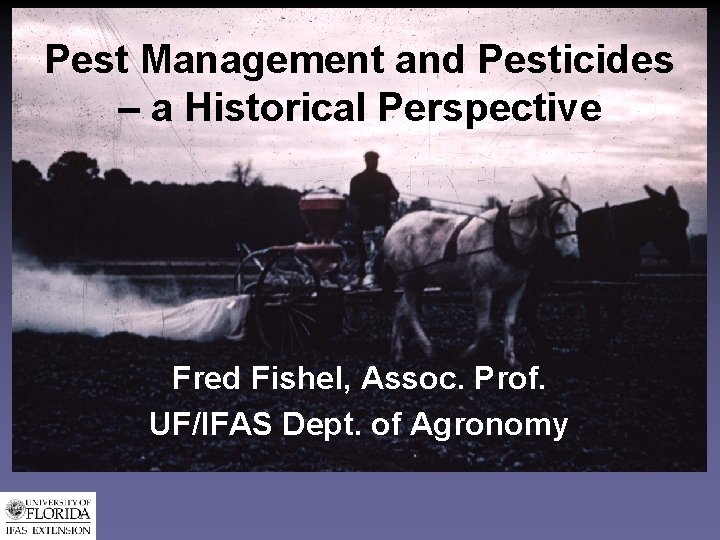
Pest Management and Pesticides – a Historical Perspective Fred Fishel, Assoc. Prof. UF/IFAS Dept. of Agronomy
Learning Objectives • After viewing this module, you should be able to: – Describe at least 5 historically significant pests that impacted change on society – Describe at least 5 historical significant events in the field of pest control – Describe at least 5 events that were instrumental in agrichemical development – Describe the IPM concept
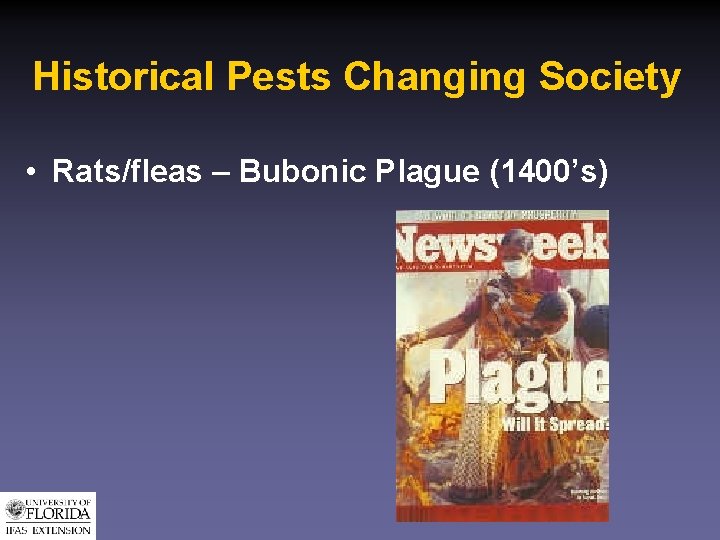
Historical Pests Changing Society • Rats/fleas – Bubonic Plague (1400’s)
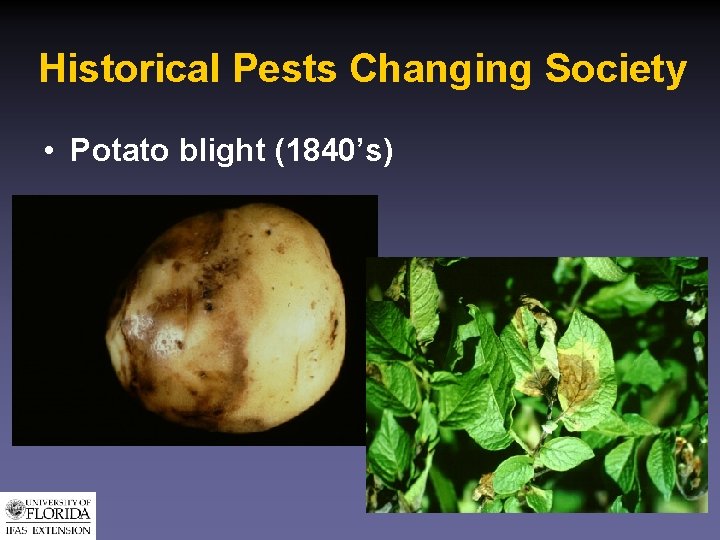
Historical Pests Changing Society • Potato blight (1840’s)
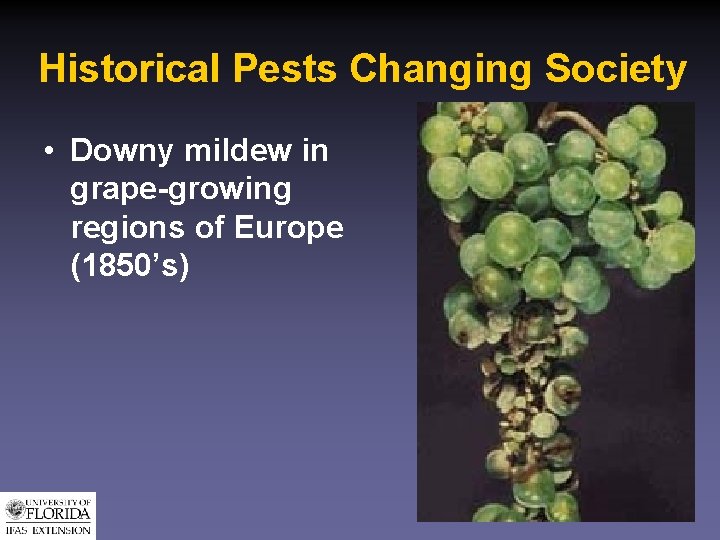
Historical Pests Changing Society • Downy mildew in grape-growing regions of Europe (1850’s)
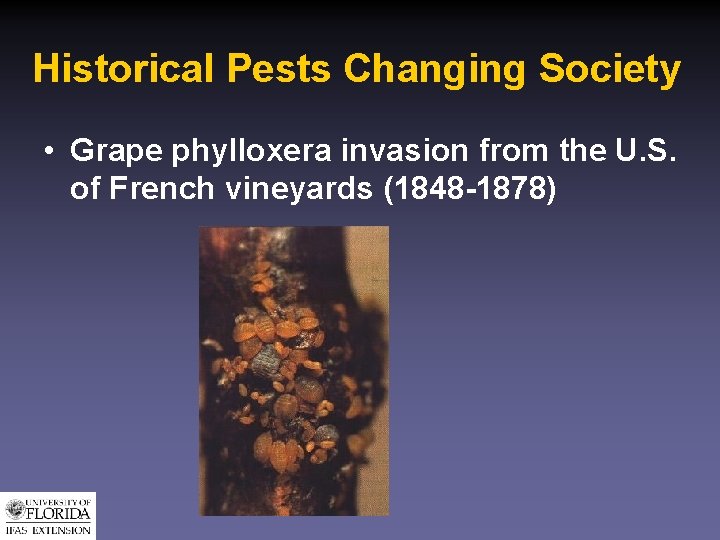
Historical Pests Changing Society • Grape phylloxera invasion from the U. S. of French vineyards (1848 -1878)
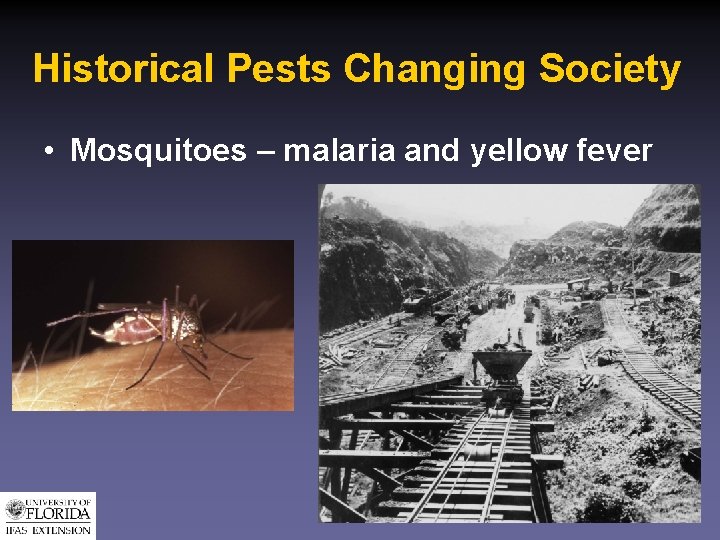
Historical Pests Changing Society • Mosquitoes – malaria and yellow fever
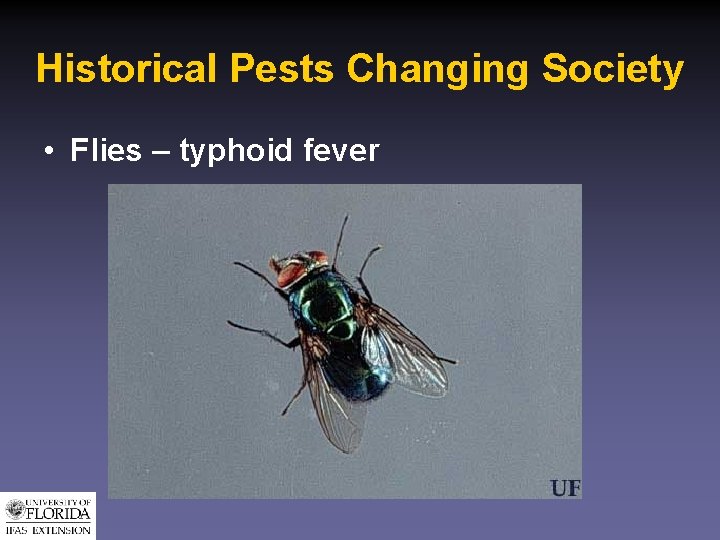
Historical Pests Changing Society • Flies – typhoid fever
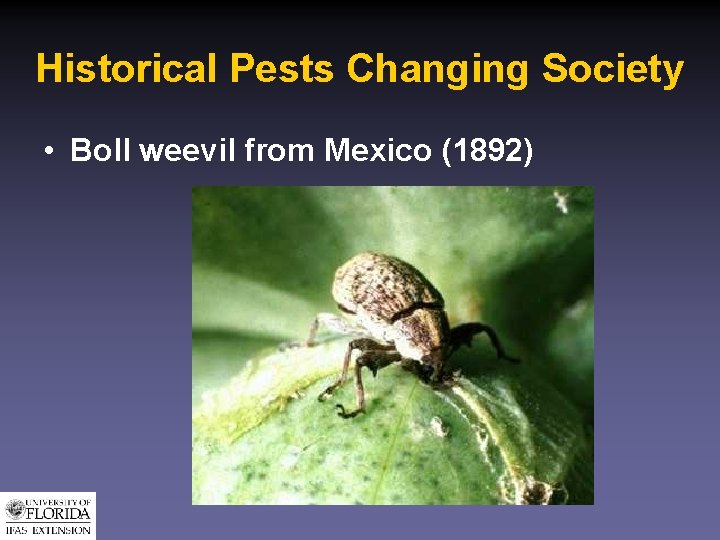
Historical Pests Changing Society • Boll weevil from Mexico (1892)
Prior to World War II, more deaths could be attributed to insect-transmitted diseases during war than the actual fighting itself.
Historical Pest Control Events • Sulfur used as a fumigant as early as 2000 BC by pagan priests • 1000 BC: Homer refers to sulfur used in fumigation and other forms of pest control
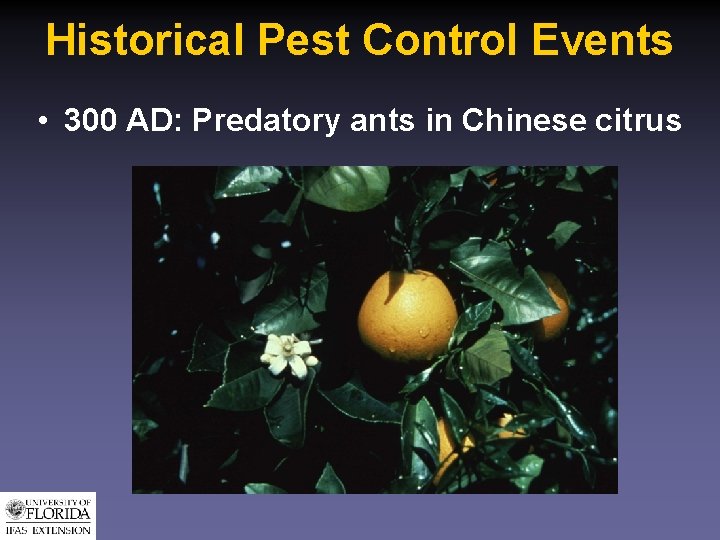
Historical Pest Control Events • 300 AD: Predatory ants in Chinese citrus
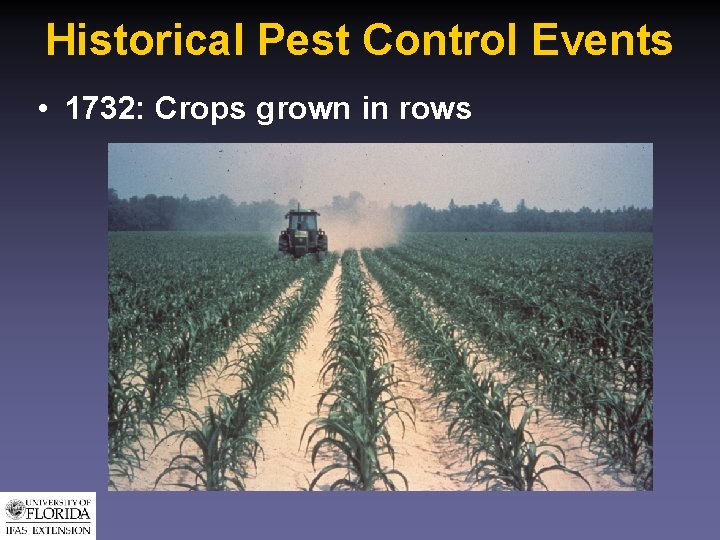
Historical Pest Control Events • 1732: Crops grown in rows
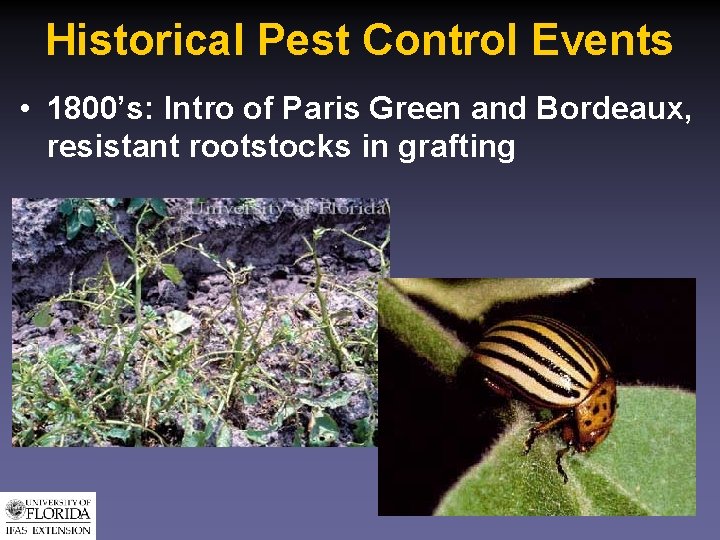
Historical Pest Control Events • 1800’s: Intro of Paris Green and Bordeaux, resistant rootstocks in grafting
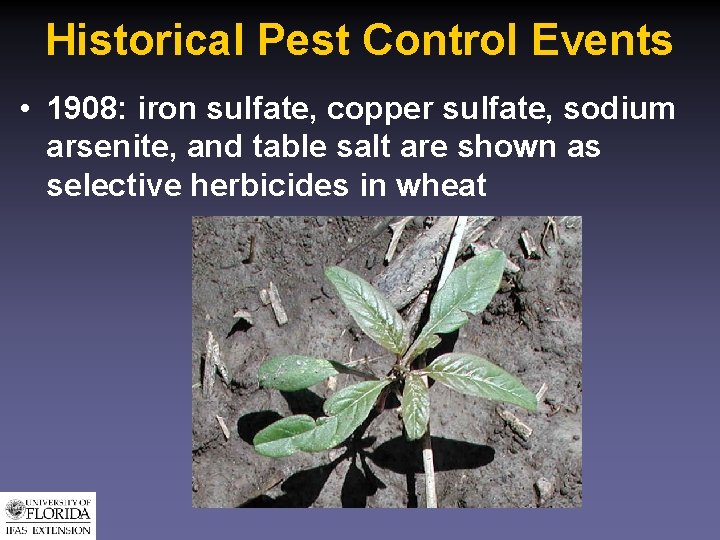
Historical Pest Control Events • 1908: iron sulfate, copper sulfate, sodium arsenite, and table salt are shown as selective herbicides in wheat
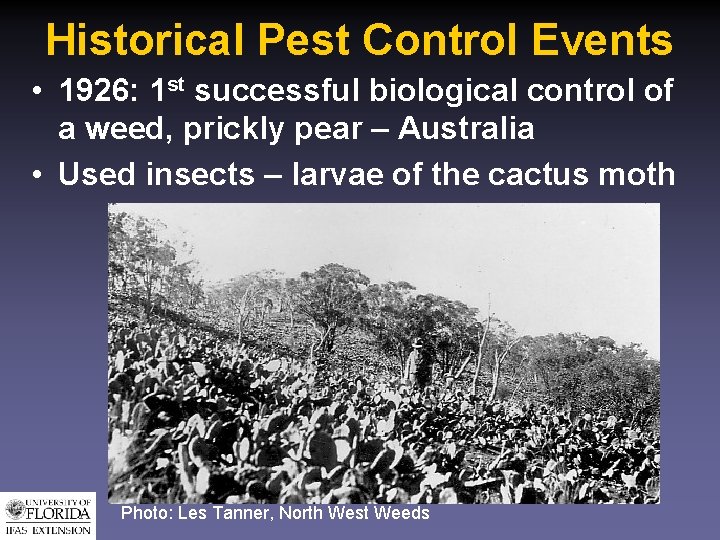
Historical Pest Control Events • 1926: 1 st successful biological control of a weed, prickly pear – Australia • Used insects – larvae of the cactus moth Photo: Les Tanner, North West Weeds
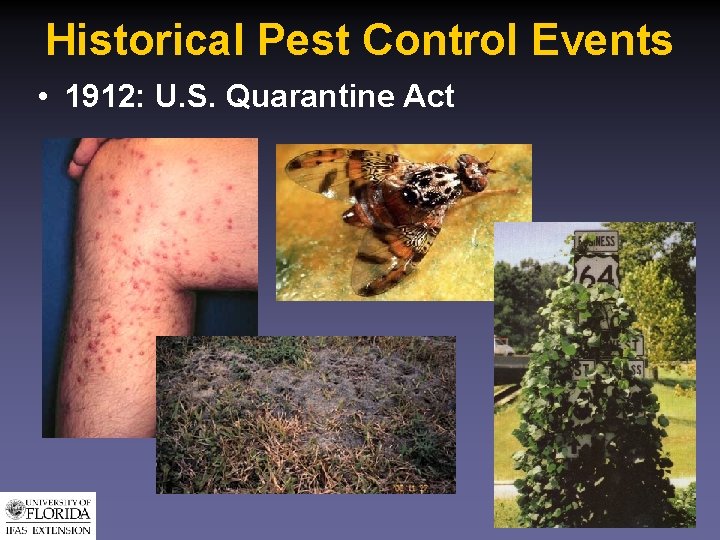
Historical Pest Control Events • 1912: U. S. Quarantine Act
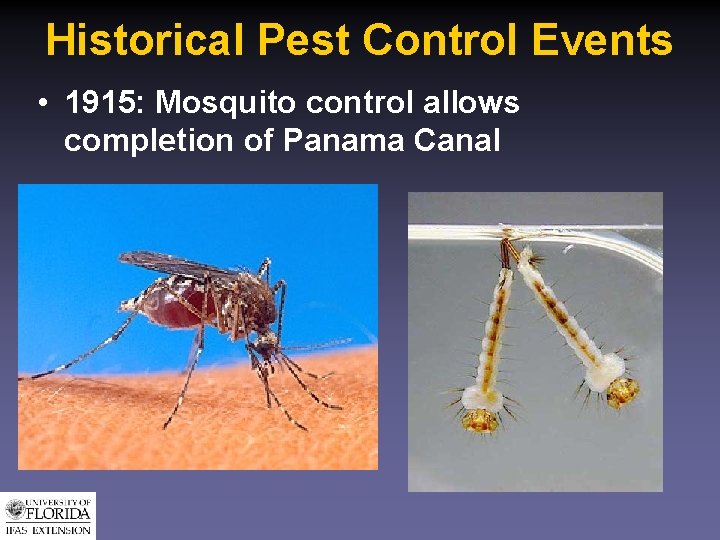
Historical Pest Control Events • 1915: Mosquito control allows completion of Panama Canal
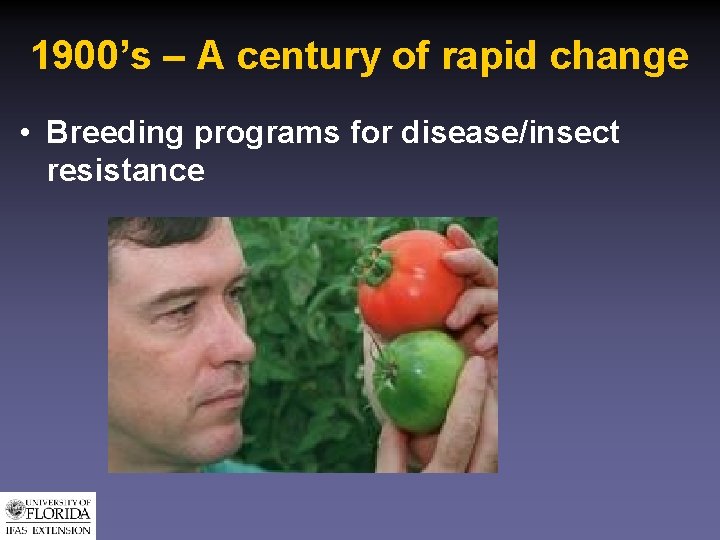
1900’s – A century of rapid change • Breeding programs for disease/insect resistance
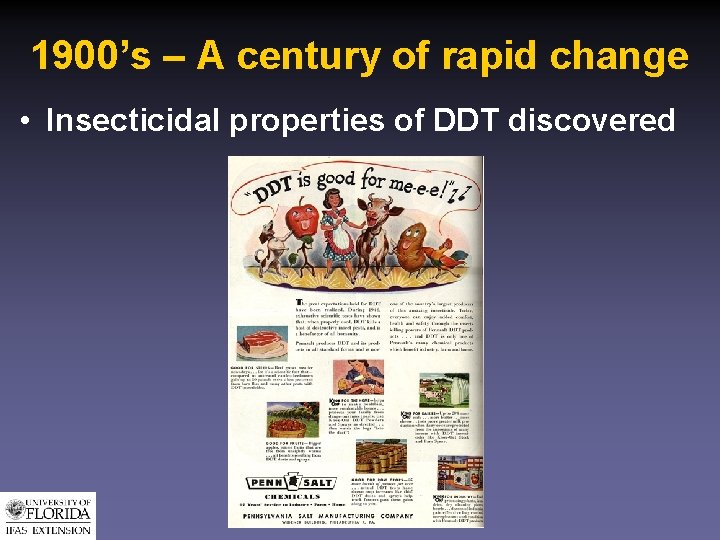
1900’s – A century of rapid change • Insecticidal properties of DDT discovered
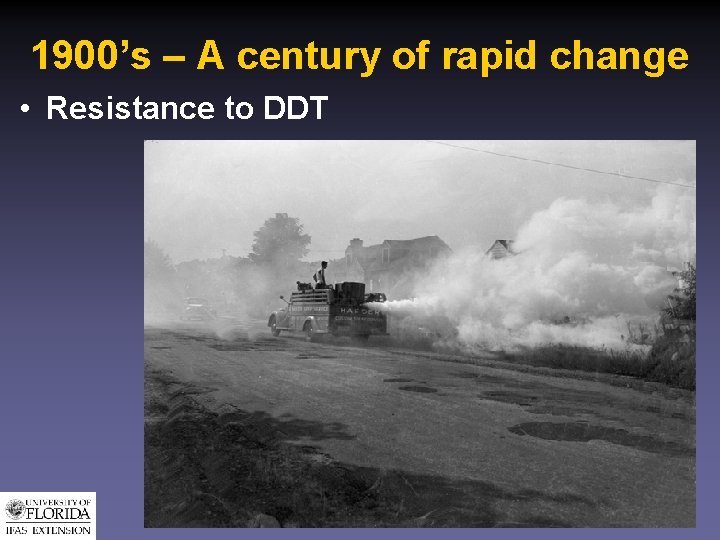
1900’s – A century of rapid change • Resistance to DDT
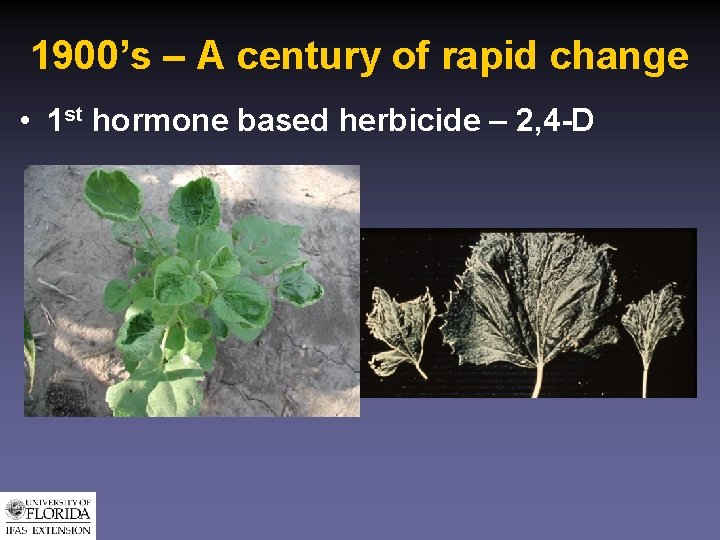
1900’s – A century of rapid change • 1 st hormone based herbicide – 2, 4 -D
1900’s – A century of rapid change • Explosive growth of agrichemical industry occurred from the 1940 s through the 60 s – First dithiocarbamate fungicide – Zineb – First aerosol insecticides – Introduction of 2, 4, 5 -T – Introduction of warfarin for rodent control – Synthesis of first synthetic pyrethroid – Introduction of malathion – Many others occurring or followed
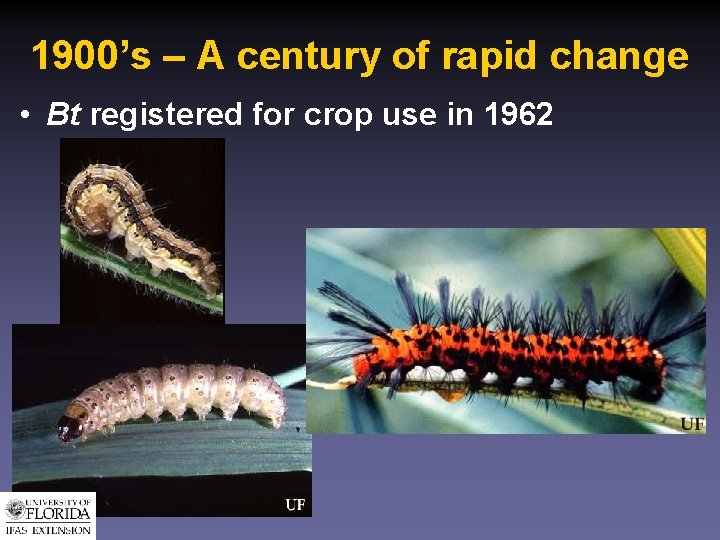
1900’s – A century of rapid change • Bt registered for crop use in 1962
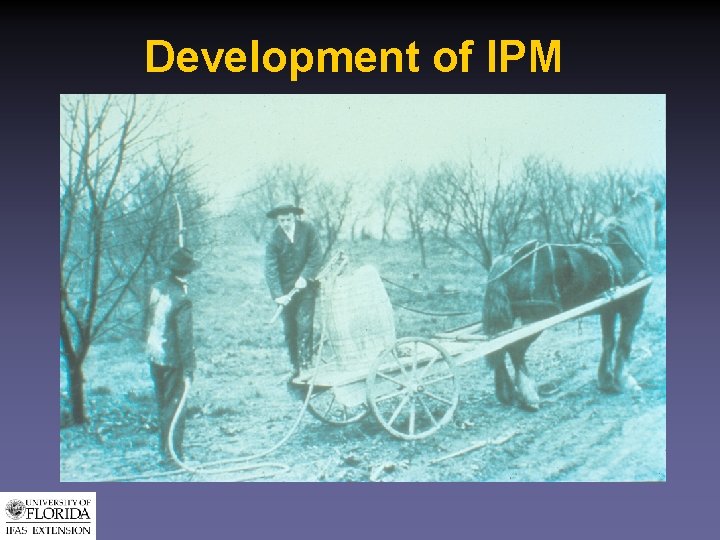
Development of IPM
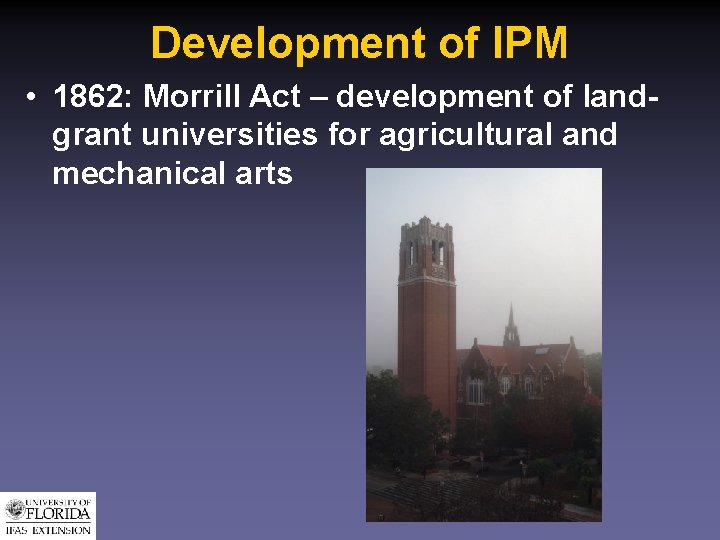
Development of IPM • 1862: Morrill Act – development of landgrant universities for agricultural and mechanical arts
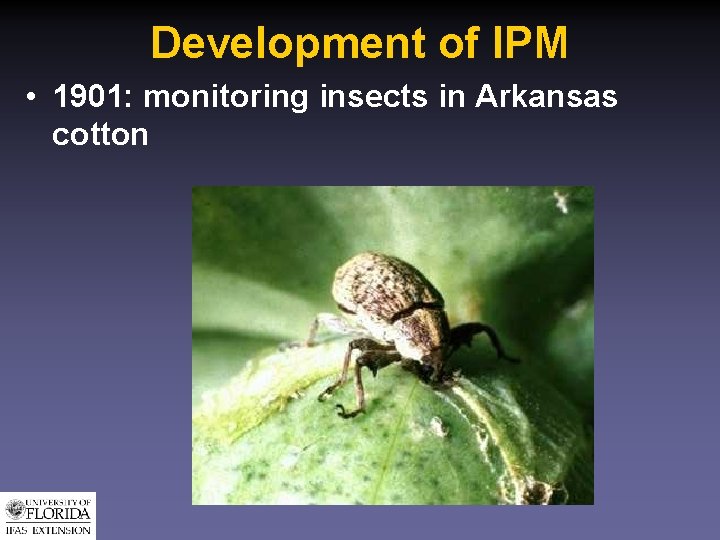
Development of IPM • 1901: monitoring insects in Arkansas cotton
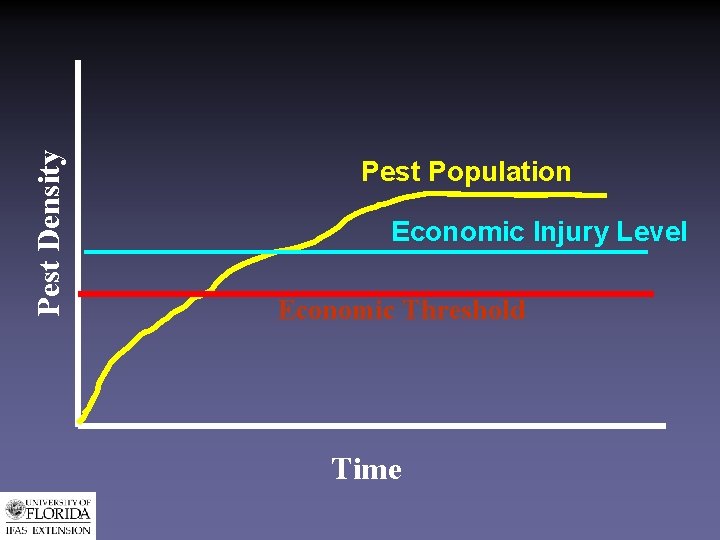
Pest Density Pest Population Economic Injury Level Economic Threshold Time
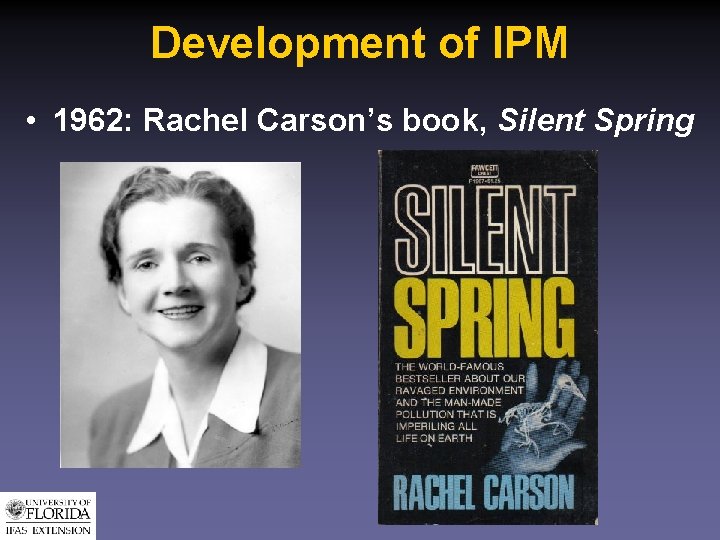
Development of IPM • 1962: Rachel Carson’s book, Silent Spring
Bubonic Plague is carried to humans primarily by: A. Mosquitoes that have fed on infected wild hogs B. Ticks that have fed on infected deer C. Fleas that have fed on infected rats D. Brown recluse and black widow spiders
Bubonic Plague is carried to humans primarily by: A. Mosquitoes that have fed on infected wild hogs B. Ticks that have fed on infected deer C. Fleas that have fed on infected rats D. Brown recluse and black widow spiders
Which plant disease is responsible for a mass emigration of Europeans in the mid-1800 s? A. B. C. D. Potato blight Cereal leaf rust Barley yellow dwarf Powdery mildew of grape
Which plant disease is responsible for a mass emigration of Europeans in the mid-1800 s? A. B. C. D. Potato blight Cereal leaf rust Barley yellow dwarf Powdery mildew of grape
Which pest was first responsible for research of genetic resistance for use as a pest management tool? A. B. C. D. Grape phylloxera Boll weevil Corn earworm Mediterranean fruit fly
Which pest was first responsible for research of genetic resistance for use as a pest management tool? A. B. C. D. Grape phylloxera Boll weevil Corn earworm Mediterranean fruit fly
Which pest nearly prevented completion of the Panama Canal? A. B. C. D. Fleas Mosquitoes Ticks Tarantulas
Which pest nearly prevented completion of the Panama Canal? A. B. C. D. Fleas Mosquitoes Ticks Tarantulas
Typhoid fever is spread to humans primarily by: A. B. C. D. Mosquitoes that fed on infected horses Deer ticks that fed on infected deer Flies that fed on feces Mites that fed on infected poultry
Typhoid fever is spread to humans primarily by: A. B. C. D. Mosquitoes that fed on infected horses Deer ticks that fed on infected deer Flies that fed on feces Mites that fed on infected poultry
The first record of biological control was by the: A. B. C. D. Egyptians in control of cotton boll weevil Chinese using predatory ants in citrus Greeks using predatory stink bugs in olives Phoenicians in control of vineyard mites
The first record of biological control was by the: A. B. C. D. Egyptians in control of cotton boll weevil Chinese using predatory ants in citrus Greeks using predatory stink bugs in olives Phoenicians in control of vineyard mites
Why were crops grown in rows? A. B. C. D. To facilitate workers in harvesting crops For accommodating aquaducts for irrigation To provide more sunlight for optimal growth To facilitate animals pulling plows
Why were crops grown in rows? A. B. C. D. To facilitate workers in harvesting crops For accommodating aquaducts for irrigation To provide more sunlight for optimal growth To facilitate animals pulling plows
Which represents the earliest selective herbicide? A. B. C. D. Imazaquin 2, 4 -D Inorganics, such as iron sulfate and salt Diesel fuel
Which represents the earliest selective herbicide? A. B. C. D. Imazaquin 2, 4 -D Inorganics, such as iron sulfate and salt Diesel fuel
Which was the first legal form of pest control imposed by the U. S. Government? A. B. C. D. Formation of the EPA Formation of state boards of agriculture Passage of the Morrill Act Passage of the U. S. Quarantine Act
Which was the first legal form of pest control imposed by the U. S. Government? A. B. C. D. Formation of the EPA Formation of state boards of agriculture Passage of the Morrill Act Passage of the U. S. Quarantine Act
The development of DDT was largely in response to: A. A Mediterranean fruit fly outbreak in California B. Crowded and unsanitary conditions during World War II C. Public outcries regarding mosquito-vectored diseases D. An effort to curb Bubonic Plague in Europe
The development of DDT was largely in response to: A. A Mediterranean fruit fly outbreak in California B. Crowded and unsanitary conditions during World War II C. Public outcries regarding mosquito-vectored diseases D. An effort to curb Bubonic Plague in Europe
The pest density at which a control measure should be applied is the: A. B. C. D. Economic density defined by {[∑½π]÷[βΨ]} Economic injury level Economic threshold Economic mental withstanding tolerance
The pest density at which a control measure should be applied is the: A. B. C. D. Economic density defined by {[∑½π]÷[βΨ]} Economic injury level Economic threshold Economic mental withstanding tolerance
Photo Credits • • • CDC North Dakota State University The Ohio State University of California – Davis Clemson University North West Weeds Mention of trade names in this presentation is solely for providing specific information. It is not a guarantee or warranty of the products named, and does not signify that they are approved to the exclusion of others of suitable composition. Use pesticides safely. Read and follow directions on the manufacturer’s label. Fred Fishel, Ph. D. Department of Agronomy University of Florida/IFAS Copyright 2006 University of Florida