
Pervious Concrete Pavement 4825 Butler Road Glyndon Maryland
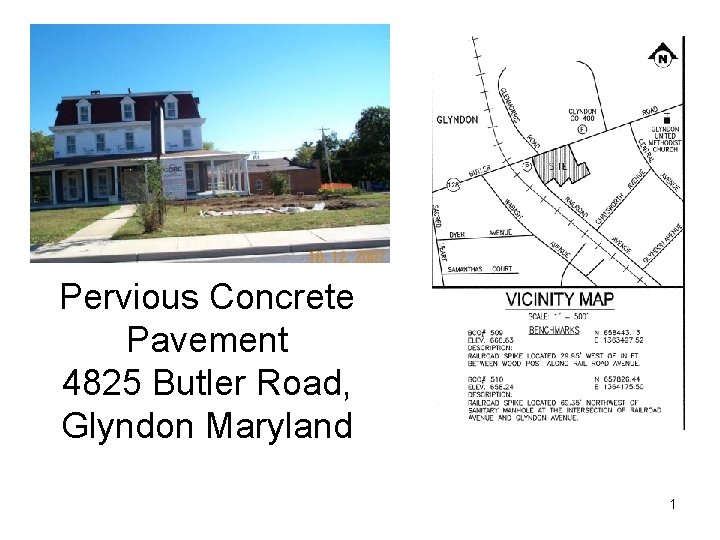
Pervious Concrete Pavement 4825 Butler Road, Glyndon Maryland 1
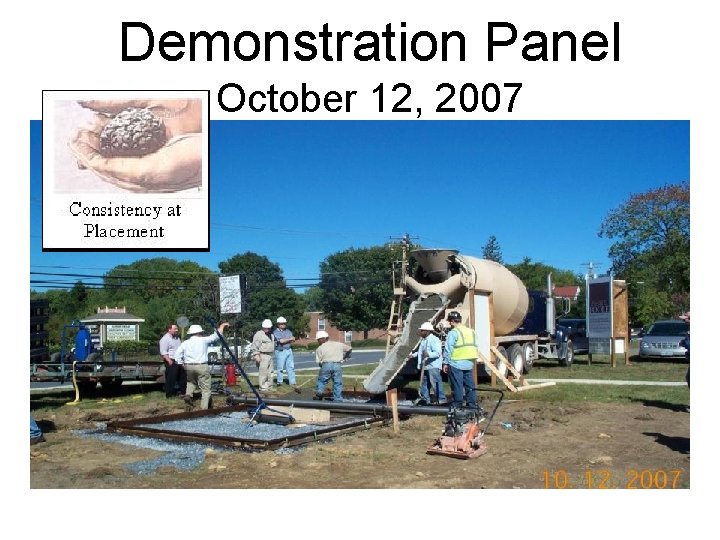
Demonstration Panel October 12, 2007
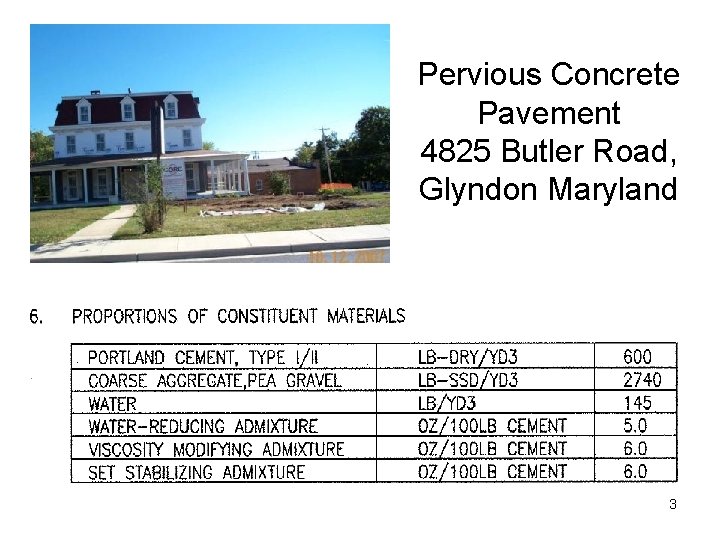
Pervious Concrete Pavement 4825 Butler Road, Glyndon Maryland 3
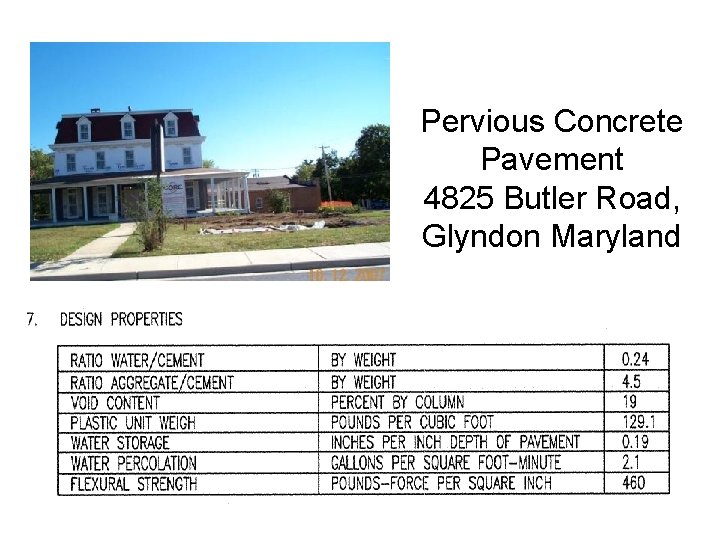
Pervious Concrete Pavement 4825 Butler Road, Glyndon Maryland 4
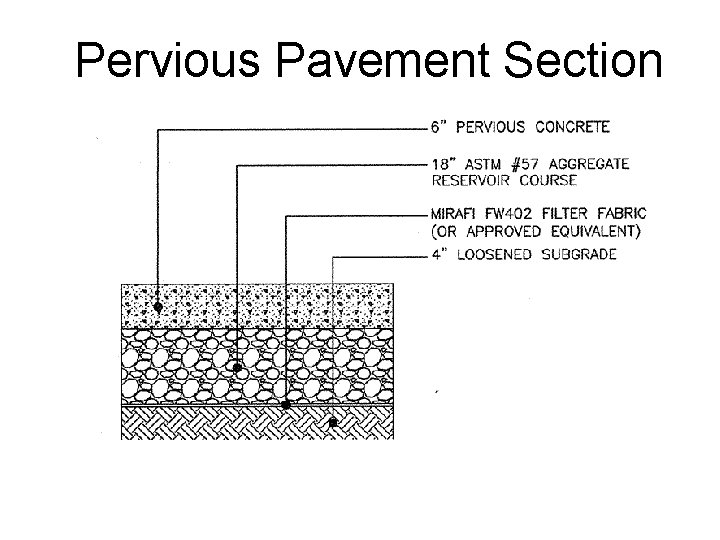
Pervious Pavement Section §
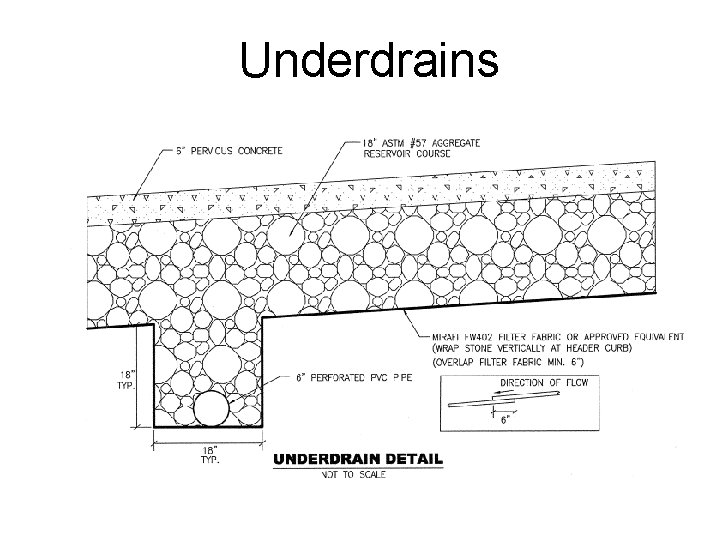
Underdrains
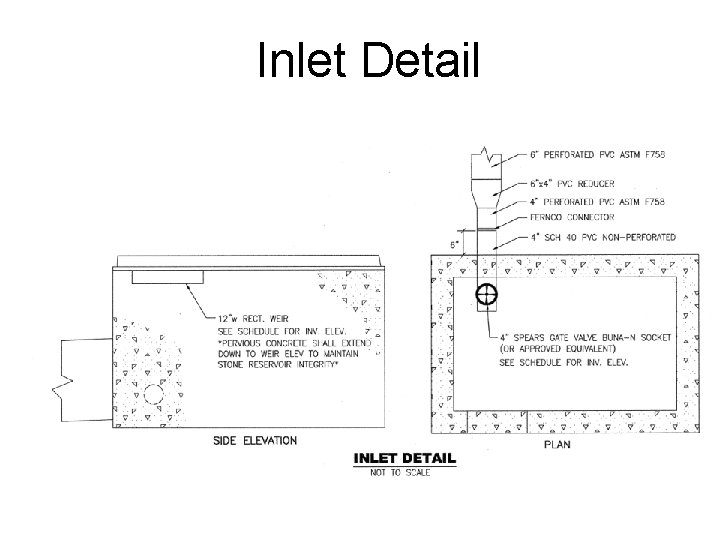
Inlet Detail
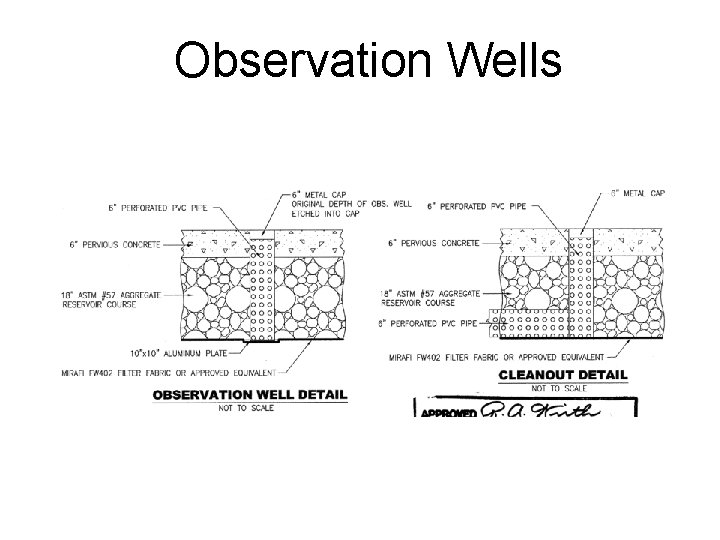
Observation Wells
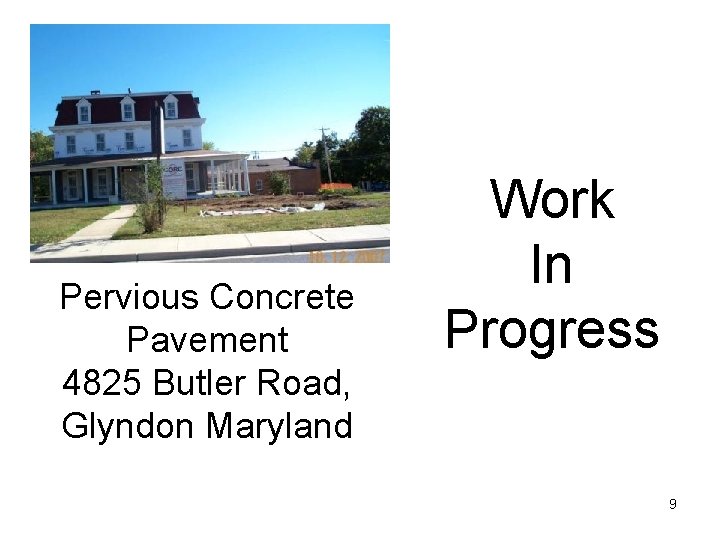
Pervious Concrete Pavement 4825 Butler Road, Glyndon Maryland Work In Progress 9
Specifications and Testing for Pervious Concrete • Rod Meyers, P. E. , CDT, BASF • Matt Cockerham, North Star
Specifications and Testing for Pervious Concrete • Desired Plastic Properties • Desired In Place Properties • Common Specification Provisions
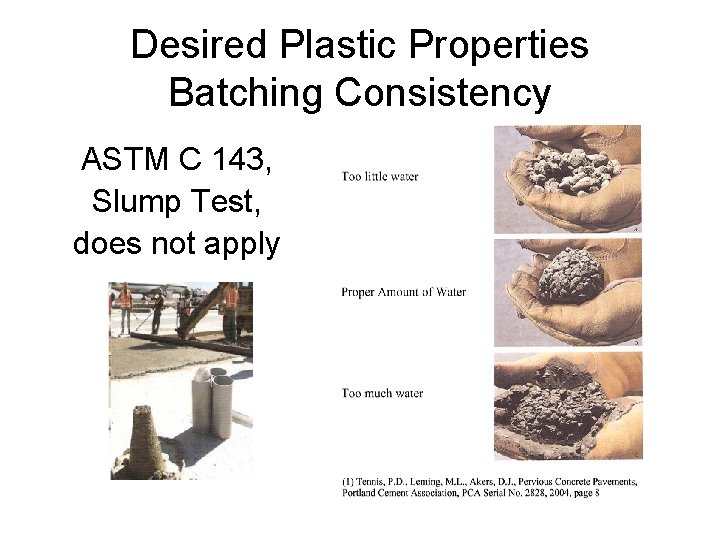
Desired Plastic Properties Batching Consistency ASTM C 143, Slump Test, does not apply
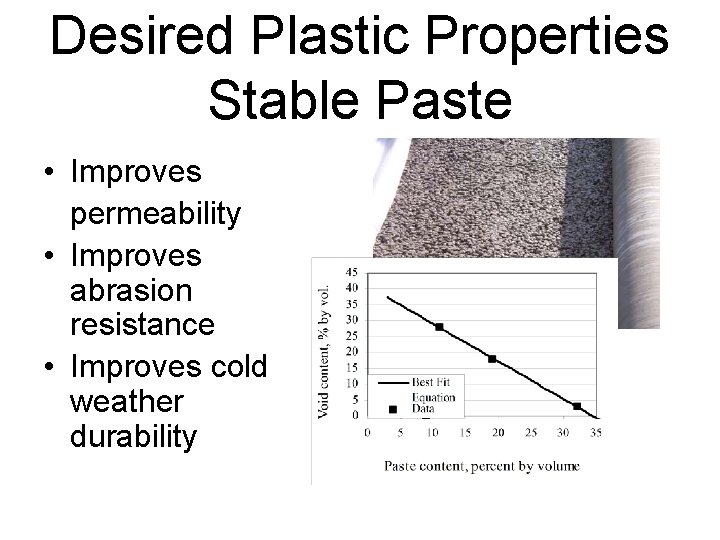
Desired Plastic Properties Stable Paste • Improves permeability • Improves abrasion resistance • Improves cold weather durability
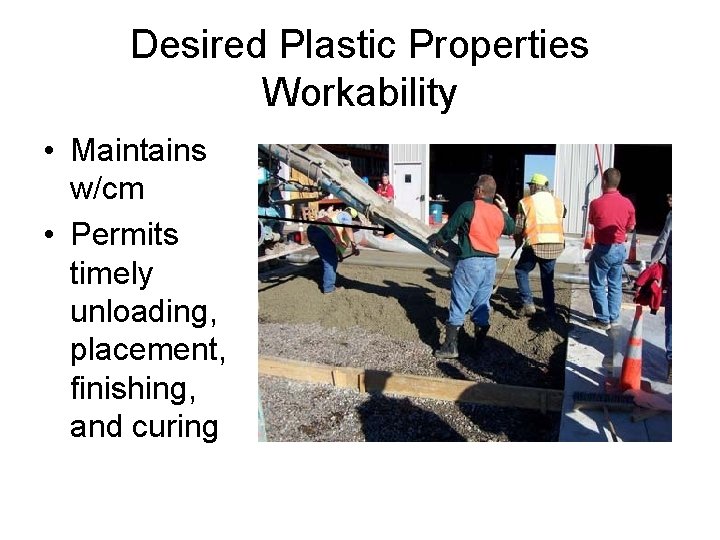
Desired Plastic Properties Workability • Maintains w/cm • Permits timely unloading, placement, finishing, and curing
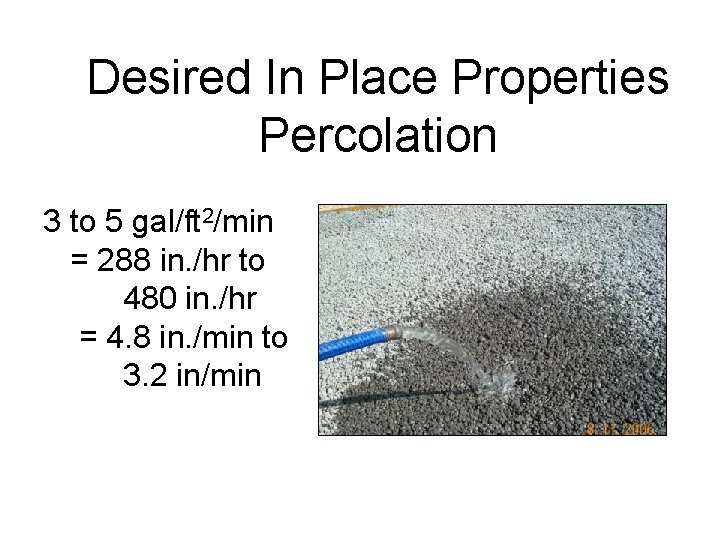
Desired In Place Properties Percolation 3 to 5 gal/ft 2/min = 288 in. /hr to 480 in. /hr = 4. 8 in. /min to 3. 2 in/min
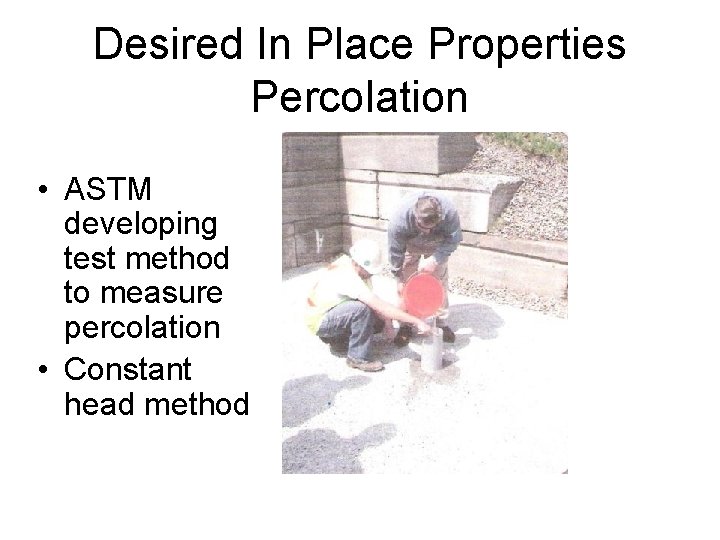
Desired In Place Properties Percolation • ASTM developing test method to measure percolation • Constant head method
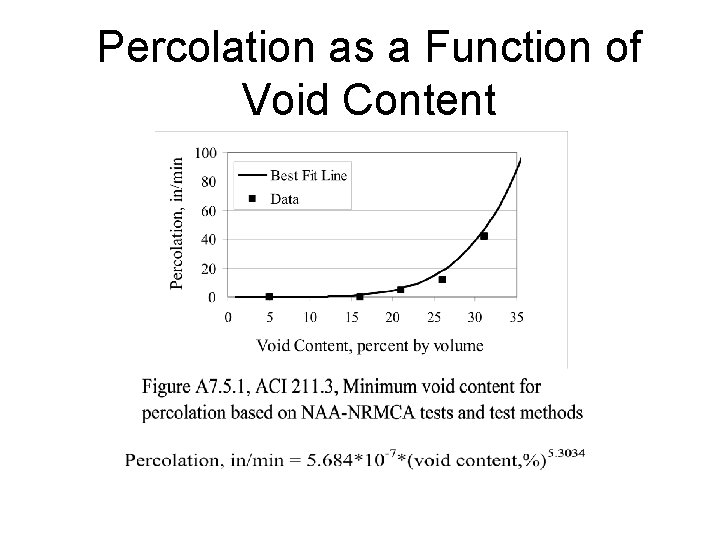
Percolation as a Function of Void Content
Measuring Voids Testing Fresh Density • Sample in accordance with ASTM C 172 • Sample every 100 cubic yards • Within +/- 5 lb/ft 3 of specified density
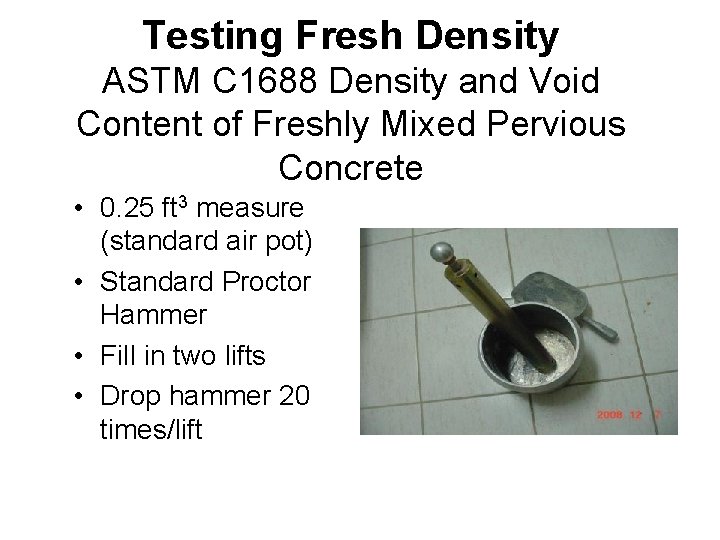
Testing Fresh Density ASTM C 1688 Density and Void Content of Freshly Mixed Pervious Concrete • 0. 25 ft 3 measure (standard air pot) • Standard Proctor Hammer • Fill in two lifts • Drop hammer 20 times/lift
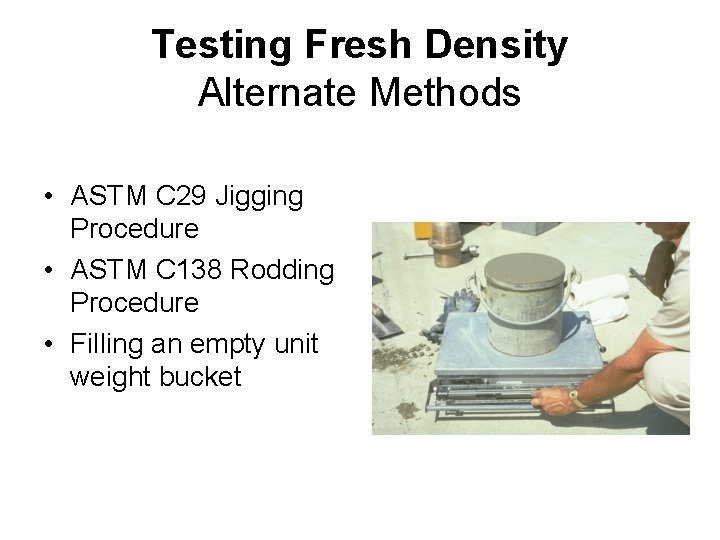
Testing Fresh Density Alternate Methods • ASTM C 29 Jigging Procedure • ASTM C 138 Rodding Procedure • Filling an empty unit weight bucket
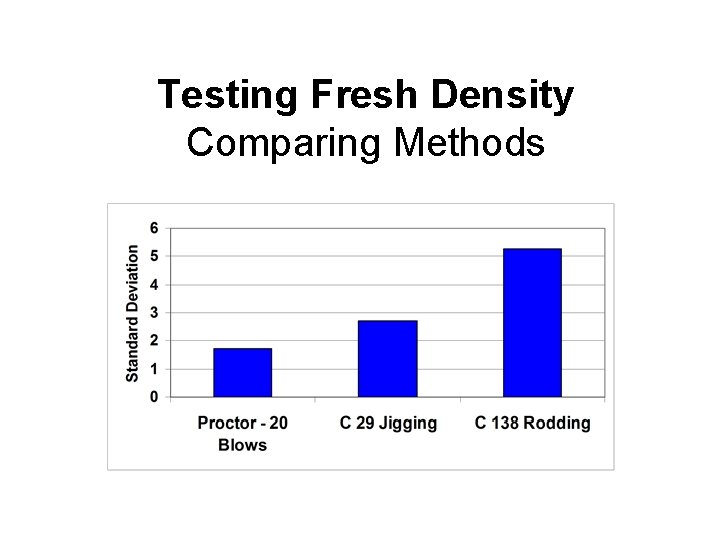
Testing Fresh Density Comparing Methods
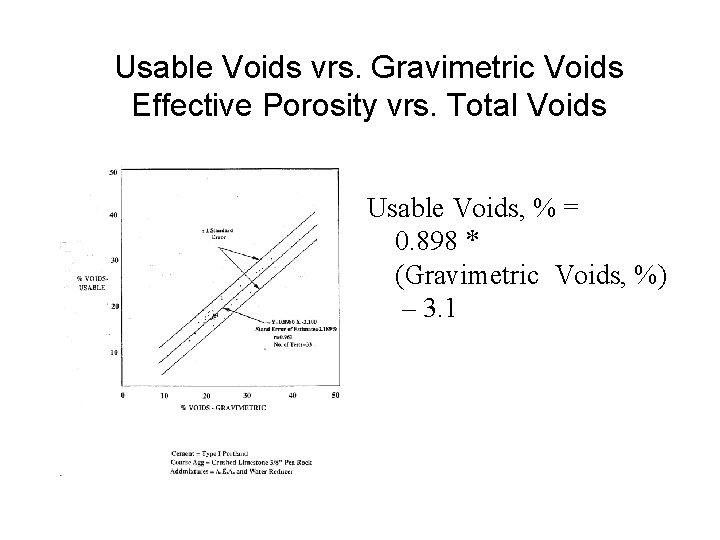
Usable Voids vrs. Gravimetric Voids Effective Porosity vrs. Total Voids Usable Voids, % = 0. 898 * (Gravimetric Voids, %) – 3. 1
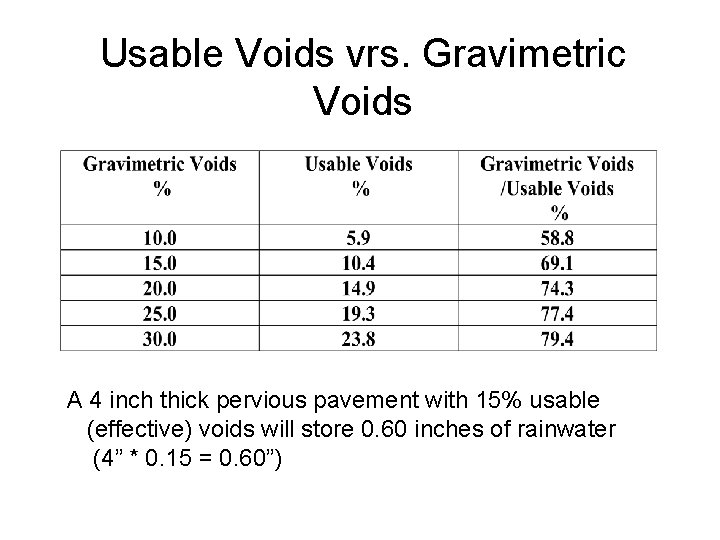
Usable Voids vrs. Gravimetric Voids A 4 inch thick pervious pavement with 15% usable (effective) voids will store 0. 60 inches of rainwater (4” * 0. 15 = 0. 60”)
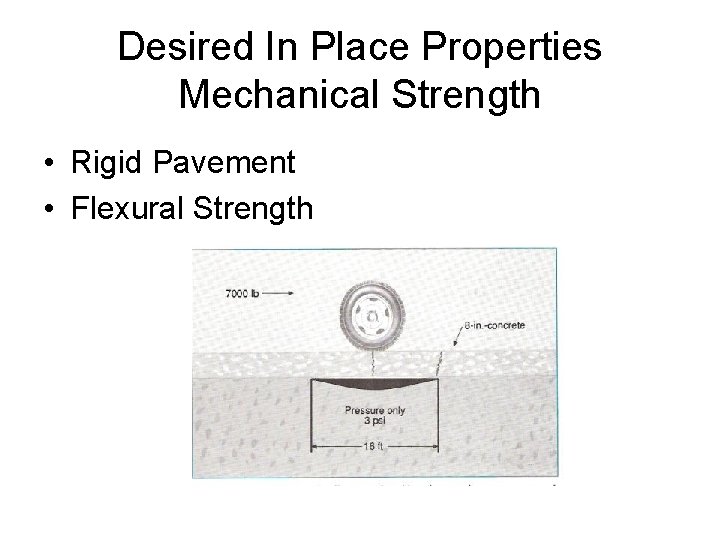
Desired In Place Properties Mechanical Strength • Rigid Pavement • Flexural Strength
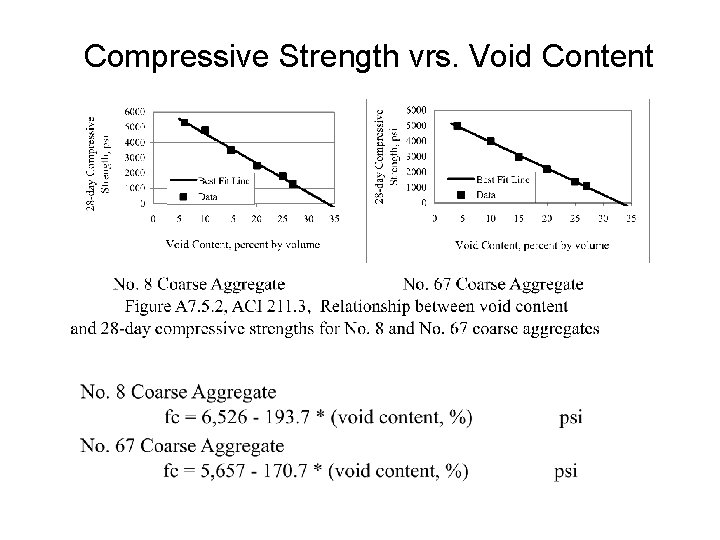
Compressive Strength vrs. Void Content
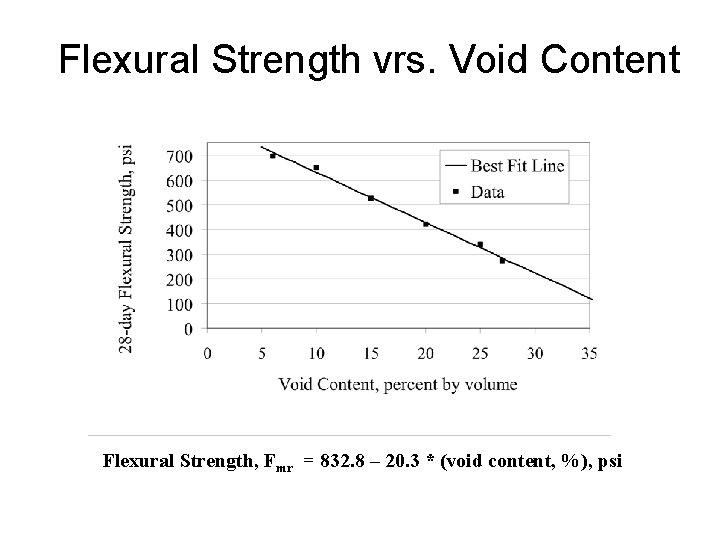
Flexural Strength vrs. Void Content Flexural Strength, Fmr = 832. 8 – 20. 3 * (void content, %), psi
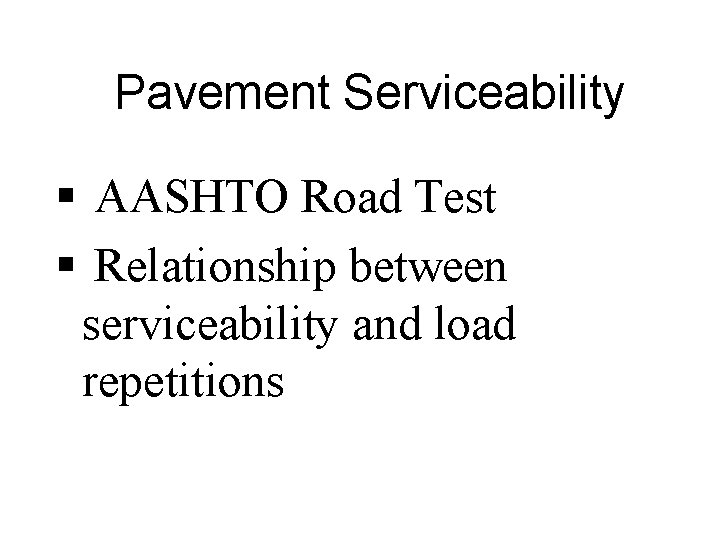
Pavement Serviceability § AASHTO Road Test § Relationship between serviceability and load repetitions
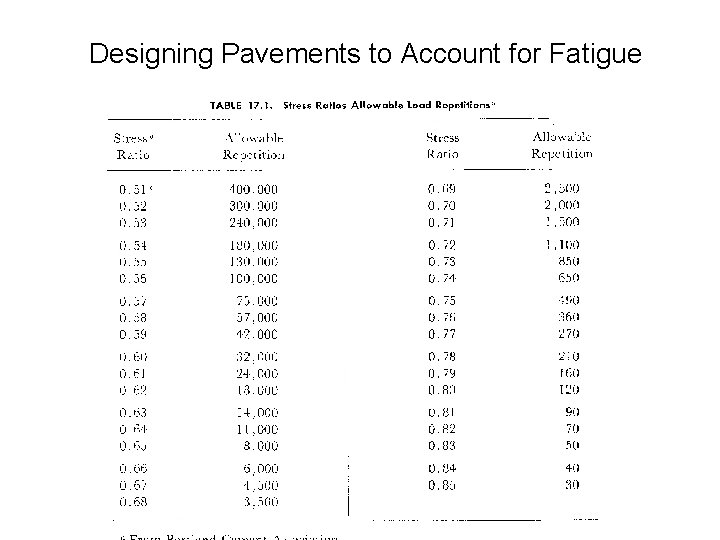
Designing Pavements to Account for Fatigue
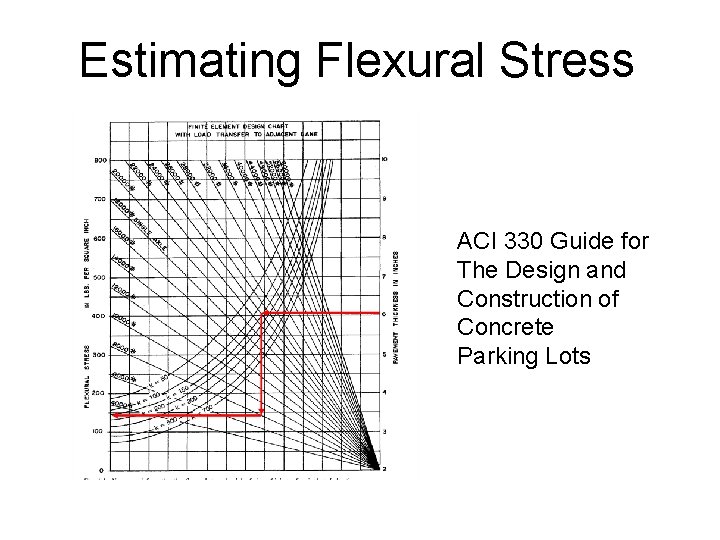
Estimating Flexural Stress ACI 330 Guide for The Design and Construction of Concrete Parking Lots
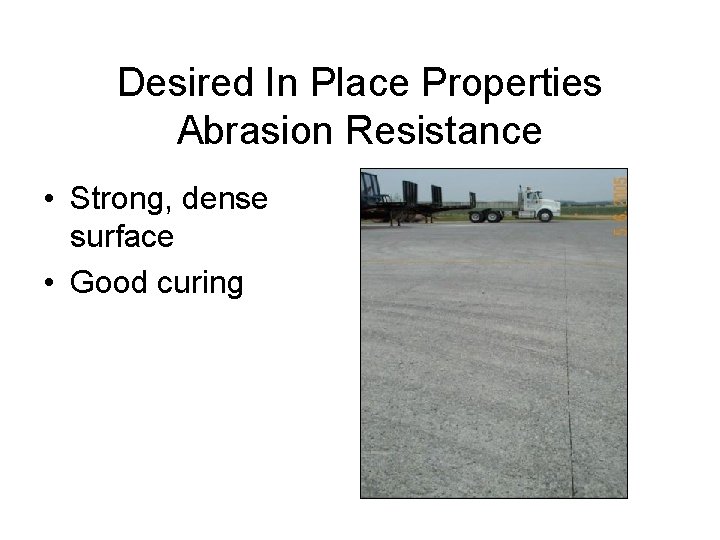
Desired In Place Properties Abrasion Resistance • Strong, dense surface • Good curing
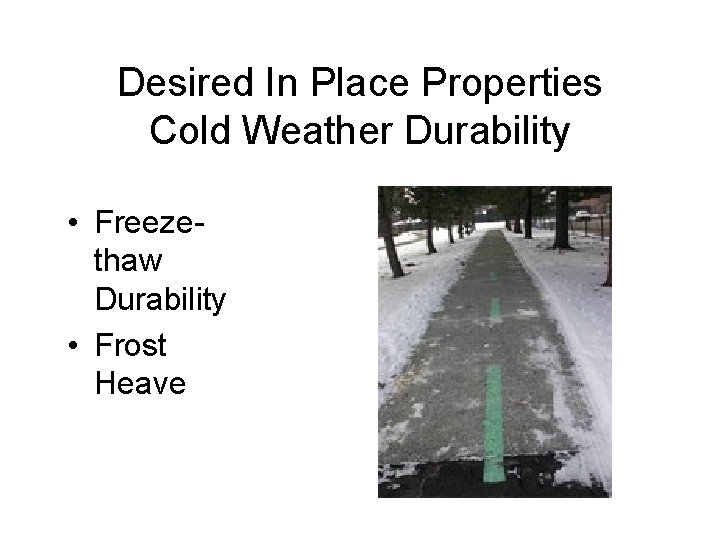
Desired In Place Properties Cold Weather Durability • Freezethaw Durability • Frost Heave
Frost Heave § Frost Penetration Depth in MD = 30” § FAA recommends 65% of the frost depth contain non-frost-susceptible material § For 30” FPD, depth of pervious material (concrete plus base) shall be 20 inches
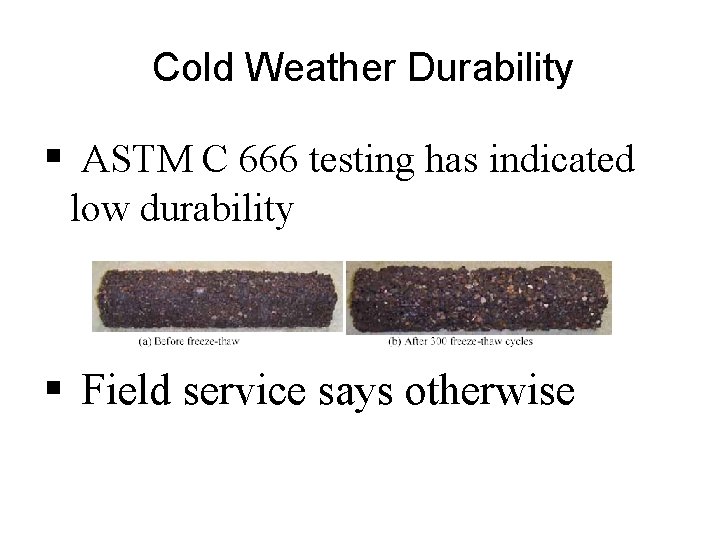
Cold Weather Durability § ASTM C 666 testing has indicated low durability § Field service says otherwise

Mix Design Development for Pervious Concrete in Cold Weather Sponsored by: Iowa Department of Transportation National Concrete Technology Pavement Technology Center Iowa Concrete Paving Association
Conclusions • Failure due to freeze-thaw cycles are the result of aggregate deterioration or cement paste matrix failure • Sand, latex and air entrainment admixture improved freeze-thaw durability
The Effect of Coarse Aggregate on the Freeze-Thaw Durability of Pervious Concrete John T Kevern, University of Missouri-Kansas City Kejin Wang, Iowa State University Vernon R Schaefer, Iowa State University
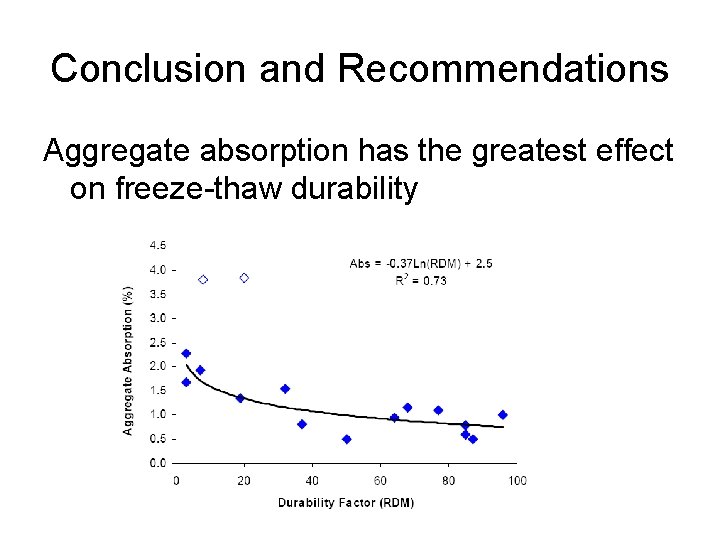
Conclusion and Recommendations Aggregate absorption has the greatest effect on freeze-thaw durability
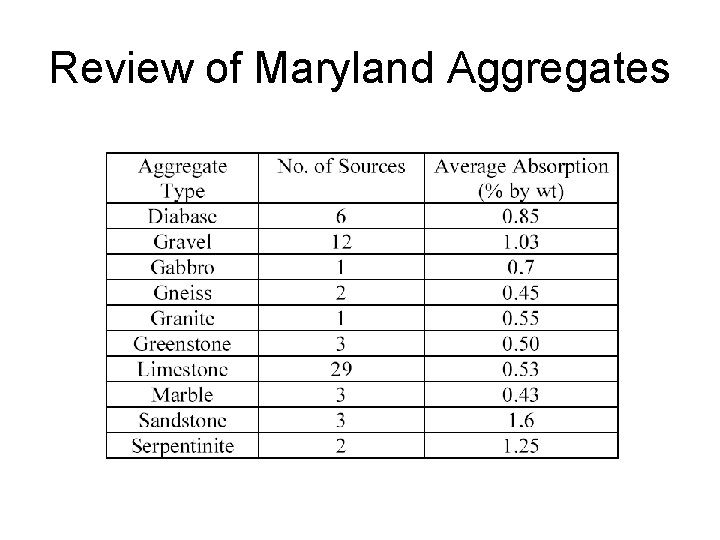
Review of Maryland Aggregates
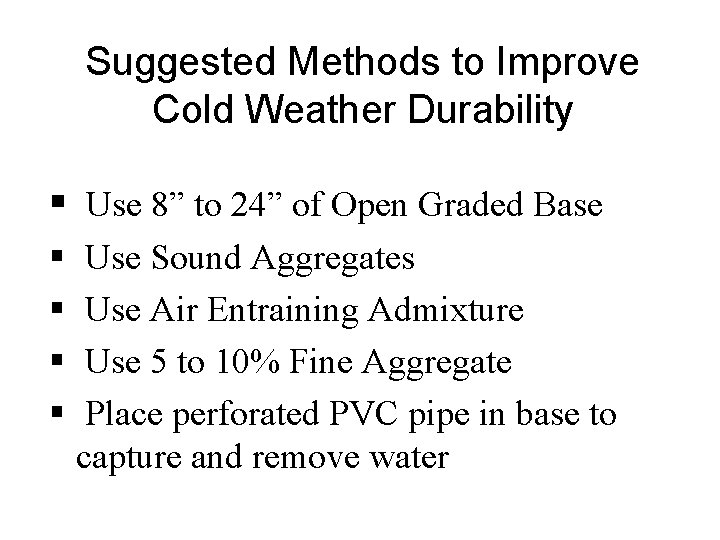
Suggested Methods to Improve Cold Weather Durability § Use 8” to 24” of Open Graded Base § § Use Sound Aggregates Use Air Entraining Admixture Use 5 to 10% Fine Aggregate Place perforated PVC pipe in base to capture and remove water

Specifications Common Provisions
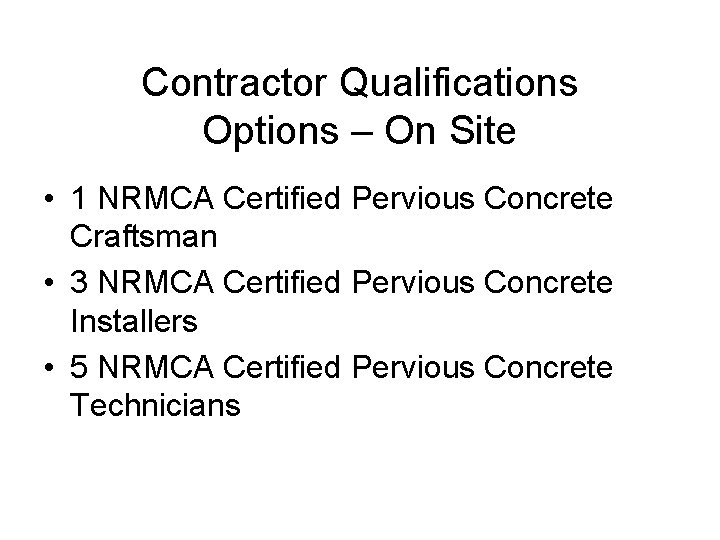
Contractor Qualifications Options – On Site • 1 NRMCA Certified Pervious Concrete Craftsman • 3 NRMCA Certified Pervious Concrete Installers • 5 NRMCA Certified Pervious Concrete Technicians
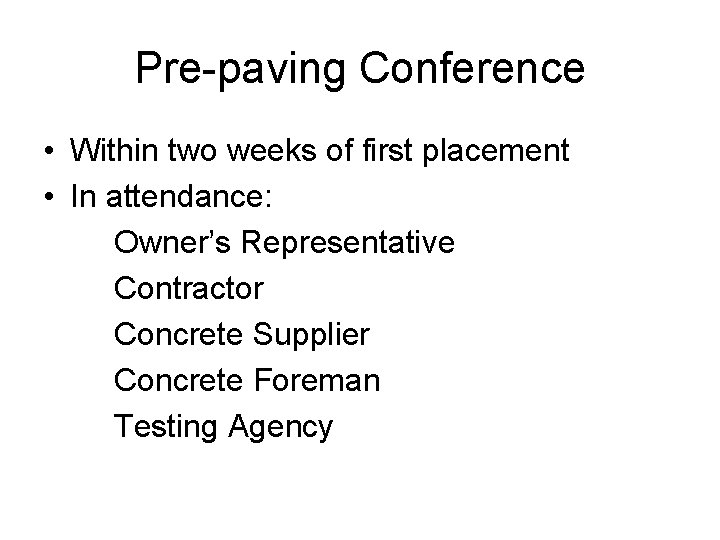
Pre-paving Conference • Within two weeks of first placement • In attendance: Owner’s Representative Contractor Concrete Supplier Concrete Foreman Testing Agency
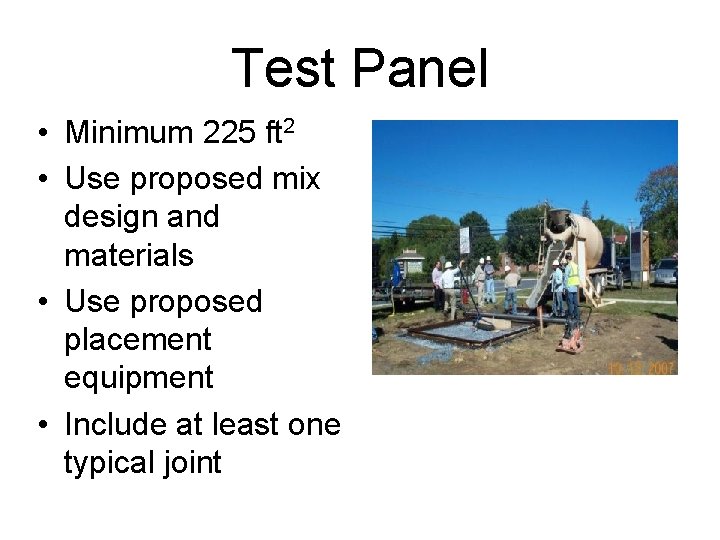
Test Panel • Minimum 225 ft 2 • Use proposed mix design and materials • Use proposed placement equipment • Include at least one typical joint
Test Panel • Fresh density: with +/- 5. 0 lb/ft 3 • Three cores: average thickness not more than ¼” less or 1. 5” more than specified thickness • Single core: not more than ½” less than specified thickness
Testing Thickness • Average of three cores more than 1 -1/2” greater than specified thickness • No single core more than ½” less than specified thickness
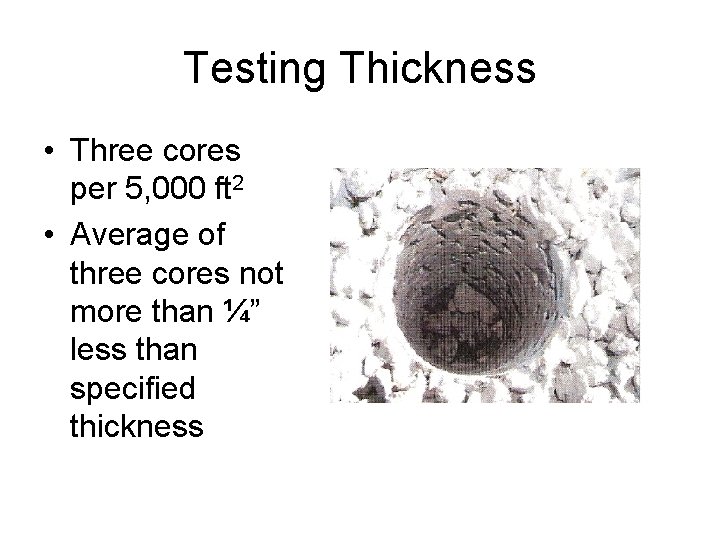
Testing Thickness • Three cores per 5, 000 ft 2 • Average of three cores not more than ¼” less than specified thickness
Testing In Place Density • Three cores per 5, 000 ft 2 • Minimum nominal diameter of 4 inches • Measure density in accordance with ASTM C 140 • Hardened density shall be within +/- 5% of approved hardened density from test panels
Subgrade Preparation • Maintain final subgrade elevation • Permeability testing: Portland Cement Association recommends: Soils with a percolation rates of ½ in/hr. ASTM D 3385, Double-ring Infiltrometer testing • Subgrade support: minimum density of 92% maximum dry density • Subgrade in moist condition within 3% of optimum moisture content

Base Materials • Open graded aggregate • 30% to 40% void content • Elevation of base shall be maintained during placement of concrete.
Concrete Materials • Comply with ASTM C 94 • Aggregates – Max. size 1/3” thickness • Aggregates – Use 3/8” maximum size • Admixtures for controlling hydration may be used and facilitate handling of plastic concrete
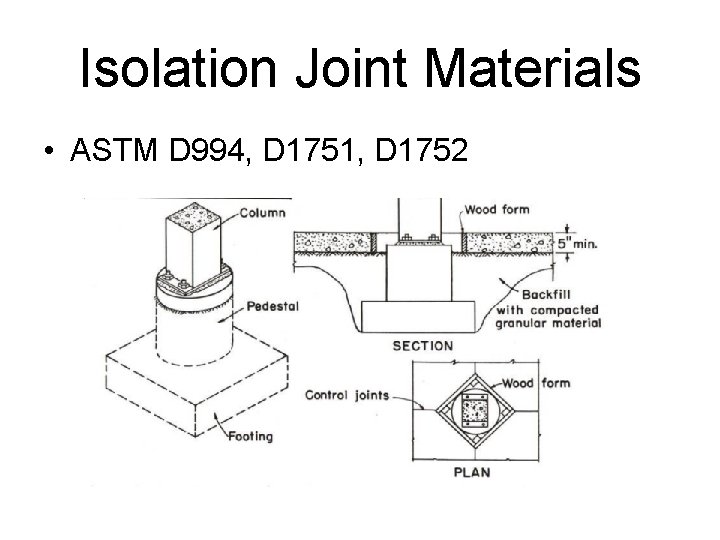
Isolation Joint Materials • ASTM D 994, D 1751, D 1752
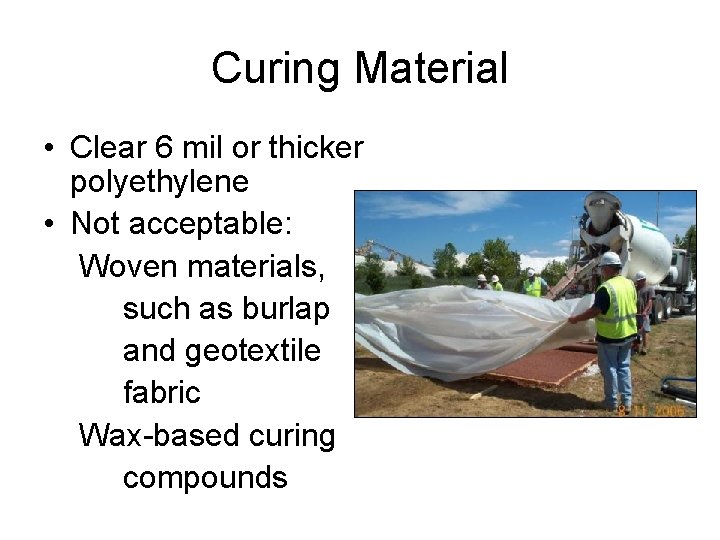
Curing Material • Clear 6 mil or thicker polyethylene • Not acceptable: Woven materials, such as burlap and geotextile fabric Wax-based curing compounds
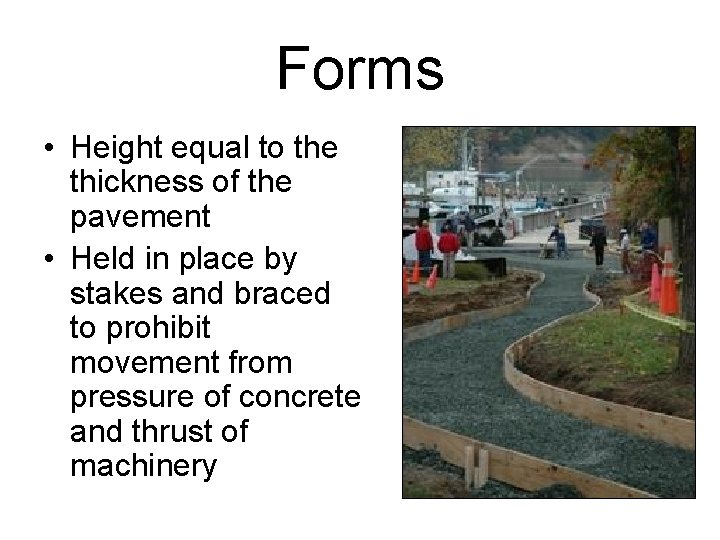
Forms • Height equal to the thickness of the pavement • Held in place by stakes and braced to prohibit movement from pressure of concrete and thrust of machinery
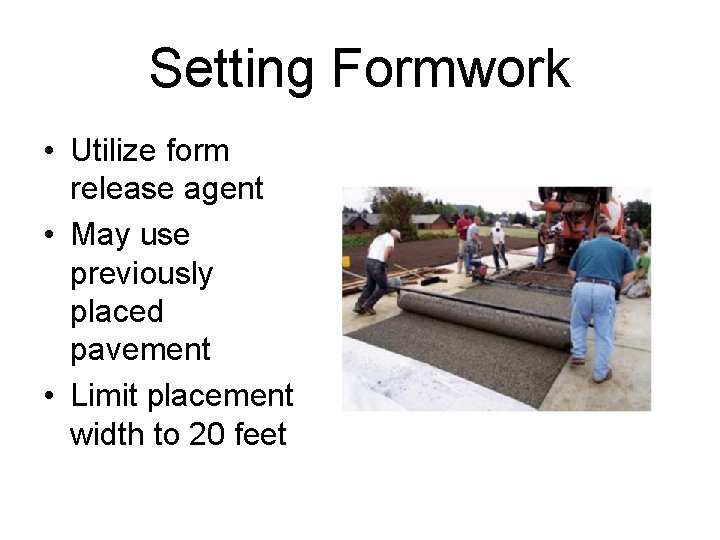
Setting Formwork • Utilize form release agent • May use previously placed pavement • Limit placement width to 20 feet
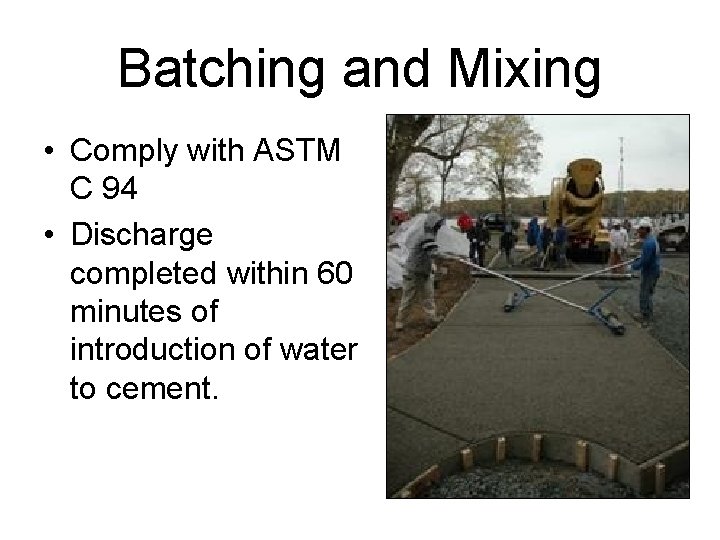
Batching and Mixing • Comply with ASTM C 94 • Discharge completed within 60 minutes of introduction of water to cement.
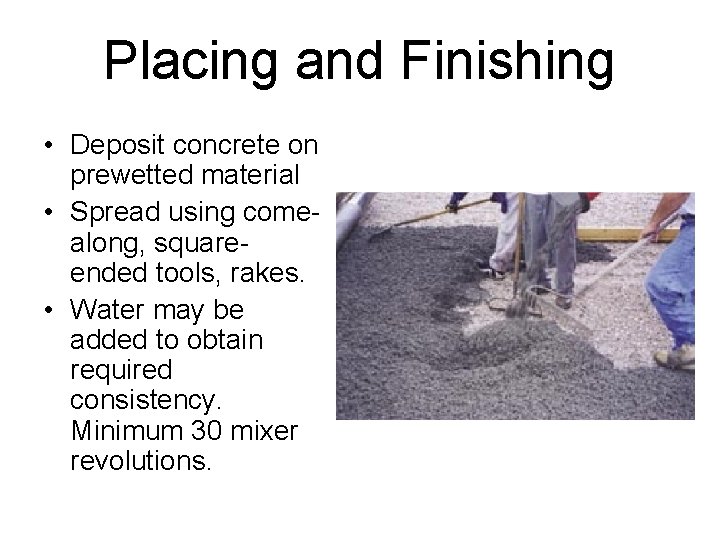
Placing and Finishing • Deposit concrete on prewetted material • Spread using comealong, squareended tools, rakes. • Water may be added to obtain required consistency. Minimum 30 mixer revolutions.
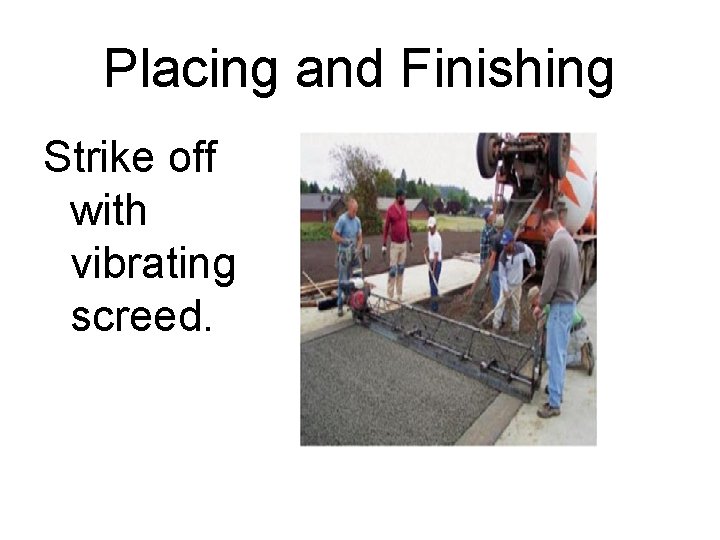
Placing and Finishing Strike off with vibrating screed.
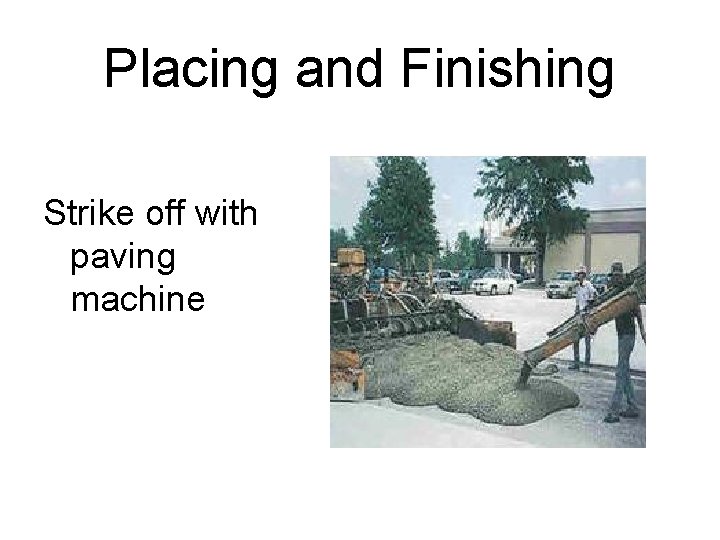
Placing and Finishing Strike off with paving machine
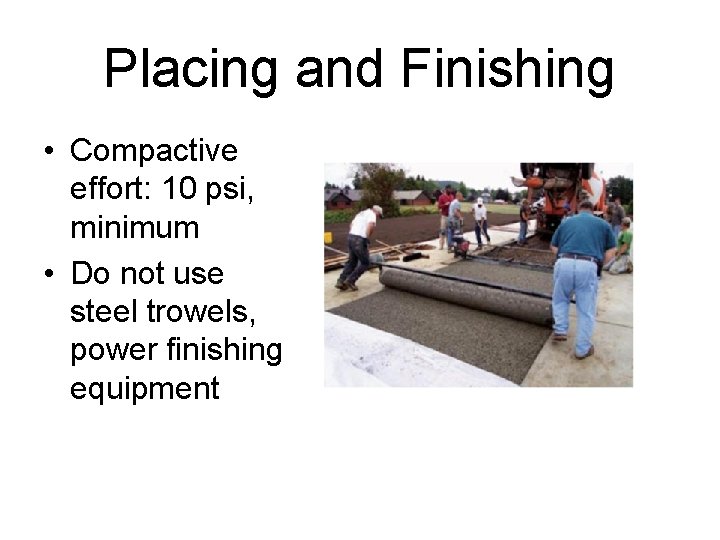
Placing and Finishing • Compactive effort: 10 psi, minimum • Do not use steel trowels, power finishing equipment
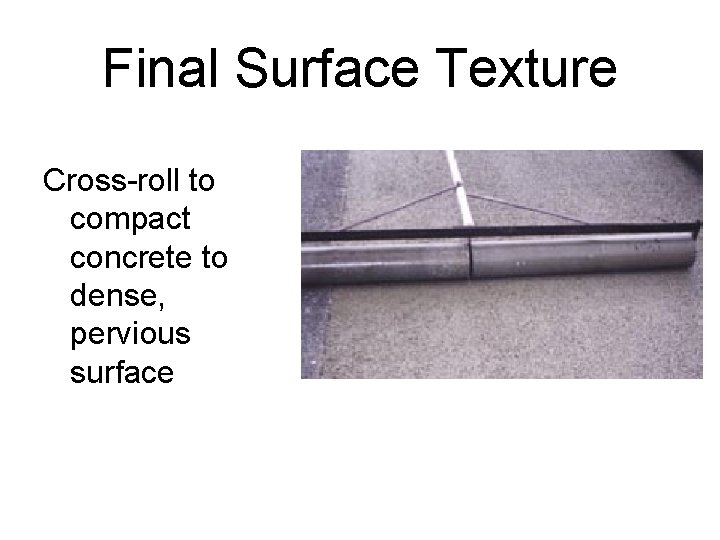
Final Surface Texture Cross-roll to compact concrete to dense, pervious surface
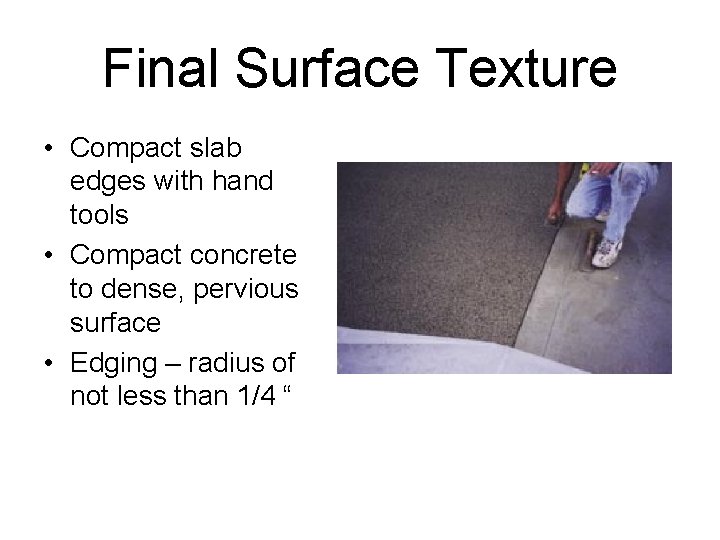
Final Surface Texture • Compact slab edges with hand tools • Compact concrete to dense, pervious surface • Edging – radius of not less than 1/4 “
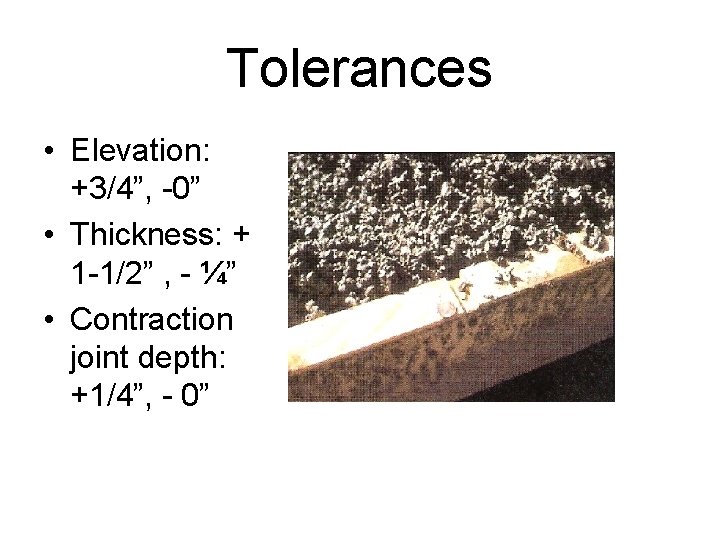
Tolerances • Elevation: +3/4”, -0” • Thickness: + 1 -1/2” , - ¼” • Contraction joint depth: +1/4”, - 0”
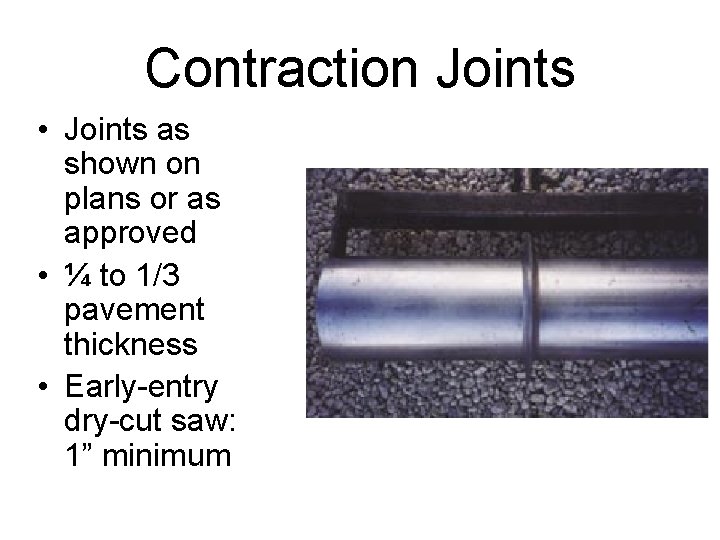
Contraction Joints • Joints as shown on plans or as approved • ¼ to 1/3 pavement thickness • Early-entry dry-cut saw: 1” minimum
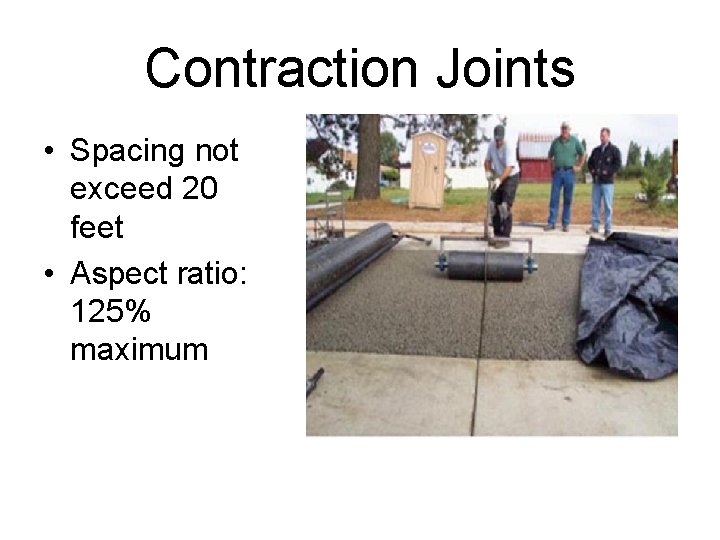
Contraction Joints • Spacing not exceed 20 feet • Aspect ratio: 125% maximum
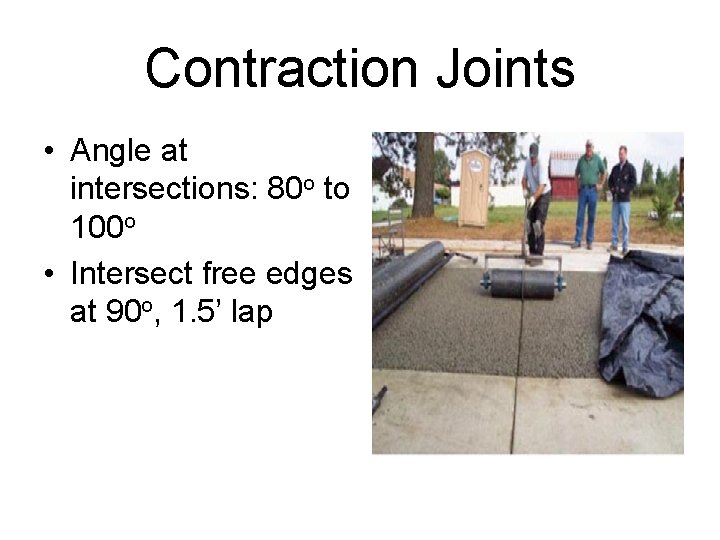
Contraction Joints • Angle at intersections: 80 o to 100 o • Intersect free edges at 90 o, 1. 5’ lap
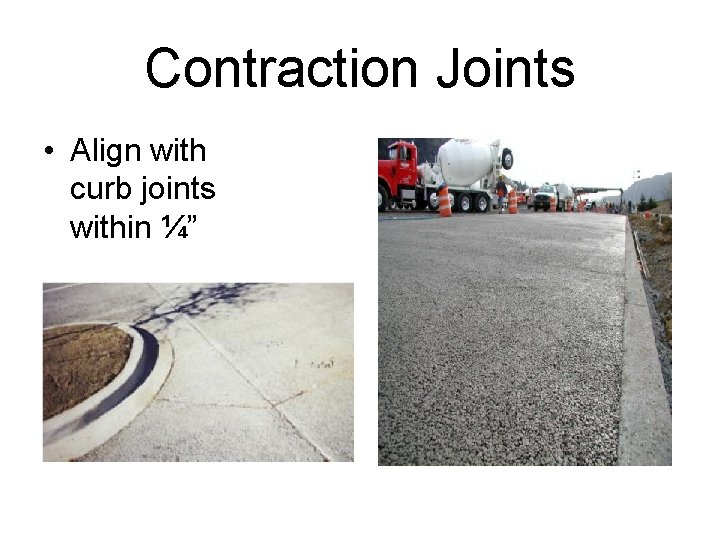
Contraction Joints • Align with curb joints within ¼”
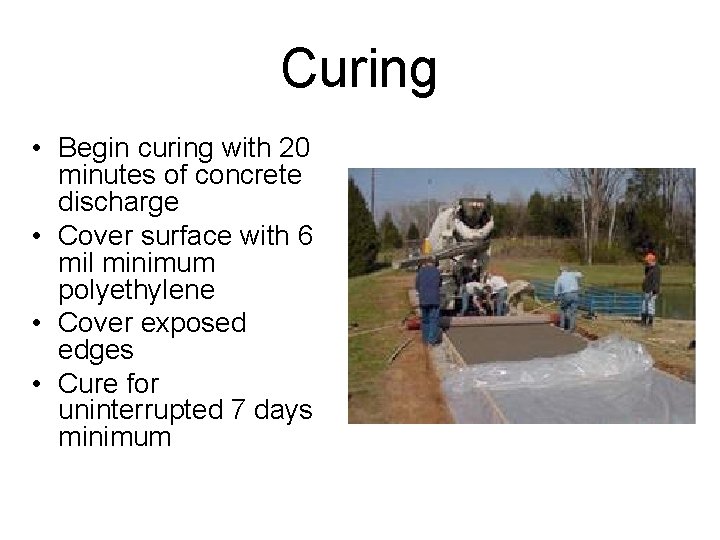
Curing • Begin curing with 20 minutes of concrete discharge • Cover surface with 6 mil minimum polyethylene • Cover exposed edges • Cure for uninterrupted 7 days minimum
Good References • ACI 522. 1 -08 Specification for Pervious Concrete Pavement • County of Fairfax, Letter 08 -01 • Ohio Ready Mixed Concrete Association • Carolinas Ready Mixed Concrete Association • Tennessee Ready Mixed Concrete Association • Georgia Concrete Promotion Association

Thank you
- Slides: 69