
PerUnit System EE 341 Energy Conversion Ali Keyhani
- Slides: 32
Per-Unit System EE 341 – Energy Conversion Ali Keyhani Transformer Lecture #3 1
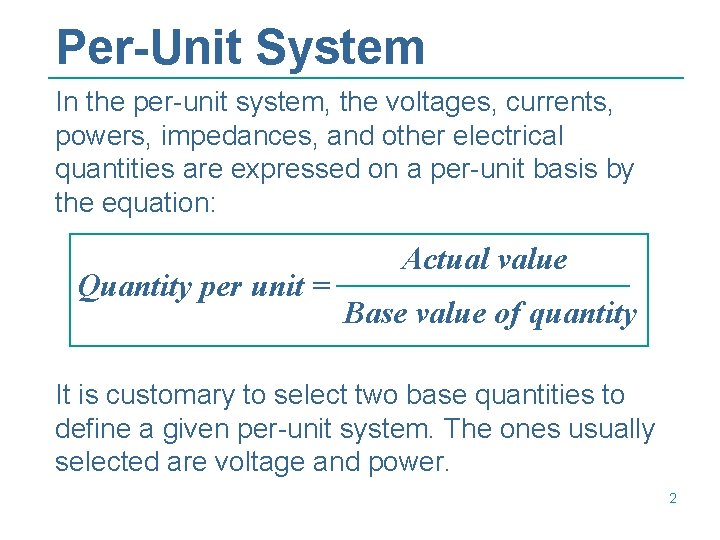
Per-Unit System In the per-unit system, the voltages, currents, powers, impedances, and other electrical quantities are expressed on a per-unit basis by the equation: Quantity per unit = Actual value Base value of quantity It is customary to select two base quantities to define a given per-unit system. The ones usually selected are voltage and power. 2
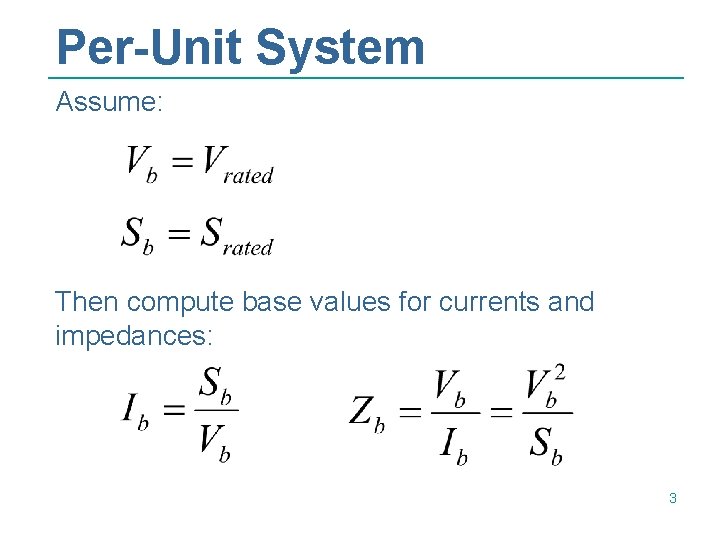
Per-Unit System Assume: Then compute base values for currents and impedances: 3
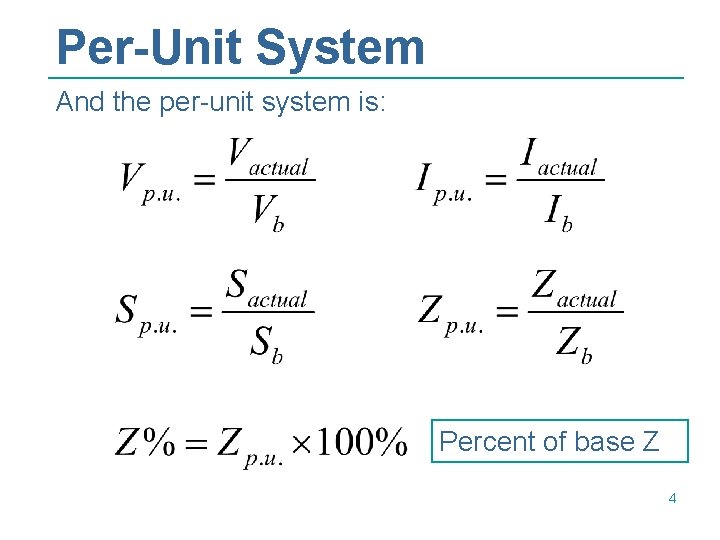
Per-Unit System And the per-unit system is: Percent of base Z 4
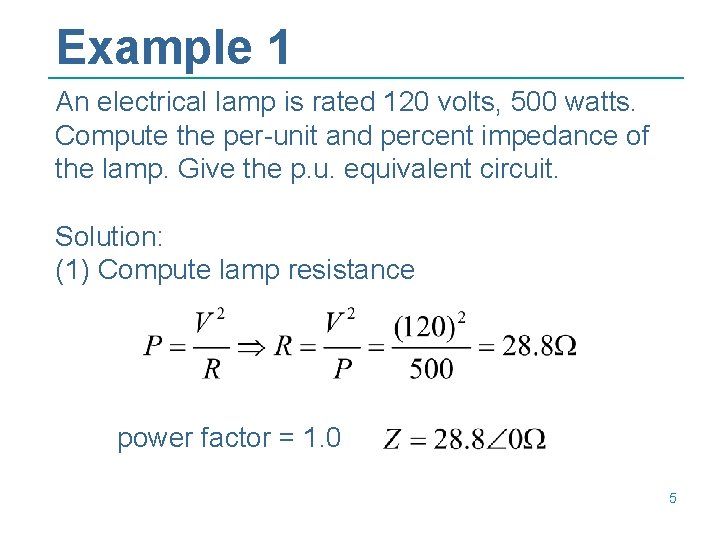
Example 1 An electrical lamp is rated 120 volts, 500 watts. Compute the per-unit and percent impedance of the lamp. Give the p. u. equivalent circuit. Solution: (1) Compute lamp resistance power factor = 1. 0 5
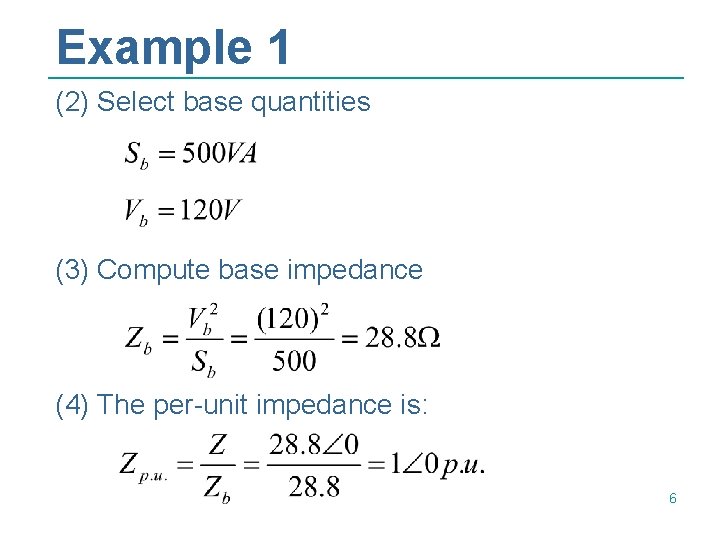
Example 1 (2) Select base quantities (3) Compute base impedance (4) The per-unit impedance is: 6
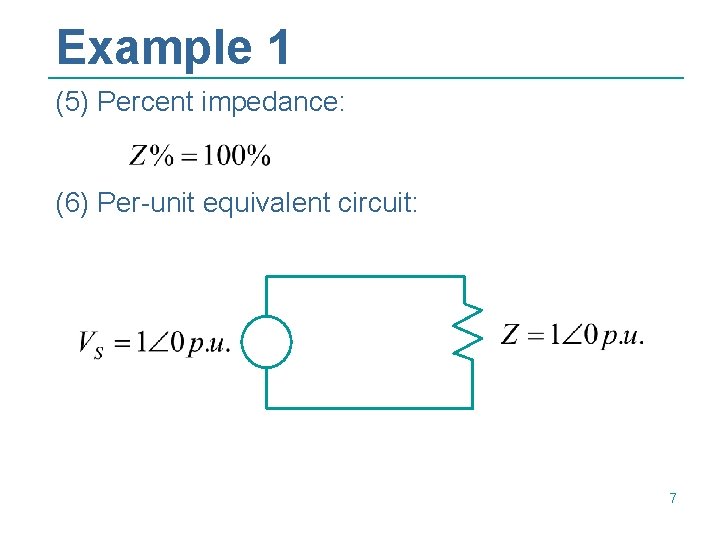
Example 1 (5) Percent impedance: (6) Per-unit equivalent circuit: 7
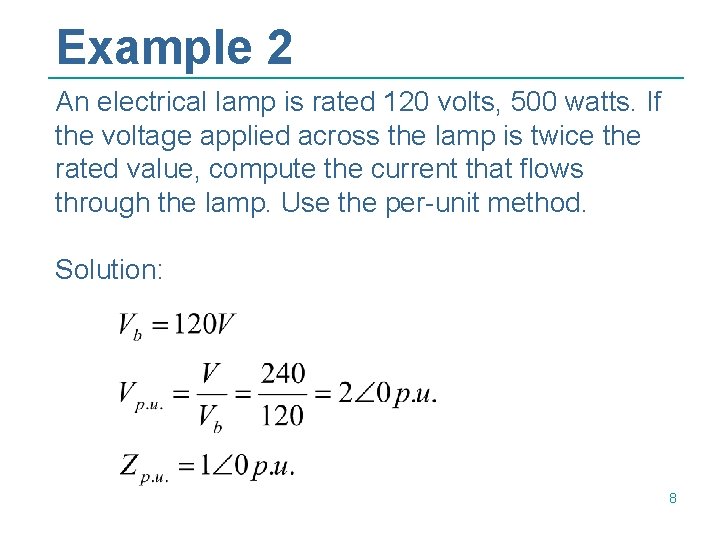
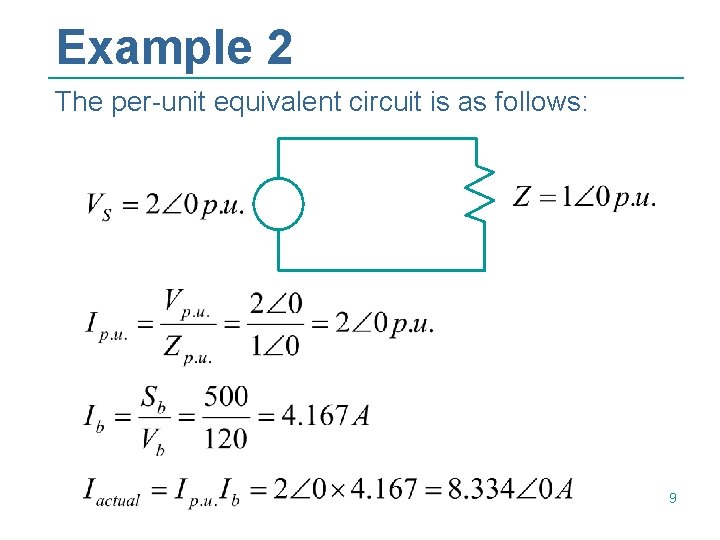
Example 2 An electrical lamp is rated 120 volts, 500 watts. If the voltage applied across the lamp is twice the rated value, compute the current that flows through the lamp. Use the per-unit method. Solution: 8
Example 2 The per-unit equivalent circuit is as follows: 9
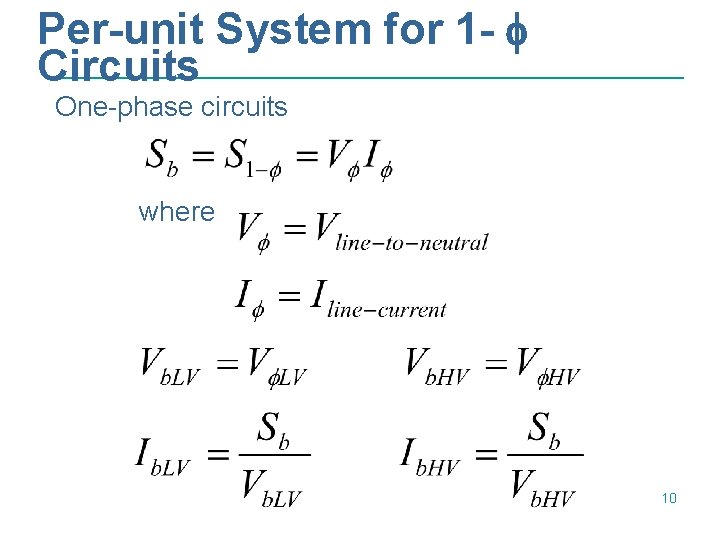
Per-unit System for 1 - Circuits One-phase circuits where 10
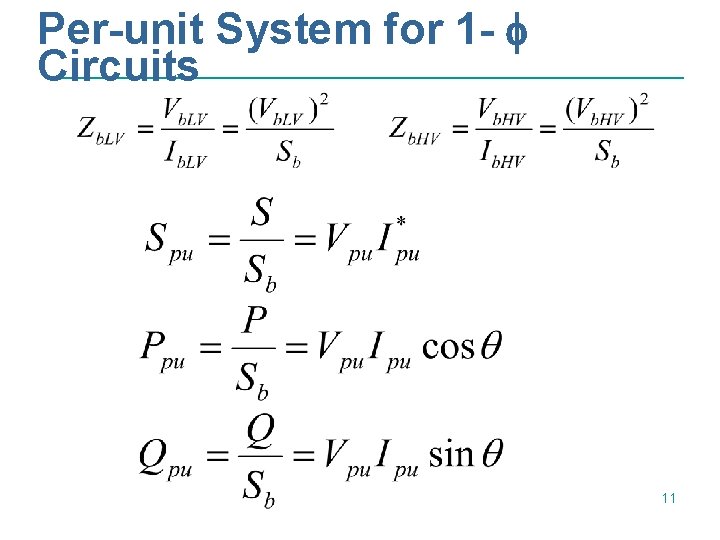
Per-unit System for 1 - Circuits 11
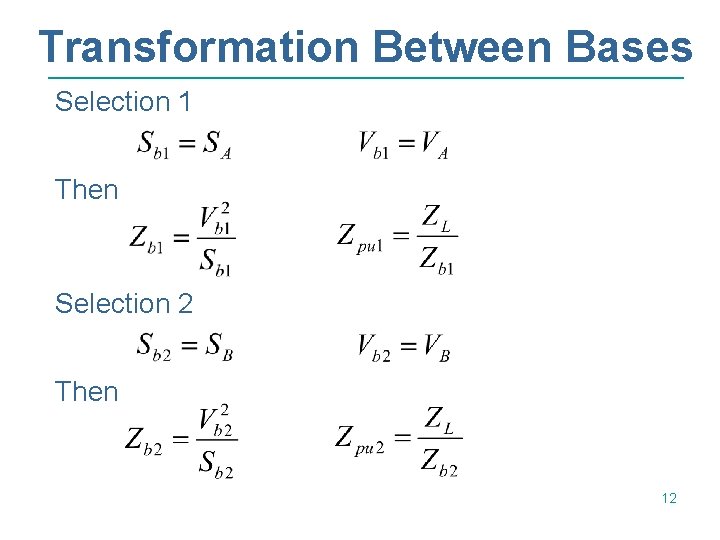
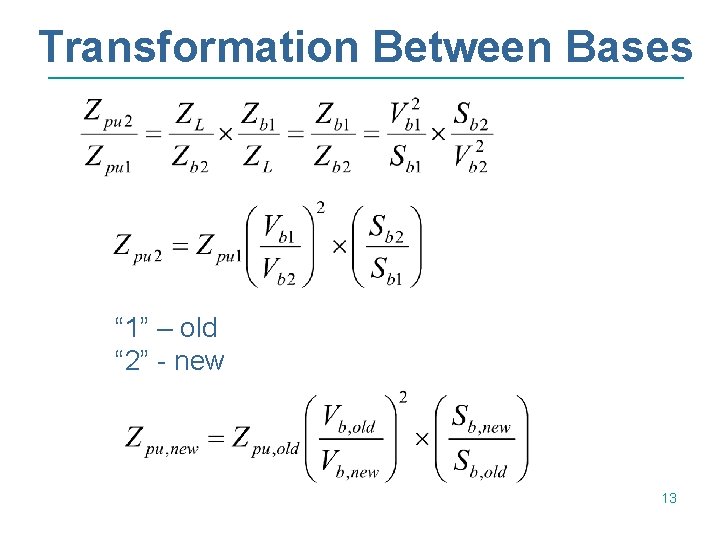
Transformation Between Bases Selection 1 Then Selection 2 Then 12
Transformation Between Bases “ 1” – old “ 2” - new 13
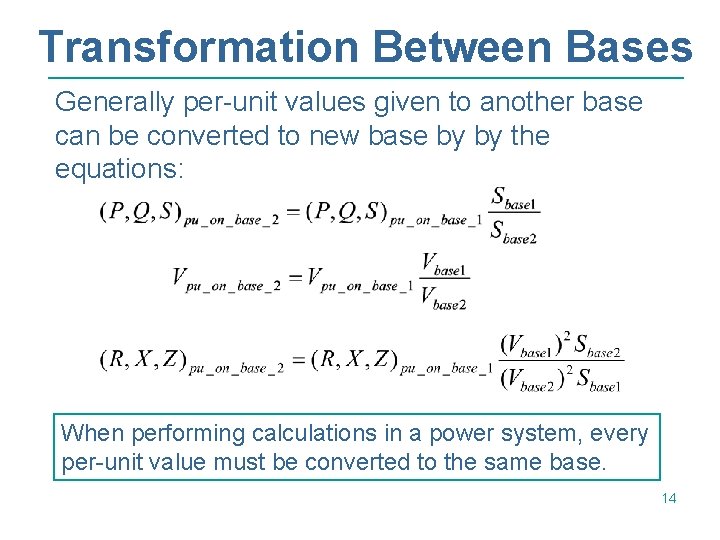
Transformation Between Bases Generally per-unit values given to another base can be converted to new base by by the equations: When performing calculations in a power system, every per-unit value must be converted to the same base. 14
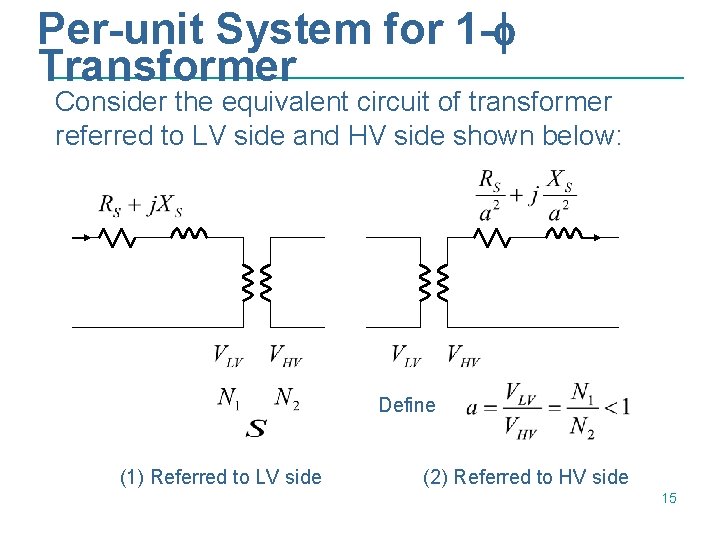
Per-unit System for 1 - Transformer Consider the equivalent circuit of transformer referred to LV side and HV side shown below: Define (1) Referred to LV side (2) Referred to HV side 15
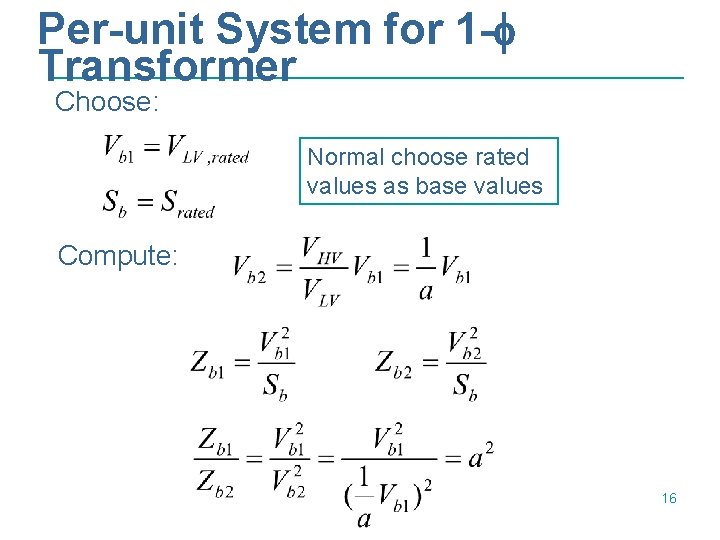
Per-unit System for 1 - Transformer Choose: Normal choose rated values as base values Compute: 16
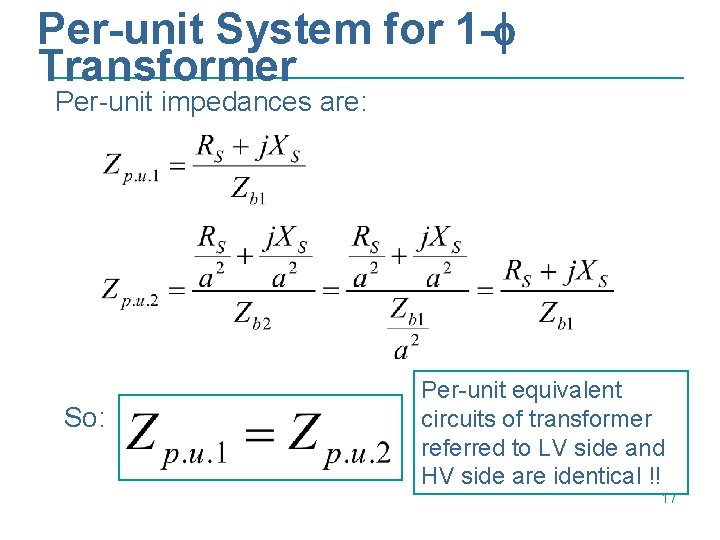
Per-unit System for 1 - Transformer Per-unit impedances are: So: Per-unit equivalent circuits of transformer referred to LV side and HV side are identical !! 17
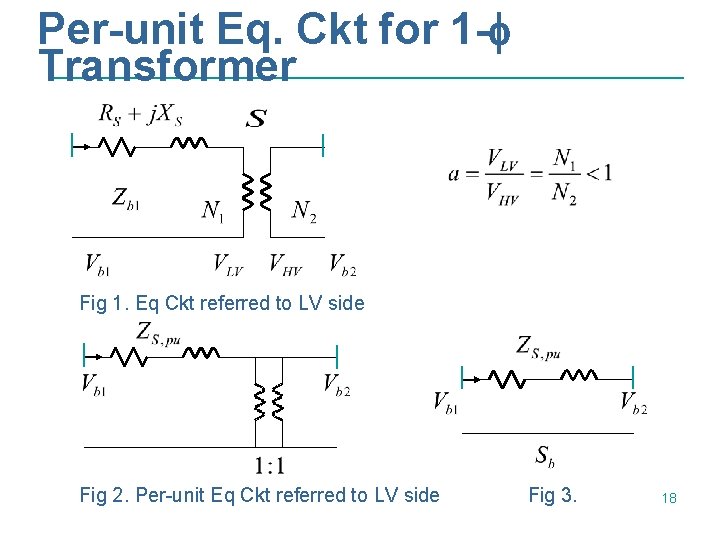
Per-unit Eq. Ckt for 1 - Transformer Fig 1. Eq Ckt referred to LV side Fig 2. Per-unit Eq Ckt referred to LV side Fig 3. 18
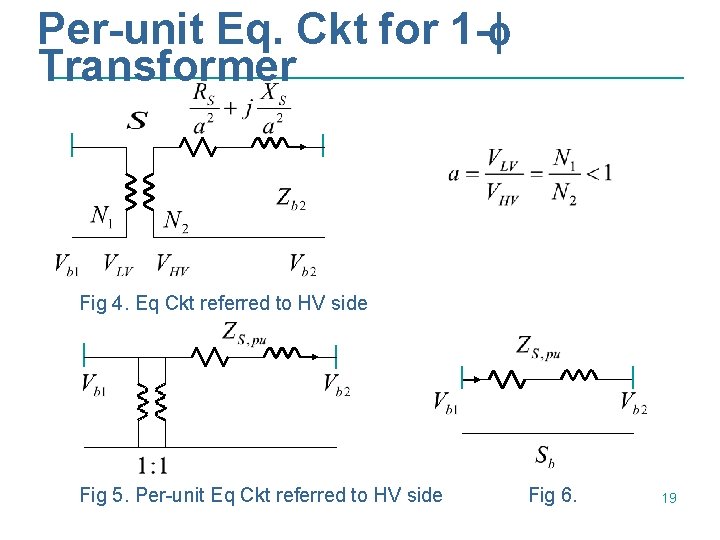
Per-unit Eq. Ckt for 1 - Transformer Fig 4. Eq Ckt referred to HV side Fig 5. Per-unit Eq Ckt referred to HV side Fig 6. 19
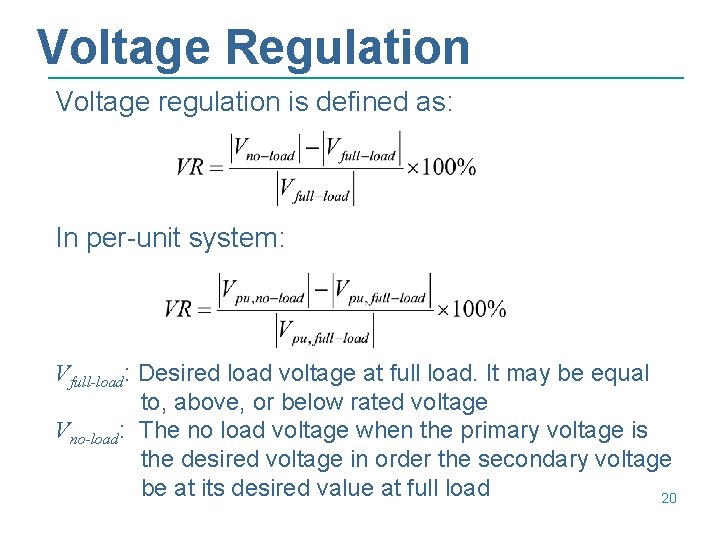
Voltage Regulation Voltage regulation is defined as: In per-unit system: Vfull-load: Desired load voltage at full load. It may be equal to, above, or below rated voltage Vno-load: The no load voltage when the primary voltage is the desired voltage in order the secondary voltage be at its desired value at full load 20
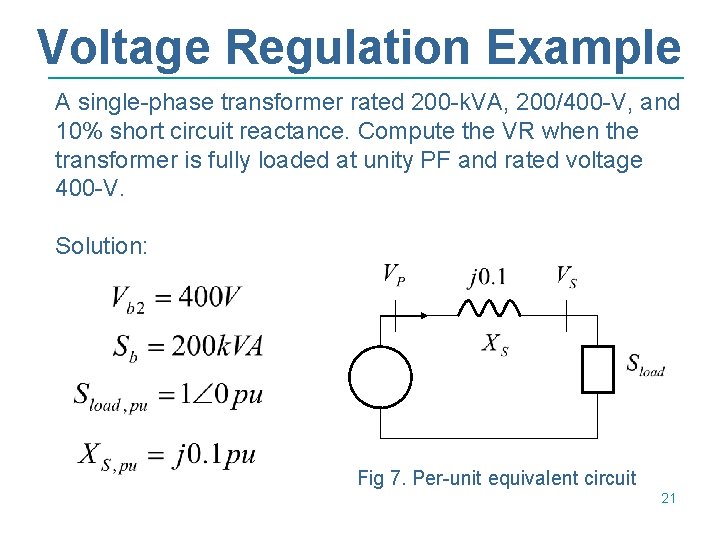
Voltage Regulation Example A single-phase transformer rated 200 -k. VA, 200/400 -V, and 10% short circuit reactance. Compute the VR when the transformer is fully loaded at unity PF and rated voltage 400 -V. Solution: Fig 7. Per-unit equivalent circuit 21
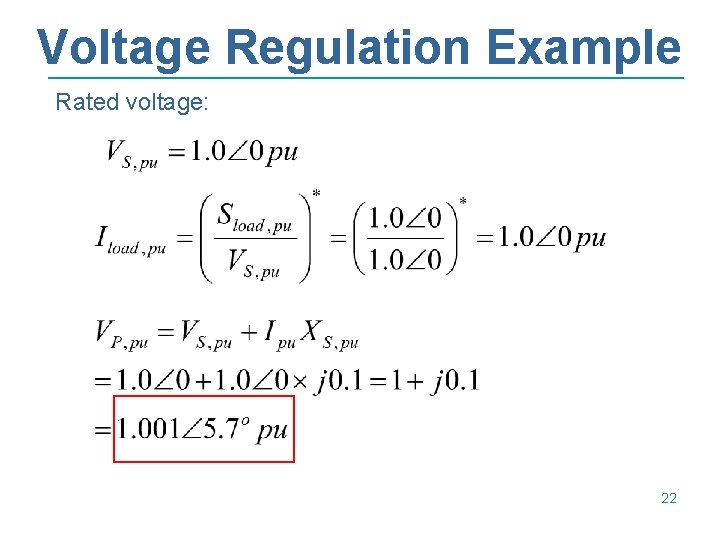
Voltage Regulation Example Rated voltage: 22
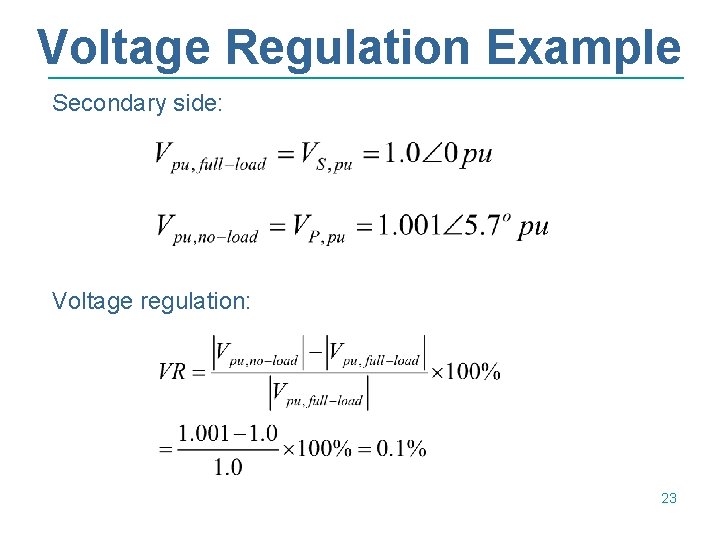
Voltage Regulation Example Secondary side: Voltage regulation: 23
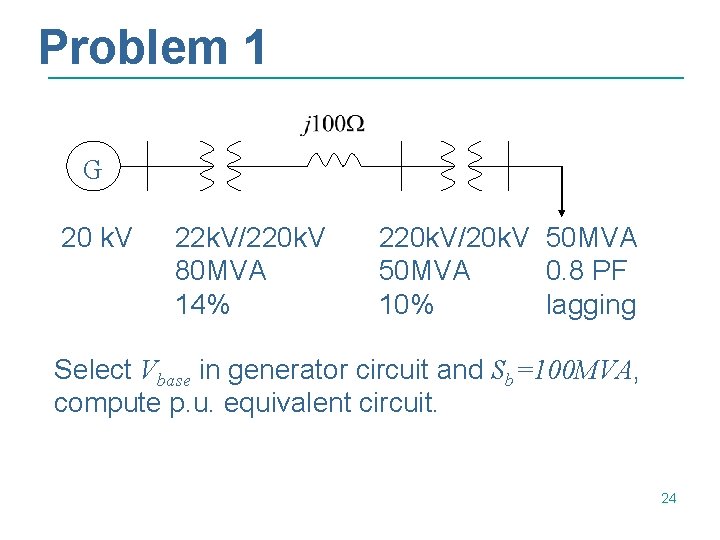
Problem 1 G 20 k. V 22 k. V/220 k. V 80 MVA 14% 220 k. V/20 k. V 50 MVA 0. 8 PF 10% lagging Select Vbase in generator circuit and Sb=100 MVA, compute p. u. equivalent circuit. 24
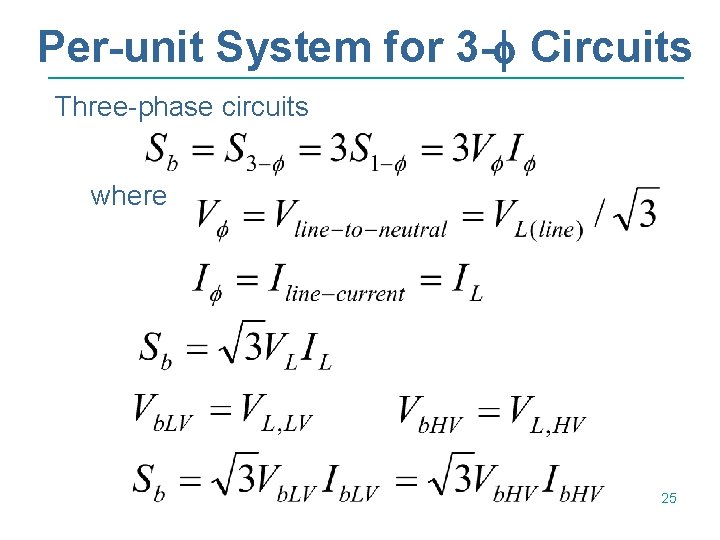
Per-unit System for 3 - Circuits Three-phase circuits where 25
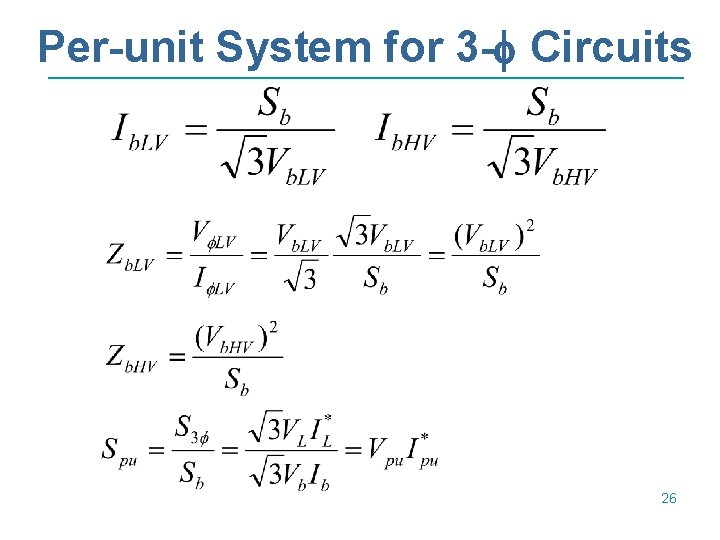
Per-unit System for 3 - Circuits 26
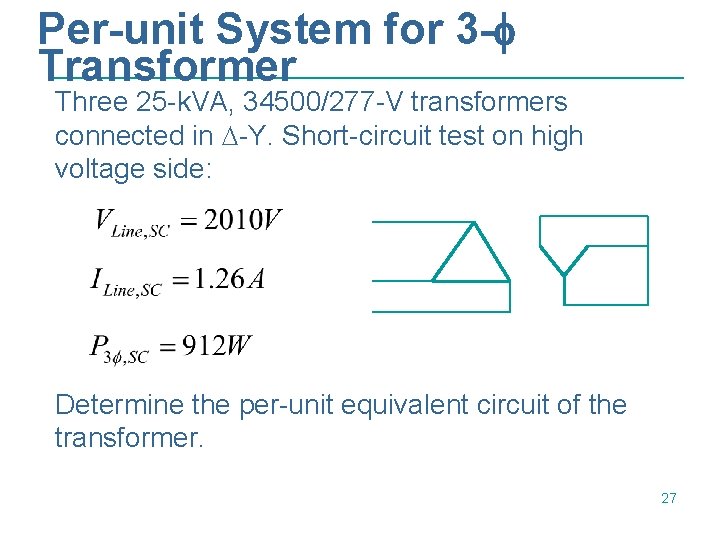
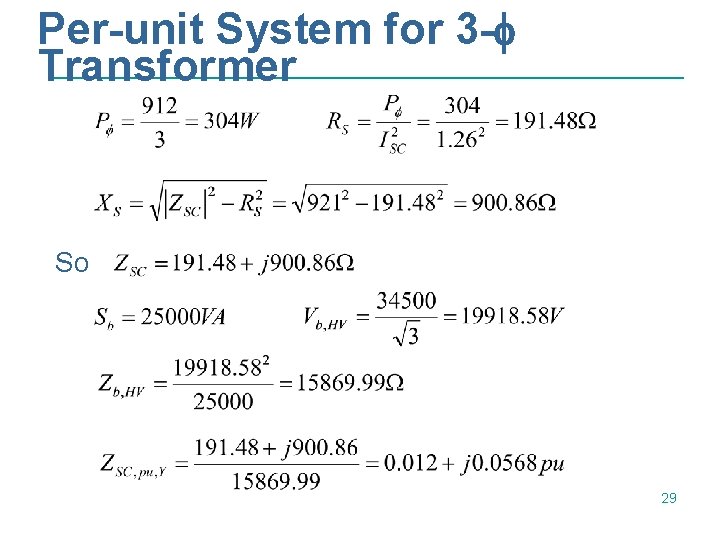
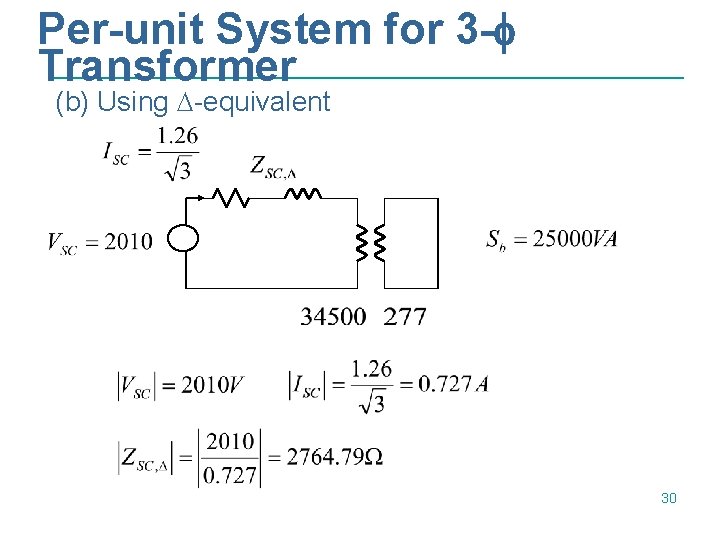
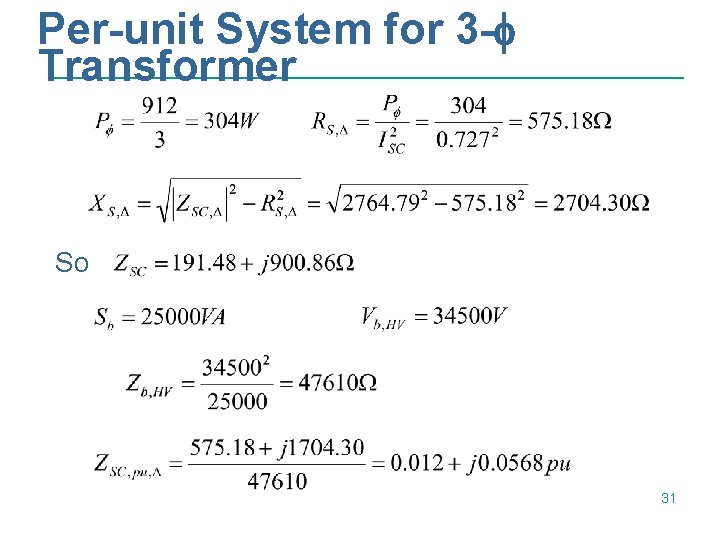
Per-unit System for 3 - Transformer Three 25 -k. VA, 34500/277 -V transformers connected in -Y. Short-circuit test on high voltage side: Determine the per-unit equivalent circuit of the transformer. 27
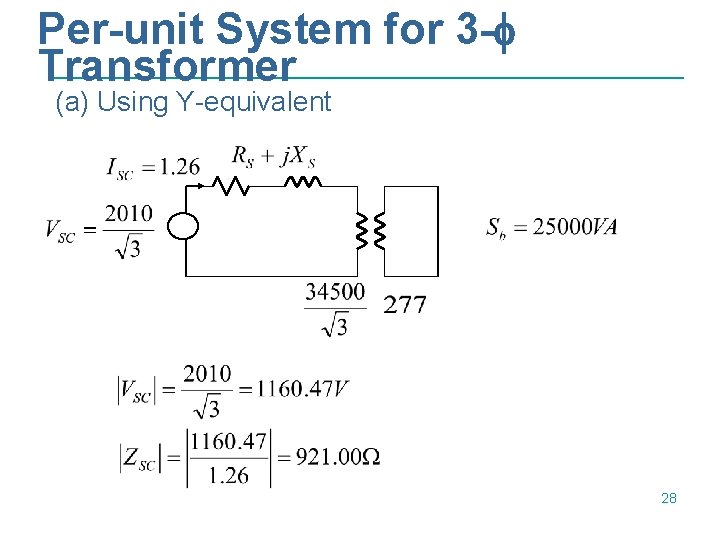
Per-unit System for 3 - Transformer (a) Using Y-equivalent 28
Per-unit System for 3 - Transformer So 29
Per-unit System for 3 - Transformer (b) Using -equivalent 30
Per-unit System for 3 - Transformer So 31
Related Materials in Textbook (1) Section 2. 6 and 2. 7, page 83~90, Chapman book (2) Section 2. 10, page 113~116, Chapman book 32