
PERSUASIVE WRITING Thinking It Through How to read


- Slides: 33
PERSUASIVE WRITING Thinking It Through
How to read a persuasive writing task 1. Underline the parts of the writing situation that are most important. 2. Use this information as a framework to your response. 3. It is easiest to persuade the reader if you believe in what you are writing. Think about an issue before you begin formal planning of your response.
How to respond to a persuasive writing task Here are some suggestions. You might… FREE-WRITE MAKE A LIST USE THE QUESTION METHOD
FREEWRITE 1. Free-write for 1 or 2 minutes. Freewriting is thinking on paper without formal sentence structure or grammar. 2. Reread what you have written and underline anything that is interesting to you as you read. 3. Locate your position on the topic as revealed in your freewriting. 4. Use this position to frame your thesis.
MAKE A LIST or LISTS 1. Make a fast list of thoughts you have concerning the topic. 2. Review your list(s) to locate your position on the topic. 3. Use this position to frame your thesis.
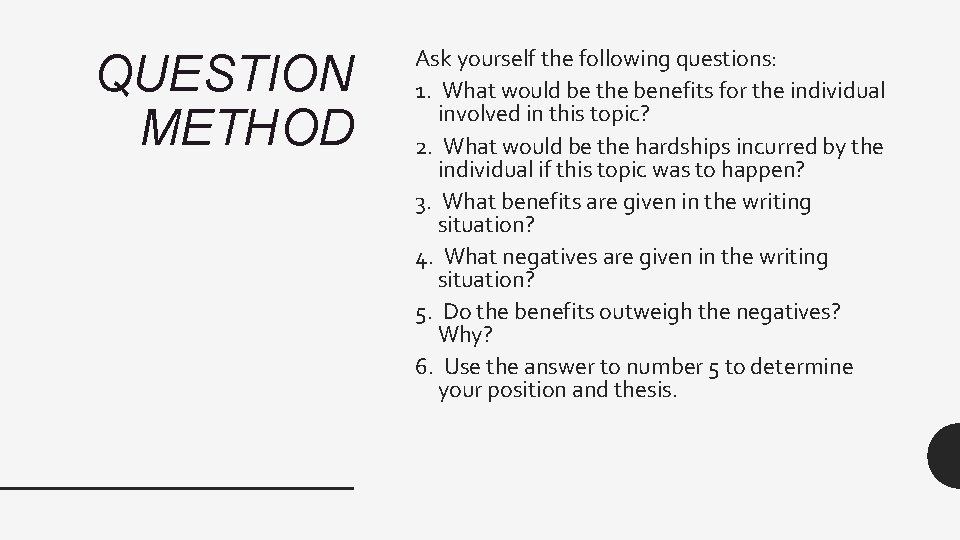
QUESTION METHOD Ask yourself the following questions: 1. What would be the benefits for the individual involved in this topic? 2. What would be the hardships incurred by the individual if this topic was to happen? 3. What benefits are given in the writing situation? 4. What negatives are given in the writing situation? 5. Do the benefits outweigh the negatives? Why? 6. Use the answer to number 5 to determine your position and thesis.
Method of Preference • T - Chart
PERSUASIVE WRITING PREWRITING: FIVE MINUTES THAT CAN MAKE A DIFFERENCE!
Prewriting • In a timed write, you do not have time to change your opinion once you have begun to write ~ therefore, it is important that you know what you are going to say and the details that will be used in support of your ideas before beginning the actual process of writing.
METHODS OF ORGANIZING Method 1 ~ Informal Outline
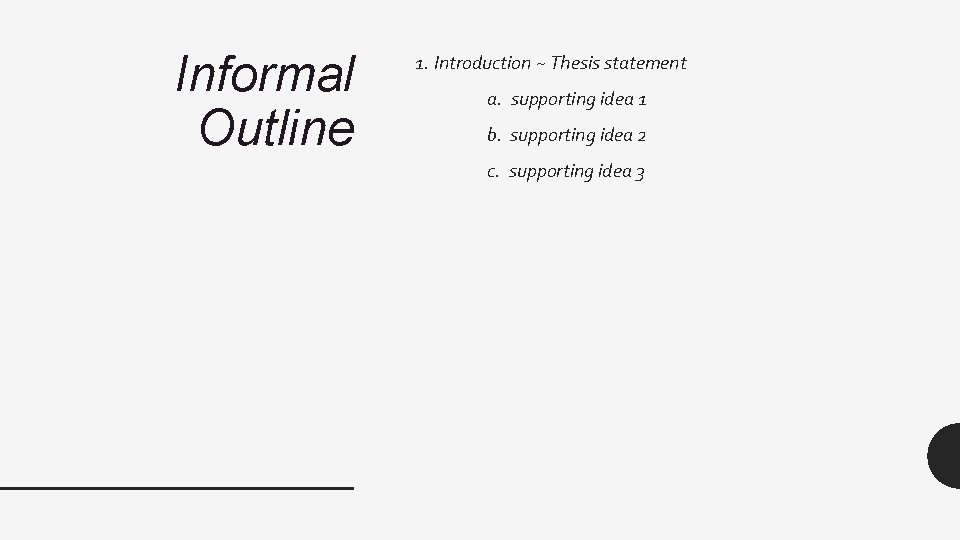
Informal Outline 1. Introduction ~ Thesis statement a. supporting idea 1 b. supporting idea 2 c. supporting idea 3
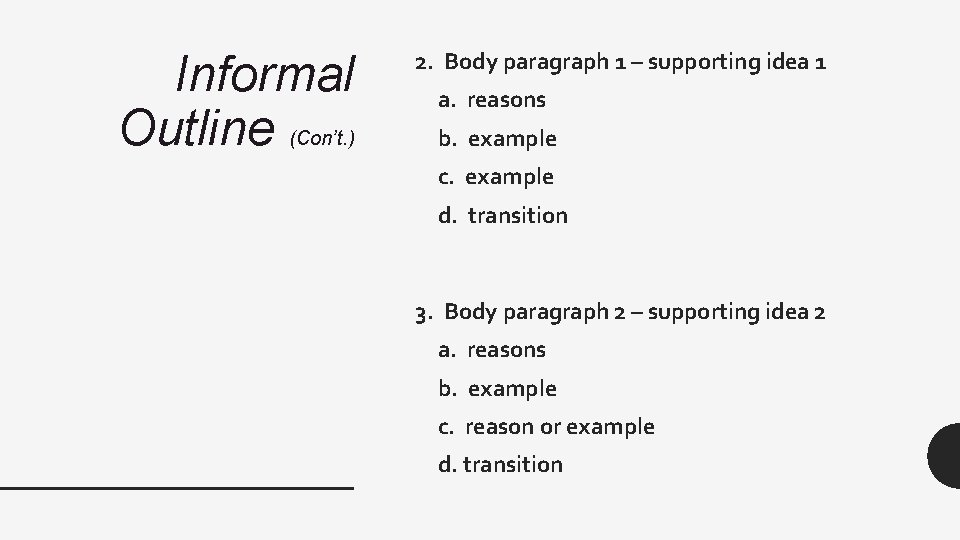
Informal Outline (Con’t. ) 2. Body paragraph 1 – supporting idea 1 a. reasons b. example c. example d. transition 3. Body paragraph 2 – supporting idea 2 a. reasons b. example c. reason or example d. transition
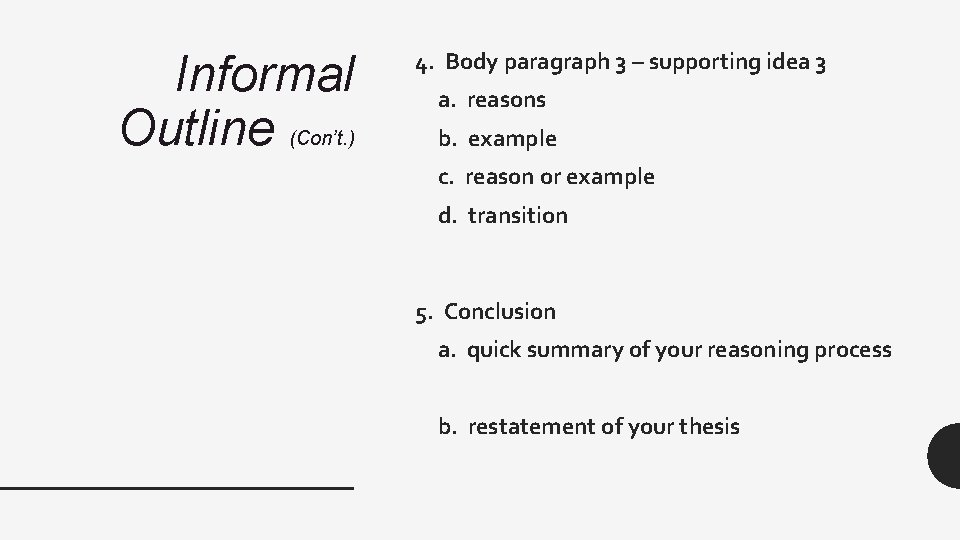
Informal Outline (Con’t. ) 4. Body paragraph 3 – supporting idea 3 a. reasons b. example c. reason or example d. transition 5. Conclusion a. quick summary of your reasoning process b. restatement of your thesis
METHODS OF ORGANIZING Method 2 ~ A Flowchart
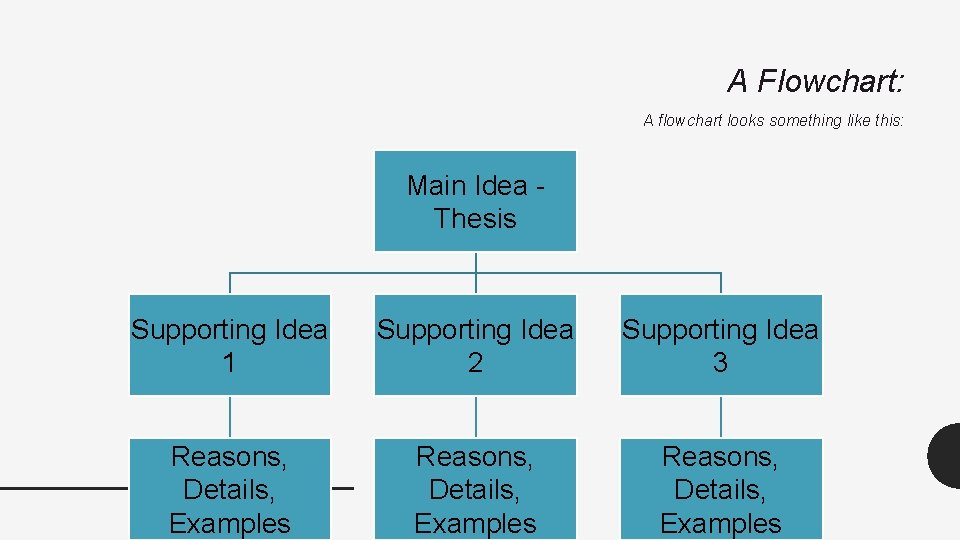
A Flowchart: A flowchart looks something like this: Main Idea Thesis Supporting Idea 1 Supporting Idea 2 Supporting Idea 3 Reasons, Details, Examples
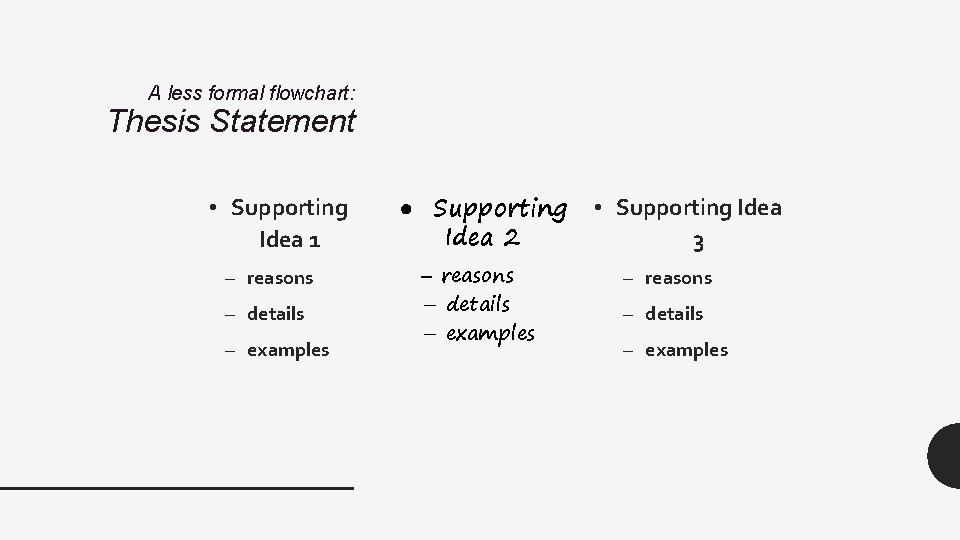
A less formal flowchart: Thesis Statement • Supporting Idea 1 – reasons – details – examples ● Supporting Idea 2 – reasons – details – examples • Supporting Idea 3 – reasons – details – examples
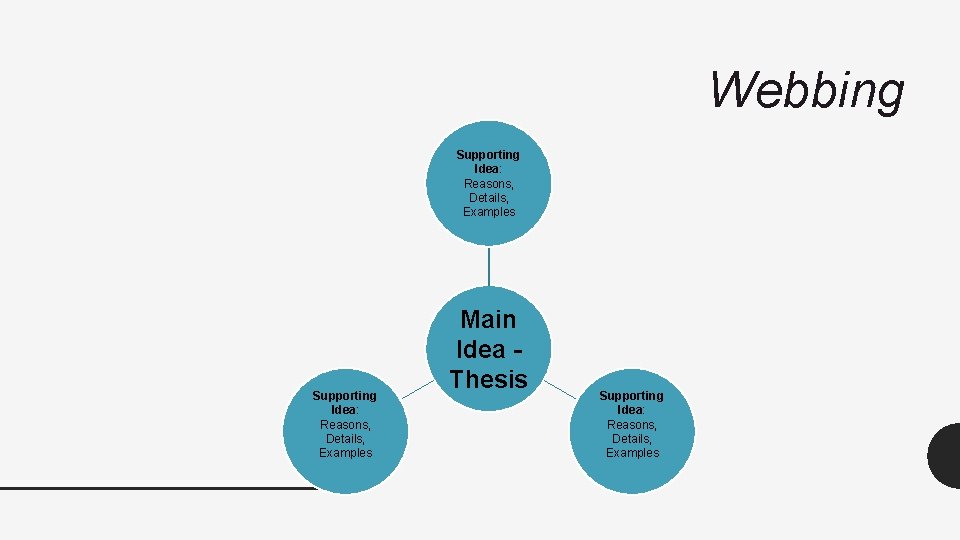
METHODS OF ORGANIZING Method 3 ~ Webbing
Webbing Supporting Idea: Reasons, Details, Examples Main Idea Thesis Supporting Idea: Reasons, Details, Examples
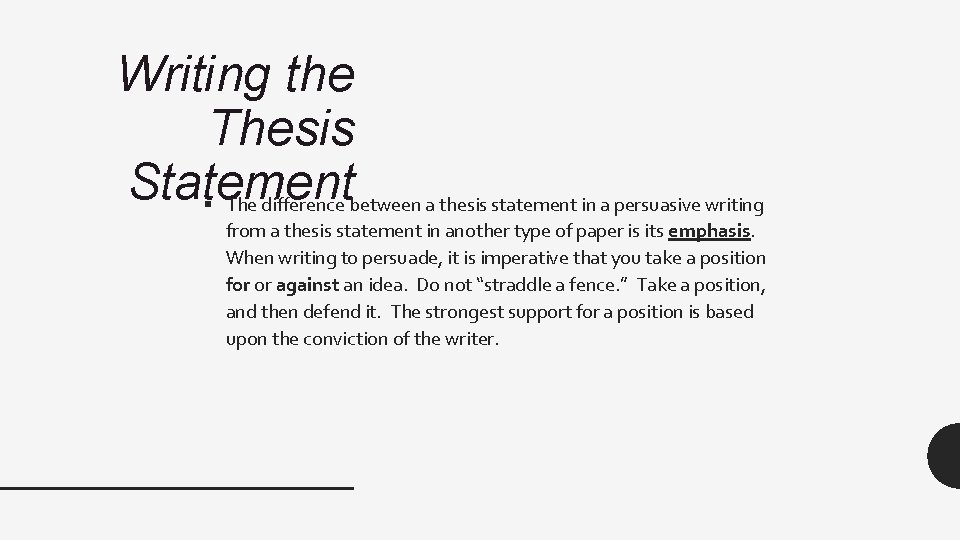
Writing the Thesis Statement The difference between a thesis statement in a persuasive writing from a thesis statement in another type of paper is its emphasis. When writing to persuade, it is imperative that you take a position for or against an idea. Do not “straddle a fence. ” Take a position, and then defend it. The strongest support for a position is based upon the conviction of the writer.
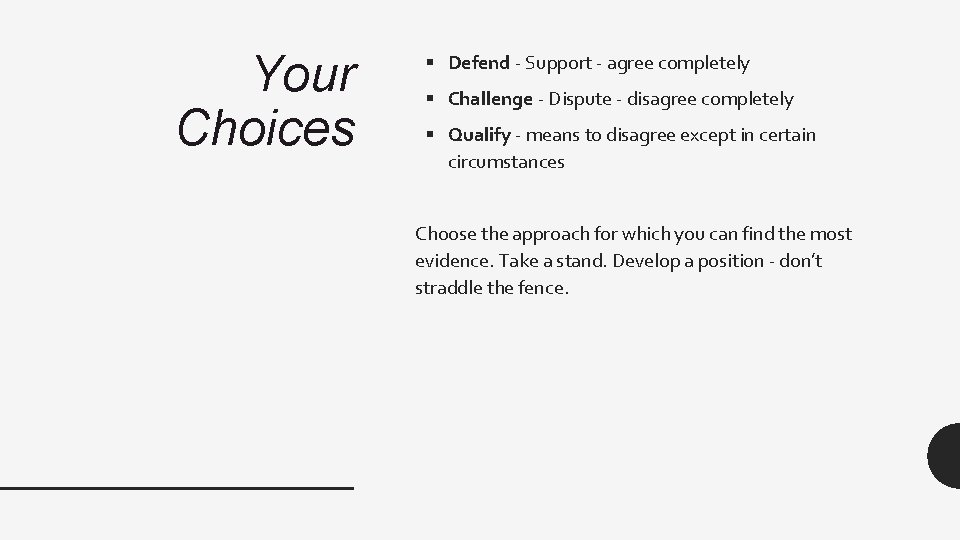
Your Choices Defend - Support - agree completely Challenge - Dispute - disagree completely Qualify - means to disagree except in certain circumstances Choose the approach for which you can find the most evidence. Take a stand. Develop a position - don’t straddle the fence.
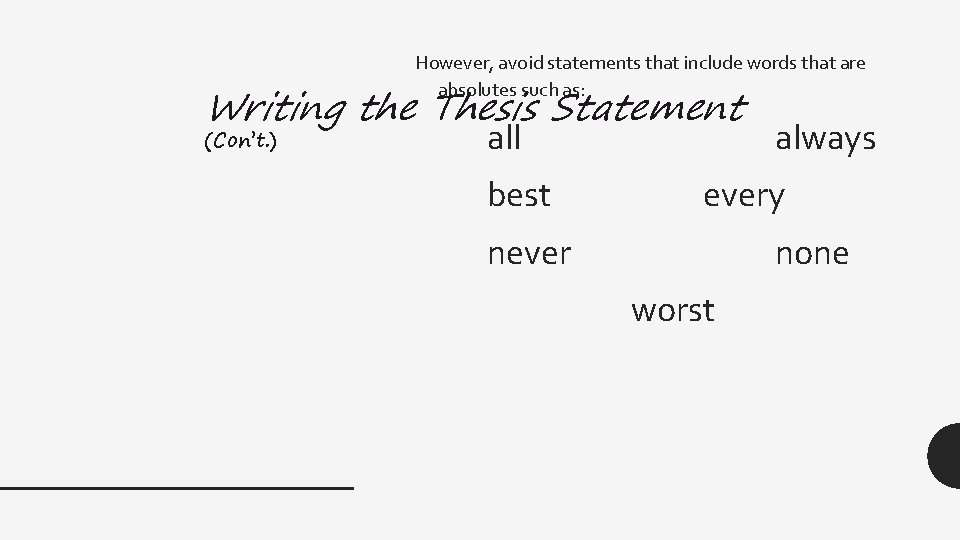
However, avoid statements that include words that are absolutes such as: Writing the Thesis Statement (Con’t. ) all best always every never none worst
Writing the Thesis Statement (Con’t. ) • These words limit your argument by not allowing for exceptions, therefore if the reader can locate a single argument against your reasoning, you can lose your case. • Keep thesis simple! Use the important information from the question to shape your thesis. Do not feel compelled to write a complex sentence unless you can do it perfectly. Use the line in the text as the basis for thesis and add your opinion.
Paragraph Organization • Start with a strong argument, put your weakest argument in the middle, and save your strongest argument for the end.
Paragraph Organization (Con’t. ) • Coherence in every paragraph • Every sentence adds to the one before • Every sentence flows smoothly to the next • New ideas go in new paragraphs
Paragraph Organization (Con’t. ) • Topic sentence at the beginning of the paragraph. • Arrange the rest of your sentences after it either by order of importance or logic. • Most persuasive arguments are based on research. • Reason (i. e. your opinion) supported by example can also persuade.
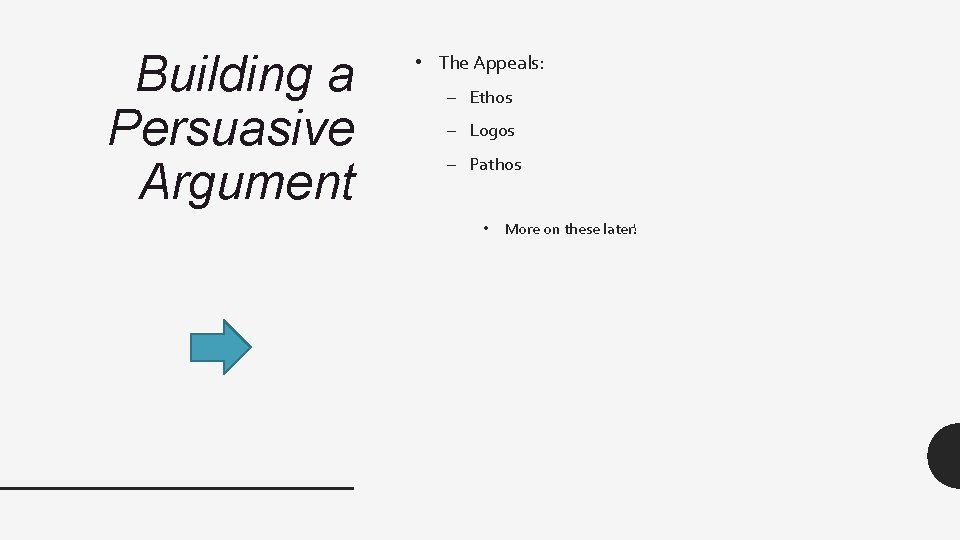
Building a Persuasive Argument • The Appeals: – Ethos – Logos – Pathos • More on these later!
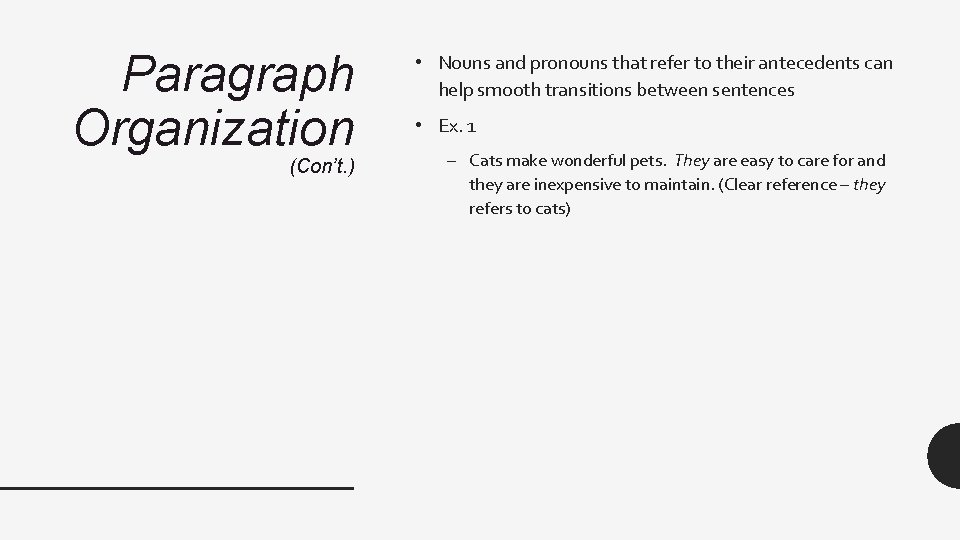
Paragraph Organization (Con’t. ) • Nouns and pronouns that refer to their antecedents can help smooth transitions between sentences • Ex. 1 – Cats make wonderful pets. They are easy to care for and they are inexpensive to maintain. (Clear reference – they refers to cats)
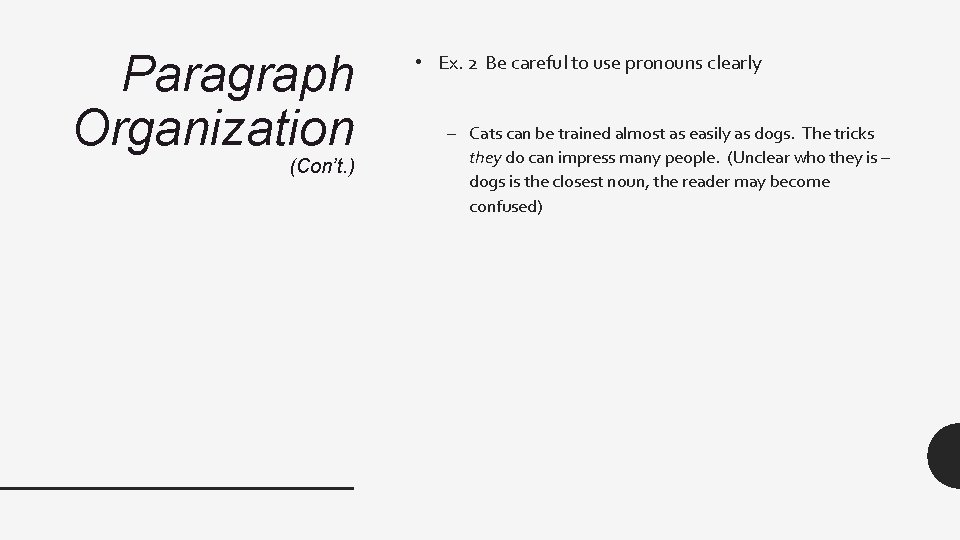
Paragraph Organization (Con’t. ) • Ex. 2 Be careful to use pronouns clearly – Cats can be trained almost as easily as dogs. The tricks they do can impress many people. (Unclear who they is – dogs is the closest noun, the reader may become confused)
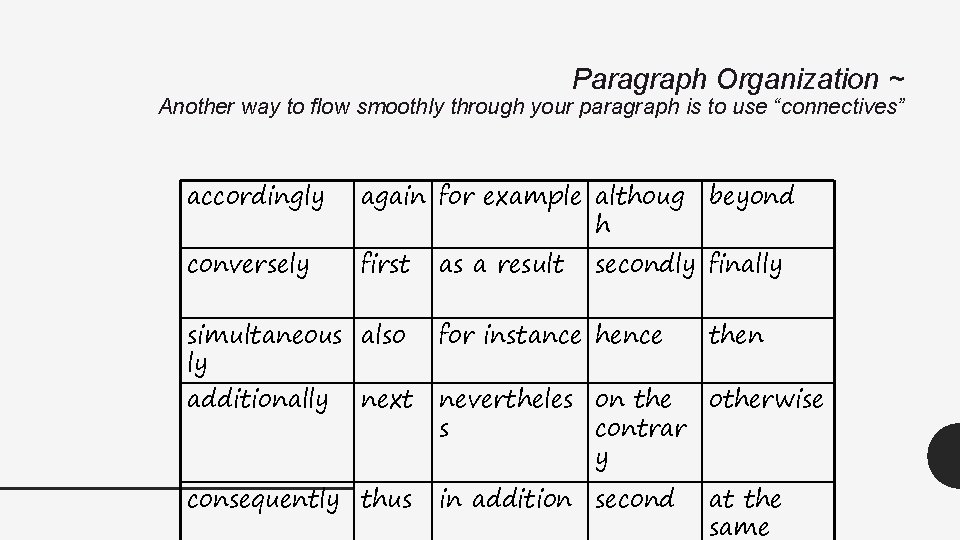
Paragraph Organization ~ Another way to flow smoothly through your paragraph is to use “connectives” accordingly conversely again for example althoug h first as a result secondly finally simultaneous also ly for instance hence consequently thus in addition second additionally next beyond then nevertheles on the otherwise s contrar y at the same
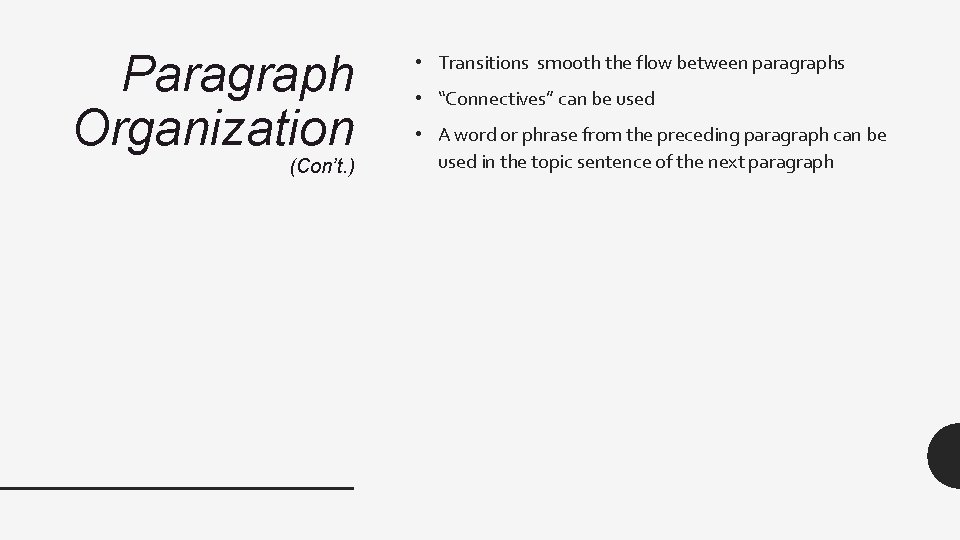
Paragraph Organization (Con’t. ) • Transitions smooth the flow between paragraphs • “Connectives” can be used • A word or phrase from the preceding paragraph can be used in the topic sentence of the next paragraph
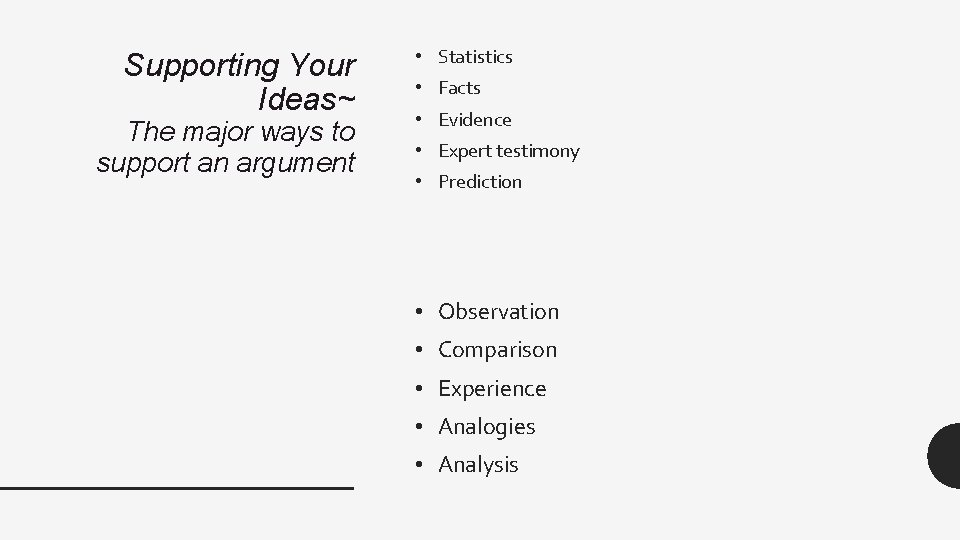
Supporting Your Ideas~ The major ways to support an argument • Statistics • Facts • Evidence • Expert testimony • Prediction • Observation • Comparison • Experience • Analogies • Analysis
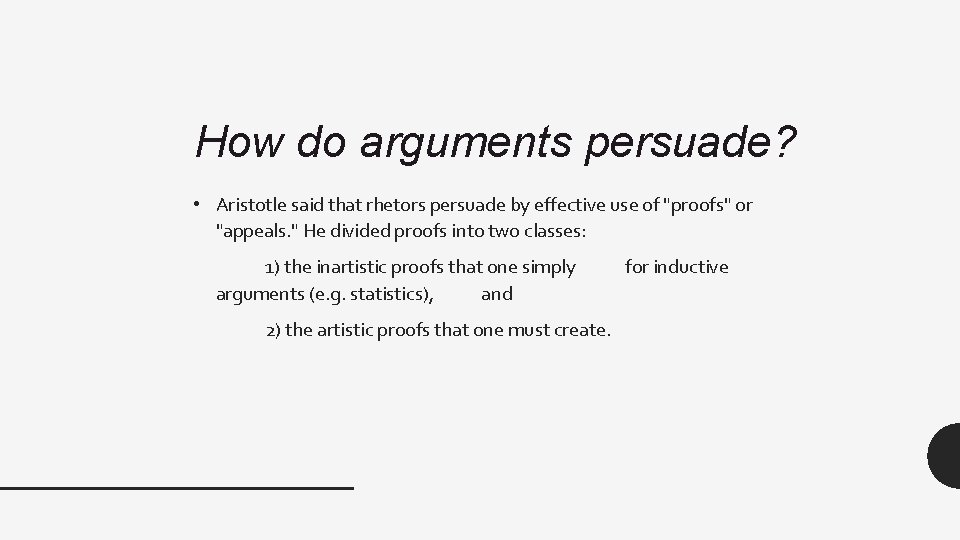
How do arguments persuade? • Aristotle said that rhetors persuade by effective use of "proofs" or "appeals. " He divided proofs into two classes: 1) the inartistic proofs that one simply arguments (e. g. statistics), and 2) the artistic proofs that one must create. for inductive