
Persuasive Techniques Used in Writing Speech Orhow to

- Slides: 33
Persuasive Techniques Used in Writing & Speech Or…how to get what you want! Adapted from: multimediaportfolio. wikispaces. com/. . . /Persuasive-Techniques
What are PERSUASIVE TECHNIQUES? o Persuasive techniques are the strategies authors use to make their writing more convincing. o Persuasive techniques: n Get a reader’s attention n Emphasize a point n Polish the writing
Why are we learning about Persuasive Techniques in Literacy class? o You need to understand HOW to persuade people in your lives to state your opinions about issues affecting YOU! o Identifying the techniques can help you judge the effectiveness of persuasive essays, editorials, and arguments. o You can use these techniques in your own writing- opinion writing and speeches for example.
ANALOGY o DEFINITION: a comparison of similar ideas, often used to explain a complex situation by showing how it is like a simple one o EXAMPLE: Boot camp is like one long piano lesson: grueling, but ultimately rewarding.
CAUSE AND EFFECT o DEFINITION: This technique demonstrates that two or more things are connected by stating that one causes another. o EXAMPLE: Many studies show that eating 200 carrots a day causes a person to become smarter.
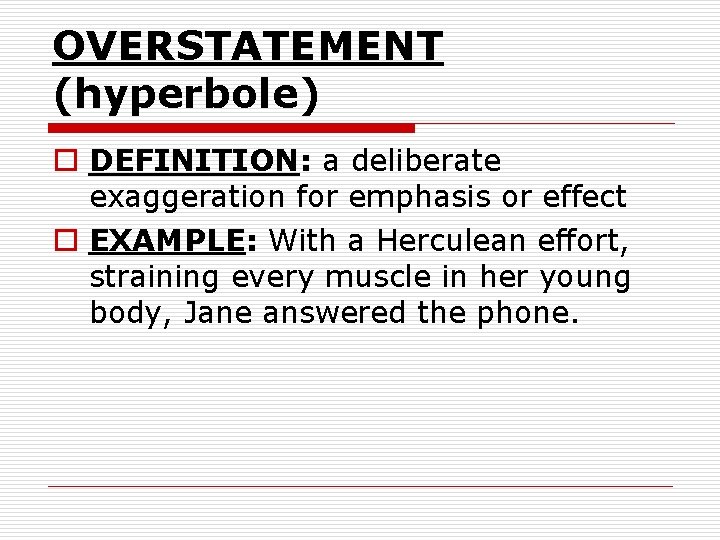
OVERSTATEMENT (hyperbole) o DEFINITION: a deliberate exaggeration for emphasis or effect o EXAMPLE: With a Herculean effort, straining every muscle in her young body, Jane answered the phone.
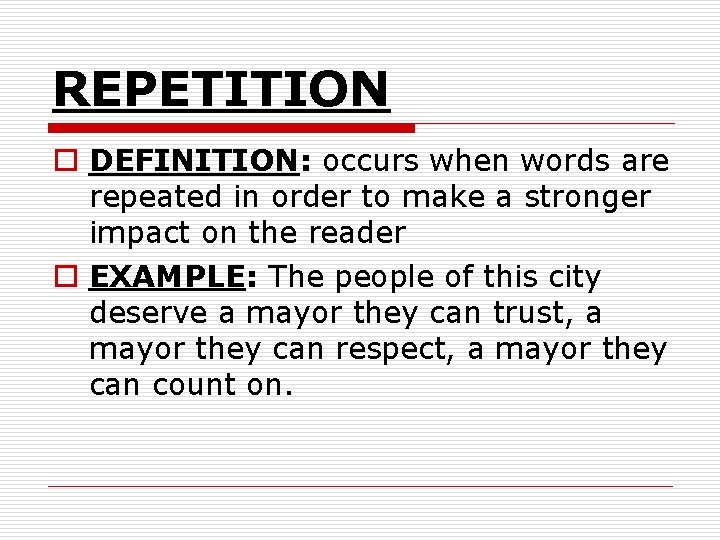
REPETITION o DEFINITION: occurs when words are repeated in order to make a stronger impact on the reader o EXAMPLE: The people of this city deserve a mayor they can trust, a mayor they can respect, a mayor they can count on.
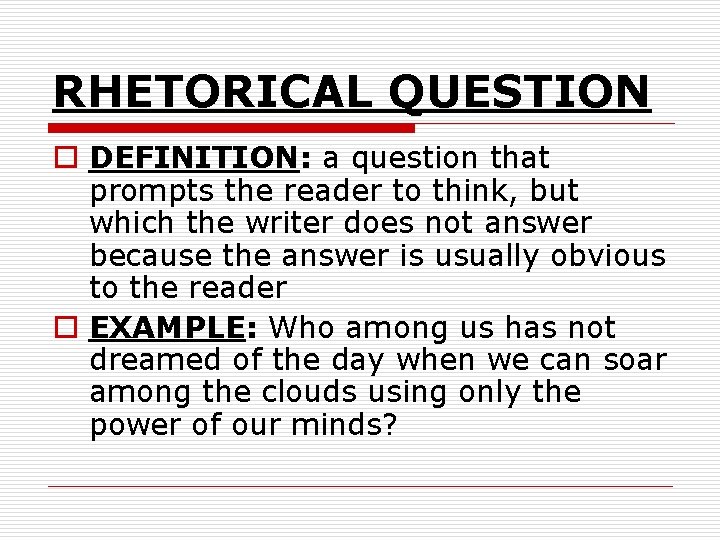
RHETORICAL QUESTION o DEFINITION: a question that prompts the reader to think, but which the writer does not answer because the answer is usually obvious to the reader o EXAMPLE: Who among us has not dreamed of the day when we can soar among the clouds using only the power of our minds?
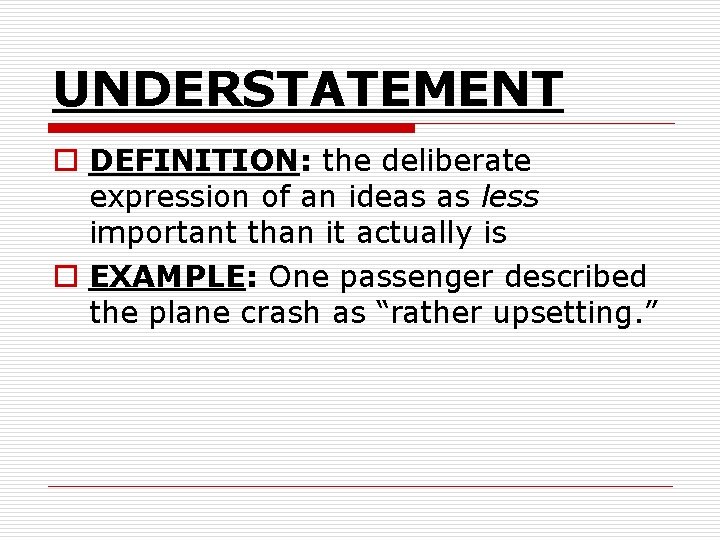
UNDERSTATEMENT o DEFINITION: the deliberate expression of an ideas as less important than it actually is o EXAMPLE: One passenger described the plane crash as “rather upsetting. ”
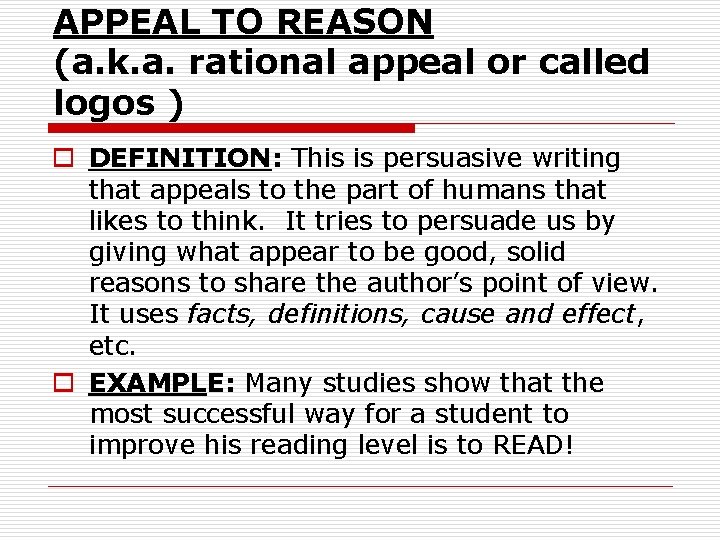
APPEAL TO REASON (a. k. a. rational appeal or called logos ) o DEFINITION: This is persuasive writing that appeals to the part of humans that likes to think. It tries to persuade us by giving what appear to be good, solid reasons to share the author’s point of view. It uses facts, definitions, cause and effect, etc. o EXAMPLE: Many studies show that the most successful way for a student to improve his reading level is to READ!
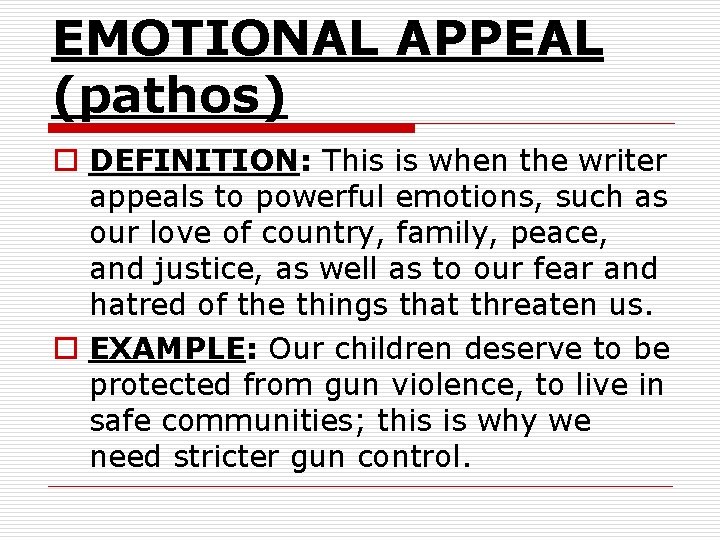
EMOTIONAL APPEAL (pathos) o DEFINITION: This is when the writer appeals to powerful emotions, such as our love of country, family, peace, and justice, as well as to our fear and hatred of the things that threaten us. o EXAMPLE: Our children deserve to be protected from gun violence, to live in safe communities; this is why we need stricter gun control.
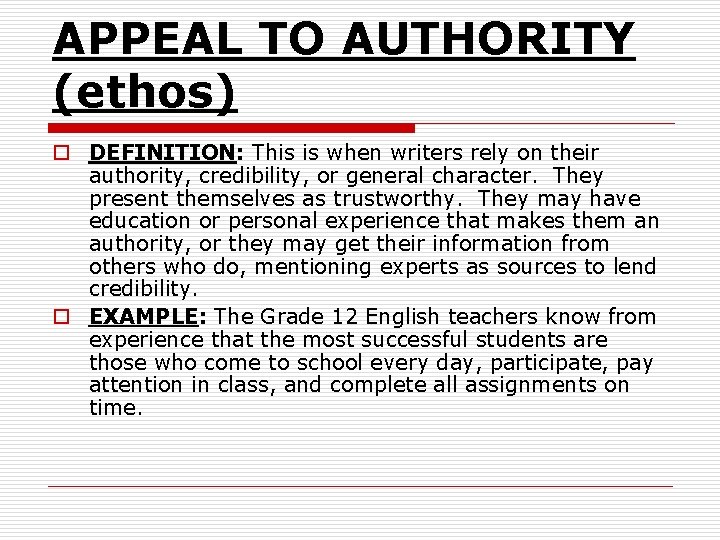
APPEAL TO AUTHORITY (ethos) o DEFINITION: This is when writers rely on their authority, credibility, or general character. They present themselves as trustworthy. They may have education or personal experience that makes them an authority, or they may get their information from others who do, mentioning experts as sources to lend credibility. o EXAMPLE: The Grade 12 English teachers know from experience that the most successful students are those who come to school every day, participate, pay attention in class, and complete all assignments on time.
Now you try! o Read the examples on the following slides. o Identify the technique used in each example (pay attention because you will have to make your own examples soon!).
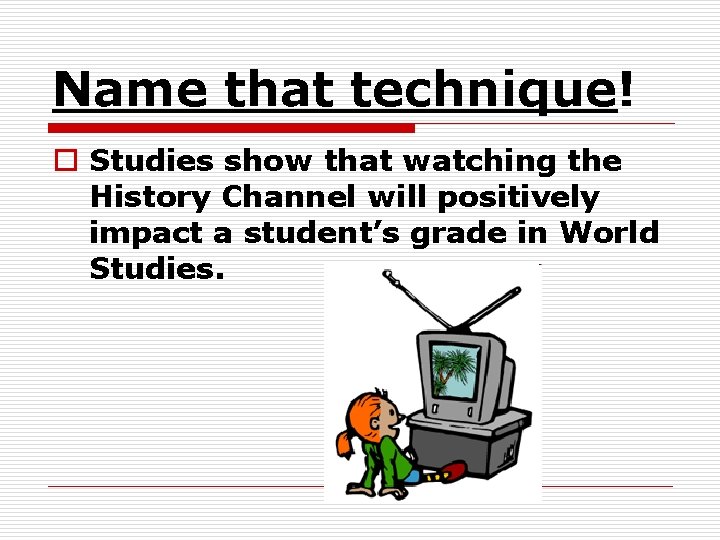
Name that technique! o Studies show that watching the History Channel will positively impact a student’s grade in World Studies.
Cause and Effect! o Why? What are your clues? o You have a cause: Watching the History Channel. o You have an effect: Positive impact on grades.
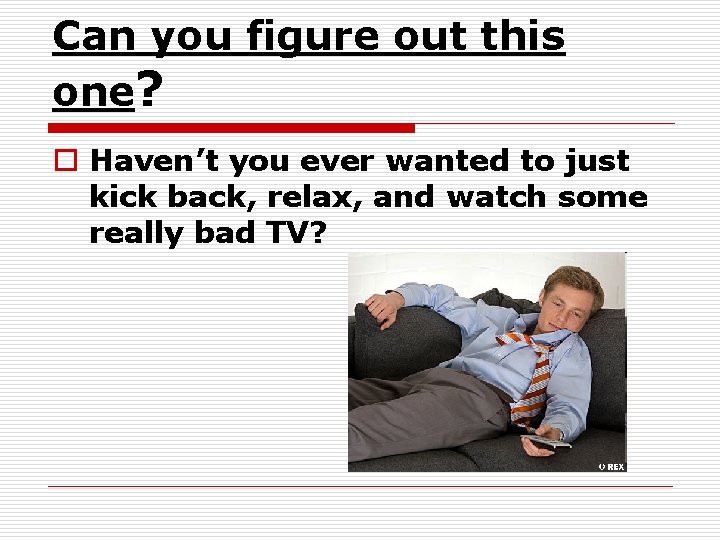
Can you figure out this one? o Haven’t you ever wanted to just kick back, relax, and watch some really bad TV?
Rhetorical Question! o. What was your context clue? o. The question mark? o. No real answer expected!
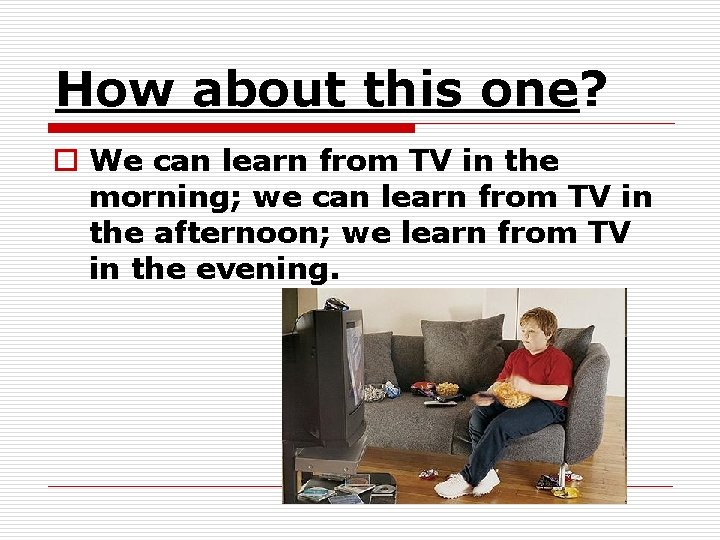
How about this one? o We can learn from TV in the morning; we can learn from TV in the afternoon; we learn from TV in the evening.
Repetition! o. Why? o. Repeated words!
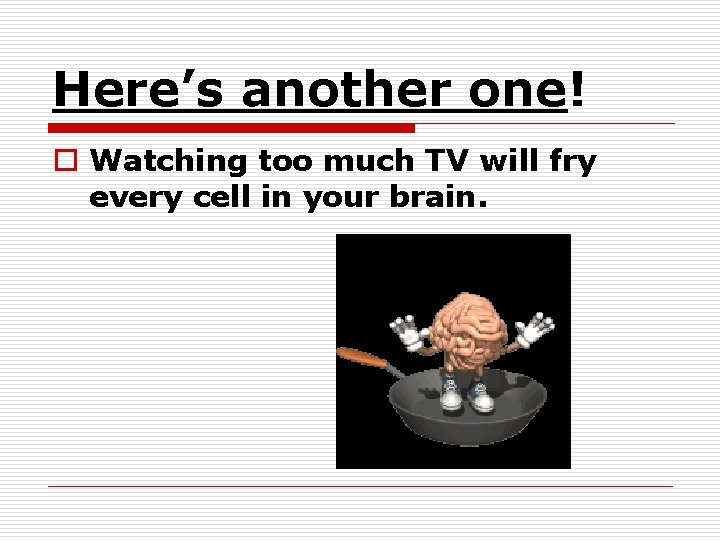
Here’s another one! o Watching too much TV will fry every cell in your brain.
Overstatement! (hyperbole) o. What were your context clues? o. Watching TV can’t literally fry your brain. o. This is an exaggeration!
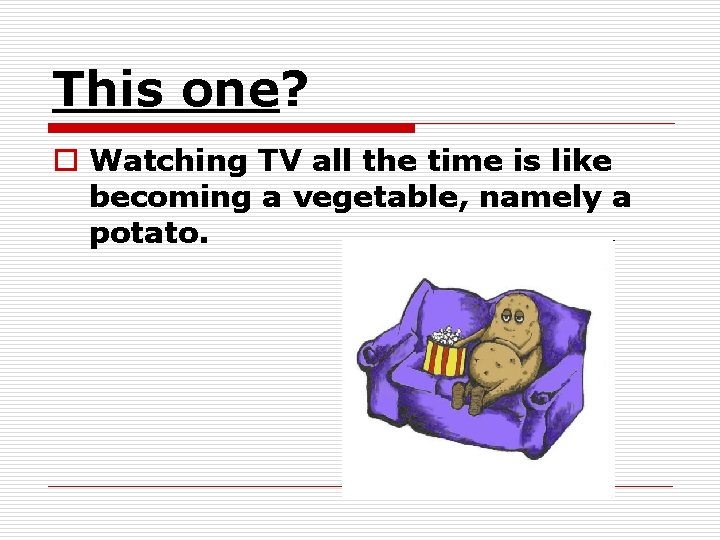
This one? o Watching TV all the time is like becoming a vegetable, namely a potato.
Analogy! o. What was your clue? o. The word “like” is often used in analogies! o. Similar in style to a simile (comparison that uses “like” or “as”).
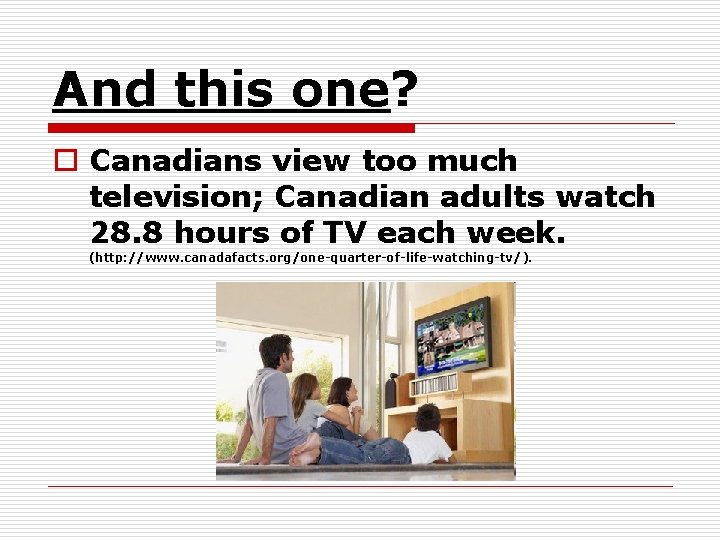
And this one? o Canadians view too much television; Canadian adults watch 28. 8 hours of TV each week. (http: //www. canadafacts. org/one-quarter-of-life-watching-tv/).
Appeal to Reason! o. Your clue? o. The numbers!
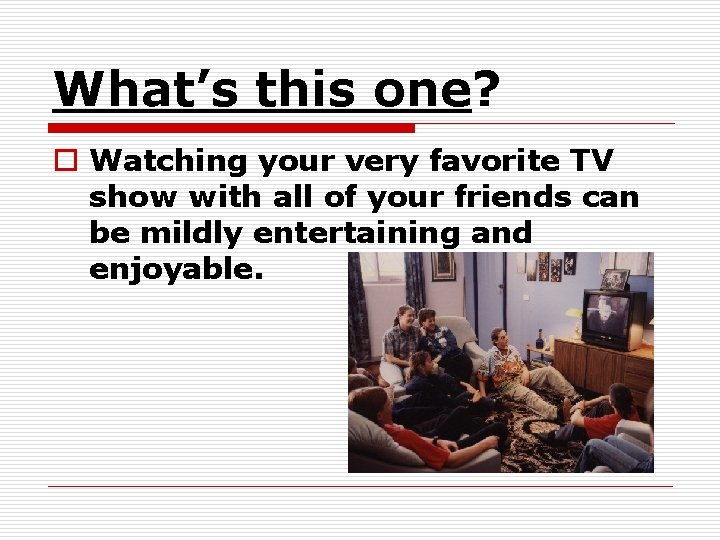
What’s this one? o Watching your very favorite TV show with all of your friends can be mildly entertaining and enjoyable.
Understatement! o. The clue? o. The word “mildly” is the biggest clue in this statement.
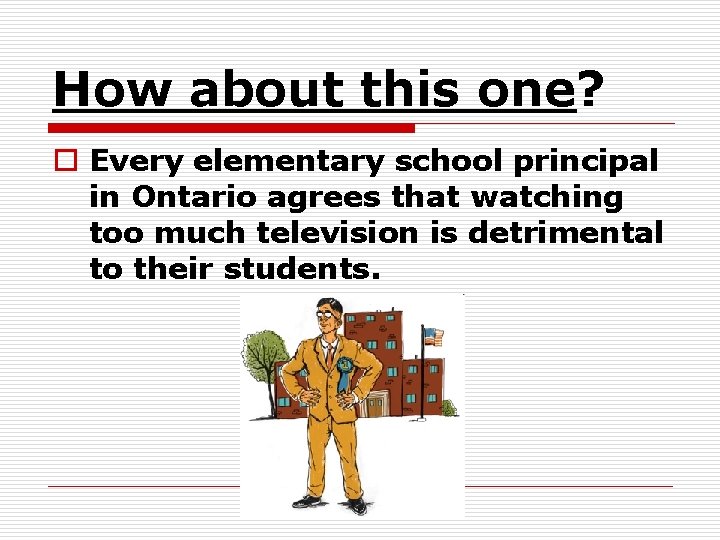
How about this one? o Every elementary school principal in Ontario agrees that watching too much television is detrimental to their students.
Appeal to Authority! o. How did you know? o. The principal! (He’s an authority!)
What’s this technique? o Parents, if you truly love your children and care about their futures, you will turn off the TV and take them for a walk.
Emotional Appeal! o. Your clues? o. Love. o. Care.
One more… o Completing the practice exercise will be the absolute most fun you have had this entire year the Literacy Course! o What persuasive technique have I just used?
Did you guess correctly? o You are correct! o It is OVERSTATEMENT!! o Apply these techniques to your own writing and see how persuasive you can be!