
Persuasive Devices Objectives Standard 5 Logic CLE 3001
Persuasive Devices
Objectives Standard 5: Logic CLE 3001. 5. 5 SPI 3001. 5. 5 – 1. 5. 11 Select/Identify/Analyze persuasive devices and logical fallacies used in written and oral communication. Through the study of current advertisements, the student will be able to identify and define types of persuasive devices and demonstrate understanding by analyzing the effect of their use.
What is a persuasive device? • A devices used to help persuade the audience to do something – Bandwagon – Name calling – Loaded Words – Transfer – Testimonial (False Authority) – Snob Appeal – Plain Folks
Bandwagon • Bandwagon states that because a large number of people use the product, you should jump on the bandwagon, too. • Feeds on a person’s desire to belong and be accepted. • Example: Crest is the number one selling toothpaste in the United States. • Problem: Just because more people do something doesn't always make it good.
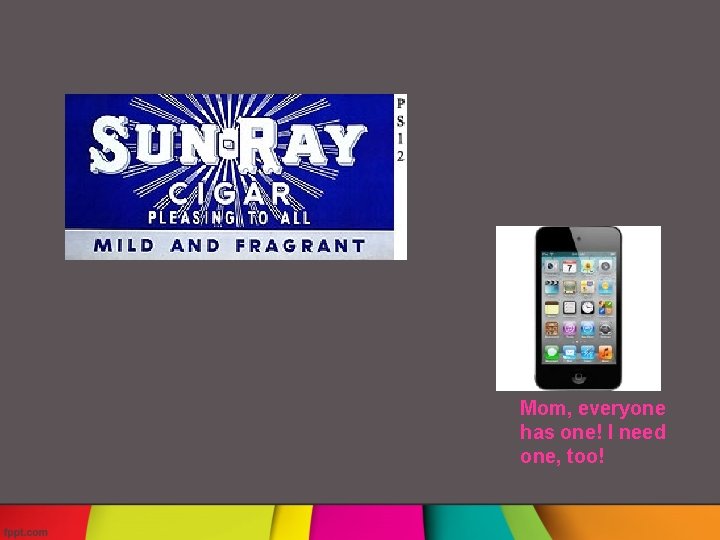
Mom, everyone has one! I need one, too!
Loaded Words Loaded words are used to appeal to emotions • usually nostalgia, happiness, or fear. Examples: Reach out and touch someone. Do you know if your kids are protected?

Testimonial • Testimonial uses some person to testify the worth of a product, action, or belief. • Example: Endorsement by a sports hero, a mother, a customer, etc. • Problem: The person may not actually use the product or share the belief. Even if the person does, why should we just because someone similar to us or that we admire says to?
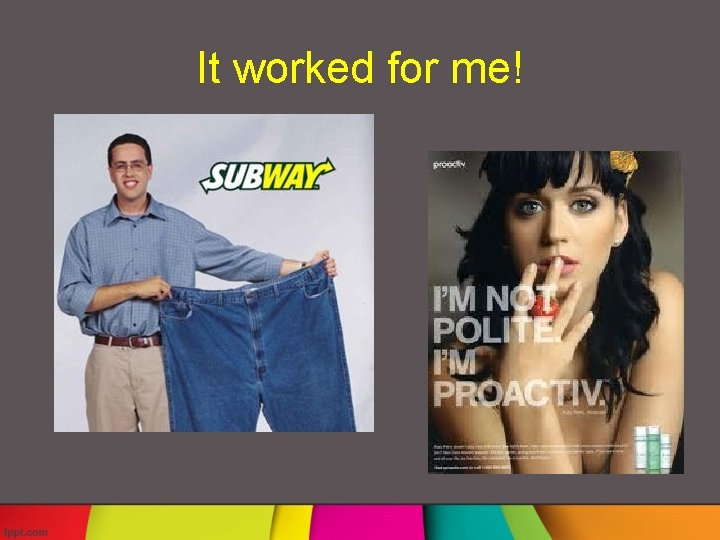
It worked for me!
Why can’t I trust testimonial? • Paycheck– What if I’m being paid to tell you to use it but I have no real experience with it? • False Authority – What if I am telling you why you need to take a certain heart medication but I’m not a heart specialist? Just because I have a heart murmur does not mean I know what I am talking about.
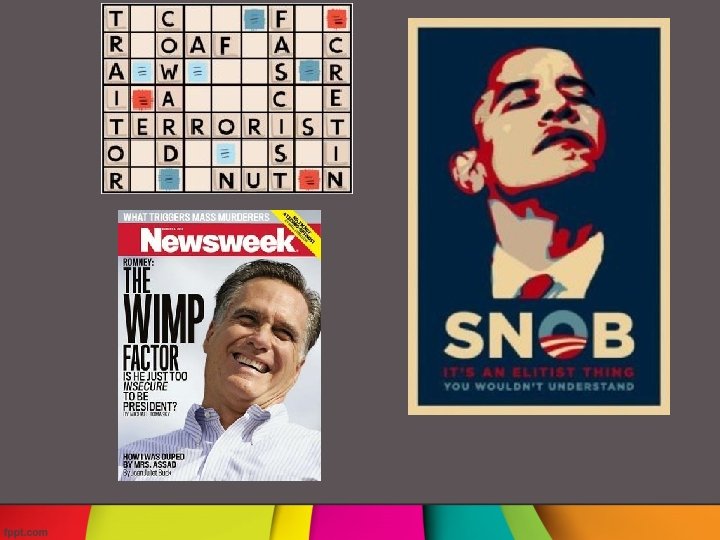
Name-Calling • Attacks the person, product, or belief in question. – Often used by politicians. – Often uses a stereotypes. Example: • Do all other brands leave your hair flat and lifeless? • He’s just not right. Problem: Does not always address the person, product, or belief at hand, being better doesn’t make something good. Attacks the person rather than an issue.
Plain Folks • Plain Folks uses common, ordinary people to sell a product. It argues you share this problem with others, and that the person can be trusted because he/she is just like you or your loved ones. • Example: As a construction worker, I often get headaches on the job. That's why I use Pain. Away aspirin. • Problem: Just because a politician dresses like the people he/she is around (in a farmer's cap or firefighter's hat), the person hasn't really changed.
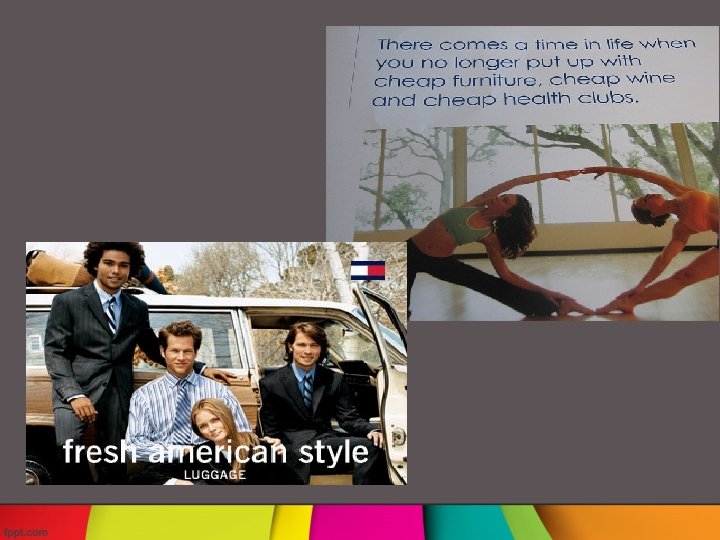
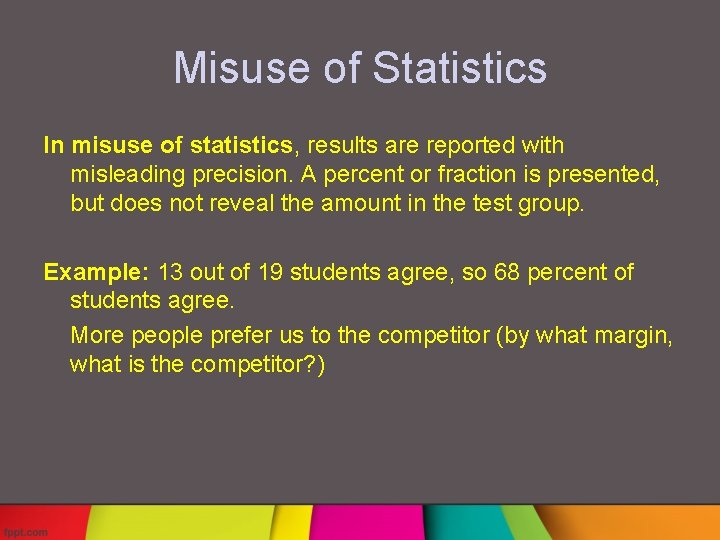
Snob Appeal • Snob Appeal: This is a reverse of the Bandwagon Appeal. Its message suggests entrance into an exclusive group by appealing to desire to be better or experience the finer things in life. • Example: "Marines. Do you have what it takes? ” • Problem: Does something being more expensive make it better? Invites stereotypes and prejudices.
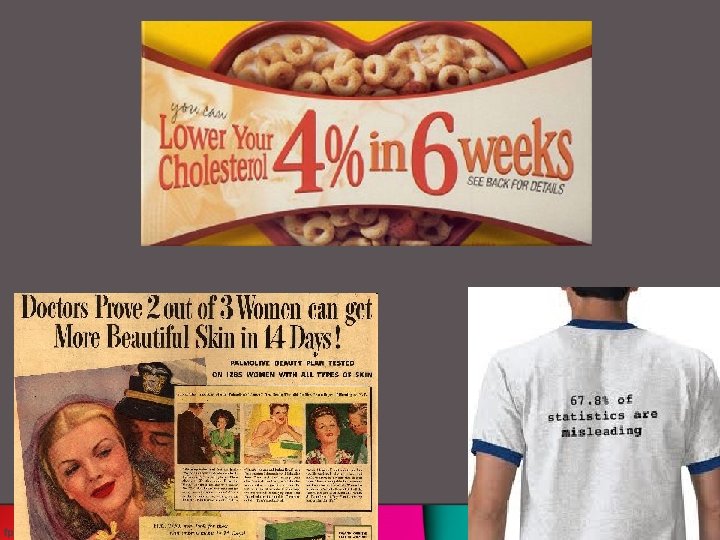
Misuse of Statistics In misuse of statistics, results are reported with misleading precision. A percent or fraction is presented, but does not reveal the amount in the test group. Example: 13 out of 19 students agree, so 68 percent of students agree. More people prefer us to the competitor (by what margin, what is the competitor? )
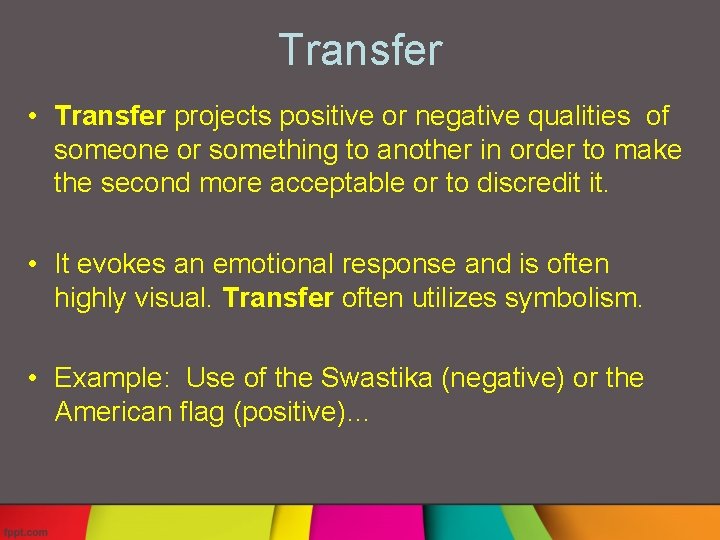
Transfer • Transfer projects positive or negative qualities of someone or something to another in order to make the second more acceptable or to discredit it. • It evokes an emotional response and is often highly visual. Transfer often utilizes symbolism. • Example: Use of the Swastika (negative) or the American flag (positive)…
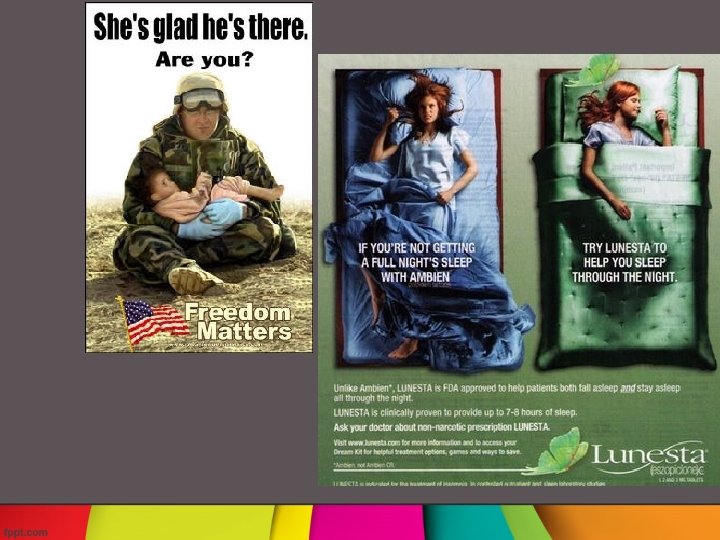
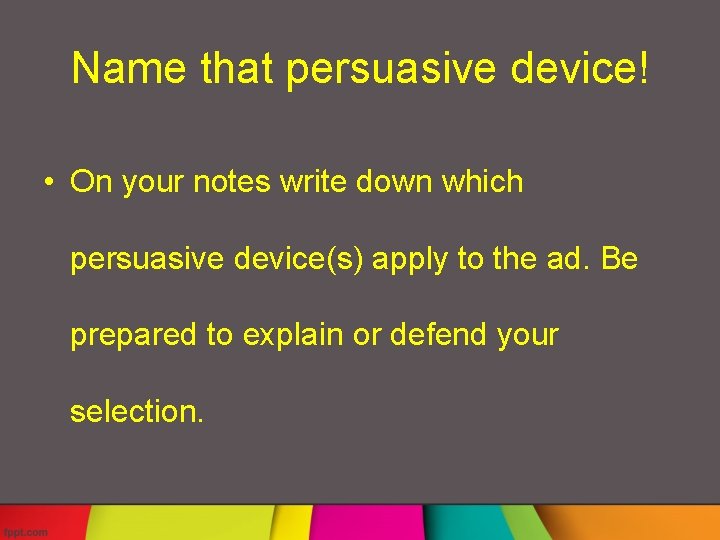
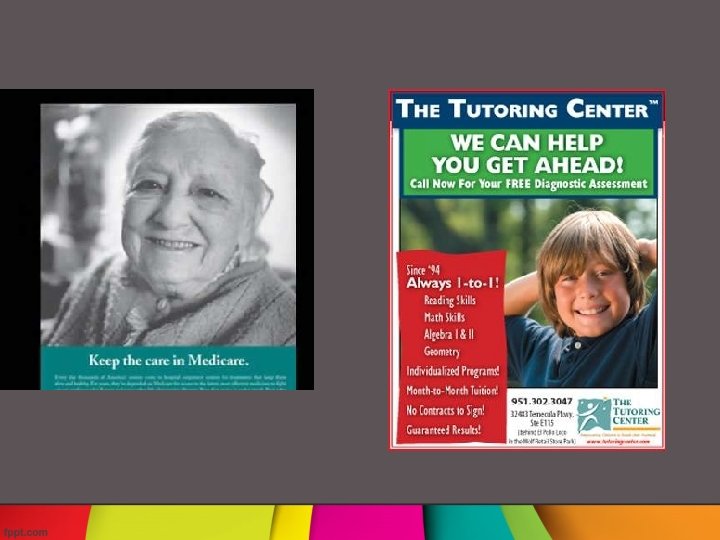
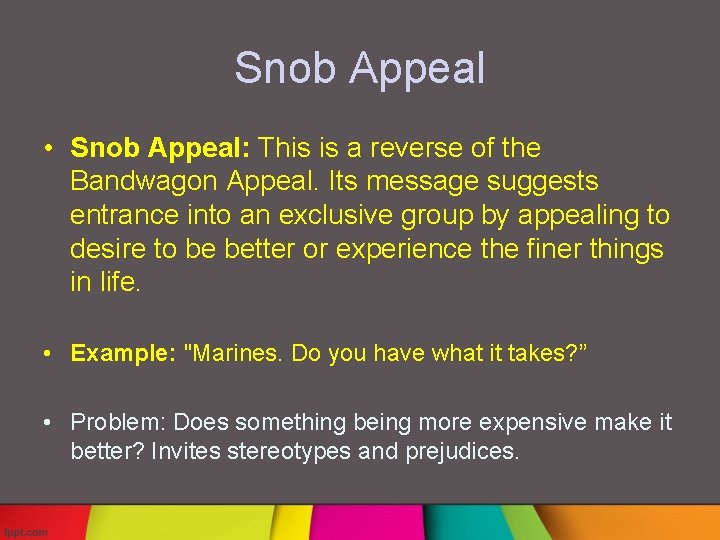
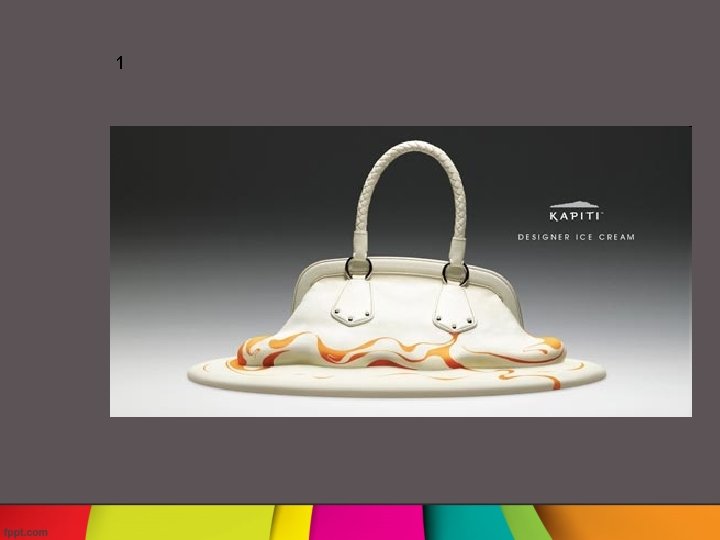
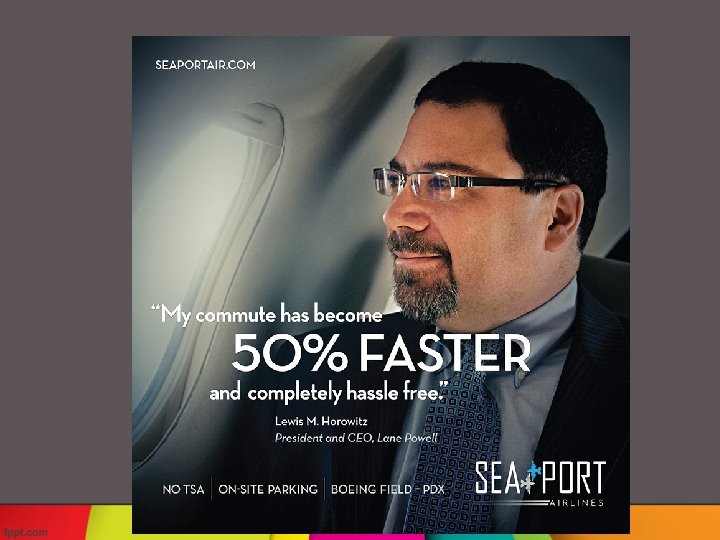
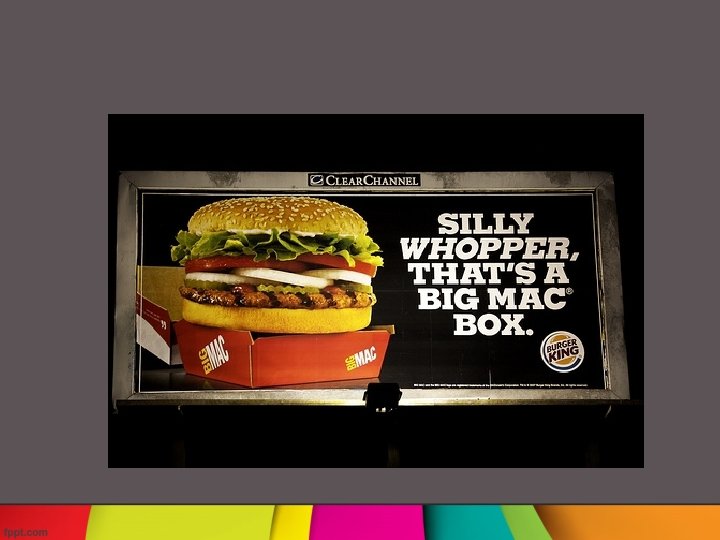
Name that persuasive device! • On your notes write down which persuasive device(s) apply to the ad. Be prepared to explain or defend your selection.
1

2

Task: o Create a persuasive advertisement that uses 2 propaganda techniques. o It should include both an image and text. (You may draw an item or use the picture of an item from a magazine if you draw like I do. o Presentations: You will use the Docucam to show your advertisement and the class will try to guess the device you used.
Logical Fallacies
Objectives Standard 5: Logic CLE 3001. 5. 5 SPI 3001. 5. 5 – 1. 5. 11 Select/Identify/Analyze persuasive devices and logical fallacies used in written and oral communication. Through the study of current advertisements, the student will be able to identify and define types of logical fallacies and demonstrate understanding by analyzing the effect of their use.
Quick Review • What is the purpose of a persuasive device? • What is the difference in the term propaganda and the phrase persuasive device? • What author’s purpose is associated with persuasive devices? • CONNECTION: Logical fallacy is a type of persuasive device.
Word Sort: Version 1 • What are we going to do? – Sort the terms into groups using some technique which makes sense to you are your partner. • Why are we going to do this? – Sorting words into groups will help you to make connections between the words. • How will be doing this? – Get with your 2 o’clock partner. Arrange the words in some way. In five minutes, I will come around and you will have to explain it to me.
What is a logical fallacy? • Think about the word LOGICAL • What do you think of when you hear fallacy? • So in your own words, what is a logical fallacy? • Why would a person want to use a logical fallacy?
So logical fallacies work because the argument will seem logical? (and society in general is stupid enough to just believe what they are told without questioning it)
Types of Logical Fallacies • SPI 3001. 5. 6 Identify and analyze the logical fallacy (i. e. , appeal to fear, personal attack {ad hominem}, false dilemma, false analogy) within a given argument.
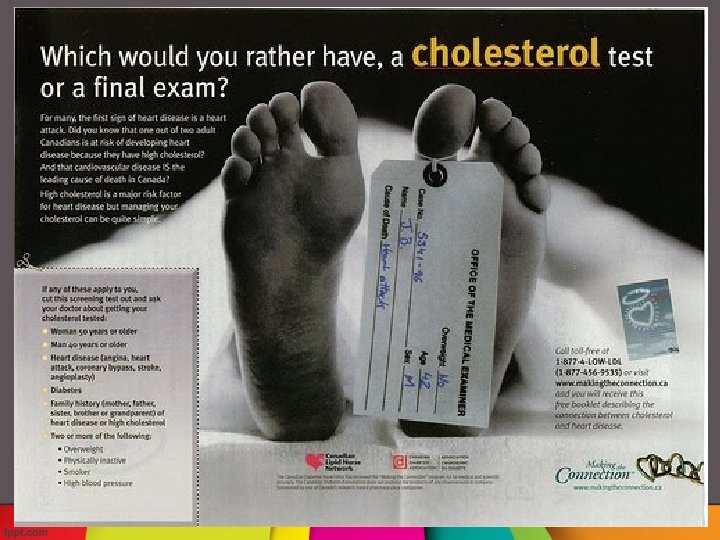
Appeal to Fear • Based on the name, what do you think appeal to fear does? • Appeal to fear tries to get people to do something out of the fear of what will happen without the person, product, or belief. – May work based on threats or predictions of the worst case scenario. • What persuasive devices might be associated with this type of fallacy? Why?
Challenge Question • Can appeal to fear ever be true?
Personal Attack • Based on the name, what do you think this does? • Also called “ad hominem” (means “against the man”) • Serves to attack the person rather than the item itself. – You attack the speaker rather than addressing the argument itself. • (Think: judgment based on characterization!) • What persuasive device might be associated with this fallacy? Why?
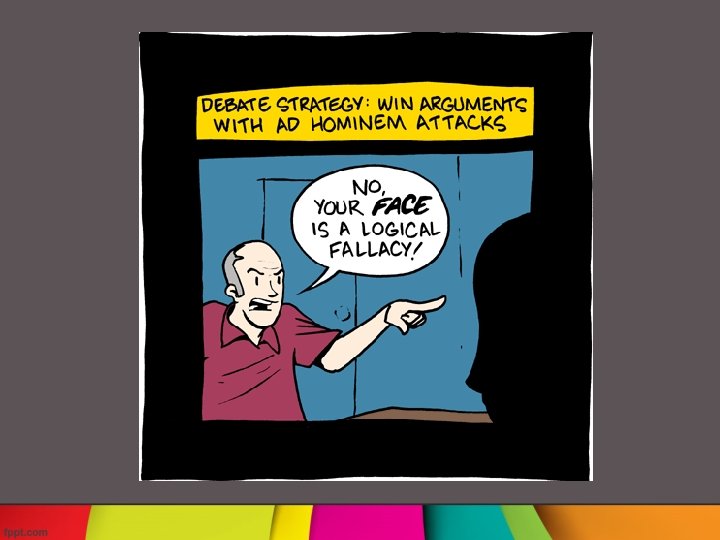
Challenge Question • Why does ad hominem work on people? • What can you do in order to make sure you don’t fall for personal attack?
False Dilemma • Argues there are only two options available in any situation and that either A will happen or B will have to happen • Also known as Either/Or or Black/White Logic because it says there are only two options
Loaded Question • A type of false dilemma occurs when using a question which cannot be answered because the wording of the question makes it appear there are only two possibilities. – So did you murder him before or after robbing the bank? – Are you still beating your wife? – Did you do your homework or are you lazy?
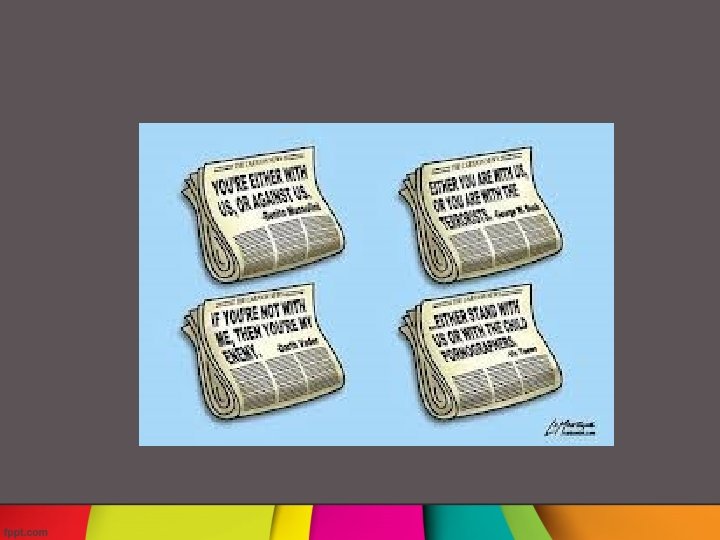
Challenge Question • Does everything come down to only two options? • Is it possible to have some situations for which there are only two possibilities?
False Analogy • Finding similarities or drawing comparisons when things really are not alike • Two things may be alike in some respects, but just because they are sort of alike does not mean they are exactly alike. – Coke and Pepsi are both soda, but they are very different.
Exit Ticket • Complete the Logical Fallacy Sort. • Step 1 is matching the definition to the device. • Step 2 is matching the example to the device.
Task • Create a Frayer model for the assigned device.
- Slides: 47