
PERSUASIVE ARGUMENTS Unit 1 Part 3 Literacy Strategy
- Slides: 8
PERSUASIVE ARGUMENTS Unit 1 – Part 3
Literacy Strategy ◦ Key writing skill for practitioners in the legal system: ◦ The ability to write flexibly – to be able to adapt one’s personal writing style to suit a variety of purposes and audiences. ◦ Keys to writing effectively: ◦ Must identify the purpose of a piece of writing, the intended reader, and the most appropriate tools for organizing different writing products.
Informational vs. Persuasive Writing ◦ The goals are different. ◦ For your open letter, your purpose is to persuade someone to change a school rule or to maintain/support a rule, and your audience is someone who has power to keep or change that rule. ◦ Legal professionals need to be able to write persuasively.
Persuasion Map ◦ A persuasion map can aid in organization of thoughts, evidence, and writing. ◦ Planning and organizing ideas can provide you with a road map for the arguments you want to make and the most compelling sequence in which to present evidence. ◦ To persuade someone to agree with you on a particular issue, you need to be clear about the position you are taking on that issue.
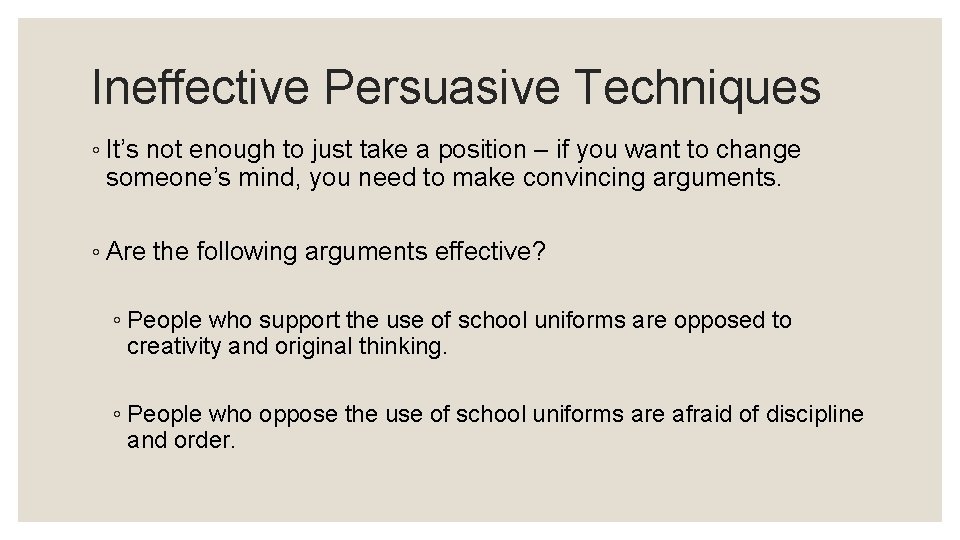
Ineffective Persuasive Techniques ◦ It’s not enough to just take a position – if you want to change someone’s mind, you need to make convincing arguments. ◦ Are the following arguments effective? ◦ People who support the use of school uniforms are opposed to creativity and original thinking. ◦ People who oppose the use of school uniforms are afraid of discipline and order.
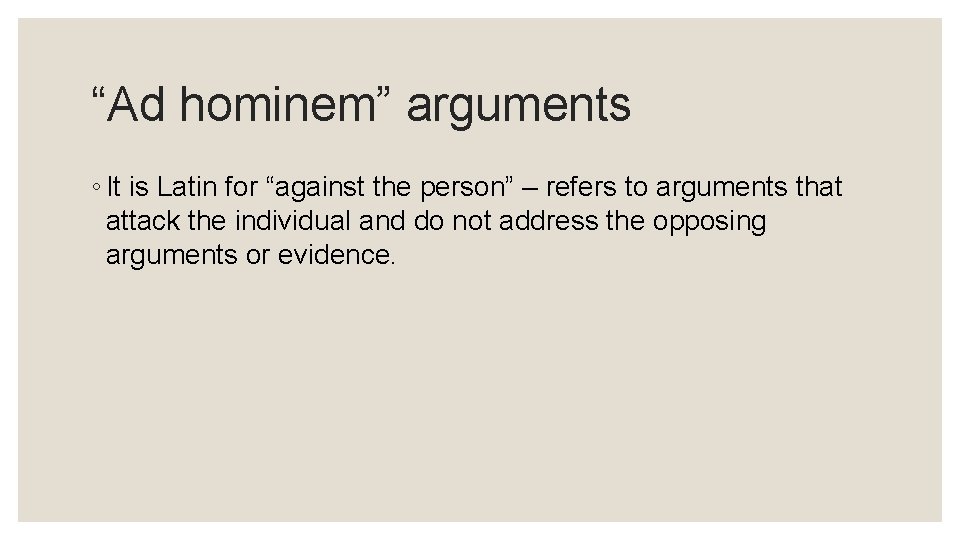
“Ad hominem” arguments ◦ It is Latin for “against the person” – refers to arguments that attack the individual and do not address the opposing arguments or evidence.
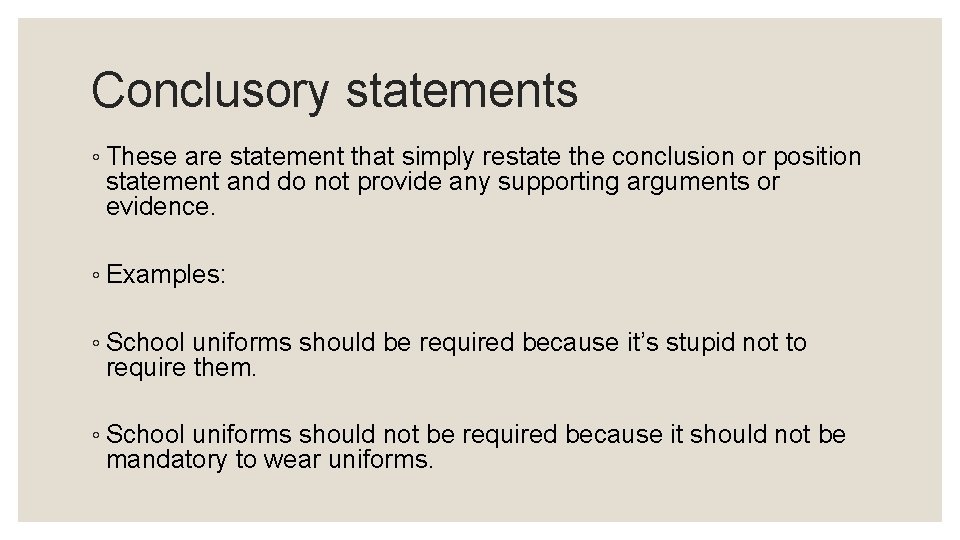
Conclusory statements ◦ These are statement that simply restate the conclusion or position statement and do not provide any supporting arguments or evidence. ◦ Examples: ◦ School uniforms should be required because it’s stupid not to require them. ◦ School uniforms should not be required because it should not be mandatory to wear uniforms.
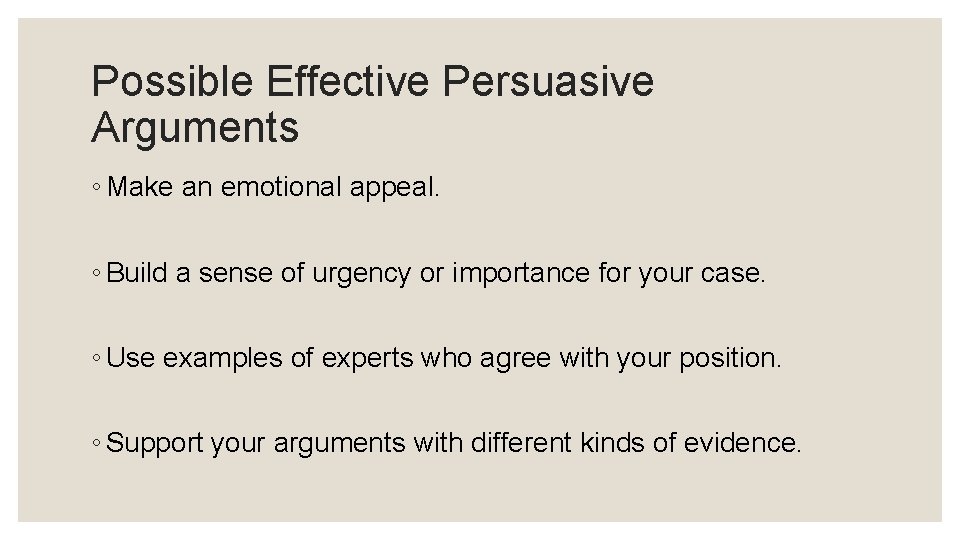
Possible Effective Persuasive Arguments ◦ Make an emotional appeal. ◦ Build a sense of urgency or importance for your case. ◦ Use examples of experts who agree with your position. ◦ Support your arguments with different kinds of evidence.