
Perspectives from MSFs AHD programmes in Africa Challenges

- Slides: 19
Perspectives from MSF’s AHD programmes in Africa: Challenges, lessons, and opportunities Tom Ellman MSF SA IAS 2019
Conflicts of Interest No conflicts of interest to declare
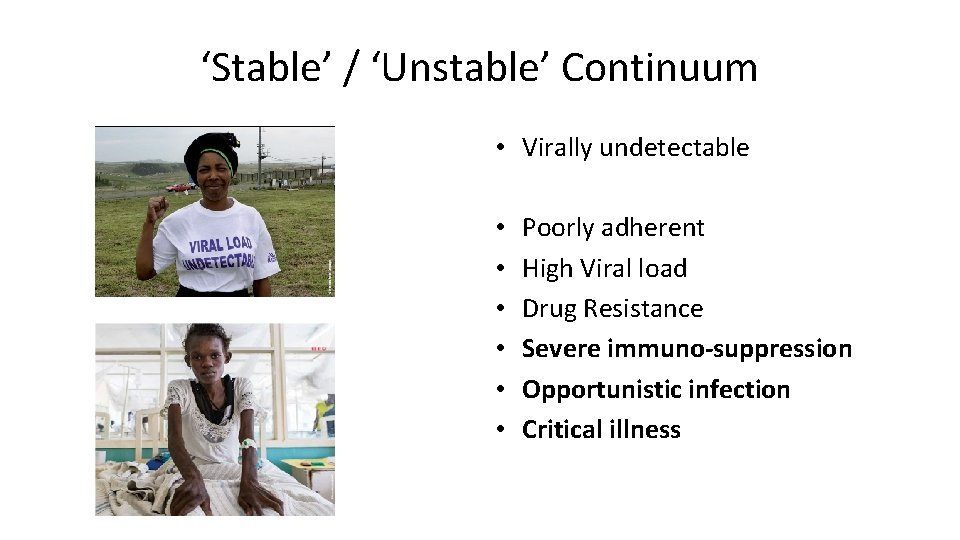
‘Stable’ / ‘Unstable’ Continuum • Virally undetectable • • • Poorly adherent High Viral load Drug Resistance Severe immuno-suppression Opportunistic infection Critical illness
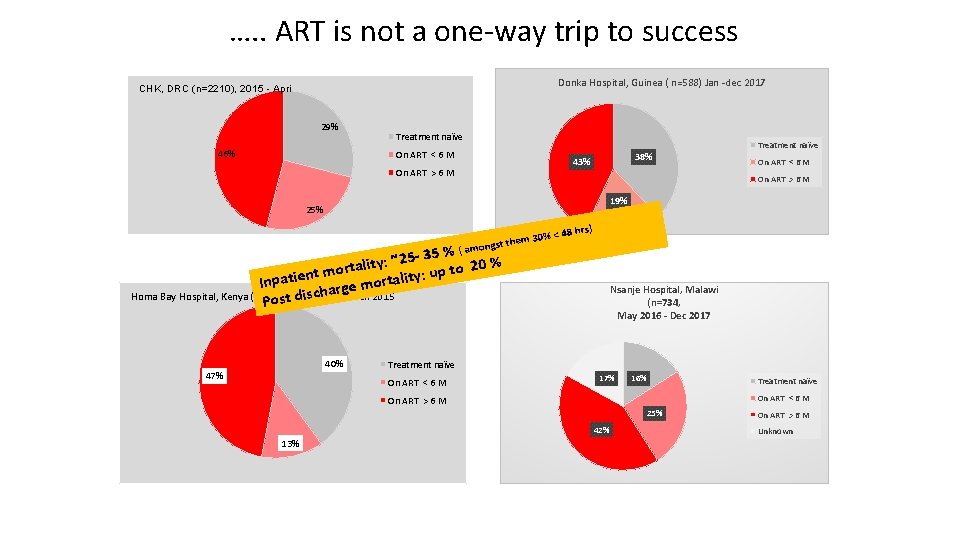
…. . ART is not a one-way trip to success Donka Hospital, Guinea ( n=588) Jan -dec 2017 CHK, DRC (n=2210), 2015 - April 2017 29% 46% Treatment naïve On ART < 6 M 38% 43% On ART > 6 M 19% 30% gst them ( amon ) < 48 hrs 25 - 35 % 20 % ~ : y t i l a up to t mort Inpatien arge mortality: ch - March 2015 Homa Bay Hospital, Kenya (n=244), dis 2014 Post. Dec 40% Nsanje Hospital, Malawi (n=734, May 2016 - Dec 2017 Treatment naïve On ART < 6 M 17% 16% Treatment naïve On ART < 6 M On ART > 6 M 25% 42% 13% On ART < 6 M On ART > 6 M 25% 47% Treatment naïve On ART > 6 M Unknown
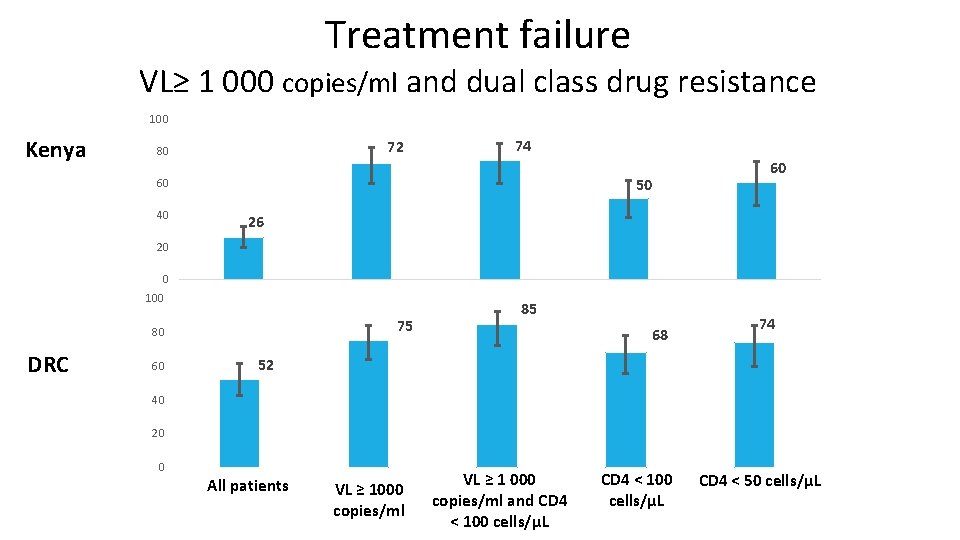
Treatment failure VL≥ 1 000 copies/ml and dual class drug resistance 100 Kenya 72 80 74 40 60 50 60 26 20 0 100 75 80 DRC 60 85 68 74 52 40 20 0 All patients VL ≥ 1000 copies/ml VL ≥ 1 000 copies/ml and CD 4 < 100 cells/µL CD 4 < 50 cells/µL
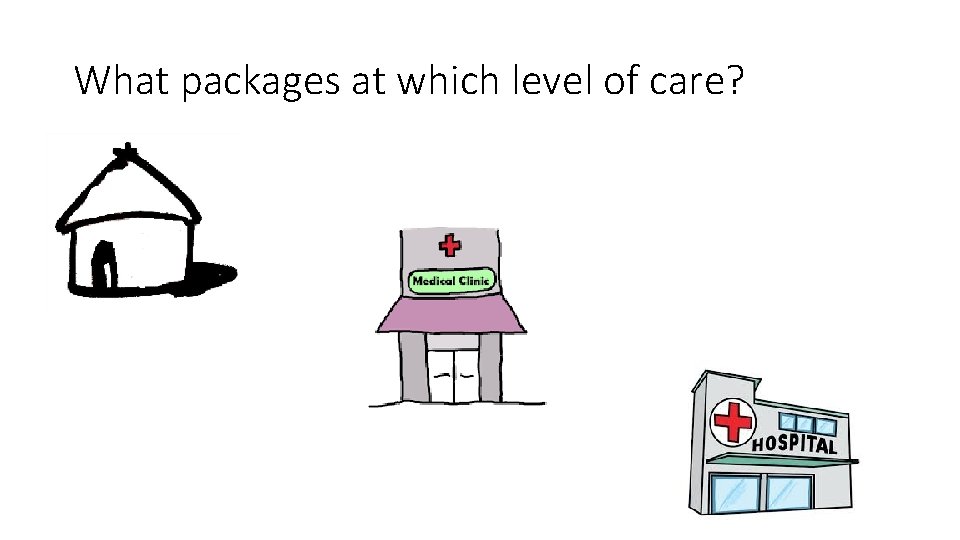
What packages at which level of care?
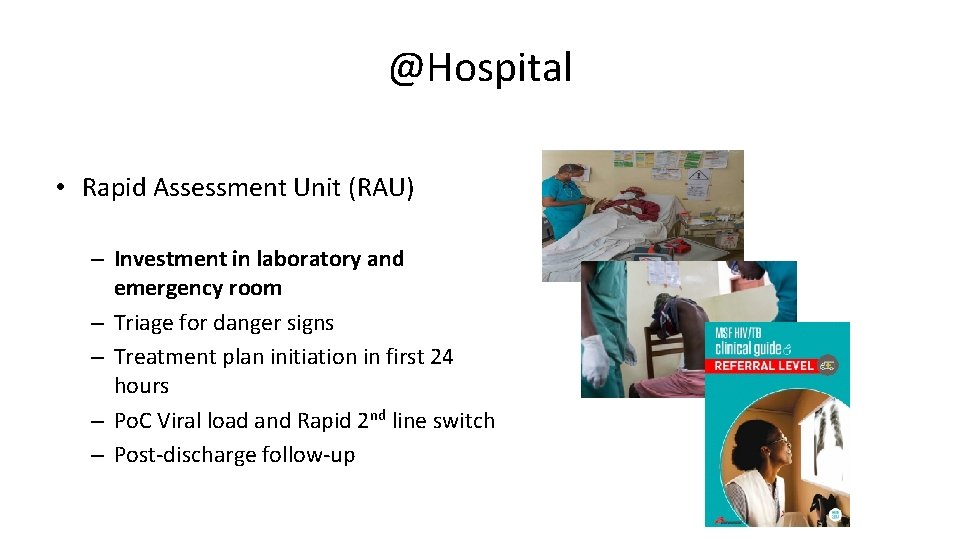
@Hospital • Rapid Assessment Unit (RAU) – Investment in laboratory and emergency room – Triage for danger signs – Treatment plan initiation in first 24 hours – Po. C Viral load and Rapid 2 nd line switch – Post-discharge follow-up
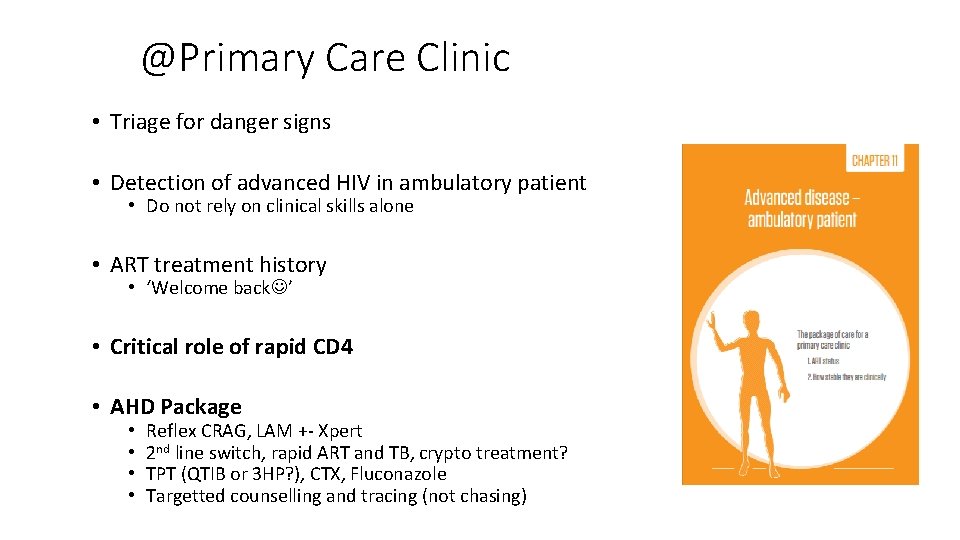
@Primary Care Clinic • Triage for danger signs • Detection of advanced HIV in ambulatory patient • Do not rely on clinical skills alone • ART treatment history • ‘Welcome back ’ • Critical role of rapid CD 4 • AHD Package • • Reflex CRAG, LAM +- Xpert 2 nd line switch, rapid ART and TB, crypto treatment? TPT (QTIB or 3 HP? ), CTX, Fluconazole Targetted counselling and tracing (not chasing)
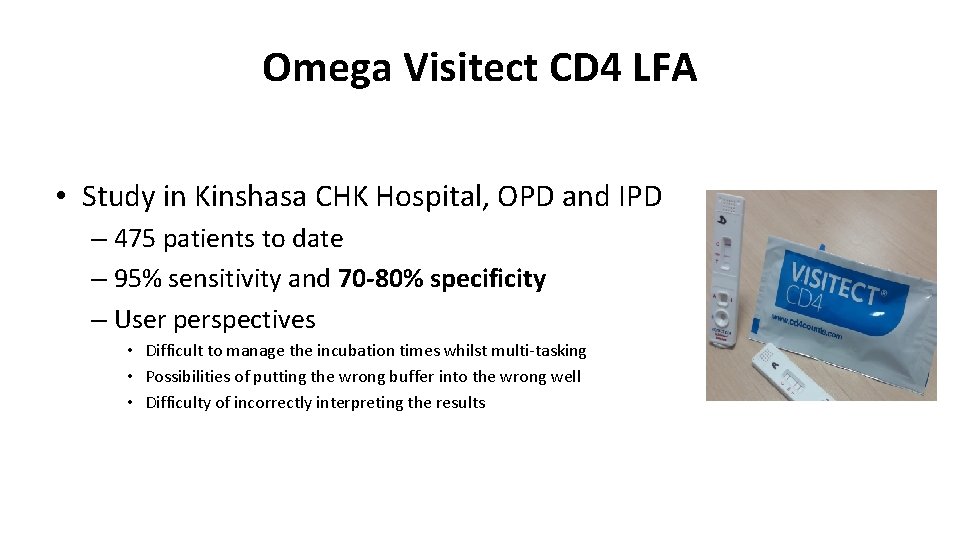
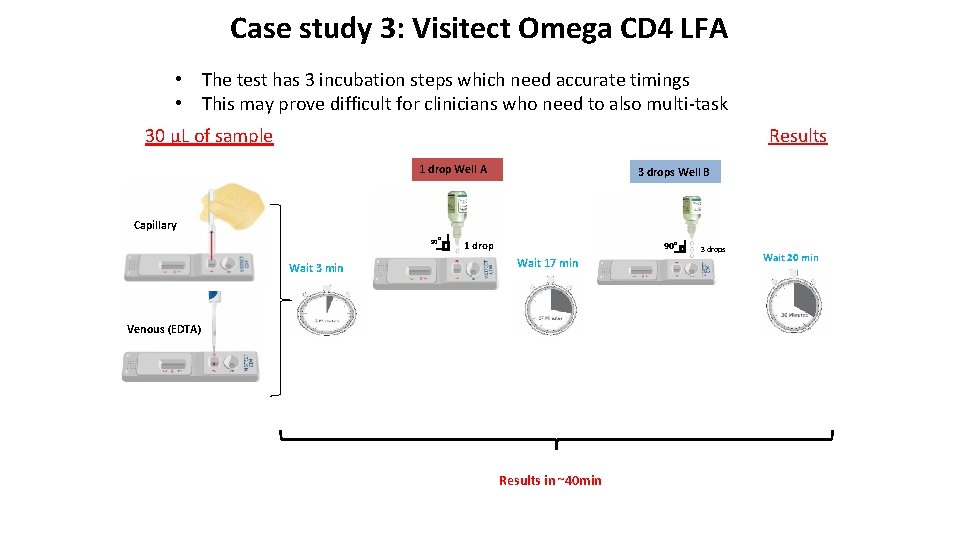
Omega Visitect CD 4 LFA • Study in Kinshasa CHK Hospital, OPD and IPD – 475 patients to date – 95% sensitivity and 70 -80% specificity – User perspectives • Difficult to manage the incubation times whilst multi-tasking • Possibilities of putting the wrong buffer into the wrong well • Difficulty of incorrectly interpreting the results
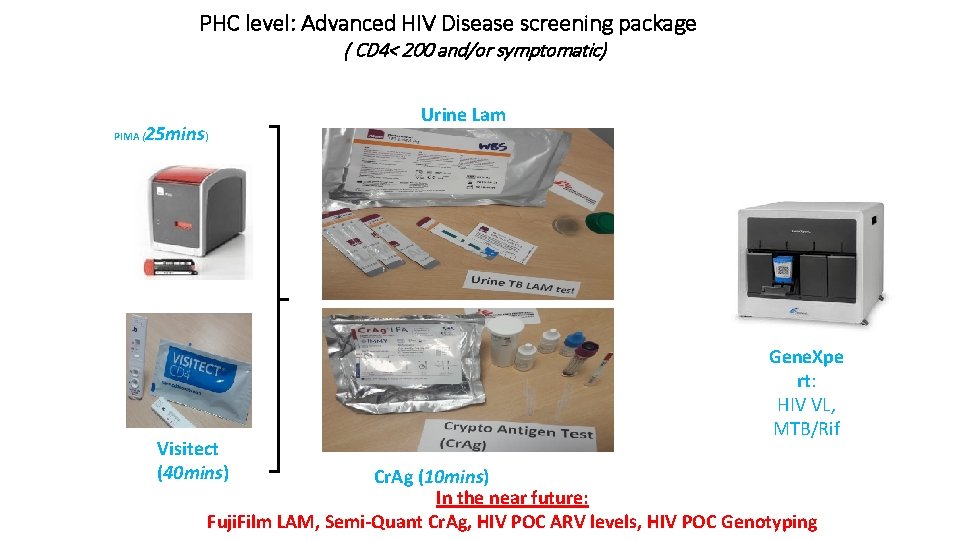
PHC level: Advanced HIV Disease screening package ( CD 4< 200 and/or symptomatic) 25 mins) PIMA ( Visitect (40 mins) Urine Lam (25 mins) Gene. Xpe rt: HIV VL, MTB/Rif Cr. Ag (10 mins) In the near future: Fuji. Film LAM, Semi-Quant Cr. Ag, HIV POC ARV levels, HIV POC Genotyping
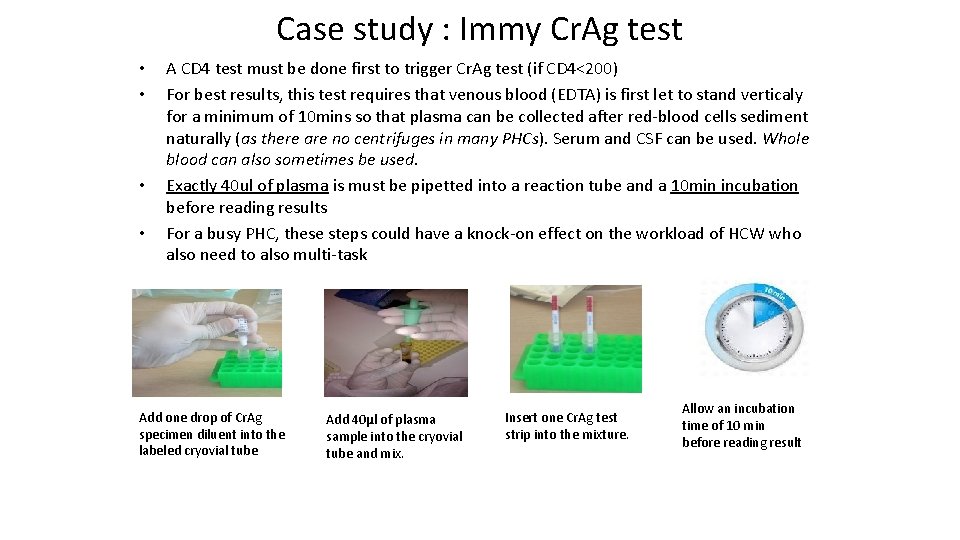
Case study : Immy Cr. Ag test • • A CD 4 test must be done first to trigger Cr. Ag test (if CD 4<200) For best results, this test requires that venous blood (EDTA) is first let to stand verticaly for a minimum of 10 mins so that plasma can be collected after red-blood cells sediment naturally (as there are no centrifuges in many PHCs). Serum and CSF can be used. Whole blood can also sometimes be used. Exactly 40 ul of plasma is must be pipetted into a reaction tube and a 10 min incubation before reading results For a busy PHC, these steps could have a knock-on effect on the workload of HCW who also need to also multi-task Add one drop of Cr. Ag specimen diluent into the labeled cryovial tube Add 40µl of plasma sample into the cryovial tube and mix. Insert one Cr. Ag test strip into the mixture. Allow an incubation time of 10 min before reading result
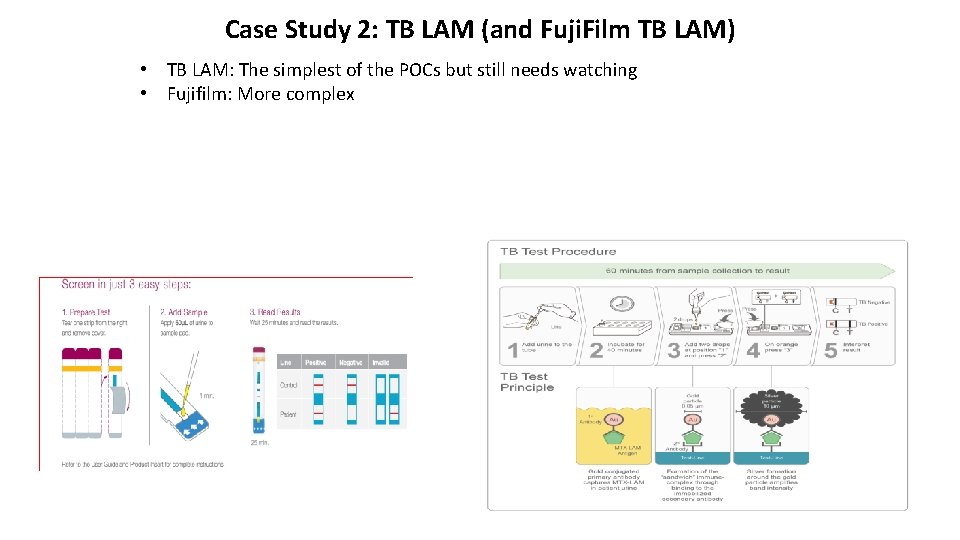
Case Study 2: TB LAM (and Fuji. Film TB LAM) • TB LAM: The simplest of the POCs but still needs watching • Fujifilm: More complex
Case study 3: Visitect Omega CD 4 LFA • The test has 3 incubation steps which need accurate timings • This may prove difficult for clinicians who need to also multi-task Results 30 µL of sample 1 drop Well A 3 drops Well B Capillary 90° Wait 3 min 90° 1 drop Wait 17 min Venous (EDTA) Results in ~40 min 3 drops Wait 20 min
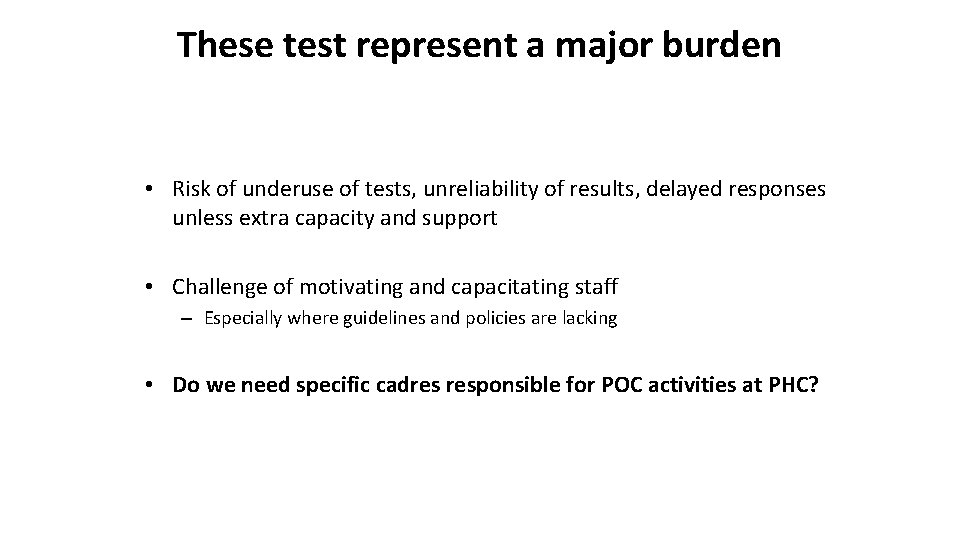
These test represent a major burden • Risk of underuse of tests, unreliability of results, delayed responses unless extra capacity and support • Challenge of motivating and capacitating staff – Especially where guidelines and policies are lacking • Do we need specific cadres responsible for POC activities at PHC?
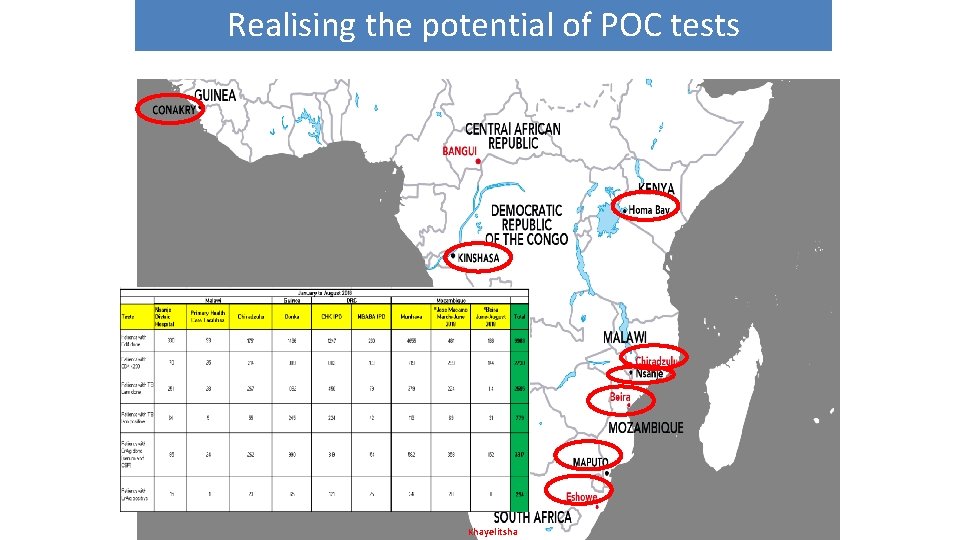
Realising the potential of POC tests Khayelitsha
@Community level • Demand creation • Treatment literacy, • Viral load • AIDS and Advanced HIV Disease • Stock-out monitoring and resolution • Stigma reduction • Social media, apps, and innovative HP approaches
Summary • Practice is far behind Guidelines and Policies – AHD Dashboard in development • Access to essential diagnostic, preventive and treatment tools – Critical gap in 2 nd line and cryptococcal meningitis treatments • DSD needed for advanced HIV at all levels of care – Focus on ambulatory at PHC level • Funding and political commitment missing – Community awareness and activism needed
Thank you https: //samumsf. org/en/news/advanced-hiv-disease-toolkit Acknowledgements: MSF and Mo. H staff, partners, and patients who did all the work MSF and Epicentre colleagues