
Perspective Drawing We are aware that parallel lines

- Slides: 15
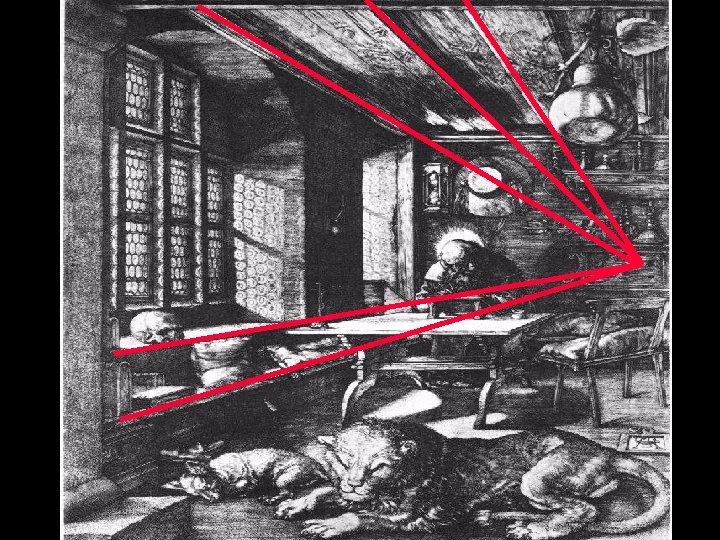
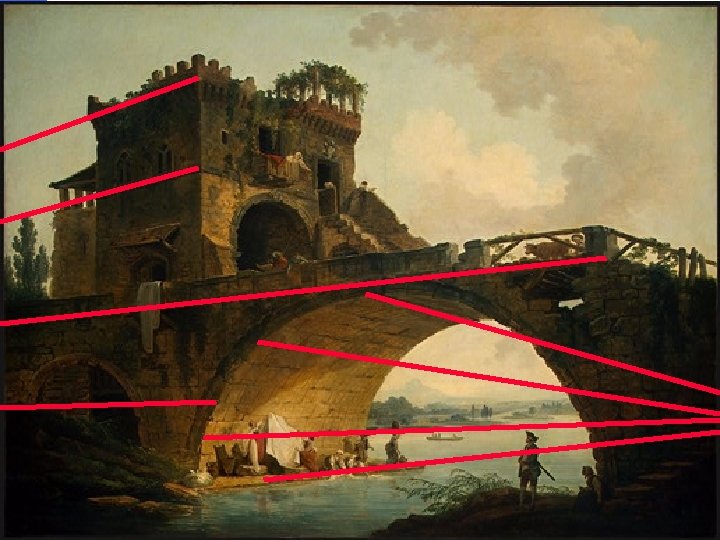
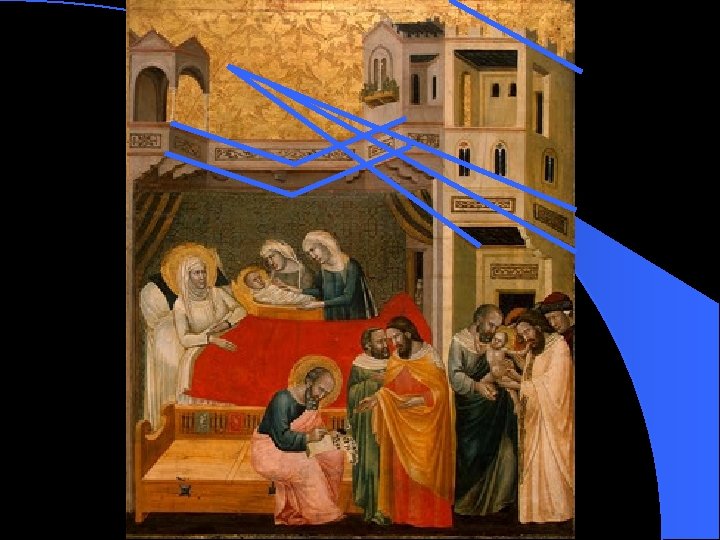
Perspective Drawing We are aware that parallel lines do not intersect, however, in many renderings, lines that we know are parallel seem to converge to one or several points.
Perspective Drawing l One-point Perspective Drawing – Example – Practice l Two-point Perspective Drawing – Example – Practice
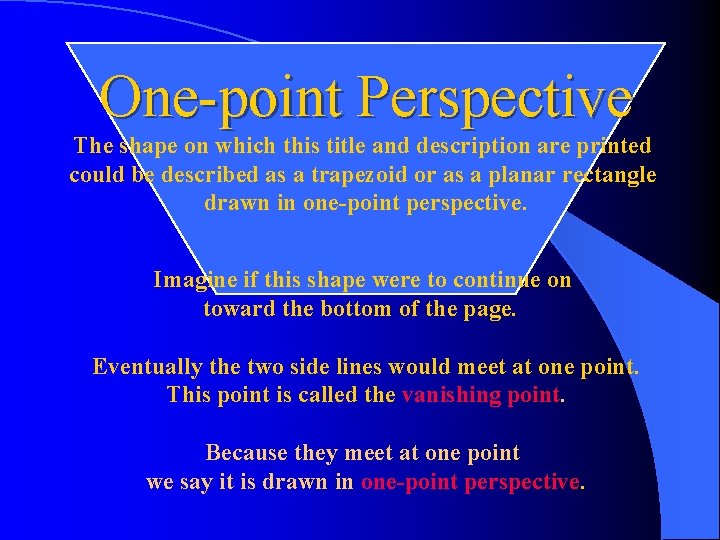
One-point Perspective The shape on which this title and description are printed could be described as a trapezoid or as a planar rectangle drawn in one-point perspective. Imagine if this shape were to continue on toward the bottom of the page. Eventually the two side lines would meet at one point. This point is called the vanishing point. Because they meet at one point we say it is drawn in one-point perspective.
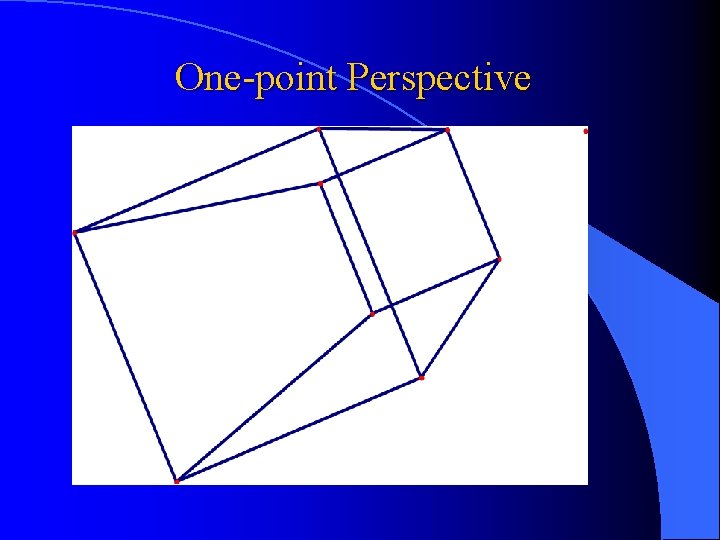
One-point Perspective
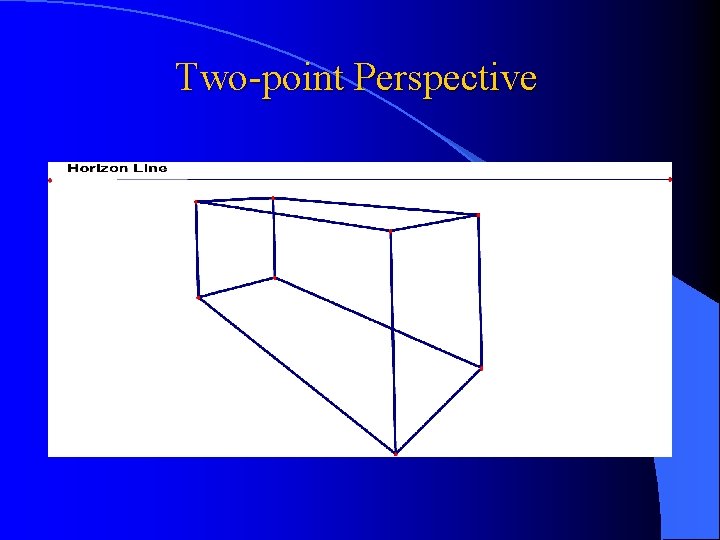
Two-Point Perspective Frequently our position with respect to our subject, dictates that we use two-point perspective. Note the figure at the top of this slide. It could be an illustration of a corner of a building. If you were to extend the top and the bottom lines of the walls they would converge at two different points - one off to the right and one off to the left.
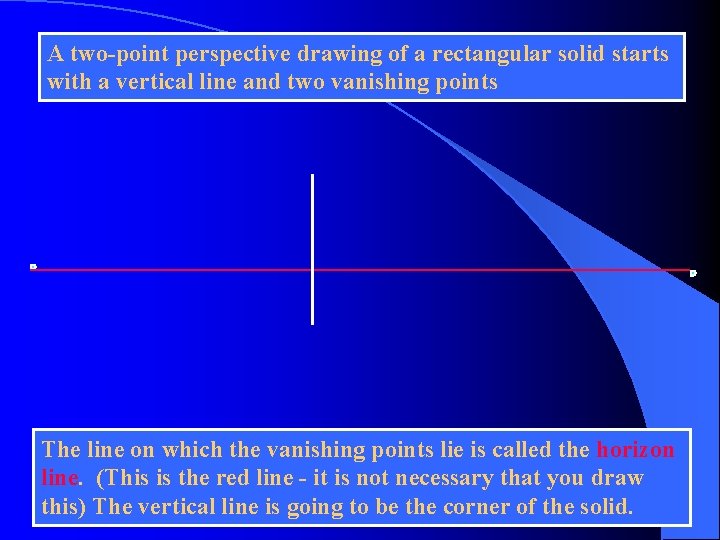
A two-point perspective drawing of a rectangular solid starts with a vertical line and two vanishing points The line on which the vanishing points lie is called the horizon line. (This is the red line - it is not necessary that you draw this) The vertical line is going to be the corner of the solid.
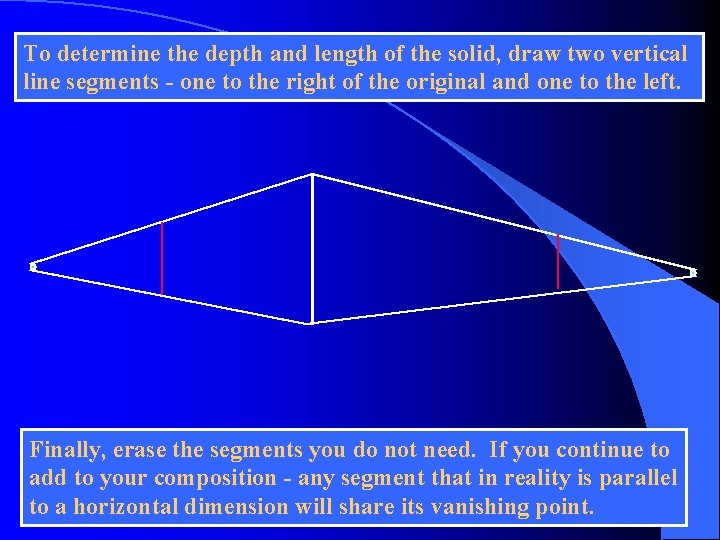
The next step is to draw line segments from each of the endpoints of the initial segment to each of the vanishing points. These segments will determine top and bottom edges of the solid.
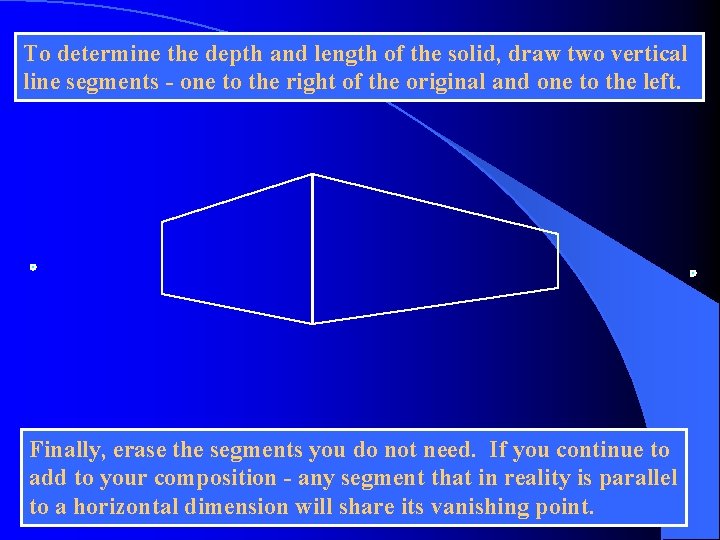
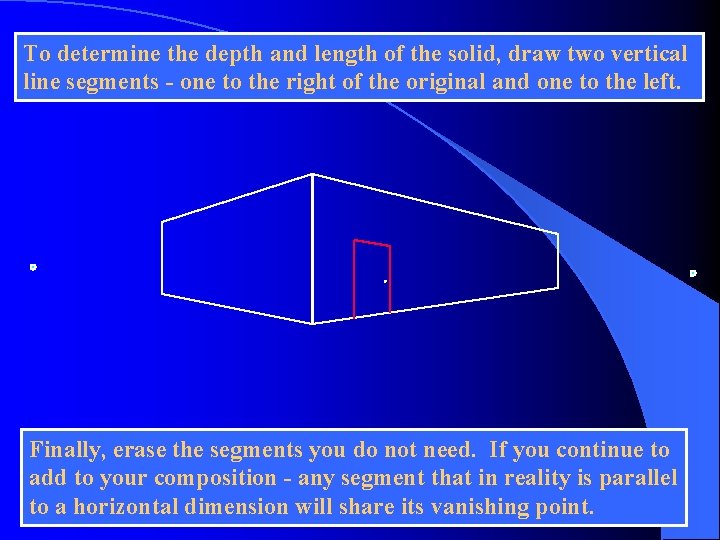
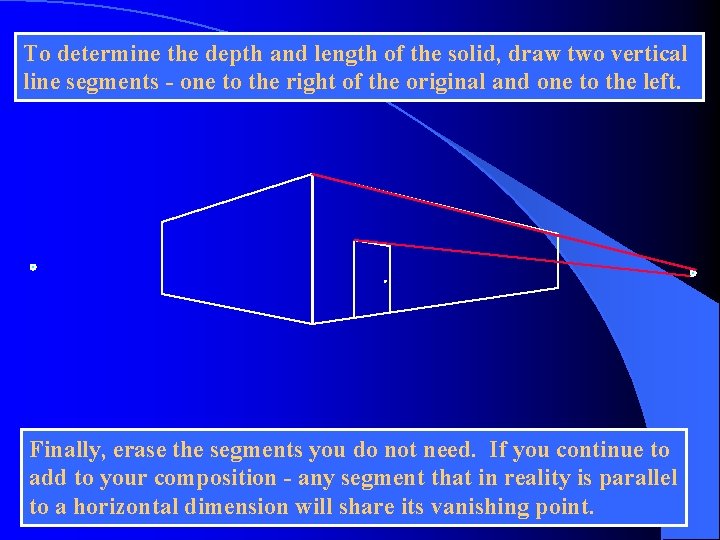
To determine the depth and length of the solid, draw two vertical line segments - one to the right of the original and one to the left. Finally, erase the segments you do not need. If you continue to add to your composition - any segment that in reality is parallel to a horizontal dimension will share its vanishing point.
To determine the depth and length of the solid, draw two vertical line segments - one to the right of the original and one to the left. Finally, erase the segments you do not need. If you continue to add to your composition - any segment that in reality is parallel to a horizontal dimension will share its vanishing point.
To determine the depth and length of the solid, draw two vertical line segments - one to the right of the original and one to the left. Finally, erase the segments you do not need. If you continue to add to your composition - any segment that in reality is parallel to a horizontal dimension will share its vanishing point.
To determine the depth and length of the solid, draw two vertical line segments - one to the right of the original and one to the left. Finally, erase the segments you do not need. If you continue to add to your composition - any segment that in reality is parallel to a horizontal dimension will share its vanishing point.
Two-point Perspective