
PERSONNEL ACCOUNTABILITY TRACKING SYSTEM Final Presentation Walter Hackett
PERSONNEL ACCOUNTABILITY & TRACKING SYSTEM Final Presentation Walter Hackett | Abdi Hussein | Tool Jampathom George Mason University SYST 798 – Fall 2009
Agenda 2 Background Problem Statement Project Definition Stakeholder Analysis Competitor Analysis Tradeoff Analysis Business Case Technical Case Conclusion
Introduction / Background 3 Historically, activities involving high risk to life and health have needed oversight, accountability, and situational awareness. Personnel accountability systems have been implemented, mainly as manually operated systems. The need for situational awareness increases exponentially in crisis situations where much is at stake and time is critical. Example: US Navy experiences over 50 man-overboard situations per year—sometimes realizing that a sailor is missing only when performing a scheduled roll call. Many of the current accountability systems are manually operated which can be error-prone and time consuming.
Problem Statement 4 Current solutions do not provide a robust, automated, and scalable system to perform personnel tracking and accounting. PATS is a MIL-STD-810 F compliant system targeted to meet the crucial need to protect the most valuable assets of any system: the personnel carrying out mission critical tasks in life threatening conditions.
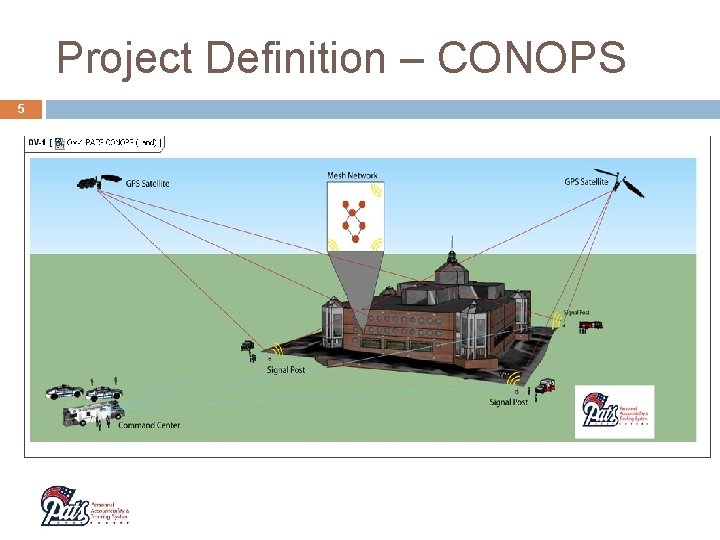
Project Definition – CONOPS 5
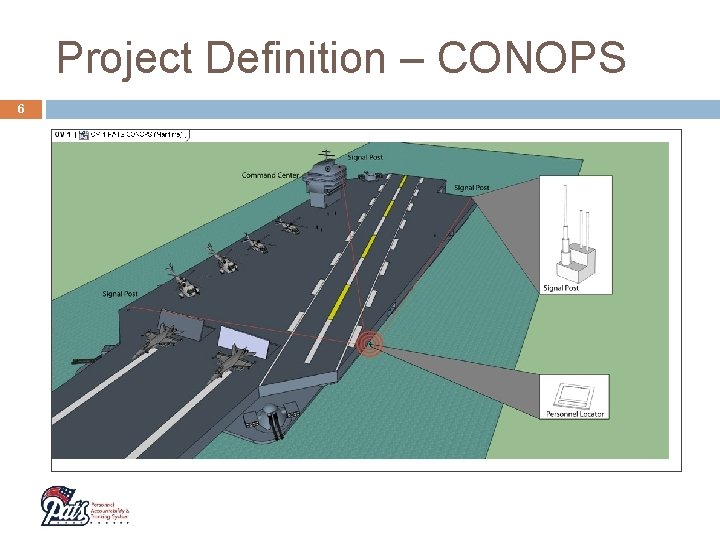
Project Definition – CONOPS 6
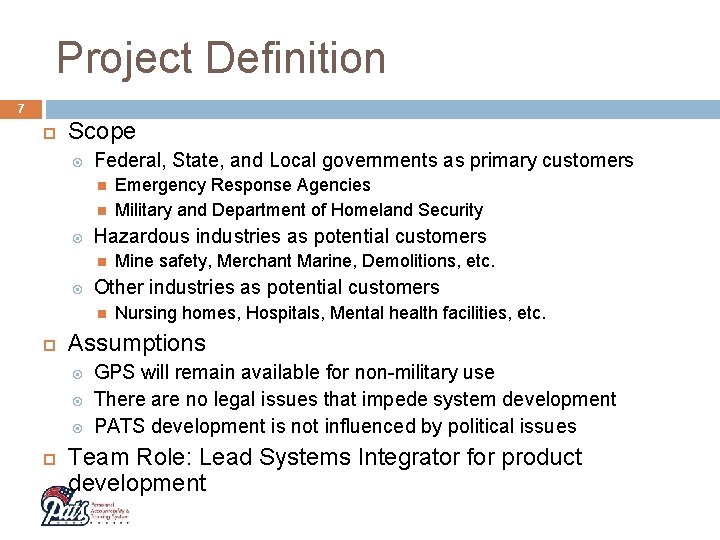
Project Definition 7 Scope Federal, State, and Local governments as primary customers Hazardous industries as potential customers Nursing homes, Hospitals, Mental health facilities, etc. Assumptions Mine safety, Merchant Marine, Demolitions, etc. Other industries as potential customers Emergency Response Agencies Military and Department of Homeland Security GPS will remain available for non-military use There are no legal issues that impede system development PATS development is not influenced by political issues Team Role: Lead Systems Integrator for product development

Project Schedule 8
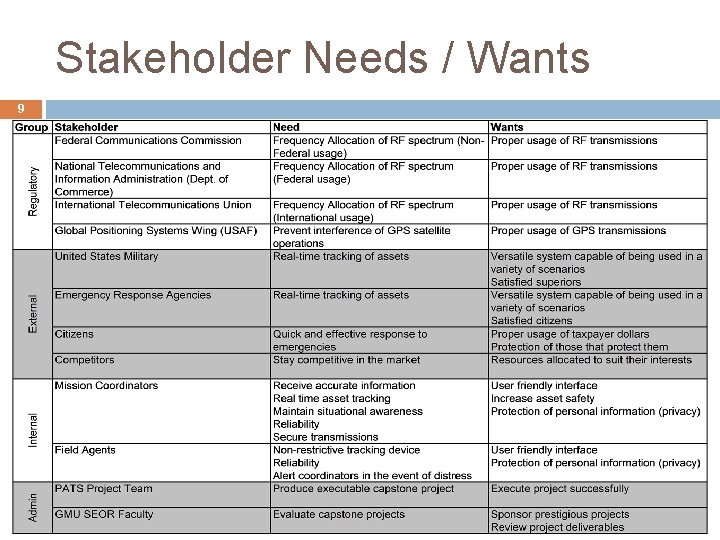
Stakeholder Needs / Wants 9 9
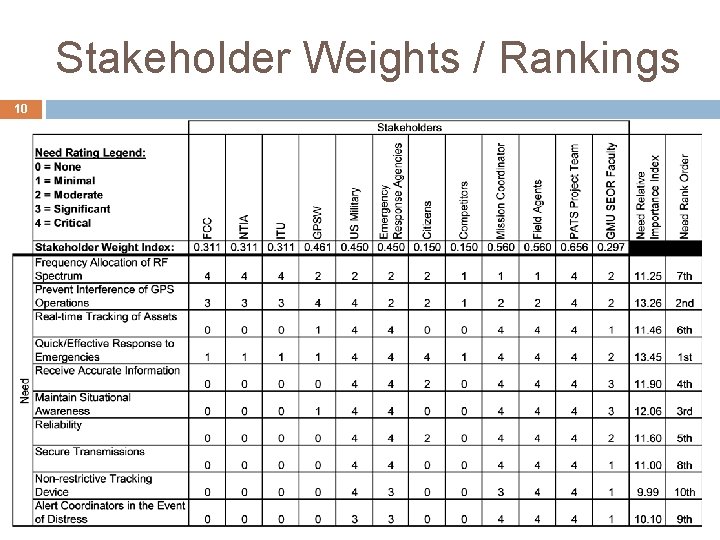
Stakeholder Weights / Rankings 10 10
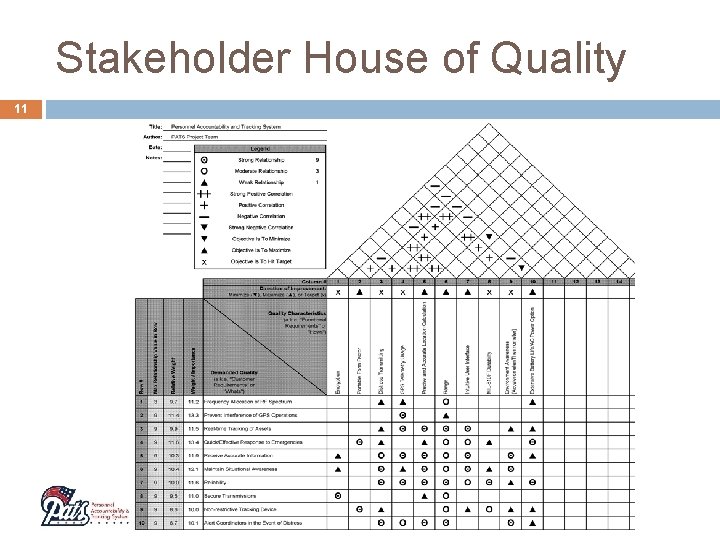
Stakeholder House of Quality 11
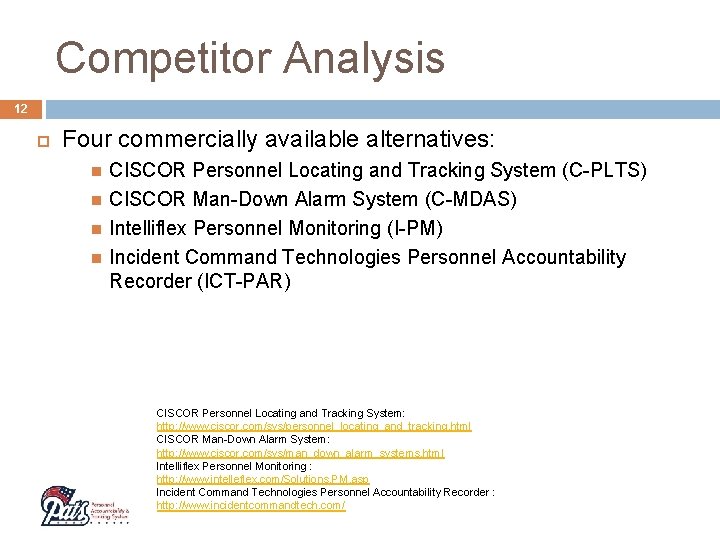
Competitor Analysis 12 Four commercially available alternatives: CISCOR Personnel Locating and Tracking System (C-PLTS) CISCOR Man-Down Alarm System (C-MDAS) Intelliflex Personnel Monitoring (I-PM) Incident Command Technologies Personnel Accountability Recorder (ICT-PAR) CISCOR Personnel Locating and Tracking System: http: //www. ciscor. com/sys/personnel_locating_and_tracking. html CISCOR Man-Down Alarm System: http: //www. ciscor. com/sys/man_down_alarm_systems. html Intelliflex Personnel Monitoring : http: //www. intelleflex. com/Solutions. PM. asp Incident Command Technologies Personnel Accountability Recorder : http: //www. incidentcommandtech. com/
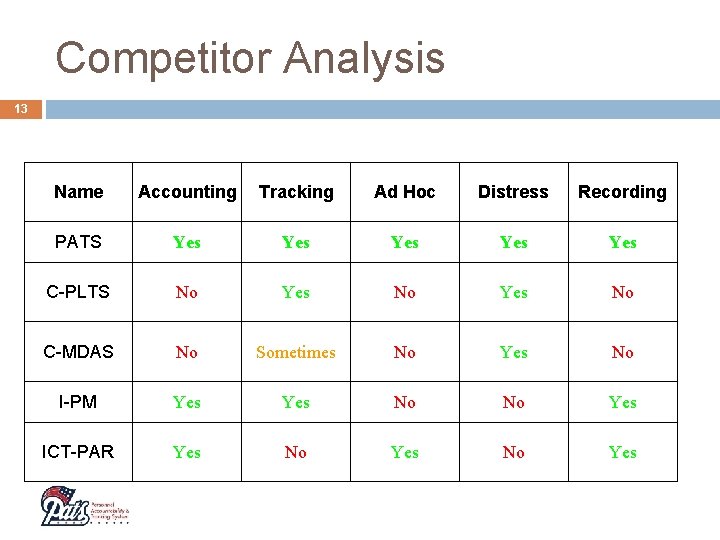
Competitor Analysis 13 Name Accounting Tracking Ad Hoc Distress Recording PATS Yes Yes Yes C-PLTS No Yes No C-MDAS No Sometimes No Yes No I-PM Yes No No Yes ICT-PAR Yes No Yes
Tradeoff Analysis 14 Various technologies were considered for PATS components: Personnel Locator Signal Posts Command Center Trades Performed by Key Functions: Location Determination Communications Computer and Information Technology
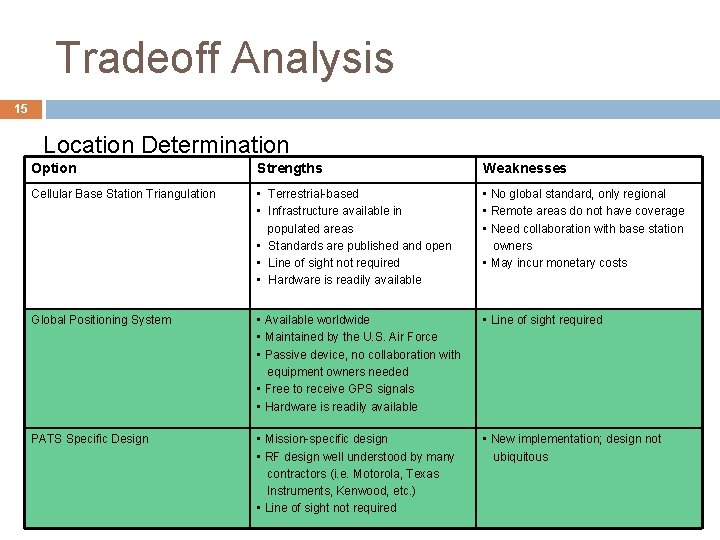
Tradeoff Analysis 15 Location Determination Option Strengths Weaknesses Cellular Base Station Triangulation • Terrestrial-based • Infrastructure available in populated areas • Standards are published and open • Line of sight not required • Hardware is readily available • No global standard, only regional • Remote areas do not have coverage • Need collaboration with base station owners • May incur monetary costs Global Positioning System • Available worldwide • Maintained by the U. S. Air Force • Passive device, no collaboration with equipment owners needed • Free to receive GPS signals • Hardware is readily available • Line of sight required PATS Specific Design • Mission-specific design • RF design well understood by many contractors (i. e. Motorola, Texas Instruments, Kenwood, etc. ) • Line of sight not required • New implementation; design not ubiquitous 15
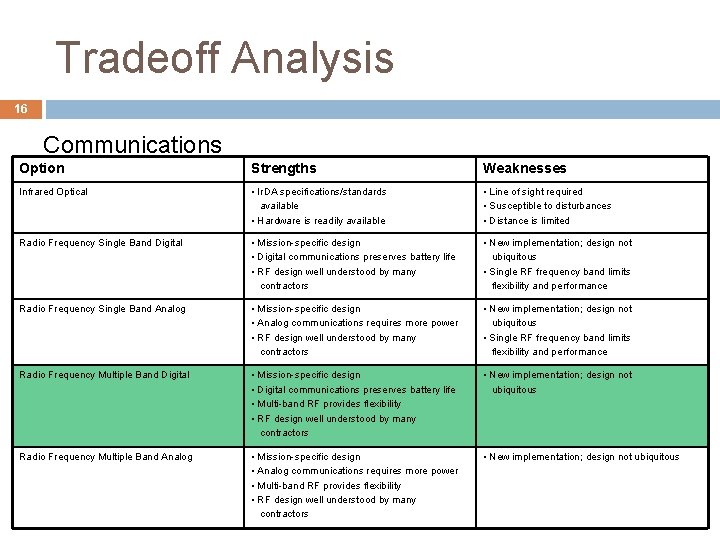
Tradeoff Analysis 16 Communications Option Strengths Weaknesses Infrared Optical • Ir. DA specifications/standards available • Hardware is readily available • Line of sight required • Susceptible to disturbances • Distance is limited Radio Frequency Single Band Digital • Mission-specific design • Digital communications preserves battery life • RF design well understood by many contractors • New implementation; design not ubiquitous • Single RF frequency band limits flexibility and performance Radio Frequency Single Band Analog • Mission-specific design • Analog communications requires more power • RF design well understood by many contractors • New implementation; design not ubiquitous • Single RF frequency band limits flexibility and performance Radio Frequency Multiple Band Digital • Mission-specific design • Digital communications preserves battery life • Multi-band RF provides flexibility • RF design well understood by many contractors • New implementation; design not ubiquitous Radio Frequency Multiple Band Analog • Mission-specific design • Analog communications requires more power • Multi-band RF provides flexibility • RF design well understood by many contractors • New implementation; design not ubiquitous
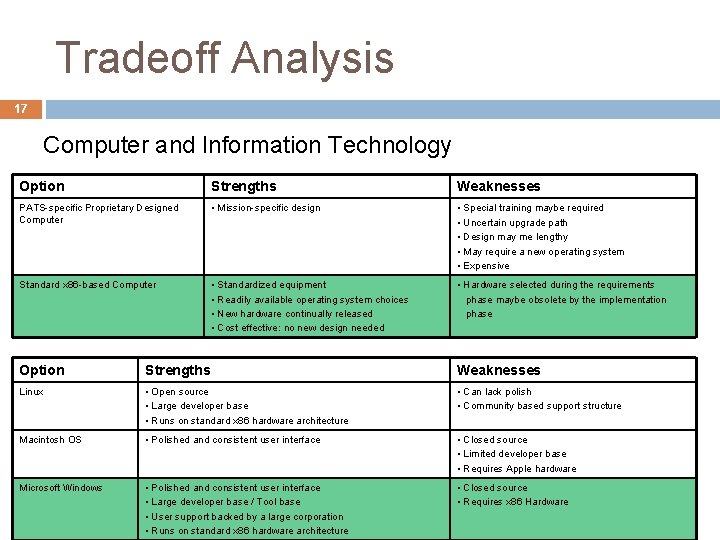
Tradeoff Analysis 17 Computer and Information Technology Option Strengths Weaknesses PATS-specific Proprietary Designed Computer • Mission-specific design • Special training maybe required • Uncertain upgrade path • Design may me lengthy • May require a new operating system • Expensive Standard x 86 -based Computer • Standardized equipment • Readily available operating system choices • New hardware continually released • Cost effective: no new design needed • Hardware selected during the requirements phase maybe obsolete by the implementation phase Option Strengths Weaknesses Linux • Open source • Large developer base • Runs on standard x 86 hardware architecture • Can lack polish • Community based support structure Macintosh OS • Polished and consistent user interface • Closed source • Limited developer base • Requires Apple hardware Microsoft Windows • Polished and consistent user interface • Large developer base / Tool base • User support backed by a large corporation • Runs on standard x 86 hardware architecture • Closed source • Requires x 86 Hardware 17
Business Case 18 Business Objective Market Situation Cost Model Break Even Analysis System Life Cycle Schedule Technology Roadmap Risk Analysis
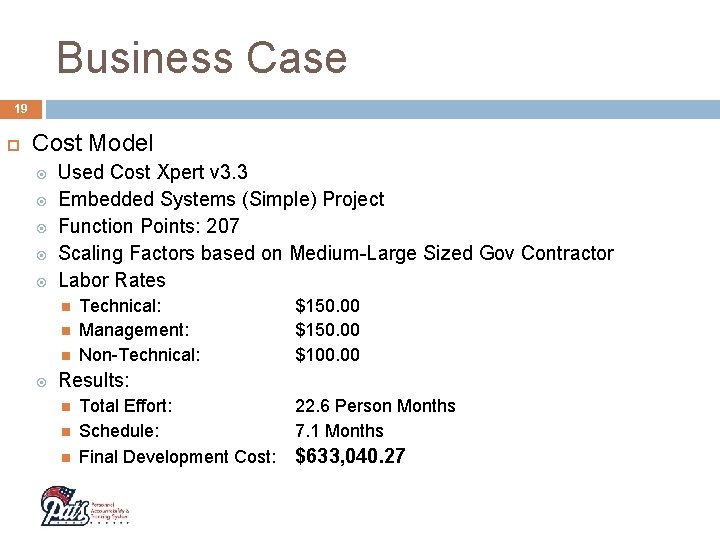
Business Case 19 Cost Model Used Cost Xpert v 3. 3 Embedded Systems (Simple) Project Function Points: 207 Scaling Factors based on Medium-Large Sized Gov Contractor Labor Rates Technical: Management: Non-Technical: $150. 00 $100. 00 Results: Total Effort: Schedule: Final Development Cost: 22. 6 Person Months 7. 1 Months $633, 040. 27
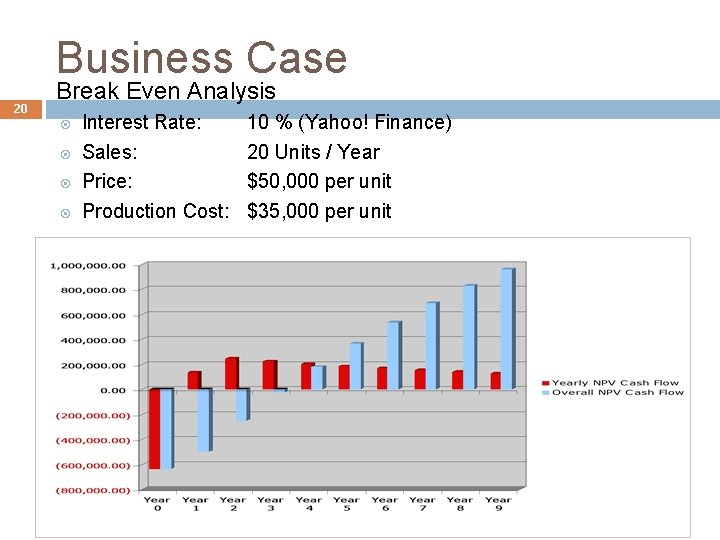
Business Case 20 Break Even Analysis Interest Rate: Sales: Price: Production Cost: 10 % (Yahoo! Finance) 20 Units / Year $50, 000 per unit $35, 000 per unit 20
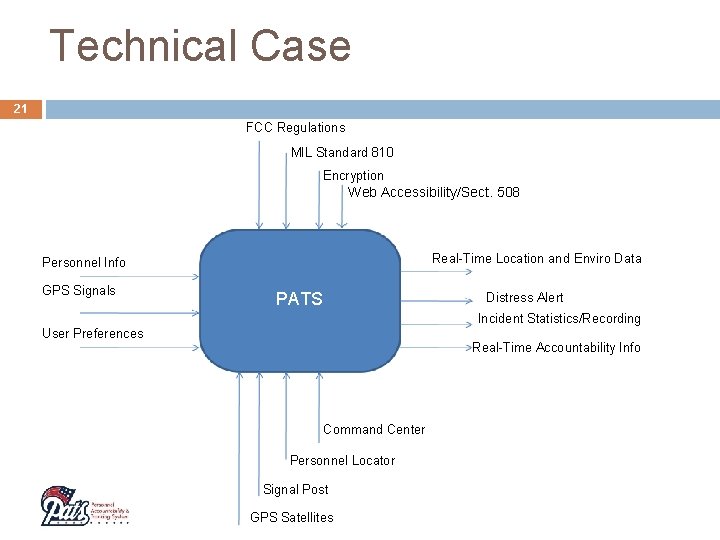
Technical Case 21 FCC Regulations MIL Standard 810 Encryption Web Accessibility/Sect. 508 Real-Time Location and Enviro Data Personnel Info GPS Signals PATS Distress Alert Incident Statistics/Recording User Preferences Real-Time Accountability Info Command Center Personnel Locator Signal Post GPS Satellites
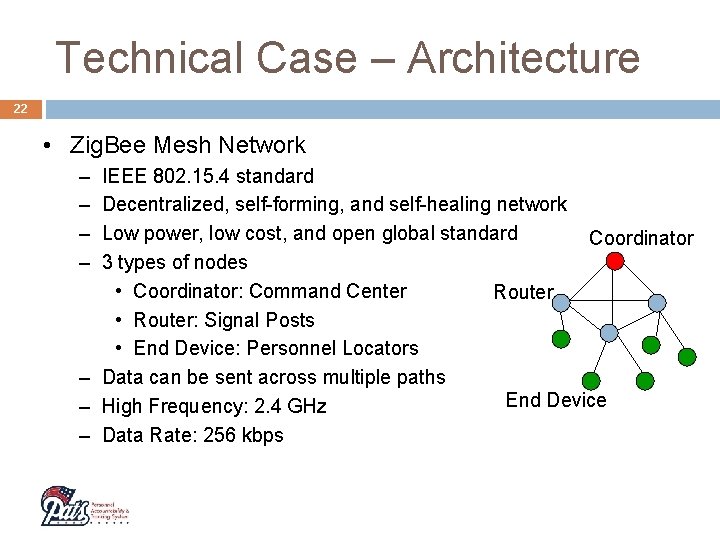
Technical Case – Architecture 22 • Zig. Bee Mesh Network – – IEEE 802. 15. 4 standard Decentralized, self-forming, and self-healing network Low power, low cost, and open global standard Coordinator 3 types of nodes • Coordinator: Command Center Router • Router: Signal Posts • End Device: Personnel Locators – Data can be sent across multiple paths End Device – High Frequency: 2. 4 GHz – Data Rate: 256 kbps
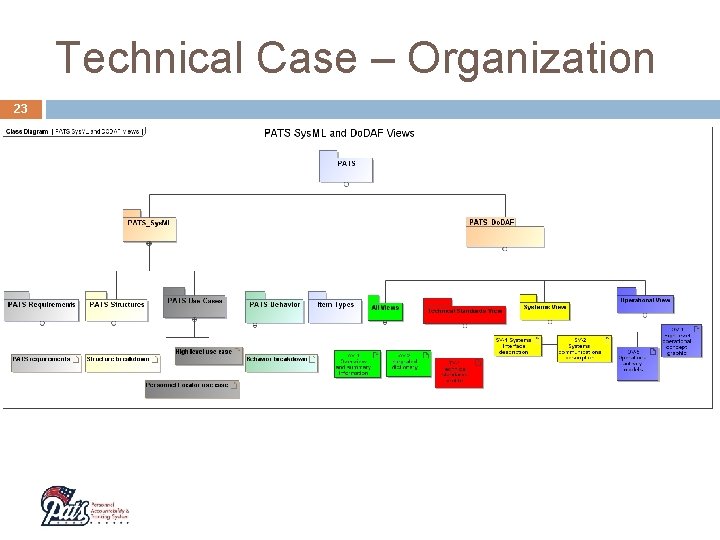
Technical Case – Organization 23
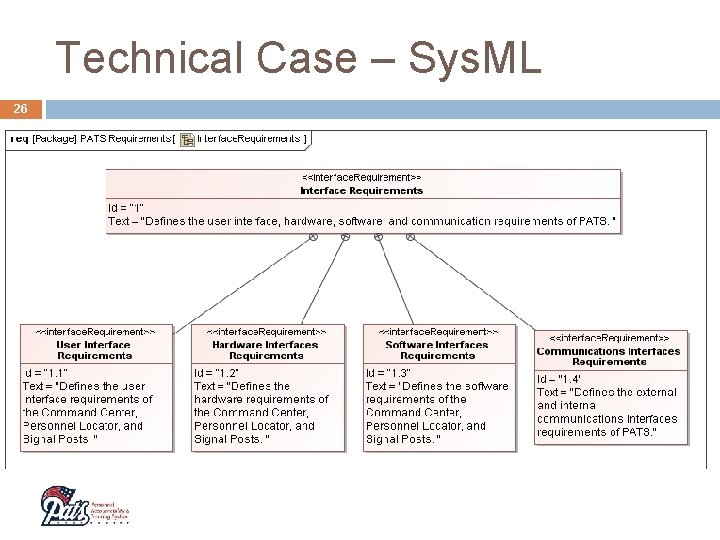
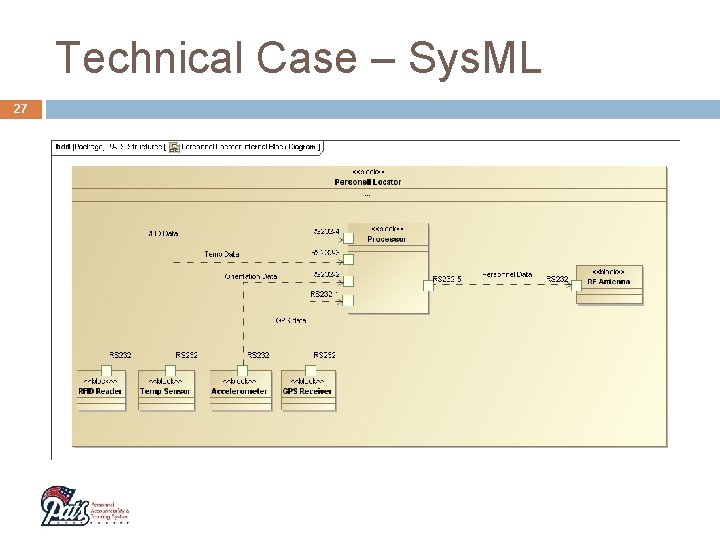
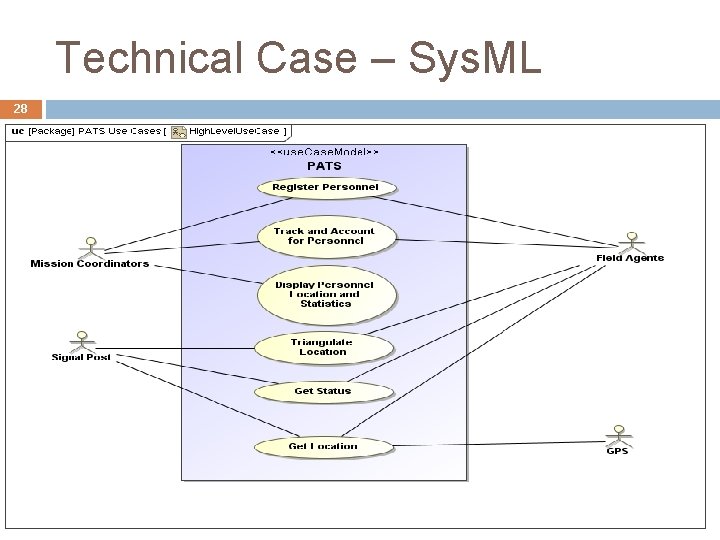
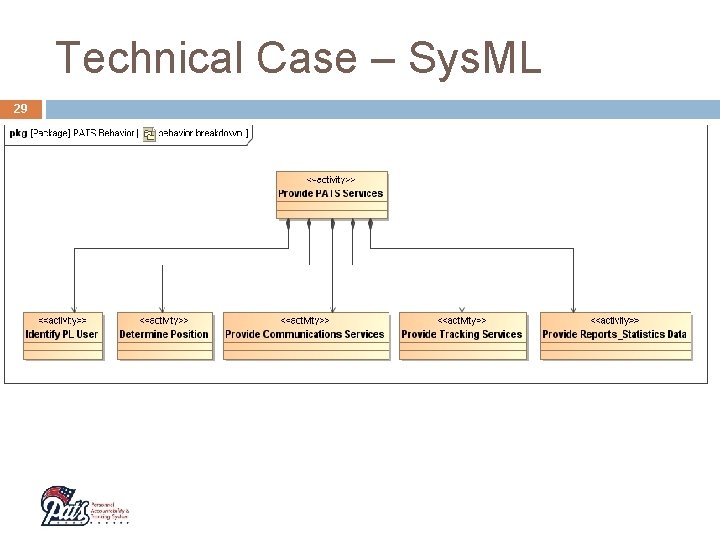
Technical Case – Sys. ML 24 System Modeling Approach • • Organize the model and identify reuse libraries Capture requirements and assumptions Model behavior Model Structure o Capture implied inputs and outputs, and data follow o Identify structural components and their interconnections o Allocate behavior onto components and behavior flow onto interconnections
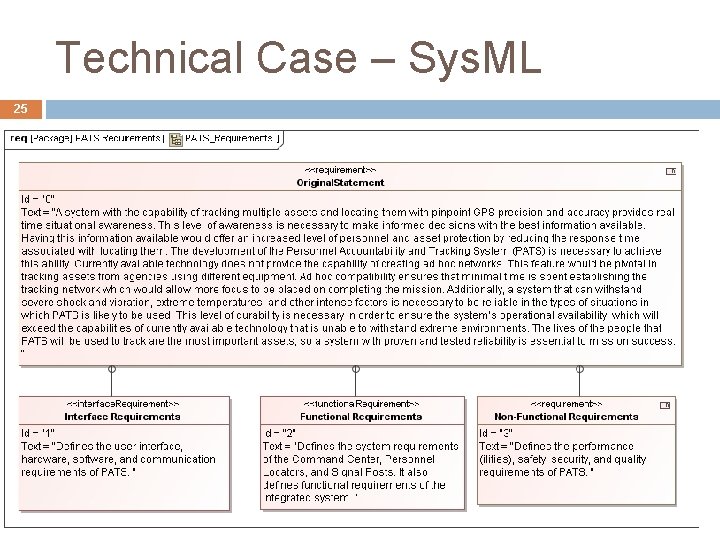
Technical Case – Sys. ML 25 25
Technical Case – Sys. ML 26
Technical Case – Sys. ML 27
Technical Case – Sys. ML 28
Technical Case – Sys. ML 29
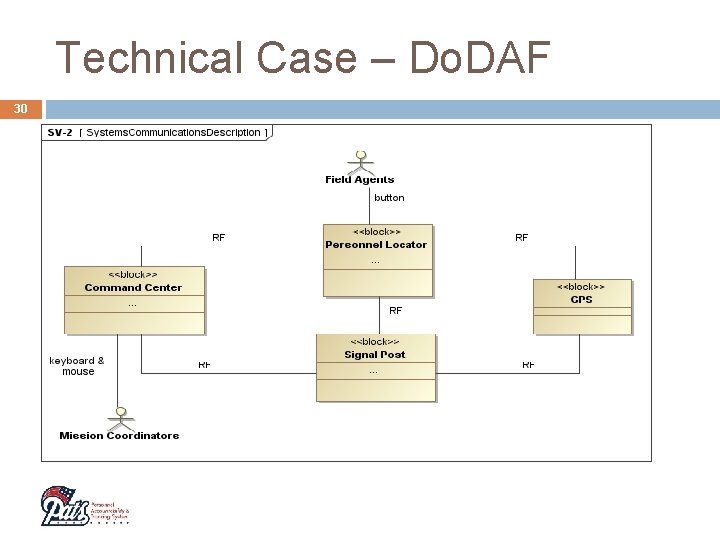
Technical Case – Do. DAF 30
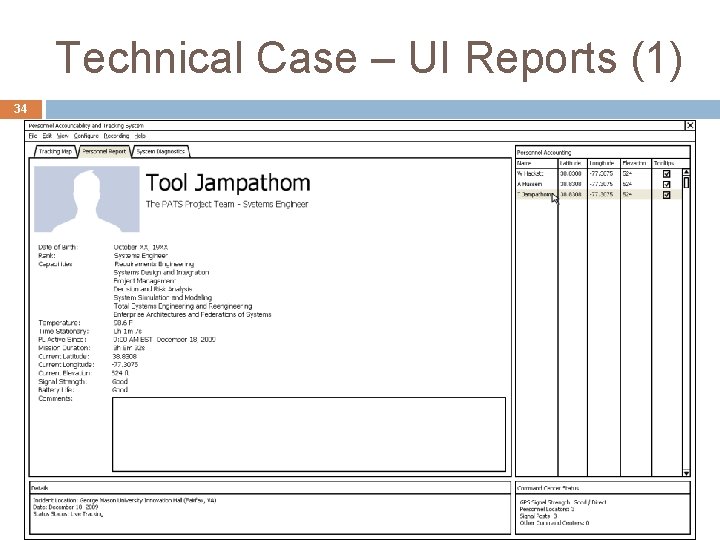
Technical Case – User Interface 31 Command Center User Interface Development Wireframe Sketcher selected as UI modeling tool Models for: Real-time tracking and accounting Distress calls and triggers (manual and autonomous) Reporting Personnel System diagnostics
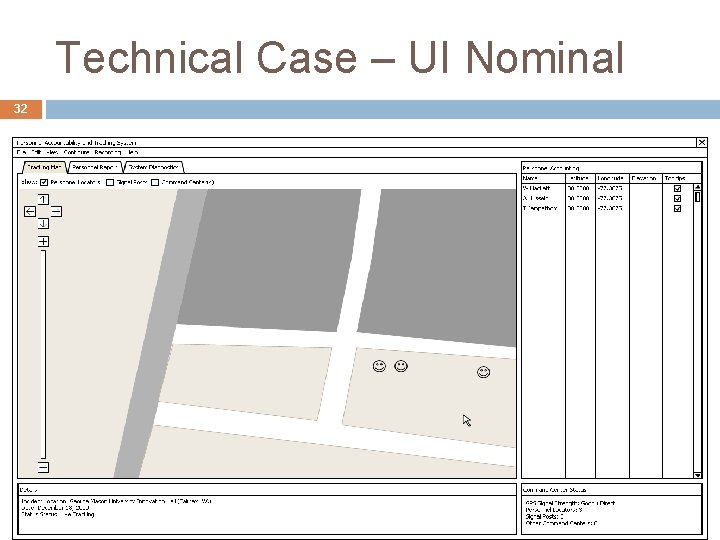
Technical Case – UI Nominal 32 32
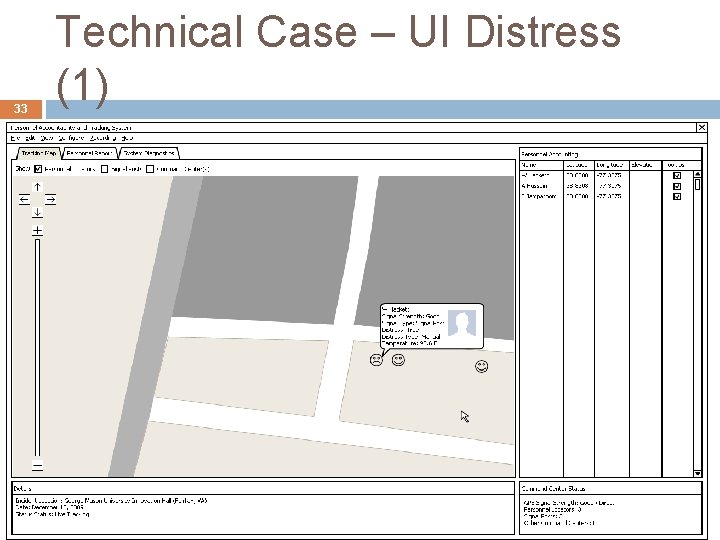
33 Technical Case – UI Distress (1) 33
Technical Case – UI Reports (1) 34 34
Conclusion 35 Summary Systems Engineering Process Stakeholder Analysis Alternatives & Tradeoffs Cost Modeling & Financials System Modeling & Do. DAF Architecture Views System Requirements Specification Future Development and Possibilities Software / Hardware Engineering Products available for handoff System Requirements Specification Technology Tradeoff Analysis Stakeholder Analysis Business / Economic / Market Analysis
36 Questions?
Backup Slides 37
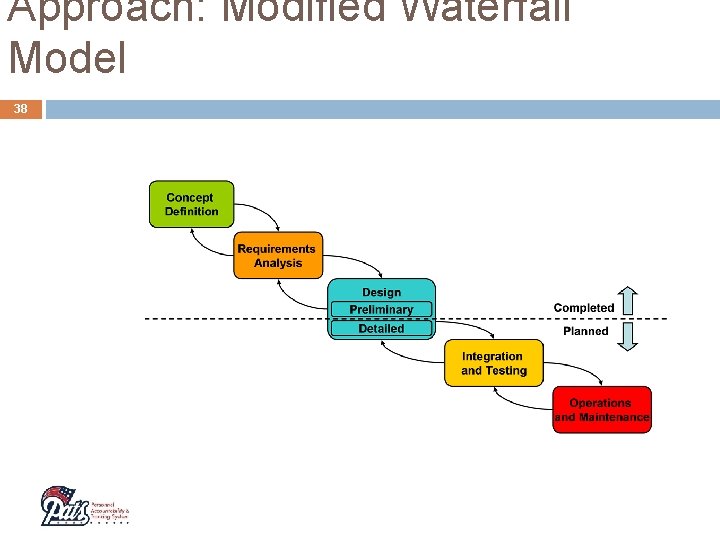
Approach: Modified Waterfall Model 38
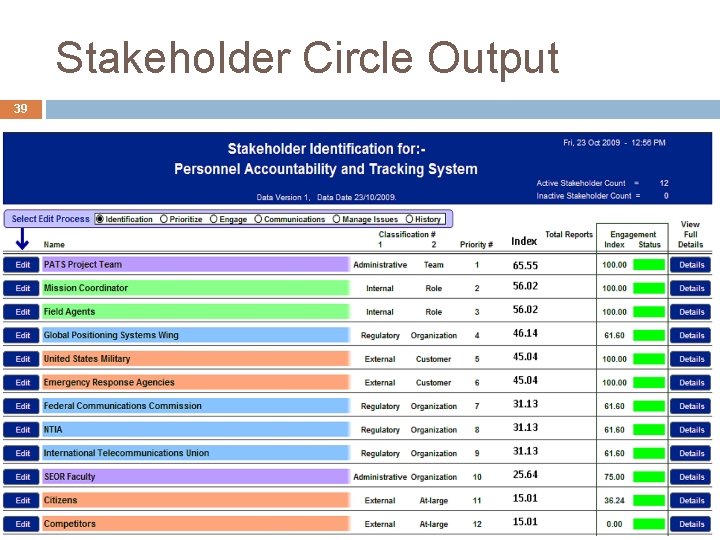
Stakeholder Circle Output 39 39
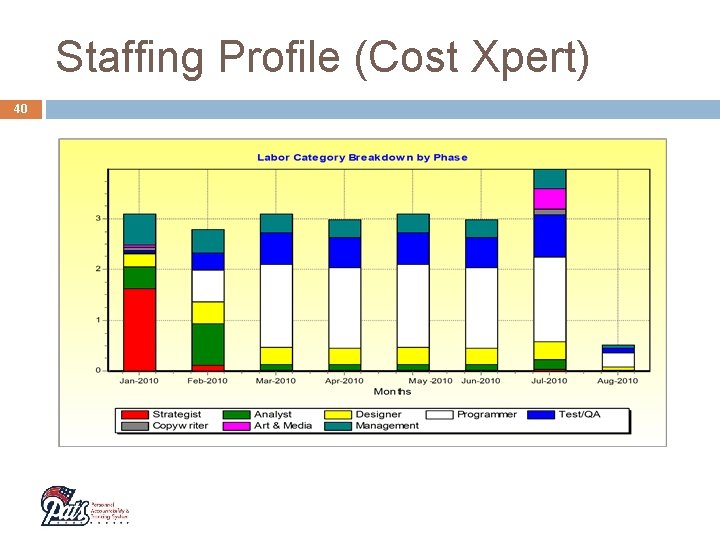
Staffing Profile (Cost Xpert) 40 40
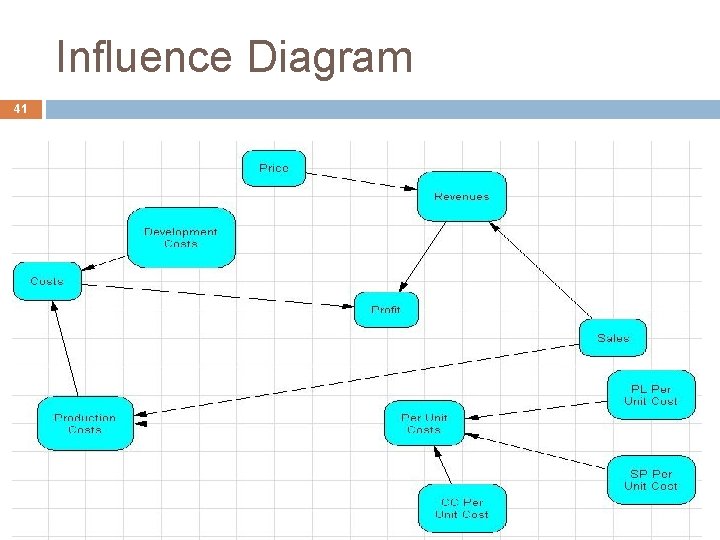
Influence Diagram 41 41
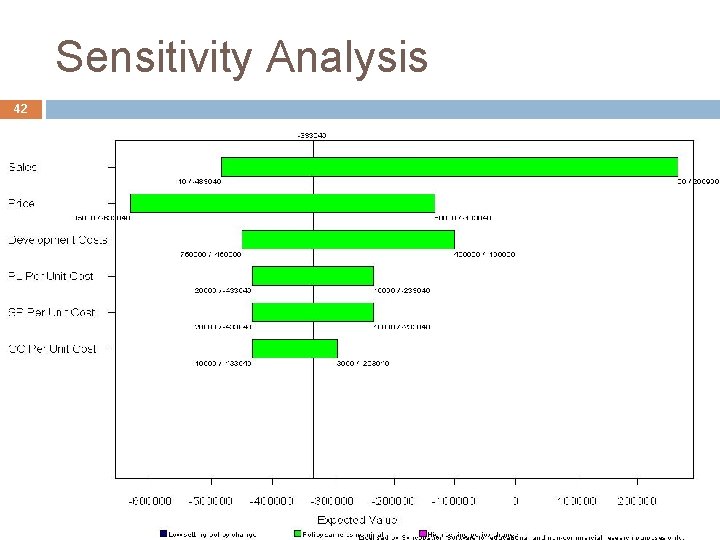
Sensitivity Analysis 42 42
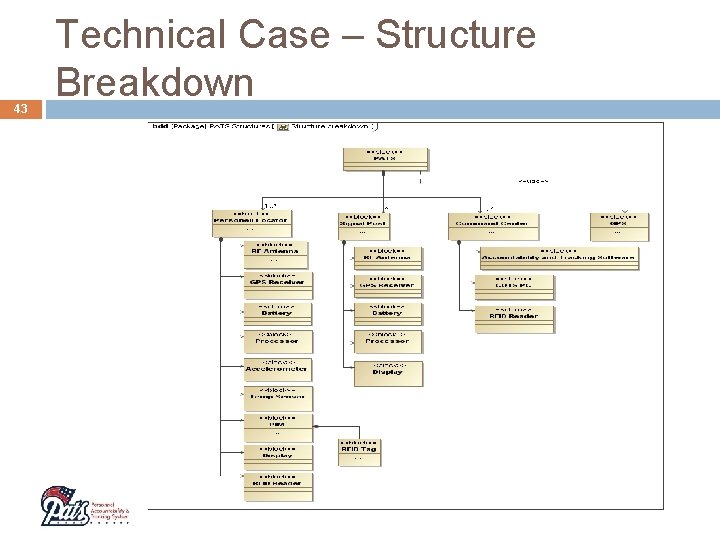
43 Technical Case – Structure Breakdown 43
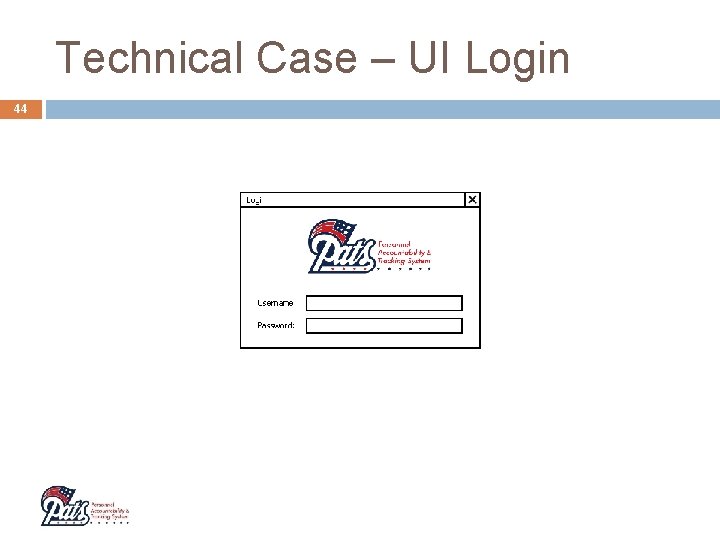
Technical Case – UI Login 44 44
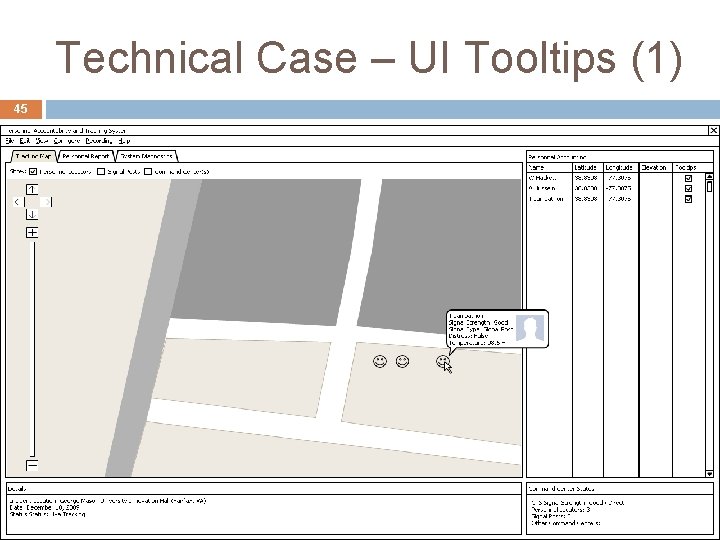
Technical Case – UI Tooltips (1) 45 45
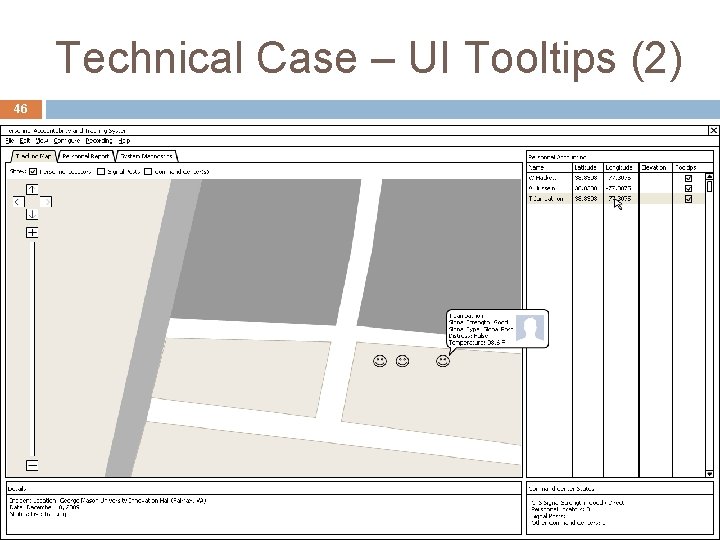
Technical Case – UI Tooltips (2) 46 46
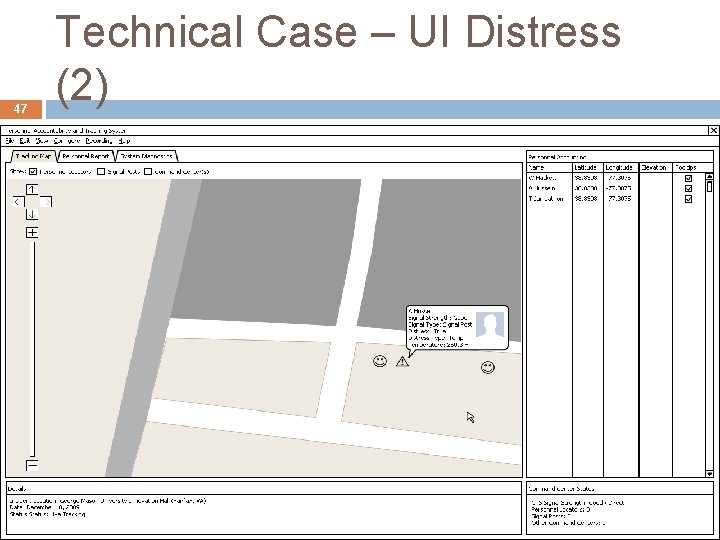
47 Technical Case – UI Distress (2) 47
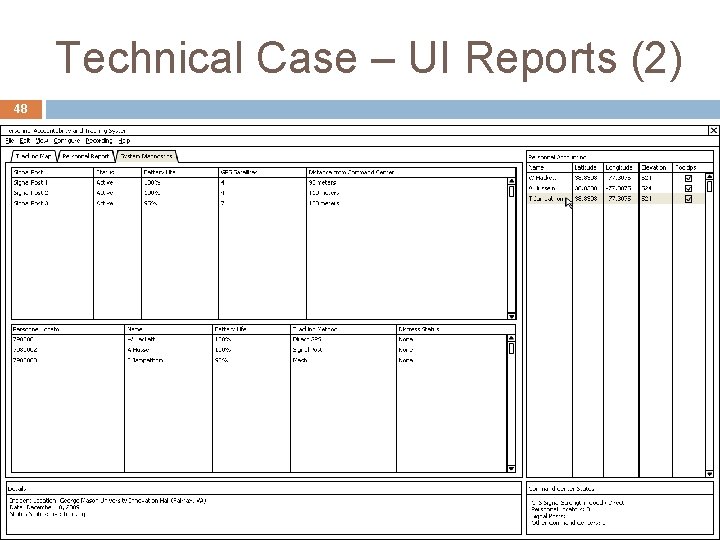
Technical Case – UI Reports (2) 48 48
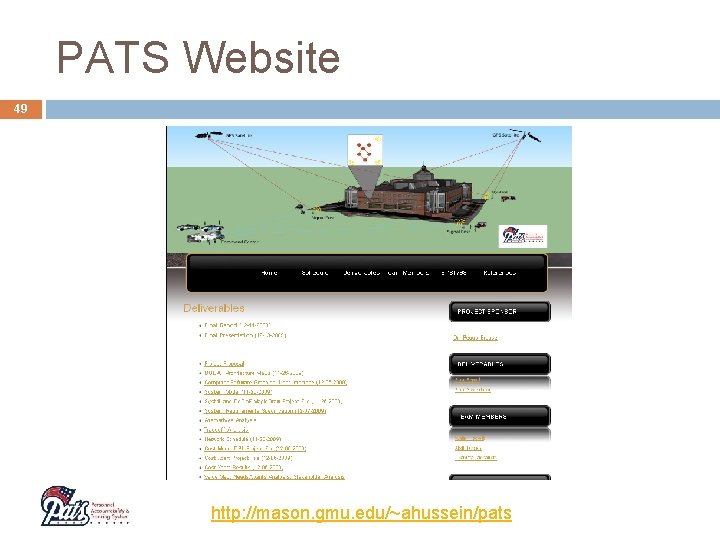
PATS Website 49 http: //mason. gmu. edu/~ahussein/pats
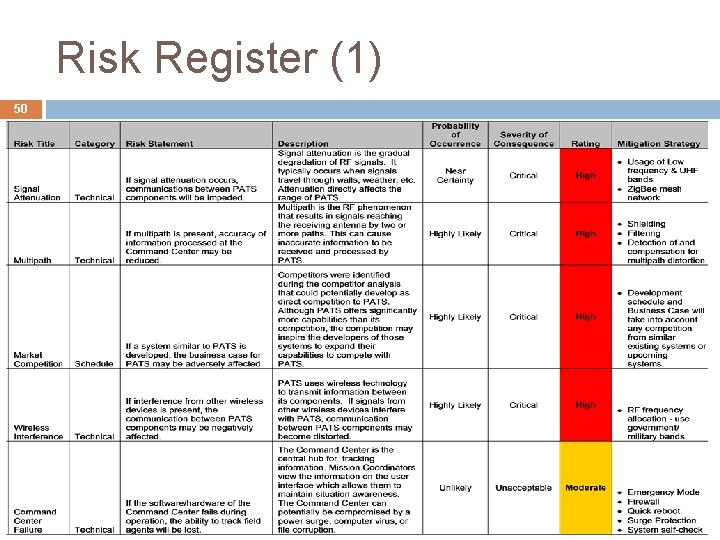
Risk Register (1) 50
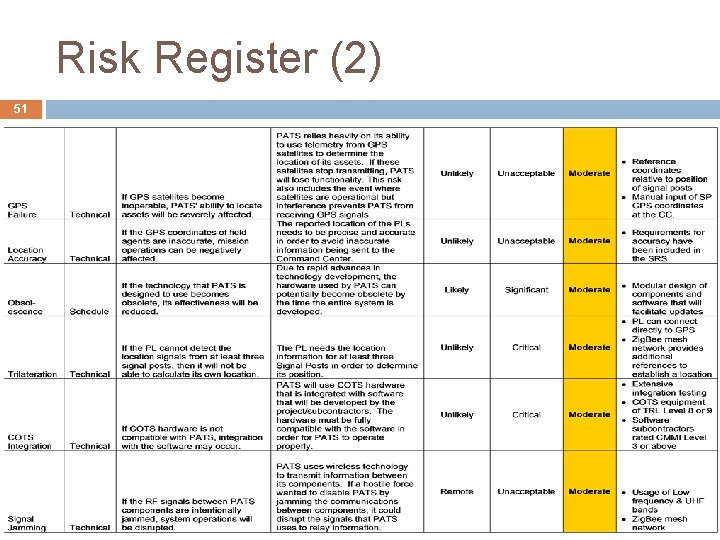
Risk Register (2) 51
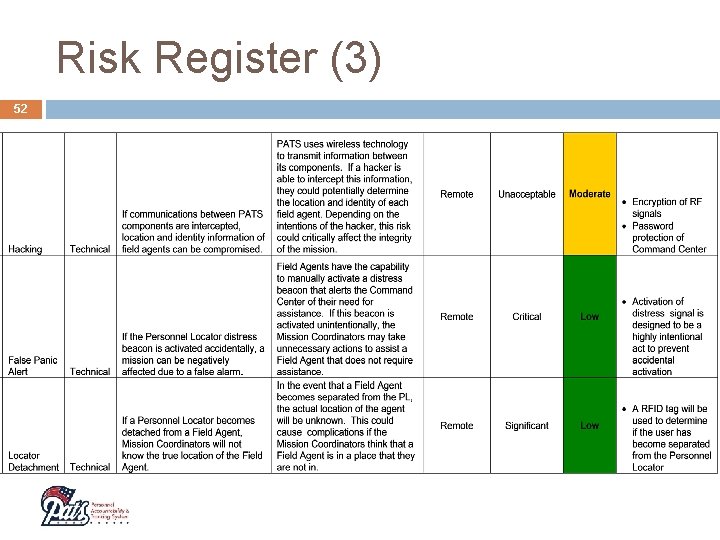
Risk Register (3) 52
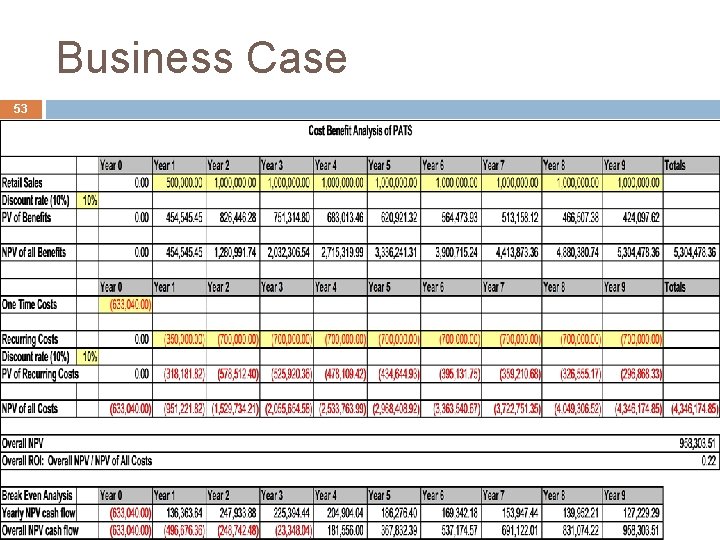
Business Case 53 53
- Slides: 53