
Personhood and Persistent Vegetative State What Is PVS
- Slides: 13
Personhood and Persistent Vegetative State
What Is PVS? n n n Permanent unconsciousness NOT coma-- sleep wake cycles Random movements No purposeful movements Cannot perceive any environmental stimuli (including pain) Spontaneous breathing after initial phase
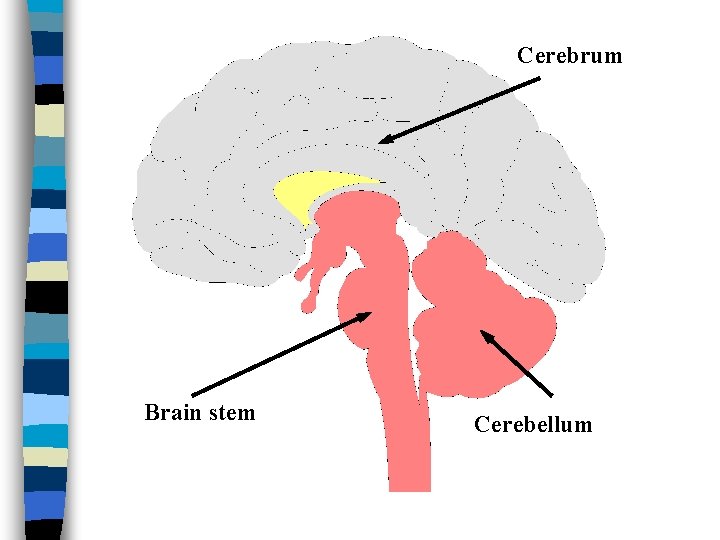
What is PVS? Cont. n n Brain stem intact Cerebral hemispheres irreversibly damaged No single sign is conclusively diagnostic Can be diagnosed with confidence 1 -12 months after initial injury depending on age, nature of injury
Persistent Vegetative State = Higher Brain Death
Cerebrum Brain stem Cerebellum
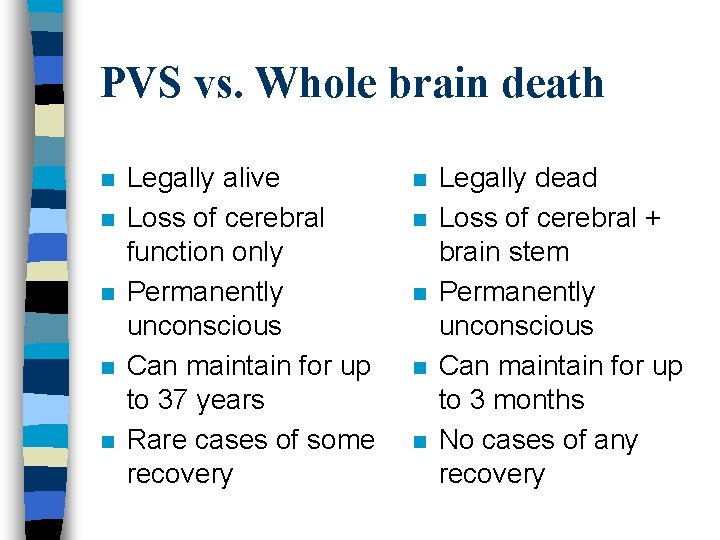
PVS vs. Whole brain death n n n Legally alive Loss of cerebral function only Permanently unconscious Can maintain for up to 37 years Rare cases of some recovery n n n Legally dead Loss of cerebral + brain stem Permanently unconscious Can maintain for up to 3 months No cases of any recovery
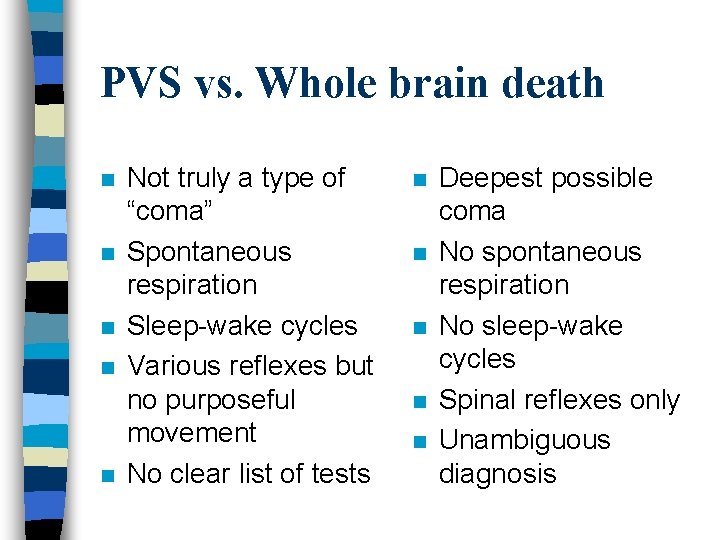
PVS vs. Whole brain death n n n Not truly a type of “coma” Spontaneous respiration Sleep-wake cycles Various reflexes but no purposeful movement No clear list of tests n n n Deepest possible coma No spontaneous respiration No sleep-wake cycles Spinal reflexes only Unambiguous diagnosis
Importance of Personhood n n n Basic moral ideal: respect for persons In almost all cases, a living human being is a person Borderline cases – Human fetus – PVS – Anencephalic infant
Mental capacity view of personhood n n Favored by Arras and many others Person = potential bearer of rights and interests To have interests it must make a difference to you for your own sake what is done to you To make a difference must have minimal level of awareness
Mental capacity n n n If one irreversibly lacks that minimal level of awareness of self and surroundings, not a “person” in the strict moral sense Applies clearly to PVS: Former person, no longer one Applies clearly to anencephalic infant: never can become a person
Risks? n n n “Nonperson” status in past often used as mode of discrimination against minorities (Nazis, etc. ) Reply: Mental capacity is different because it clearly made a difference to victims of Nazis what happened to them Test: what would I want done to and for myself, if I were later to enter a PVS?
Criterion for death? n n n Proposal: We care about the deaths of persons, not about the deaths of human bodies Therefore should have higher brain not whole brain criterion for death Practical problem: ease and certainty of diagnosis
A differing (religious) view n n All living human beings are worthy of respect and dignity Ongoing life is always a “benefit” A feeding tube thus provides a benefit with very little if any burden PVS is an extreme disability so nontreatment mean treating the disabled as less than full persons