
Personality Types and the Correlation with Your Political
- Slides: 9
Personality Types and the Correlation with Your Political Affiliation Angelica Thompson Huntington University
Research • Cooper, Golden and Socha (2013) • By using The Big Five personality test, it was found that extraversion, conscientiousness, neuroticism and openness to experience are all correlated with whether someone is a liberal or conservative. • The results suggest that people who score higher on openness to experience are more likely to be self-professed liberals than those who are less open to new experiences. • Results support that people who scored higher on the agreeableness dimension will be more efficacious and also demonstrates that extroverted people are also more likely to be politically efficacious.
Research • Sweetser (2014) • By using The Big Five personality test, an analysis of variance was conducted on each of the five personality inventories based on political party identification (Democrat, Independent, Republican). • Republicans displayed greater conscientiousness than both Democrats and Independents. • The other four personality factors did not result in statistically significant difference based on the political factors.
Research Questions 1. What is the relationship between political affiliation and one’s score on the Myers Briggs personality test? 2. Are people who score high in specific areas of personality types inclined to lean a certain direction in politics? 3. What are the differences in the personality profiles for libertarians, liberals, conservatives, centrists and statists? 4. Is there any significance in being an evangelical Christian and believing in the separation of church and state.
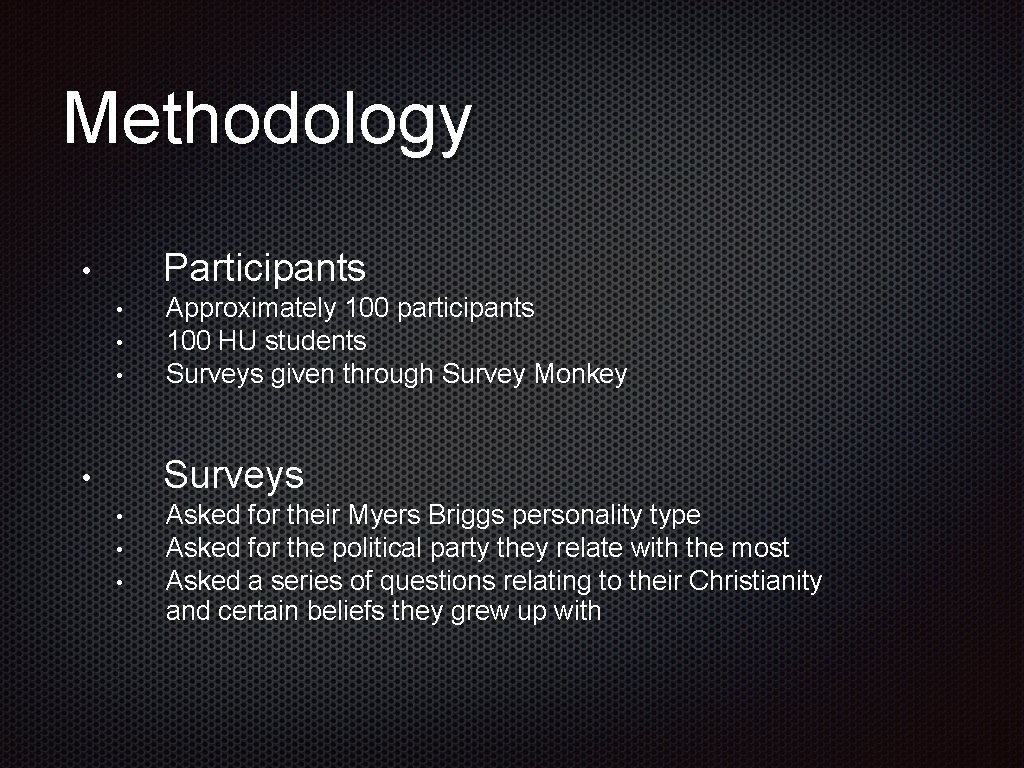
Methodology Participants • • Approximately 100 participants 100 HU students Surveys given through Survey Monkey Surveys • • Asked for their Myers Briggs personality type Asked for the political party they relate with the most Asked a series of questions relating to their Christianity and certain beliefs they grew up with
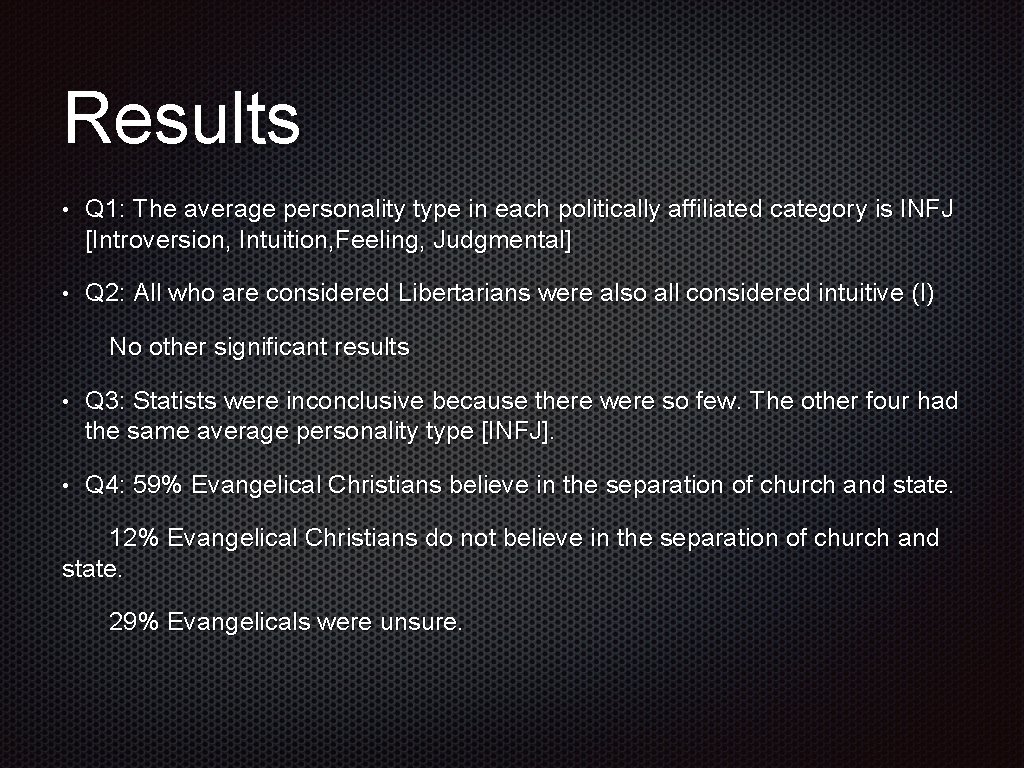
Results • Q 1: The average personality type in each politically affiliated category is INFJ [Introversion, Intuition, Feeling, Judgmental] • Q 2: All who are considered Libertarians were also all considered intuitive (I) No other significant results • Q 3: Statists were inconclusive because there were so few. The other four had the same average personality type [INFJ]. • Q 4: 59% Evangelical Christians believe in the separation of church and state. 12% Evangelical Christians do not believe in the separation of church and state. 29% Evangelicals were unsure.
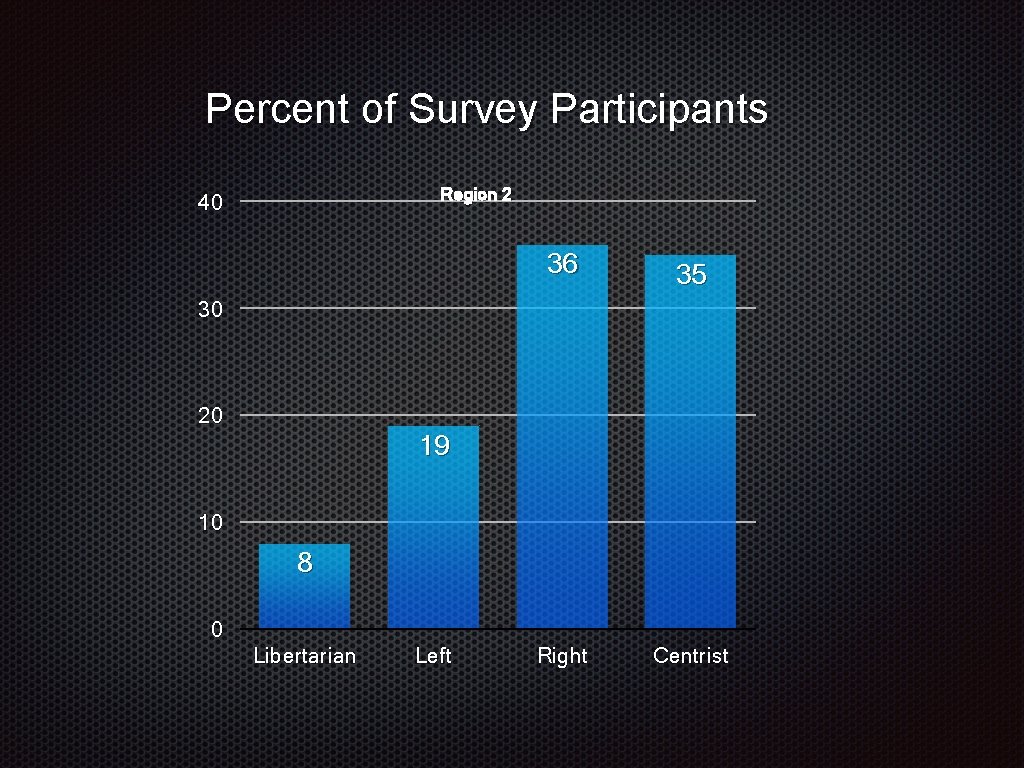
Percent of Survey Participants Region 2 40 36 35 Right Centrist 30 20 19 10 8 0 Libertarian Left
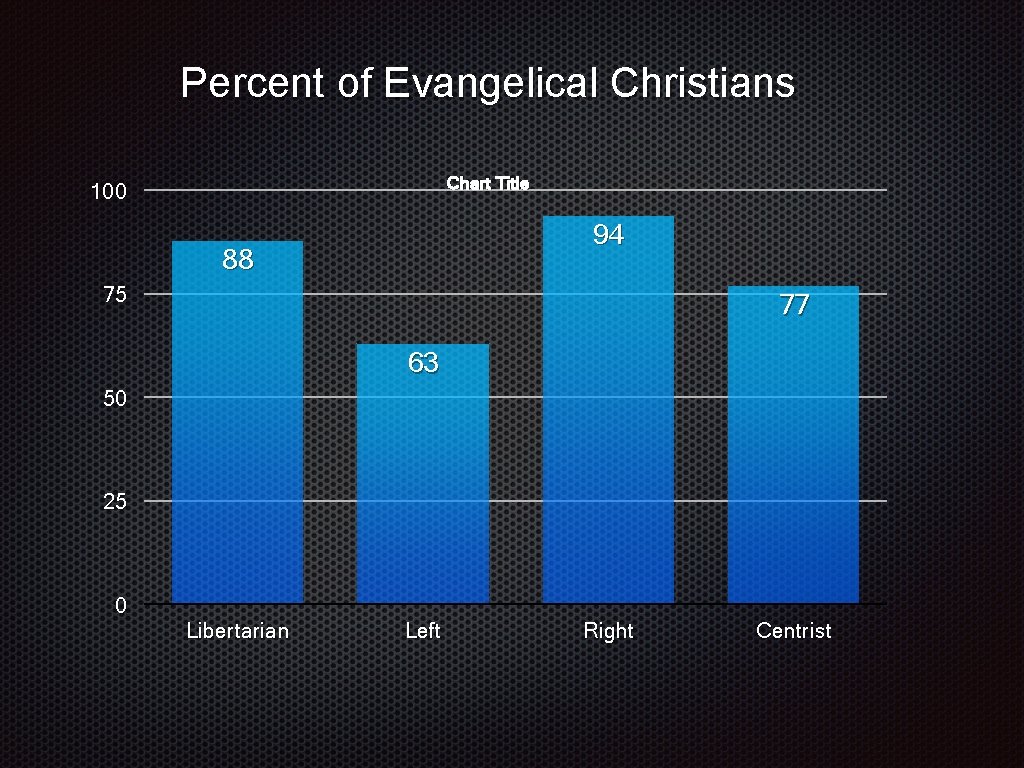
Percent of Evangelical Christians Chart Title 100 94 88 75 77 63 50 25 0 Libertarian Left Right Centrist
Limitations & Further Research Limitations • • Convenience survey The small number of participants • Small and private Christian University • Further Research • • Use a much larger amount of participants Use participants at a large public college Survey students from multiple colleges