
Personality Four Main Theories Psychoanalytic Theory Humanistic Theory
- Slides: 10
Personality Four Main Theories: • Psychoanalytic Theory • Humanistic Theory • Social-Cognitive Theory • Trait Theory A person’s pattern of thinking, feeling and acting.
Trait Theories of Personality Trait: a characteristic pattern of behavior or a disposition to feel and act n They believe that we can describe people’s personalities by specifying their main characteristics (traits). n Traits like honesty, laziness, ambition, outgoing are thought to be stable over the course of your lives. n
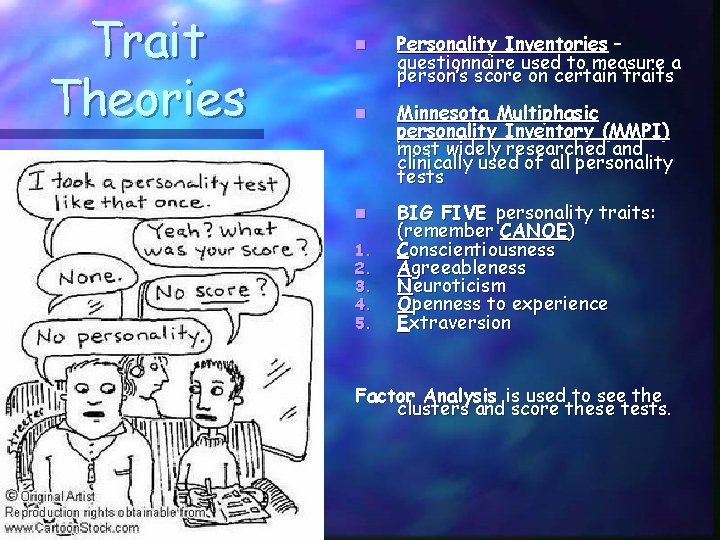
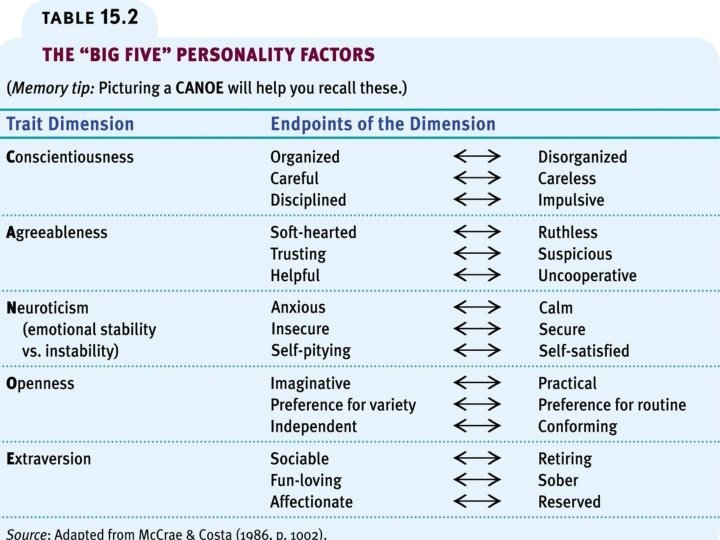
Trait Theories n Personality Inventories – questionnaire used to measure a person’s score on certain traits n Minnesota Multiphasic personality Inventory (MMPI) most widely researched and clinically used of all personality tests n BIG FIVE personality traits: (remember CANOE) Conscientiousness Agreeableness Neuroticism Openness to experience Extraversion 1. 2. 3. 4. 5. Factor Analysis is used to see the clusters and score these tests.
Conscientiousness n High n Organized n Careful n Disciplined n Low n Disorganized n Careless n Impulsive
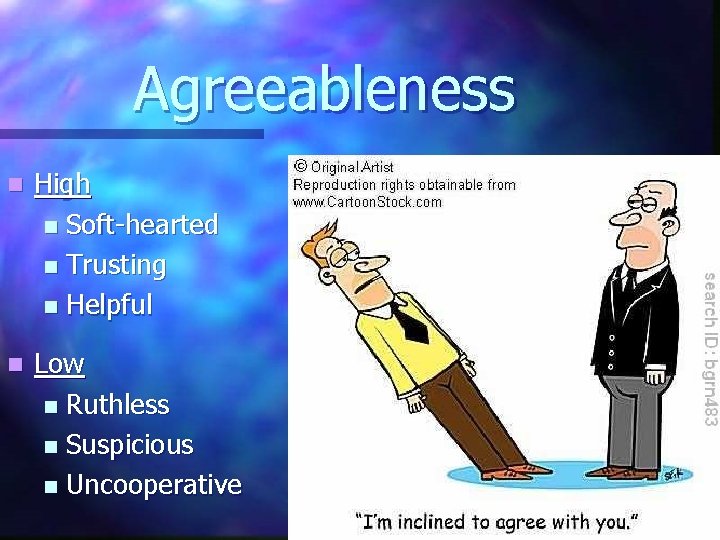
Agreeableness n High n Soft-hearted n Trusting n Helpful n Low n Ruthless n Suspicious n Uncooperative
Neuroticism High n Anxious n Insecure n Self-pitying n Low n Calm n Secure n Self-satisfied n
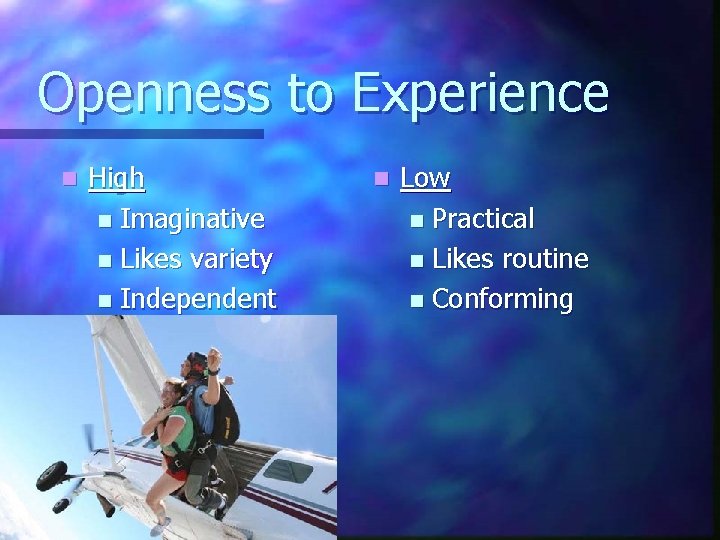
Openness to Experience n High n Imaginative n Likes variety n Independent n Low n Practical n Likes routine n Conforming
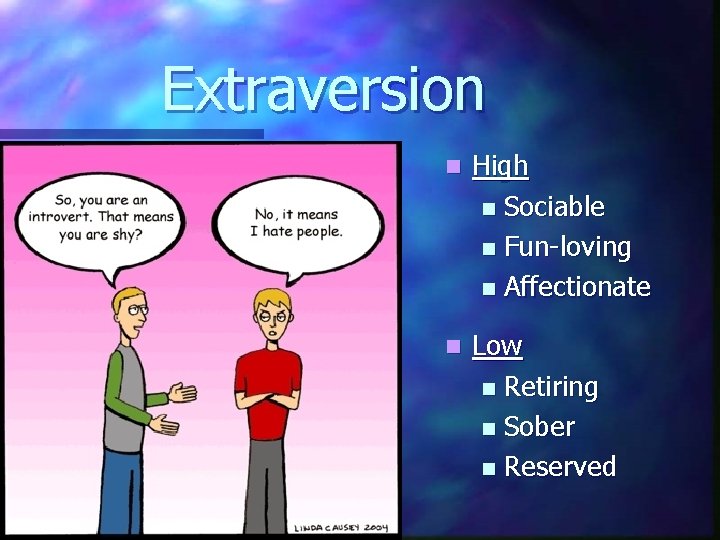
Extraversion n High n Sociable n Fun-loving n Affectionate n Low n Retiring n Sober n Reserved
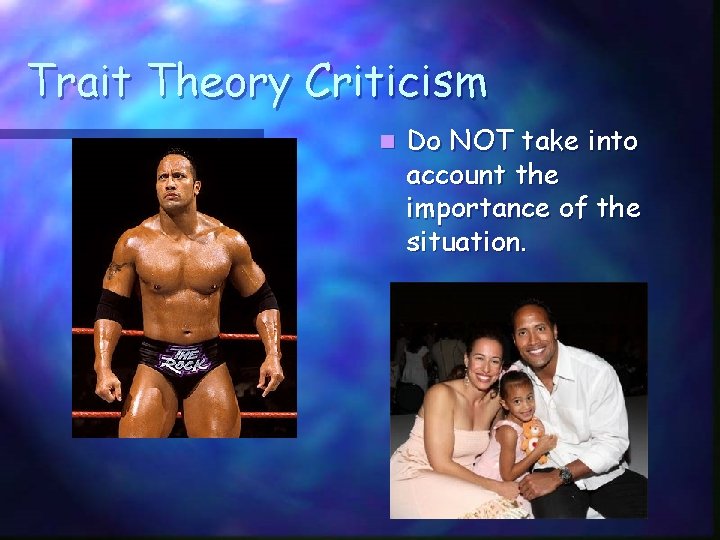
Trait Theory Criticism n Do NOT take into account the importance of the situation.