
Personality Disorders Psychological disorders characterized by inflexible and
Personality Disorders Psychological disorders characterized by inflexible and enduring behavior patterns that impair social functioning.
BASIC FACTS • Approx. 15% of U. S. adults meet criteria for one or more PDs • Up to 30% of people who require mental health services have at least one PD • No cure for PDs, but therapy and some forms of medication can aid with symptoms • Combination of heredity and life experiences appear to play a role in most PDs 2
RISK FACTORS • More women than men develop Borderline PD • More men than women develop Antisocial PD & Obsessive-Compulsive PD • Other risk factors: – – – History of child abuse (verbal, physical, sexual) Family history of Schizophrenia Family history of Personality Disorders Childhood head injury Unstable, chaotic family life 3
RISK FACTORS (cont’d) • Individuals with PDs have greater risk of the following: – Social Isolation – Suicide – Substance Abuse – Depression, Anxiety, & Eating Disorders – Self-destructive Behavior – Violence & Homicide – Incarceration 4
Paranoid Personality Disorder q Distrust / suspicion of others that they have bad intentions or motives q. Suspects (w/o sufficient evidence) that others are exploiting, harming, or deceiving him/her q. Reluctant to confide in others due to fear that information will be used against him/her q. Persistently holds grudges q. Has recurrent suspicions regarding fidelity of their spouse or partner 5
Antisocial Personality Disorder • Pattern of disregard for and violation of others’ rights – Failure to conform to lawful behaviors – Deceitfulness (i. e. repeated lying, manipulation) – Impulsivity or failure to plan ahead – Irritability & aggressiveness – Reckless disregard for self or others – Consistent irresponsibility – Lack of remorse 6
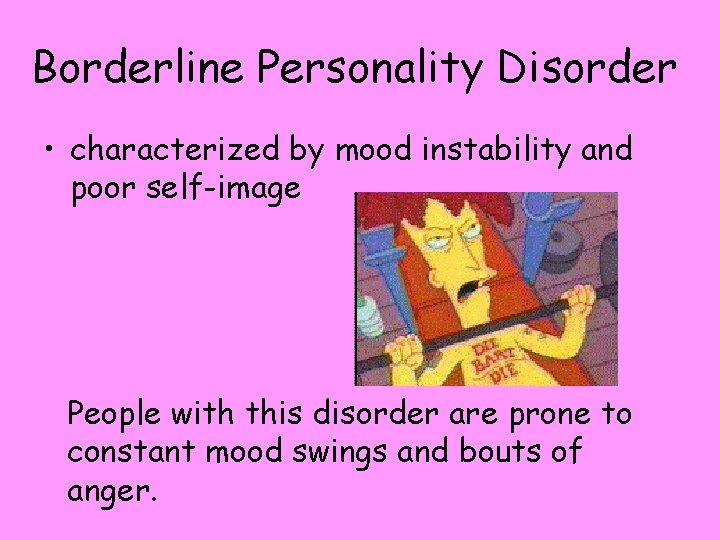
Borderline Personality Disorder • characterized by mood instability and poor self-image People with this disorder are prone to constant mood swings and bouts of anger.
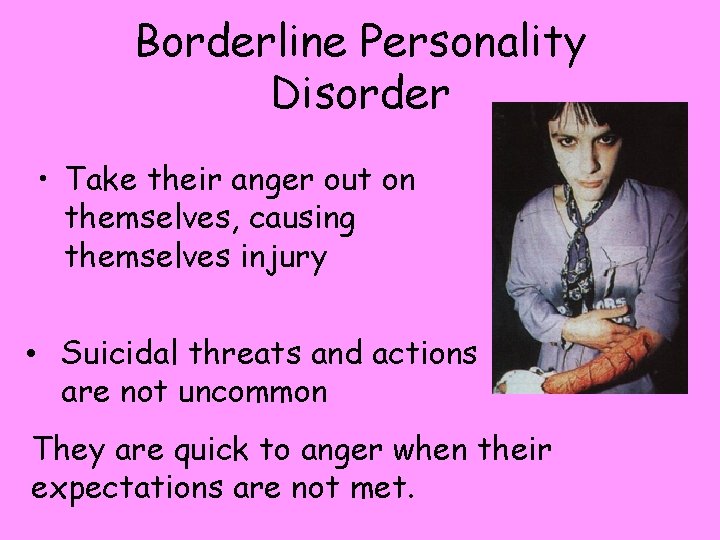
Borderline Personality Disorder • Take their anger out on themselves, causing themselves injury • Suicidal threats and actions are not uncommon They are quick to anger when their expectations are not met.
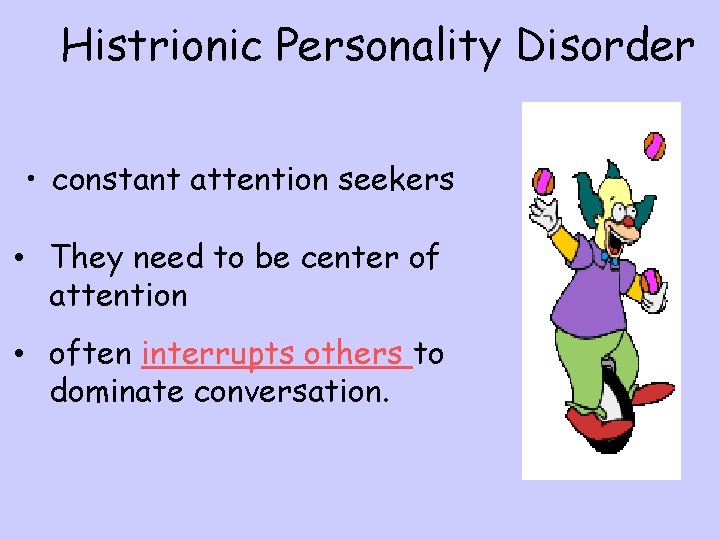
Histrionic Personality Disorder • constant attention seekers • They need to be center of attention • often interrupts others to dominate conversation.
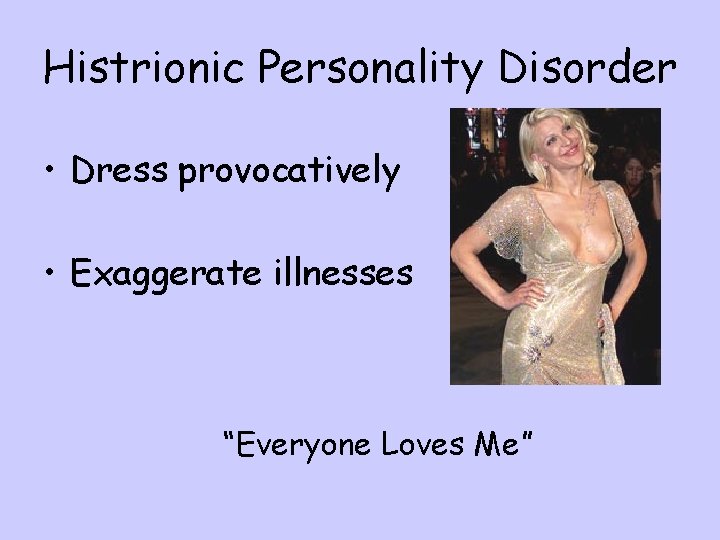
Histrionic Personality Disorder • Dress provocatively • Exaggerate illnesses “Everyone Loves Me”
Narcissistic Personality Disorder • characterized by selfcenteredness Exaggerate their achievements, expecting others to recognize them as being superior
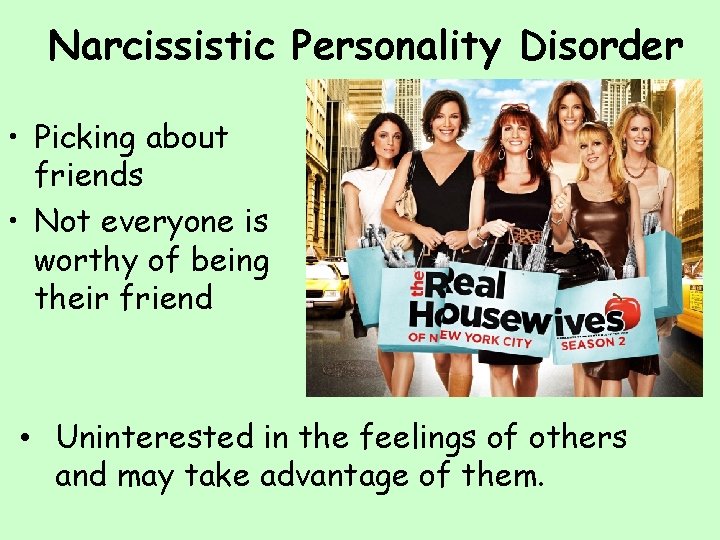
Narcissistic Personality Disorder • Picking about friends • Not everyone is worthy of being their friend • Uninterested in the feelings of others and may take advantage of them.
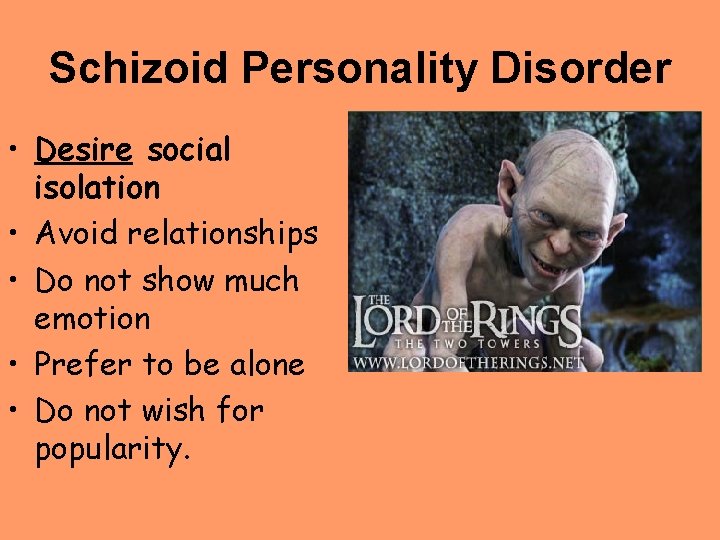
Schizoid Personality Disorder • Desire social isolation • Avoid relationships • Do not show much emotion • Prefer to be alone • Do not wish for popularity.
Schizoid Personality Disorder • Tend to seek jobs that require little social contact • Social skills are weak • Do not show need for attention/acceptance • Seen as humorless and distant • Often are termed "loners. "
Schizotypal Personality Disorder • Need for social isolation • Odd behavior and thinking • Believed that schizotypal personality disorder is a mild form of schizophrenia
Dependent personality disorder • Psychological dependence on other people. • Experiences difficulty making everyday decisions without an excessive amount of advice and reassurance from others
Obsessive Compulsive Personality Disorder • General psychological inflexibility • Strict conformity to rules and procedures • Perfectionism, excessive orderliness • People with OCPD tend to stress perfectionism above all else – Can feel anxious when they think things aren't "right"
- Slides: 17