
Personality behavior and disease UNTAD 2011 How personality
Personality, behavior and disease UNTAD 2011
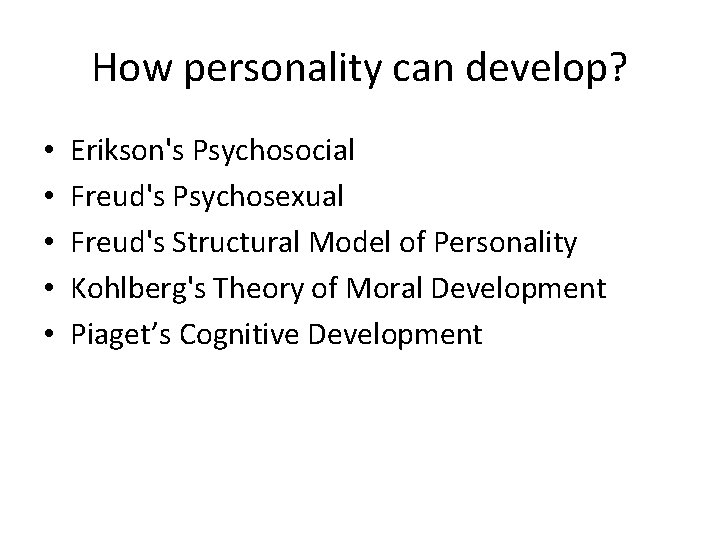
How personality can develop? • • • Erikson's Psychosocial Freud's Psychosexual Freud's Structural Model of Personality Kohlberg's Theory of Moral Development Piaget’s Cognitive Development
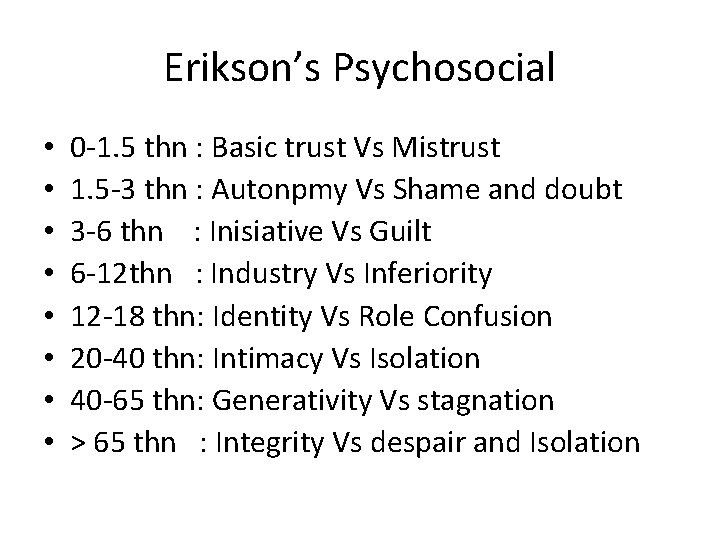
Erikson’s Psychosocial • • 0 -1. 5 thn : Basic trust Vs Mistrust 1. 5 -3 thn : Autonpmy Vs Shame and doubt 3 -6 thn : Inisiative Vs Guilt 6 -12 thn : Industry Vs Inferiority 12 -18 thn: Identity Vs Role Confusion 20 -40 thn: Intimacy Vs Isolation 40 -65 thn: Generativity Vs stagnation > 65 thn : Integrity Vs despair and Isolation
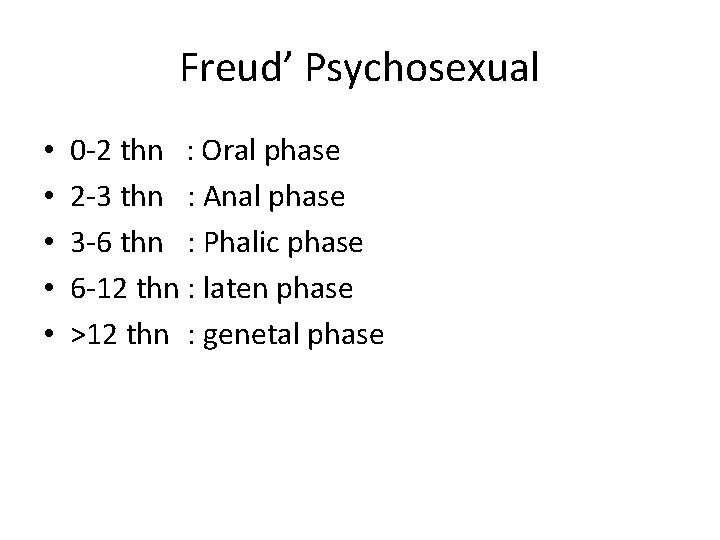
Freud’ Psychosexual • • • 0 -2 thn : Oral phase 2 -3 thn : Anal phase 3 -6 thn : Phalic phase 6 -12 thn : laten phase >12 thn : genetal phase

Freud's Structural Model of Personality • Id : Dorongan instinctual dibawa seja lahir • EGO : Pelepasan dorongan naluri sesuai kenyataan (realita) • Super Ego: Ajaran, norma dan hukuman diletakkan kepada anak oleh orang tua dimasukkan kedalam Super Ego mulai terbentuk pada usia 5 -6 thn
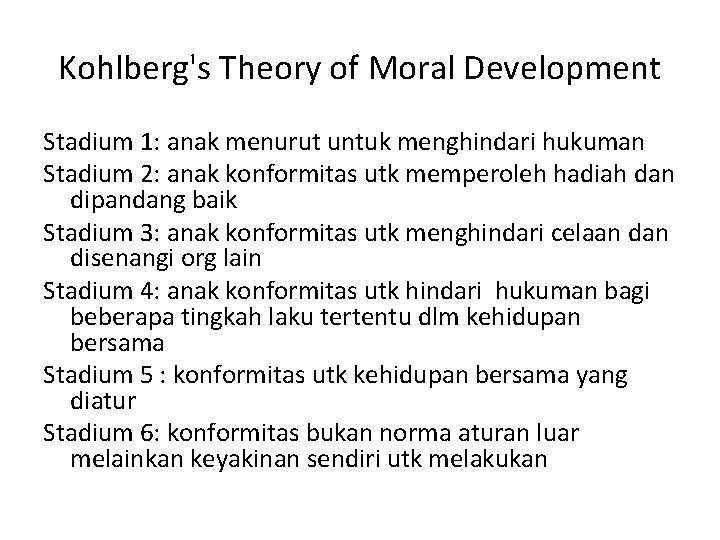
Kohlberg's Theory of Moral Development Stadium 1: anak menurut untuk menghindari hukuman Stadium 2: anak konformitas utk memperoleh hadiah dan dipandang baik Stadium 3: anak konformitas utk menghindari celaan disenangi org lain Stadium 4: anak konformitas utk hindari hukuman bagi beberapa tingkah laku tertentu dlm kehidupan bersama Stadium 5 : konformitas utk kehidupan bersama yang diatur Stadium 6: konformitas bukan norma aturan luar melainkan keyakinan sendiri utk melakukan
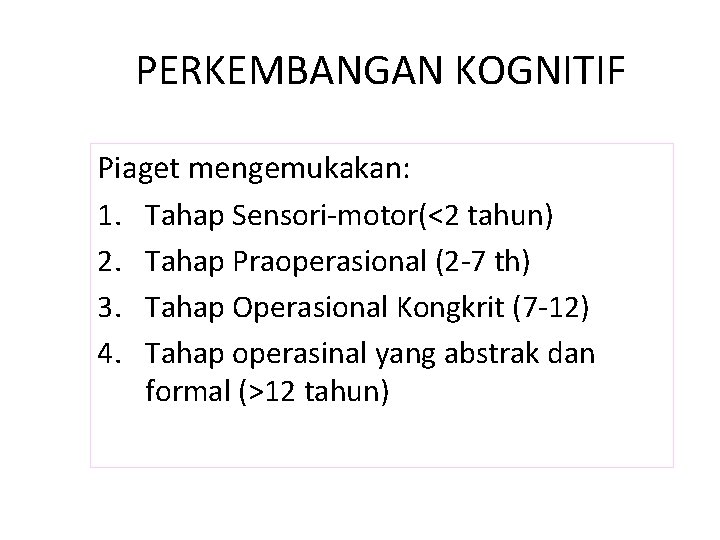
PERKEMBANGAN KOGNITIF Piaget mengemukakan: 1. Tahap Sensori-motor(<2 tahun) 2. Tahap Praoperasional (2 -7 th) 3. Tahap Operasional Kongkrit (7 -12) 4. Tahap operasinal yang abstrak dan formal (>12 tahun)
Personality • Is the whole of personal characteristics, the group of behavioral and emotional tendencies • Is the way of habits, attitudes and traits combine to make a person “unique”
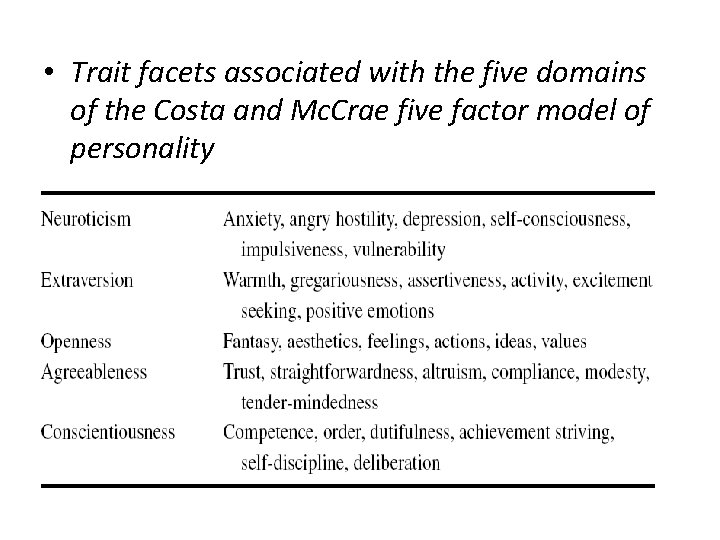
• Trait facets associated with the five domains of the Costa and Mc. Crae five factor model of personality • five factor model of personality
STRESS • Stress – A reaction to a situation, not the situation itself – the arousal, both physical and mental, to situations or events that we perceive as threatening or challenging • Eustress is positive stress occurs when your level of stress is high enough to motivate you to move into action to get things accomplished • Distress is Distress or negative stress occurs when your level of stress is either too high or too low and your body and/or mind begin to respond negatively to the stressors
Stress l mind and body’s response or reaction to a real or imagined threat, event or change. l Stress—a reaction to a situation, not the situation itself; not necessarily “bad” l The threat, event or change are commonly called stressors. Stressors can be internal (thoughts, beliefs, attitudes or external (loss, tragedy, change).
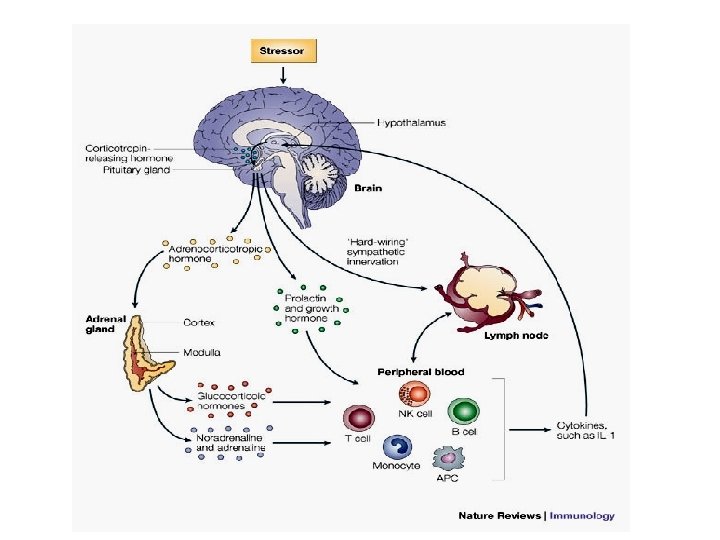
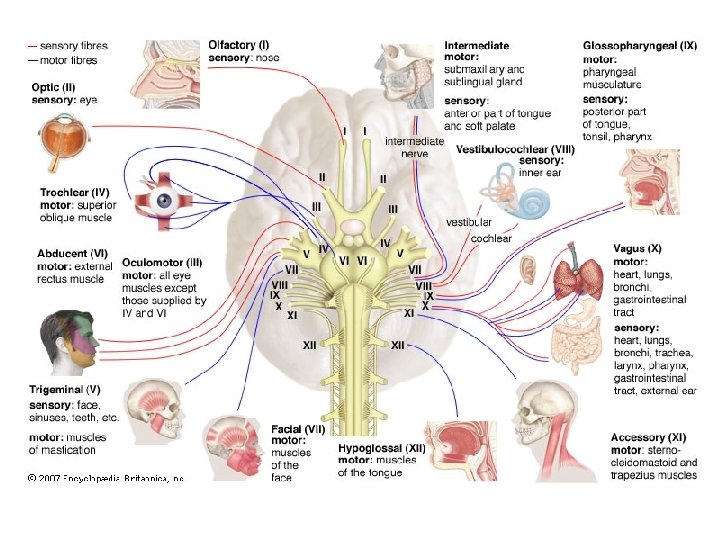
Distress • negative stress occurs when your level of stress is either too high or too low and your body and/or mind begin to respond negatively to the stressors • Inability to cope with environmental demands in a healthy (“wholeness”) way causes the fragmentation and disruption of our soma (body) and our thinking (psyche).
Stages of Stress • Alarm Stage – beginning to experience a stressful event or perceive something to be stressful psychological changes occur in your body • Resistance Stage – The body tries to cope or adapt to the stressors by beginning a process of repairing any damage the stressor has caused
• Exhaustion Stage – the stressor is not being managed effectively and the body and mind are not able to repair the damage
Neuroticism and stress vulnerability • High N in itself can be considered to be a form of stress proneness – persistent worry – feelings of inadequacy, – tension and nervousness are unpleasant, – stressful feelings – relates to various indices of subclinical stress (somatic or physical symptoms) with social dysfunction
– prone to cognitive failure – everyday errors – sexual problems such as nervousness, guilt and inhibition (Kennedy et al. , 1999)
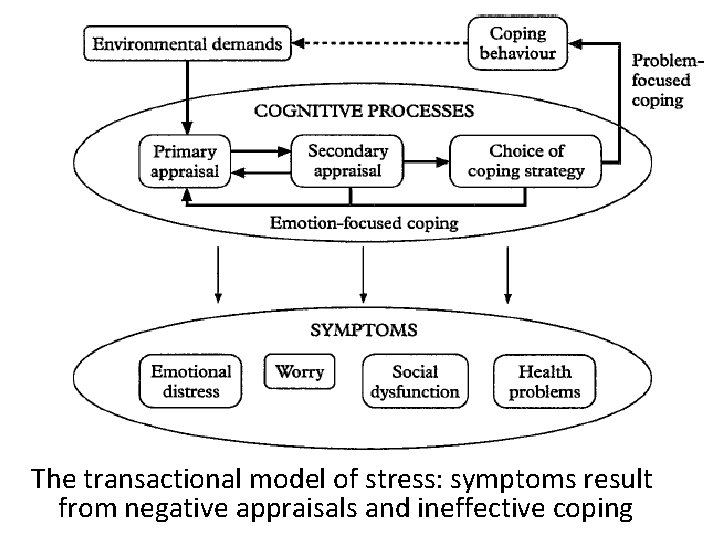
The transactional model of stress: symptoms result from negative appraisals and ineffective coping
Extraversion • tendency to use problem-focused coping strategies • tend to exhibit behavioral problems • associated with some general bias towards better adjustment, irrespective of life circumstances • may relate to reduced (or amplified) stress vulnerability
Personality and health • Neurotic and coronary heart disease • Type A Behavior pattern – myocardial infarction, explosive and hurried speech, upper chest breathing, lack of bodily relaxation, aggressiveness, drive to dominate and achieve goals, and a tendency to be workaholic.
• Depression – hopelessness and cancer • Neuroticism as a risk factor for multiple diseases • Hostility, anger and coronary heart disease severe chronic stress (such as long-term interpersonal difficulties) was associated with a much greater risk of developing a cold, after adjustment for social support, personality, health behaviors and immune response (Cohen et al. , 1998)
Selesai
- Slides: 23