
Personality Assessment Methods Presented By Ms Mariya Oliver
Personality Assessment Methods Presented By, Ms. Mariya Oliver Asst. Professor College of Nursing Kishtwar

Interview Method Interview is defined as a face – to – face conversation carried on with some basic goals. Two types: • Structureed Interview • Unstructured Interview

Interview Method (Cont) Seven – Point Plan. • Physical characteristic or abilities. • Attainments – Education, personal and • • • professional background. Overall general ability Special aptitude. Interests. Personality attributes. Aspirations and goals.
Interview Method (Cont) Advantages • It is highly flexible tool. • It can be used for a wide range of people. • Body language can be observed in addition to what is said. Disadvantages • Highly subjective. • Time consuming • Requires trained personnel.
Personality Inventories A personality inventory is a printed form containing statements, questions or adjectives which apply to human behaviour.
Personality Inventories (Cont) Minnesota Multipahsic Personality Inventory. This test asks for answers of “True” or “False” or “Cannot say” to 550 statements about different personality traits such as attitudes, emotional reactions, physical and psychological symptoms. The answers are quantitatively measured and personality assessment is done based on the score.
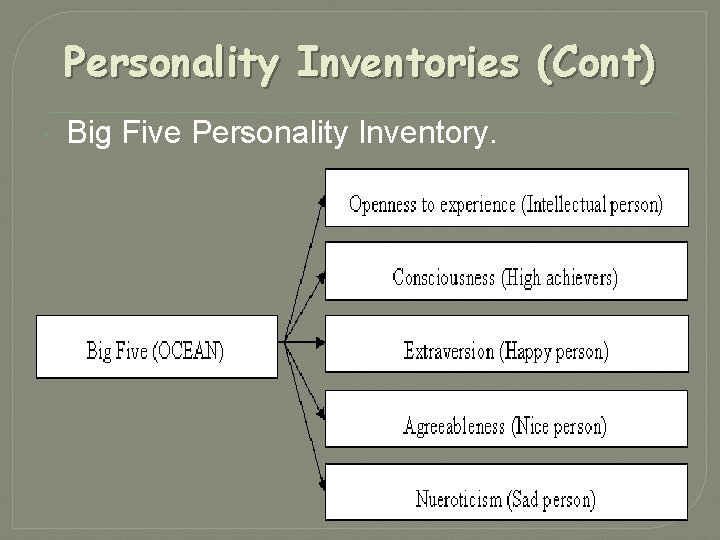
Personality Inventories (Cont) Big Five Personality Inventory.
Personality Inventories (Cont) Eysenck Personality Inventory • The dimensions of this inventory are as follows: Extroversion – Introversion. Neuroticism – Stability • The test may take 15 – 20 minutes and consists of 57 “yes” or “no” questions. There is no right or wrong answer, the subject has to give an honest opinion.
Personality Inventories (Cont) Cattell’s 16 factory Personality Inventory. • • • Abstractedness: Imaginative versus practical Apprehensions: Worried versus confident Dominance: Forceful versus submissive Emotional Stability: Clam versus high strung Liveliness: Spontaneous versus restrained. Openness to Change: Flexible versus attached to the familiar. • Perfectionism: Controlled versus undisciplined. • Privateness: Discreet versus open
Personality Inventories (Cont) Cattell’s 16 factory Personality Inventory. • Reasoning: Abstract versus concrete • Rule – Consciousness: Conforming versus non – • • • conforming Self – Reliance: Self – sufficient versus dependent Sensitivity: Tender – hearted versus tough – minded Social Boldness: Uninhibited versus shy Tension: Impatient versus relaxed. Vigilance: Suspicious versus trusting Warmth: Outgoing versus reserved
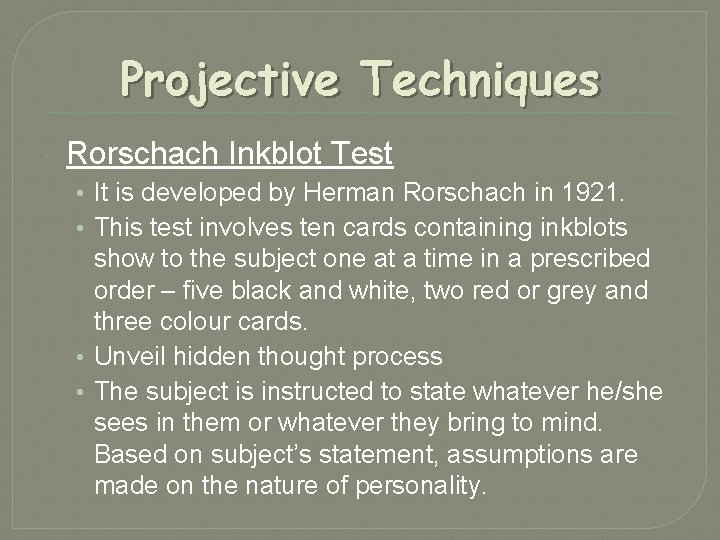
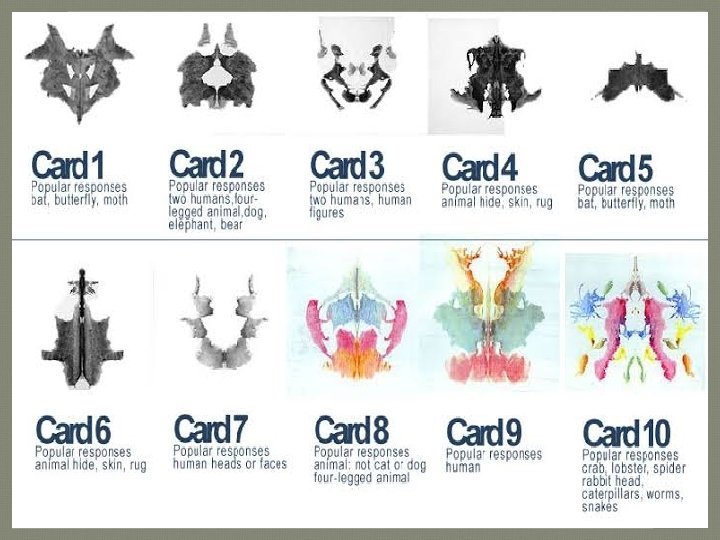
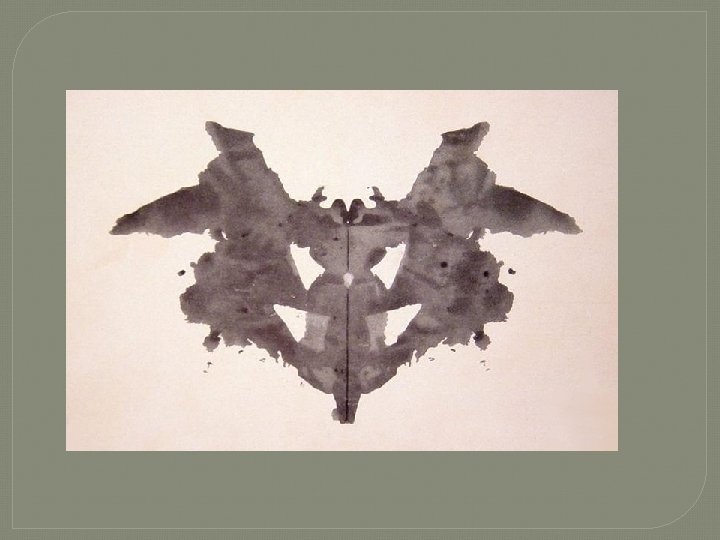
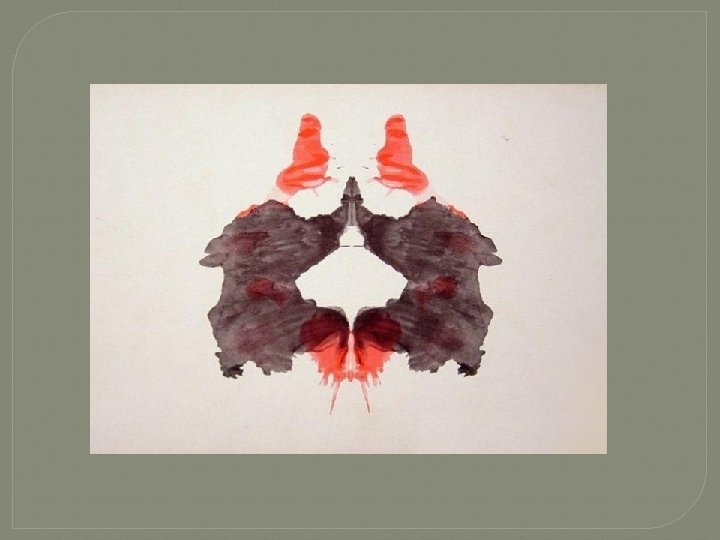
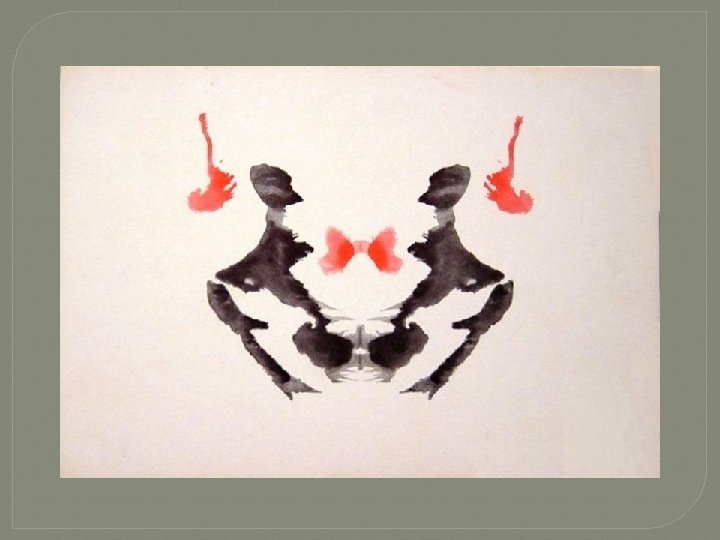
Projective Techniques Rorschach Inkblot Test • It is developed by Herman Rorschach in 1921. • This test involves ten cards containing inkblots show to the subject one at a time in a prescribed order – five black and white, two red or grey and three colour cards. • Unveil hidden thought process • The subject is instructed to state whatever he/she sees in them or whatever they bring to mind. Based on subject’s statement, assumptions are made on the nature of personality.
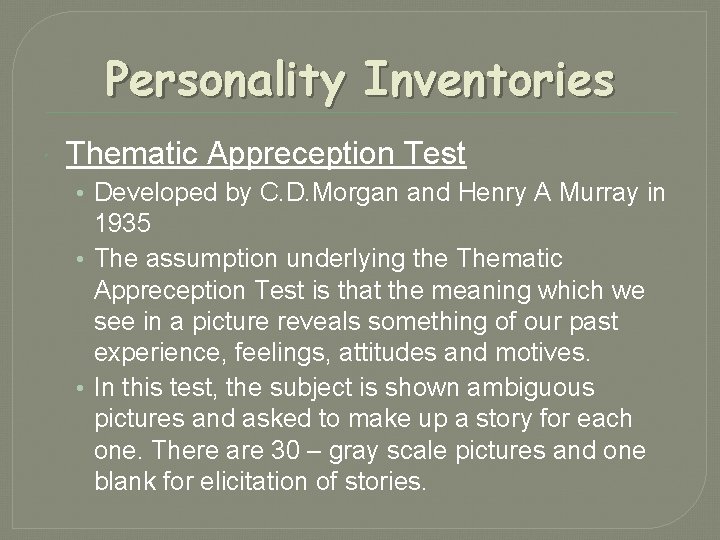
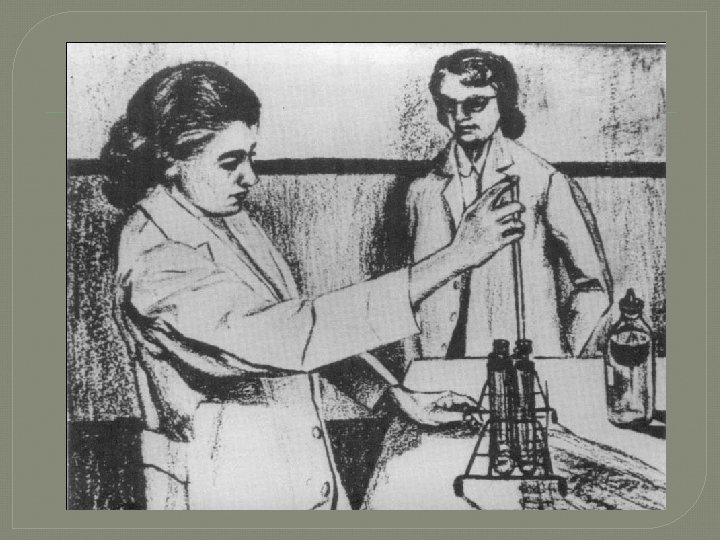
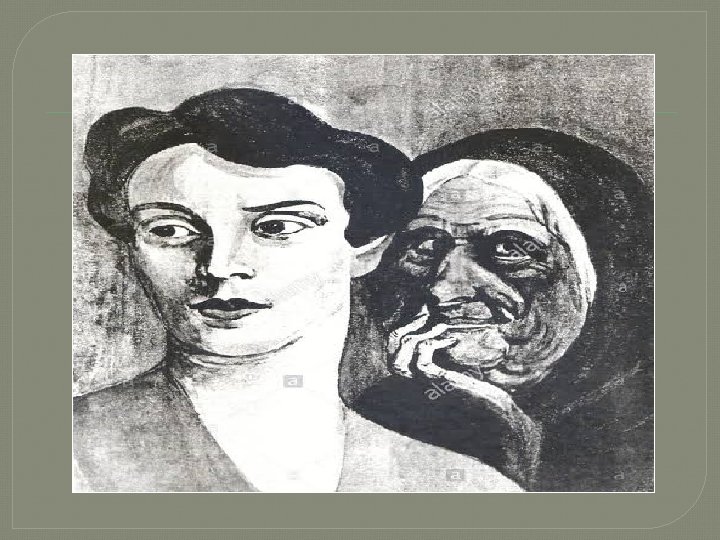
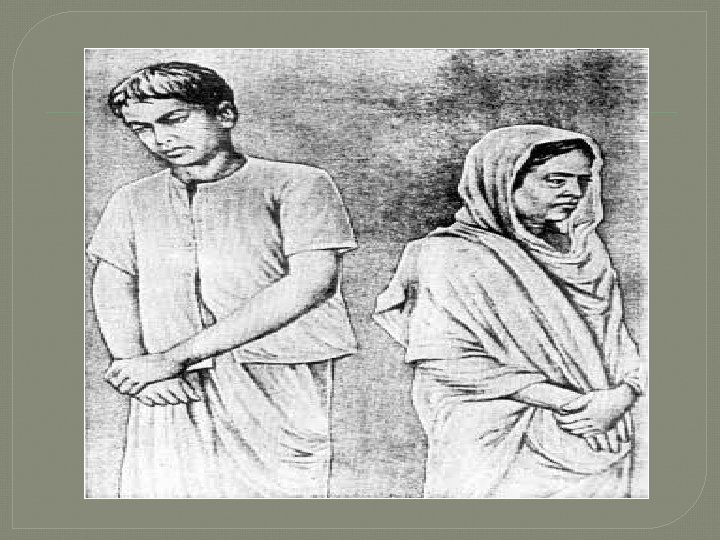
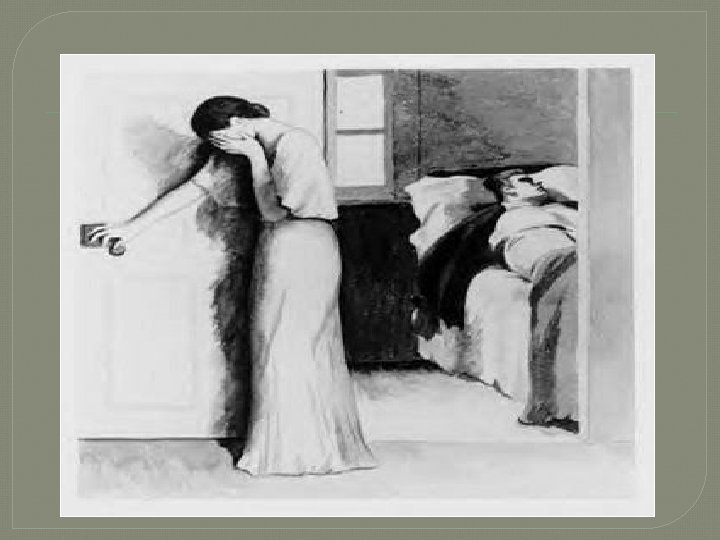
Personality Inventories Thematic Appreception Test • Developed by C. D. Morgan and Henry A Murray in 1935 • The assumption underlying the Thematic Appreception Test is that the meaning which we see in a picture reveals something of our past experience, feelings, attitudes and motives. • In this test, the subject is shown ambiguous pictures and asked to make up a story for each one. There are 30 – gray scale pictures and one blank for elicitation of stories.
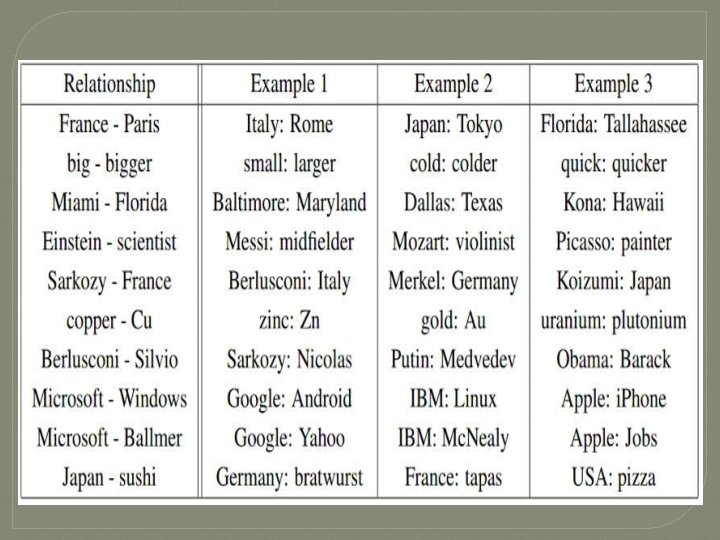
Personality Inventories Word Association Test • In word association test, the subject is informed that the examiner would utter a series of words, one word at a time and subject should immediately utter the first word that comes to his mind. • There are no right or wrong answers. • Based on the subject’s response the examiner evaluates the individual’s personality.
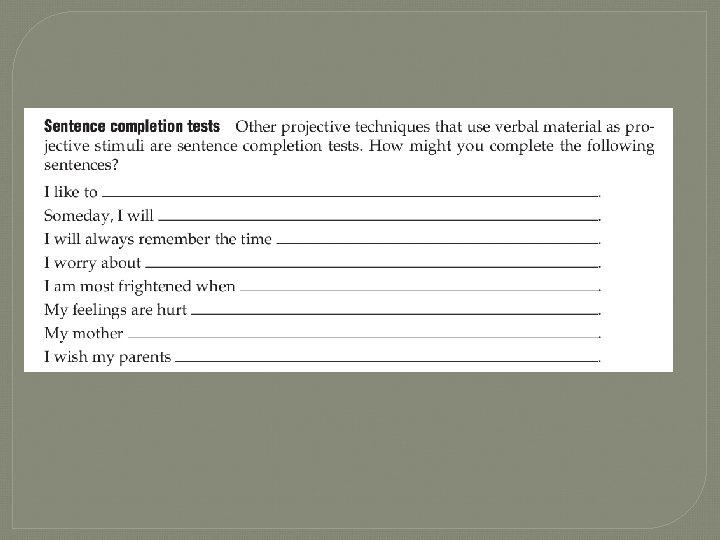
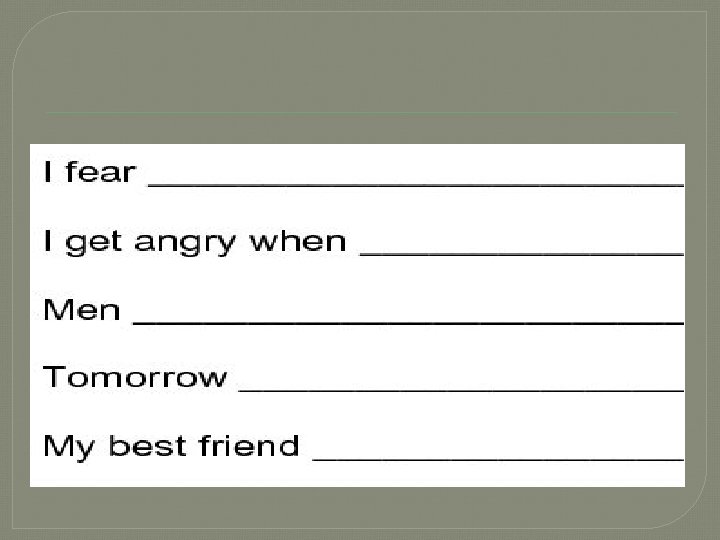
Personality Inventories Sentence Completion Test • Here a number of incomplete sentences are given and the subject is required to complete them as to how he/she feels. • The responses are analyzed for indications of one’s personality. • The test includes the information about wishes, desires, likes, dislikes, fears and locus of control. .
Personality Inventories Situational Test • This consists of certain real life situations where the subjects have to perform certain given activities. • Subject’s performance and behaviour with respect to such situations helps us to understand his/her personality. • In this test, the subject’s behaviour is evaluated by some trained person.
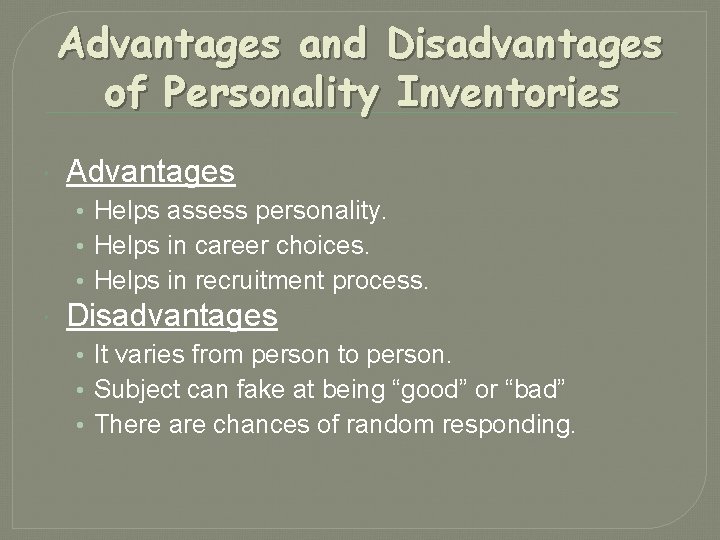
Advantages and Disadvantages of Personality Inventories Advantages • Helps assess personality. • Helps in career choices. • Helps in recruitment process. Disadvantages • It varies from person to person. • Subject can fake at being “good” or “bad” • There are chances of random responding.

Thank you
- Slides: 28