
Personalised psychosocial supports for people with dementia in

- Slides: 25
Personalised psychosocial supports for people with dementia in the community: Learning from Ireland May 2019 Dr Fiona Keogh
Overview ▷ Definitions – so we understand what we are talking about and so we can start to think about things differently ▷ Evidence ▷ Providing personalised psychosocial supports ▷ What we’ve learned
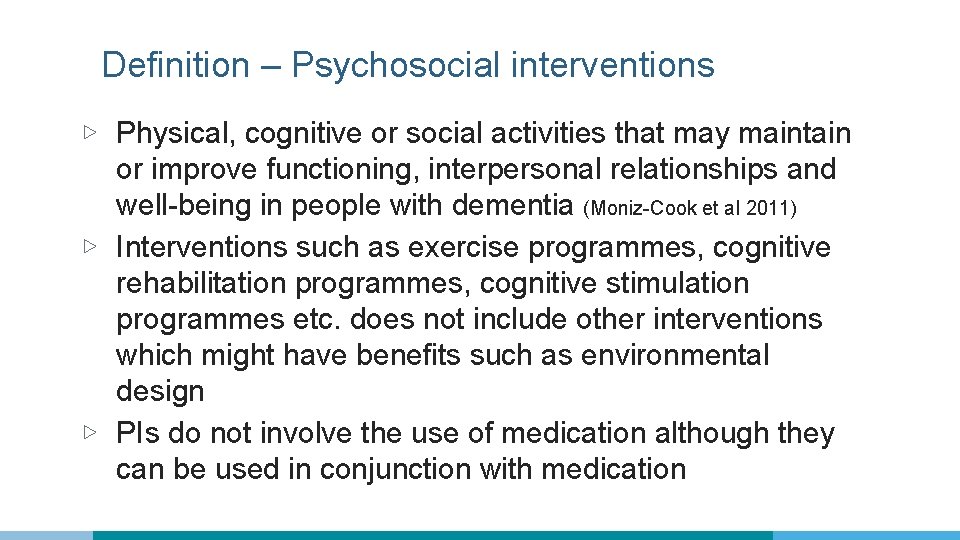
Definition – Psychosocial interventions ▷ Physical, cognitive or social activities that may maintain or improve functioning, interpersonal relationships and well-being in people with dementia (Moniz-Cook et al 2011) ▷ Interventions such as exercise programmes, cognitive rehabilitation programmes, cognitive stimulation programmes etc. does not include other interventions which might have benefits such as environmental design ▷ PIs do not involve the use of medication although they can be used in conjunction with medication
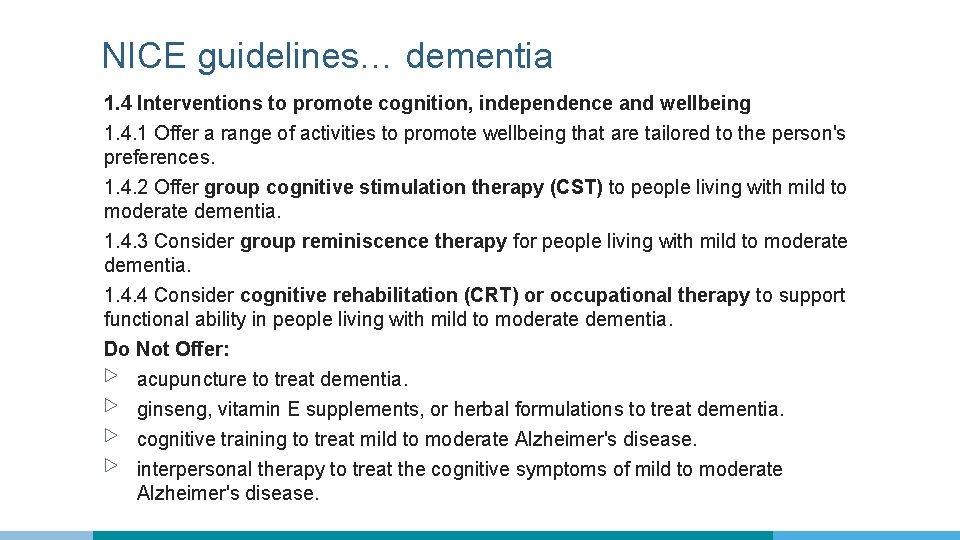
NICE guidelines… dementia 1. 4 Interventions to promote cognition, independence and wellbeing 1. 4. 1 Offer a range of activities to promote wellbeing that are tailored to the person's preferences. 1. 4. 2 Offer group cognitive stimulation therapy (CST) to people living with mild to moderate dementia. 1. 4. 3 Consider group reminiscence therapy for people living with mild to moderate dementia. 1. 4. 4 Consider cognitive rehabilitation (CRT) or occupational therapy to support functional ability in people living with mild to moderate dementia. Do Not Offer: ▷ acupuncture to treat dementia. ▷ ginseng, vitamin E supplements, or herbal formulations to treat dementia. ▷ cognitive training to treat mild to moderate Alzheimer's disease. ▷ interpersonal therapy to treat the cognitive symptoms of mild to moderate Alzheimer's disease.
Evidence
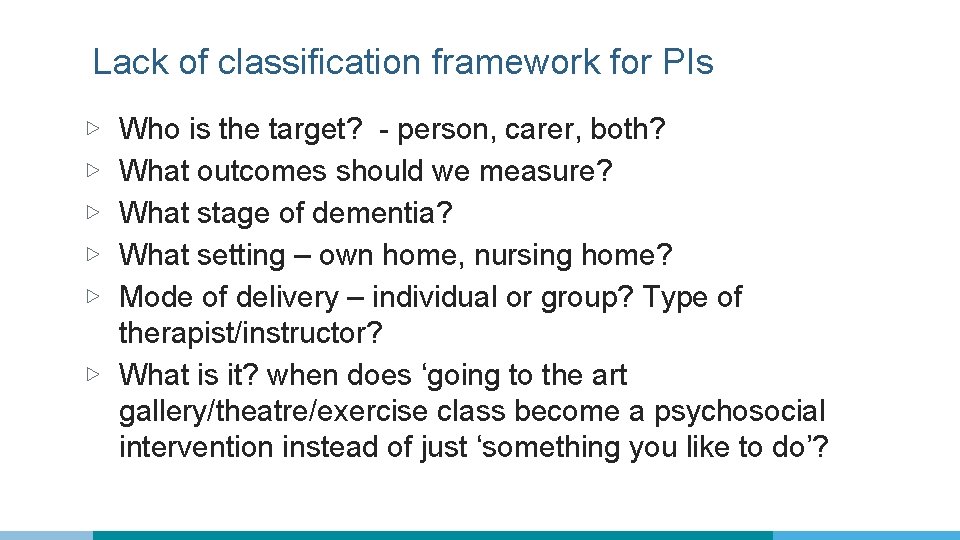
Lack of classification framework for PIs Who is the target? - person, carer, both? What outcomes should we measure? What stage of dementia? What setting – own home, nursing home? Mode of delivery – individual or group? Type of therapist/instructor? ▷ What is it? when does ‘going to the art gallery/theatre/exercise class become a psychosocial intervention instead of just ‘something you like to do’? ▷ ▷ ▷
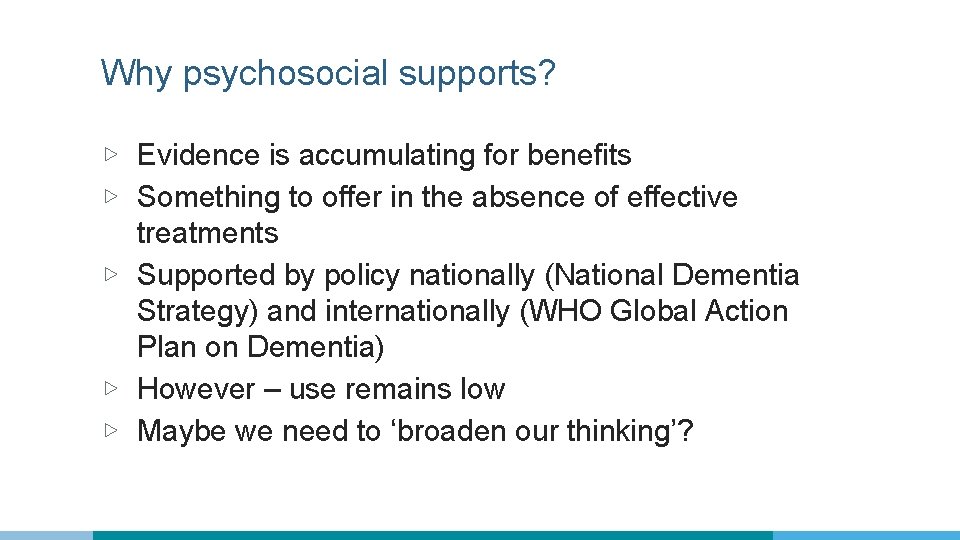
Why psychosocial supports? ▷ Evidence is accumulating for benefits ▷ Something to offer in the absence of effective treatments ▷ Supported by policy nationally (National Dementia Strategy) and internationally (WHO Global Action Plan on Dementia) ▷ However – use remains low ▷ Maybe we need to ‘broaden our thinking’?
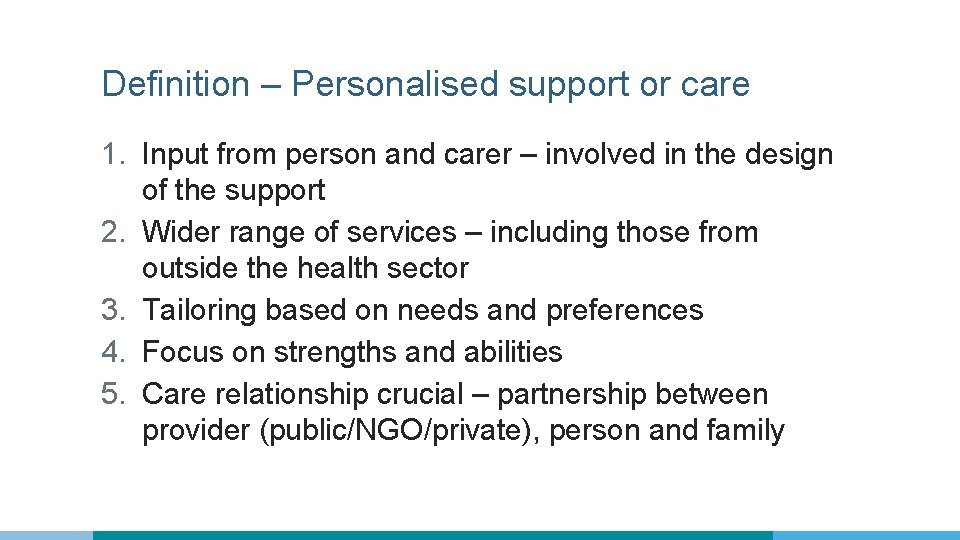
Definition – Personalised support or care 1. Input from person and carer – involved in the design of the support 2. Wider range of services – including those from outside the health sector 3. Tailoring based on needs and preferences 4. Focus on strengths and abilities 5. Care relationship crucial – partnership between provider (public/NGO/private), person and family
Thinking of this more widely… ▷ Psychosocial support a broader term than intervention – encompassing activities that are not formalised and/or may not have a published evidence base ▷ For example – 6 sessions of CST vs 6 sessions of cultural events or 6 sessions of a social club? ? ▷ Opens up possibilities in terms of who can provide the intervention, where etc. . ▷ Use evidence from other sectors, certain basic needs are a ‘given’, evidence focused on the ‘how’…
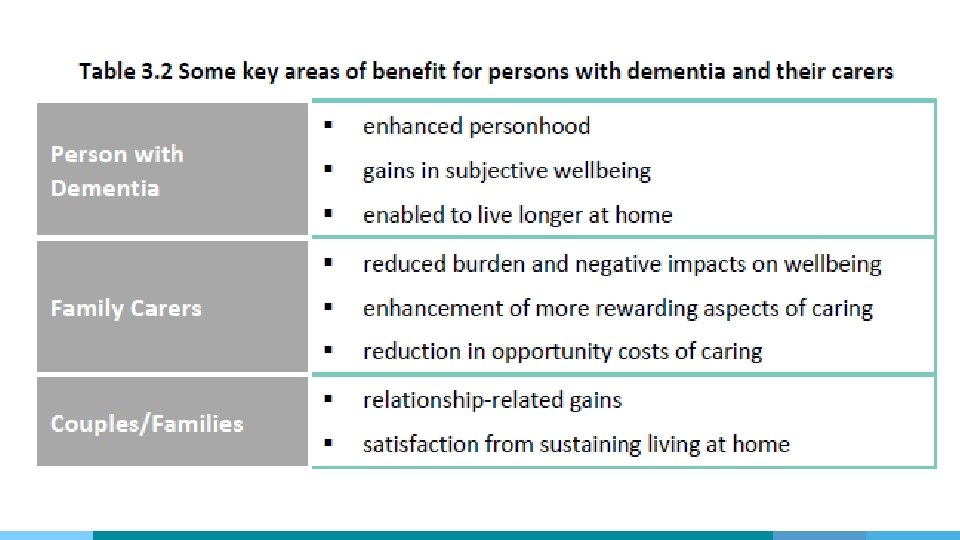
HSE & Genio Dementia Programme ▷ Support the person with dementia to remain at home living well for as long as possible and to improve the care system for people with dementia: ○ Develop a range of community-based, personalised responses for people with dementia and their carers – 9 sites ▷ Wide range of stakeholders required if personalised support is to be provided for people with dementia at home in a costeffective, sustainable way – Dementia Consortium Genio (2016) HSE & Genio Dementia Programme Keogh et al (2016) Dementia Consortia – Integrated networks to deliver individualised supports
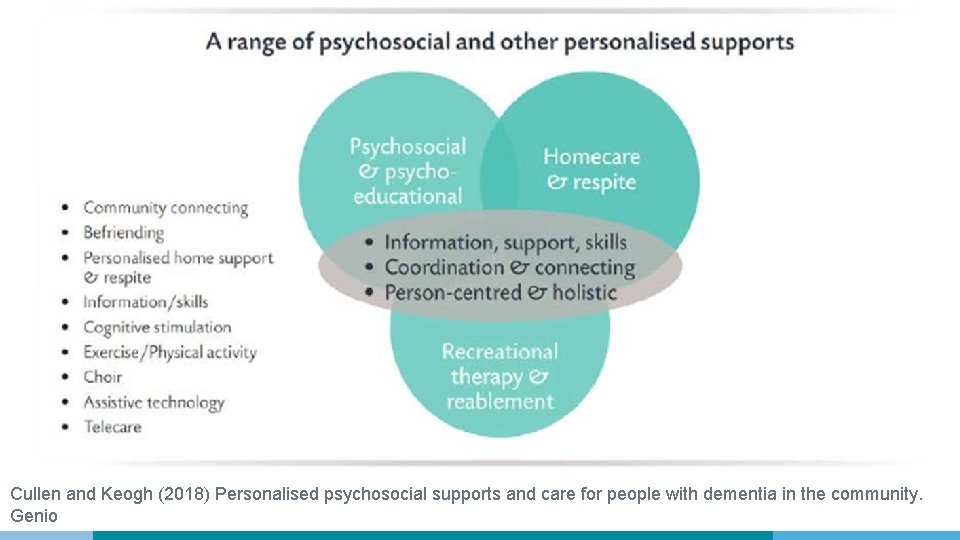
Cullen and Keogh (2018) Personalised psychosocial supports and care for people with dementia in the community. Genio
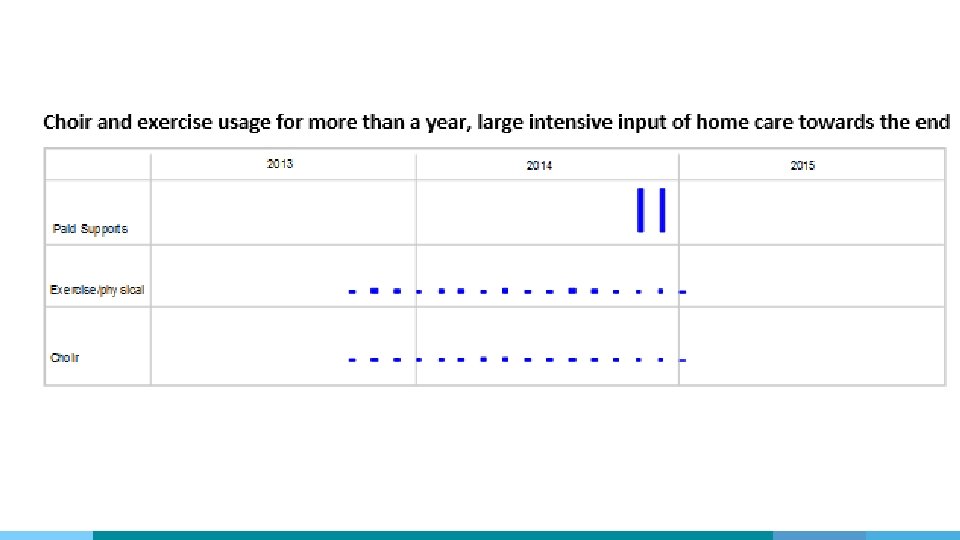
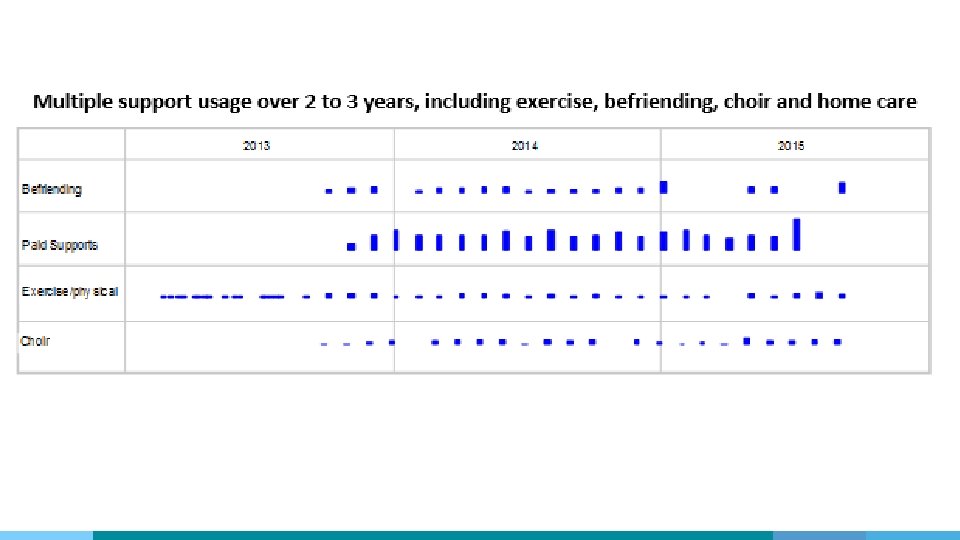
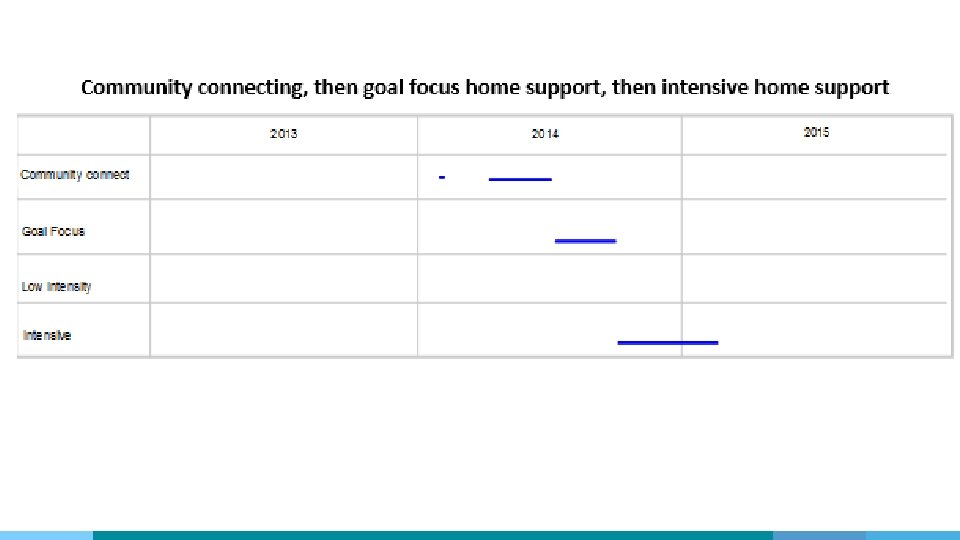
Example of personalised response A woman with a diagnosis of early onset dementia is supported to attend a musical memories choir and an exercise class. A volunteer has been matched with this woman in the shared interest of walking. This relationship has also provided opportunity for her to speak about living with dementia. A paid support worker provides support at home and in the community, for example, support to reconnect with art by joining a local art group. Members of the group provide transport for this woman when outings are organised. A carer support group has provided the woman’s husband with a network of people living through the same experience with whom he can share his experiences. As this woman’s dementia progresses, more intensive in-home support has been provided.
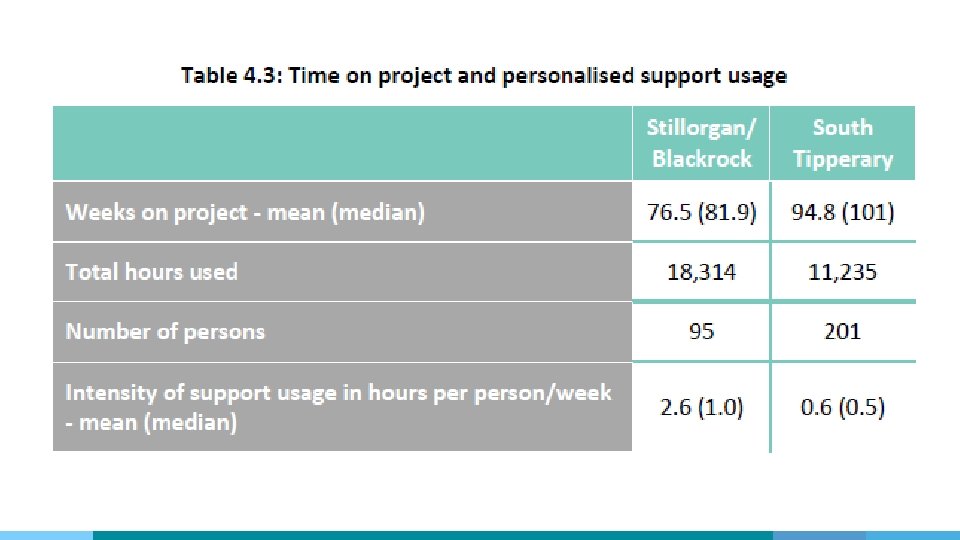
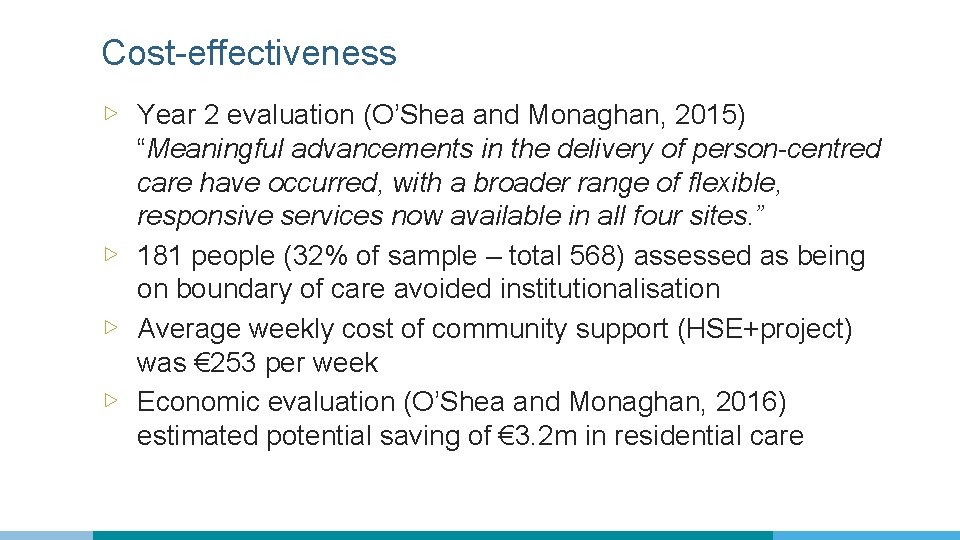
Cost-effectiveness ▷ Year 2 evaluation (O’Shea and Monaghan, 2015) “Meaningful advancements in the delivery of person-centred care have occurred, with a broader range of flexible, responsive services now available in all four sites. ” ▷ 181 people (32% of sample – total 568) assessed as being on boundary of care avoided institutionalisation ▷ Average weekly cost of community support (HSE+project) was € 253 per week ▷ Economic evaluation (O’Shea and Monaghan, 2016) estimated potential saving of € 3. 2 m in residential care
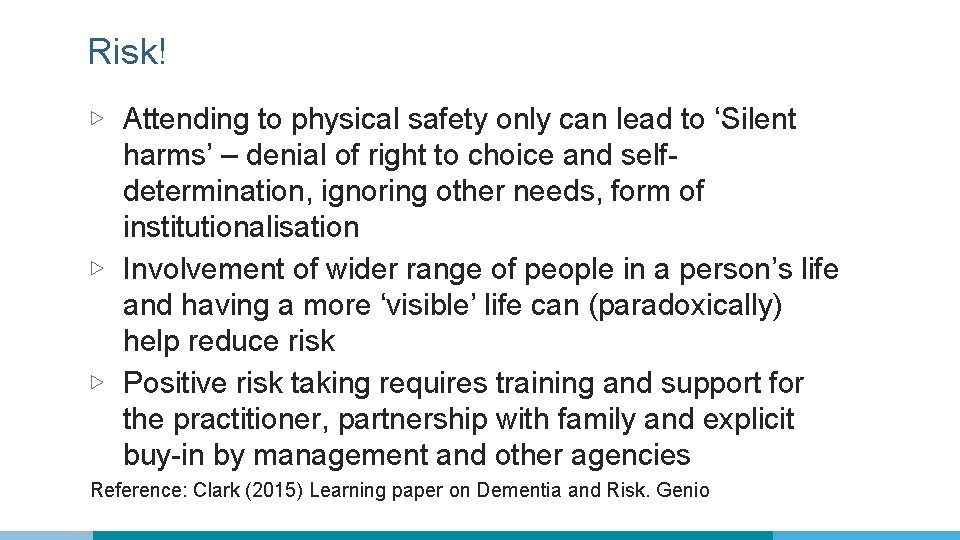
Risk! ▷ Attending to physical safety only can lead to ‘Silent harms’ – denial of right to choice and selfdetermination, ignoring other needs, form of institutionalisation ▷ Involvement of wider range of people in a person’s life and having a more ‘visible’ life can (paradoxically) help reduce risk ▷ Positive risk taking requires training and support for the practitioner, partnership with family and explicit buy-in by management and other agencies Reference: Clark (2015) Learning paper on Dementia and Risk. Genio
Summary of learning points
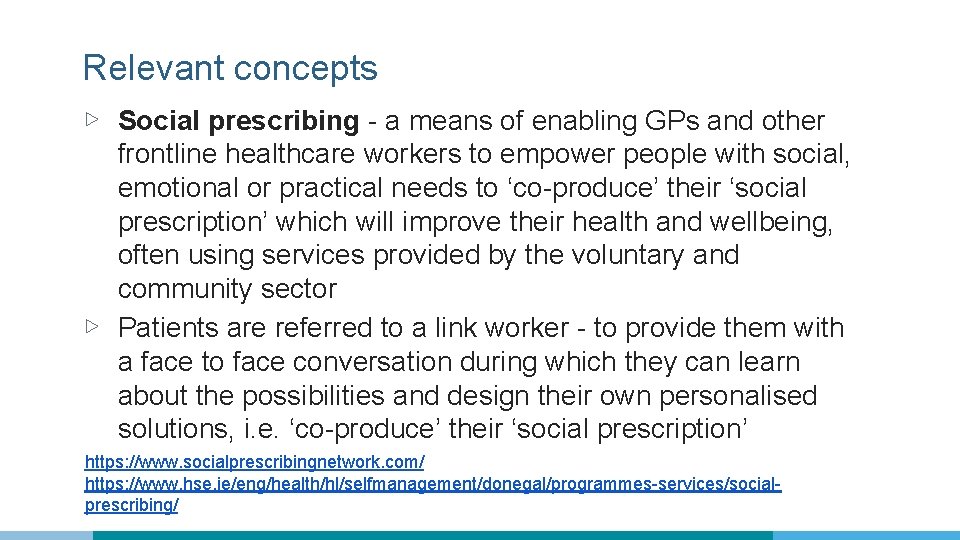
Relevant concepts ▷ Social prescribing - a means of enabling GPs and other frontline healthcare workers to empower people with social, emotional or practical needs to ‘co-produce’ their ‘social prescription’ which will improve their health and wellbeing, often using services provided by the voluntary and community sector ▷ Patients are referred to a link worker - to provide them with a face to face conversation during which they can learn about the possibilities and design their own personalised solutions, i. e. ‘co-produce’ their ‘social prescription’ https: //www. socialprescribingnetwork. com/ https: //www. hse. ie/eng/health/hl/selfmanagement/donegal/programmes-services/socialprescribing/
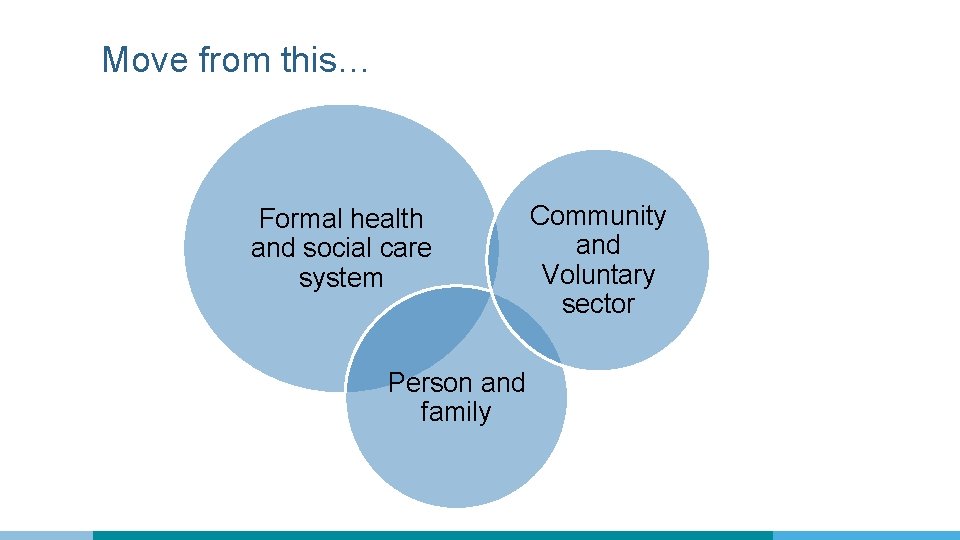
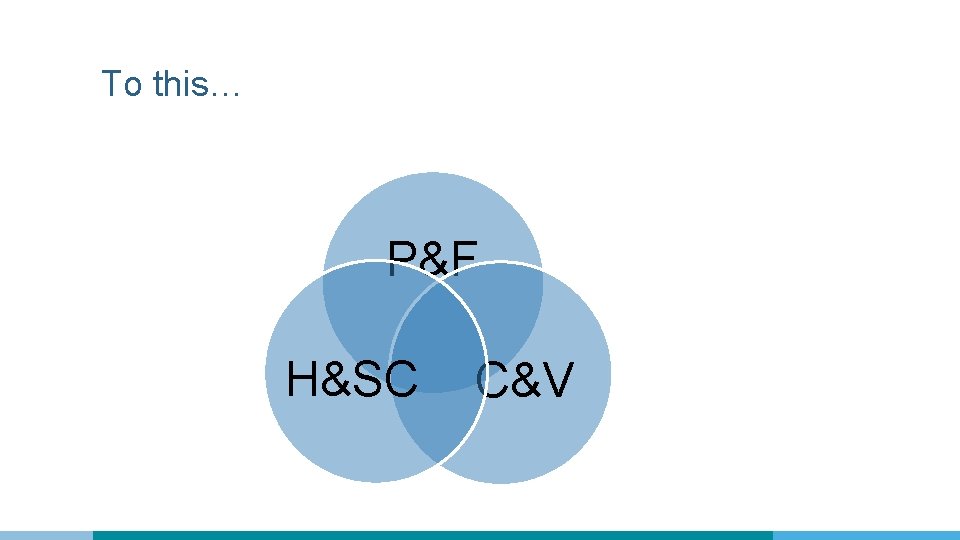
Move from this… Formal health and social care system Person and family Community and Voluntary sector
To this… P&F H&SC C&V
What we learned… ▷ This broad approach to psychosocial support for people ▷ ▷ ▷ with dementia is feasible in Ireland It provides benefits for the person, the carer and the family unit It is cost effective We need to re-think who provides what type of support We need to look beyond ‘traditional’ health and social care to provide sustainable support in the long term We need to work in a way that supports positive risktaking – wider support needed for this change
Thank you www. cesrd. ie fiona. keogh@nuigalway. ie