
Personal Qualities of Health Care Workers Health Team

- Slides: 33
Personal Qualities of Health Care Workers Health Team Relations
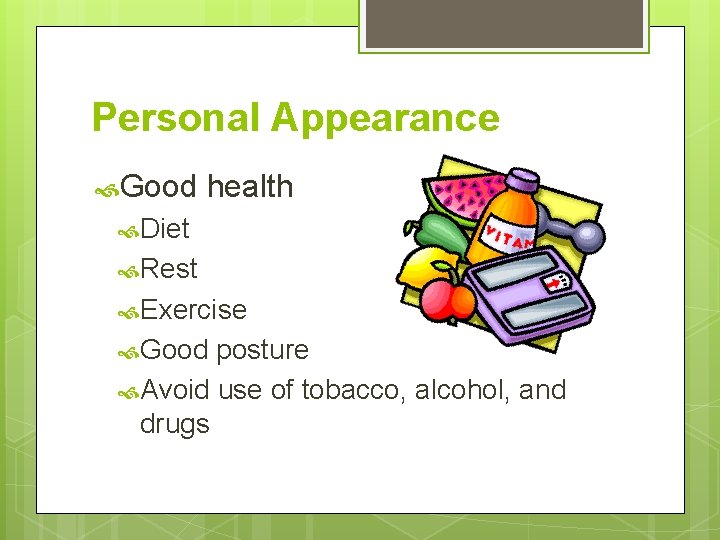
Personal Appearance Good health Diet Rest Exercise Good posture Avoid use of tobacco, alcohol, and drugs
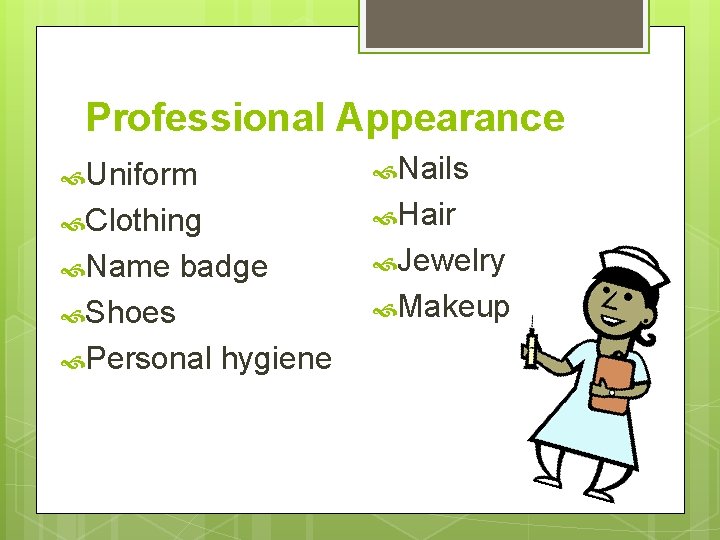
Professional Appearance Uniform Nails Clothing Hair Name Jewelry badge Makeup Shoes Personal hygiene
Personal Characteristics Empathy- identify and understand peoples feelings Honesty- truthfulness and integrity Dependability- reliable Willingness to learn Patience- tolerant Acceptance of criticism Enthusiasm- enjoy work
Personal Characteristics Self-motivation Tact- consider feelings Competence- qualified and capable Responsibility- being held accountable Discretion-use good judgment Team Player- work well with others
Effective Communication is the exchange of information Occurs 2 way Verbal- spoken word or written Nonverbal-facial expression, body language, touch
Effective Communication 3 parts of communication Sender: person who creates message Message: information, ideas, thoughts Receiver: person who receives that message Communication can’t occur w/out all 3 parts Feedback determines if message was successful
Factors interfering with communication Message must be clear In term both sender and receiver understand Medical Terms Ex: jargon may need to be defined urinate=go pee or number 1 http: //www. youtube. com/watch? v=Lm. OKwjg. Yc. G 4
Factors interfering with communication Sender must deliver message in clear and brief manner Correct punctuation, grammar, avoid slang, tone and pitch of voice Written should short and spelled correctly ex: off-topic storytellers
Factors interfering with communication Receiver must be able to hear and receive message Hearing of visually impaired people, limited English, physical condition inhibits understanding message (medicated) Repeat the message, reword message, get interpreter
Factors interfering with communication Receiver must be able to understand message Avoid unfamiliar terms, attitudes and prejudices of sender or receiver can interfere Interruptions Loud or distractions noise, bright lights, uncomfortable temps, eliminate or limit distractions
Listening Important part of effective communication Paying attention, making effort to hear what is said Good listening skills require practice Allows to receive entire message Observe for contradictions Reflect statement
Techniques for good listening Show interest Be alert maintain eye contact Avoid interruptions Pay attention to speaker Avoid thinking about responses Eliminate prejudices Watch speaker for contradiction
Techniques for good listening Reflect statements to speaker to show understanding Ask question if you don’t understand
Nonverbal Communication Facial expression Body language Gestures Eye contact Touch Can send 2 different messages Be aware of own body language When verbal and nonverbal match message is clearer
Barriers to Communication Physical disabilities Deafness/Hearing loss Blindness Aphasia or speech impairment http: //www. youtube. com/watch? v=9 GZvd_4 ot 04 http: //www. soundsnap. com/taxonomy/term/46 37/longest
Barriers to Communication Psychological Judgment attitudes or prejudice of others based on appearance, lifestyle, socioeconomic status Stereotypes: lazy bum, dumb blonde HCW must be aware of own prejudices
Barriers to Communication Cultural Culture diversity is beliefs, values, attitudes and customs Language Eye contact Use of touch Respect is essential
Teamwork Almost ALL health careers require you to work with others Consist of professionals with different levels of education, ideas, background and interest working for the good of the patient
Teamwork All members work together to meet patients needs and offer best care Leader’s responsibilities Organize Encourage opinions Motivate Assist w/ problems Provide reports and feedback
Teamwork Must have good interpersonal relationships be positive and friendly Cooperate and assist Listen and respect Be open-minded Support and encourage Remember the Golden Rule
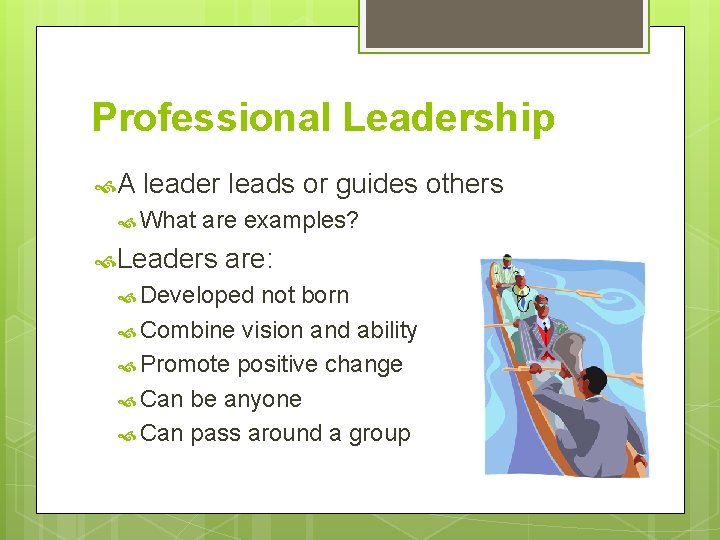
Professional Leadership A leader leads or guides others What are examples? Leaders are: Developed not born Combine vision and ability Promote positive change Can be anyone Can pass around a group
Characteristics of Leaders Respectful Understand democracy Works well in groups Understands strengths/weaknesses Confidence Completes task Gives praise dedicated
Types of Leaders Democratic Encourages participation of all people Listien to opinions Guides people to solution so whole group is responsible Ex: Barack Obama
Types of Leaders Laissez-faire Informal leader Minimal rules and regulation Allows individual function instead of group Hands off policy
Types of Leaders Autocratic Called a dictator Maintain total rule, difficulty delegating Rarely ask opinions People follow out of fear or extreme loyalty Ex: Hitler or Nazis
Stress Identify stressors What event, how did you feel, how much stress did you feel, did you have good or bad feelings Physical Stop Breathe Reflect choose reaction to stress
Problem Solving Method Gather information Identify the problem List possible solutions Make a plan Act on solution Evaluate results Change the solution
Stress-reducing Techniques Healthy life Take a break Relax Escape Relieve tension Rely on others meditate Use imagery Enjoy yourself Renew yourself Think positive Outside interest Seek help Avoid too many commitments
Time Management A skill to allow us to use time in the best way possible Reduce stress by: Putting you in charge Keep thing in perspective when life is overwhelming Increase productivity Use time effectively Improve enjoyment Time for relaxing
Time Management Setting Goals What are your high school short term goal? Long term goals? How can you set goals effectively?
Time Management Setting State goals in positive manner Define clearly what it is Prioritize goals Write goals down Make each goal at the right level
Time Management Plan Analyze and prioritize Identify habits & preferences Schedule task Make daily to do list Plan your work Avoid distractions Take credit for job well done