
Personal Protective Equipment Hand Protection Types of hand

- Slides: 16
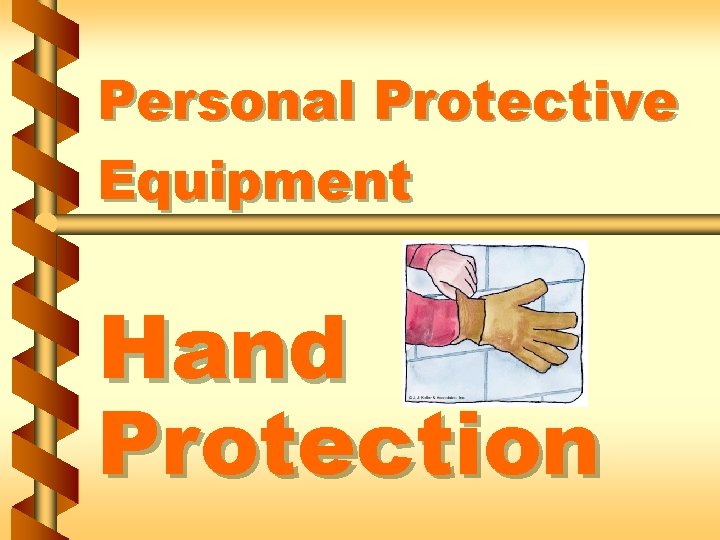
Personal Protective Equipment Hand Protection
Types of hand protection v Mitts v Finger cotts v Thimbles v Hand pads 1 a
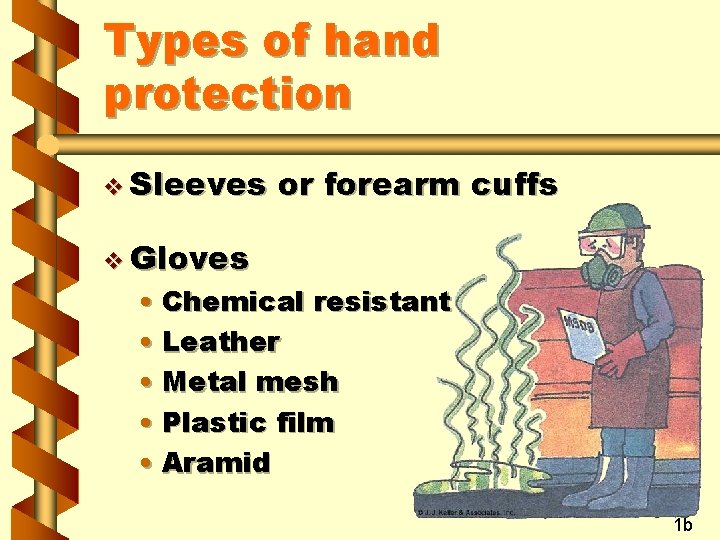
Types of hand protection v Sleeves or forearm cuffs v Gloves • Chemical resistant • Leather • Metal mesh • Plastic film • Aramid 1 b
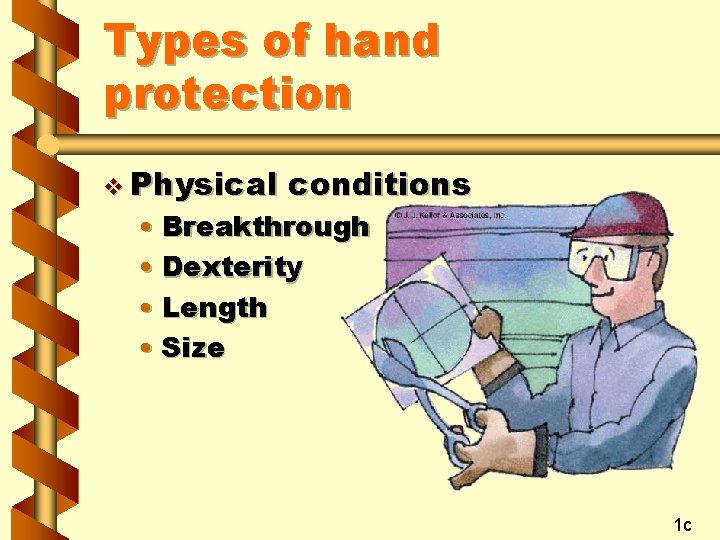
Types of hand protection v Physical conditions • Breakthrough • Dexterity • Length • Size 1 c
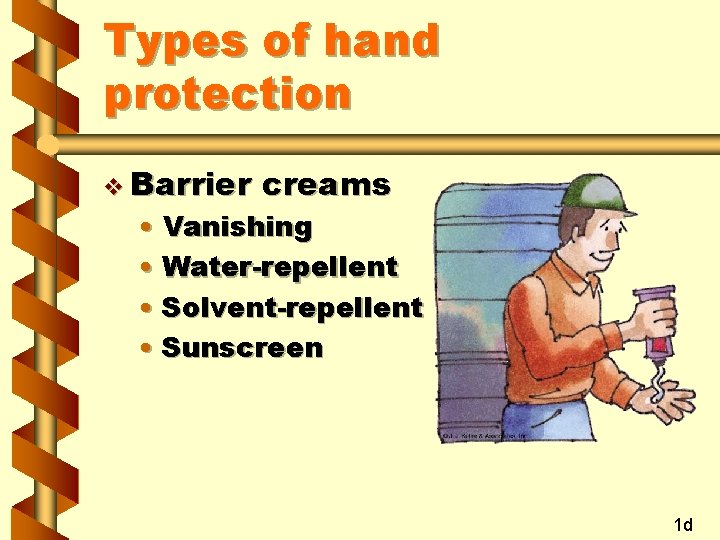
Types of hand protection v Barrier creams • Vanishing • Water-repellent • Solvent-repellent • Sunscreen 1 d
Safe glove use v Proper donning, doffing, adjustment, use v Inspect v Apply gloves for defects powder to hands 2 a
Safe glove use v Be cautious when wearing gloves near machinery v Wash or rinse reusable gloves v Pull glove off by cuff, not by the fingers 2 b
Safe glove use v Turn glove inside out when removing v Store reusable gloves away from heat sources 2 c
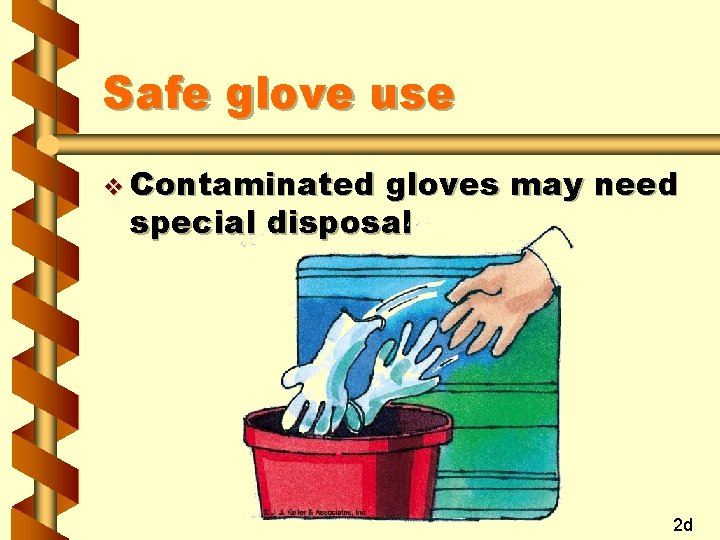
Safe glove use v Contaminated gloves may need special disposal 2 d
Safe glove use v Barrier creams • Clean and dry hands before applying • Reapply frequently • Wash off cream before eating 2 e
Limitations of hand protection v Use the proper glove for the job v Gloves break down over time v Proper fit is essential v Limits dexterity 3 a
Care, maintenance, use, disposal v Requires proper fit v Maintain in clean, serviceable condition v Keep clean 4 a
Care, maintenance, use, disposal v Inspect at regular intervals v Follow manufacturer’s instructions 4 b
Housekeeping v Good housekeeping is an element of personal protection v Helps prevent injury 5 a
Housekeeping v Moisturizing skin lotion • Fights infection • Puts back moisture • Prevents dermatitis 5 b
Hand protection is needed to protect against v Mechanical v Extreme v Electric injuries heat or cold shock or burns v Skin irritation from chemicals or germs 6 a