
Personal Protective Equipment An InService Training Program Instructor

- Slides: 32
Personal Protective Equipment An In-Service Training Program Instructor Presentation & Notes Provided Courtesy of © 2020 - W. H. HEATON 1
Session Objectives Upon completion of this training session, you should be able to: § Define personal protective equipment (PPE). § Discuss reasons PPE is NOT used. § Identify the types of PPE and their purpose. § Discuss three key factors to use when selecting PPE. § Discuss the process for selecting PPE. § Discuss key points about PPE. § Review the correct sequence of putting on and removing PPE. § Review and discuss scenarios concerning the selection of PPE. © 2020 - W. H. HEATON 2
Definitions q Hand Hygiene is a general term that applies to hand washing with soap and water, or the use of a waterless alcohol-based antiseptic handrub (ABHR). q Personal Protective Equipment (PPE) is defined as protective items or garments worn by caregivers for protection against infectious materials and diseases, and to prevent crosstransmission of infectious materials and/or communicable diseases among residents. © 2020 - W. H. HEATON 3
Reasons Staff Give for NOT Using Personal Protective Equipment (PPE) ü It’s uncomfortable. ü It doesn’t fit me. ü Takes too long to put on and remove. ü Interferes with my ability to do the task. ü I forgot. ü Not available when needed. ü This task will only take a couple of minutes. ü Too busy / not enough time. ü Resident’s needs takes priority. © 2020 - W. H. HEATON 4
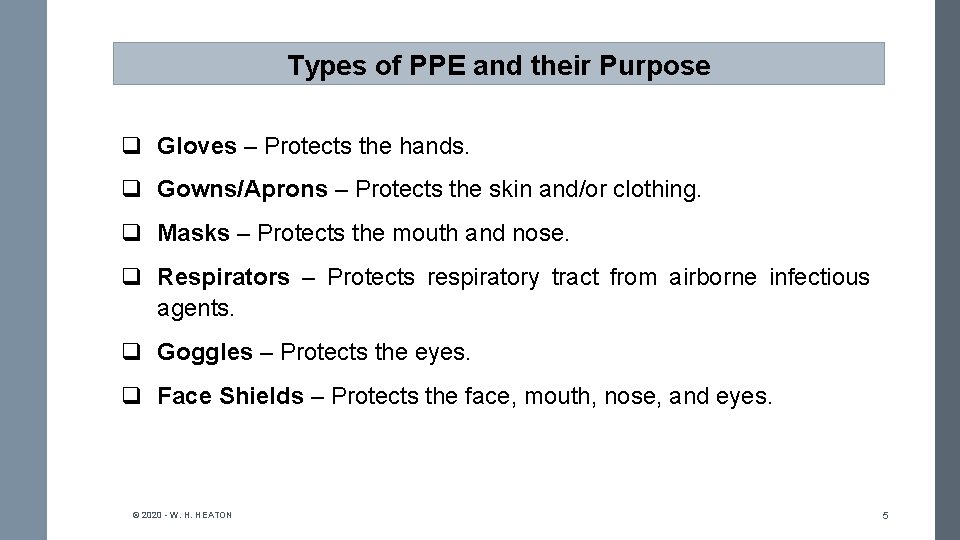
Types of PPE and their Purpose q Gloves – Protects the hands. q Gowns/Aprons – Protects the skin and/or clothing. q Masks – Protects the mouth and nose. q Respirators – Protects respiratory tract from airborne infectious agents. q Goggles – Protects the eyes. q Face Shields – Protects the face, mouth, nose, and eyes. © 2020 - W. H. HEATON 5
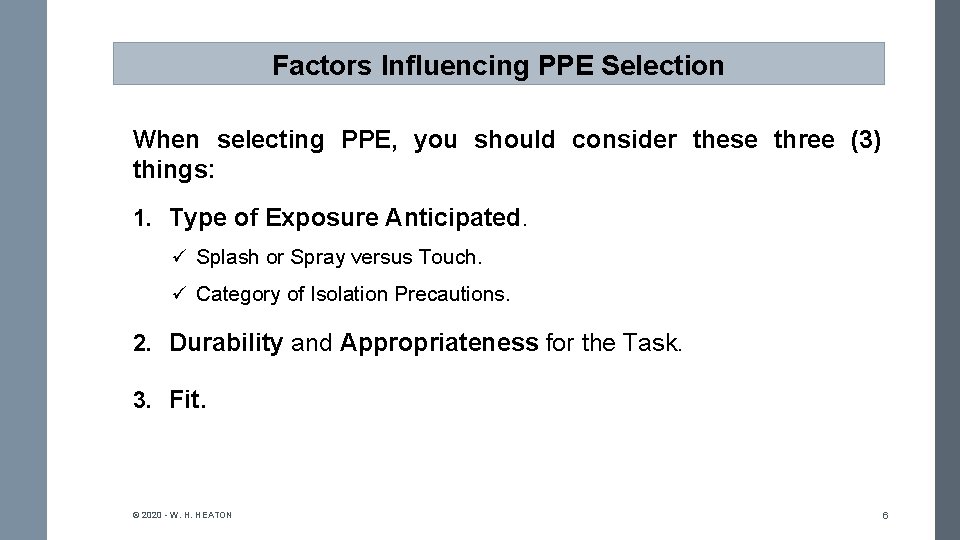
Factors Influencing PPE Selection When selecting PPE, you should consider these three (3) things: 1. Type of Exposure Anticipated. ü Splash or Spray versus Touch. ü Category of Isolation Precautions. 2. Durability and Appropriateness for the Task. 3. Fit. © 2020 - W. H. HEATON 6
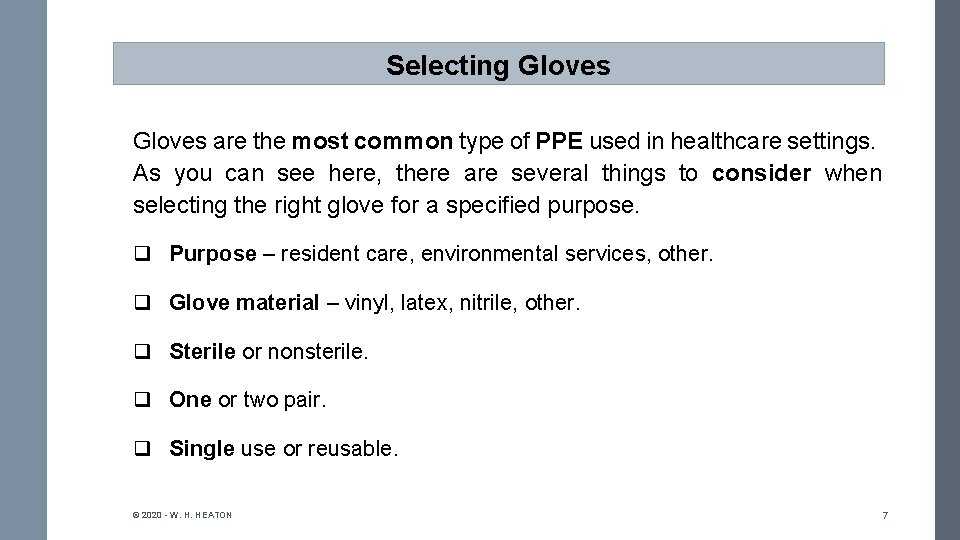
Selecting Gloves are the most common type of PPE used in healthcare settings. As you can see here, there are several things to consider when selecting the right glove for a specified purpose. q Purpose – resident care, environmental services, other. q Glove material – vinyl, latex, nitrile, other. q Sterile or nonsterile. q One or two pair. q Single use or reusable. © 2020 - W. H. HEATON 7
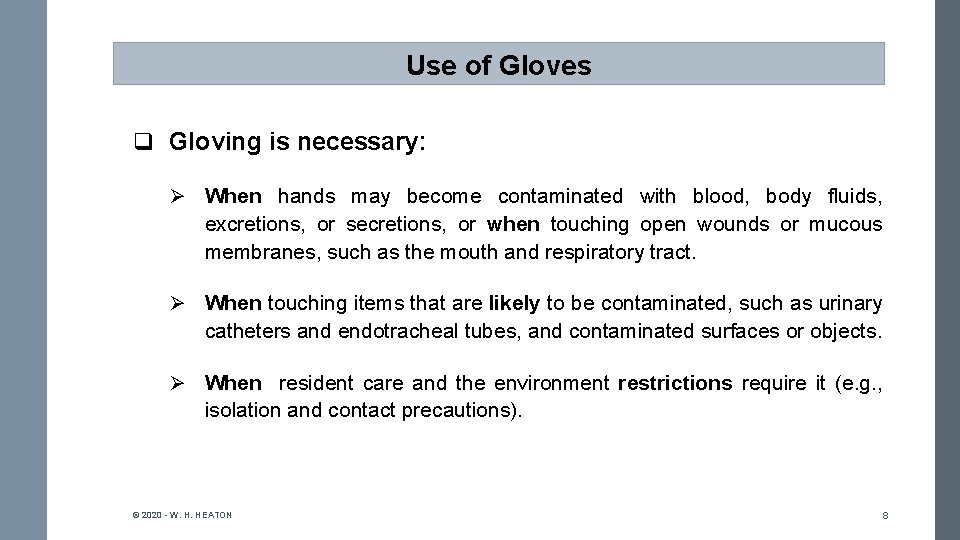
Use of Gloves q Gloving is necessary: Ø When hands may become contaminated with blood, body fluids, excretions, or secretions, or when touching open wounds or mucous membranes, such as the mouth and respiratory tract. Ø When touching items that are likely to be contaminated, such as urinary catheters and endotracheal tubes, and contaminated surfaces or objects. Ø When resident care and the environment restrictions require it (e. g. , isolation and contact precautions). © 2020 - W. H. HEATON 8
Do’s and Don’ts of Glove Use q Work from “clean to dirty. ” q Limit opportunities for “touch contamination. ” Protect yourself, others, and the environment: q q § Don’t touch your face or adjust PPE with contaminated gloves. § Don’t touch environmental surfaces except as necessary during resident care. Change gloves: § During use if torn and when heavily soiled (even during use on the same resident). § After use on each resident. Discard in appropriate receptacle: § Never wash or reuse disposable gloves. © 2020 - W. H. HEATON 9
Selecting Gowns (or Aprons) There are three (3) factors that influence the selection of a gown or apron as PPE. q Purpose of Use. q Material: § Natural or man-made. § Reusable or disposable. § Resistance to fluid penetration. q Clean or Sterile. © 2020 - W. H. HEATON 10
Selecting Face Protection A combination of PPE types is available to protect all or parts of the face from contact with potentially infectious material. The selection of facial PPE is determined by the isolation precautions required for the resident and/or the nature of the resident contact. q Masks – protects the nose and mouth. § Should fully cover the nose and mouth and prevent fluid penetration. q Goggles – protects the eyes. § Should fit snuggly over and around the eyes. § Personal glasses are NOT a substitute for goggles. q Face Shields – protects the face, nose, mouth, and eyes. § Should cover the forehead, extend below chin and wrap around side of face. © 2020 - W. H. HEATON 11
Respiratory Protection q Purpose – protects from inhalation of infectious aerosols (e. g. , Mycobacterium tuberculosis, COVID-19, etc. ) q PPE types for respiratory protection: § Particulate respirators. § Half- or full-face elastomeric respirators. § Powered air purifying respirators (PAPR). © 2020 - W. H. HEATON 12
Key Points About PPE KEY points to remember about PPE use: ü Put on PPE before contact with the resident, generally before entering the room. ü Use carefully – don’t spread contamination. ü Remove and discard carefully, either at the doorway or immediately outside the resident’s room; remove respirator outside the room. ü Immediately perform hand hygiene. © 2020 - W. H. HEATON 13
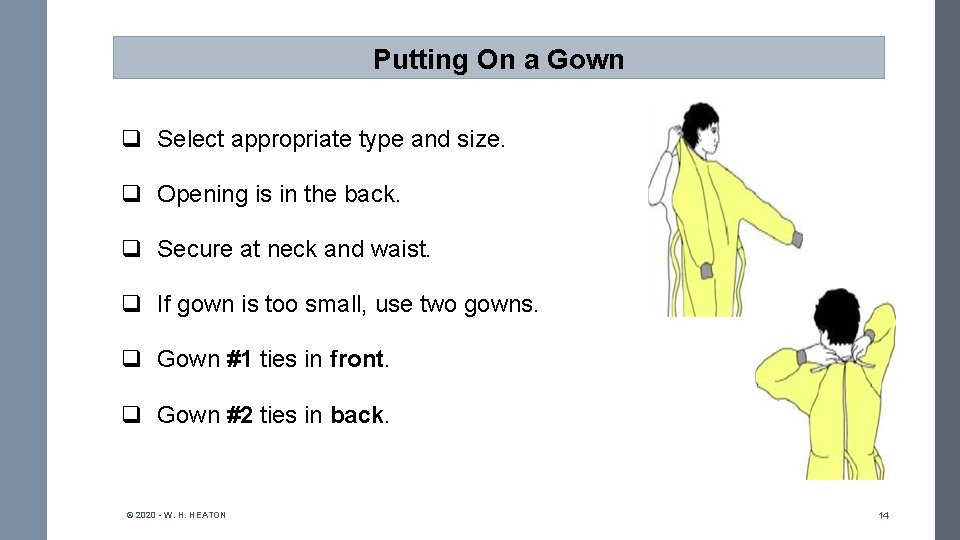
Putting On a Gown q Select appropriate type and size. q Opening is in the back. q Secure at neck and waist. q If gown is too small, use two gowns. q Gown #1 ties in front. q Gown #2 ties in back. © 2020 - W. H. HEATON 14
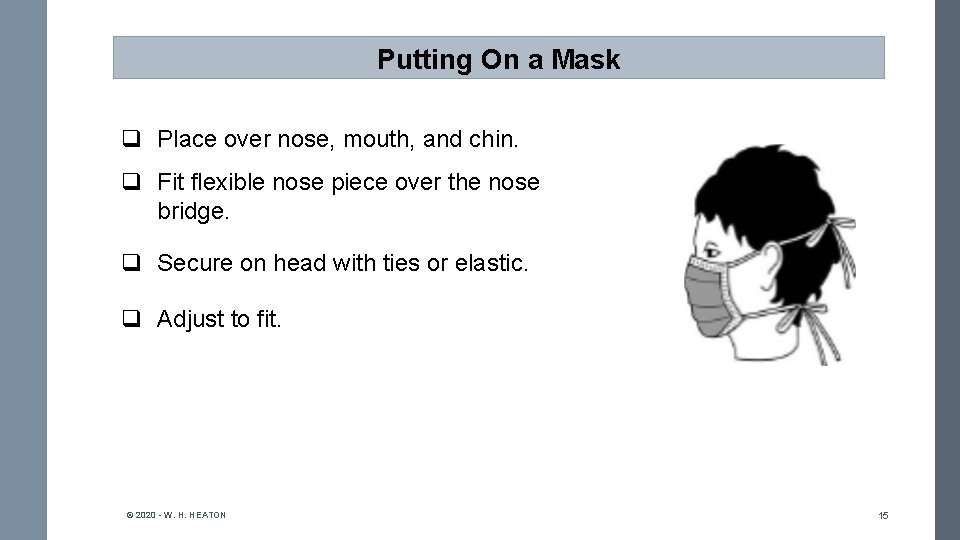
Putting On a Mask q Place over nose, mouth, and chin. q Fit flexible nose piece over the nose bridge. q Secure on head with ties or elastic. q Adjust to fit. © 2020 - W. H. HEATON 15
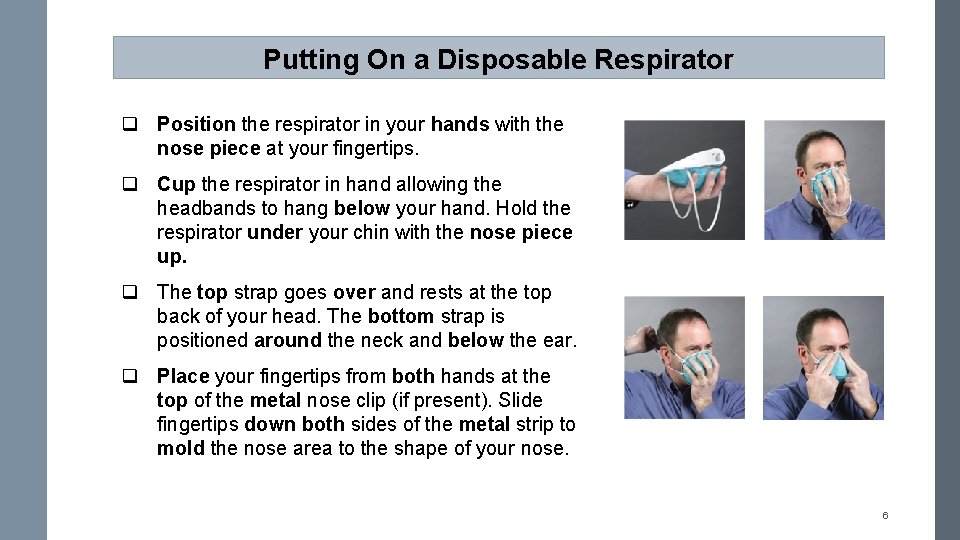
Putting On a Disposable Respirator q Position the respirator in your hands with the nose piece at your fingertips. q Cup the respirator in hand allowing the headbands to hang below your hand. Hold the respirator under your chin with the nose piece up. q The top strap goes over and rests at the top back of your head. The bottom strap is positioned around the neck and below the ear. q Place your fingertips from both hands at the top of the metal nose clip (if present). Slide fingertips down both sides of the metal strip to mold the nose area to the shape of your nose. © 2020 - W. H. HEATON 16
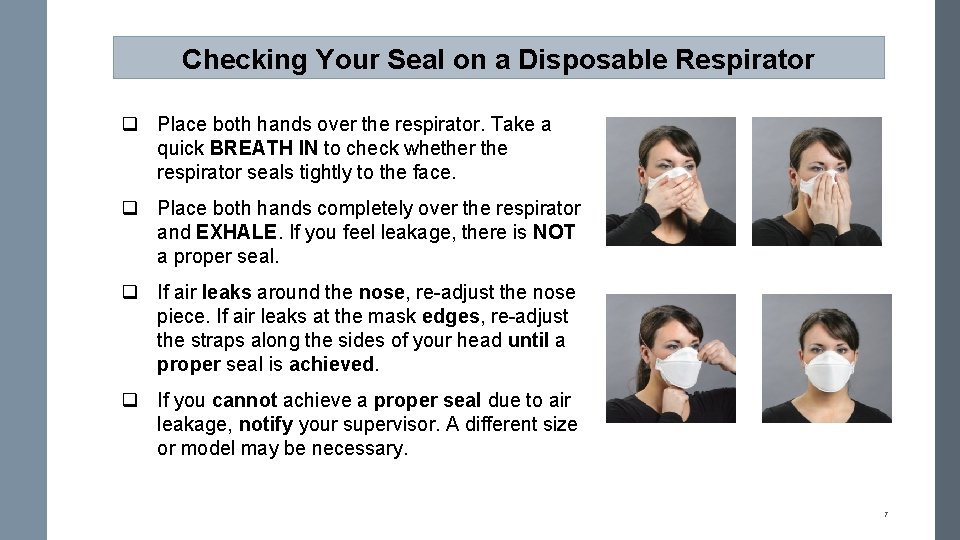
Checking Your Seal on a Disposable Respirator q Place both hands over the respirator. Take a quick BREATH IN to check whether the respirator seals tightly to the face. q Place both hands completely over the respirator and EXHALE. If you feel leakage, there is NOT a proper seal. q If air leaks around the nose, re-adjust the nose piece. If air leaks at the mask edges, re-adjust the straps along the sides of your head until a proper seal is achieved. q If you cannot achieve a proper seal due to air leakage, notify your supervisor. A different size or model may be necessary. © 2020 - W. H. HEATON 17
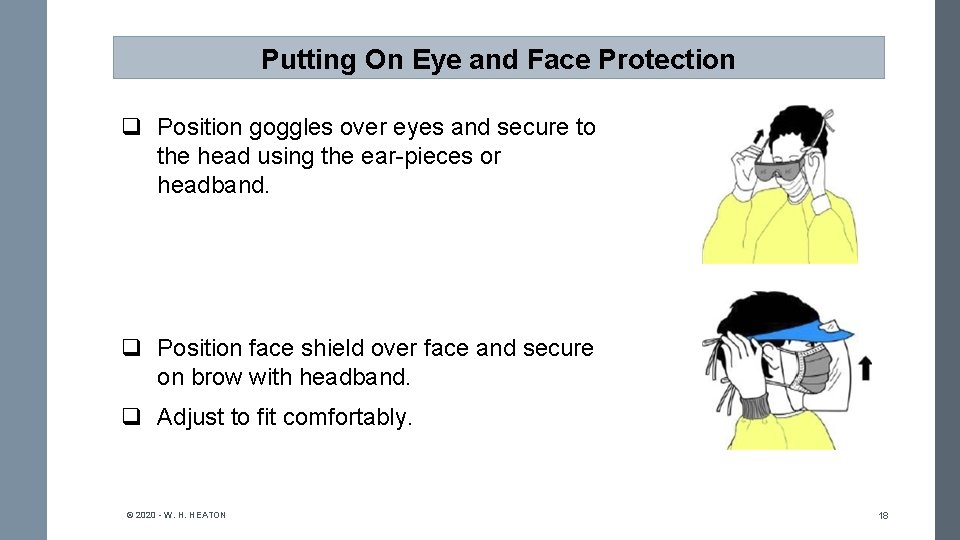
Putting On Eye and Face Protection q Position goggles over eyes and secure to the head using the ear-pieces or headband. q Position face shield over face and secure on brow with headband. q Adjust to fit comfortably. © 2020 - W. H. HEATON 18
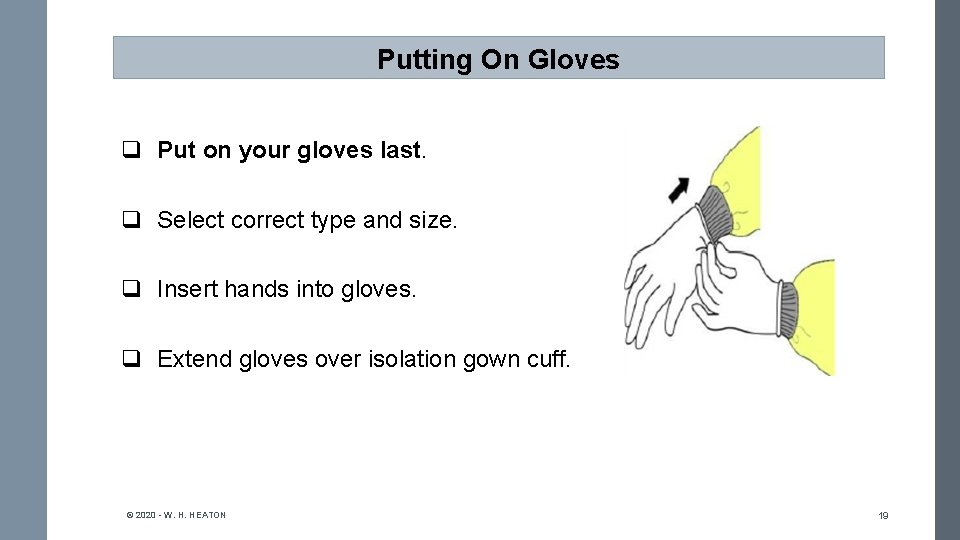
Putting On Gloves q Put on your gloves last. q Select correct type and size. q Insert hands into gloves. q Extend gloves over isolation gown cuff. © 2020 - W. H. HEATON 19
How to Safely Use PPE q Keep gloved hands away from face. q Avoid touching or adjusting other PPE. q Remove gloves if they become torn; perform hand hygiene before putting on new gloves. q Limit surfaces and items touched. © 2020 - W. H. HEATON 20
“Contaminated” and “Clean” Areas of PPE To remove PPE safely, you must first be able to identify what sites are considered “clean” and what are “contaminated. ” q Contaminated – outside front: § Areas of PPE that have or are likely to have been in contact with body sites, materials, or environmental surfaces where the infectious organism may reside. q Clean – inside, outside back, ties on head and back: § Areas of PPE that are not likely to have been in contact with the infectious organism. © 2020 - W. H. HEATON 21
Sequence for Removing PPE The sequence for removing PPE is intended to limit opportunities for self-contamination. Remove PPE in the following sequence: q Gloves. q Face Shield or Goggles. q Gown. q Mask or Respirator. © 2020 - W. H. HEATON 22
Where to Remove PPE q At doorway, before leaving the resident room or in the anteroom. q Remove respirator outside room, after door has been closed. q Be sure that hand hygiene facilities and trash receptacles are available at the point needed, e. g. , sink or alcohol-based hand rub. © 2020 - W. H. HEATON 23
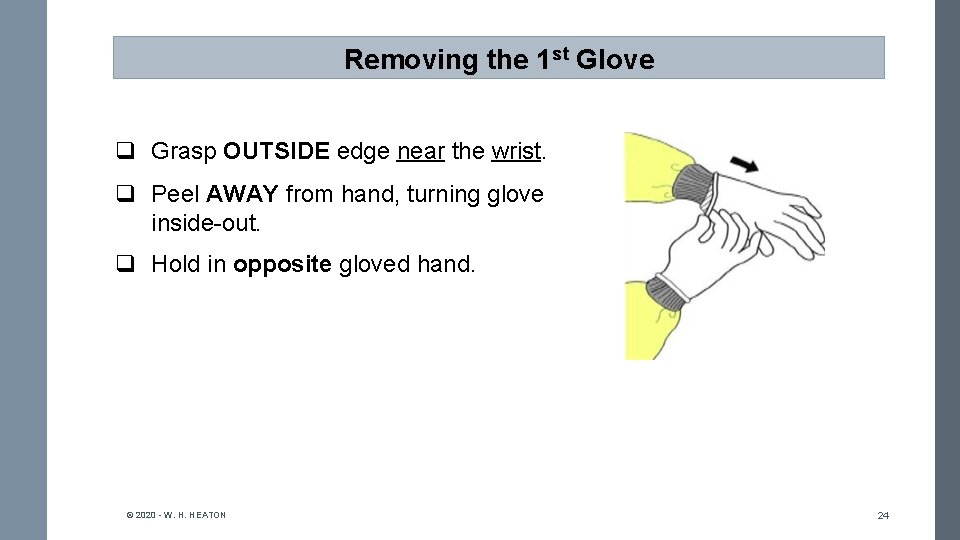
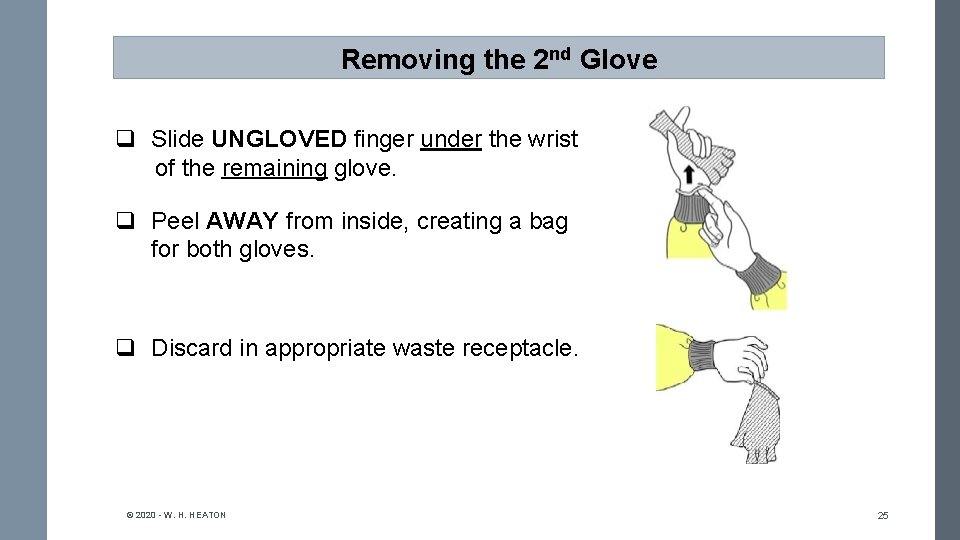
Removing the 1 st Glove q Grasp OUTSIDE edge near the wrist. q Peel AWAY from hand, turning glove inside-out. q Hold in opposite gloved hand. © 2020 - W. H. HEATON 24
Removing the 2 nd Glove q Slide UNGLOVED finger under the wrist of the remaining glove. q Peel AWAY from inside, creating a bag for both gloves. q Discard in appropriate waste receptacle. © 2020 - W. H. HEATON 25
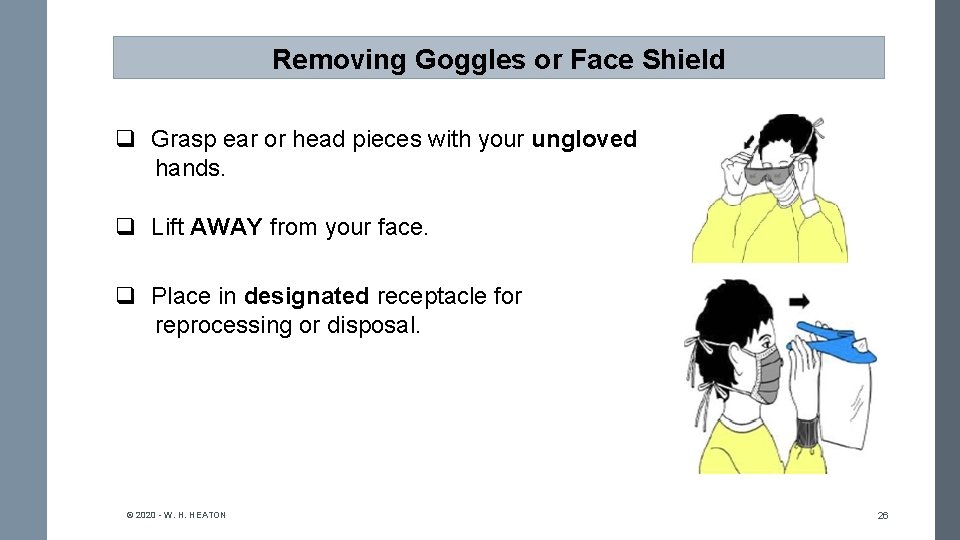
Removing Goggles or Face Shield q Grasp ear or head pieces with your ungloved hands. q Lift AWAY from your face. q Place in designated receptacle for reprocessing or disposal. © 2020 - W. H. HEATON 26
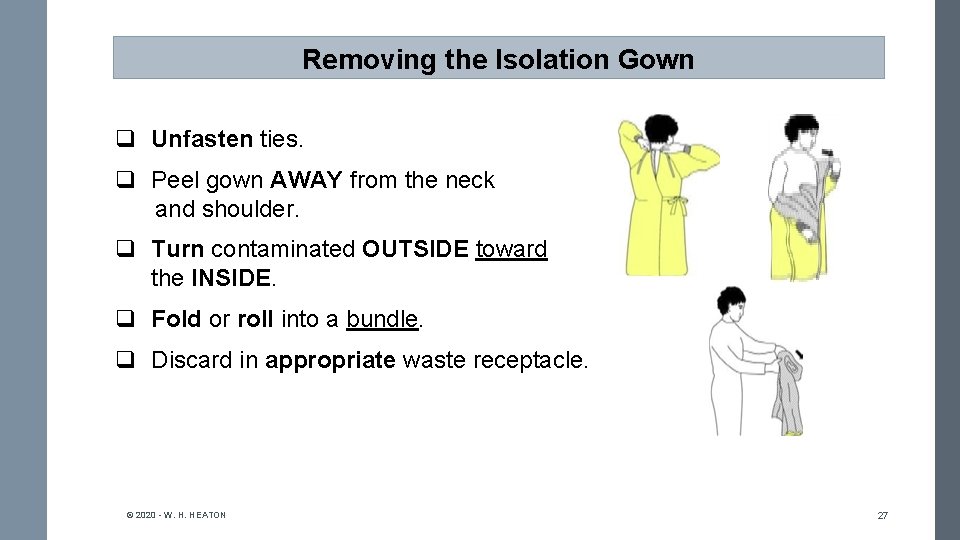
Removing the Isolation Gown q Unfasten ties. q Peel gown AWAY from the neck and shoulder. q Turn contaminated OUTSIDE toward the INSIDE. q Fold or roll into a bundle. q Discard in appropriate waste receptacle. © 2020 - W. H. HEATON 27
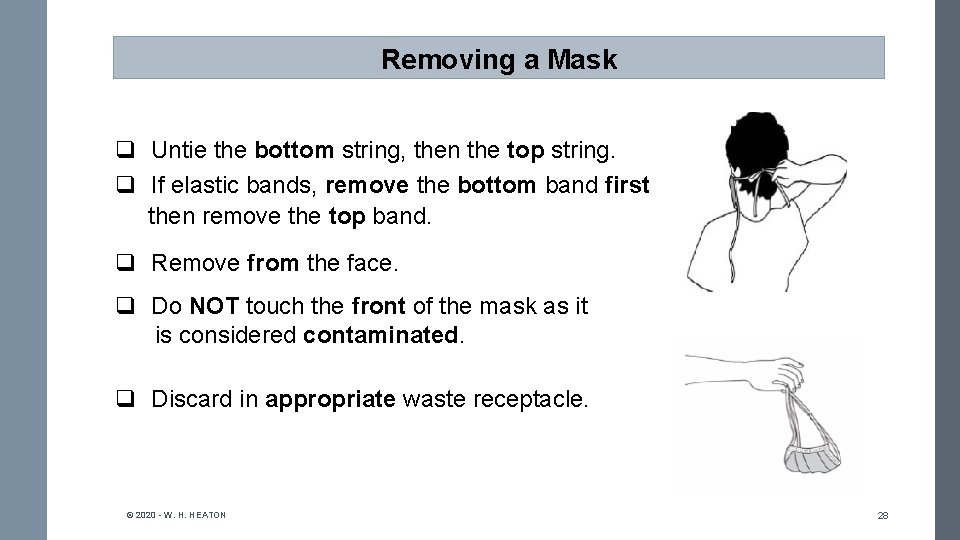
Removing a Mask q Untie the bottom string, then the top string. q If elastic bands, remove the bottom band first then remove the top band. q Remove from the face. q Do NOT touch the front of the mask as it is considered contaminated. q Discard in appropriate waste receptacle. © 2020 - W. H. HEATON 28
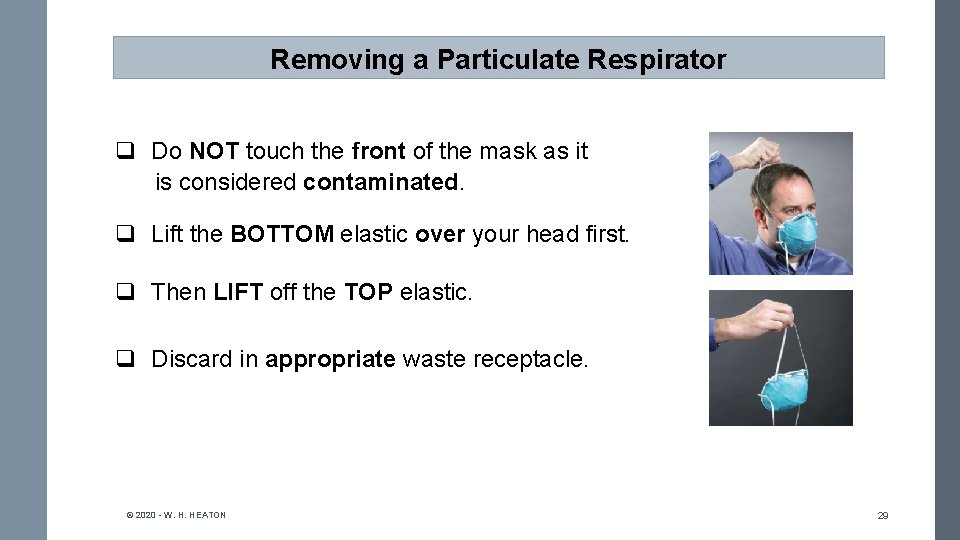
Removing a Particulate Respirator q Do NOT touch the front of the mask as it is considered contaminated. q Lift the BOTTOM elastic over your head first. q Then LIFT off the TOP elastic. q Discard in appropriate waste receptacle. © 2020 - W. H. HEATON 29
Hand Hygiene q Perform hand hygiene immediately after removing PPE. § If hands become visibly contaminated during PPE removal, wash hands before continuing to remove PPE. q Wash hands with soap and water or use an alcohol-based hand rub. q Ensure that hand hygiene facilities are available at the point needed, e. g. , sink or alcohol-based hand rub. © 2020 - W. H. HEATON 30
What Type of PPE Would YOU Wear in These Scenarios? 1. Giving a bed bath? 2. Suctioning oral secretions? 3. Transporting a resident in a wheel-chair? 4. Responding to an emergency where blood is spurting? 5. Drawing blood from a vein? 6. Cleaning an incontinent resident with diarrhea? 7. Irrigating a wound? 8. Taking vital signs? © 2020 - W. H. HEATON 31
Question and Answer Session © 2020 - W. H. HEATON 32