
Personal Monitoring for Air Pollution Exposure Philip M
- Slides: 19
Personal Monitoring for Air Pollution Exposure Philip M. Fine, Ph. D. Atmospheric Measurements Manager South Coast Air Quality Management District CAPCOA Health Conference, Carson, CA, September 19 -20, 2007
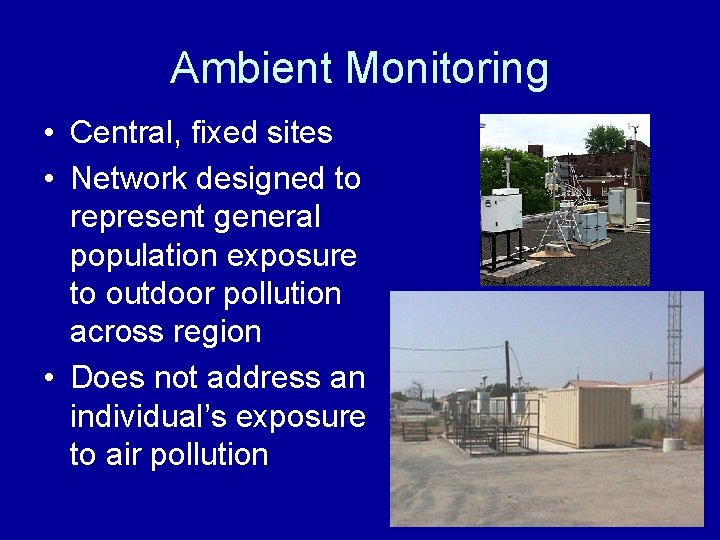
Ambient Monitoring • Central, fixed sites • Network designed to represent general population exposure to outdoor pollution across region • Does not address an individual’s exposure to air pollution
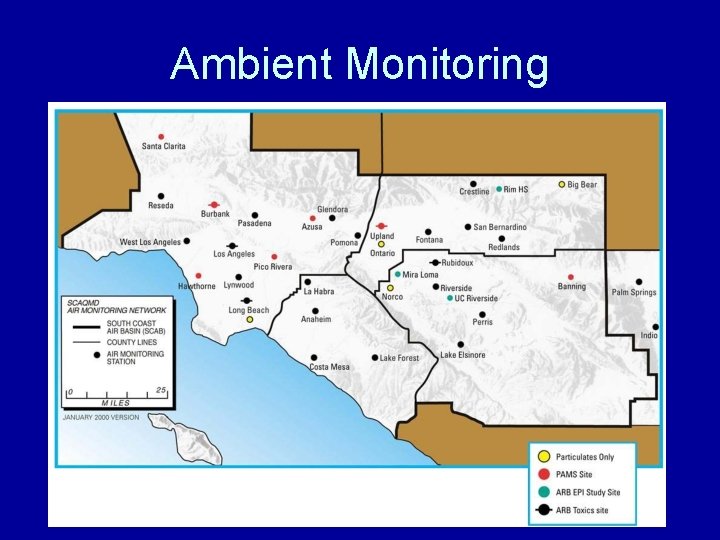
Ambient Monitoring
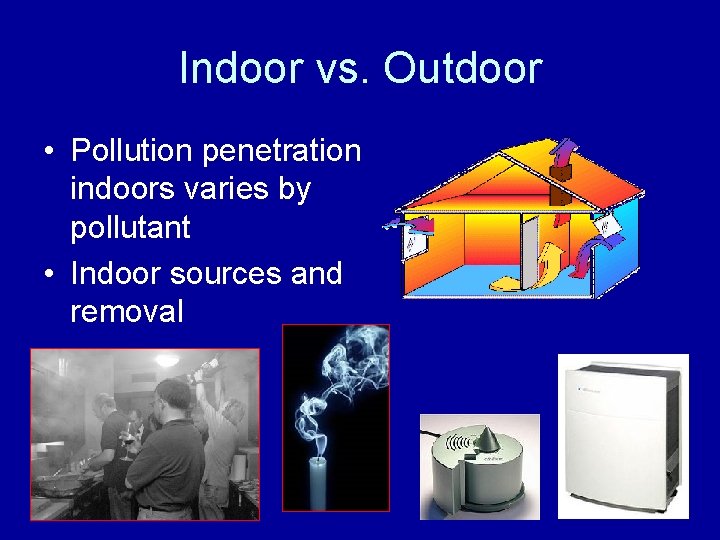
Indoor vs. Outdoor • Pollution penetration indoors varies by pollutant • Indoor sources and removal
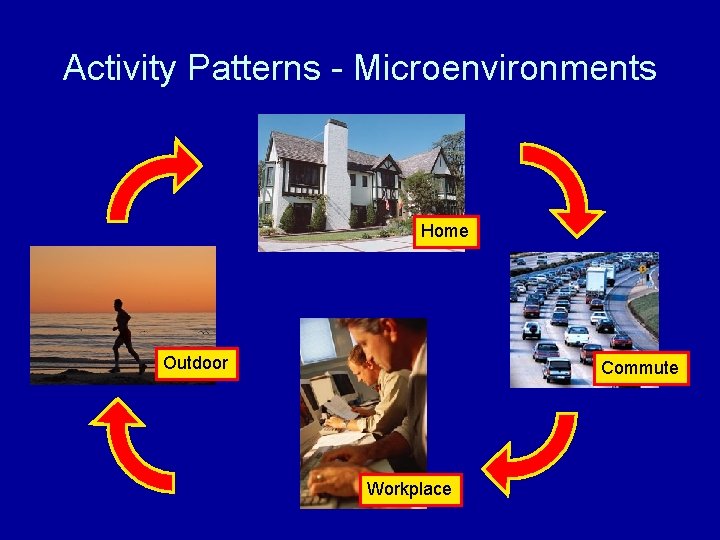
Activity Patterns - Microenvironments Home Outdoor Commute Workplace
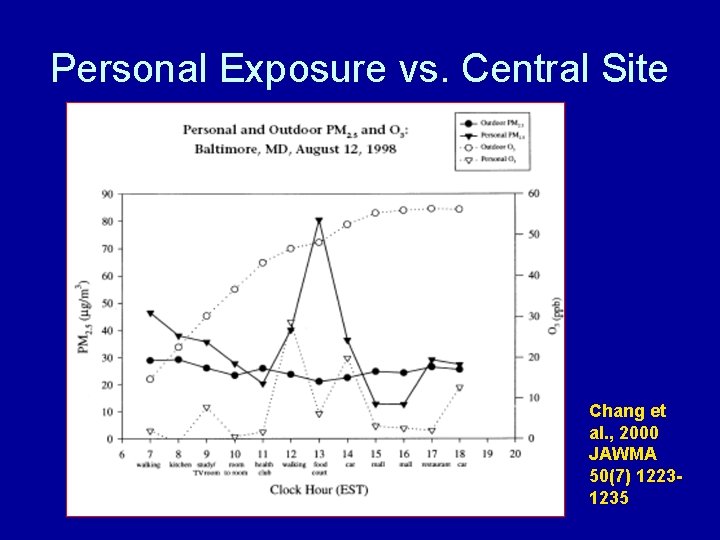
Personal Exposure vs. Central Site Chang et al. , 2000 JAWMA 50(7) 12231235
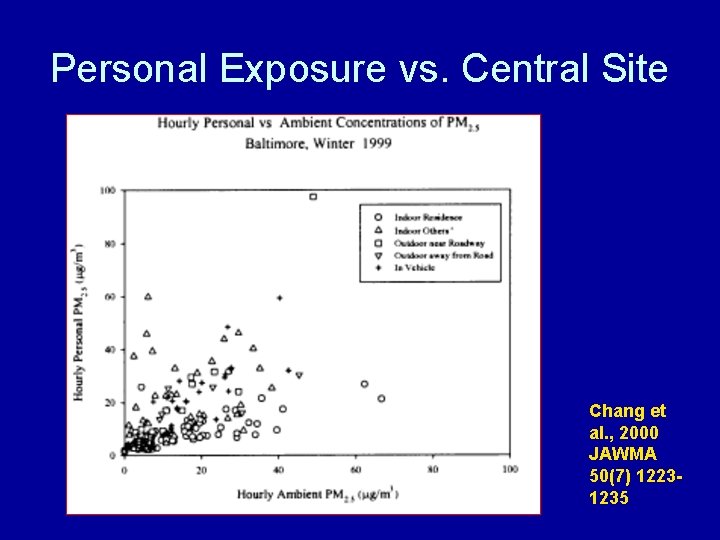
Personal Exposure vs. Central Site Chang et al. , 2000 JAWMA 50(7) 12231235
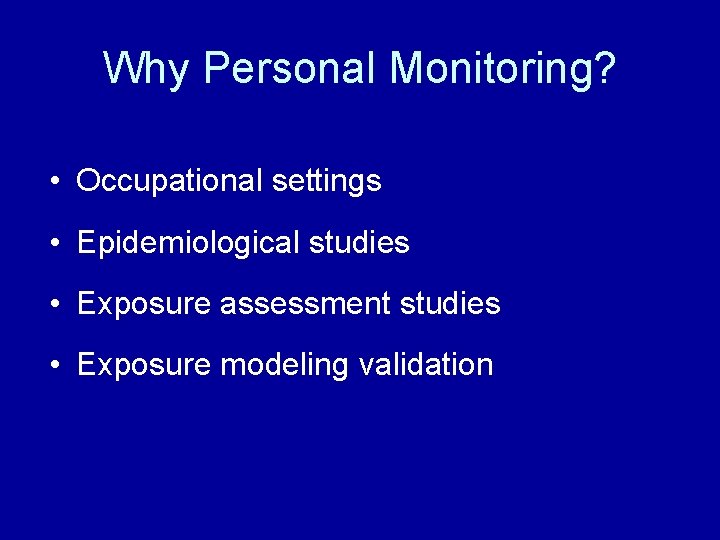
Why Personal Monitoring? • Occupational settings • Epidemiological studies • Exposure assessment studies • Exposure modeling validation
Personal Air Pollution Monitors • Most technologies developed for occupational settings • Detection limits tend to be higher • Various criteria and toxic pollutants available (VOC, Particulate Matter, CO, etc. ) • Active vs. passive • Continuous vs. time-integrated
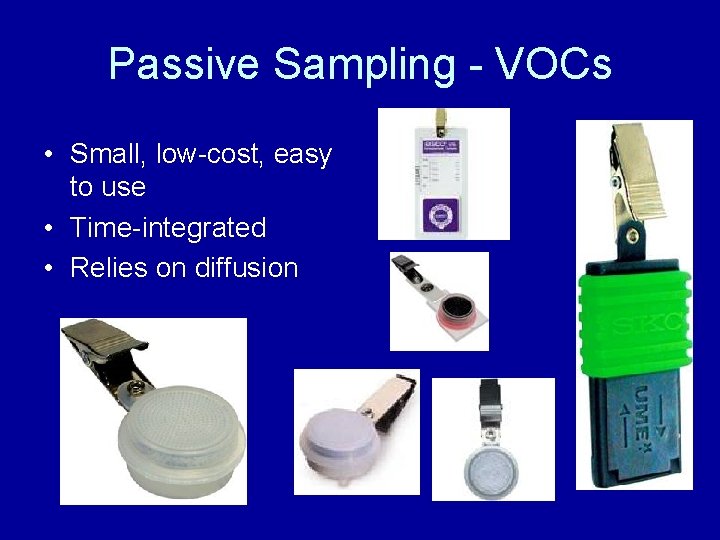
Passive Sampling - VOCs • Small, low-cost, easy to use • Time-integrated • Relies on diffusion
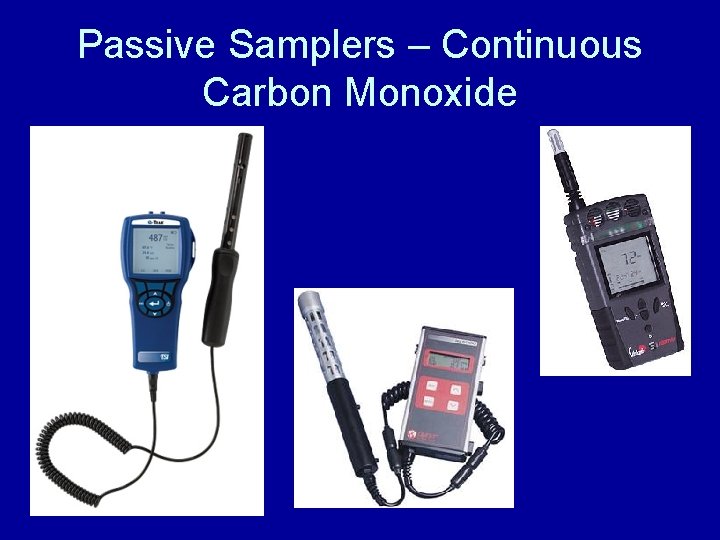
Passive Samplers – Continuous Carbon Monoxide
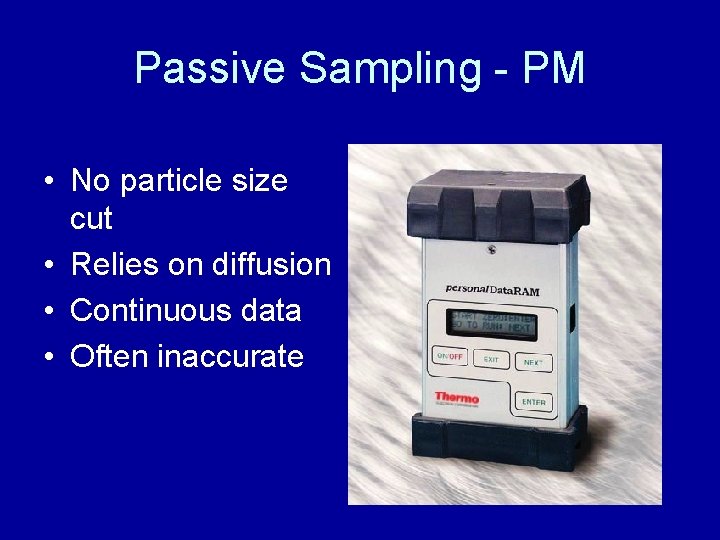
Passive Sampling - PM • No particle size cut • Relies on diffusion • Continuous data • Often inaccurate
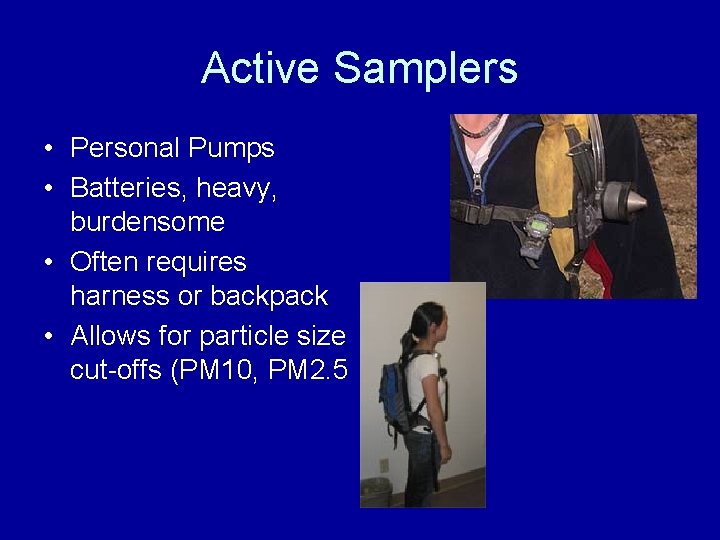
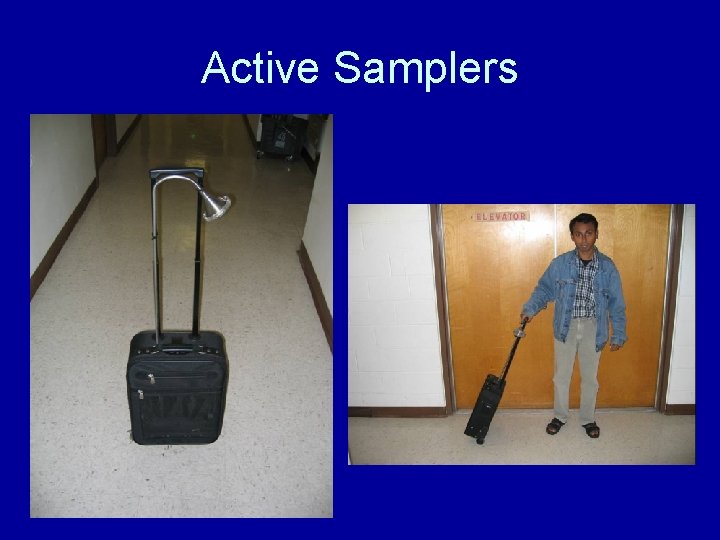
Active Samplers • Personal Pumps • Batteries, heavy, burdensome • Often requires harness or backpack • Allows for particle size cut-offs (PM 10, PM 2. 5
Active Samplers
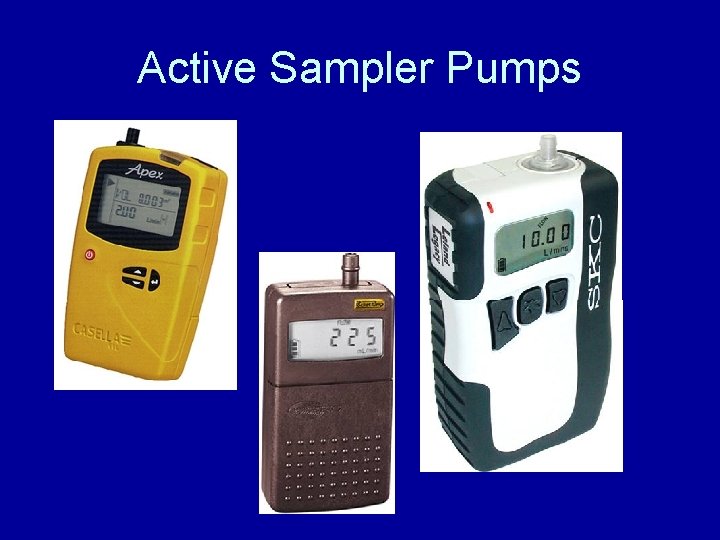
Active Sampler Pumps
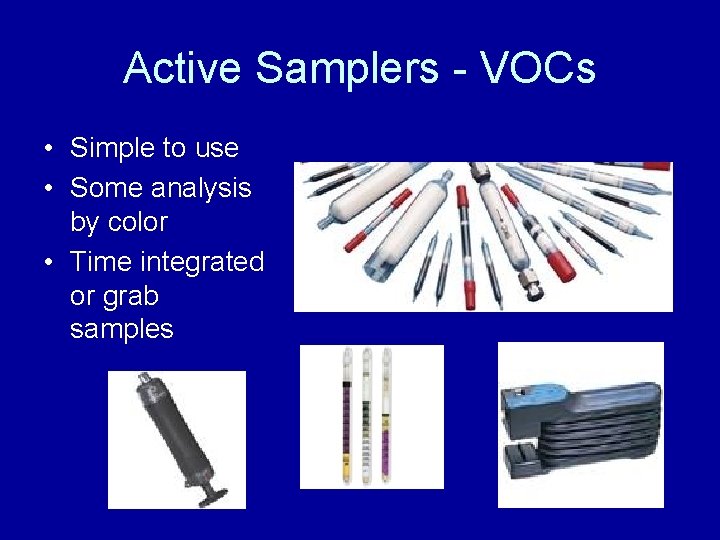
Active Samplers - VOCs • Simple to use • Some analysis by color • Time integrated or grab samples
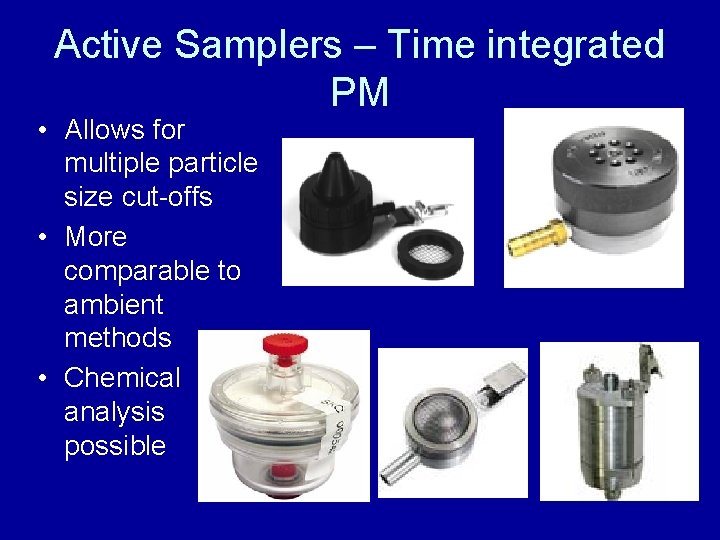
Active Samplers – Time integrated PM • Allows for multiple particle size cut-offs • More comparable to ambient methods • Chemical analysis possible
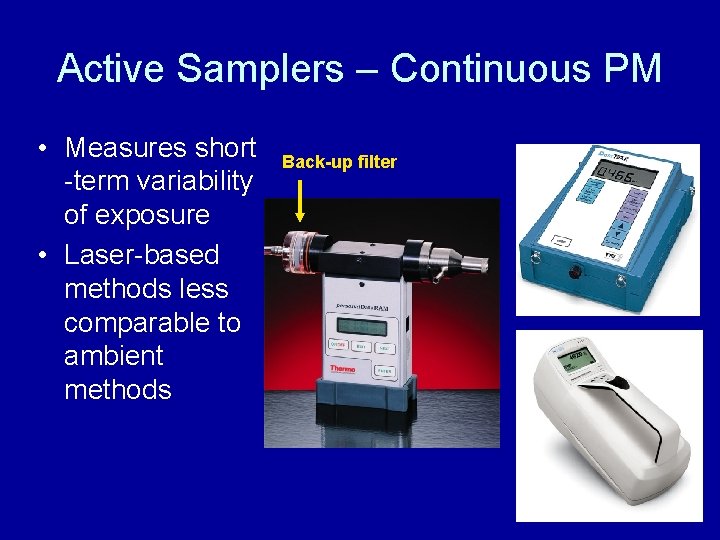
Active Samplers – Continuous PM • Measures short -term variability of exposure • Laser-based methods less comparable to ambient methods Back-up filter
Conclusions • Personal air quality monitors are useful tools for very specific applications • Continuous data is more useful to track variations in exposure in different microenvironments • Regulations designed to reduce outdoor pollution at fixed sites will still tend to reduce personal exposure