
Personal Management Tactical Positioning Stance Movement Approaching Individuals
- Slides: 16
Personal Management Tactical Positioning, Stance & Movement, Approaching Individuals
Manage Conflict Situations in Policing (Unit 3) Assessment Criteria Covered: 1. 3 Explain the levels of training required to use personal safety skills and equipment
Objectives By the end of this session officers should be able to: Define Tactical Positioning Describe the conventional fighting arc Describe the unconventional fighting arc Describe the reactionary gap Identify proxemics zones and explain their impact on communication • State the stances that can be adopted when dealing with individuals • Describe how to maintain balance when moving forwards, sideways and rearwards. • Demonstrate the roles of ‘contact’ and ‘cover’ officer • • • State the tactics for approach and arrest of a suspect who has Covid 19 symptoms or is self-isolating 3
Tactical Positioning Task: • Write down what you think is meant by Tactical Positioning means…. . “to place yourself in a position of advantage, in order to achieve your aim”
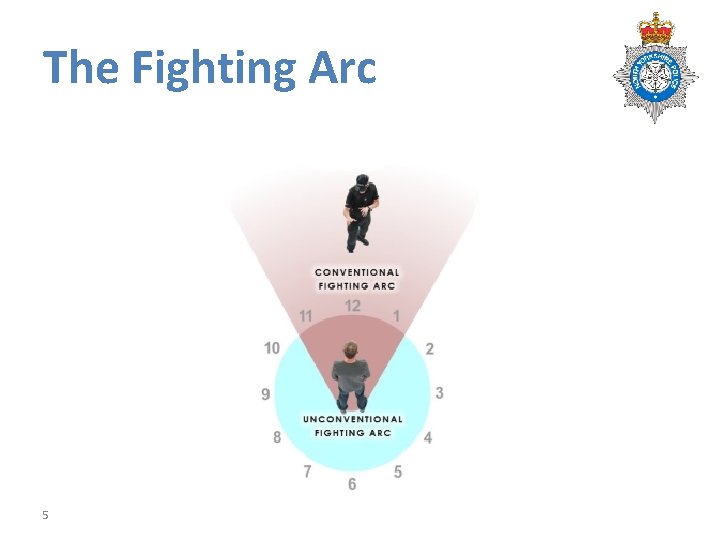
The Fighting Arc 5
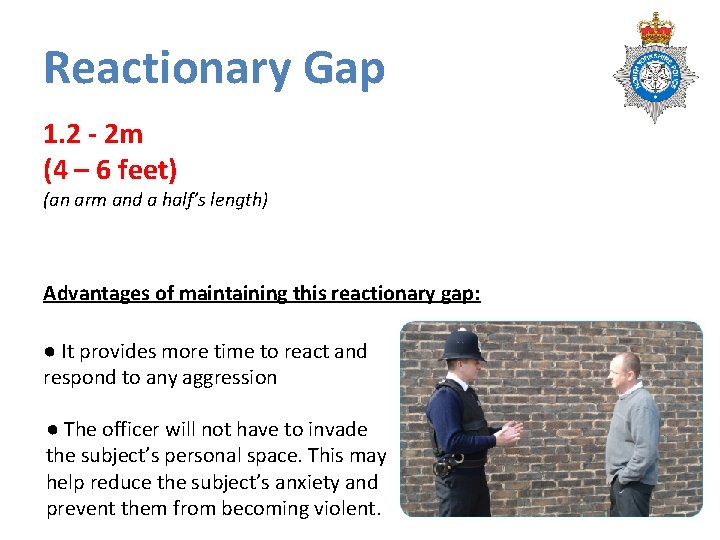
Reactionary Gap 1. 2 - 2 m (4 – 6 feet) (an arm and a half’s length) Advantages of maintaining this reactionary gap: ● It provides more time to react and respond to any aggression ● The officer will not have to invade the subject’s personal space. This may help reduce the subject’s anxiety and prevent them from becoming violent.
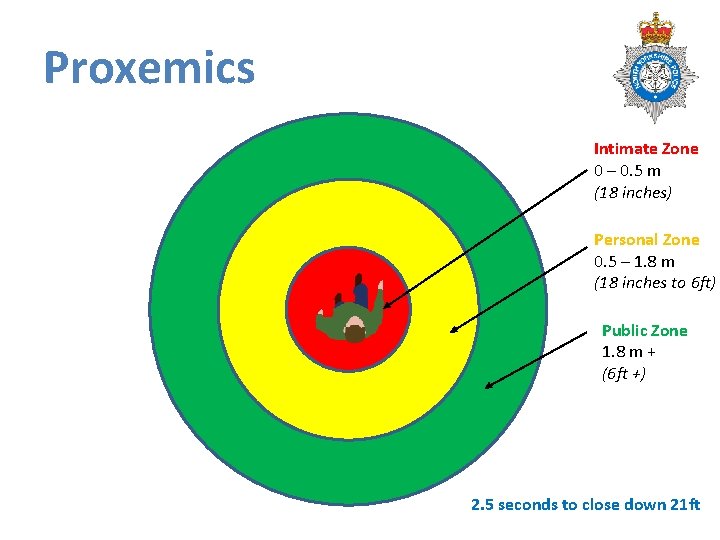
Proxemics Intimate Zone 0 – 0. 5 m (18 inches) Personal Zone 0. 5 – 1. 8 m (18 inches to 6 ft) Public Zone 1. 8 m + (6 ft +) 2. 5 seconds to close down 21 ft
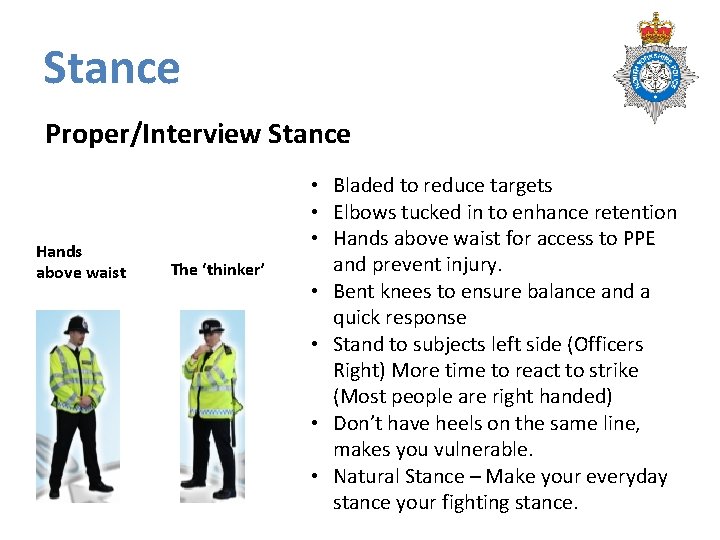
Stance Proper/Interview Stance Hands above waist The ‘thinker’ • Bladed to reduce targets • Elbows tucked in to enhance retention • Hands above waist for access to PPE and prevent injury. • Bent knees to ensure balance and a quick response • Stand to subjects left side (Officers Right) More time to react to strike (Most people are right handed) • Don’t have heels on the same line, makes you vulnerable. • Natural Stance – Make your everyday stance your fighting stance.
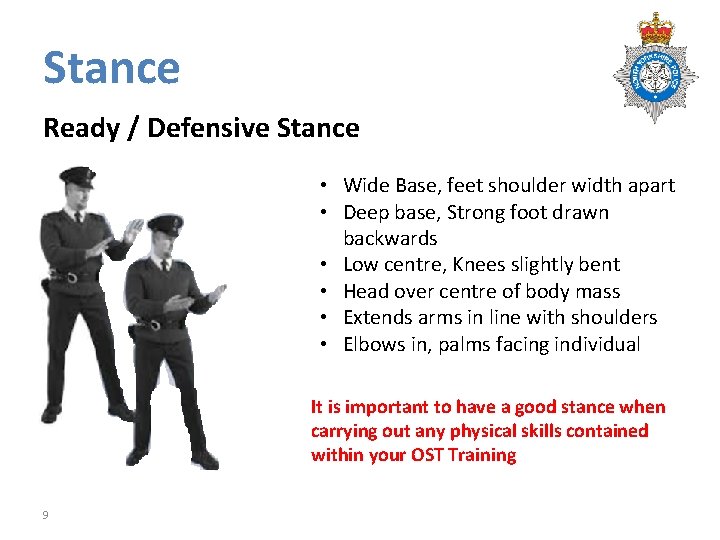
Stance Ready / Defensive Stance • Wide Base, feet shoulder width apart • Deep base, Strong foot drawn backwards • Low centre, Knees slightly bent • Head over centre of body mass • Extends arms in line with shoulders • Elbows in, palms facing individual It is important to have a good stance when carrying out any physical skills contained within your OST Training 9
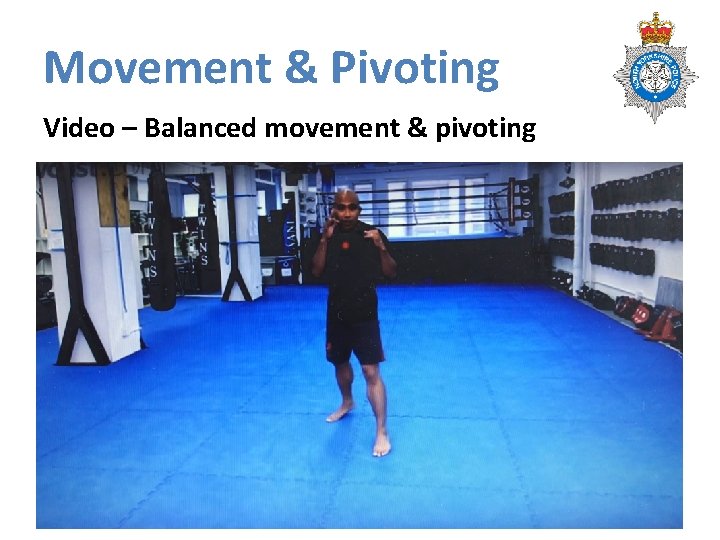
Movement & Pivoting Video – Balanced movement & pivoting
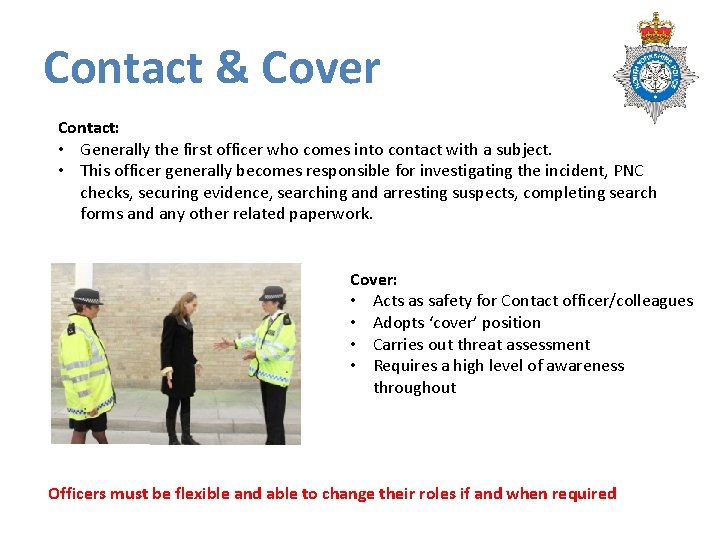
Contact & Cover Contact: • Generally the first officer who comes into contact with a subject. • This officer generally becomes responsible for investigating the incident, PNC checks, securing evidence, searching and arresting suspects, completing search forms and any other related paperwork. Cover: • Acts as safety for Contact officer/colleagues • Adopts ‘cover’ position • Carries out threat assessment • Requires a high level of awareness throughout Officers must be flexible and able to change their roles if and when required
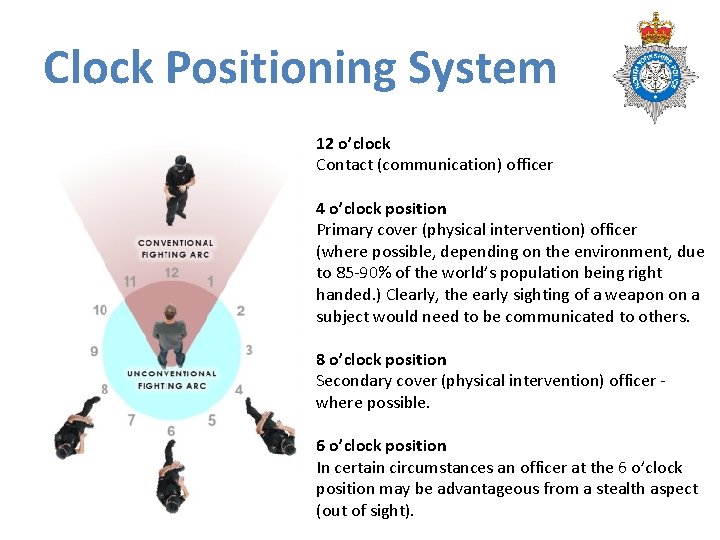
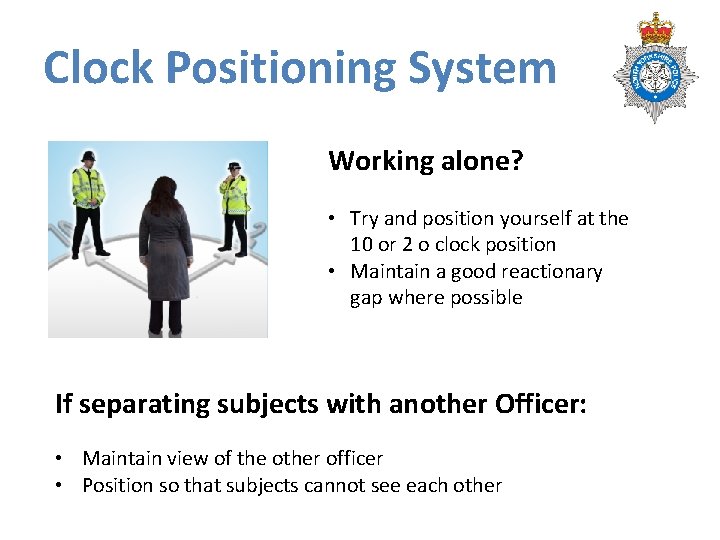
Clock Positioning System 12 o’clock Contact (communication) officer 4 o’clock position Primary cover (physical intervention) officer (where possible, depending on the environment, due to 85 -90% of the world’s population being right handed. ) Clearly, the early sighting of a weapon on a subject would need to be communicated to others. 8 o’clock position Secondary cover (physical intervention) officer where possible. 6 o’clock position In certain circumstances an officer at the 6 o’clock position may be advantageous from a stealth aspect (out of sight).
Clock Positioning System Working alone? • Try and position yourself at the 10 or 2 o clock position • Maintain a good reactionary gap where possible If separating subjects with another Officer: • Maintain view of the other officer • Position so that subjects cannot see each other
COVID 19 Tactics for approach and arrest of a suspect who has Covid-19 symptoms or is self-isolating • • • Consider use of ‘ 5 Step Appeal’ Ask subject to step outside property Maintain 2 -3 metre distance Approach from 6 o’clock position to handcuff to the rear If available, place face mask on them. If they are resistant, use of PAVA should be considered.
Knowledge Check write down your answers, then check your answers when finished 1. What are the disadvantages of being in a subjects fighting arc? Area of natural fighting skill, exposure of body targets, kit and equipment retention 2. What is the correct reactionary gap? 4 -6 ft / 1. 2 -2 m / an arm and a half length 3. Why is it important to maintain a reactionary gap? Action beats reaction, time to react, reduce subject anxiety as not ‘too close’ 4. What are the proxemics zones? Intimate (0 – 0. 5 m (18 inches), , Personal 0. 5 – 1. 8 m (18 inches to 6 ft) Public 1. 8 m+ (6 ft+) 6. How long (approx. ) does it take to close down 21 ft? 2. 5 seconds 7. At which clock positions do the ‘contact’ and ‘cover’ officer stand? Contact: 12 o clock , Primary Cover: 4 o clock, Secondary Cover: 8 o clock Stealth: 6 o clock
Personal Safety Manual Link (Click Here)