
Personal Hygiene Food handlers are sources of and
- Slides: 24
Personal Hygiene • Food handlers are sources of and vehicles for food contamination. • Good hygiene prevents contamination • Customers expect high standards • Law requires Personal Hygiene
Personal Hygiene • • • Contamination from food handlers: Chemical: perfume or aftershave Physical: hair, clothing, jewellery Microbial: cuts, ear, nose, throat, gut Specific examples?
Personal Hygiene • 30 -40% of population & food handlers are asymptomatic carriers of Staphylococcus. • Food handlers may come into contact with Salmonella, Camplyobacter, E. coli in food • Food handlers can carry contamination from preparation and from hand contact points
Personal Hygiene • Hand washing; • To remove contamination from hands • Controls hand contamination of food
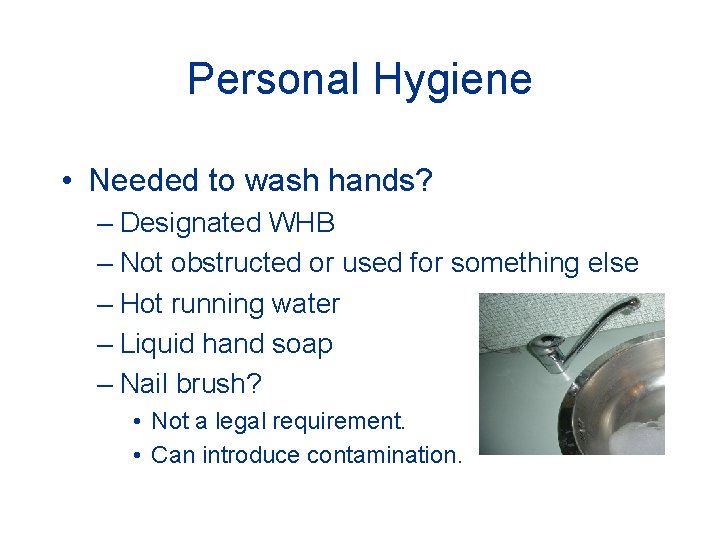
Personal Hygiene • Needed to wash hands? – Designated WHB – Not obstructed or used for something else – Hot running water – Liquid hand soap – Nail brush? • Not a legal requirement. • Can introduce contamination.
Personal Hygiene • When to wash hands. – Before entering a food room – After going to the toilet – After changing rubbish – After handling raw food (egg, meat, veg) – After coughing, sneezing, grooming – Other examples?
Personal Hygiene • How to wash hands. • The combination of water, heat, chemicals (soap) & friction remove bacteria • Is “typical” hand washing enough?
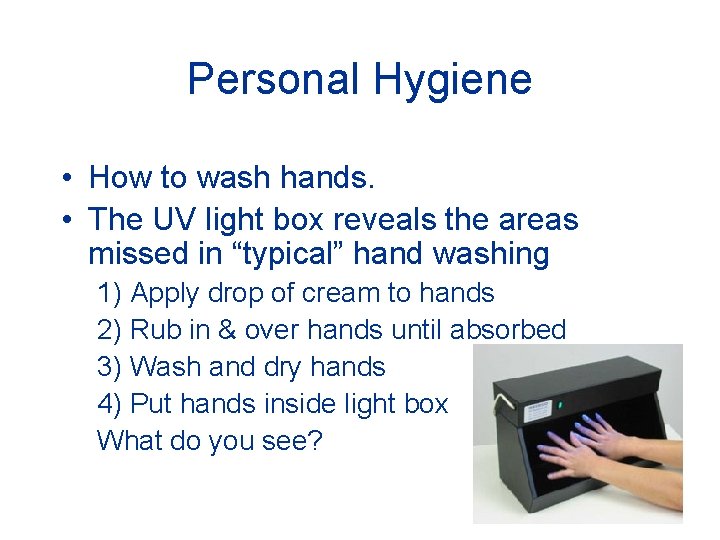
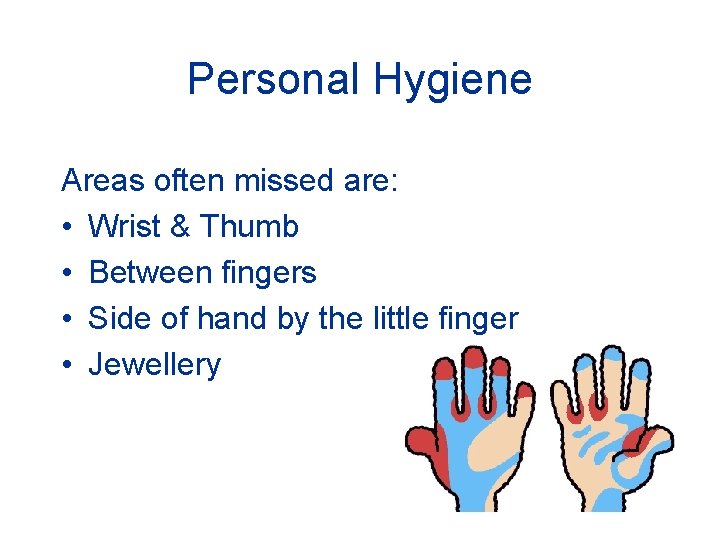
Personal Hygiene • How to wash hands. • The UV light box reveals the areas missed in “typical” hand washing 1) Apply drop of cream to hands 2) Rub in & over hands until absorbed 3) Wash and dry hands 4) Put hands inside light box What do you see?
Personal Hygiene Areas often missed are: • Wrist & Thumb • Between fingers • Side of hand by the little finger • Jewellery
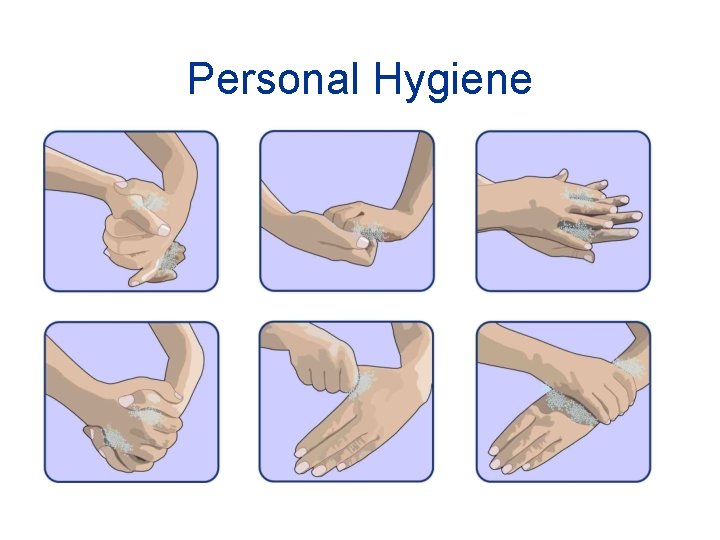
Personal Hygiene • • How to wash hands: Use soap & comfortably hot water. Rub palms. Rub fingers inside palm. Interlock fingers & rub. Rub interlocked hands over each other. Lock & turn hands. Rub thumbs and wrists. Rinse and dry.
Personal Hygiene
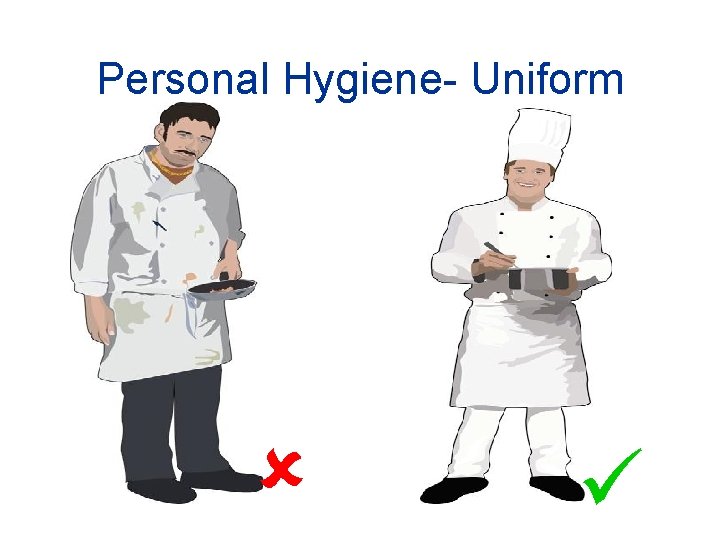
Personal Hygiene • • • Uniform policy: No jewellery (except single plain band) No piercings (except ear stud) Protective clothes cover outdoor clothes Clean & in good condition No buttons, external pockets etc
Personal Hygiene • Which protective clothing? • A Waiter • Kitchen Porter (KP) who washes vegetables and prepares salads • The Head Chef • Remember, protective clothing controls contamination
Personal Hygiene- Uniform
Personal Hygiene- Gloves • Mistaken as alternative to hand washing • Must be changed frequently- when hand washing would normally occur • Must be suitable for use • Hands with a wound should be covered with a plaster and then a glove
Personal Hygiene- First Aid • • A first aid dressing (plasters) must: Protect food from contamination Be waterproof Be prevented from falling into food
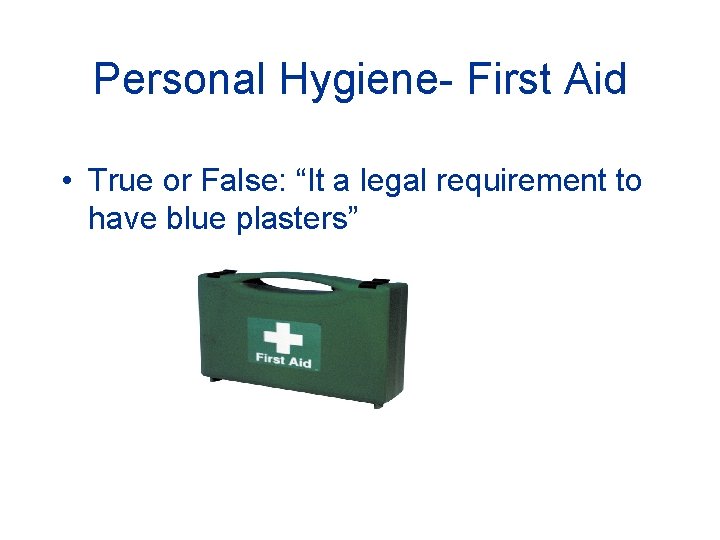
Personal Hygiene- First Aid • True or False: “It a legal requirement to have blue plasters”
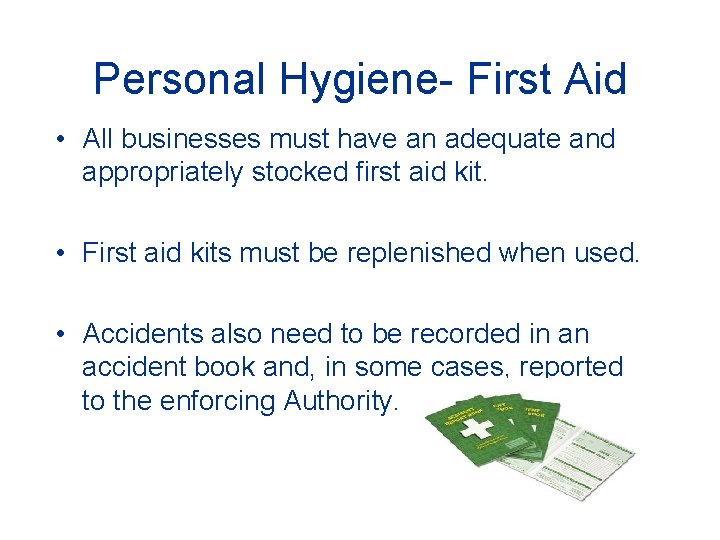
Personal Hygiene- First Aid • All businesses must have an adequate and appropriately stocked first aid kit. • First aid kits must be replenished when used. • Accidents also need to be recorded in an accident book and, in some cases, reported to the enforcing Authority.
Infection Control • • Fitness to work: Pre-employment health questionnaire Clear staff policy (before they start) Instructions to report illness
Infection Control • • • Symptoms to be reported include: Diarrhoea, Nausea, Vomiting Stomach Cramp Skin conditions Similar illness at home Illness after recent travel abroad
Infection Control • Sickness Reporting – Food handler to report sickness to manager (legal requirement) – “ 48 hour rule”: Exclude food handler until symptom free for at least 48 consecutive hours – Return to work interview after sickness
Infection Control • • EHSS affordable model forms include: Pre-employment health questionnaires Return to work interview forms Fitness to work rules And other essential documents Form. File. TM In English & Polish language
Infection Control • Bar from work for 48 hours because food handlers may be: • Temporarily “Asymptomatic” • A “Carrier” (may need to be tested) • “Intermittent Excreter” • Consider your workplace policy.
Infection Control • What do you do in each case? 1) A chef phones to say they cant come in as they have a headache 2) At work, the KP says they feel sick 3) The head chef arrives late after being up all night with diarrhoea & vomiting