
Personal Genomics Selection and adaptation Shai Carmi School
- Slides: 68
Personal Genomics Selection and adaptation Shai Carmi School of Public Health
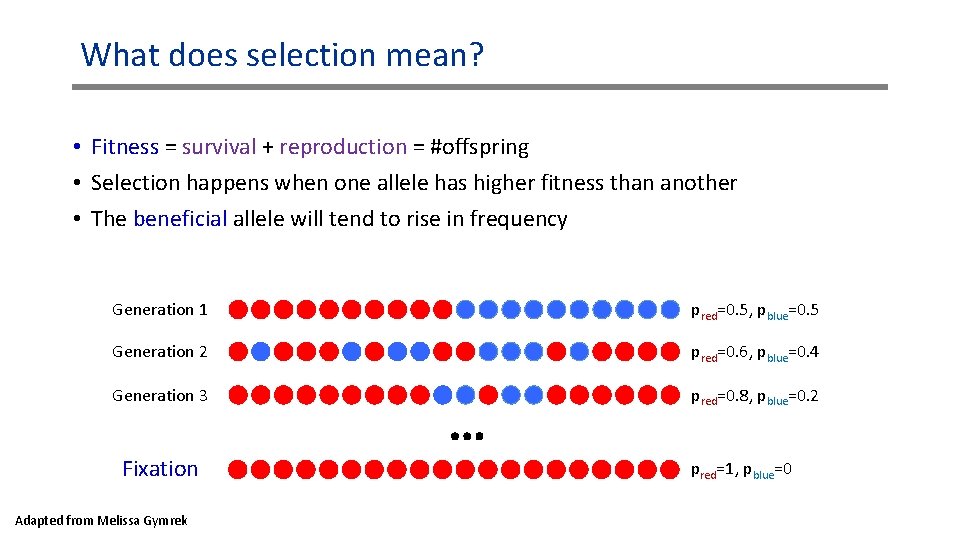
What does selection mean? • Fitness = survival + reproduction = #offspring • Selection happens when one allele has higher fitness than another • The beneficial allele will tend to rise in frequency Generation 1 pred=0. 5, pblue=0. 5 Generation 2 pred=0. 6, pblue=0. 4 Generation 3 pred=0. 8, pblue=0. 2 Fixation Adapted from Melissa Gymrek … pred=1, pblue=0
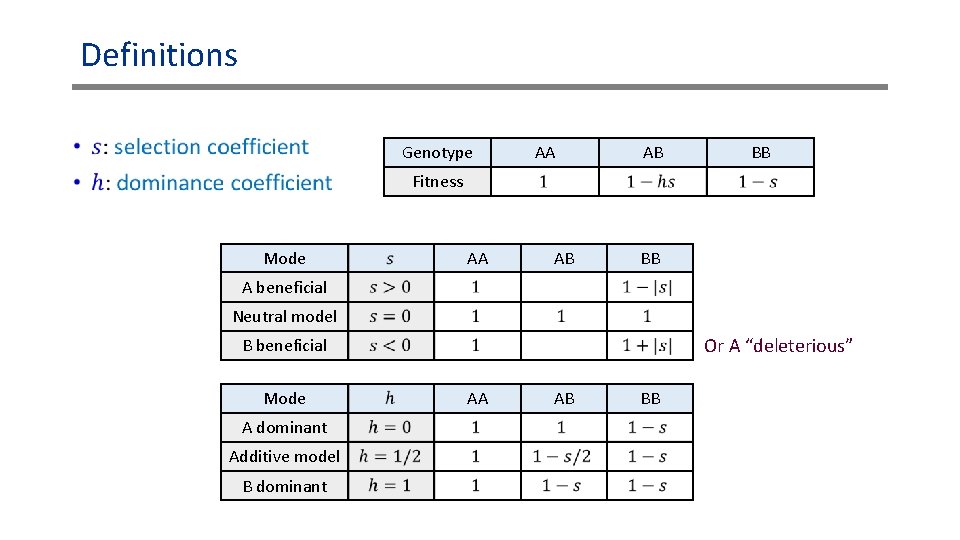
Definitions • Genotype AA AB BB Fitness Mode AA AB BB A beneficial Neutral model Or A “deleterious” B beneficial Mode A dominant Additive model B dominant AA AB BB
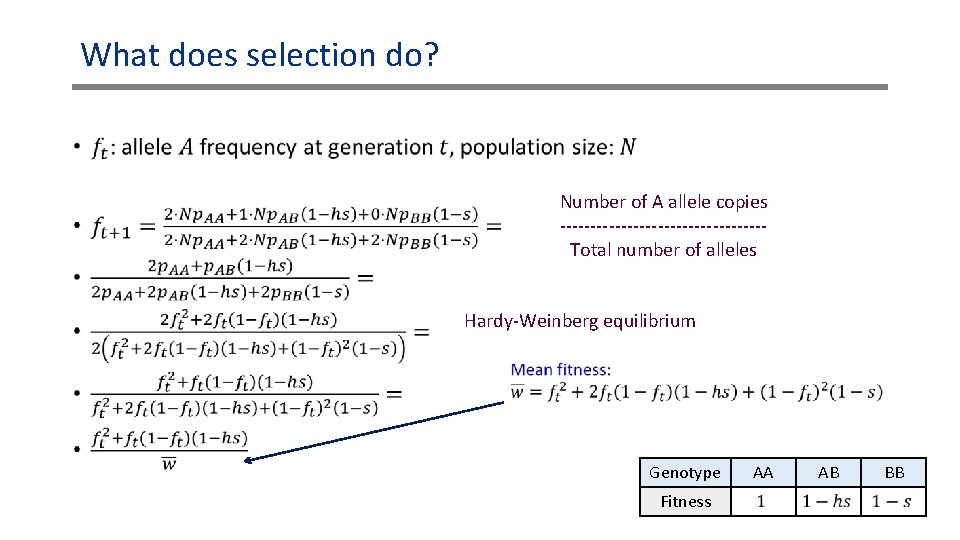
What does selection do? • Number of A allele copies -----------------Total number of alleles Hardy-Weinberg equilibrium Genotype Fitness AA AB BB
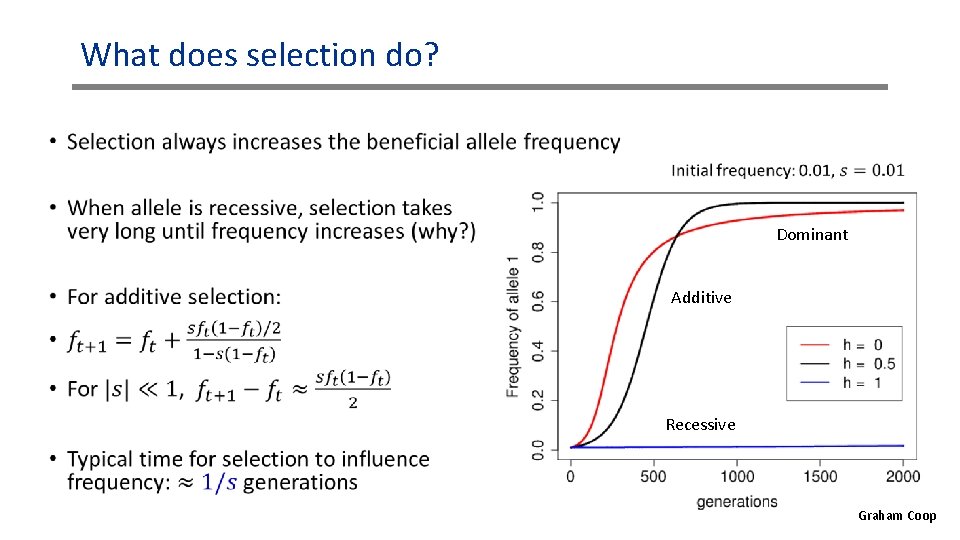
What does selection do? • Dominant Additive Recessive Graham Coop
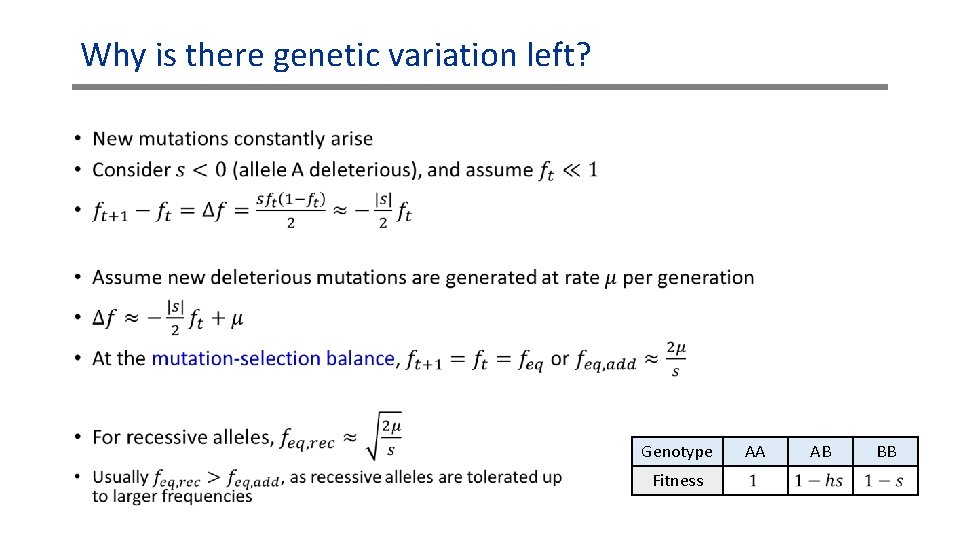
Why is there genetic variation left? • Genotype Fitness AA AB BB
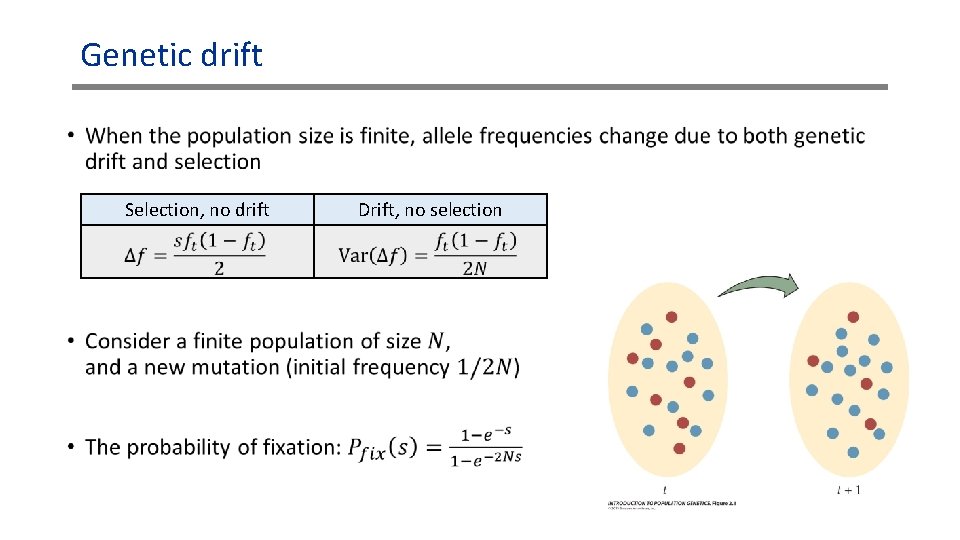
Genetic drift • Selection, no drift Drift, no selection Allele frequency Wikipedia
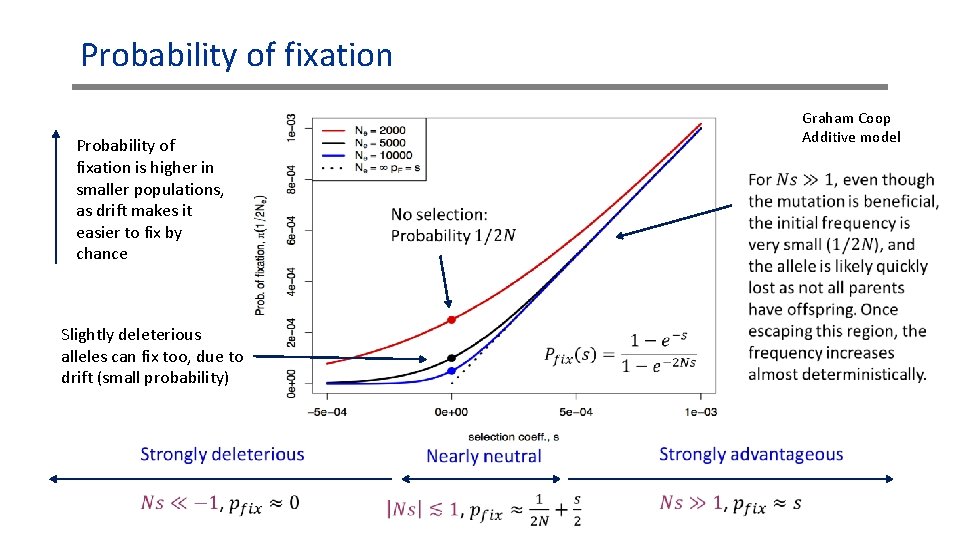
Probability of fixation is higher in smaller populations, as drift makes it easier to fix by chance Slightly deleterious alleles can fix too, due to drift (small probability) Graham Coop Additive model
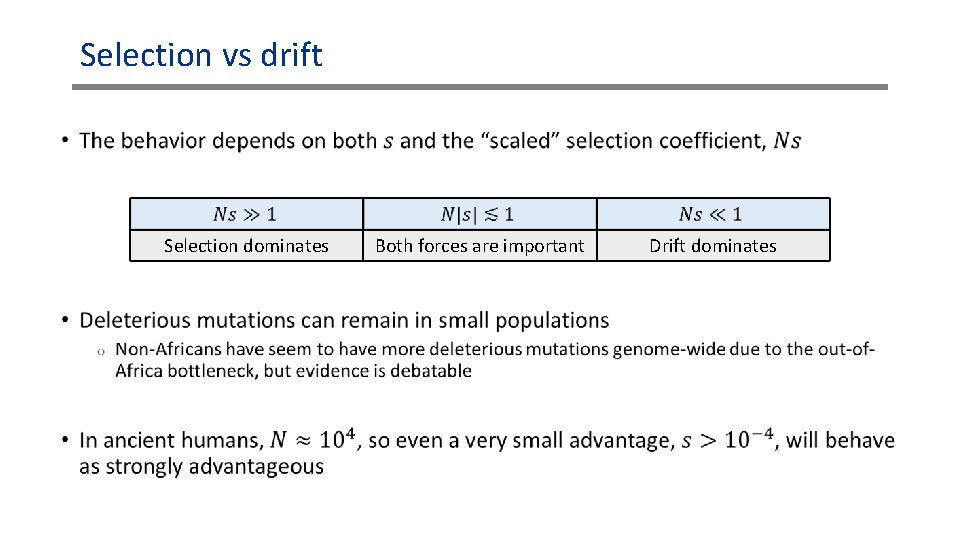
Selection vs drift • Selection dominates Both forces are important Drift dominates
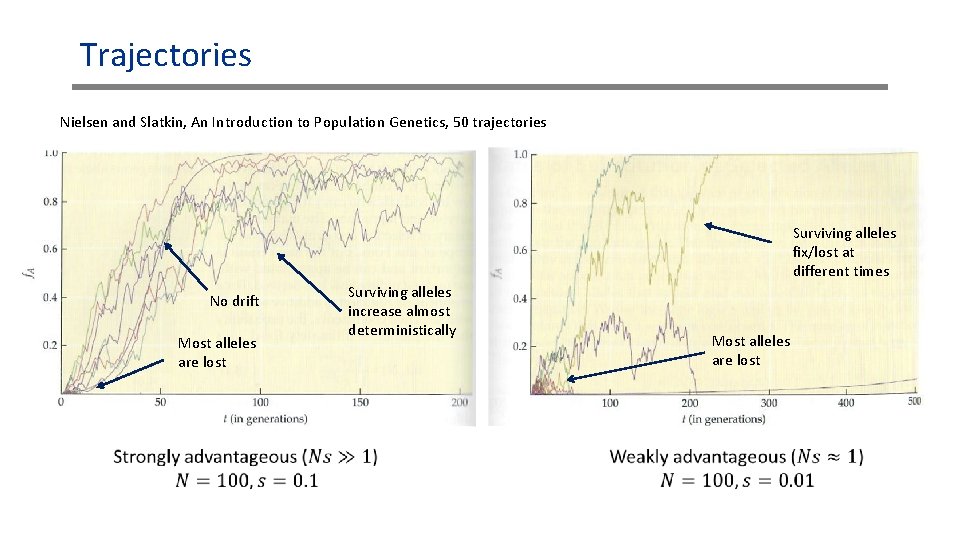
Trajectories Nielsen and Slatkin, An Introduction to Population Genetics, 50 trajectories Surviving alleles fix/lost at different times No drift Most alleles are lost Surviving alleles increase almost deterministically Most alleles are lost
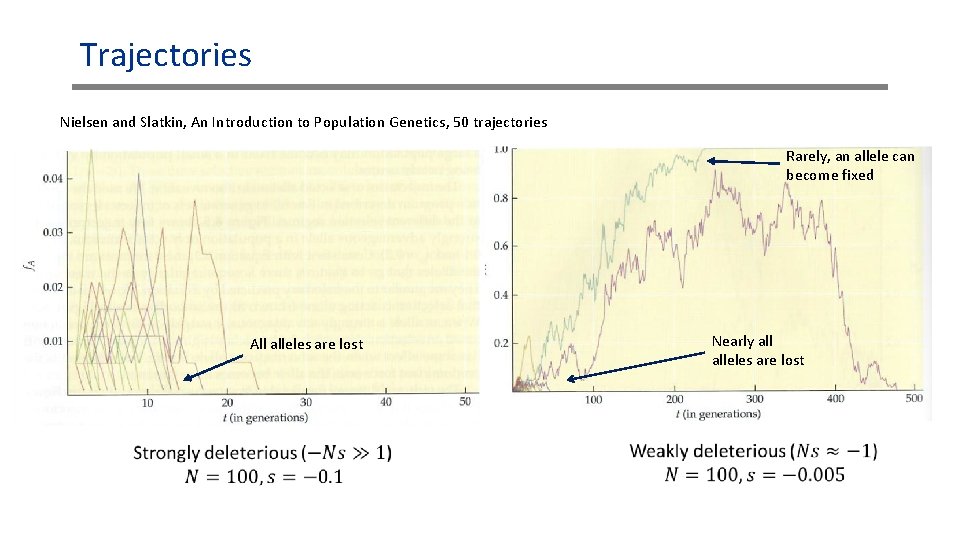
Trajectories Nielsen and Slatkin, An Introduction to Population Genetics, 50 trajectories Rarely, an allele can become fixed All alleles are lost Nearly alleles are lost
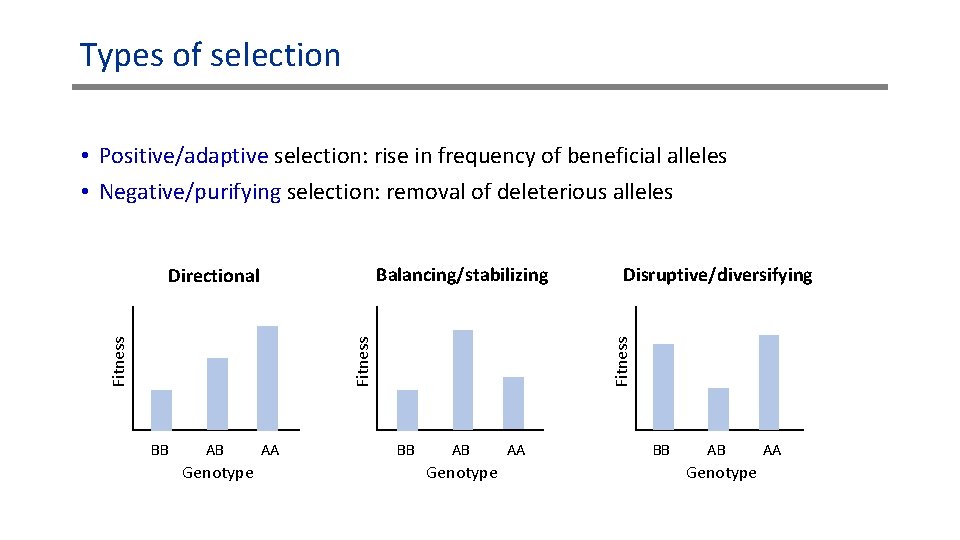
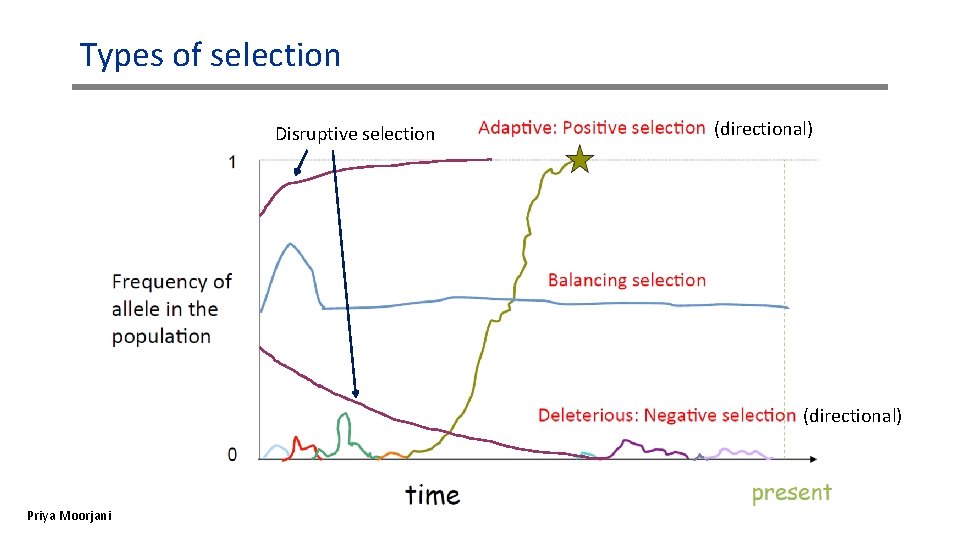
Types of selection • Positive/adaptive selection: rise in frequency of beneficial alleles • Negative/purifying selection: removal of deleterious alleles Fitness BB AB Genotype AA Disruptive/diversifying Fitness Balancing/stabilizing Directional BB AB Genotype AA
Types of selection Disruptive selection (directional) Priya Moorjani
The neutral theory of molecular evolution • Kimura, 1968 • Most mutations are neutral or nearly-neutral o Makes sense given the repetitive nature of genomes • Changes between species, populations, or individuals are mostly due to mutation and genetic drift; positive selection is rare • Still considered the dominating theory, but interesting exceptions exist
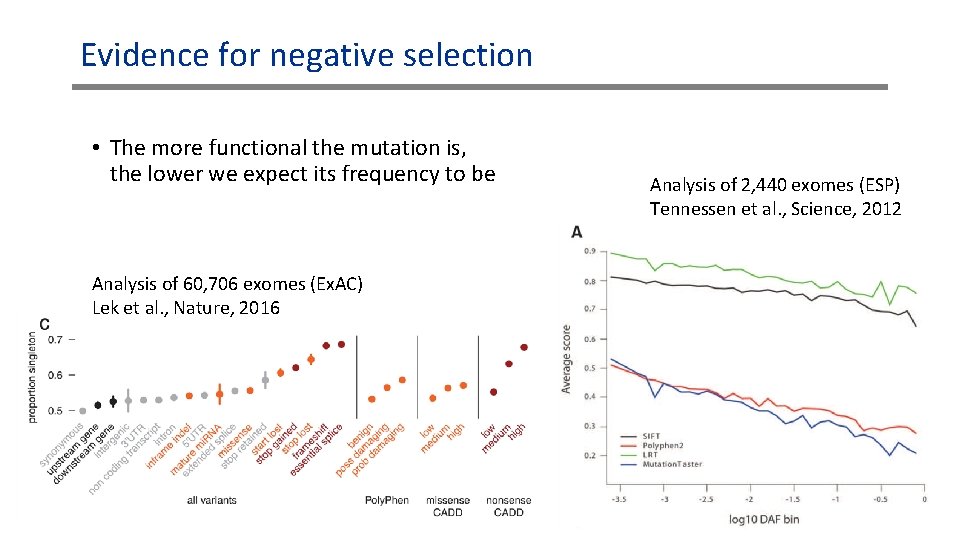
Evidence for negative selection • The more functional the mutation is, the lower we expect its frequency to be Analysis of 60, 706 exomes (Ex. AC) Lek et al. , Nature, 2016 Analysis of 2, 440 exomes (ESP) Tennessen et al. , Science, 2012
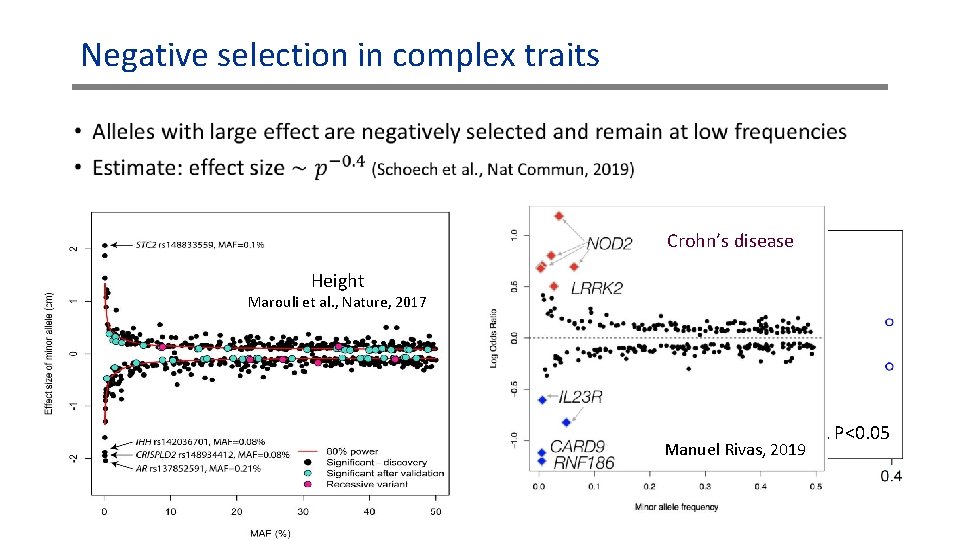
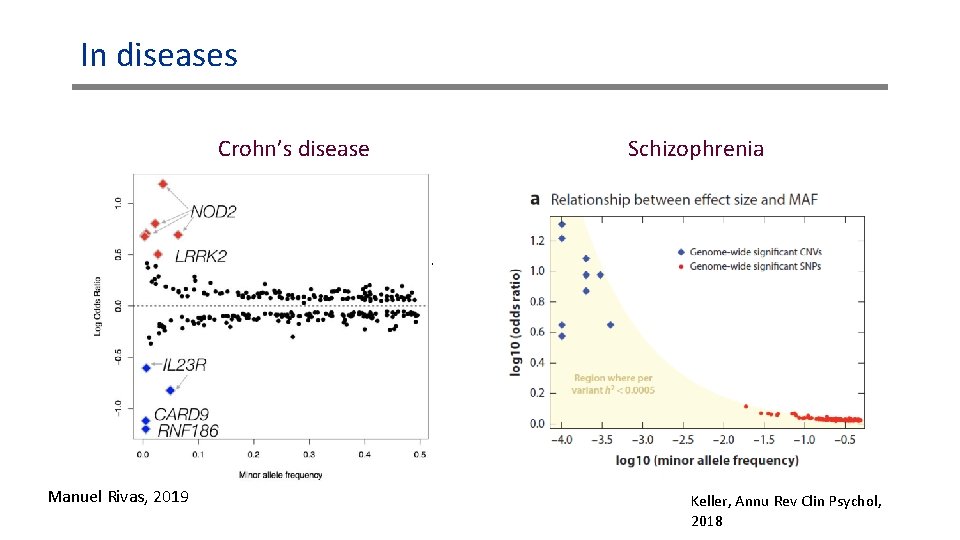
Negative selection in complex traits • Crohn’s disease Height Marouli et al. , Nature, 2017 UK Biobank, P<0. 05 Manuel Rivas, 2019
In diseases Crohn’s disease Schizophrenia Height Marouli et al. , Nature, 2017 Manuel Rivas, 2019 Keller, Annu Rev Clin Psychol, 2018
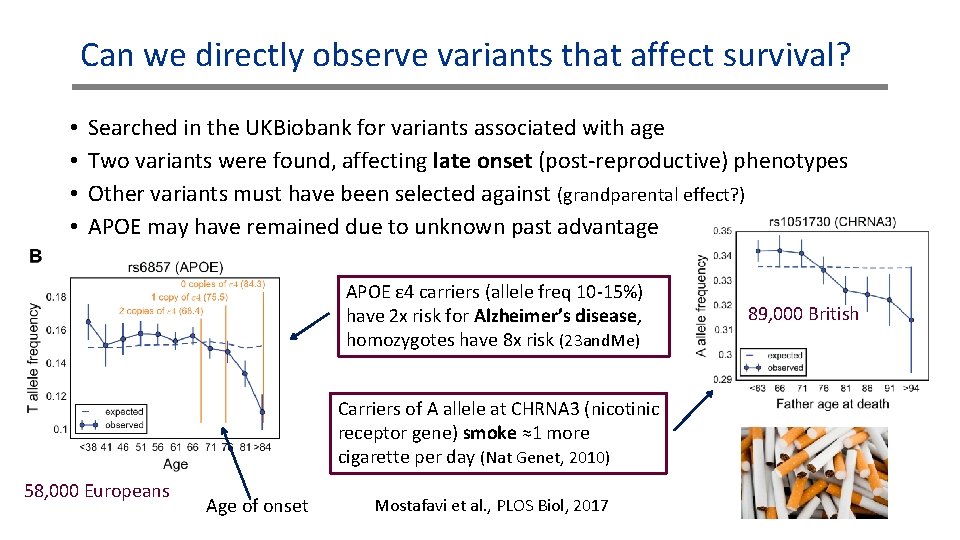
Can we directly observe variants that affect survival? • • Searched in the UKBiobank for variants associated with age Two variants were found, affecting late onset (post-reproductive) phenotypes Other variants must have been selected against (grandparental effect? ) APOE may have remained due to unknown past advantage APOE ε 4 carriers (allele freq 10 -15%) have 2 x risk for Alzheimer’s disease, homozygotes have 8 x risk (23 and. Me) Carriers of A allele at CHRNA 3 (nicotinic receptor gene) smoke ≈1 more cigarette per day (Nat Genet, 2010) 58, 000 Europeans Age of onset Mostafavi et al. , PLOS Biol, 2017 89, 000 British
Can we directly observe variants that affect reproduction? • Genome-wide association study for age at first birth and number of children ever born • n=251 k, 343 k • Detected 12 loci • Barban et al. , Nat Genet, 2016
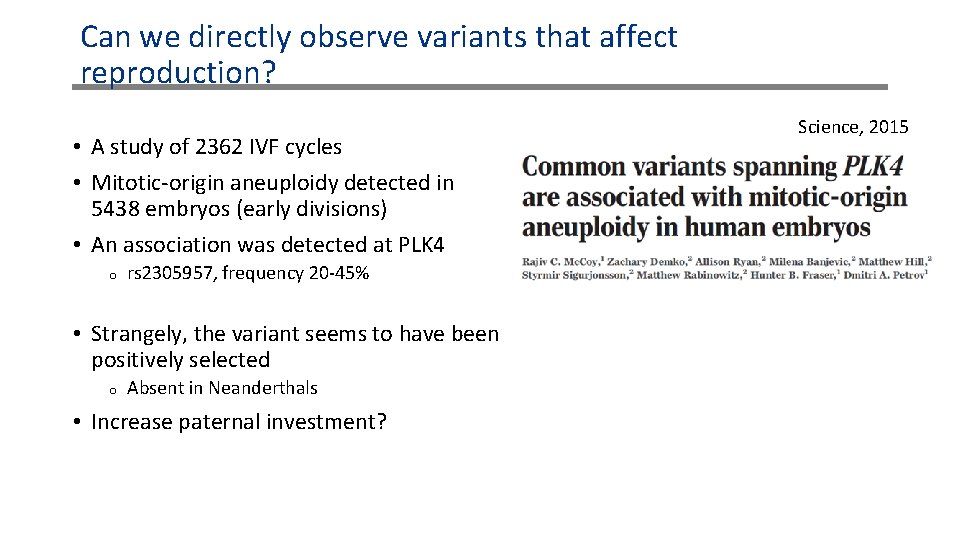
Can we directly observe variants that affect reproduction? • A study of 2362 IVF cycles • Mitotic-origin aneuploidy detected in 5438 embryos (early divisions) • An association was detected at PLK 4 o rs 2305957, frequency 20 -45% • Strangely, the variant seems to have been positively selected o Absent in Neanderthals • Increase paternal investment? Science, 2015
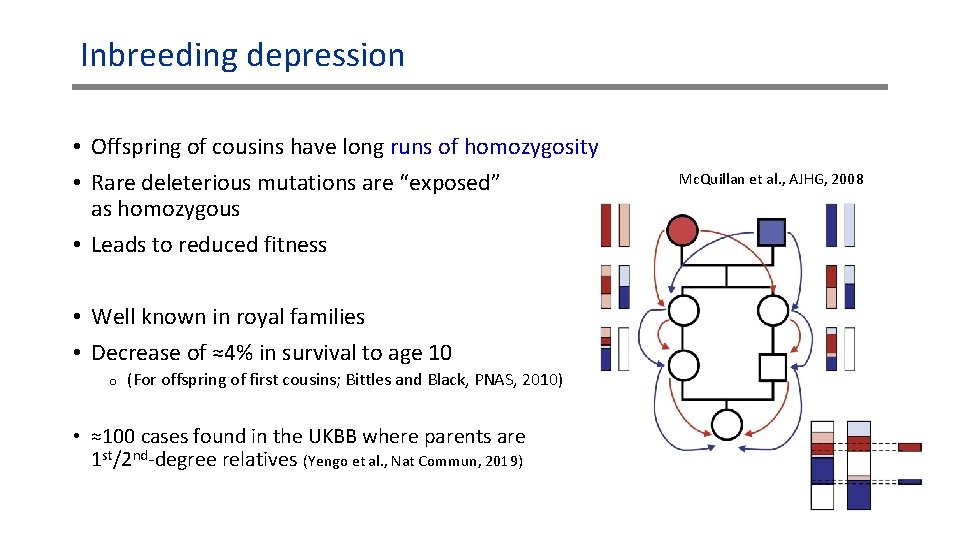
Inbreeding depression • Offspring of cousins have long runs of homozygosity • Rare deleterious mutations are “exposed” as homozygous • Leads to reduced fitness • Well known in royal families • Decrease of ≈4% in survival to age 10 o (For offspring of first cousins; Bittles and Black, PNAS, 2010) • ≈100 cases found in the UKBB where parents are 1 st/2 nd-degree relatives (Yengo et al. , Nat Commun, 2019) Mc. Quillan et al. , AJHG, 2008
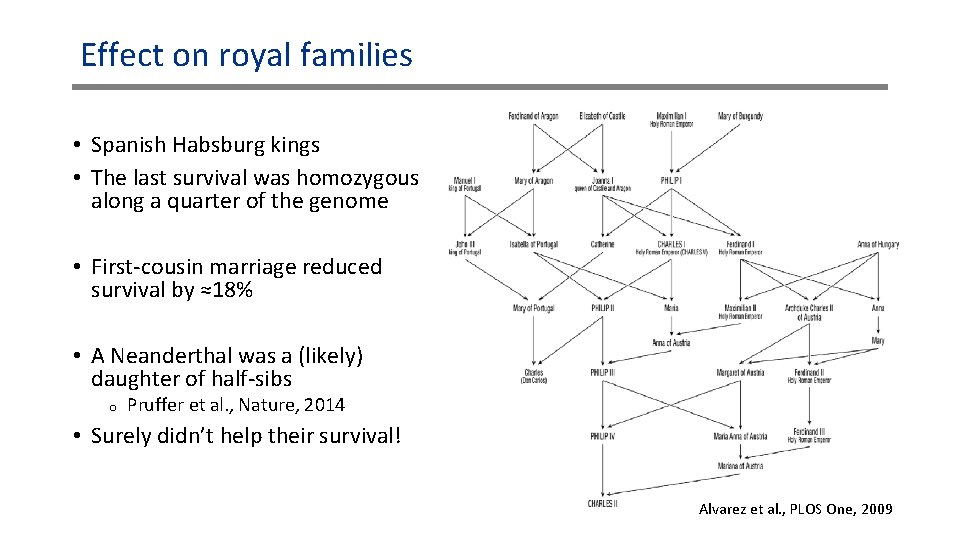
Effect on royal families • Spanish Habsburg kings • The last survival was homozygous along a quarter of the genome • First-cousin marriage reduced survival by ≈18% • A Neanderthal was a (likely) daughter of half-sibs o Pruffer et al. , Nature, 2014 • Surely didn’t help their survival! Alvarez et al. , PLOS One, 2009
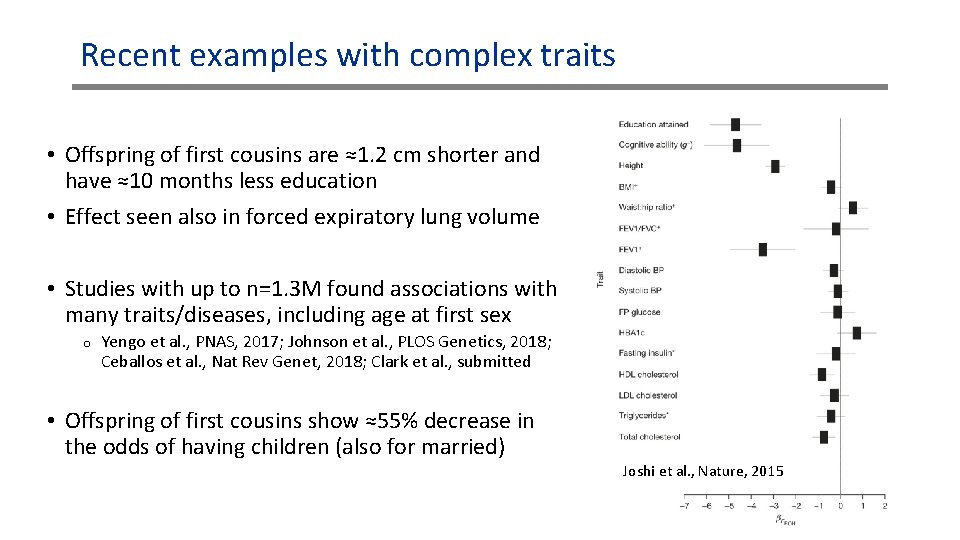
Recent examples with complex traits • Offspring of first cousins are ≈1. 2 cm shorter and have ≈10 months less education • Effect seen also in forced expiratory lung volume • Studies with up to n=1. 3 M found associations with many traits/diseases, including age at first sex o Yengo et al. , PNAS, 2017; Johnson et al. , PLOS Genetics, 2018; Ceballos et al. , Nat Rev Genet, 2018; Clark et al. , submitted • Offspring of first cousins show ≈55% decrease in the odds of having children (also for married) Joshi et al. , Nature, 2015
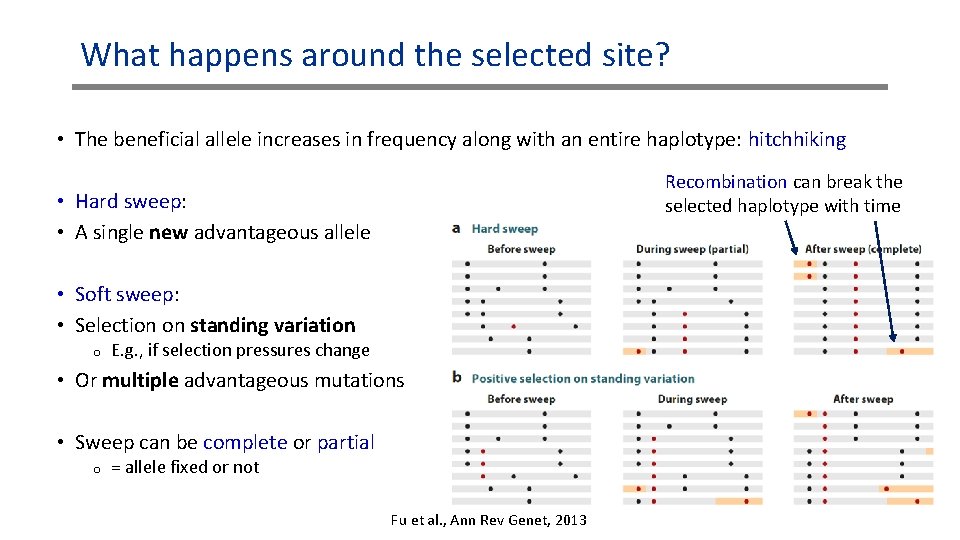
What happens around the selected site? • The beneficial allele increases in frequency along with an entire haplotype: hitchhiking Recombination can break the selected haplotype with time • Hard sweep: • A single new advantageous allele • Soft sweep: • Selection on standing variation o E. g. , if selection pressures change • Or multiple advantageous mutations • Sweep can be complete or partial o = allele fixed or not Fu et al. , Ann Rev Genet, 2013
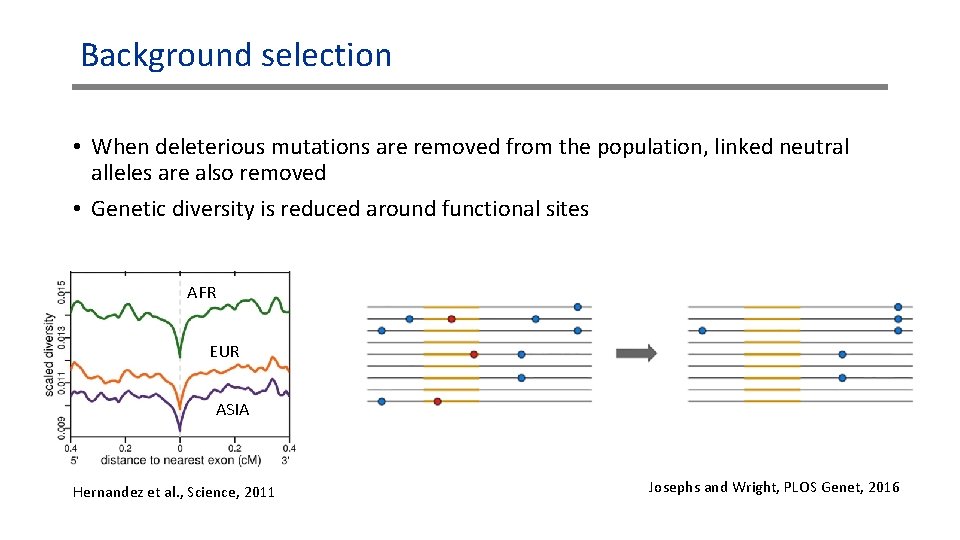
Background selection • When deleterious mutations are removed from the population, linked neutral alleles are also removed • Genetic diversity is reduced around functional sites AFR EUR ASIA Hernandez et al. , Science, 2011 Josephs and Wright, PLOS Genet, 2016
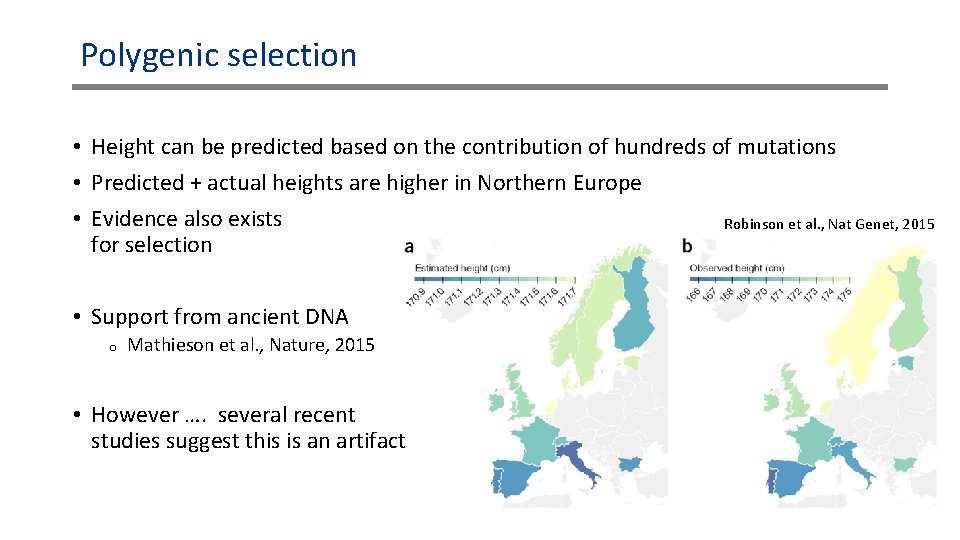
Polygenic selection • Height can be predicted based on the contribution of hundreds of mutations • Predicted + actual heights are higher in Northern Europe • Evidence also exists Robinson et al. , Nat Genet, 2015 for selection • Support from ancient DNA o Mathieson et al. , Nature, 2015 • However …. several recent studies suggest this is an artifact
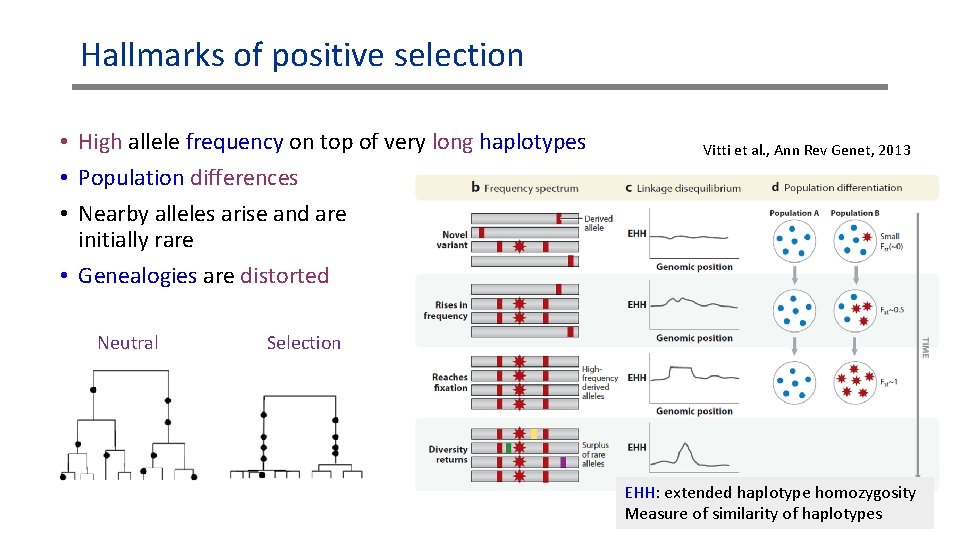
Hallmarks of positive selection • High allele frequency on top of very long haplotypes • Population differences • Nearby alleles arise and are initially rare • Genealogies are distorted Neutral Vitti et al. , Ann Rev Genet, 2013 Selection EHH: extended haplotype homozygosity Measure of similarity of haplotypes
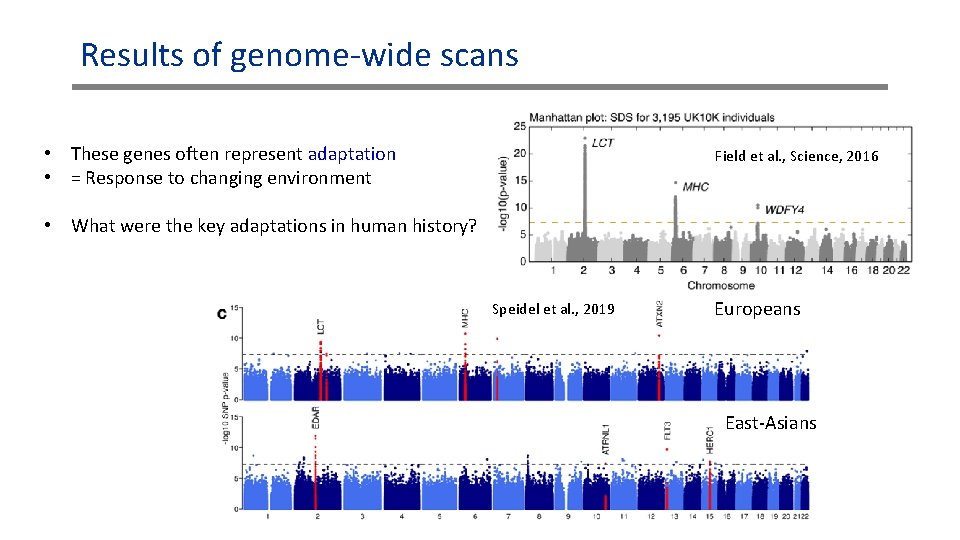
Results of genome-wide scans • These genes often represent adaptation • = Response to changing environment Field et al. , Science, 2016 • What were the key adaptations in human history? Speidel et al. , 2019 Europeans East-Asians
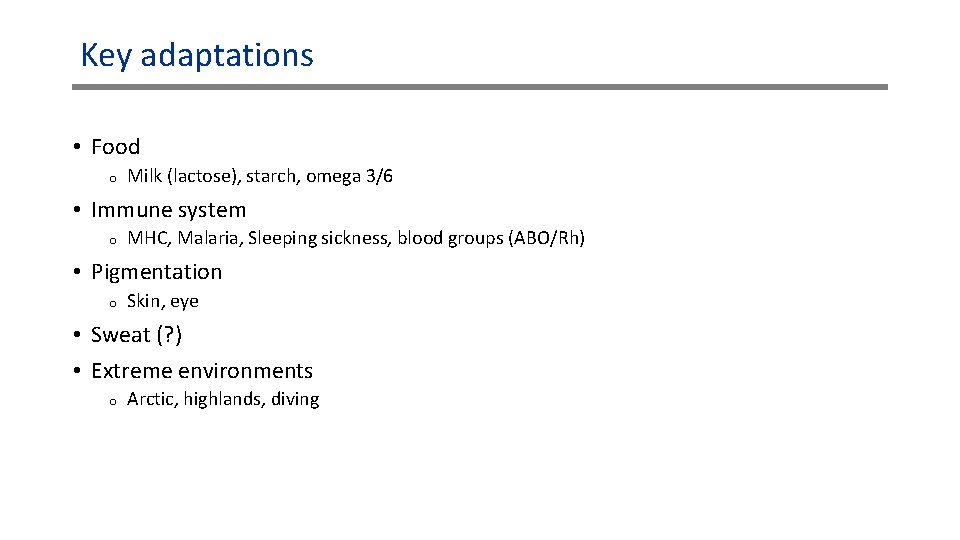
Key adaptations • Food o Milk (lactose), starch, omega 3/6 • Immune system o MHC, Malaria, Sleeping sickness, blood groups (ABO/Rh) • Pigmentation o Skin, eye • Sweat (? ) • Extreme environments o Arctic, highlands, diving
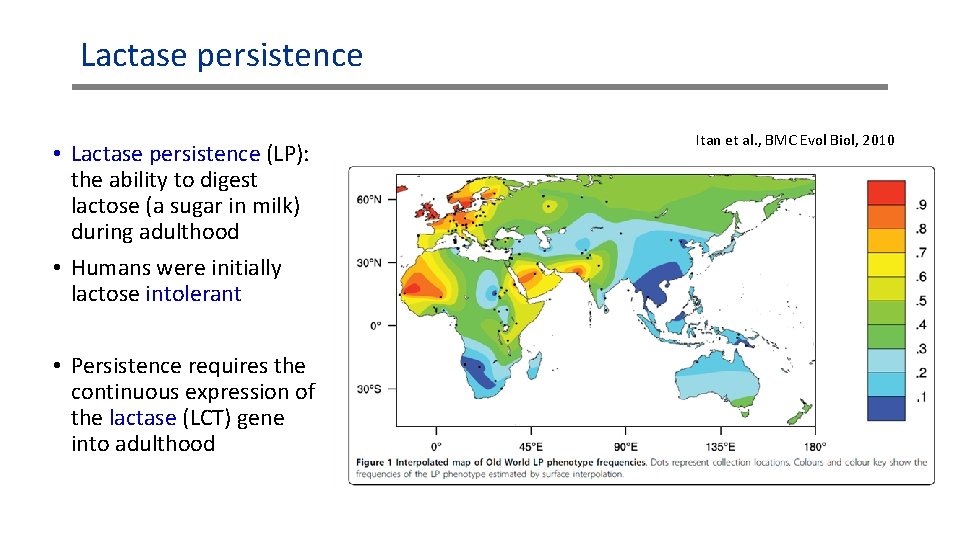
Lactase persistence • Lactase persistence (LP): the ability to digest lactose (a sugar in milk) during adulthood • Humans were initially lactose intolerant • Persistence requires the continuous expression of the lactase (LCT) gene into adulthood Itan et al. , BMC Evol Biol, 2010
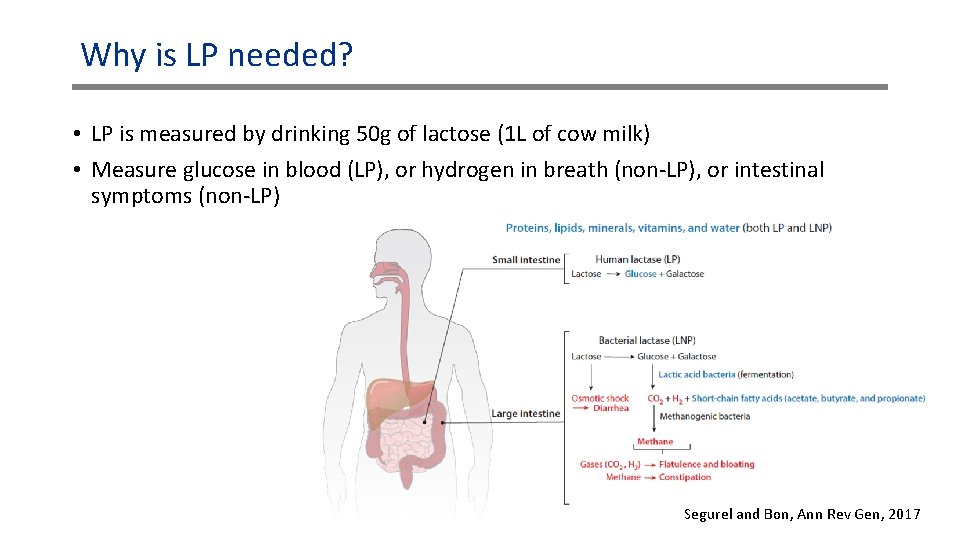
Why is LP needed? • LP is measured by drinking 50 g of lactose (1 L of cow milk) • Measure glucose in blood (LP), or hydrogen in breath (non-LP), or intestinal symptoms (non-LP) Segurel and Bon, Ann Rev Gen, 2017
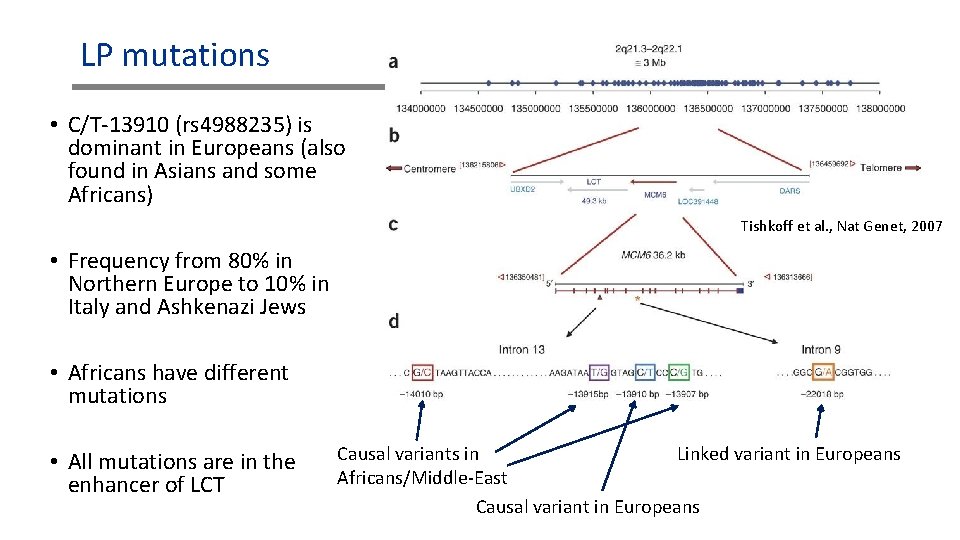
LP mutations • C/T-13910 (rs 4988235) is dominant in Europeans (also found in Asians and some Africans) Tishkoff et al. , Nat Genet, 2007 • Frequency from 80% in Northern Europe to 10% in Italy and Ashkenazi Jews • Africans have different mutations • All mutations are in the enhancer of LCT Causal variants in Linked variant in Europeans Africans/Middle-East Causal variant in Europeans
Textbook evolution story? • Before the agricultural revolution, humans did not drink milk past weaning • Farm animals were domesticated ≈10 k years ago • Individuals with the mutation were able to drink cow milk in adulthood • They received more nutrients higher survival rates higher fitness The LP mutations rose to high frequency • The LCT haplotype is extremely long, and appears in all genome scans • Selection coefficient estimated as 0. 01 -0. 1 – among the largest genome-wide! o o Segurel and Bon, Ann Rev Gen, 2017 Most recent estimates: 0. 02 (Stern et al. , 2019), 0. 035 (Vicente et al. , 2019)
Problem 1: known alleles don’t explain all phenotypes • Many differences between lactose persistence and known LP allele frequency • Central Asian populations drink milk but have no known mutation Itan et al. , BMC Evol Biol, 2010
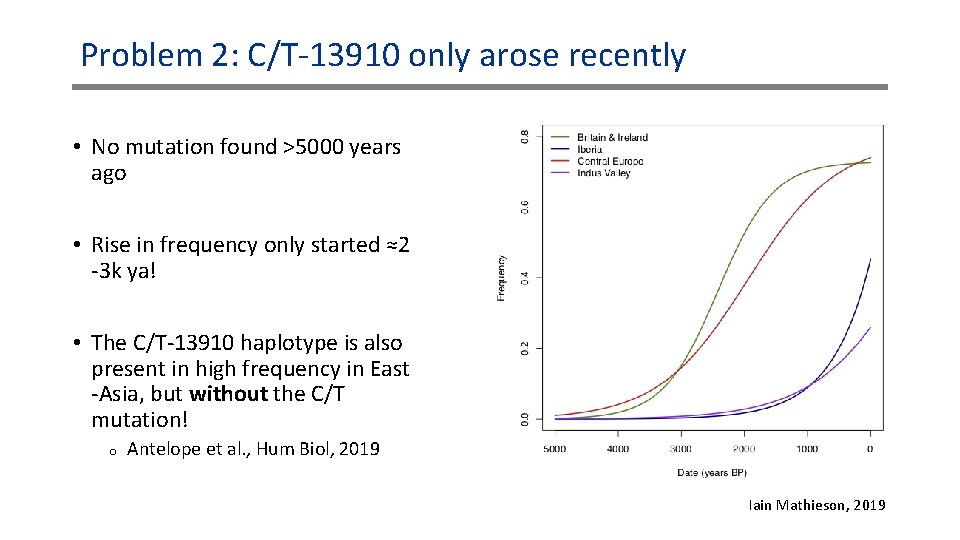
Problem 2: C/T-13910 only arose recently • No mutation found >5000 years ago • Rise in frequency only started ≈2 -3 k ya! • The C/T-13910 haplotype is also present in high frequency in East -Asia, but without the C/T mutation! o Antelope et al. , Hum Biol, 2019 Iain Mathieson, 2019
Problem 3: is milk important for fitness? • Lactase intolerant individuals can gain the same amount of proteins/fat from lowlactose “derived” products (e. g. , yogurt, cheese, butter) • Same for calcium, vitamin D • Derived products provide less calories, but this is only important during famines, when livestock cannot be fed • Segurel and Bon, Ann Rev Gen, 2017
What could reconcile these findings? • How can humans drink milk without the mutation? 1. Humans may have been able to drink milk due to having different microbiome o Some conjecture that the more we drink milk, the better the microbiome adapts 2. Symptoms may be mild with moderate amounts • Data on lactose intolerance is not reliable, particularly not self-reports of symptoms (only glucose test is reliable) • Other mutations can lead to LP? • Selection on other mutations in the same haplotype? • Bottom line: the precise selection pressure is still unknown
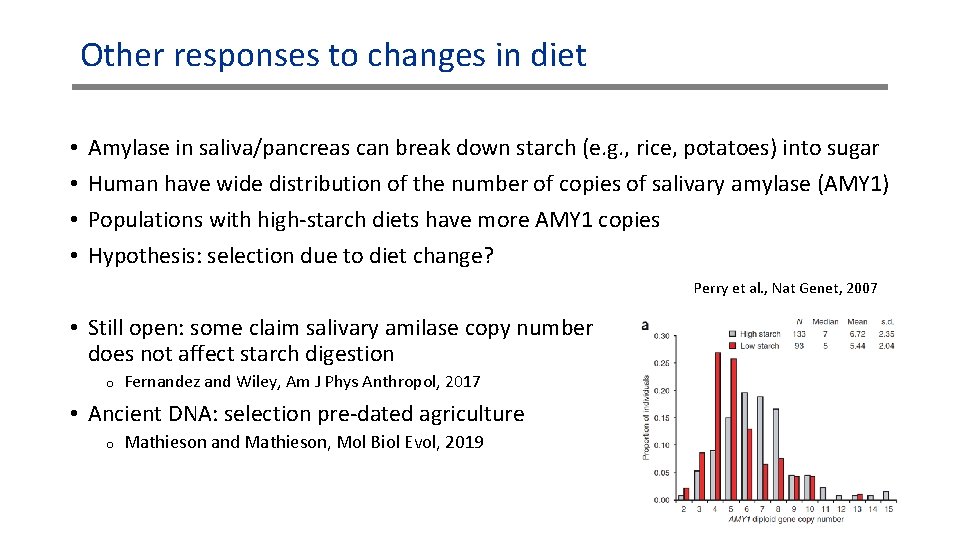
Other responses to changes in diet • • Amylase in saliva/pancreas can break down starch (e. g. , rice, potatoes) into sugar Human have wide distribution of the number of copies of salivary amylase (AMY 1) Populations with high-starch diets have more AMY 1 copies Hypothesis: selection due to diet change? Perry et al. , Nat Genet, 2007 • Still open: some claim salivary amilase copy number does not affect starch digestion o Fernandez and Wiley, Am J Phys Anthropol, 2017 • Ancient DNA: selection pre-dated agriculture o Mathieson and Mathieson, Mol Biol Evol, 2019
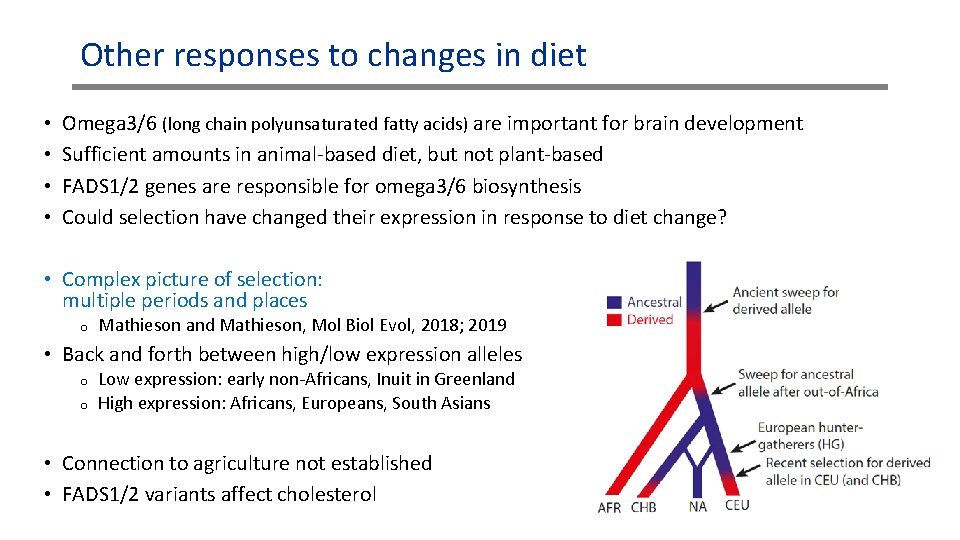
Other responses to changes in diet • • Omega 3/6 (long chain polyunsaturated fatty acids) are important for brain development Sufficient amounts in animal-based diet, but not plant-based FADS 1/2 genes are responsible for omega 3/6 biosynthesis Could selection have changed their expression in response to diet change? • Complex picture of selection: multiple periods and places o Mathieson and Mathieson, Mol Biol Evol, 2018; 2019 • Back and forth between high/low expression alleles o o Low expression: early non-Africans, Inuit in Greenland High expression: Africans, Europeans, South Asians • Connection to agriculture not established • FADS 1/2 variants affect cholesterol
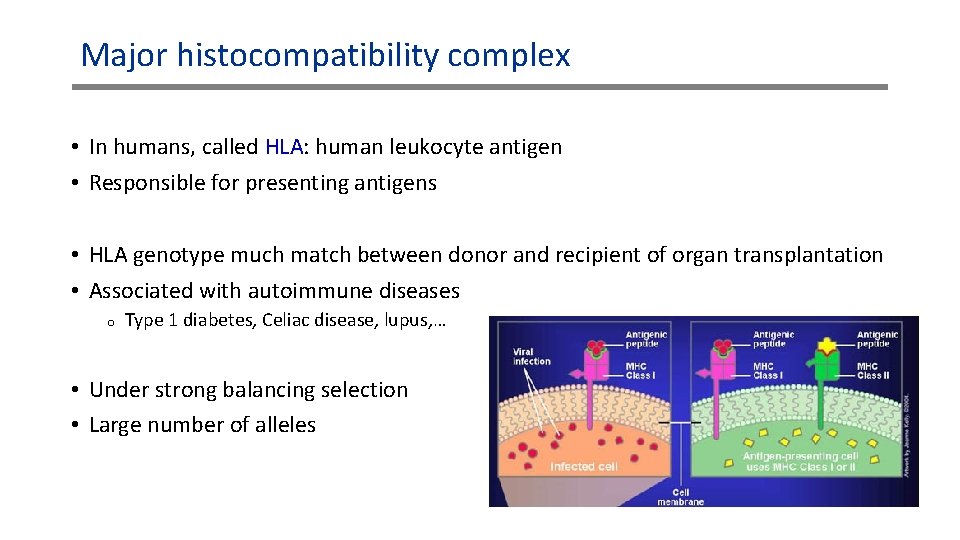
Major histocompatibility complex • In humans, called HLA: human leukocyte antigen • Responsible for presenting antigens • HLA genotype much match between donor and recipient of organ transplantation • Associated with autoimmune diseases o Type 1 diabetes, Celiac disease, lupus, … • Under strong balancing selection • Large number of alleles
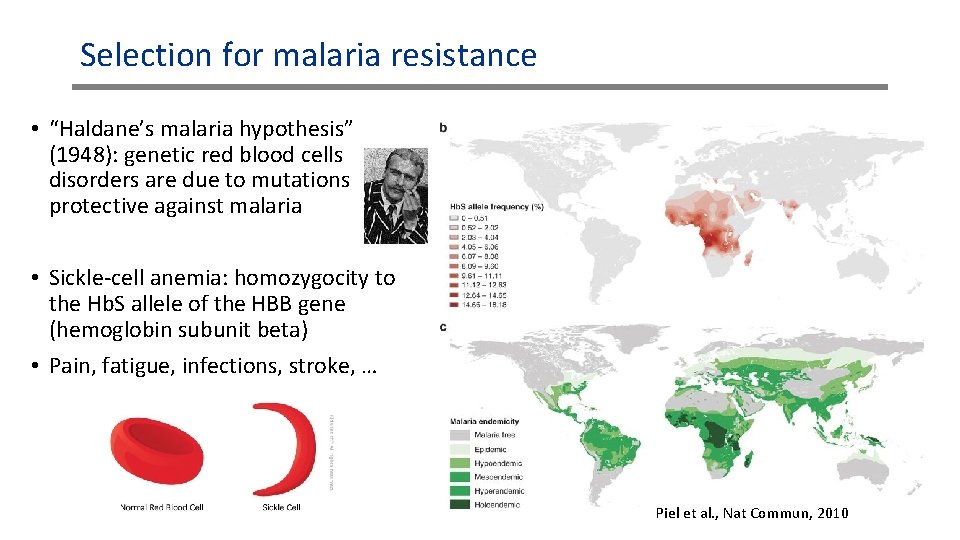
Selection for malaria resistance • “Haldane’s malaria hypothesis” (1948): genetic red blood cells disorders are due to mutations protective against malaria • Sickle-cell anemia: homozygocity to the Hb. S allele of the HBB gene (hemoglobin subunit beta) • Pain, fatigue, infections, stroke, … Piel et al. , Nat Commun, 2010
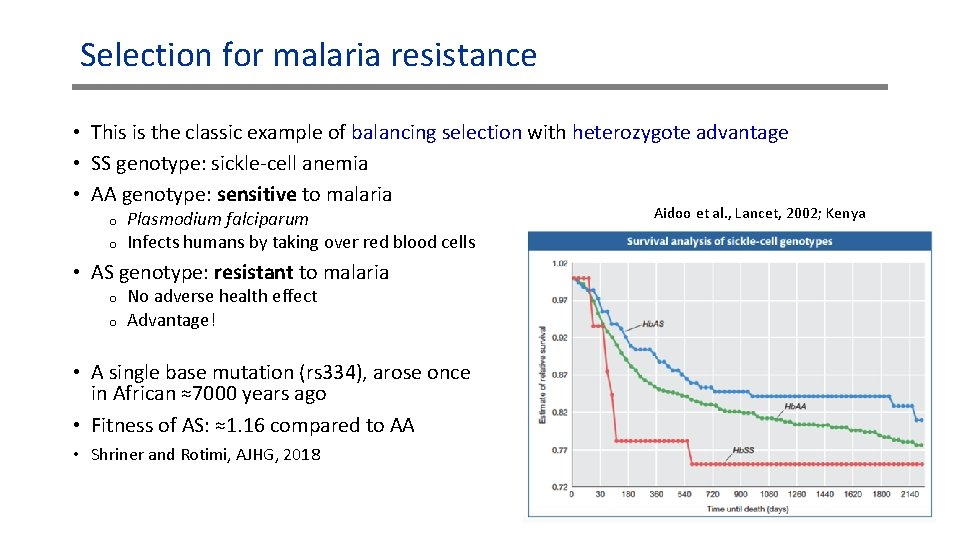
Selection for malaria resistance • This is the classic example of balancing selection with heterozygote advantage • SS genotype: sickle-cell anemia • AA genotype: sensitive to malaria o o Plasmodium falciparum Infects humans by taking over red blood cells • AS genotype: resistant to malaria o o No adverse health effect Advantage! • A single base mutation (rs 334), arose once in African ≈7000 years ago • Fitness of AS: ≈1. 16 compared to AA • Shriner and Rotimi, AJHG, 2018 Aidoo et al. , Lancet, 2002; Kenya
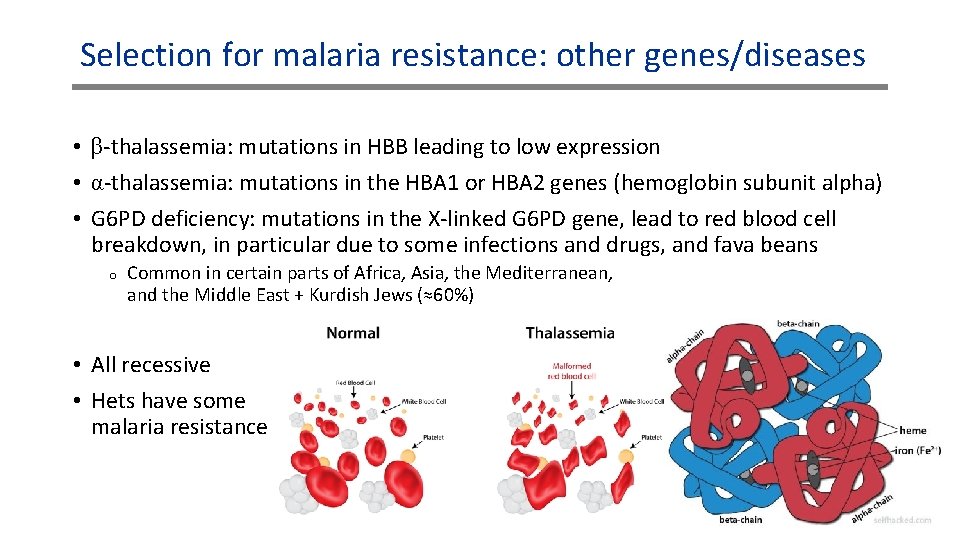
Selection for malaria resistance: other genes/diseases • β-thalassemia: mutations in HBB leading to low expression • α-thalassemia: mutations in the HBA 1 or HBA 2 genes (hemoglobin subunit alpha) • G 6 PD deficiency: mutations in the X-linked G 6 PD gene, lead to red blood cell breakdown, in particular due to some infections and drugs, and fava beans o Common in certain parts of Africa, Asia, the Mediterranean, and the Middle East + Kurdish Jews (≈60%) • All recessive • Hets have some malaria resistance
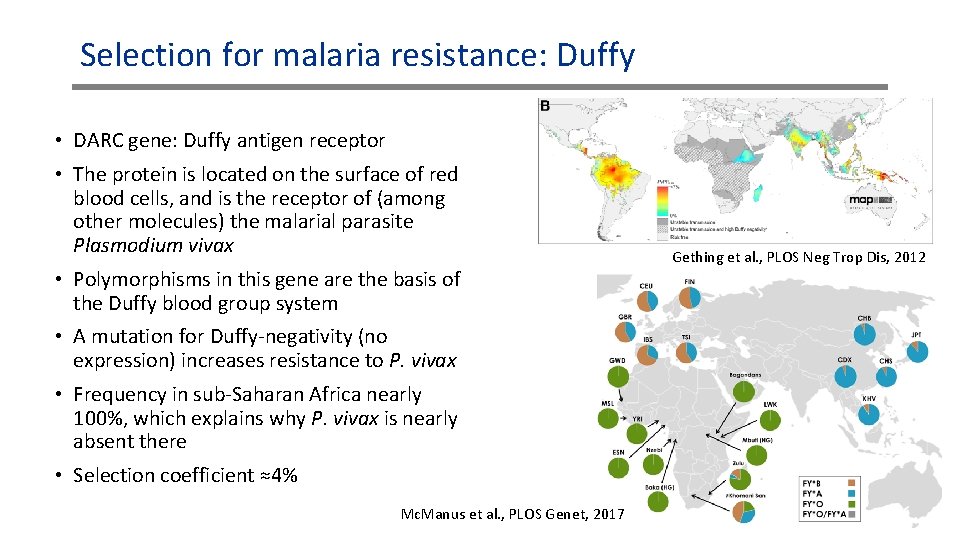
Selection for malaria resistance: Duffy • DARC gene: Duffy antigen receptor • The protein is located on the surface of red blood cells, and is the receptor of (among other molecules) the malarial parasite Plasmodium vivax • Polymorphisms in this gene are the basis of the Duffy blood group system • A mutation for Duffy-negativity (no expression) increases resistance to P. vivax • Frequency in sub-Saharan Africa nearly 100%, which explains why P. vivax is nearly absent there • Selection coefficient ≈4% Mc. Manus et al. , PLOS Genet, 2017 Gething et al. , PLOS Neg Trop Dis, 2012
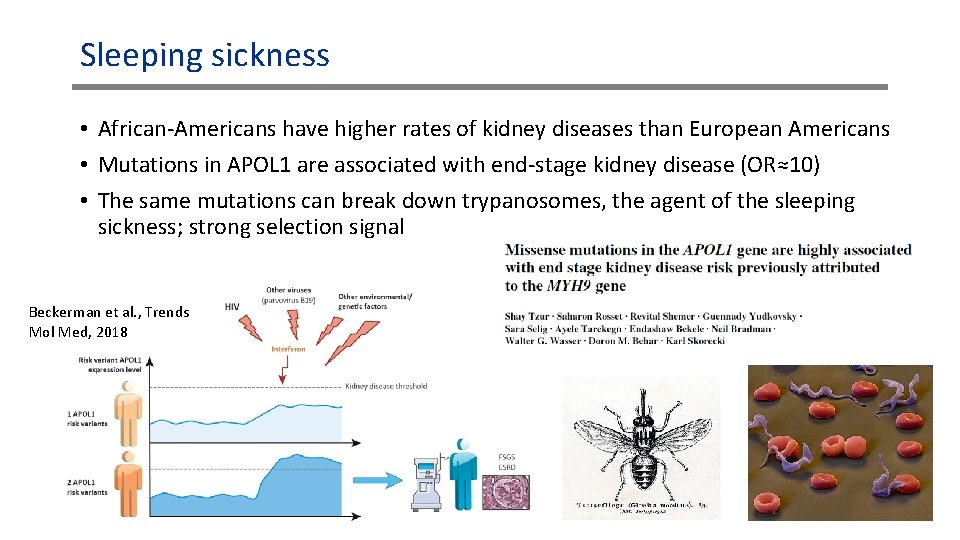
Sleeping sickness • African-Americans have higher rates of kidney diseases than European Americans • Mutations in APOL 1 are associated with end-stage kidney disease (OR≈10) • The same mutations can break down trypanosomes, the agent of the sleeping sickness; strong selection signal Beckerman et al. , Trends Mol Med, 2018
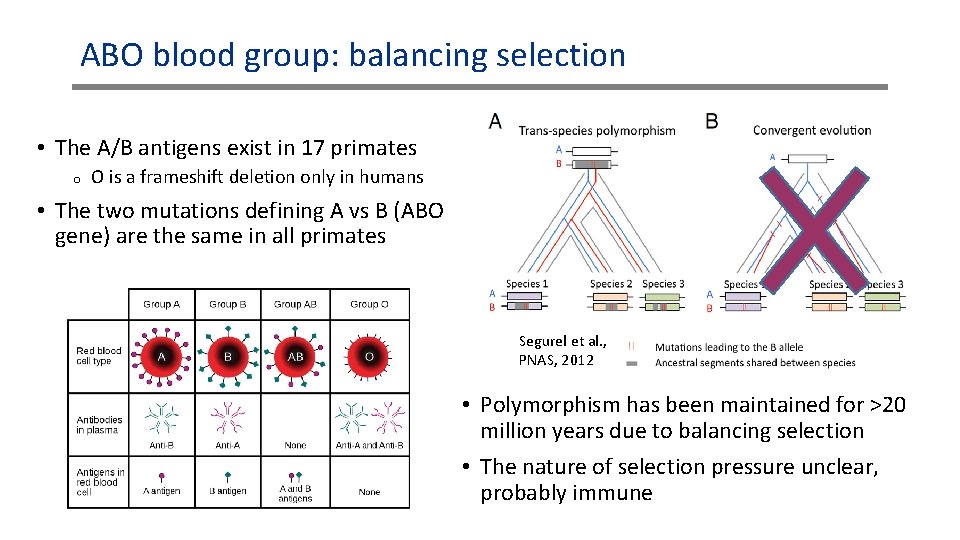
ABO blood group: balancing selection • The A/B antigens exist in 17 primates o O is a frameshift deletion only in humans • The two mutations defining A vs B (ABO gene) are the same in all primates Segurel et al. , PNAS, 2012 • Polymorphism has been maintained for >20 million years due to balancing selection • The nature of selection pressure unclear, probably immune
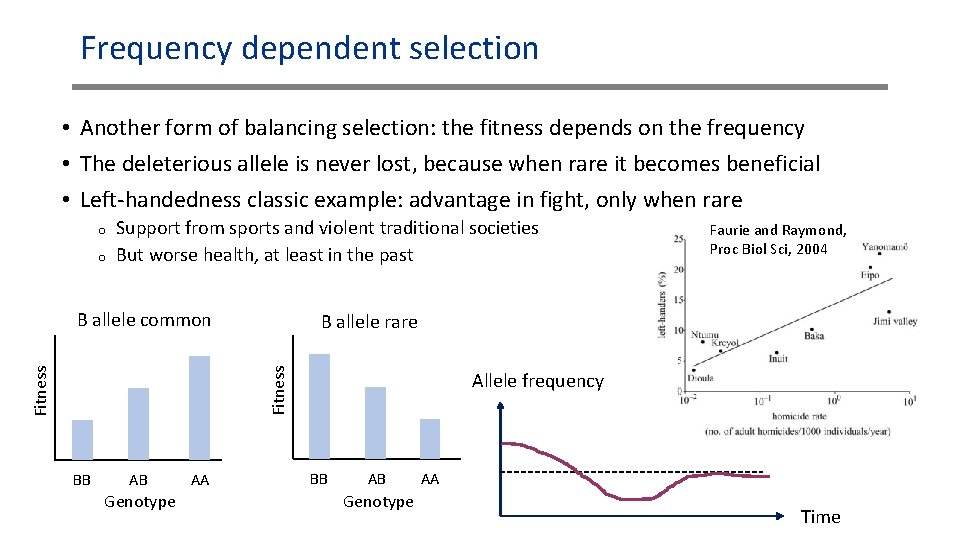
Frequency dependent selection • Another form of balancing selection: the fitness depends on the frequency • The deleterious allele is never lost, because when rare it becomes beneficial • Left-handedness classic example: advantage in fight, only when rare o o Support from sports and violent traditional societies But worse health, at least in the past B allele common B allele rare Fitness BB AB Genotype AA Faurie and Raymond, Proc Biol Sci, 2004 Allele frequency BB AB Genotype AA Time
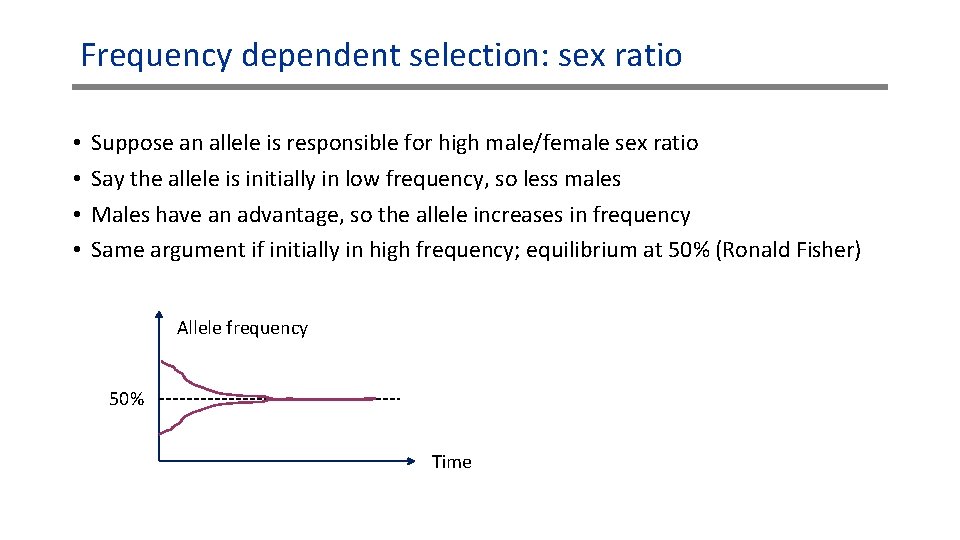
Frequency dependent selection: sex ratio • • Suppose an allele is responsible for high male/female sex ratio Say the allele is initially in low frequency, so less males Males have an advantage, so the allele increases in frequency Same argument if initially in high frequency; equilibrium at 50% (Ronald Fisher) Allele frequency 50% Time
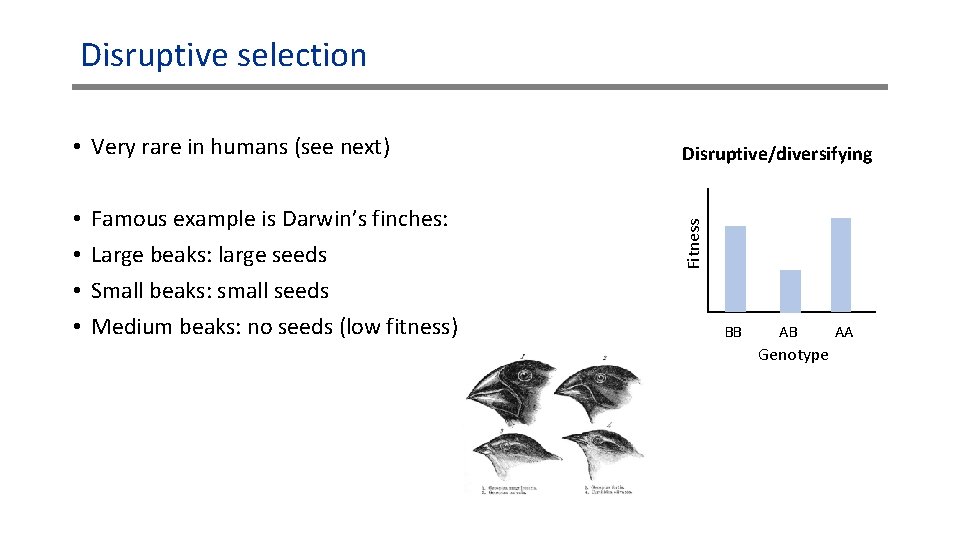
Disruptive selection • • Famous example is Darwin’s finches: Large beaks: large seeds Small beaks: small seeds Medium beaks: no seeds (low fitness) Disruptive/diversifying Fitness • Very rare in humans (see next) BB AB Genotype AA
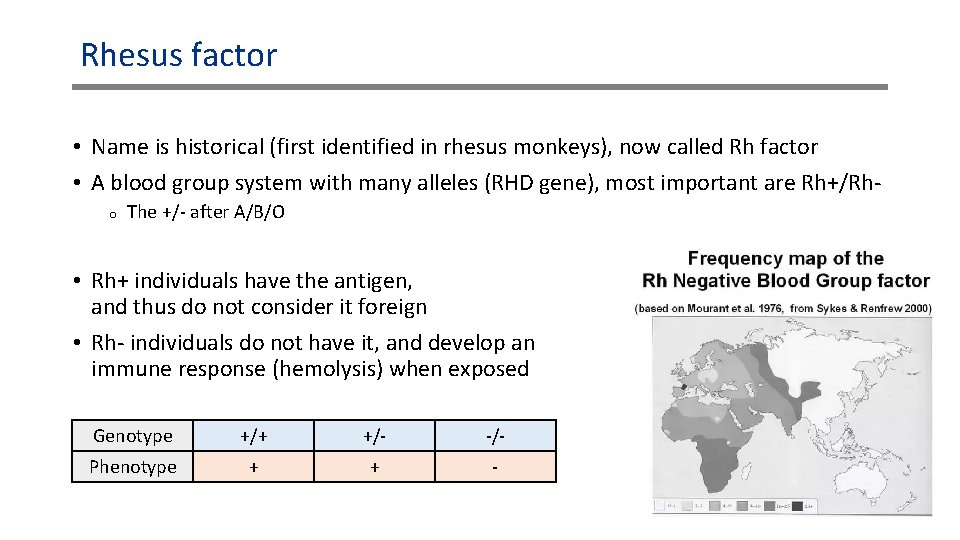
Rhesus factor • Name is historical (first identified in rhesus monkeys), now called Rh factor • A blood group system with many alleles (RHD gene), most important are Rh+/Rho The +/- after A/B/O • Rh+ individuals have the antigen, and thus do not consider it foreign • Rh- individuals do not have it, and develop an immune response (hemolysis) when exposed Genotype +/+ +/- -/- Phenotype + + -
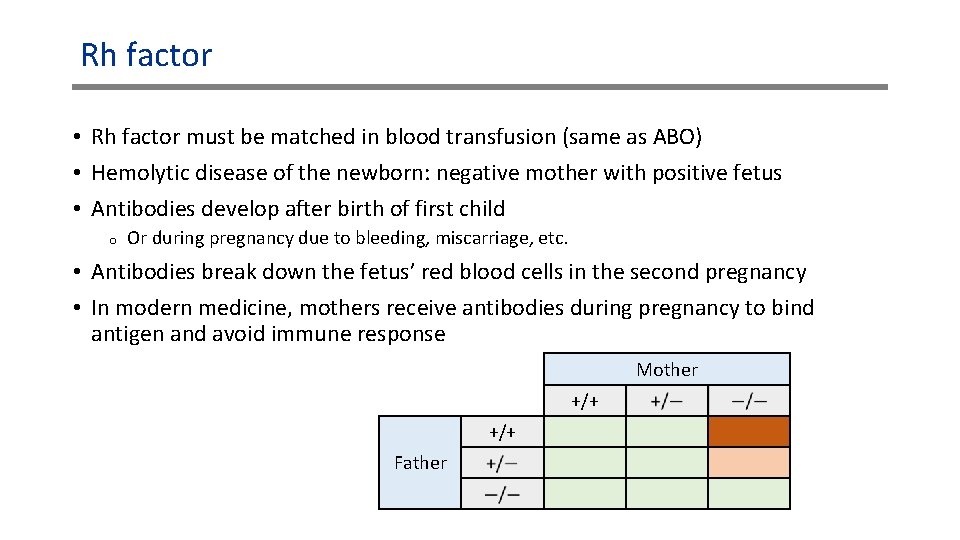
Rh factor • Rh factor must be matched in blood transfusion (same as ABO) • Hemolytic disease of the newborn: negative mother with positive fetus • Antibodies develop after birth of first child o Or during pregnancy due to bleeding, miscarriage, etc. • Antibodies break down the fetus’ red blood cells in the second pregnancy • In modern medicine, mothers receive antibodies during pregnancy to bind antigen and avoid immune response Mother +/+ Father
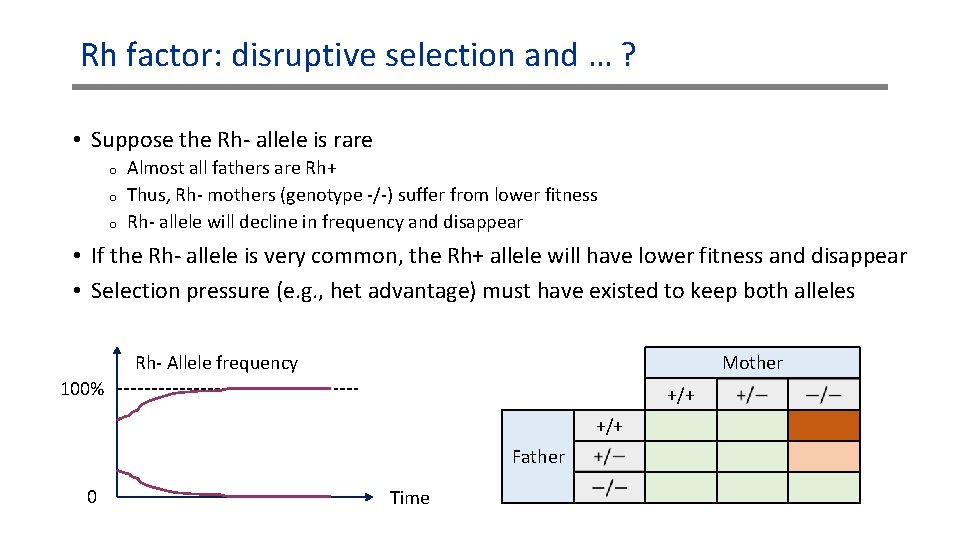
Rh factor: disruptive selection and … ? • Suppose the Rh- allele is rare o o o Almost all fathers are Rh+ Thus, Rh- mothers (genotype -/-) suffer from lower fitness Rh- allele will decline in frequency and disappear • If the Rh- allele is very common, the Rh+ allele will have lower fitness and disappear • Selection pressure (e. g. , het advantage) must have existed to keep both alleles Mother Rh- Allele frequency 100% +/+ Father 0 Time
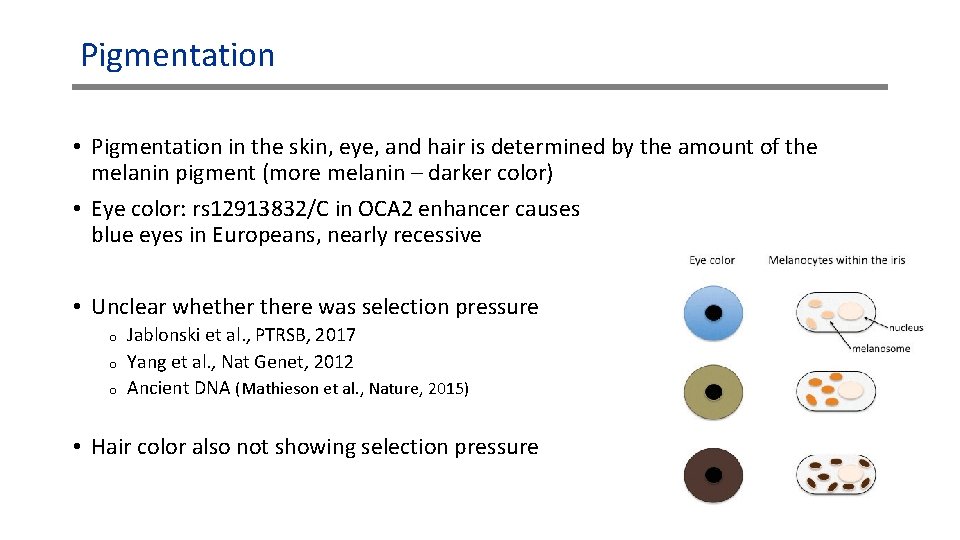
Pigmentation • Pigmentation in the skin, eye, and hair is determined by the amount of the melanin pigment (more melanin – darker color) • Eye color: rs 12913832/C in OCA 2 enhancer causes blue eyes in Europeans, nearly recessive • Unclear whethere was selection pressure o o o Jablonski et al. , PTRSB, 2017 Yang et al. , Nat Genet, 2012 Ancient DNA (Mathieson et al. , Nature, 2015) • Hair color also not showing selection pressure
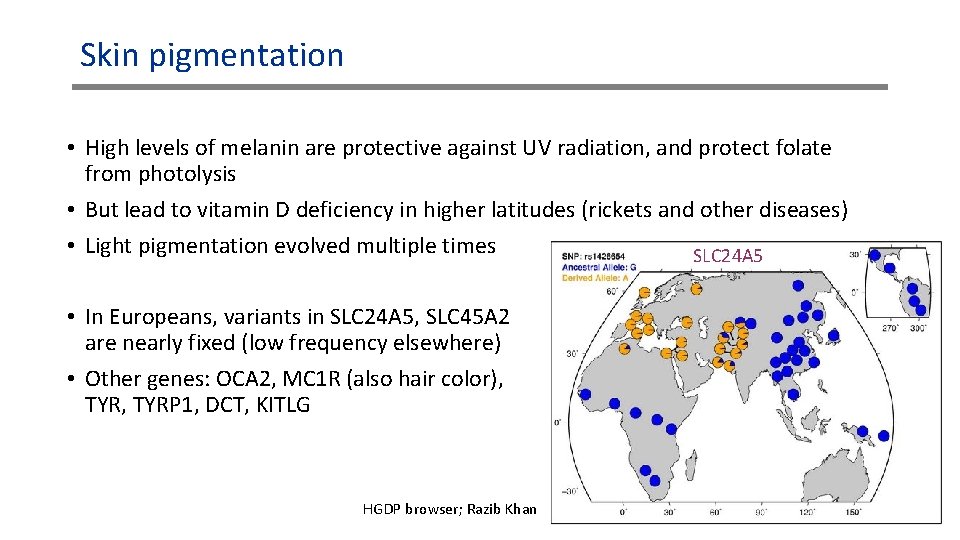
Skin pigmentation • High levels of melanin are protective against UV radiation, and protect folate from photolysis • But lead to vitamin D deficiency in higher latitudes (rickets and other diseases) • Light pigmentation evolved multiple times SLC 24 A 5 • In Europeans, variants in SLC 24 A 5, SLC 45 A 2 are nearly fixed (low frequency elsewhere) • Other genes: OCA 2, MC 1 R (also hair color), TYRP 1, DCT, KITLG HGDP browser; Razib Khan
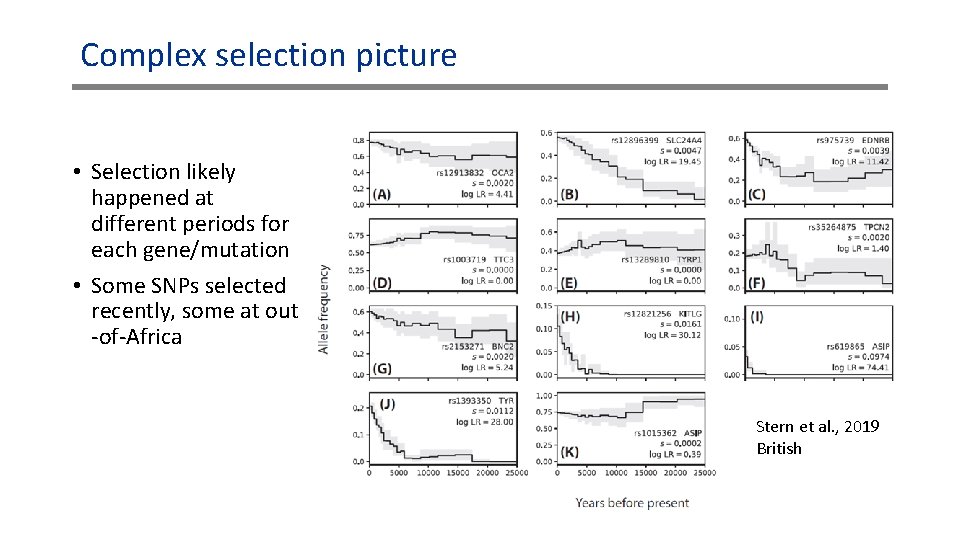
Complex selection picture • Selection likely happened at different periods for each gene/mutation • Some SNPs selected recently, some at out -of-Africa Stern et al. , 2019 British
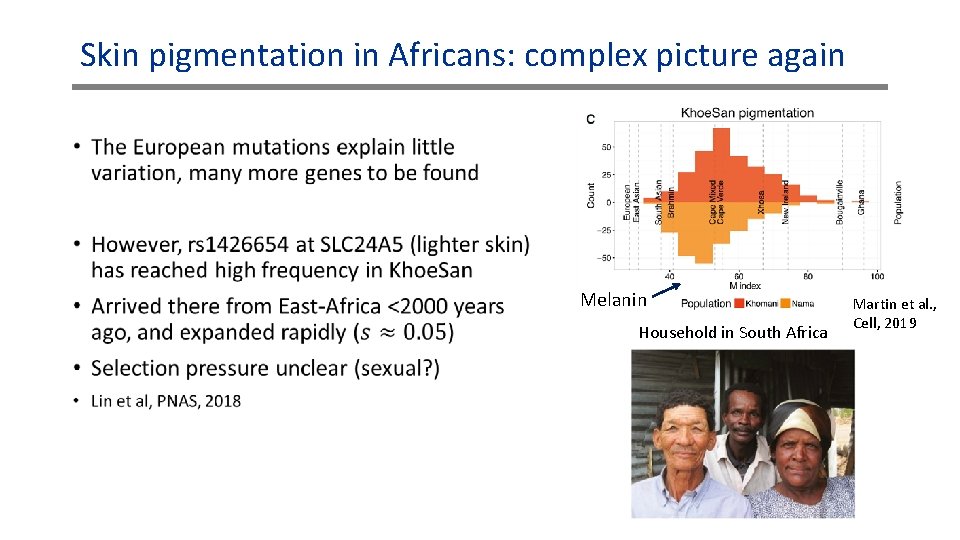
Skin pigmentation in Africans: complex picture again • Melanin Household in South Africa Martin et al. , Cell, 2019
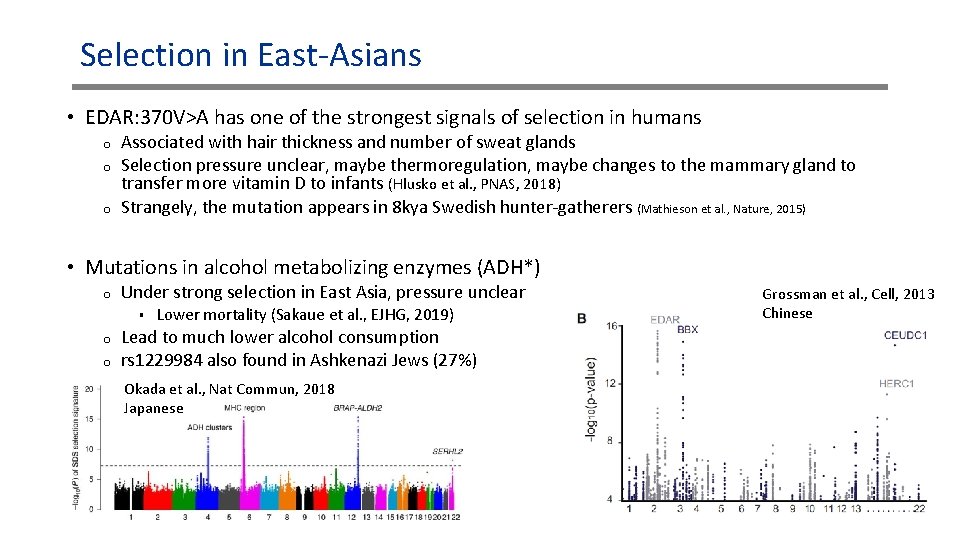
Selection in East-Asians • EDAR: 370 V>A has one of the strongest signals of selection in humans o o o Associated with hair thickness and number of sweat glands Selection pressure unclear, maybe thermoregulation, maybe changes to the mammary gland to transfer more vitamin D to infants (Hlusko et al. , PNAS, 2018) Strangely, the mutation appears in 8 kya Swedish hunter-gatherers (Mathieson et al. , Nature, 2015) • Mutations in alcohol metabolizing enzymes (ADH*) o Under strong selection in East Asia, pressure unclear § o o Lower mortality (Sakaue et al. , EJHG, 2019) Lead to much lower alcohol consumption rs 1229984 also found in Ashkenazi Jews (27%) Okada et al. , Nat Commun, 2018 Japanese Grossman et al. , Cell, 2013 Chinese
Extreme environments • Arctic environment • High altitudes • Sea diving Illardo and Nielsen, Curr Opin Gen Dev, 2018 Beall, Ann Rev Anthrop, 2014
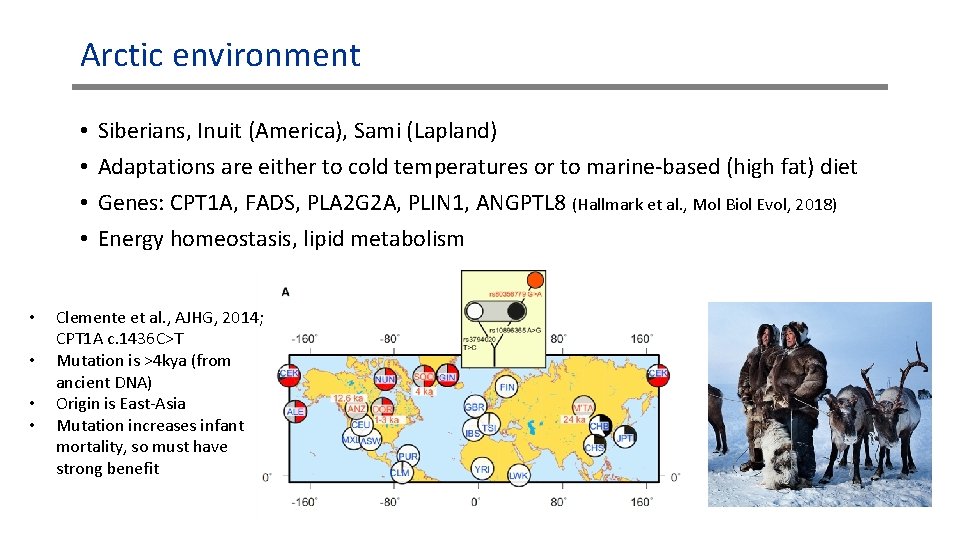
Arctic environment • • Siberians, Inuit (America), Sami (Lapland) Adaptations are either to cold temperatures or to marine-based (high fat) diet Genes: CPT 1 A, FADS, PLA 2 G 2 A, PLIN 1, ANGPTL 8 (Hallmark et al. , Mol Biol Evol, 2018) Energy homeostasis, lipid metabolism Clemente et al. , AJHG, 2014; CPT 1 A c. 1436 C>T Mutation is >4 kya (from ancient DNA) Origin is East-Asia Mutation increases infant mortality, so must have strong benefit
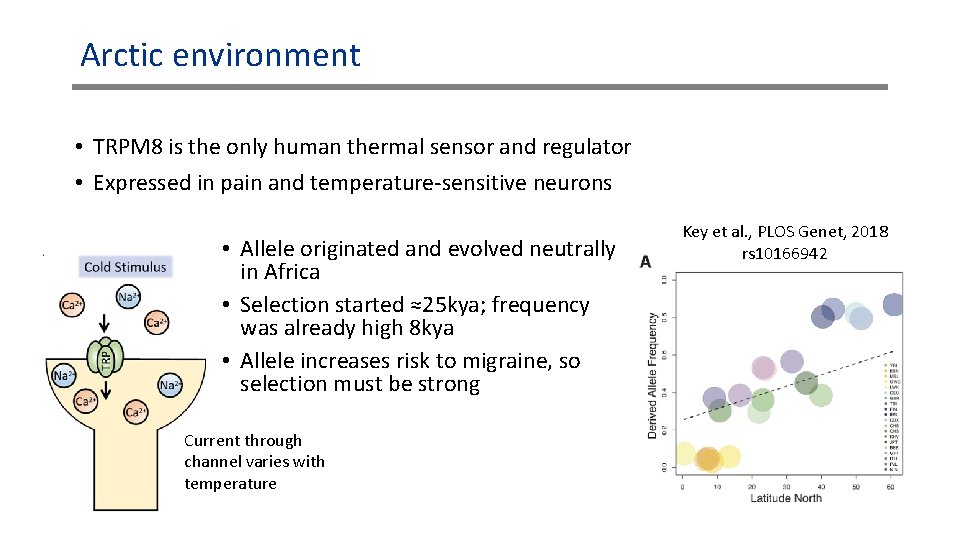
Arctic environment • TRPM 8 is the only human thermal sensor and regulator • Expressed in pain and temperature-sensitive neurons • Allele originated and evolved neutrally in Africa • Selection started ≈25 kya; frequency was already high 8 kya • Allele increases risk to migraine, so selection must be strong Current through channel varies with temperature Key et al. , PLOS Genet, 2018 rs 10166942
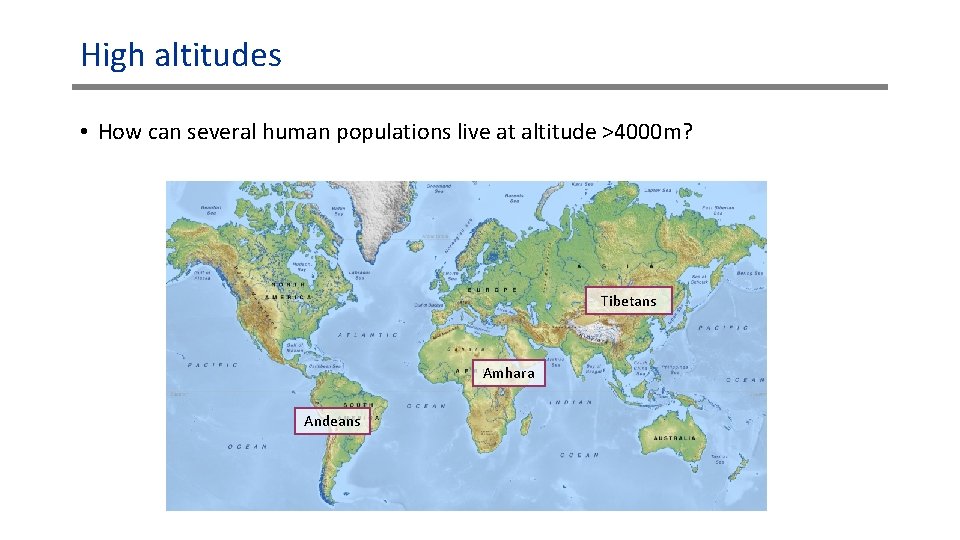
High altitudes • How can several human populations live at altitude >4000 m? Tibetans Amhara Andeans
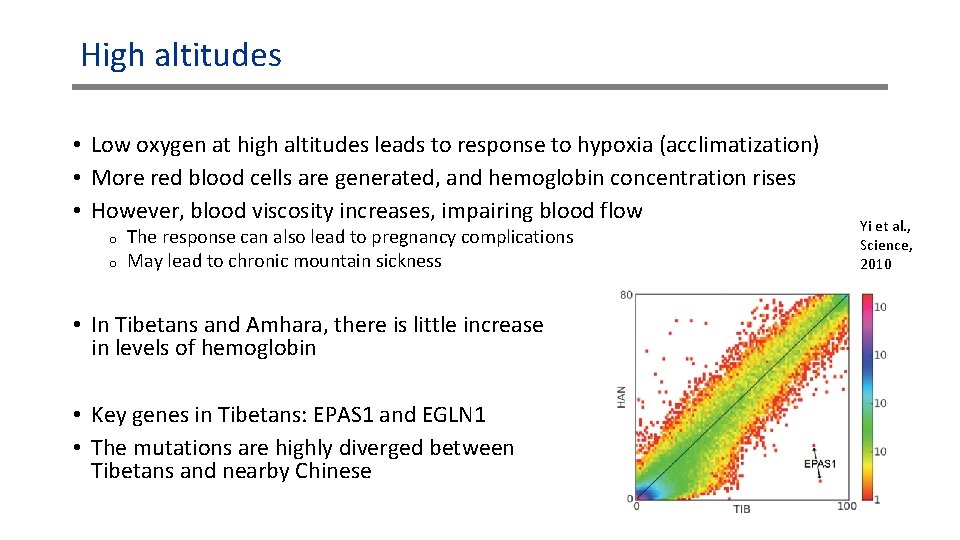
High altitudes • Low oxygen at high altitudes leads to response to hypoxia (acclimatization) • More red blood cells are generated, and hemoglobin concentration rises • However, blood viscosity increases, impairing blood flow o o The response can also lead to pregnancy complications May lead to chronic mountain sickness • In Tibetans and Amhara, there is little increase in levels of hemoglobin • Key genes in Tibetans: EPAS 1 and EGLN 1 • The mutations are highly diverged between Tibetans and nearby Chinese Yi et al. , Science, 2010
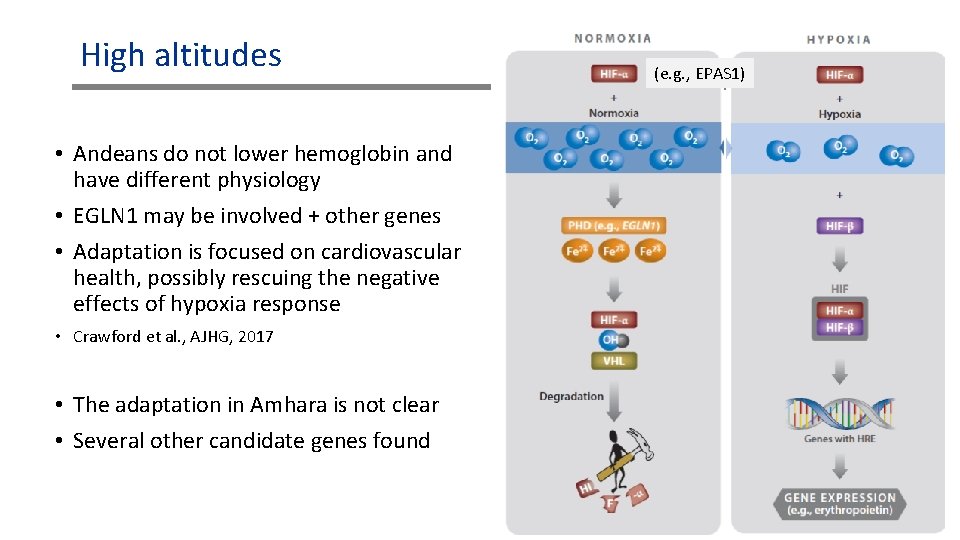
High altitudes • Andeans do not lower hemoglobin and have different physiology • EGLN 1 may be involved + other genes • Adaptation is focused on cardiovascular health, possibly rescuing the negative effects of hypoxia response • Crawford et al. , AJHG, 2017 • The adaptation in Amhara is not clear • Several other candidate genes found (e. g. , EPAS 1)
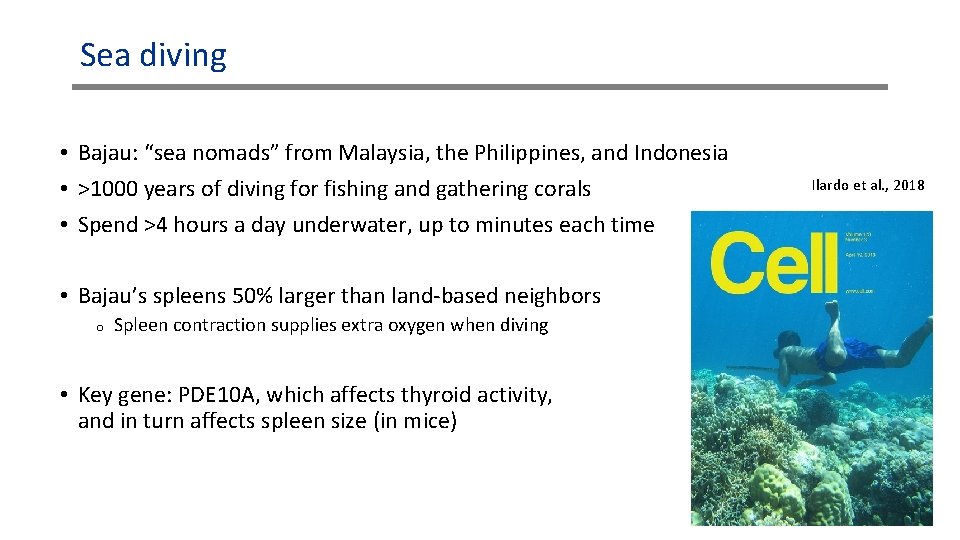
Sea diving • Bajau: “sea nomads” from Malaysia, the Philippines, and Indonesia • >1000 years of diving for fishing and gathering corals • Spend >4 hours a day underwater, up to minutes each time • Bajau’s spleens 50% larger than land-based neighbors o Spleen contraction supplies extra oxygen when diving • Key gene: PDE 10 A, which affects thyroid activity, and in turn affects spleen size (in mice) Ilardo et al. , 2018
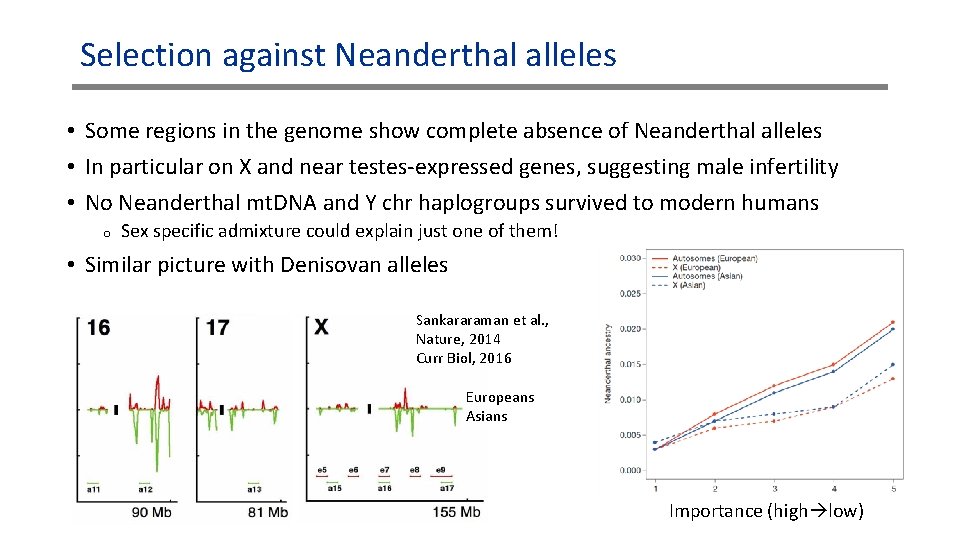
Selection against Neanderthal alleles • Some regions in the genome show complete absence of Neanderthal alleles • In particular on X and near testes-expressed genes, suggesting male infertility • No Neanderthal mt. DNA and Y chr haplogroups survived to modern humans o Sex specific admixture could explain just one of them! • Similar picture with Denisovan alleles Sankararaman et al. , Nature, 2014 Curr Biol, 2016 Europeans Asians Importance (high low)
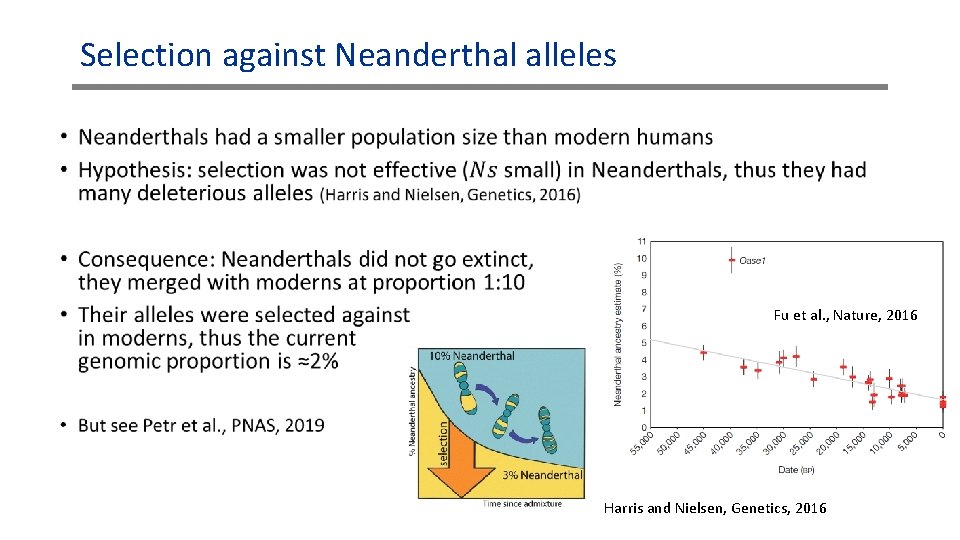
Selection against Neanderthal alleles • Fu et al. , Nature, 2016 Harris and Nielsen, Genetics, 2016
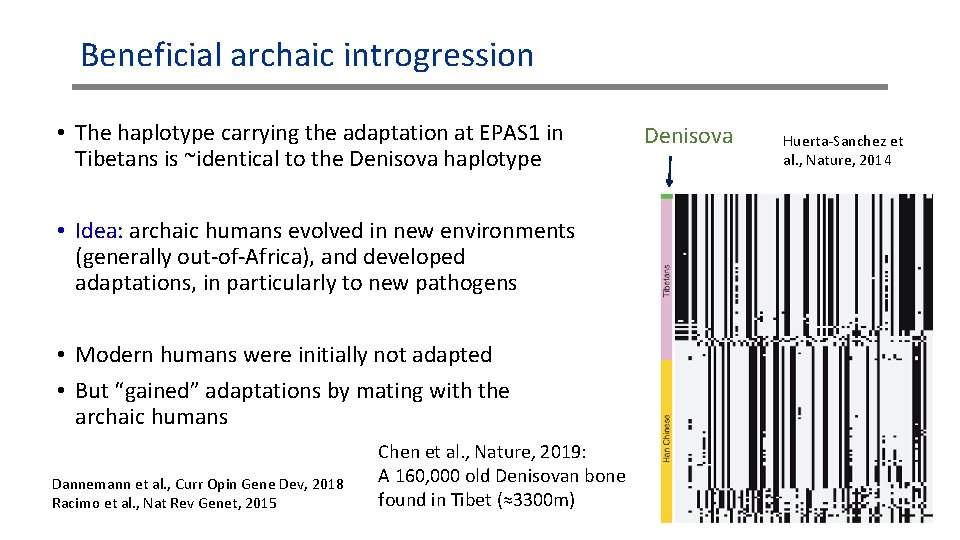
Beneficial archaic introgression • The haplotype carrying the adaptation at EPAS 1 in Tibetans is ~identical to the Denisova haplotype • Idea: archaic humans evolved in new environments (generally out-of-Africa), and developed adaptations, in particularly to new pathogens • Modern humans were initially not adapted • But “gained” adaptations by mating with the archaic humans Dannemann et al. , Curr Opin Gene Dev, 2018 Racimo et al. , Nat Rev Genet, 2015 Chen et al. , Nature, 2019: A 160, 000 old Denisovan bone found in Tibet (≈3300 m) Denisova Huerta-Sanchez et al. , Nature, 2014
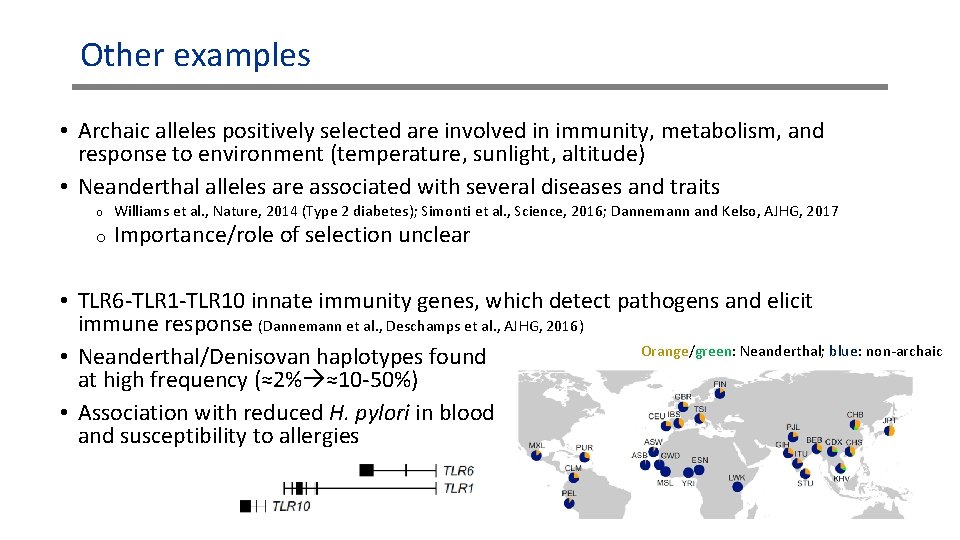
Other examples • Archaic alleles positively selected are involved in immunity, metabolism, and response to environment (temperature, sunlight, altitude) • Neanderthal alleles are associated with several diseases and traits o o Williams et al. , Nature, 2014 (Type 2 diabetes); Simonti et al. , Science, 2016; Dannemann and Kelso, AJHG, 2017 Importance/role of selection unclear • TLR 6 -TLR 10 innate immunity genes, which detect pathogens and elicit immune response (Dannemann et al. , Deschamps et al. , AJHG, 2016) Orange/green: Neanderthal; blue: non-archaic • Neanderthal/Denisovan haplotypes found at high frequency (≈2% ≈10 -50%) • Association with reduced H. pylori in blood and susceptibility to allergies