
Personal Finance Personal Finance 101 What is personal
- Slides: 21
Personal Finance
Personal Finance 101 • What is personal finance? • Create a list of words you think of when you hear personal finance? • What does it mean? What does it entail? • Why is personal finance important to you? • Consider the following list and label which are most important to you (label those #1). Label which is somewhat important to you (label those #2). Label which aren’t very important to you (label those #3).
Financial Planning Process • 5 Steps for Financial Planning • 1) Assessment • Figure out your situation • Understand your worth: income and expenses • 2) Setting goals • Give financial direction • Paying for college, future jobs, buying a car, retirement • Its common to have multiple goals • 3) Creating a plan • Have financial details about how to get your goals • Reducing expenses, increasing income • Spreadsheets and calculations
Financial Planning Process • 4) Action • Take action on your plans, implement them • Often requires discipline and perseverance • You’re not done after you have implemented your plan • 5) Monitoring • Maintain and adjust for changes with your financial plan • Your goals can change, so your plan must account for that
Monetary Management 10 Things to Know
1) Monetary Management • A system for income and spending that allows for the achievement of financial and consumer goals • Most everyone practice some sort of money management • How do theses entities practice money management? • Businesses • Grandpa and Grandma • Yourself • But in order to manage money, you have to have it……. .
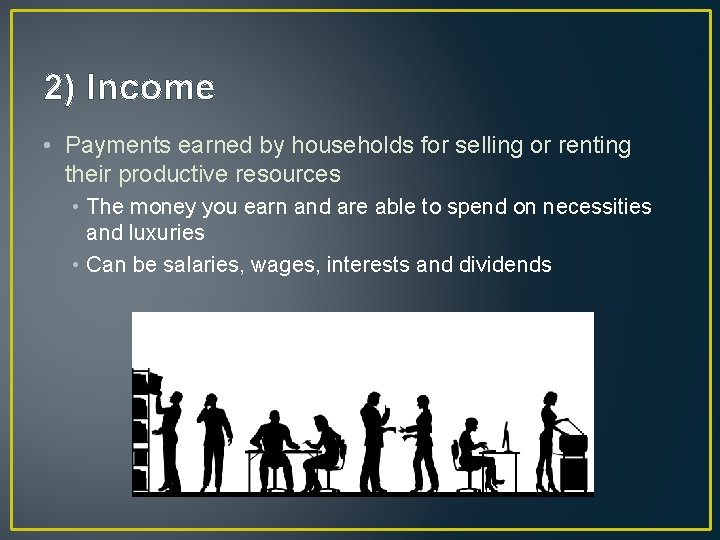
2) Income • Payments earned by households for selling or renting their productive resources • The money you earn and are able to spend on necessities and luxuries • Can be salaries, wages, interests and dividends
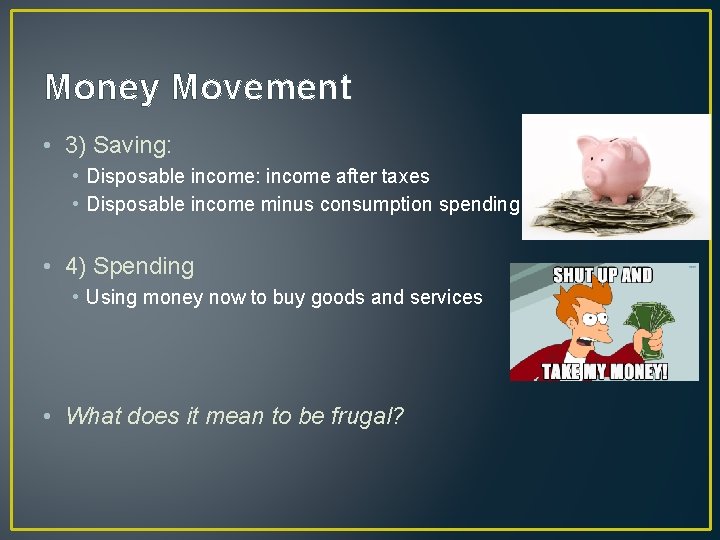
Money Movement • 3) Saving: • Disposable income: income after taxes • Disposable income minus consumption spending • 4) Spending • Using money now to buy goods and services • What does it mean to be frugal?
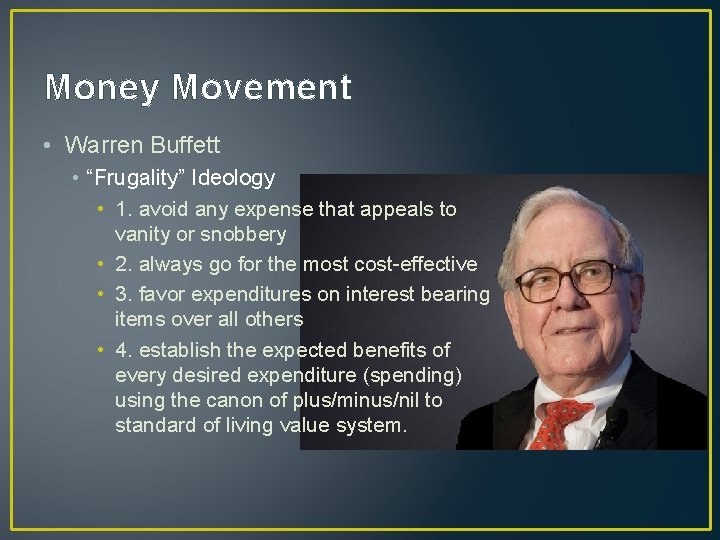
Money Movement • Warren Buffett • “Frugality” Ideology • 1. avoid any expense that appeals to vanity or snobbery • 2. always go for the most cost-effective • 3. favor expenditures on interest bearing items over all others • 4. establish the expected benefits of every desired expenditure (spending) using the canon of plus/minus/nil to standard of living value system.
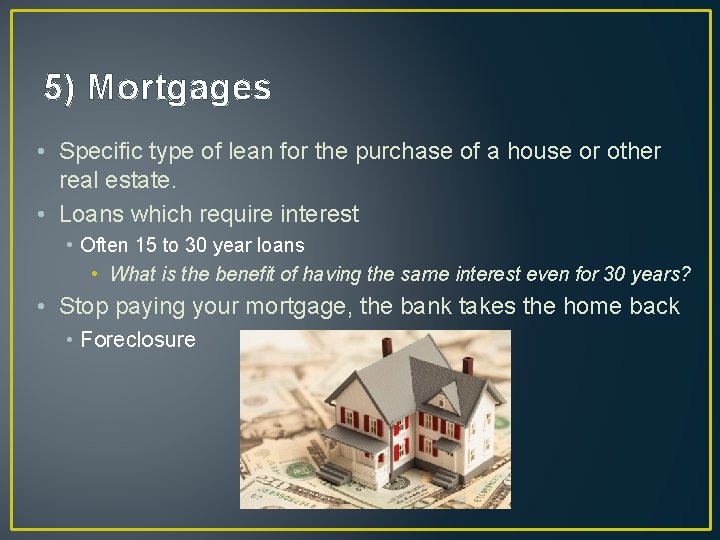
5) Mortgages • Specific type of lean for the purchase of a house or other real estate. • Loans which require interest • Often 15 to 30 year loans • What is the benefit of having the same interest even for 30 years? • Stop paying your mortgage, the bank takes the home back • Foreclosure
6) Credit • Borrowing of money, or to receive goods or services in return for a promise to pay later • IOUs, line of credit from a bank • Interest: percentage of the principal amount that a borrower repays each payment period • Simple interest vs compounding interest • Simple: interest earned on the principal only (mortgages) • Compounding: interest gained on the principal and accrued interest (student loans and credit cards)
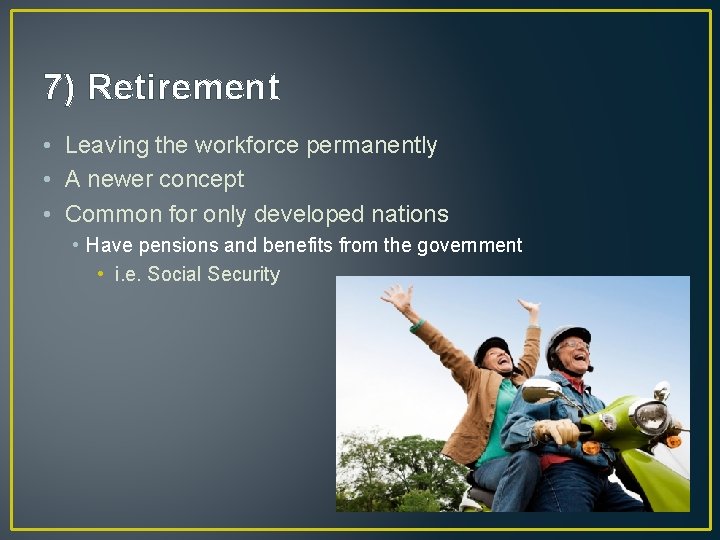
7) Retirement • Leaving the workforce permanently • A newer concept • Common for only developed nations • Have pensions and benefits from the government • i. e. Social Security
Investments • 8) Investing: • The process of putting money someplace with the intention of making financial gain • Stocks, bonds, mutual funds, real estate • 401 k, IRAs, 403 B • 9) Investment • Amount of money placed into stocks and bonds, mutual funds or other investment strategies
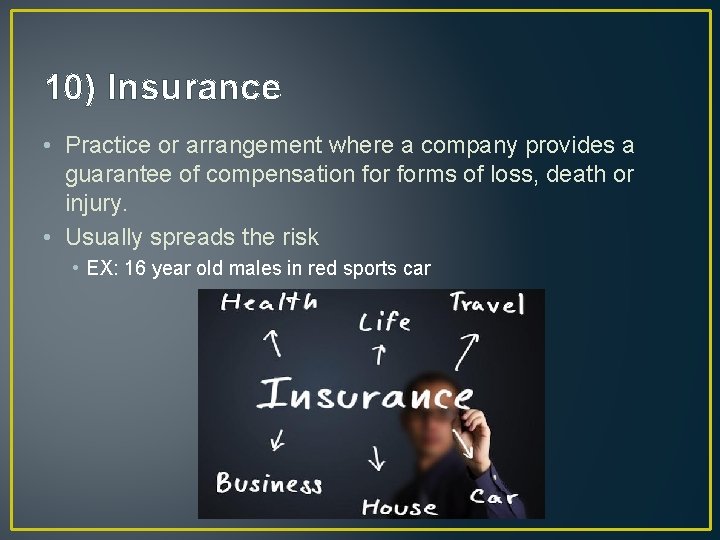
10) Insurance • Practice or arrangement where a company provides a guarantee of compensation forms of loss, death or injury. • Usually spreads the risk • EX: 16 year old males in red sports car
Budgets How much do you actually budget?
Budget • A process of determining income and expenses • Often on a monthly basis – cash flow • Can be long term and/or short term • Short term: monthly bills, rent/mortgage, even vacations • Long term: college, retirement funds, purchasing a home • Helps plan for disruptions in income or crisis/emergencies • Emergency funds, saved income, or proper planning
Frequent Budget Tips • Remain flexible • Buy something nice every once in a while, which might require compensation in another area • Eating out once, but not buying your next few coffees • Spend less than you earn • Leave room for fun things, pay necessities first • Don’t go into debt that are not long term investments • Buying a house is not debt necessarily • Stick to your plans as best as you can/able to
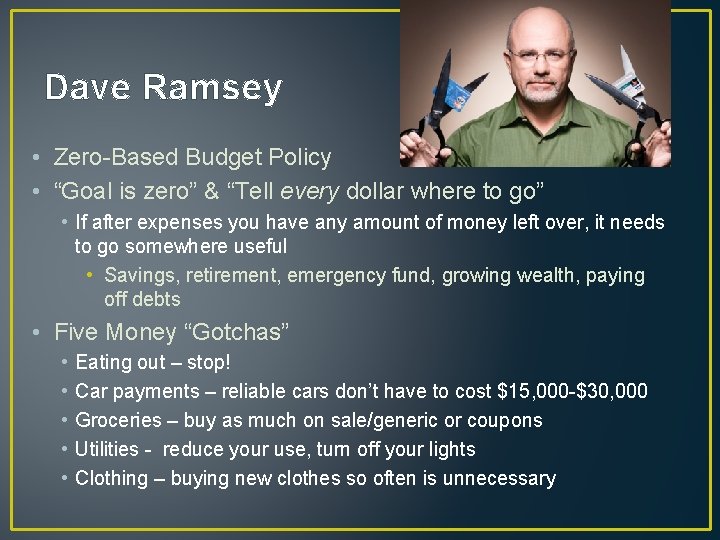
Dave Ramsey • Zero-Based Budget Policy • “Goal is zero” & “Tell every dollar where to go” • If after expenses you have any amount of money left over, it needs to go somewhere useful • Savings, retirement, emergency fund, growing wealth, paying off debts • Five Money “Gotchas” • • • Eating out – stop! Car payments – reliable cars don’t have to cost $15, 000 -$30, 000 Groceries – buy as much on sale/generic or coupons Utilities - reduce your use, turn off your lights Clothing – buying new clothes so often is unnecessary
Types of Expenses • 1) Fixed Expenses • Things that do not change • Rent, student loans, car payment • These expenses often need the “safety net” • 2) Flexible Expenses • Things that change • Entertainment, grocery bills, phone bills • You can control these • 3) Planned Expenses • The expenses you know will come regularly • What your budget is based on • 4) Unplanned Expenses • Expenses that are unexpected • Car repair, new appliance • Where your budget saves you
• How much do you spend? ?