
PERSONAL FINANCE MONEY MANAGEMENT SAVINGS Money not spent
- Slides: 12
PERSONAL FINANCE MONEY MANAGEMENT
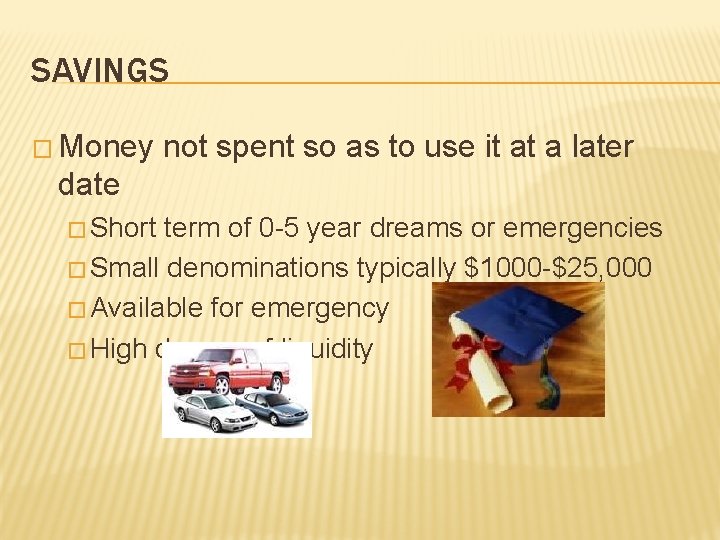
SAVINGS � Money not spent so as to use it at a later date � Short term of 0 -5 year dreams or emergencies � Small denominations typically $1000 -$25, 000 � Available for emergency � High degree of liquidity
TYPES OF SAVINGS � PASSBOOK ACCOUNTS � Savings account in which deposits and withdrawals are recorded by the bank in a depositor’s passbook � MONEY-MARKET ACCOUNTS � Pass higher rate of return based on rates in the money markets (trading short-term commodities) � TIME DEPOSITS � Savings with restriction on the term or period of time before withdrawals can be made (ex. CD)
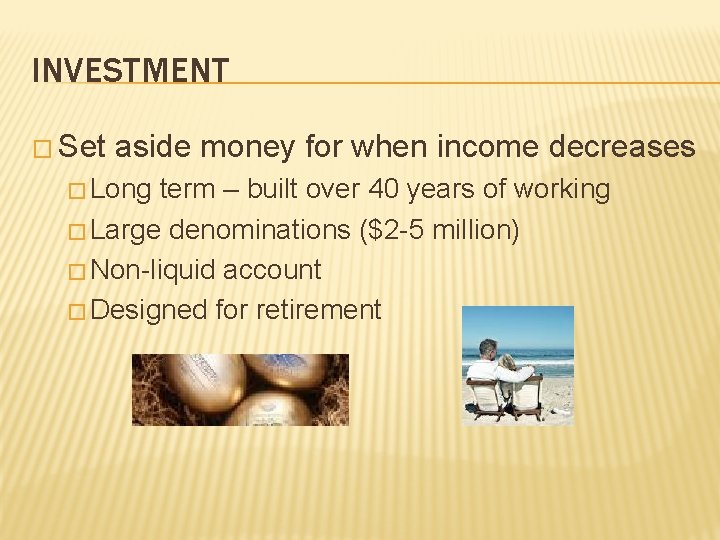
INVESTMENT � Set aside money for when income decreases � Long term – built over 40 years of working � Large denominations ($2 -5 million) � Non-liquid account � Designed for retirement
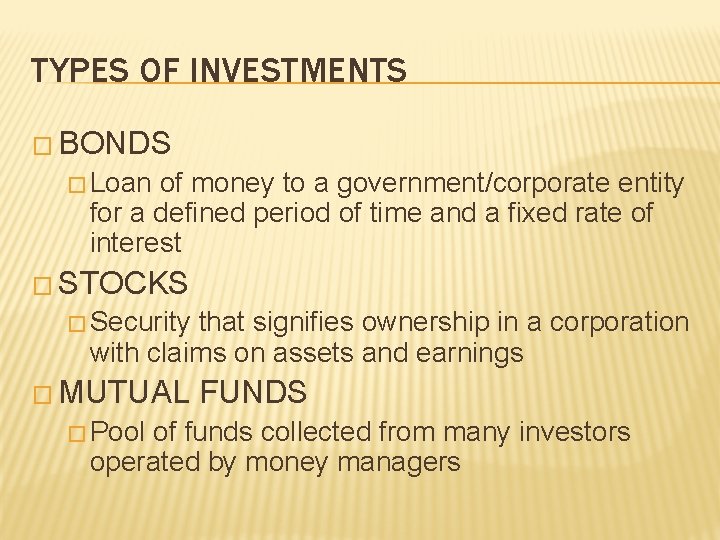
TYPES OF INVESTMENTS � BONDS � Loan of money to a government/corporate entity for a defined period of time and a fixed rate of interest � STOCKS � Security that signifies ownership in a corporation with claims on assets and earnings � MUTUAL � Pool FUNDS of funds collected from many investors operated by money managers
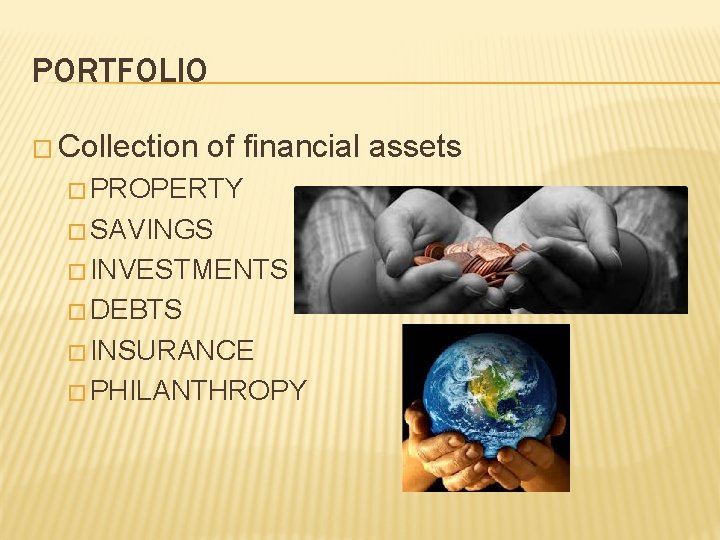
PORTFOLIO � Collection of financial assets � PROPERTY � SAVINGS � INVESTMENTS � DEBTS � INSURANCE � PHILANTHROPY
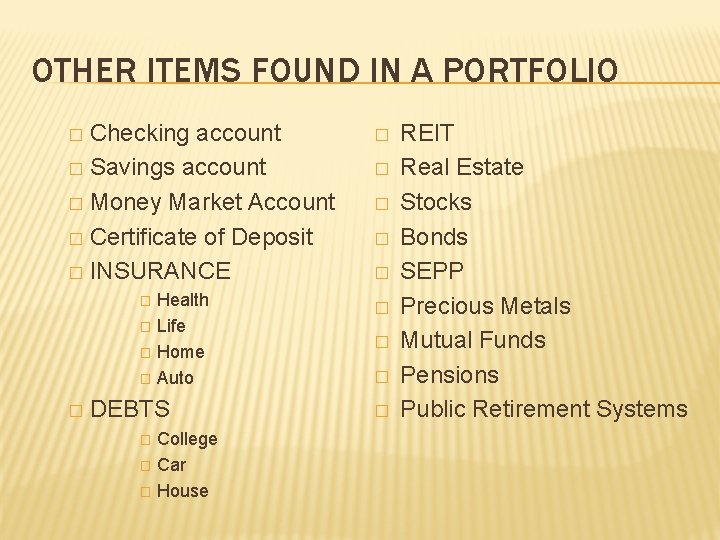
OTHER ITEMS FOUND IN A PORTFOLIO Checking account � Savings account � Money Market Account � Certificate of Deposit � INSURANCE � Health � Life � Home � Auto � � DEBTS College � Car � House � � � � � REIT Real Estate Stocks Bonds SEPP Precious Metals Mutual Funds Pensions Public Retirement Systems
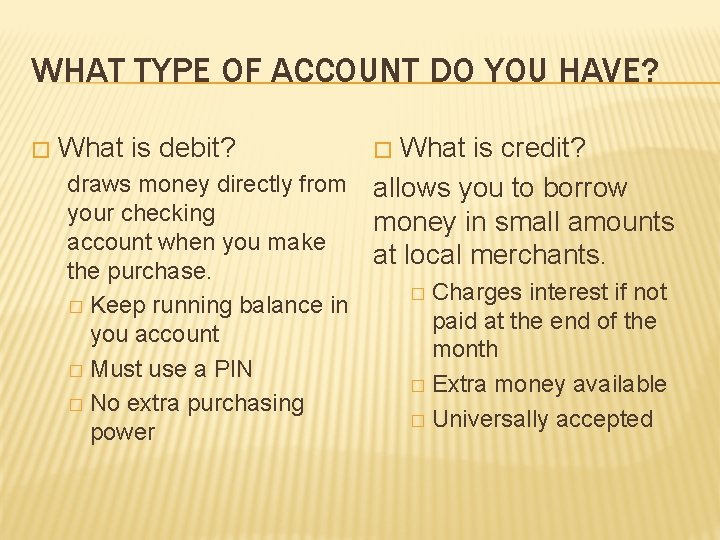
WHAT TYPE OF ACCOUNT DO YOU HAVE? � What is debit? What is credit? draws money directly from allows you to borrow your checking money in small amounts account when you make at local merchants. the purchase. � Keep running balance in you account � Must use a PIN � No extra purchasing power � Charges interest if not paid at the end of the month � Extra money available � Universally accepted �
DEBTS � Something, typically money, that is owed or due Are there GOOD and BAD debts ? � Personal loans like credit cards and car loans are typically thought of as bad debts � Some people think that student loans and mortgages are worth risking debt because they become an investment with future rewards
INSURANCE � Guarantee of compensation for specified loss, damage, illness, or death in return for payment of a premium (usually paid monthly) � Property with guaranteed replacement cost � Auto with plenty of liability (may not need collision) � Health may have many options to consider � Disability that pays at least 65% of wages � Long-term Care for in-home or facility nursing services � Identity Theft with restoration services � Term Life to cover all debts and death expenses
PHILANTHROPY � The desire to promote the welfare of others, expressed especially by the generous donation of money to good causes � Research where all your money goes � Some charitable organizations are better than others at getting funds to those in need, and must provide their records upon request � Once you begin to give prepare to get more requests � Wisely for � Give learn to say no to the groups you do not have a passion generously � For many people this can be 10% of their monthly budget
10 -25 -10 PLAN � If you follow these simple principles in the following areas of most budgetary concern your financial health should be OK. � Spend no more (including payments, insurance, and maintenance) than these percentages of your income on … � 10% Automobiles � 25% Housing � Spend at least this percent of your income (from the first paycheck to your last) on: � 10 -15% Retirement � 10% Giving (optional for those so inclined)