
Personal Finance Assignment sheet 2 Budgeting and Saving
Personal Finance Assignment sheet 2 Budgeting and Saving
Defining Your Goals Kinds of Goals • Distinguish between short-term, medium-term, and long-term goals. – Short-term (up to five years) – Medium-term (five to ten years) – Long-term (ten or more years) © EMC Publishing, LLC
Defining Your Goals Asking Questions • Identify your financial goals: – What kind of housing do I want? – Where do I want to live? – What job do I want? – What about my family life? – What will I do for recreation? – How much money will I need? © EMC Publishing, LLC
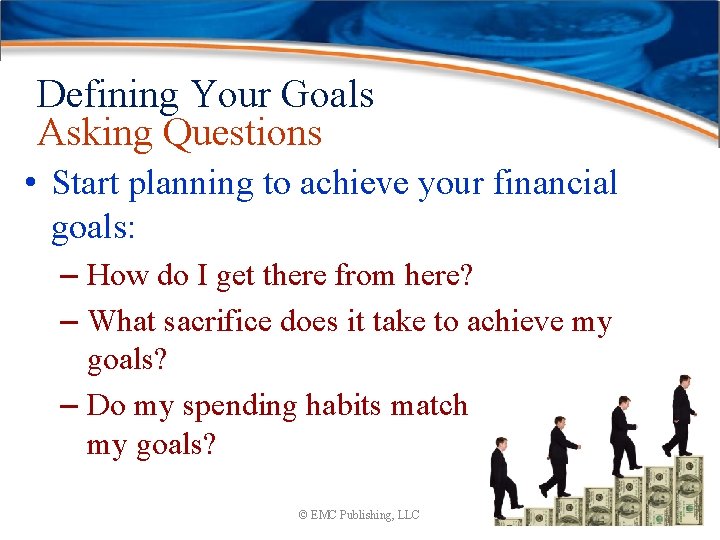
Defining Your Goals Asking Questions • Start planning to achieve your financial goals: – How do I get there from here? – What sacrifice does it take to achieve my goals? – Do my spending habits match my goals? © EMC Publishing, LLC
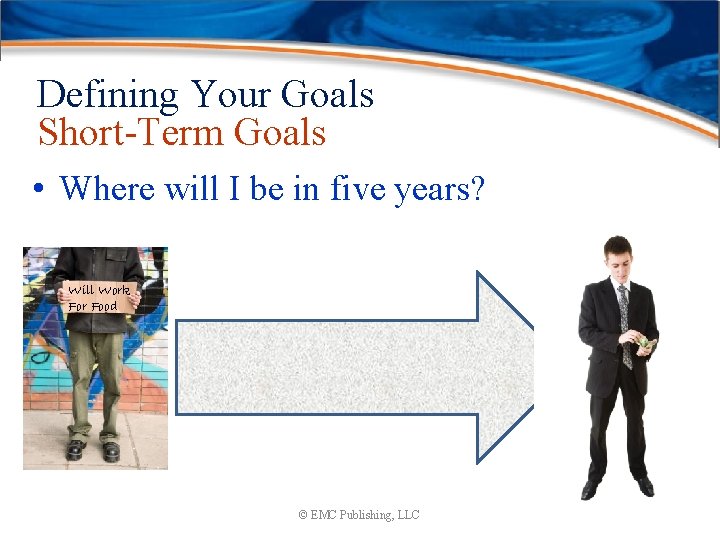
Defining Your Goals Short-Term Goals • Where will I be in five years? Will Work For Food © EMC Publishing, LLC
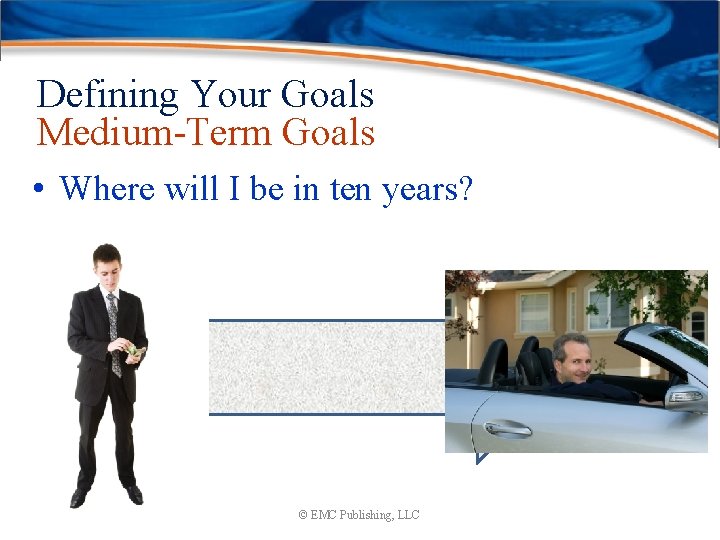
Defining Your Goals Medium-Term Goals • Where will I be in ten years? © EMC Publishing, LLC
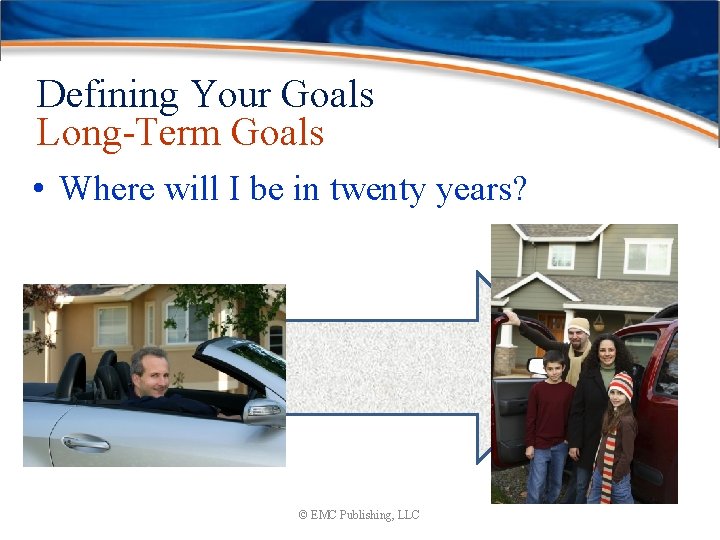
Defining Your Goals Long-Term Goals • Where will I be in twenty years? © EMC Publishing, LLC
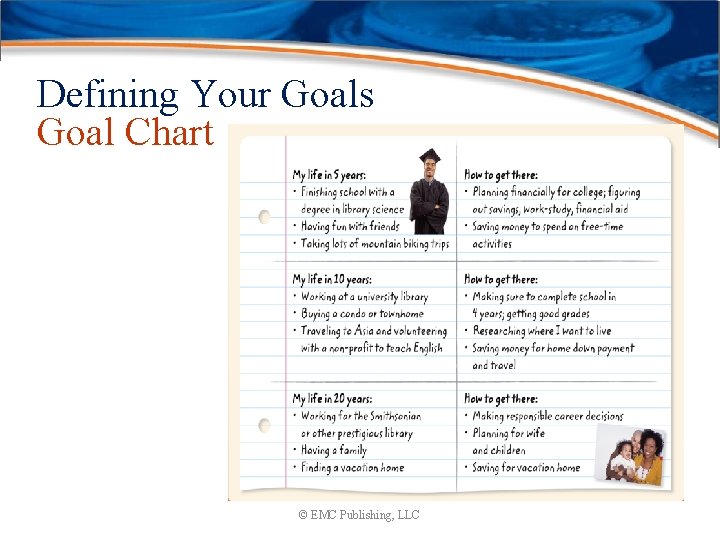
Defining Your Goals Goal Chart © EMC Publishing, LLC
Which kind of goal would your plans for retirement most likely fall under? A. Short-term goal B. Medium-term goal C. Long-term goal © EMC Publishing, LLC
Which kind of goal would your plans for retirement most likely fall under? A. Short-term goal B. Medium-term goal C. Long-term goal © EMC Publishing, LLC
What do you think? Discussion • What are short-term goals? • What are medium-term goals? • What are long-term goals? © EMC Publishing, LLC
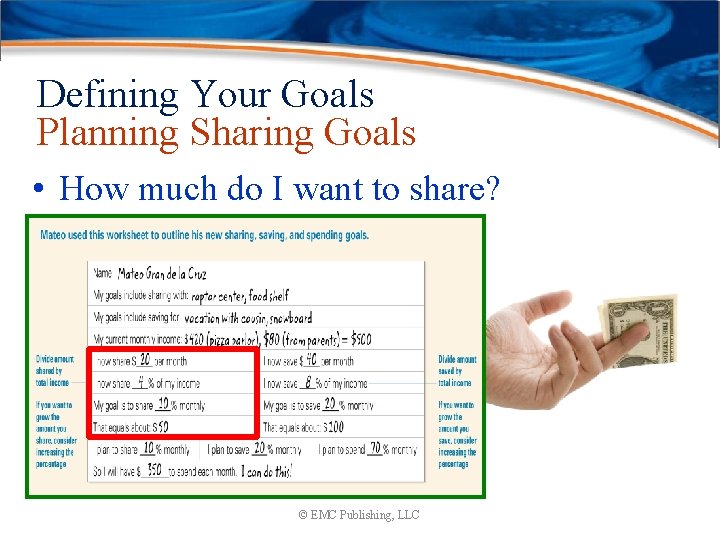
Defining Your Goals Planning Sharing Goals • How much do I want to share? © EMC Publishing, LLC
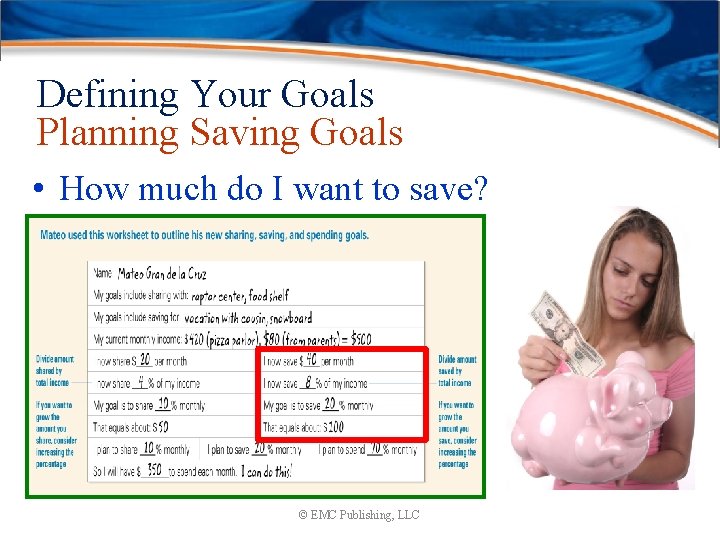
Defining Your Goals Planning Saving Goals • How much do I want to save? © EMC Publishing, LLC
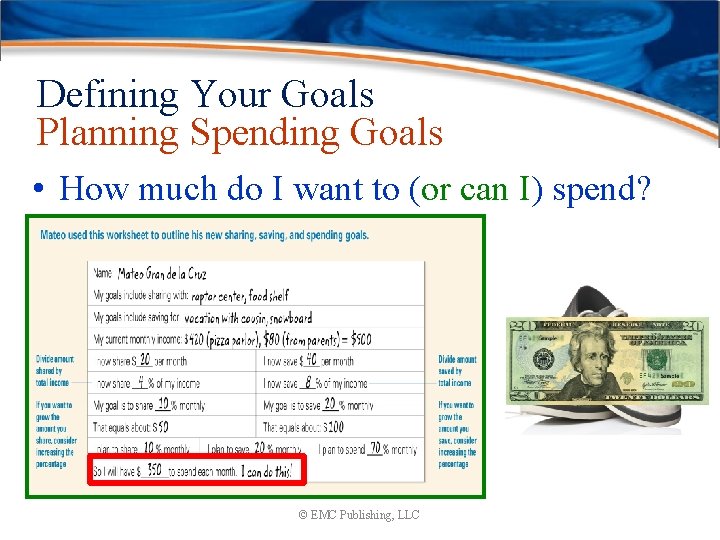
Defining Your Goals Planning Spending Goals • How much do I want to (or can I) spend? © EMC Publishing, LLC
Creating a Budget Balancing Goals • A budget helps you achieve your goals. © EMC Publishing, LLC
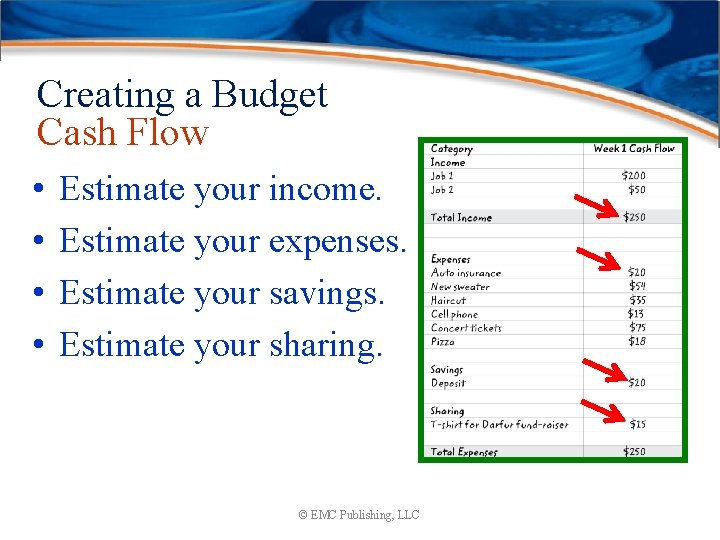
Creating a Budget Cash Flow • • Estimate your income. Estimate your expenses. Estimate your savings. Estimate your sharing. © EMC Publishing, LLC
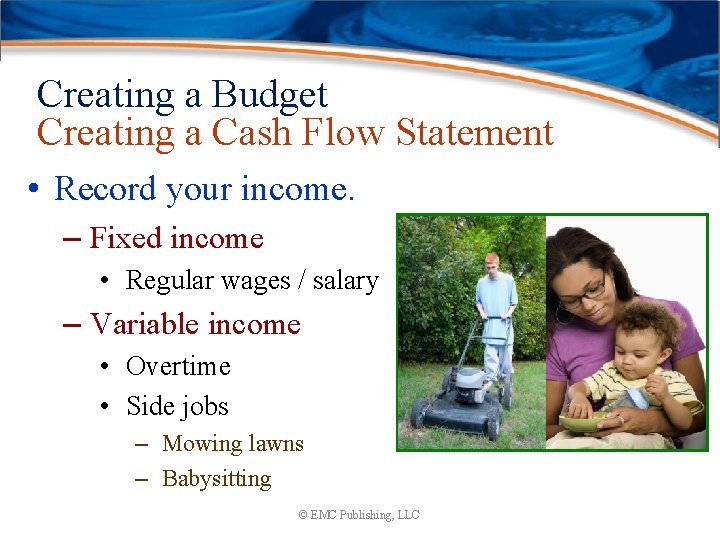
Creating a Budget Creating a Cash Flow Statement • Record your income. – Fixed income • Regular wages / salary – Variable income • Overtime • Side jobs – Mowing lawns – Babysitting © EMC Publishing, LLC
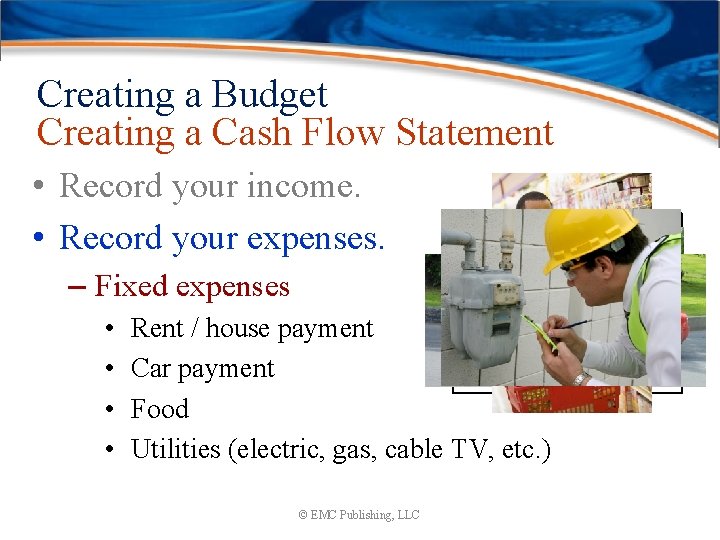
Creating a Budget Creating a Cash Flow Statement • Record your income. • Record your expenses. – Fixed expenses • • Fixed Expenses Rent $450 Car Payment $250 Food $275 Rent / house payment Car payment Utilities Food Utilities (electric, gas, cable TV, etc. ) © EMC Publishing, LLC $125
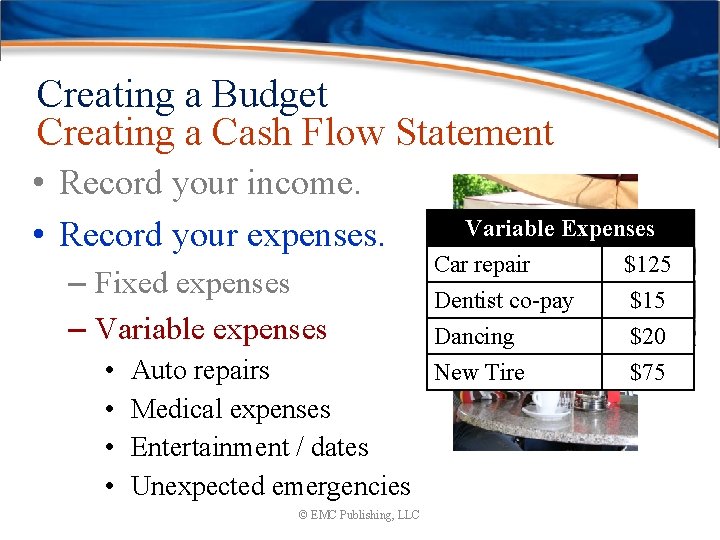
Creating a Budget Creating a Cash Flow Statement • Record your income. • Record your expenses. – Fixed expenses – Variable expenses • • Variable Expenses Car repair $125 Dentist co-pay $15 Dancing $20 Auto repairs New Tire Medical expenses Entertainment / dates Unexpected emergencies © EMC Publishing, LLC $75
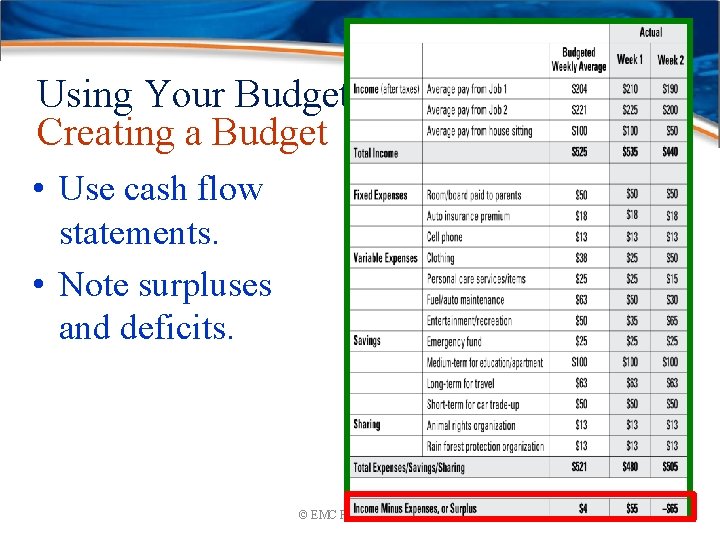
Using Your Budget Creating a Budget • Use cash flow statements. • Note surpluses and deficits. © EMC Publishing, LLC
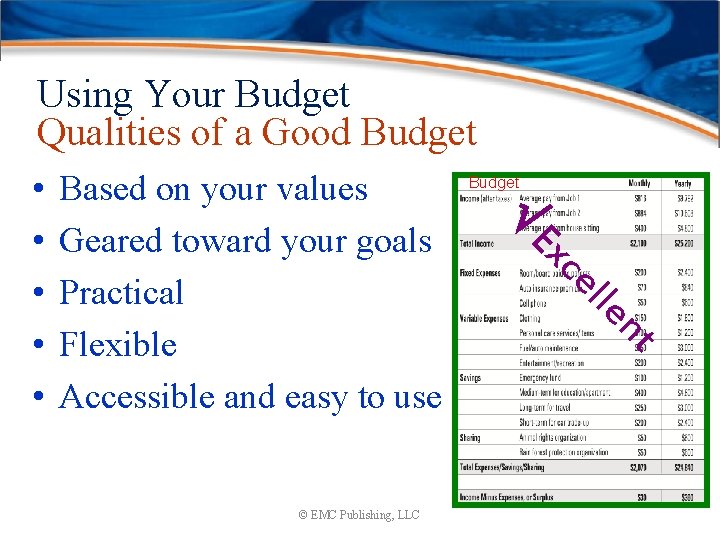
Using Your Budget Qualities of a Good Budget nt lle ce © EMC Publishing, LLC Budget Ex Based on your values Geared toward your goals Practical Flexible Accessible and easy to use • • •
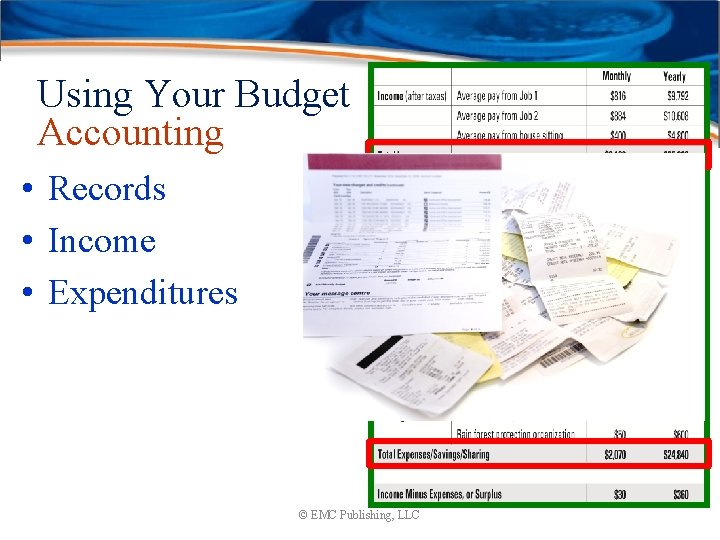
Using Your Budget Accounting • Records • Income • Expenditures © EMC Publishing, LLC
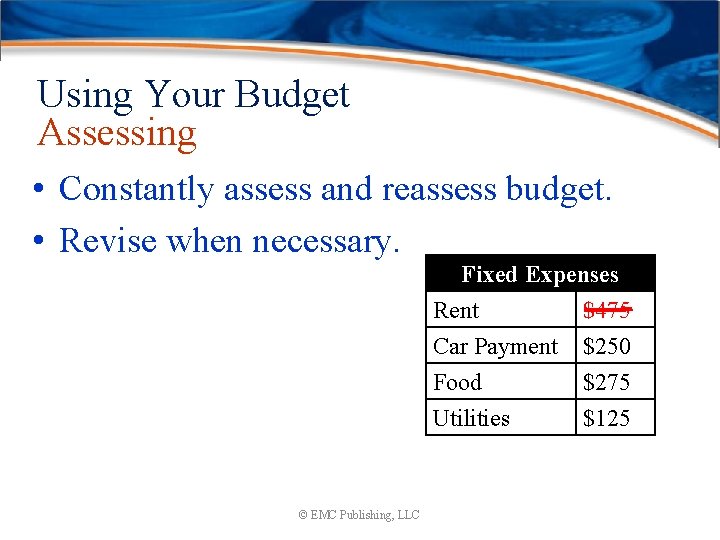
Using Your Budget Assessing • Constantly assess and reassess budget. • Revise when necessary. Fixed Expenses Rent $450 $475 Car Payment $250 Food $275 Utilities © EMC Publishing, LLC $125
A. B. C. D. E. Which of the following is not one of the five qualities of a good budget? Add the quality that is missing. It is based on your values. It is rigid. It is geared toward your goals. It is practical. It is accessible. © EMC Publishing, LLC
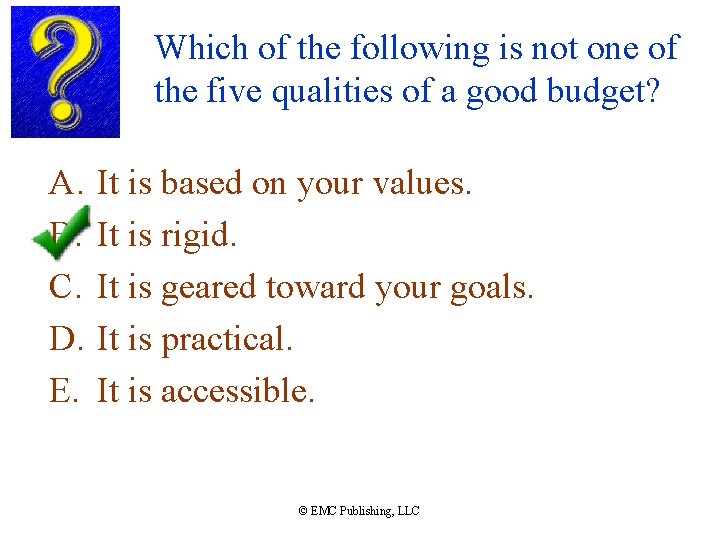
Which of the following is not one of the five qualities of a good budget? A. B. C. D. E. It is based on your values. It is rigid. It is geared toward your goals. It is practical. It is accessible. © EMC Publishing, LLC
What do you think? Discussion • What are the four steps of setting up a budget? • What is the difference between a fixed and variable expense and give an example of each. • What are some examples of “budget busters”? • What are some tips for staying within your budget?

The end © EMC Publishing, LLC
- Slides: 27