
Persistent OSPF Attacks Gabi Nakibly Alex Kirshon and
Persistent OSPF Attacks Gabi Nakibly, Alex Kirshon and Dima Gonikman, Dan Boneh 19 th Annual Network & Distributed System Security Conference (NDSS 2012)
Outline • Introduction (OSPF v 2) • OSPF Security Strengths • Attack • Impact and Analysis • Mitigation Measures

Introduction (OSPF v 2) • Most used protocol in Autonomous System • Link State Routing Protocol • LSA is flooded throughout the AS • Designated Router • Database Description (DBD) Messages
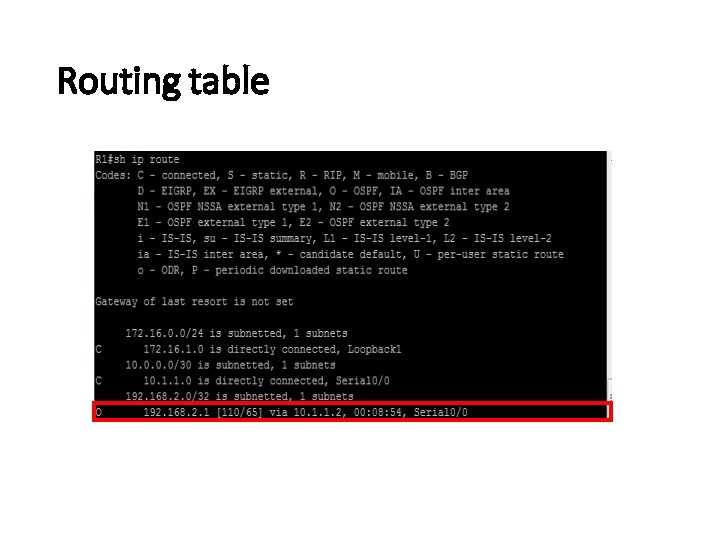
Routing table
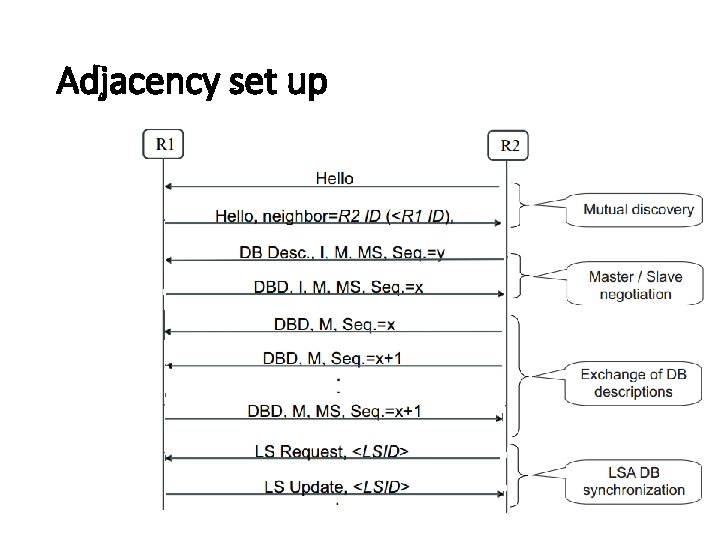
Adjacency set up
Security Strengths • Per Link Authentication • Flooding • Fight Back • LSA Content
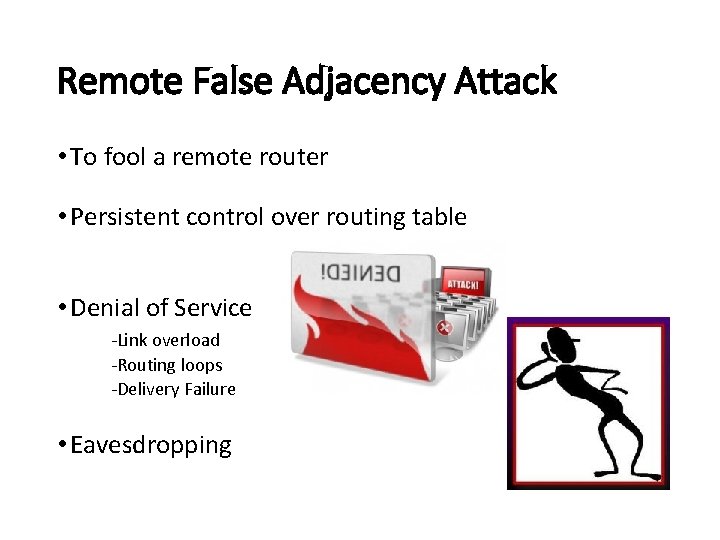
Remote False Adjacency Attack • To fool a remote router • Persistent control over routing table • Denial of Service -Link overload -Routing loops -Delivery Failure • Eavesdropping
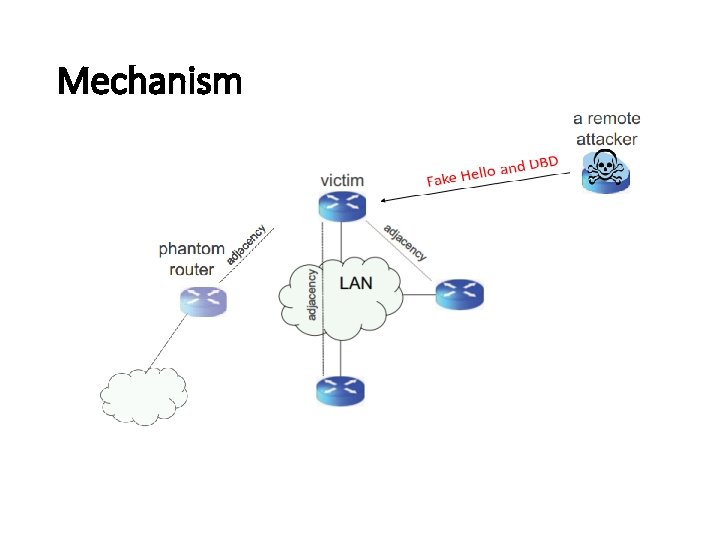
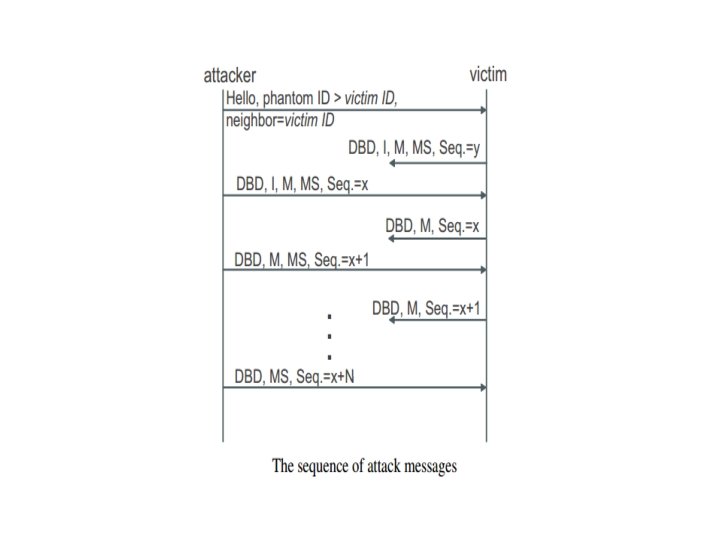
Mechanism
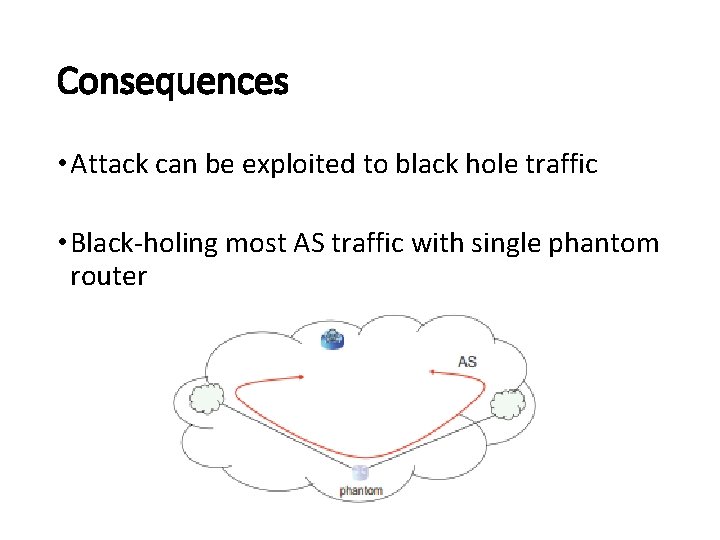
Consequences • Attack can be exploited to black hole traffic • Black-holing most AS traffic with single phantom router
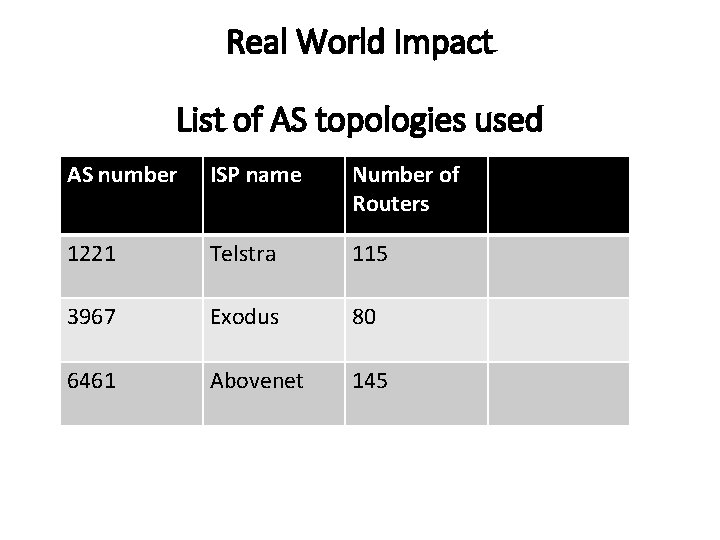
Real World Impact List of AS topologies used AS number ISP name Number of Routers 1221 Telstra 115 3967 Exodus 80 6461 Abovenet 145
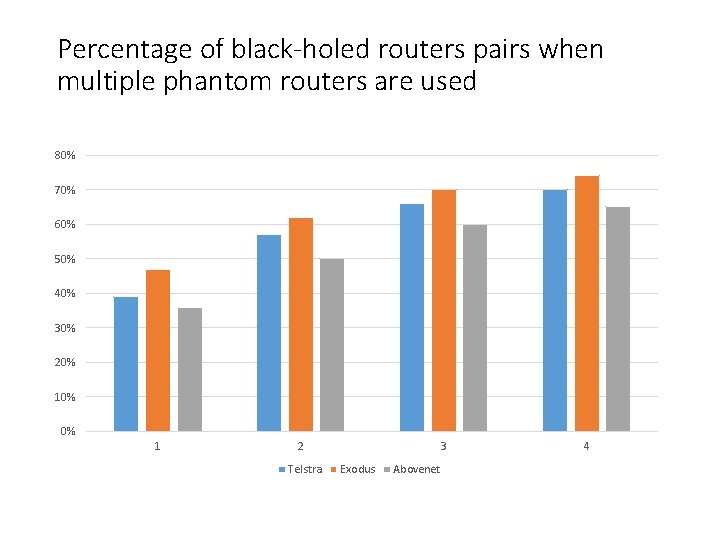
Percentage of black-holed routers pairs when multiple phantom routers are used 80% 70% 60% 50% 40% 30% 20% 10% 0% 1 2 Telstra 3 Exodus Abovenet 4
Mitigation Measures • Protocol Weakness • Same secret key • Master cannot see message content • Anti source-IP spoofing • Master must prove to slave that it has seen at least one message from slave

THANK YOU AND ANY Questions?
- Slides: 14