
Persistence Diagram Topological Characterization of Noise in Images
![Orthonormal basis in [0, 1] Produces sine and cosine basis Removes sine basis](https://slidetodoc.com/presentation_image_h/0d5fb2359047466427490a65a96cdb38/image-11.jpg "Orthonormal basis in [0, 1] Produces sine and cosine basis Removes sine basis")
- Slides: 17
Persistence Diagram: Topological Characterization of Noise in Images Moo K. Chung Department of Biostatistics and Medical Informatics Waisman Laboratory for Brain Imaging and Behavior University of Wisconsin-Madison www. stat. wisc. edu/~mchung Brain Food Meeting November 5, 2008
Acknowledgments Kim M. Dalton, Richard J. Davidson Waisman Laboratory for Brain Imaging and Behavior University of Wisconsin-Madison Peter Kim University of Guelph CANADA
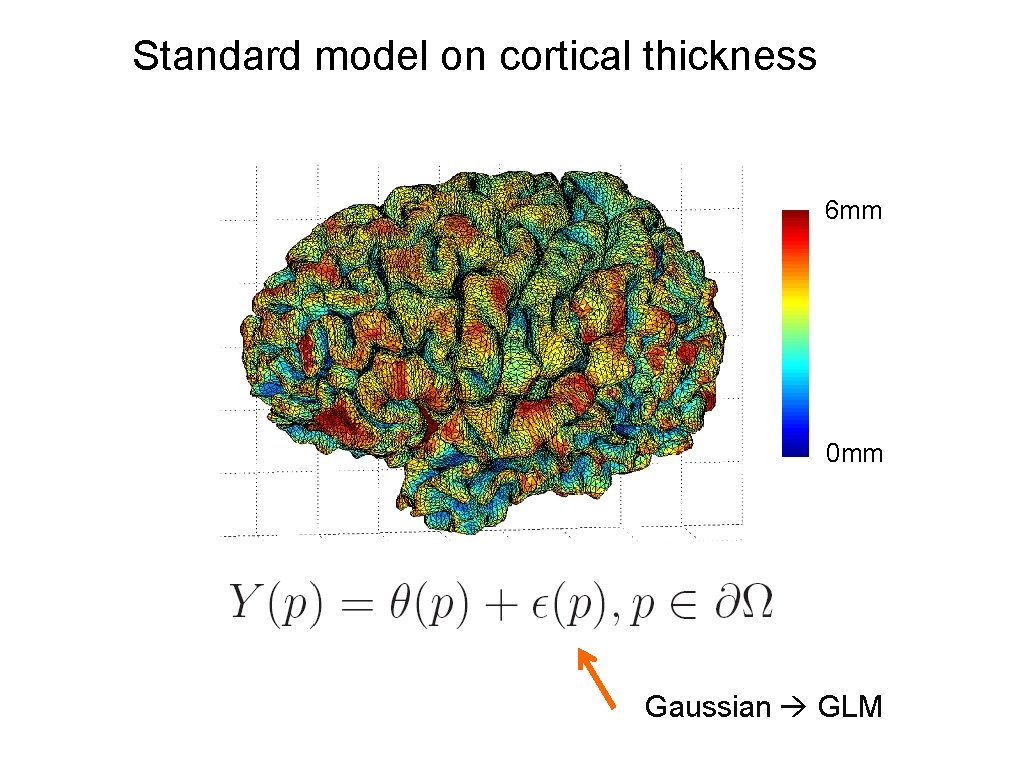
Standard model on cortical thickness 6 mm 0 mm Gaussian GLM
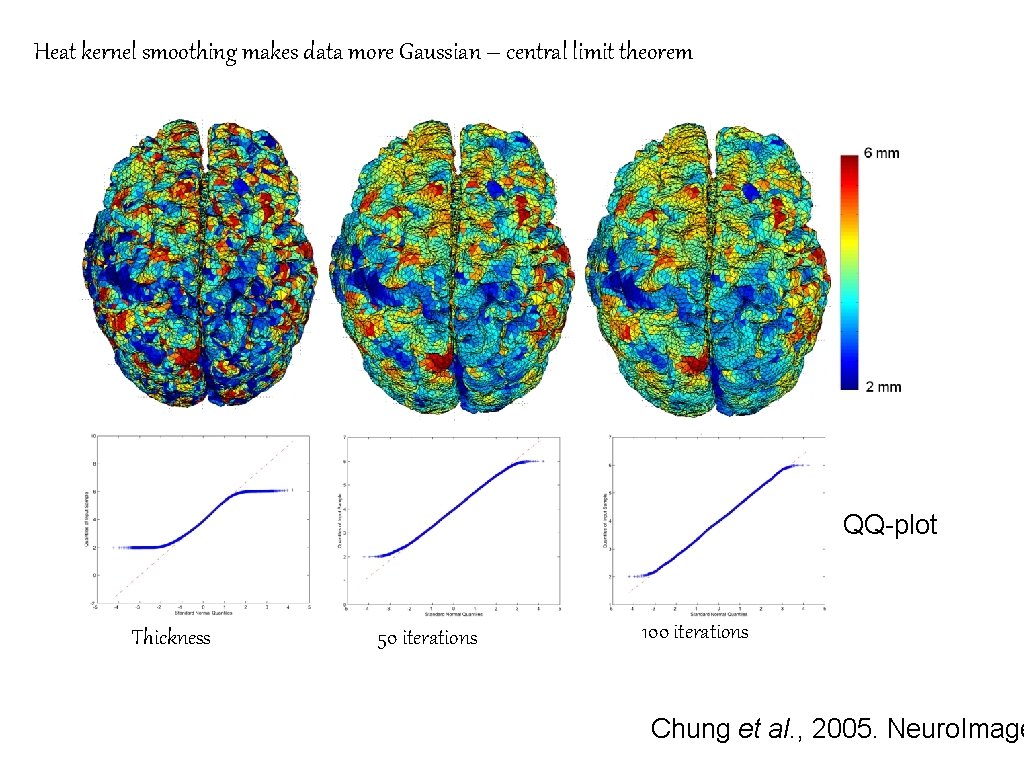
Heat kernel smoothing makes data more Gaussian – central limit theorem QQ-plot Thickness 50 iterations 100 iterations Chung et al. , 2005. Neuro. Image
Heat kernel smoothing widely used cortical data smoothing technique cortical curvatures (Luders, 2006; Gaser, 2006) cortical thickness (Luders, 2006; Bernal-Rusiel, 2008) Hippocampus (Shen, 2006; Zhu, 2007) Magnetoencephalography (MEG) (Han, 2007) functional-MRI (Hagler, 2006: Jo, 2007) General linear model (GLM) + random field theory Can we do data analysis in a really crazy way? Why? We may be able to detect some features
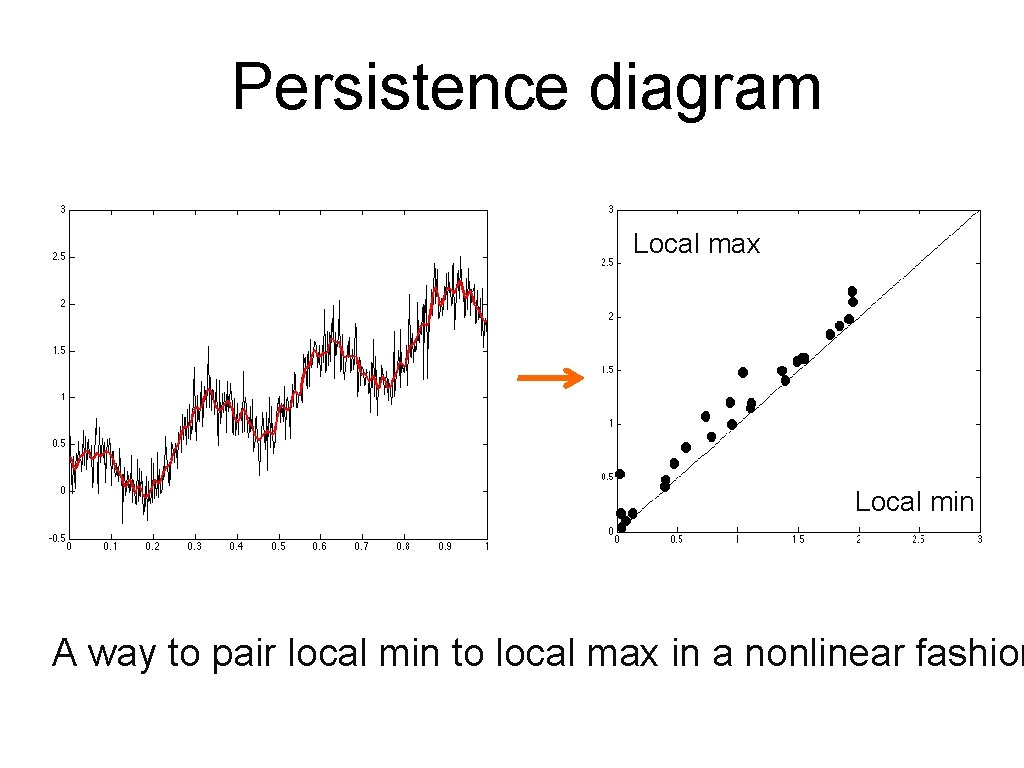
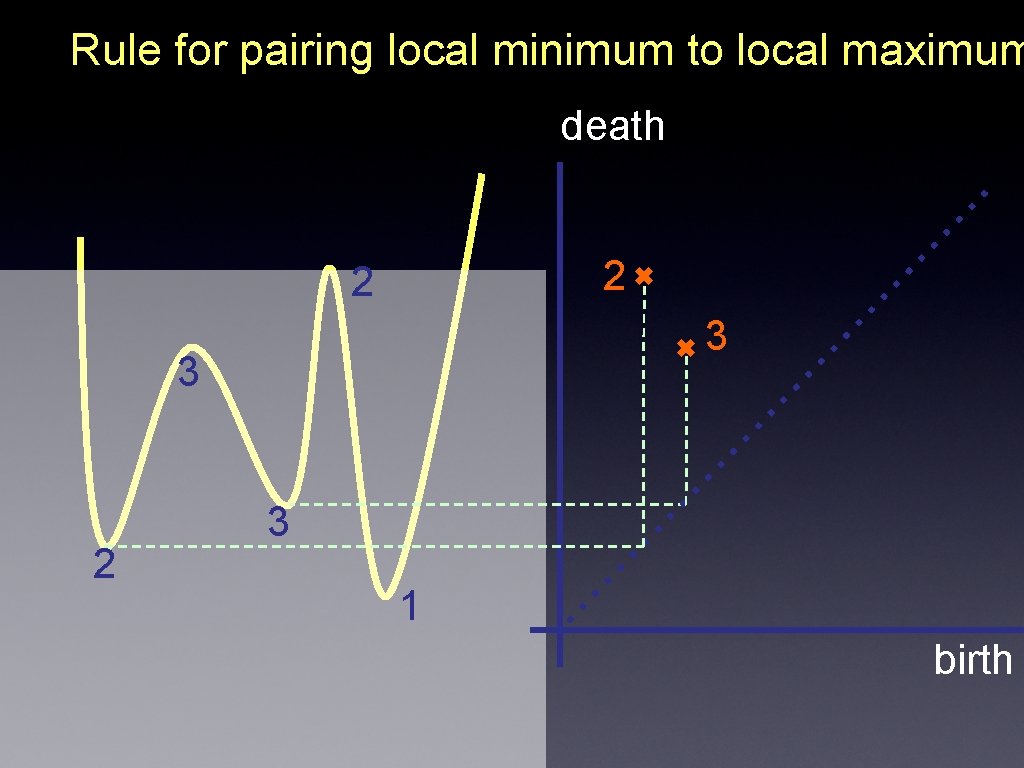
Persistence diagram Local max Local min A way to pair local min to local max in a nonlinear fashion
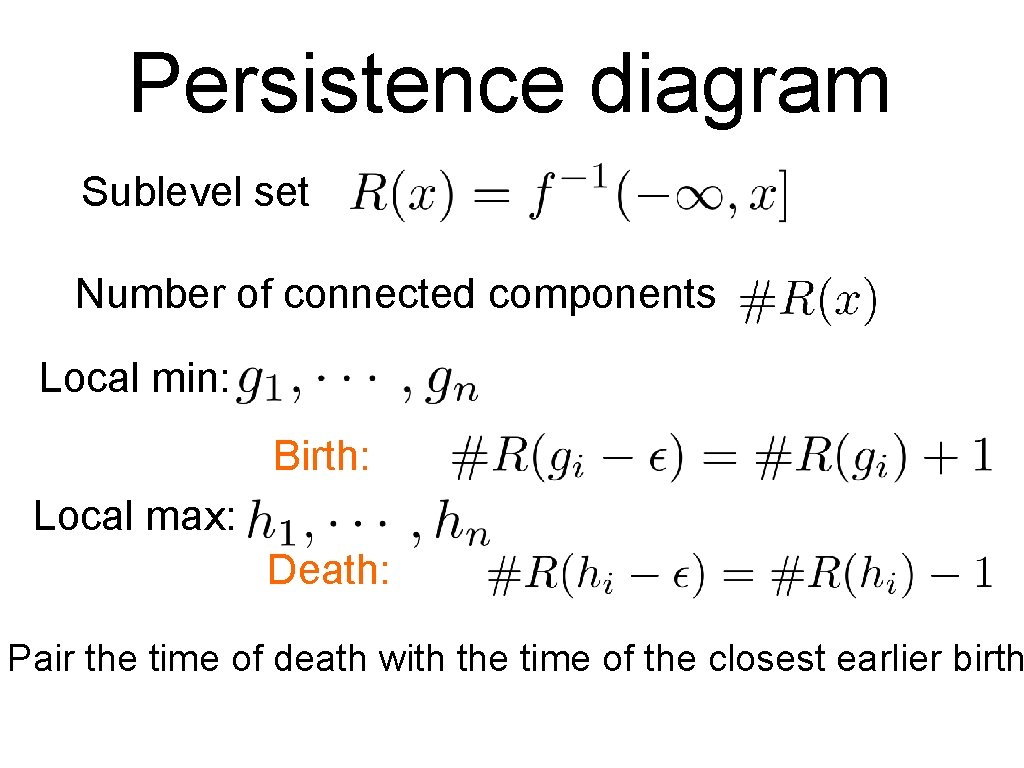
Persistence diagram Sublevel set Number of connected components Local min: Birth: Local max: Death: Pair the time of death with the time of the closest earlier birth
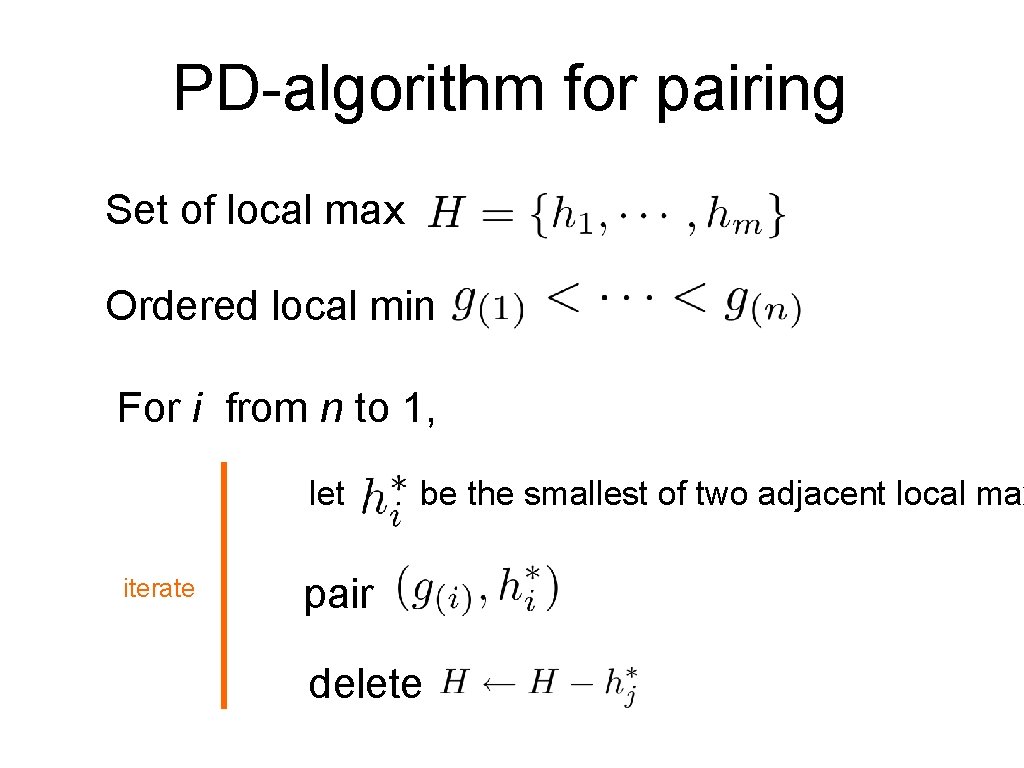
PD-algorithm for pairing Set of local max Ordered local min For i from n to 1, let iterate be the smallest of two adjacent local max pair delete
Rule for pairing local minimum to local maximum death 2 2 3 3 2 3 1 birth
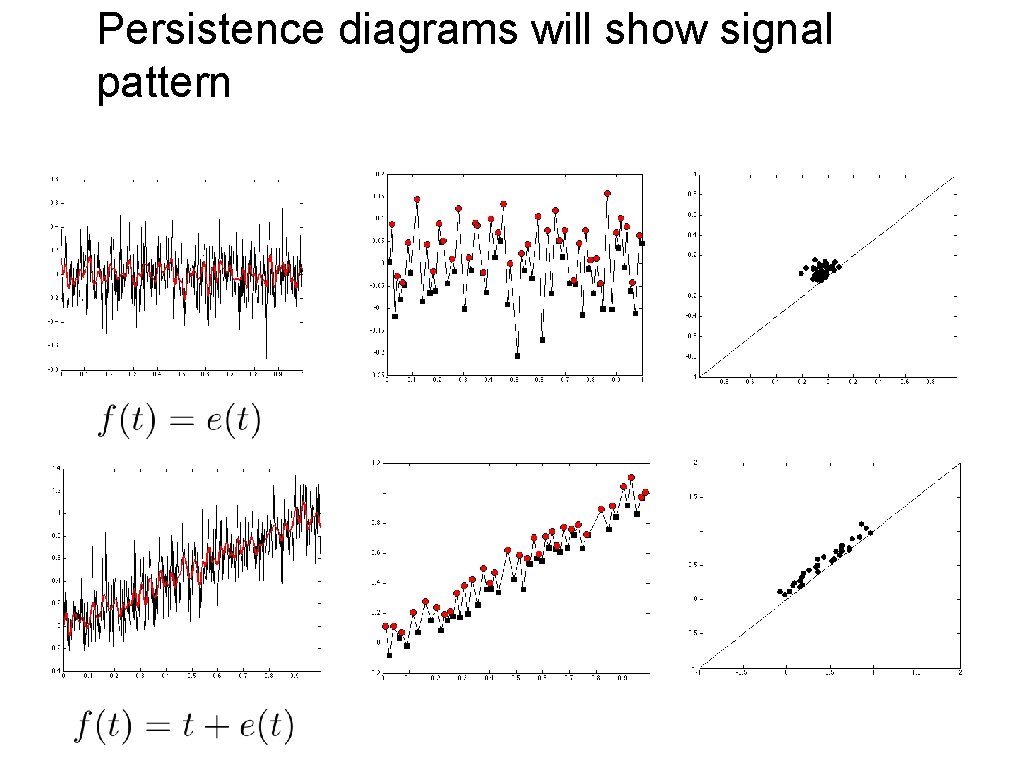
Persistence diagrams will show signal pattern
Orthonormal basis in [0, 1] Produces sine and cosine basis Removes sine basis
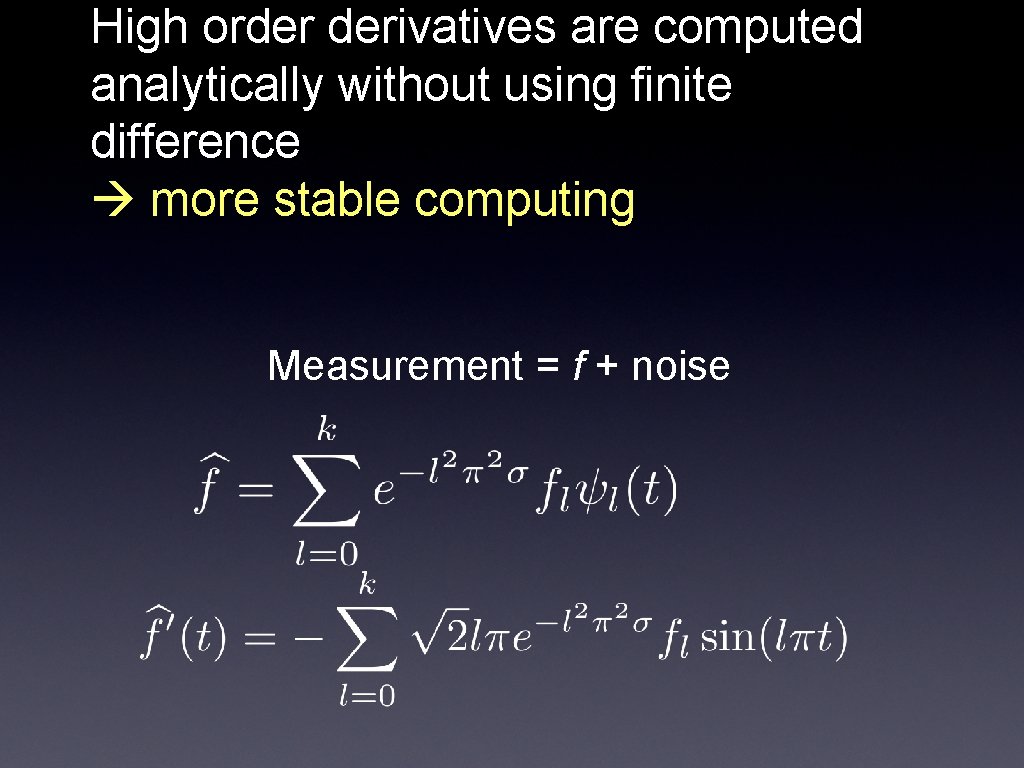
High order derivatives are computed analytically without using finite difference more stable computing Measurement = f + noise
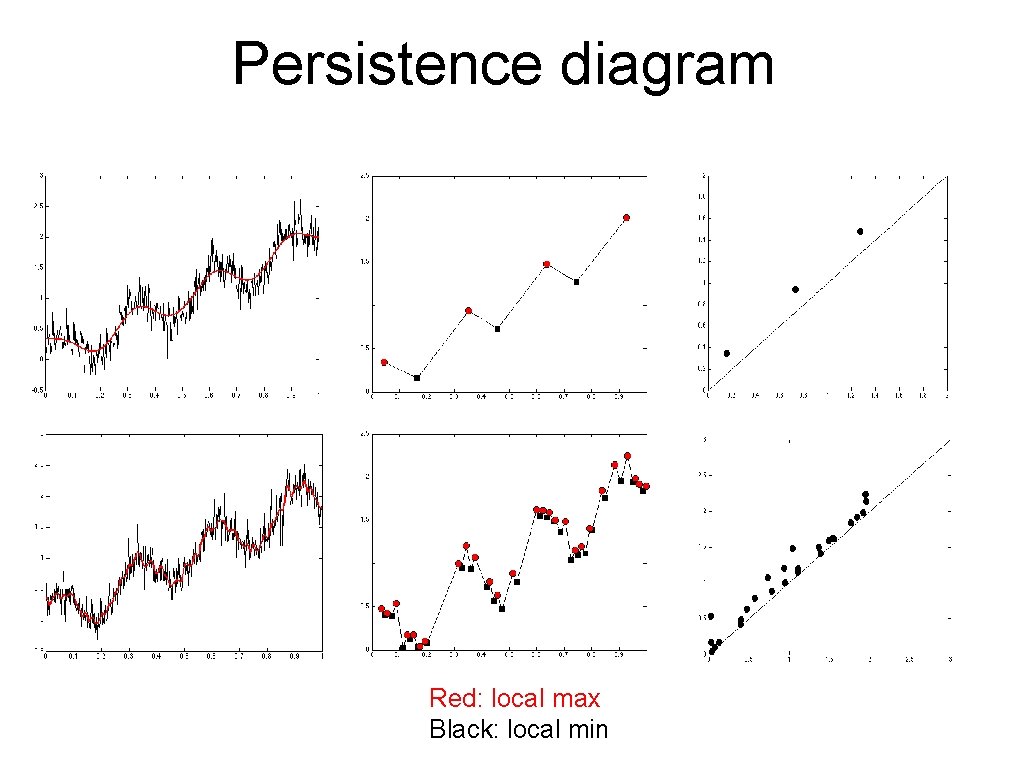
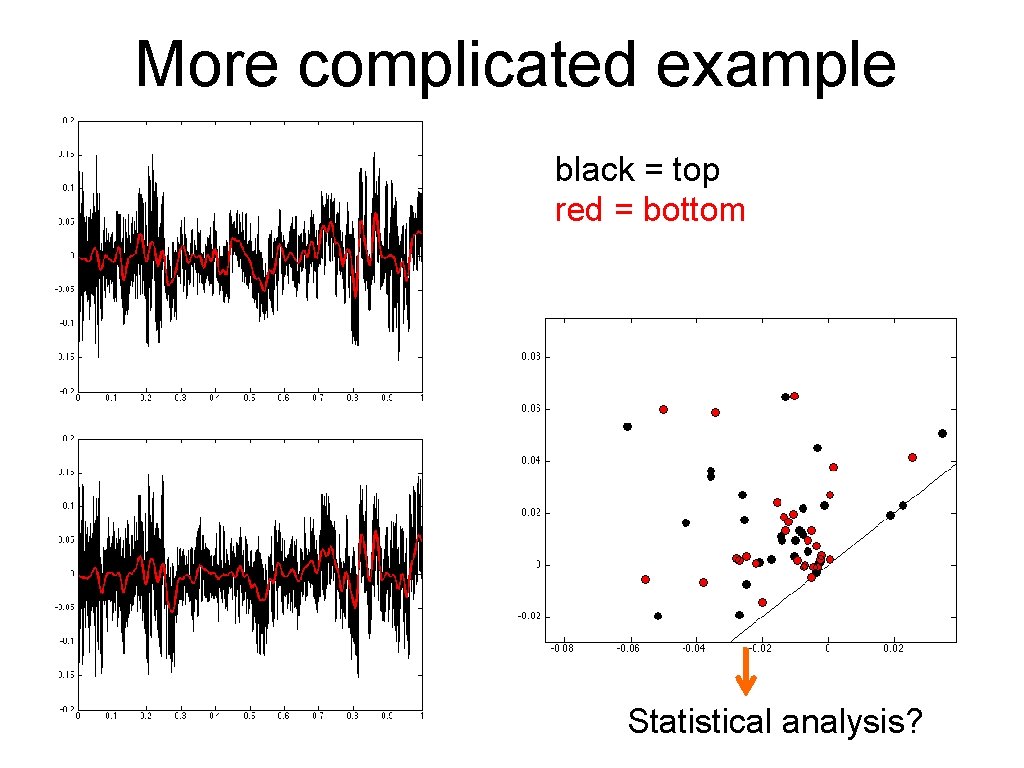
Persistence diagram Red: local max Black: local min
More complicated example black = top red = bottom Statistical analysis?
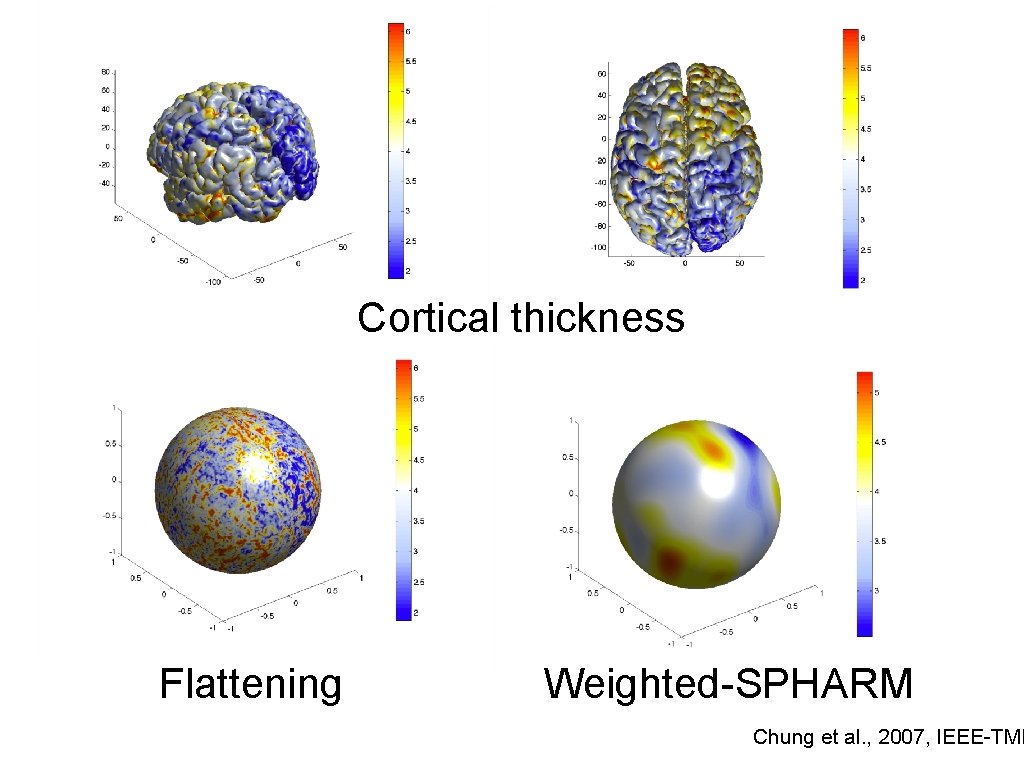
Cortical thickness Flattening Weighted-SPHARM Chung et al. , 2007, IEEE-TMI
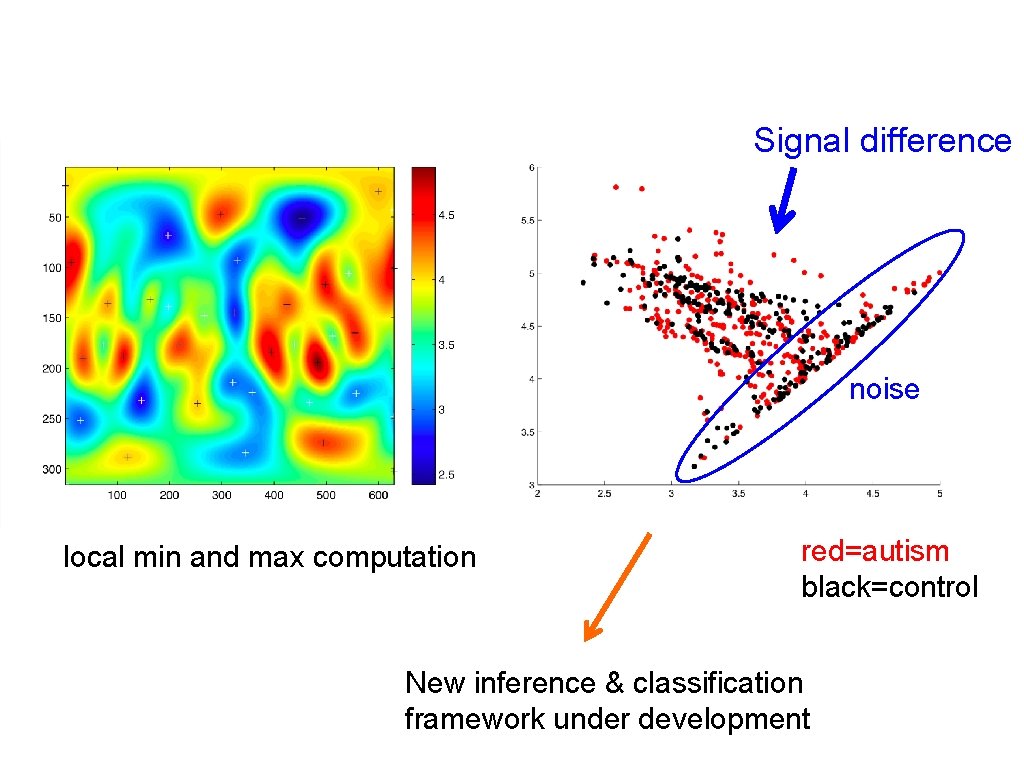
Signal difference noise local min and max computation red=autism black=control New inference & classification framework under development
Thank you If you want to analyze your data this way, please talk to me