
Persian Gulf National Day Symposium no 127 Acromegaly
- Slides: 12
Persian Gulf National Day
Symposium no. 127 Acromegaly Research Institute for Endocrine Sciences Shahid Beheshti University of Medical Sciences 30 April 2015
The importance of knowing about acromegaly (a rare disease): � Delayed diagnosis � Persistence of disease activity even after surgery � Multimodal treatment � Increased mortality (Lowering GH and normalizing IGF‑I levels in patients with acromegaly results in mortality rates similar to those expected in the general population. ) � Increased comorbidities Management of patients with acromegaly is problematic, complex and costly, and requires approaches tailored to each individual patient.
§ List of symposium sessions: ü Diagnostic approach ü Surgical therapy ü Medical therapy ü Radiotherapy ü Follow-up and Monitoring ü Endocrine Society Clinical (2014) overview ü Panel discussion Practice Guideline
Interactive case study Courtesy of Dr. Maria Fleseriu Oregon Health and Science University, Portland, OR, USA
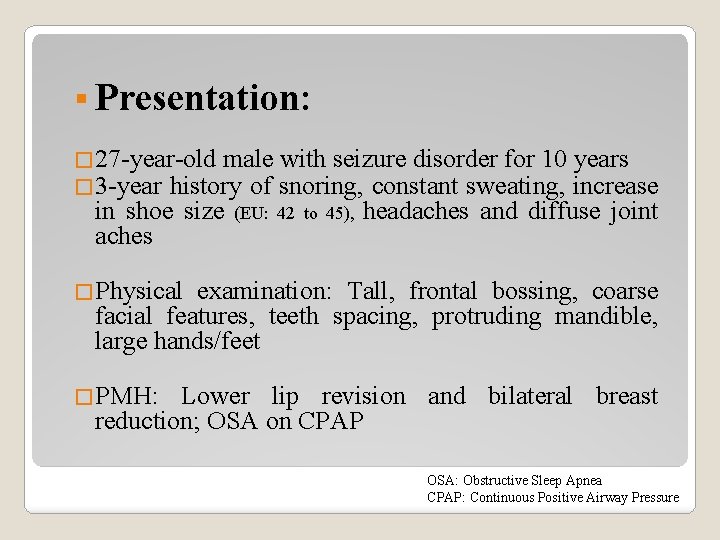
§ Presentation: � 27 -year-old male with seizure disorder for 10 years � 3 -year history of snoring, constant sweating, increase in shoe size aches (EU: 42 to 45), headaches and diffuse joint �Physical examination: Tall, frontal bossing, coarse facial features, teeth spacing, protruding mandible, large hands/feet �PMH: Lower lip revision and bilateral breast reduction; OSA on CPAP OSA: Obstructive Sleep Apnea CPAP: Continuous Positive Airway Pressure
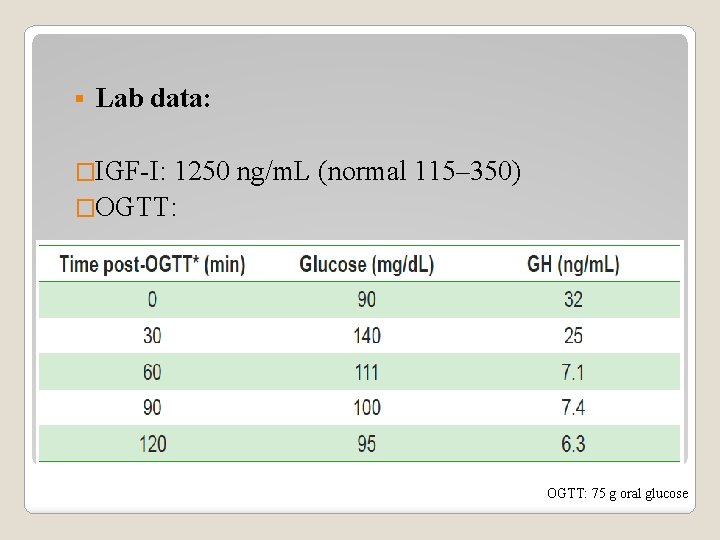
§ Lab data: �IGF-I: 1250 ng/m. L (normal 115– 350) �OGTT: 75 g oral glucose
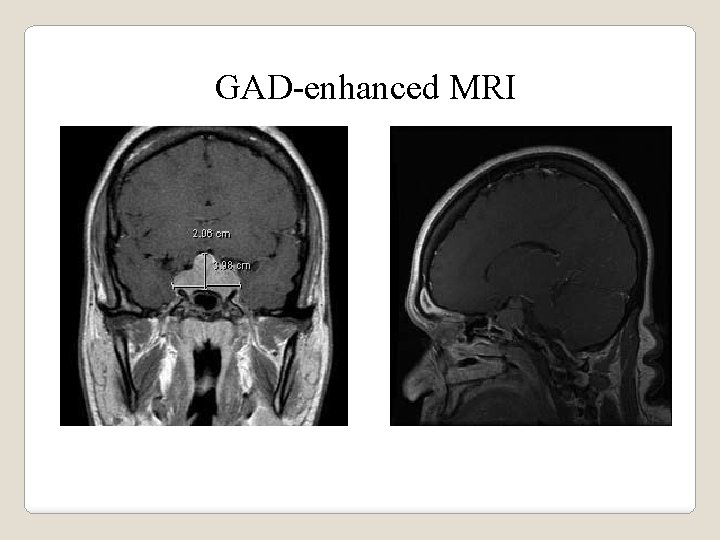
GAD-enhanced MRI
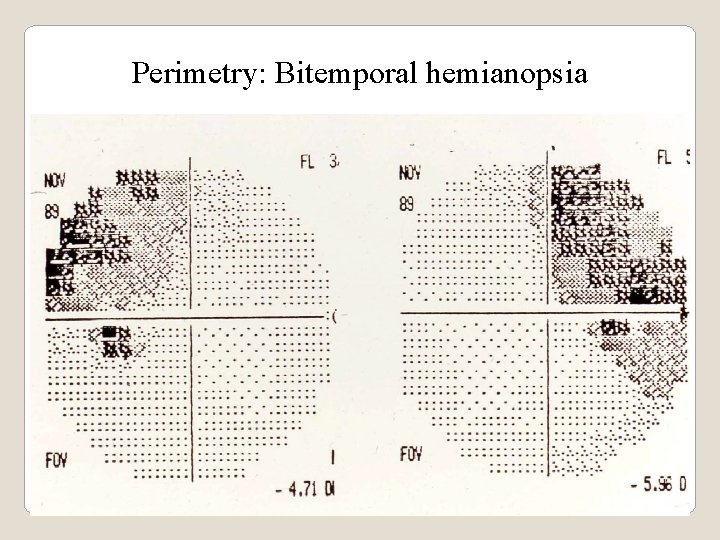
Perimetry: Bitemporal hemianopsia
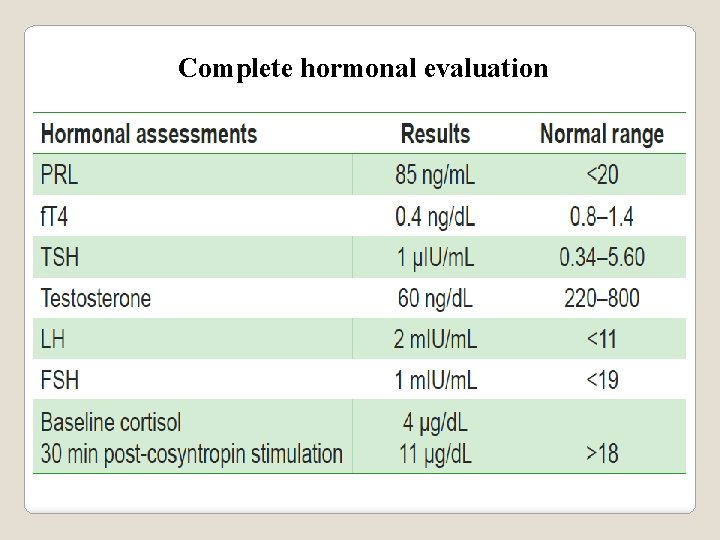
Complete hormonal evaluation
How do you manage this patient? Panel Discussion
Persian Gulf National Day