
Persepolis by Marjane Satrapi Graphic Novel Terms and

Persepolis by Marjane Satrapi
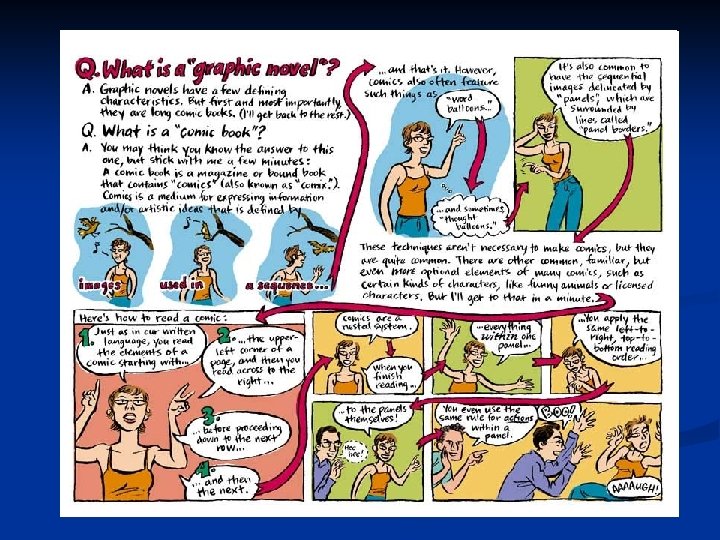
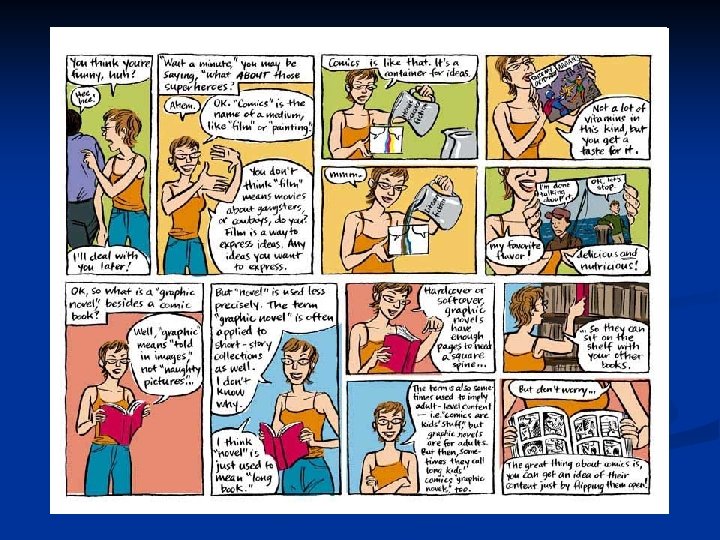
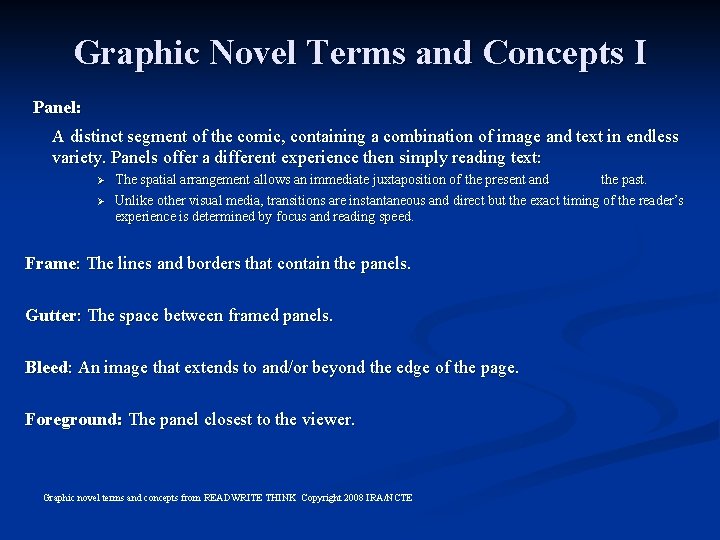
Graphic Novel Terms and Concepts I Panel: A distinct segment of the comic, containing a combination of image and text in endless variety. Panels offer a different experience then simply reading text: Ø Ø The spatial arrangement allows an immediate juxtaposition of the present and the past. Unlike other visual media, transitions are instantaneous and direct but the exact timing of the reader’s experience is determined by focus and reading speed. Frame: The lines and borders that contain the panels. Gutter: The space between framed panels. Bleed: An image that extends to and/or beyond the edge of the page. Foreground: The panel closest to the viewer. Graphic novel terms and concepts from READWRITE THINK Copyright 2008 IRA/NCTE
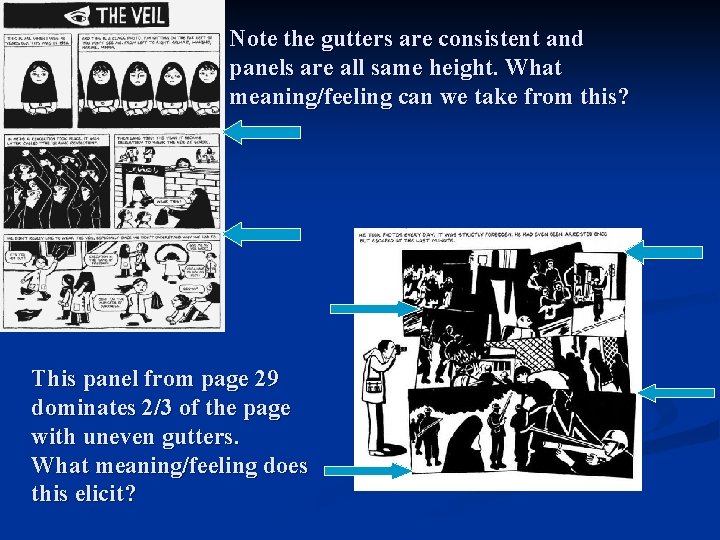
Note the gutters are consistent and panels are all same height. What meaning/feeling can we take from this? This panel from page 29 dominates 2/3 of the page with uneven gutters. What meaning/feeling does this elicit?

Graphic Novel Terms and Concepts II Midground: Allows centering of image by using natural resting place for vision. The artist deliberately decides to place the image where a viewer would be most likely to look first. Placing an image off-center or near the top or bottom can be used to create visual tension but using the midground permits the artist to create a more readily accepted image. Background: Provides additional, sub textual information for the reader. Graphic weight: A term that describes the way some images draw the eye more than others, creating a definite focus using color and shading in various ways including: Ø Ø Ø The use of light and dark shades; dark-toned images or high-contrast images draw the eye more than light or low-contrast images do A pattern or repeated series of marks Colors that are more brilliant or deeper than others on the page
Graphic Novel Terms and Concepts III Text Captions: These are boxes containing a variety of text elements, including scene-setting, description, etc. Speech Balloons: These enclose dialogue and come from a specific speaker’s mouth; they vary in size, shape, and layout and can alternate to depict a conversation. Types of speech balloons include: Ø Ø External dialogue, which is speech between characters Internal dialogue, which is a thought enclosed by a balloon that has a series of dots or bubbles going up to it Special-effects Lettering: This is a method of drawing attention to text; it often highlights onomatopoeia and reinforces the impact of words such as bang or wow.
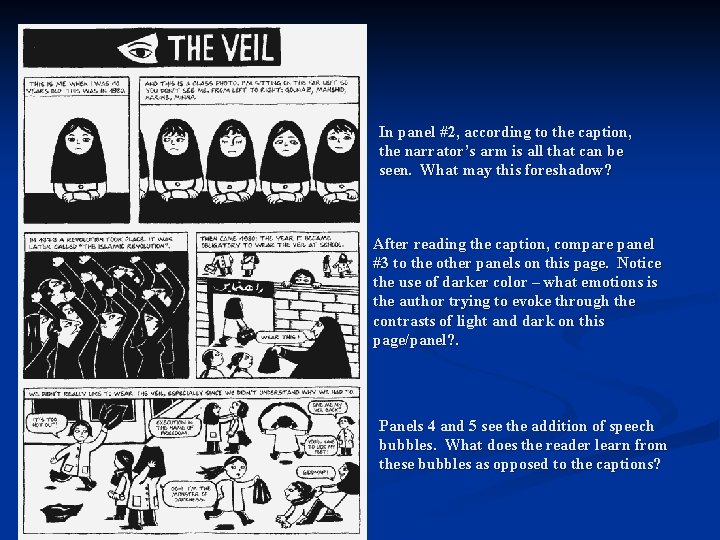
In panel #2, according to the caption, the narrator’s arm is all that can be seen. What may this foreshadow? After reading the caption, compare panel #3 to the other panels on this page. Notice the use of darker color – what emotions is the author trying to evoke through the contrasts of light and dark on this page/panel? . Panels 4 and 5 see the addition of speech bubbles. What does the reader learn from these bubbles as opposed to the captions?

Graphic Novel Terms and Concepts IV Figures Faces: Faces can be portrayed in different ways. Some depict an actual person, like a portrait; others are iconic, which means they are representative of an idea or a group of people. Other points to observe about faces include: Ø Ø They can be dramatic when placed against a detailed backdrop; a bright white face stands out They can be drawn without much expression or detail; this is called an “open blank” and it invites the audience to imagine what the character is feeling without telling them. Hands/Feet: The positioning of hands and feet can be used to express what is happening in the story. For example, hands that are raised with palms out suggest surprise. The wringing of hands suggests submission or discomfort. Hands over the mouth depict fear, shame, or shyness. Turned in feet may denote embarrassment, while feet with motion strokes can create the sense of panic, urgency, or speed.
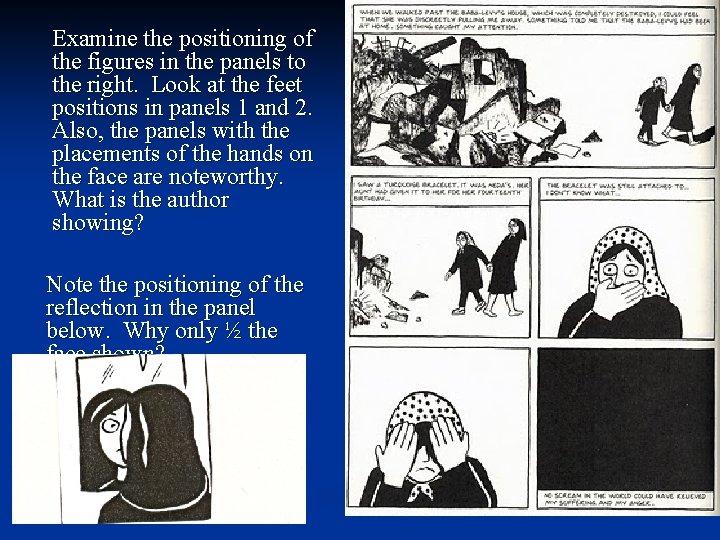
Examine the positioning of the figures in the panels to the right. Look at the feet positions in panels 1 and 2. Also, the panels with the placements of the hands on the face are noteworthy. What is the author showing? Note the positioning of the reflection in the panel below. Why only ½ the face shown?
- Slides: 14