
PERRY LAROQUE FOUNDER AND PRESIDENT LEE BURDETTE WILLIAMS
PERRY LAROQUE, FOUNDER AND PRESIDENT LEE BURDETTE WILLIAMS, DIRECTOR OF STUDENT LIFE AND COLLEGIATE PARTNERSHIPS MANSFIELD HALL, BURLINGTON VT Williams, Lee B. and La. Roque, Perry (2015). Mansfield Hall, Burlington, VT Helping Students on the Autism Spectrum Prepare for Employment
Today’s Agenda background Some of what we’ve learned Your questions, some strategies and tools More Q and A Williams, Lee B. and La. Roque, Perry (2015). Mansfield Hall, Burlington, VT Some

Presence on campus is increasing in 68 individuals (CDC) have a diagnosis of ASD More college students with ASD due to improved K 12 services and federally-mandated expectations (e. g. , ADA) Small colleges appeal to families who believe individualized attention is critical to success Williams, Lee B. and La. Roque, Perry (2015). Mansfield Hall, Burlington, VT 1
And at Champlain… types of academic programs often attract a higher percentage of students with ASD (technology, gaming, cybersecurity and other CS-related majors) Williams, Lee B. and La. Roque, Perry (2015). Mansfield Hall, Burlington, VT Certain
What do you know about students on the Autism Spectrum? Williams, Lee B. and La. Roque, Perry (2015). Mansfield Hall, Burlington, VT Asperger’s Syndrome (High Functioning Autism)
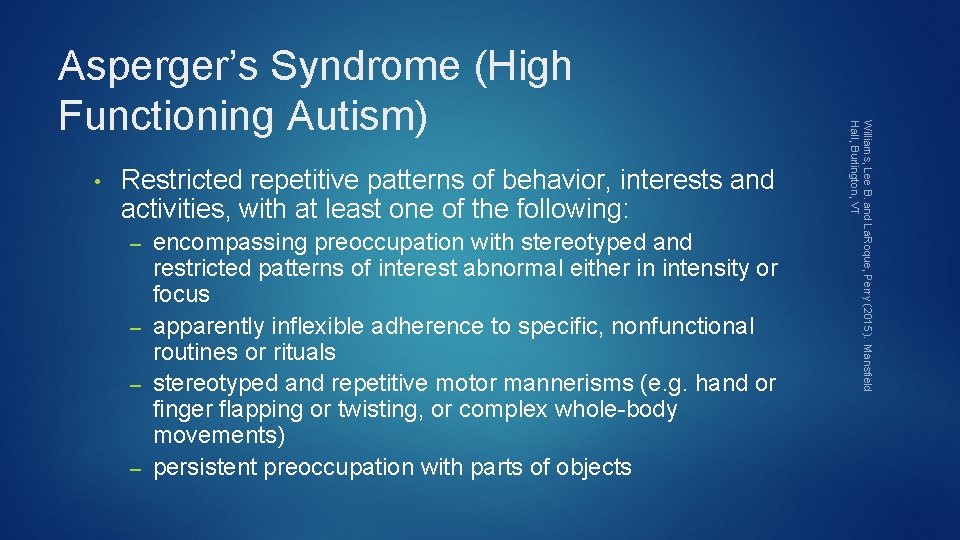
• Restricted repetitive patterns of behavior, interests and activities, with at least one of the following: encompassing preoccupation with stereotyped and restricted patterns of interest abnormal either in intensity or focus – apparently inflexible adherence to specific, nonfunctional routines or rituals – stereotyped and repetitive motor mannerisms (e. g. hand or finger flapping or twisting, or complex whole-body movements) – persistent preoccupation with parts of objects – Williams, Lee B. and La. Roque, Perry (2015). Mansfield Hall, Burlington, VT Asperger’s Syndrome (High Functioning Autism)
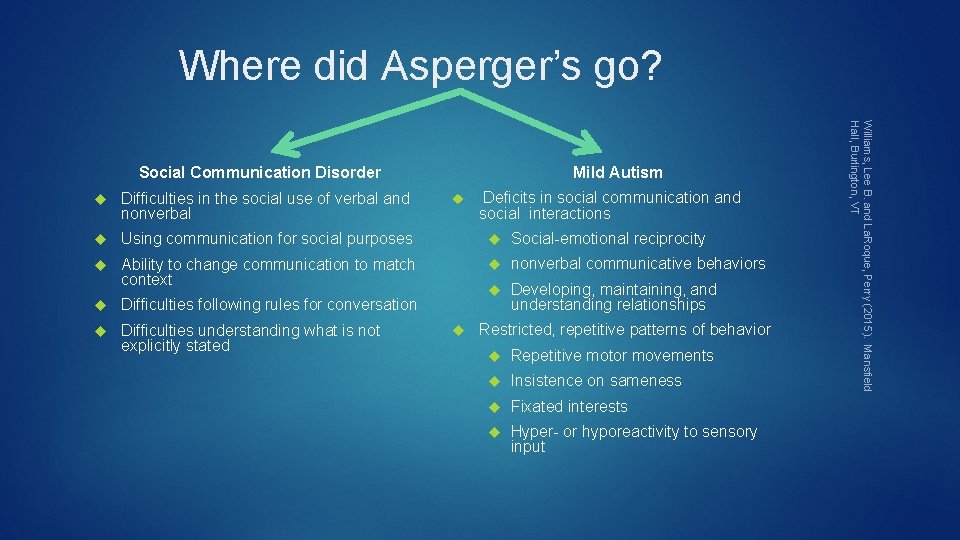
Where did Asperger’s go? Deficits in social communication and social interactions Difficulties in the social use of verbal and nonverbal Using communication for social purposes Social-emotional reciprocity Ability to change communication to match context nonverbal communicative behaviors Developing, maintaining, and understanding relationships Difficulties following rules for conversation Difficulties understanding what is not explicitly stated Restricted, repetitive patterns of behavior Repetitive motor movements Insistence on sameness Fixated interests Hyper- or hyporeactivity to sensory input Williams, Lee B. and La. Roque, Perry (2015). Mansfield Hall, Burlington, VT Mild Autism Social Communication Disorder
Williams, Lee B. and La. Roque, Perry (2015). Mansfield Hall, Burlington, VT
Champlain’s Challenge do you turn successful students into successful job applicants and ultimately, prepare them to be successful employees or business owners? Williams, Lee B. and La. Roque, Perry (2015). Mansfield Hall, Burlington, VT How
The Good News of the strategies you currently employ are “best practices” in working with this population. Often, what’s needed is more a “shift in perspective” than a change in skills. Williams, Lee B. and La. Roque, Perry (2015). Mansfield Hall, Burlington, VT Many
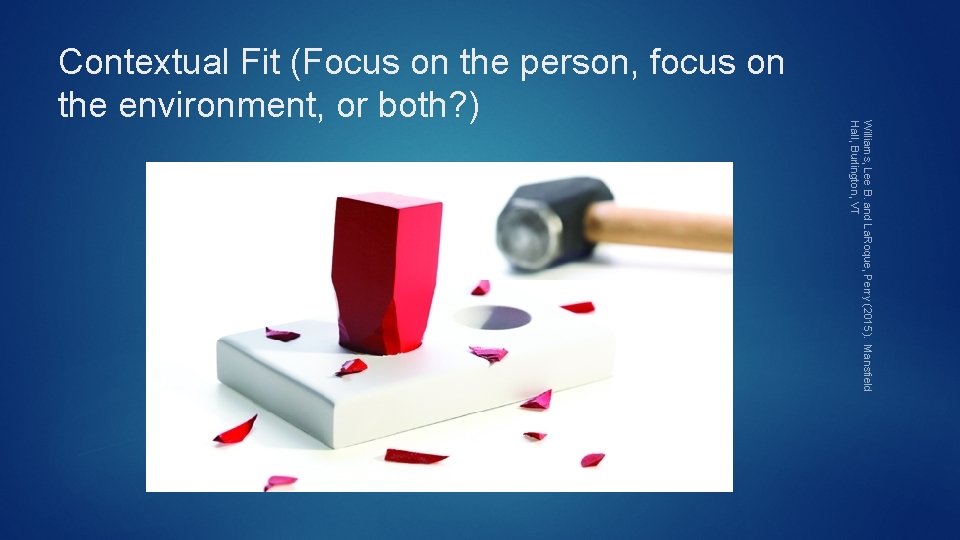
Williams, Lee B. and La. Roque, Perry (2015). Mansfield Hall, Burlington, VT Contextual Fit (Focus on the person, focus on the environment, or both? )
Resilience factors are predictive for about 20 -49% of a high risk population (Rutter, 1987, 2000; Werner, 2001) Resiliency traits predict positive outcomes in 50 -80% of a high risk population (Werner, 2001) Williams, Lee B. and La. Roque, Perry (2015). Mansfield Hall, Burlington, VT Risk
Resilience Williams, Lee B. and La. Roque, Perry (2015). Mansfield Hall, Burlington, VT Social Competence - empathy, compassion, communication Autonomy - Goal direction, hope, sense of meaning Sense of Purpose - humor, internal locus of control, adaptive distancing Problem Solving - planning, critical thinking, resourceful
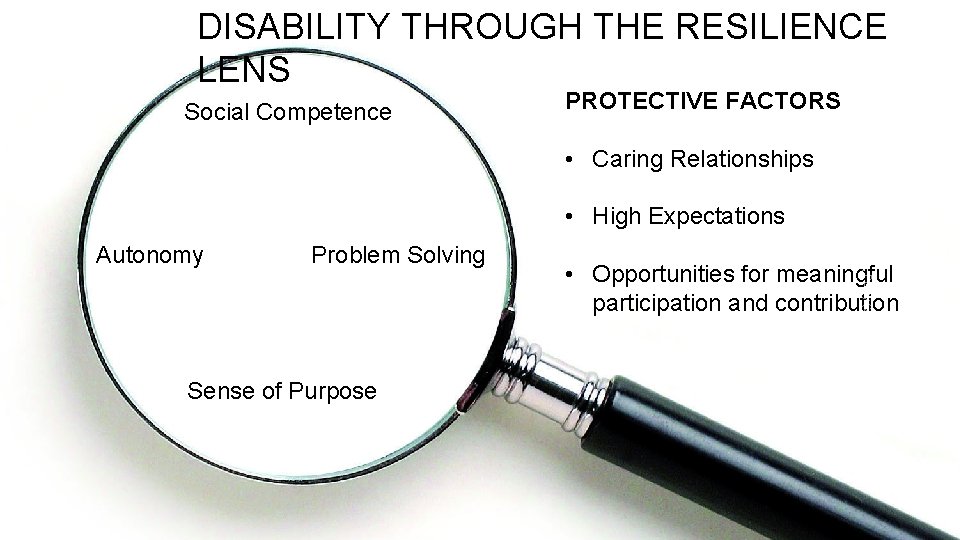
DISABILITY THROUGH THE RESILIENCE LENS PROTECTIVE FACTORS • Caring Relationships • High Expectations Autonomy Problem Solving Sense of Purpose Williams, Lee B. and La. Roque, Perry (2015). Mansfield Hall, Burlington, VT Social Competence • Opportunities for meaningful participation and contribution
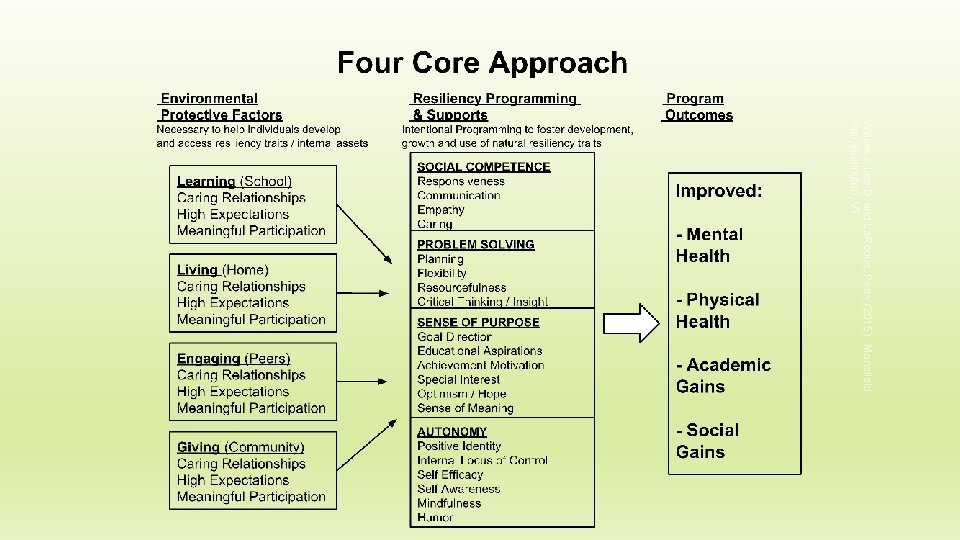
Williams, Lee B. and La. Roque, Perry (2015). Mansfield Hall, Burlington, VT
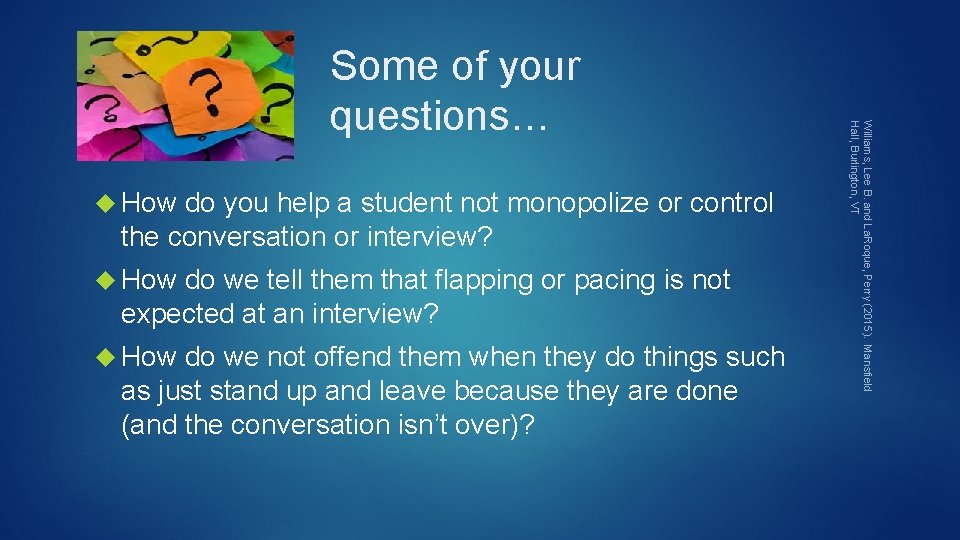
How do you help a student not monopolize or control the conversation or interview? How do we tell them that flapping or pacing is not expected at an interview? How do we not offend them when they do things such as just stand up and leave because they are done (and the conversation isn’t over)? Williams, Lee B. and La. Roque, Perry (2015). Mansfield Hall, Burlington, VT Some of your questions…
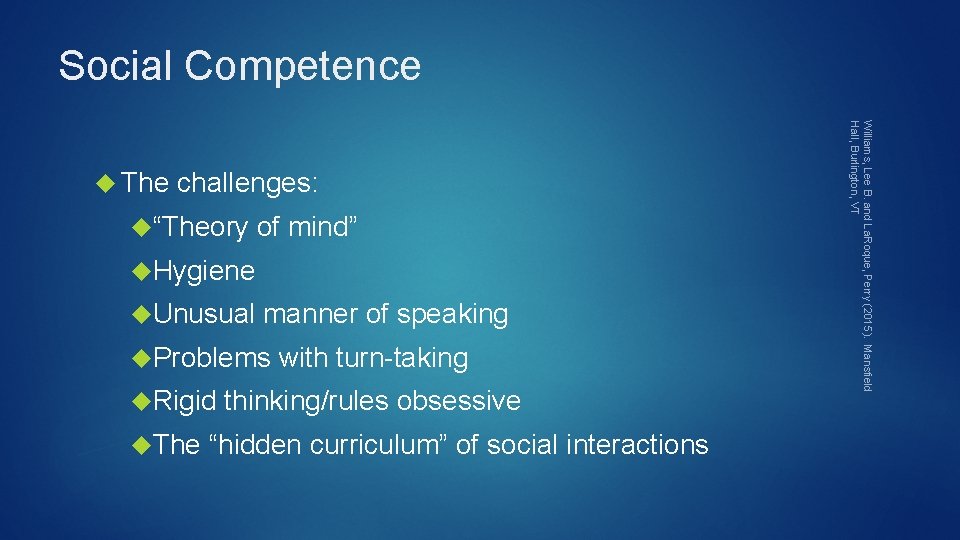
Social Competence challenges: “Theory of mind” Hygiene Unusual manner of speaking Problems Rigid The with turn-taking thinking/rules obsessive “hidden curriculum” of social interactions Williams, Lee B. and La. Roque, Perry (2015). Mansfield Hall, Burlington, VT The
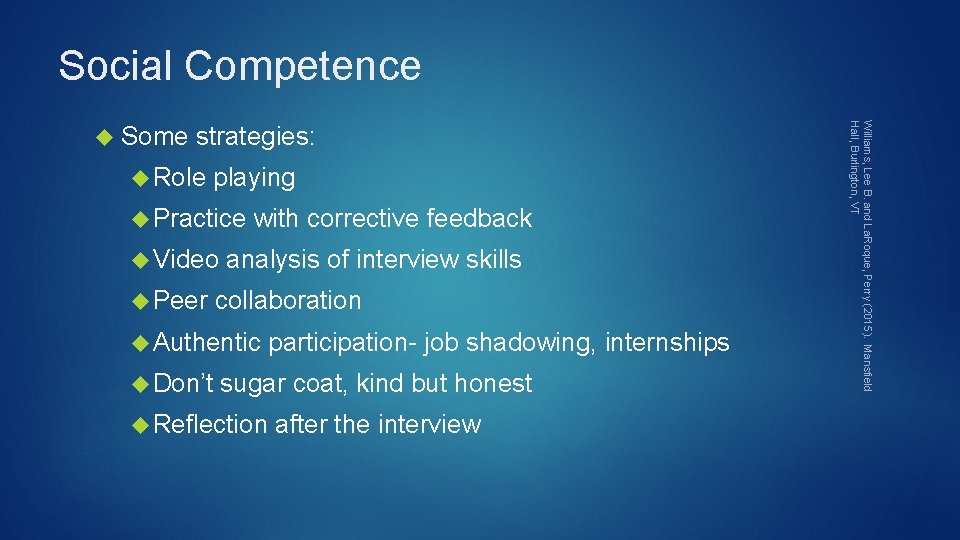
Social Competence strategies: Role playing Practice Video Peer with corrective feedback analysis of interview skills collaboration Authentic Don’t participation- job shadowing, internships sugar coat, kind but honest Reflection after the interview Williams, Lee B. and La. Roque, Perry (2015). Mansfield Hall, Burlington, VT Some
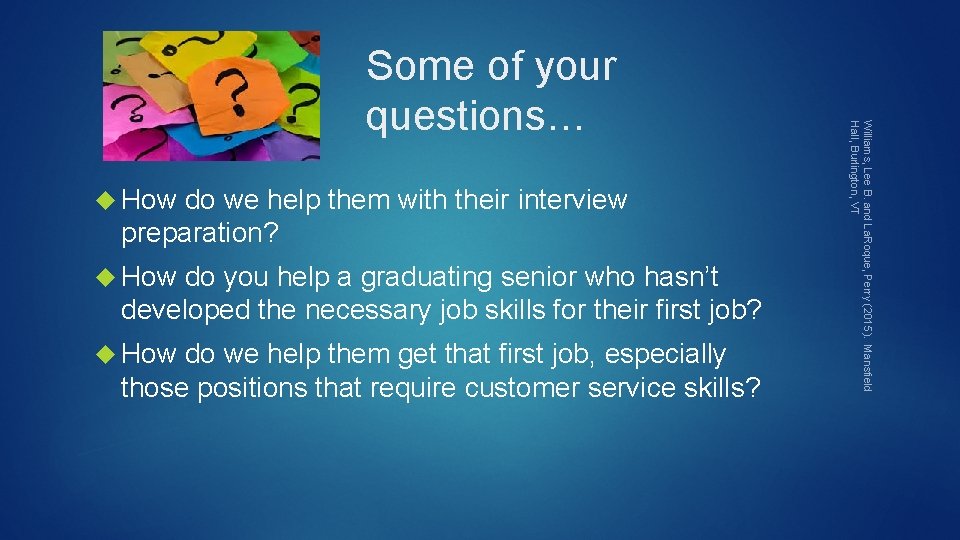
How do we help them with their interview preparation? How do you help a graduating senior who hasn’t developed the necessary job skills for their first job? How do we help them get that first job, especially those positions that require customer service skills? Williams, Lee B. and La. Roque, Perry (2015). Mansfield Hall, Burlington, VT Some of your questions…
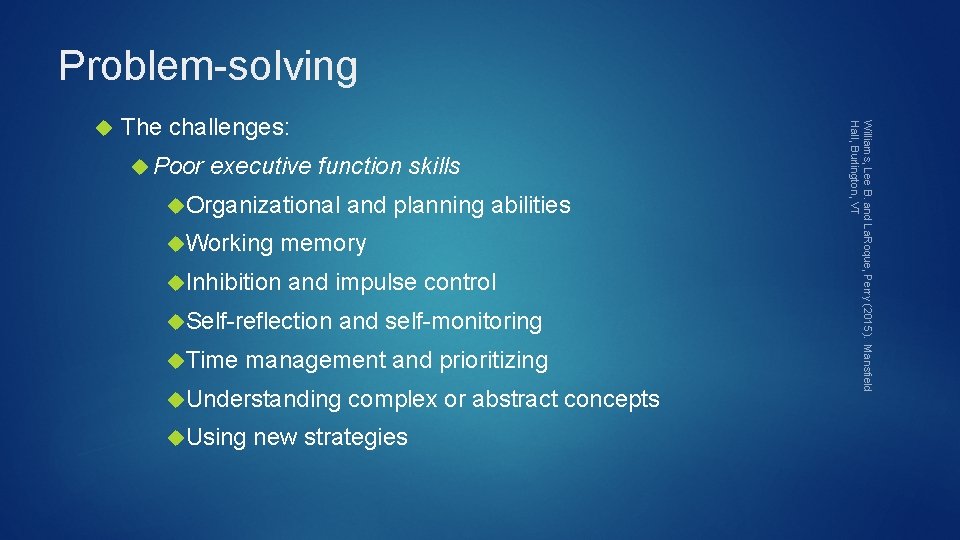
Problem-solving The challenges: Poor executive function skills Organizational Working memory Inhibition and impulse control Self-reflection Time and planning abilities and self-monitoring management and prioritizing Understanding Using complex or abstract concepts new strategies Williams, Lee B. and La. Roque, Perry (2015). Mansfield Hall, Burlington, VT
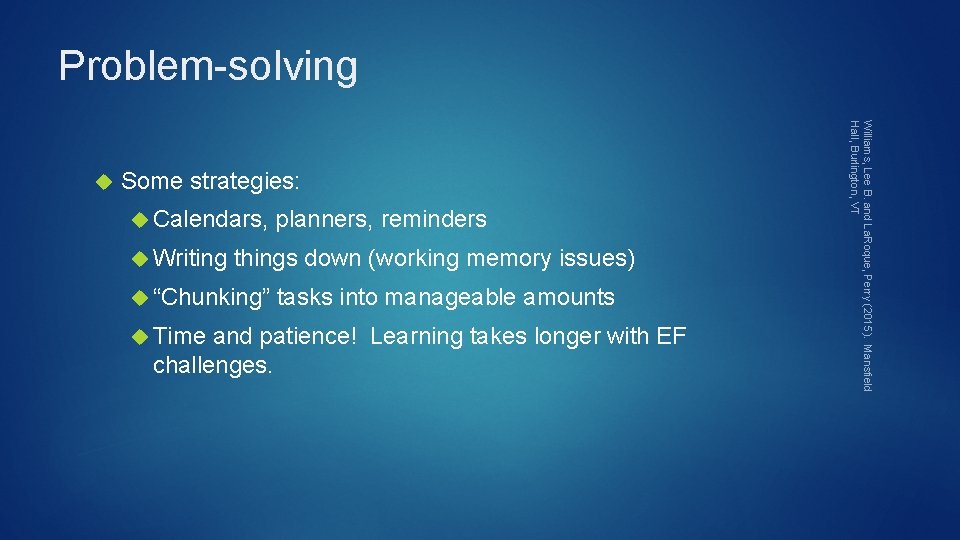
Problem-solving Some strategies: Calendars, Writing things down (working memory issues) “Chunking” Time planners, reminders tasks into manageable amounts and patience! Learning takes longer with EF challenges. Williams, Lee B. and La. Roque, Perry (2015). Mansfield Hall, Burlington, VT
Are there recommended videos that demonstrate success? What if their employment goals are unrealistic? Williams, Lee B. and La. Roque, Perry (2015). Mansfield Hall, Burlington, VT Some of your questions…
Sense of Purpose students achieve this through: Goal-setting Collaborative Skills problem-solving inventories Allowing them to fail Williams, Lee B. and La. Roque, Perry (2015). Mansfield Hall, Burlington, VT Help

Williams, Lee B. and La. Roque, Perry (2015). Mansfield Hall, Burlington, VT The “Social Story”
At what point is it appropriate to refer a student to support services if we sense they are on the Spectrum, but haven’t disclosed that? How (if at all) would a student go about broaching the subject of their disability/challenges with an employer? Williams, Lee B. and La. Roque, Perry (2015). Mansfield Hall, Burlington, VT Some of your questions…
Personal Autonomy Challenges: Stigma, secrecy, lack of knowledge about their disability Strategies: Encourage, role-play, help student with language for that conversation. Build a strengths/weakness chart with the student. Build confidence through practice. Refer to counseling and disabilities colleagues when you are not sure what to do next. Williams, Lee B. and La. Roque, Perry (2015). Mansfield Hall, Burlington, VT
There are “scripts” for these conversations (see resource packet) Encourage interview. employers to call you to follow up after an Williams, Lee B. and La. Roque, Perry (2015). Mansfield Hall, Burlington, VT What can you or your student say to employers?
YES! But every student (ASD or not) is different. Each requires the individualized assessment you do for all students. Employer/environment is more critical than specific tasks/skills. Williams, Lee B. and La. Roque, Perry (2015). Mansfield Hall, Burlington, VT Are there specific types of jobs/careers that would be a good fit for someone with ASD?
And some general reminders: for this population take longer than for many students. Ambiguity and “gray areas” are more challenging than for many students. This is not a disorder of motivation. Many of these behaviors are hard-wired responses to a different way of seeing the world. Williams, Lee B. and La. Roque, Perry (2015). Mansfield Hall, Burlington, VT Transitions
Other Resources Vermont Association of Business Industry and Rehabilitation http: //www. vabir. org http: //weraspies. weebly. com/uploads/6/8/5/9/6859492/intervie w_social_story. pdf Do 2 learn. com (subscription website with rich resources for job -hunting and job skills for people with disabilities) Local coaches and therapists (list in Resource Packet) Williams, Lee B. and La. Roque, Perry (2015). Mansfield Hall, Burlington, VT

Williams, Lee B. and La. Roque, Perry (2015). Mansfield Hall, Burlington, VT Other Questions?
Leeburdettewilliams. net Williams, Lee B. and La. Roque, Perry (2015). Mansfield Hall, Burlington, VT A copy of this presentation can be found at:
- Slides: 32