
PERMEABALITY REDUCING ADMIXTURES WHAT IS THE PERMEABILITY OF

PERMEABALITY REDUCING ADMIXTURES
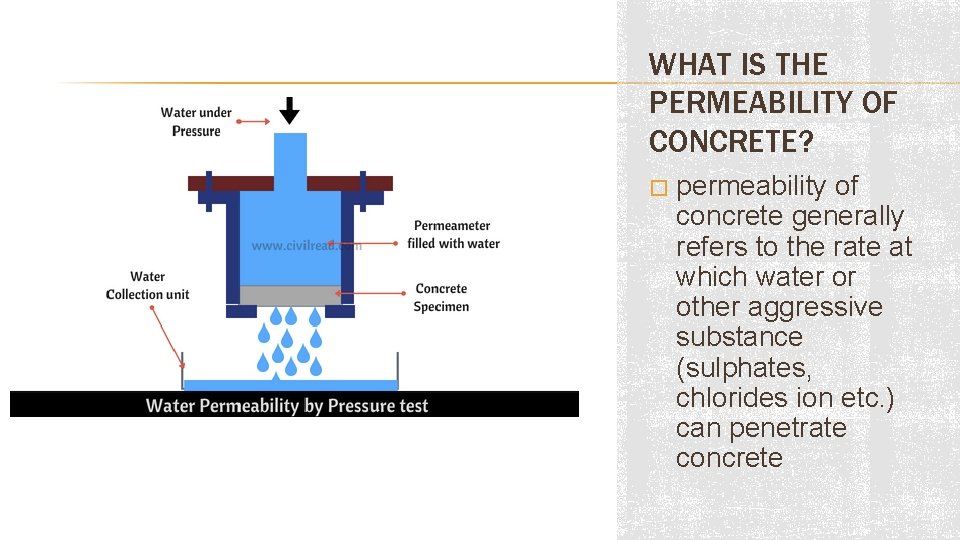
WHAT IS THE PERMEABILITY OF CONCRETE? � permeability of concrete generally refers to the rate at which water or other aggressive substance (sulphates, chlorides ion etc. ) can penetrate concrete

� Over the past two decades, permeability-reducing admixtures have been widely used to improve the water tightness and durability of concrete � permeability reducing admixtures into two main groups: admixtures for concrete exposed to � hydrostatic (PRAH—Permeability-Reducing Admixture for Hydrostatic conditions) � nonhydrostatic (PRAN—Permeability- Reducing Admixture for Nonhydrostatic conditions) service conditions
nonhydrostatic service condition, Resistance to water under pressure is very limited and is not suitable for concretes exposed to water under pressure In contrast, hydrostatic service condition also known waterproofing admixtures It has stability to resist water under pressure (used for tanks, foundations, enclosure structures, etc. )
In general, the performance of a permeation reducing additive depends on whether it is PRAN or PRAH PRANES are water repellent chemicals (soaps and long-chain fatty acid derivatives, vegetable oils and petroleum), consist of very fine particulate solids (powder, bentonite, silicon powders, clay, hydrocarbon resins and coal tar) or chemical active fillers (lime, silicates and colloidal silica) They are most commonly used for moisture insulation protection under nonhydrostatic conditions.
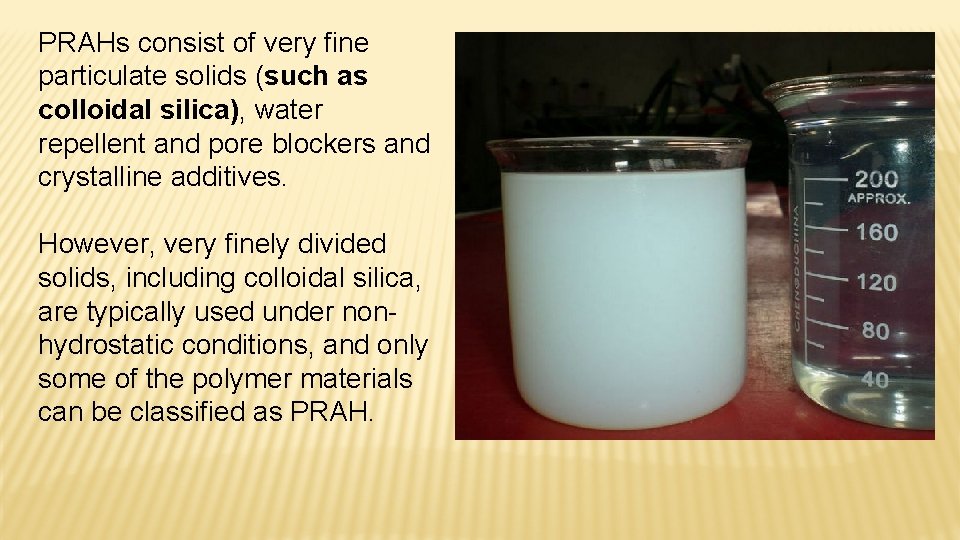
PRAHs consist of very fine particulate solids (such as colloidal silica), water repellent and pore blockers and crystalline additives. However, very finely divided solids, including colloidal silica, are typically used under nonhydrostatic conditions, and only some of the polymer materials can be classified as PRAH.
� Water repellent and pore blocking agents are used only under non-hydrostatic conditions � Crystalline water-absorbing polymers (rubber, water-soluble or liquid polymer) are used only under hydrostatic conditions. � Crystalline additives are resistant to water penetration under hydrostatic pressure � To make the cracks waterproof, to be effective for a long time, to increase the durability of the concrete structure, etc. are advantageous over water repellents based on other fillers or other polymer coupling mechanisms.
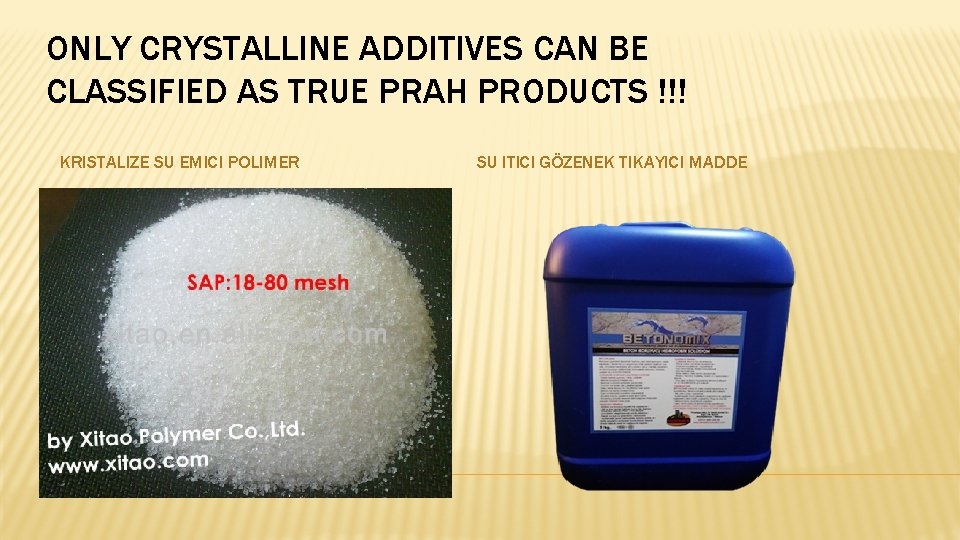
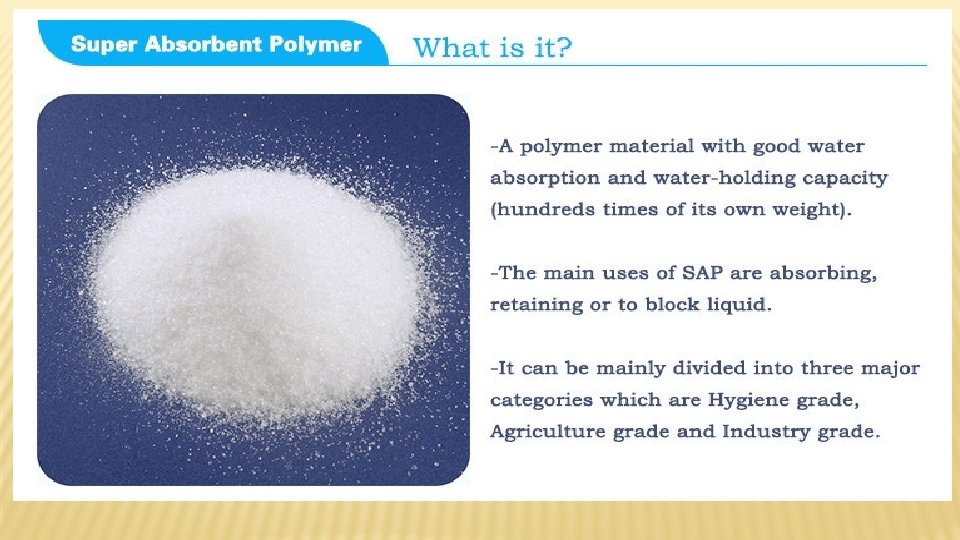
ONLY CRYSTALLINE ADDITIVES CAN BE CLASSIFIED AS TRUE PRAH PRODUCTS !!! KRISTALIZE SU EMICI POLIMER SU ITICI GÖZENEK TIKAYICI MADDE
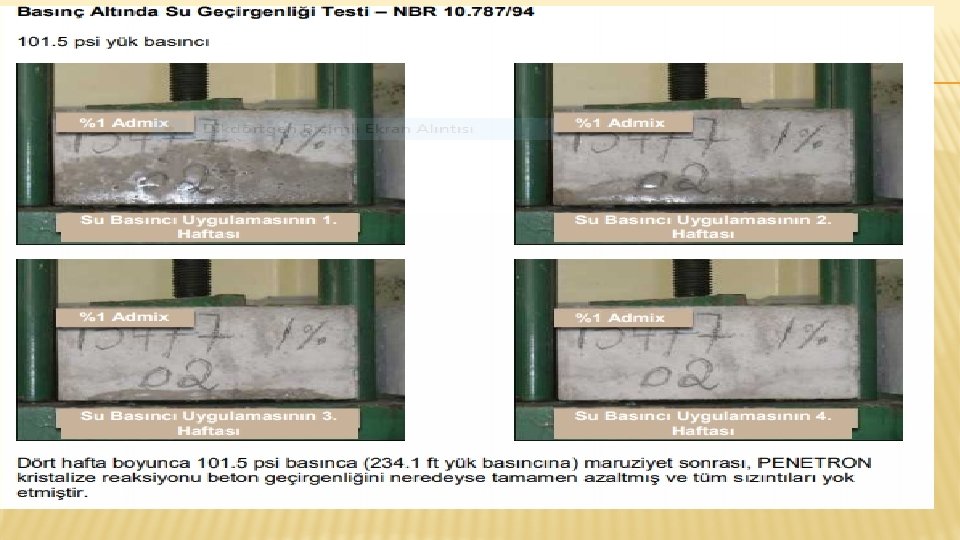
WHAT IS THE PRAH'S ADVANTAGES? � Registered active ingredients in a crystallized PRAH increase the density of calcium silicate hydrate (CHS) by introducing water and cement particles in the concrete and / or form residues that clog pores against water penetration in existing microcracks and capillaries. � As capillary cracks develop during the lifetime of the concrete, crystalline additives continue to act together with moisture and fill the gaps.
REFERENCES � https: //vimeo. com/151798404 � http: //www. penekim. com. tr/sayfa/PRANvs. PRAH_The. Penetro n. Difference_tr. pdf � Ina Report on Chemical Concrete Additives-(ACI 212. 3 R-10 / January 2011), published by American Concrete Institute, � https: //www. researchgate. net/publication/44796082_Perform ance_of_Permeability. Reducing_Admixtures_in_Marine_Concrete_Structures � Adam M. Neville, J. J. Brooks-Concrete technology

Yücel ŞAHİN 38054081492 THANK YOU FOR LISTENING
- Slides: 14