
Permanent Magnet Electromagnet Principles ElectricityElectronics Yvonne Brannum Outline
Permanent Magnet & Electromagnet Principles Electricity/Electronics Yvonne Brannum
Outline Permanent Magnets – Poles – Magnetic Fields – Characteristics of Fields – Uses l Electromagnets – How they are created – Magnetic fields – Uses l
Permanent Magnets Holds a magnetic force l Can not be turned on and off l Uses – Frig Magnet – Speakers – Electric Motors – Many more…. l
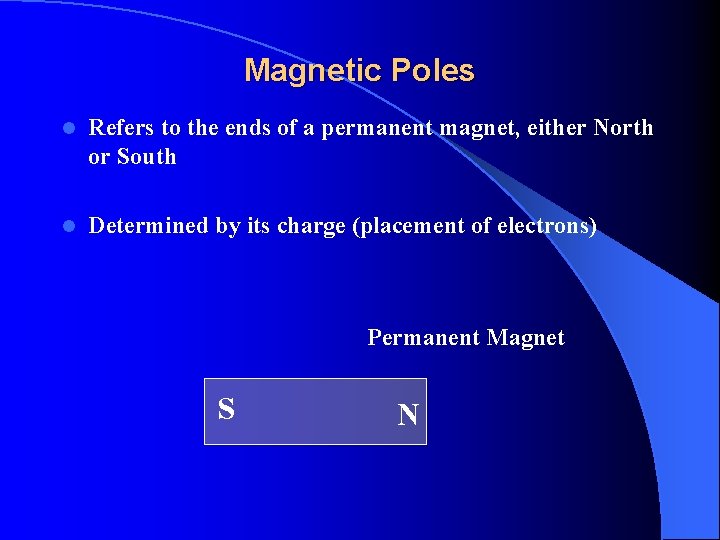
Magnetic Poles l Refers to the ends of a permanent magnet, either North or South l Determined by its charge (placement of electrons) Permanent Magnet S N
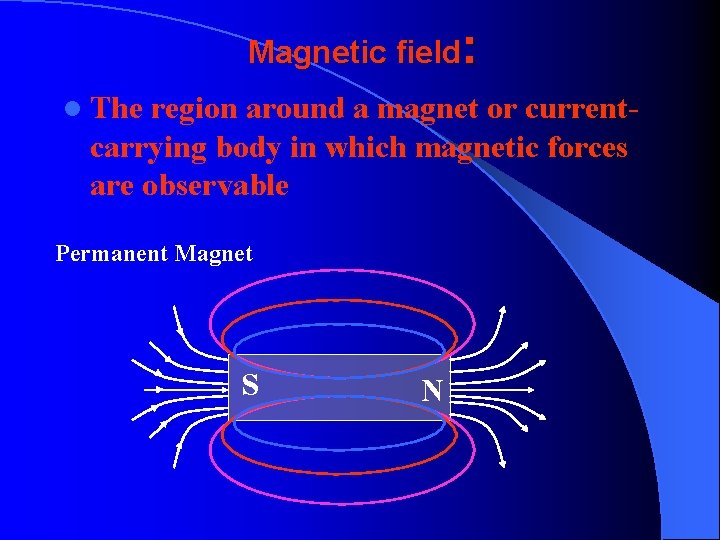
Magnetic field: l The region around a magnet or currentcarrying body in which magnetic forces are observable Permanent Magnet S N

Repelling Forces l S Like Poles want to repel each other N N Magnetic fields collide and push against each other S
Electromagnets Use electricity to create a magnetic field l They can be controlled (turned on and off) l Their force or strength of field can be controlled l
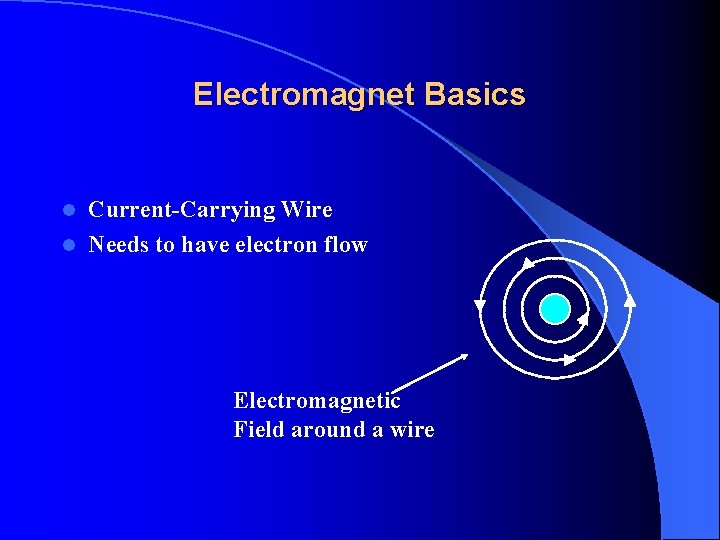
Electromagnet Basics Current-Carrying Wire l Needs to have electron flow l Electromagnetic Field around a wire
Determining the Direction of the Magnetic field l Left-Hand Rule: – Grasp a wire with your left hand with your thumb pointing in the direction of current flow – Your fingers around the wire point in the direction of the field
Creating a Larger Magnet Coils – Each loop of coil has a small amount of magnetic pull – When the loops are added together the coil begins to act as a magnet with poles
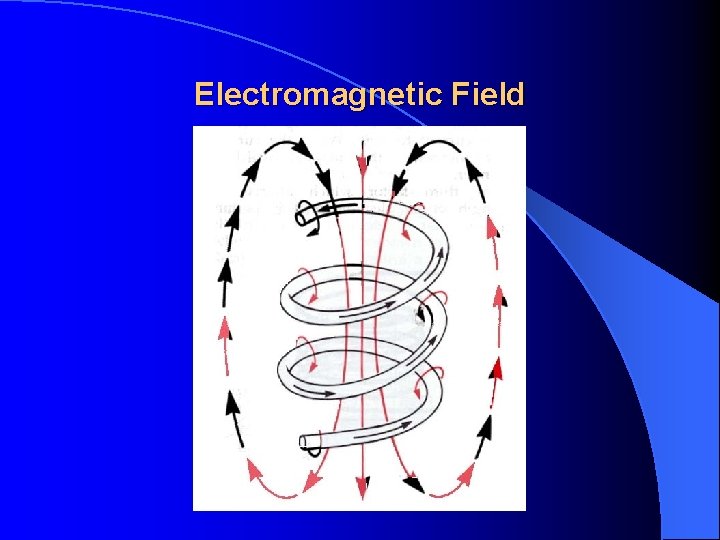
Electromagnetic Field
Strength of Electromagnets Depends on three main things: l Number of turns in the coil – The more turns in a coil, the stronger the magnet l Amount of current in the coil – If the voltage is increased, so will the current, which will increase the strength of the magnetic field
Strength of Electromagnets(cont. ) l Permeability of the core material – Permeability: The ability of a material to be magnetized, even temporarily, and to transmit magnetic force – Air would make a weak magnet – Iron would make a strong magnet
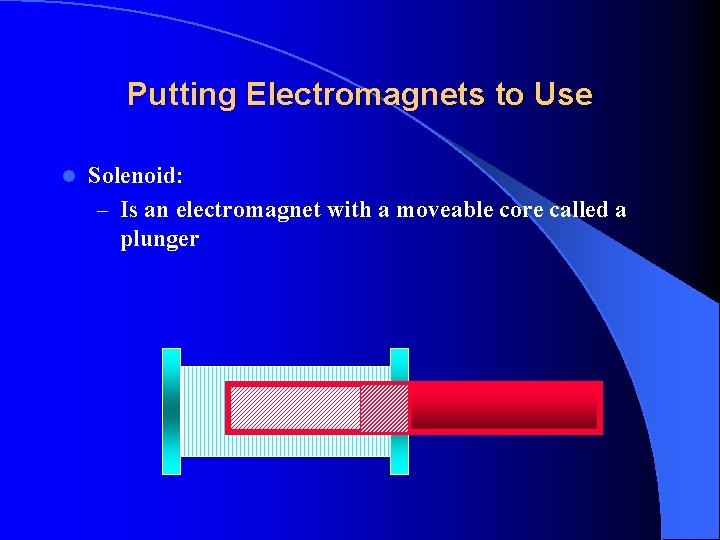
Putting Electromagnets to Use l Solenoid: – Is an electromagnet with a moveable core called a plunger
Uses for a Solenoid l l l Electrical Relays Buzzers Switches Locks Bells
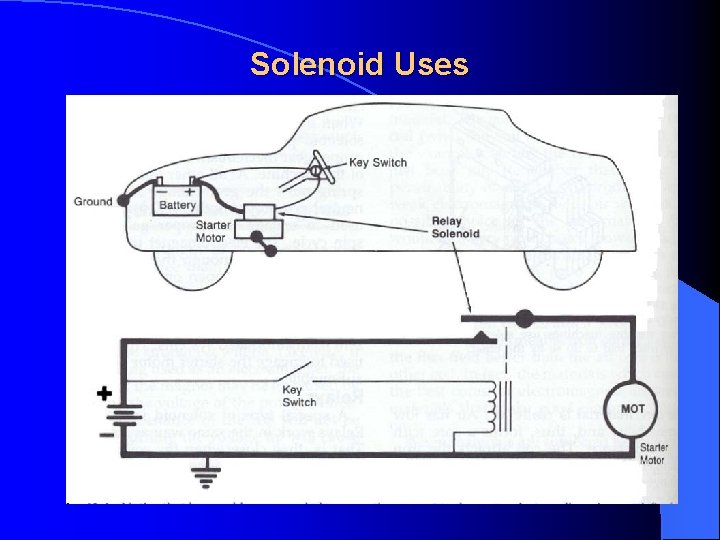
Solenoid Uses
Other uses for Electromagnets Transformers l Industry l Sensors l Motors l
Summary 1. Magnets that hold their magnetic forces and can not be controlled are called_____. • Permanent Magnets 2. Refers to the region around a magnet or current carrying device where magnet forces are observed. – Magnetic Field
Summary (cont. ) 3. How is the direction of a magnetic field determine around a current carrying wire? Left-Hand Rule 4. What three things determine an electromagnet’s strength? – Number of turns – Current through the coil – Permeability of core material
- Slides: 19