
Permafrost degradation and changes in stream morphology a
- Slides: 2
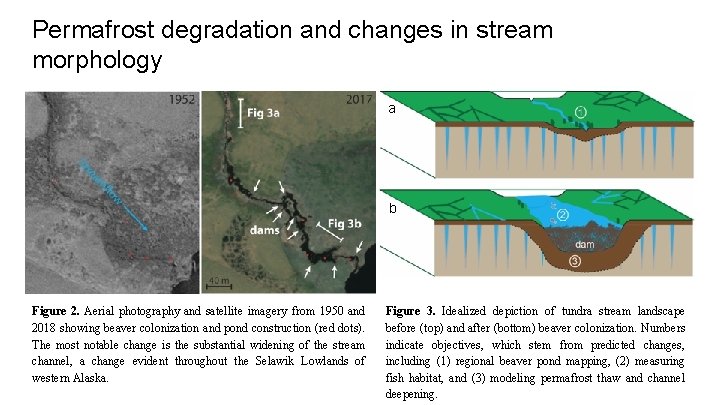
Permafrost degradation and changes in stream morphology a b Figure 2. Aerial photography and satellite imagery from 1950 and 2018 showing beaver colonization and pond construction (red dots). The most notable change is the substantial widening of the stream channel, a change evident throughout the Selawik Lowlands of western Alaska. Figure 3. Idealized depiction of tundra stream landscape before (top) and after (bottom) beaver colonization. Numbers indicate objectives, which stem from predicted changes, including (1) regional beaver pond mapping, (2) measuring fish habitat, and (3) modeling permafrost thaw and channel deepening.
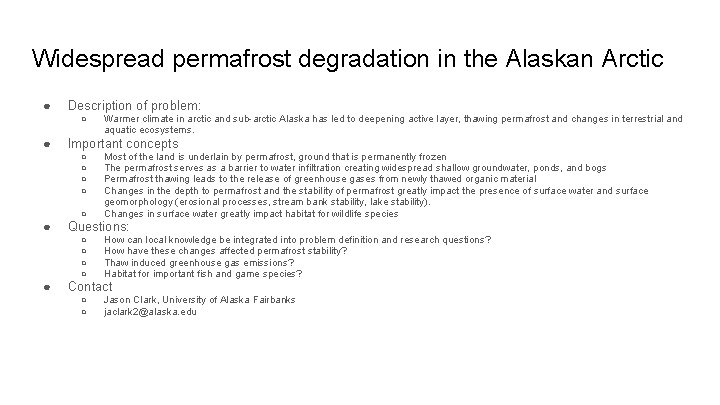
Widespread permafrost degradation in the Alaskan Arctic ● ● Description of problem: ○ Warmer climate in arctic and sub-arctic Alaska has led to deepening active layer, thawing permafrost and changes in terrestrial and aquatic ecosystems. Important concepts ○ ○ ○ Most of the land is underlain by permafrost, ground that is permanently frozen The permafrost serves as a barrier to water infiltration creating widespread shallow groundwater, ponds, and bogs Permafrost thawing leads to the release of greenhouse gases from newly thawed organic material Changes in the depth to permafrost and the stability of permafrost greatly impact the presence of surface water and surface geomorphology (erosional processes, stream bank stability, lake stability). Changes in surface water greatly impact habitat for wildlife species Questions: ○ ○ How can local knowledge be integrated into problem definition and research questions? How have these changes affected permafrost stability? Thaw induced greenhouse gas emissions? Habitat for important fish and game species? Contact ○ ○ Jason Clark, University of Alaska Fairbanks jaclark 2@alaska. edu