
Peritoneal adhesions are fibrous bands of tissues formed

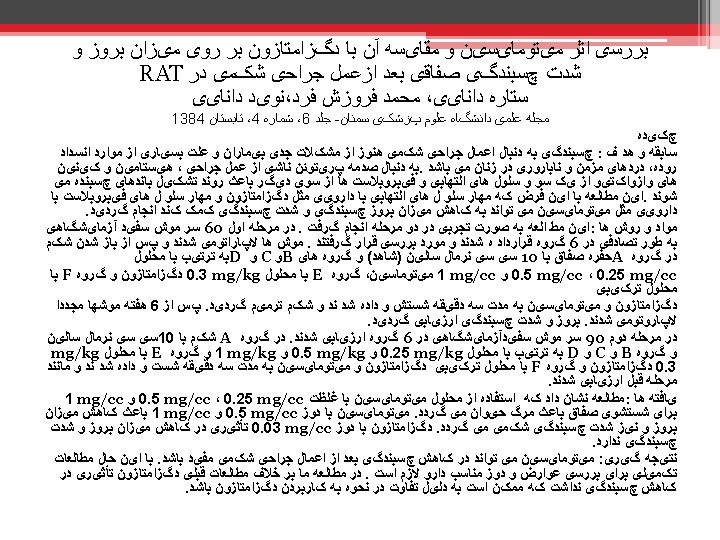
Peritoneal adhesions are fibrous bands of tissues formed between organs that are normally separated and/or between organs and the internal body wall. Most intraabdominal adhesions are a result of peritoneal injury, either by a prior surgical procedure or due to intra-abdominal infection. Postmortem examinations demonstrate adhesions in 67% of patients with prior surgical procedures and in 28% with a history of intra-abdominal infection.

Intra-abdominal adhesions are the most common cause (65%– 75%) of small bowel obstruction, especially in the ileum. Operations in the lower abdomen have a higher chance of producing small bowel obstruction. Following rectal surgery, left colectomy, or total colectomy, there is an 11% chance of developing small bowel obstruction within 1 year, and this rate increases to 30% by 10 years.
Adhesions also are a leading cause of secondary infertility in women and can cause substantial abdominal and pelvic pain. Adhesions account for 2% of all surgical admissions and 3% of all laparotomies in general surgery. Adhesions form when the peritoneal surface is damaged due to surgery, thermal or ischemic injury, inflammation, or foreignbody reaction.
There are two major strategies for adhesion prevention or reduction. Surgical trauma is minimized within the peritoneum by careful tissue handling, avoiding desiccation and ischemia, and spare use of cautery, laser, and retractors. Fewer adhesions form with laparoscopic surgical techniques due to reduced tissue trauma. The second major advance in adhesion prevention has been the introduction of barrier membranes and gels, which separate and create barriers between damaged mesothelial surfaces, allowing for adhesion-free healing.
Currently, only three products are Food and Drug Administration (FDA) approved for reducing adhesion formation: Interceed (oxidized regenerated cellulose, indicated only in pelvic surgery), Seprafilm (a film composed of hyaluronic acid and carboxymethylcellulose) that is usually applied below the incision, and Adept (4% icodextrin, a corn starch derivative in electrolyte solution, also for use mainly in pelvic surgery). However, use of these substances directly over bowel anastomoses is contraindicated due to an elevated risk of leak. There have been innumerable studies investigating different molecules in hopes of preventing adhesion formation, but most of the success is limited to animal models, and clinically significant results in humans have yet to be achieved.
- Slides: 12