
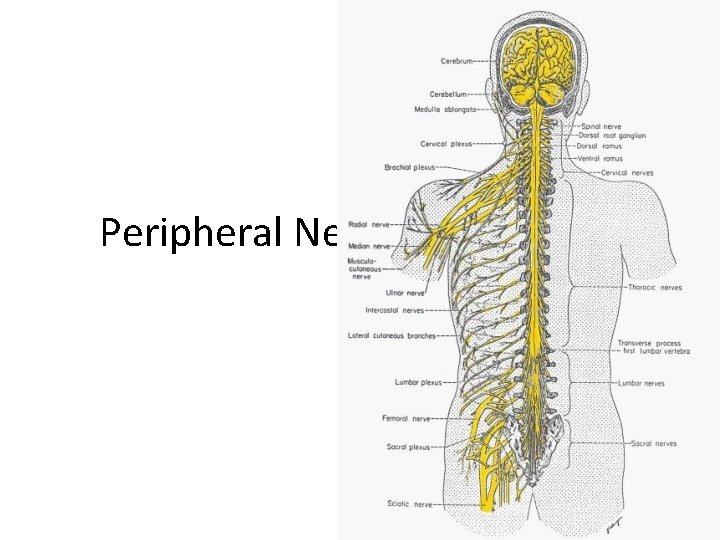
Peripheral Nervous System Peripheral Nervous System PNS Cranial
- Slides: 10
Peripheral Nervous System
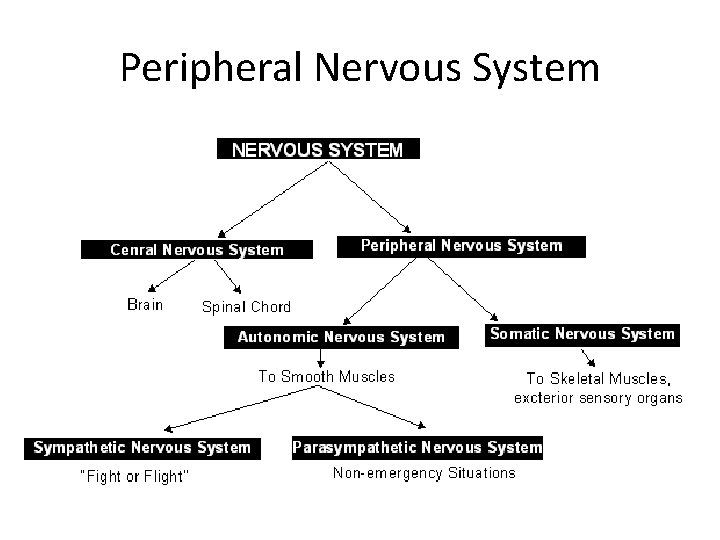
Peripheral Nervous System
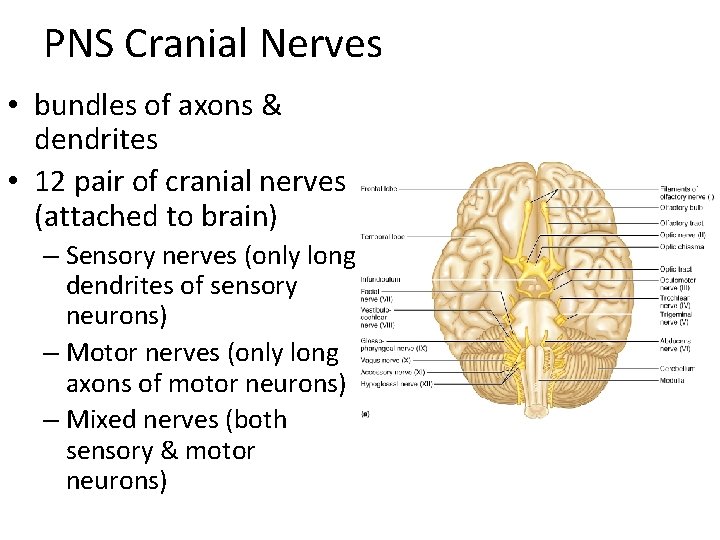
PNS Cranial Nerves • bundles of axons & dendrites • 12 pair of cranial nerves (attached to brain) – Sensory nerves (only long dendrites of sensory neurons) – Motor nerves (only long axons of motor neurons) – Mixed nerves (both sensory & motor neurons)
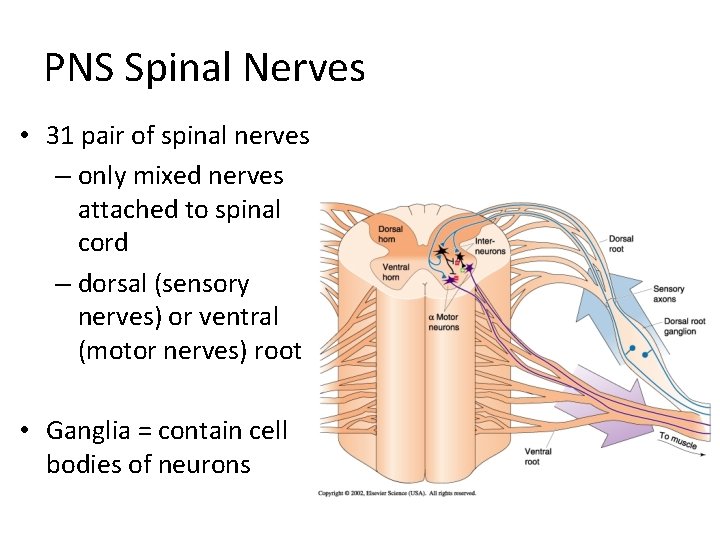
PNS Spinal Nerves • 31 pair of spinal nerves – only mixed nerves attached to spinal cord – dorsal (sensory nerves) or ventral (motor nerves) root • Ganglia = contain cell bodies of neurons
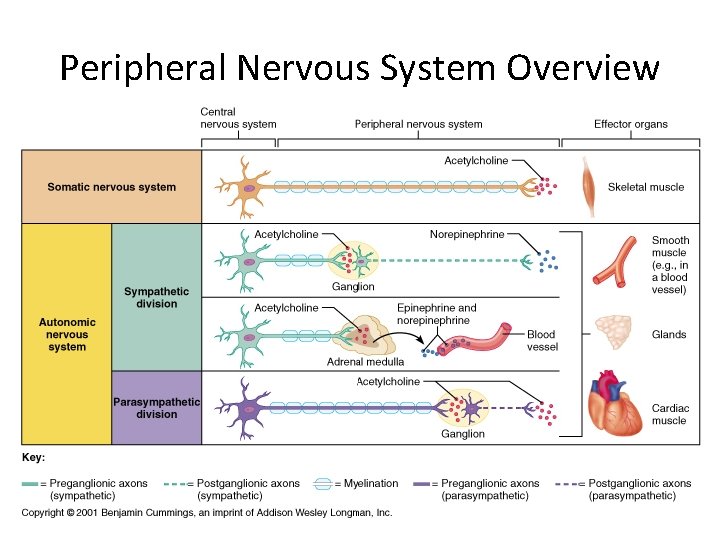
PNS – Somatic System • voluntary • nerves for musculoskeletal system and the exterior sense organs (including skin). • Exterior sense organs are RECEPTORS (receive environmental stimuli and begin nerve impulses). • Muscle fibers are EFFECTORS that react to the stimulus.
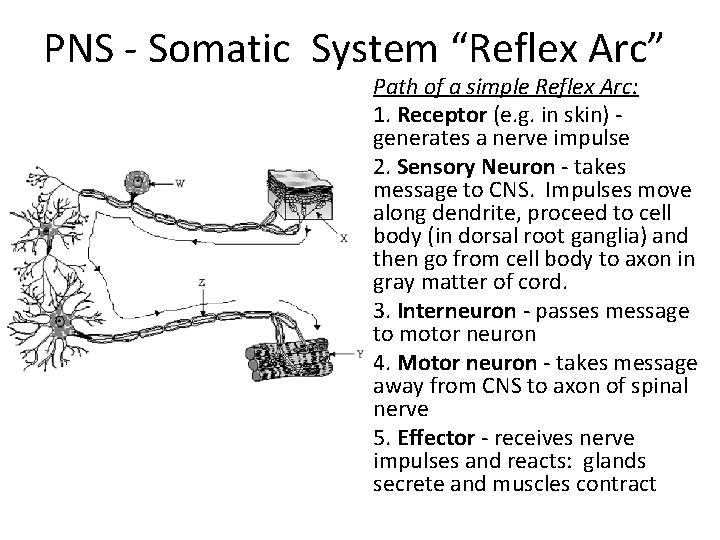
PNS - Somatic System “Reflex Arc” Path of a simple Reflex Arc: 1. Receptor (e. g. in skin) generates a nerve impulse 2. Sensory Neuron - takes message to CNS. Impulses move along dendrite, proceed to cell body (in dorsal root ganglia) and then go from cell body to axon in gray matter of cord. 3. Interneuron - passes message to motor neuron 4. Motor neuron - takes message away from CNS to axon of spinal nerve 5. Effector - receives nerve impulses and reacts: glands secrete and muscles contract
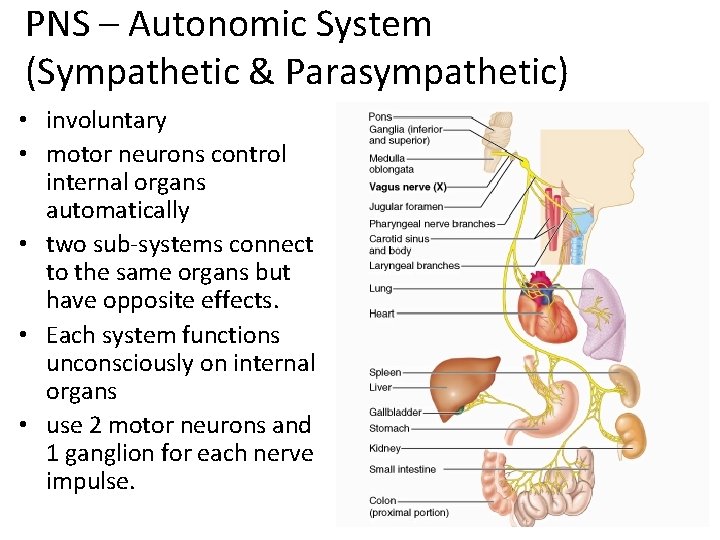
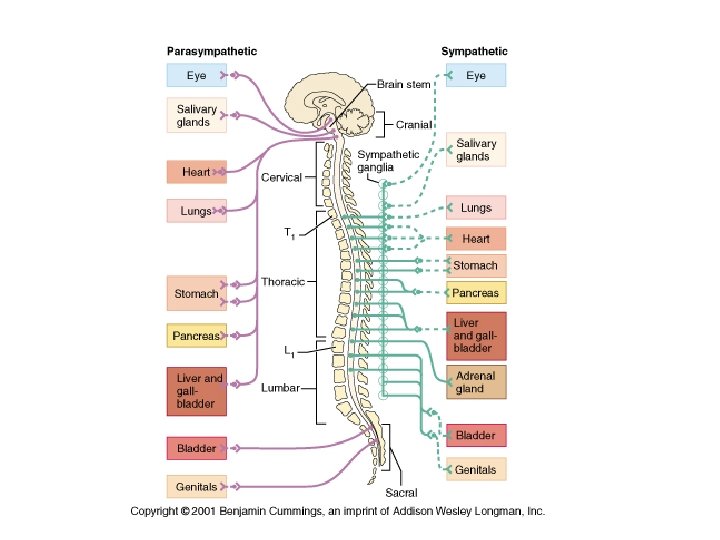
PNS – Autonomic System (Sympathetic & Parasympathetic) • involuntary • motor neurons control internal organs automatically • two sub-systems connect to the same organs but have opposite effects. • Each system functions unconsciously on internal organs • use 2 motor neurons and 1 ganglion for each nerve impulse.
PNS – Autonomic System Sympathetic (Emergencies!) • "FIGHT OR FLIGHT" reaction. • energy directed away from digestion • pupils dilate • heart rate, sweating, breathing, & salivation increase • neurotransmitter: NORADRENALIN • Fibres: middle part (thoraciclumbar) of the spinal cord. • Preganglionic fiber is short • Postganglionic fiber (which contacts the organ) is long. Parasympathetic (Relaxed ) • internal responses associated with a RELAXED state. • causes the pupils to contract • energy diverted for digestion of food • heart rate slows • neurotransmitter: ACETYLCHOLINE • Fibres: cranial & sacral nerves • Preganglionic fiber is long • Postganglionic fiber is short (b/c ganglia are close to organs)
Peripheral Nervous System Overview