
Peripheral Nerve Injury Basar Atalay M D YEDITEPE
Peripheral Nerve Injury Basar Atalay M. D. YEDITEPE UNIVERSITY FACULTY OF MEDICINE DEPARTMENT OF NEUROSURGERY
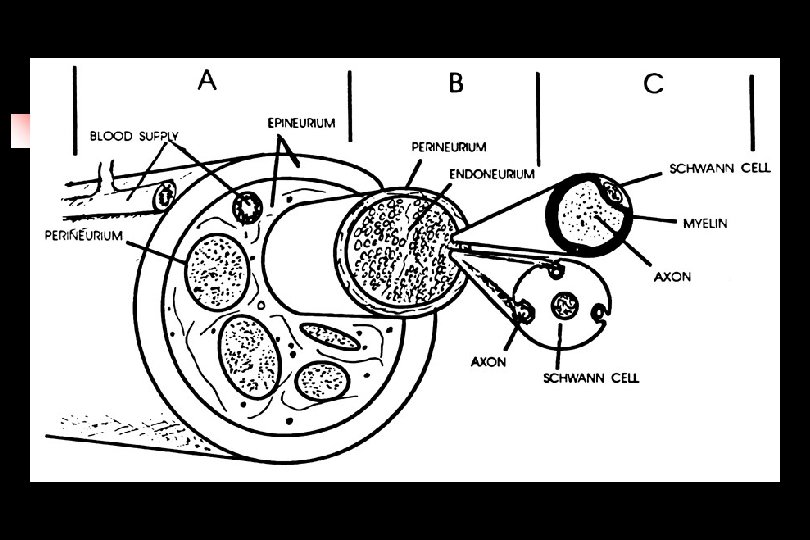
Anatomy Connective tissue - major tissue component - epineurium, perineurium, endoneurium Nerve tissue - axon, schwann cell
Peripheral Nerve Injury Acute injury Chronic injury (entrapment neuropathy)
Neuropraxia The mildest form, reversible conduction block Loss of function, which persists for hours or days Direct mechanical compression, ischemia, mild burn trauma or stretch

Axonotmetic Axon continuity is disrupted Fascicular integrity is maintained Wallerian degeneration occurs
Neurotmesis Laceration from sharp or blunt forces The only important consideration is the timing of repair Acute repair or more bluntly lacerated nerves are repaired 3 -4 weeks

Classification
Factors for Decision Making Age Segment between injury and end organ Gap of injury Mechanism of injury Severity of injury Presence of pain
Axonal Regeneration Initial delay to the distal stump : 1 -2 week delay Growth rate 1 mm/day, 1 inch/month Terminal delay several weeks-several months Recovery within 6 weeks good prognosis
Diagnosis Clinical Signs Motor function Tinel’s sign positive-sensory function negative(after 4 -6 weeks)-total interruption Sweating-sympathetic fiber Sensory function

Diagnosis Electrophysiological Tests EMG SNAP SSEP Intraoperative NAP

Muscle Atrophy 24 month rule - muscle scar tissue Muscle atrophy start : post-injury 1 month peak : 3 rd - 4 th month Segment between injury and end organ
Treatment Time of Operation Open injury Early intervention Delayed intervention Closed injury Delayed intervention
Early Intervention Enlarging hematoma/aneurysmal sac Predisposing to Volkmann’s ischemic contracture Severe noncausalsic pain Injury to N. in areas of potential entrapment Simple, clean lacerating injury
Delayed Intervention 2 -3 months after injury No clinical or substantial recovery

Operations Neurolysis : internal/external Nerve repair end-to-end repair : epineural/fascicular autologous graft : sural N. Neurotization intercostal N. /accessory N. /cervical plexus within 1 year Muscle and tendon transfer
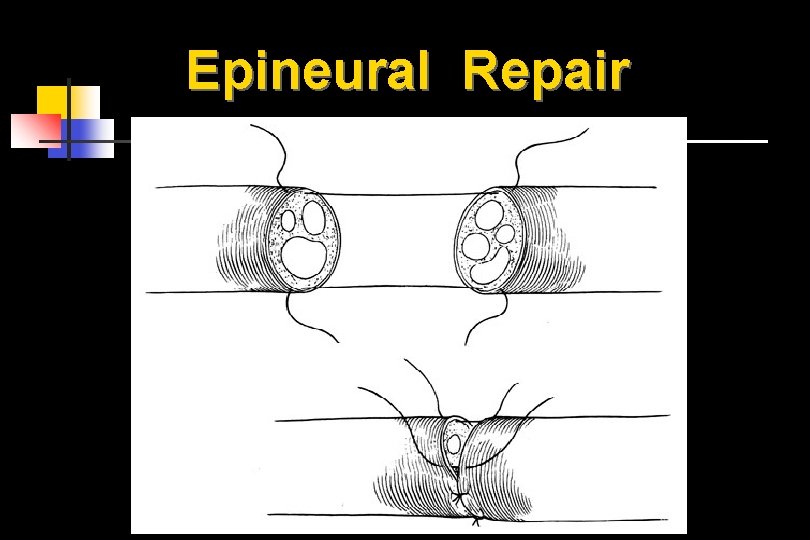
Epineural Repair
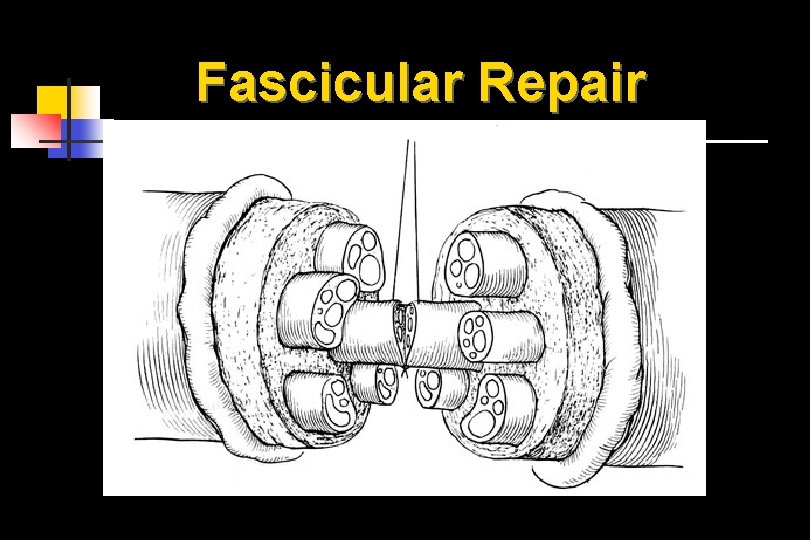
Fascicular Repair

Nerve Graft # leading cause of failure of nerve graft • Inadequate resection • Distraction of repair site
Conclusions 1. Immediate primary repair in sharp injuries Immediate repair is especially important for brachial plexus and sciatic nerve transsections because delay leads not only to retraction but also to severe scaring Bluntly transsected nerve best repaired after a delay of several weeks. 2. A focally injured nerve should be explored if no functional return within 8 -10 weeks 3. Decision - making as to whether neurolysis or resection & repair in a lesion in gross continuity is based on intraoperative electrophysiological evaluation
Conclusions 4. Nerve anastomosis failure ① inadequate resection of scarred nerve ends ② nerve suture distraction 5. A good end result requires rehabilitation.
Chronic Injuries of Peripheral Nerves by Entrapment Pain Paresthesia Loss of function
Pathophysiology of Entrapment Direct compression segmental demyelination wallerian degeneration(distal) Ischemia swelling of nerve microcompartment SD
Treatment Conservative Treatment Indications not long history mild-moderate, intermittent reversible cause pregnancy, oral contraceptive, endocrine abnormalities(DM…) Method nonsteroidal anti-inflammatory drugs splint
Treatment Surgical Indications Failed conservative tx Typical clinical finding with electrodiagnostic data Severe sensory loss muscle atrophy motor weakness

Entrapment of Thoracic Outlet Cervical rib or anomalous transverse process of C 7 Fibromuscular bands or scalene muscle abnomality - X-ray - NCV & EMG - Angiography – vascular anomaly Treatment: Supraclavicular approach - Best op. management

scalene anterior and medius M.
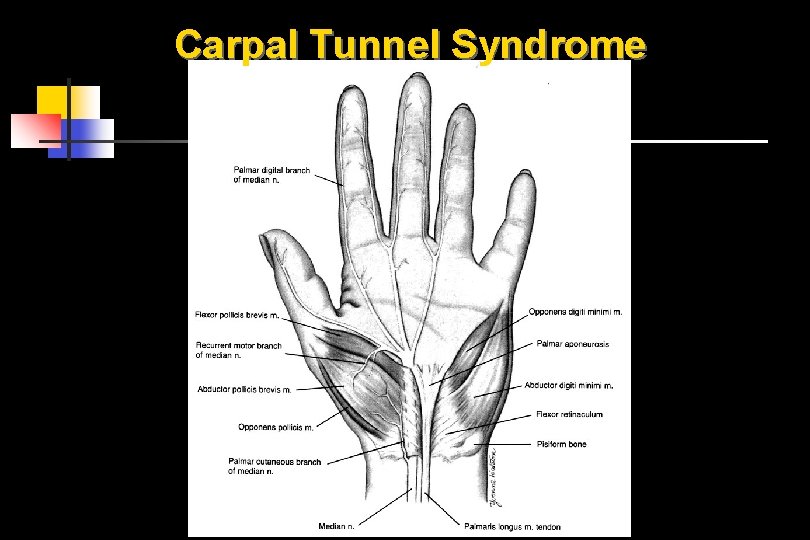
Carpal Tunnel Syndrome
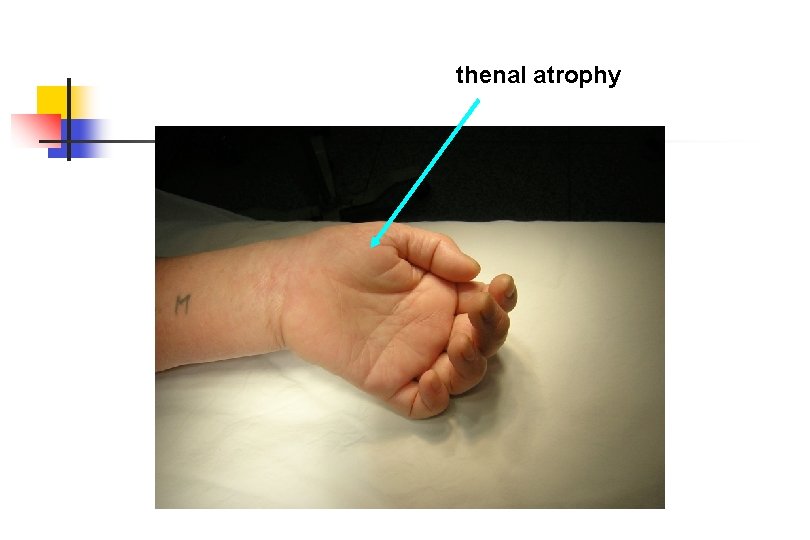
thenal atrophy
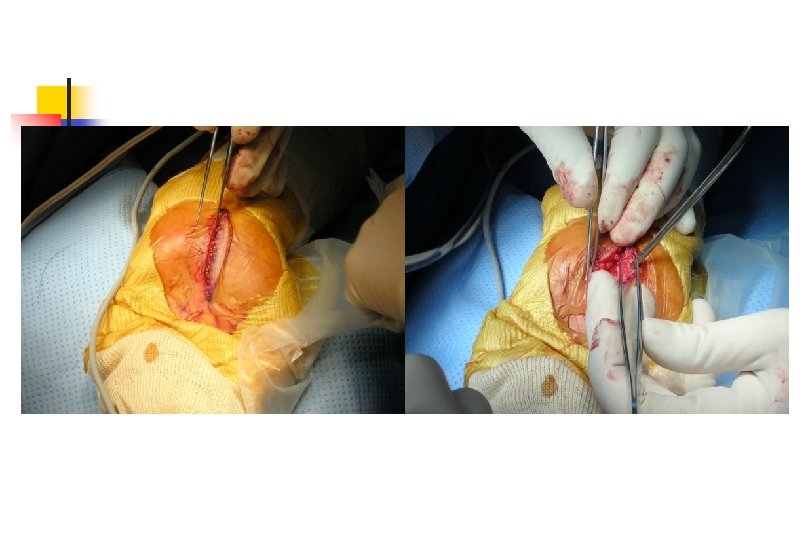
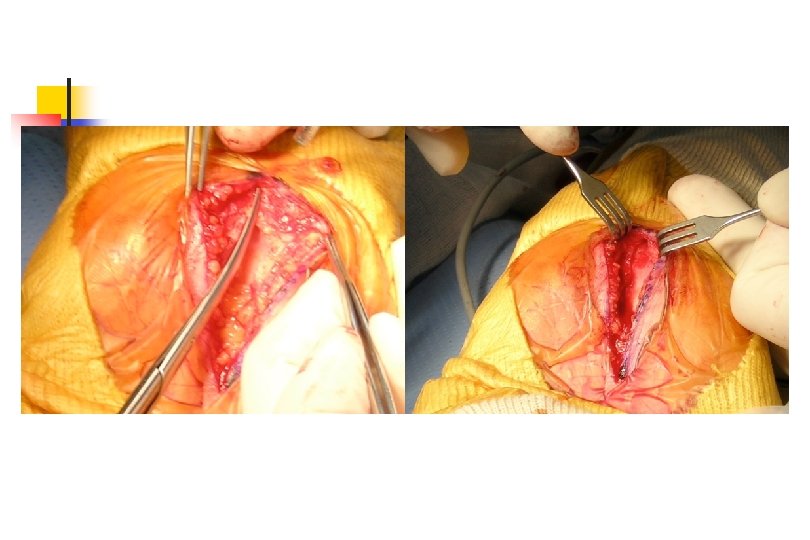
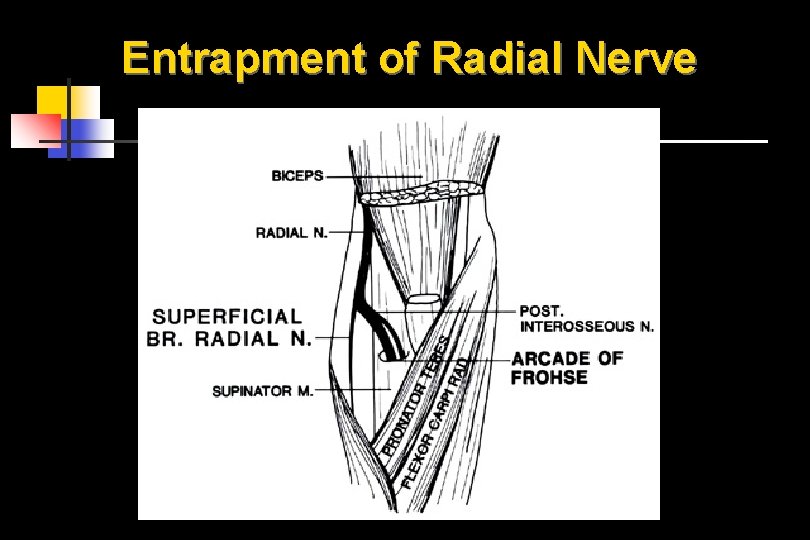
Entrapment of Radial Nerve
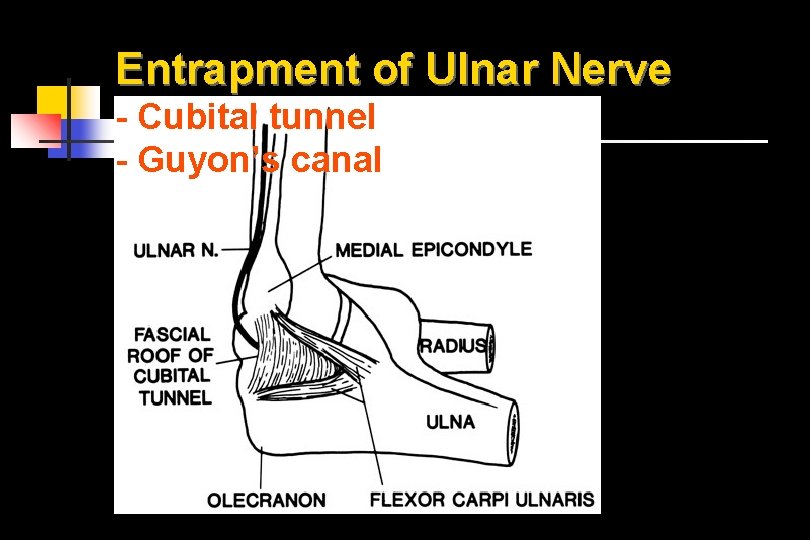
Entrapment of Ulnar Nerve - Cubital tunnel - Guyon’s canal

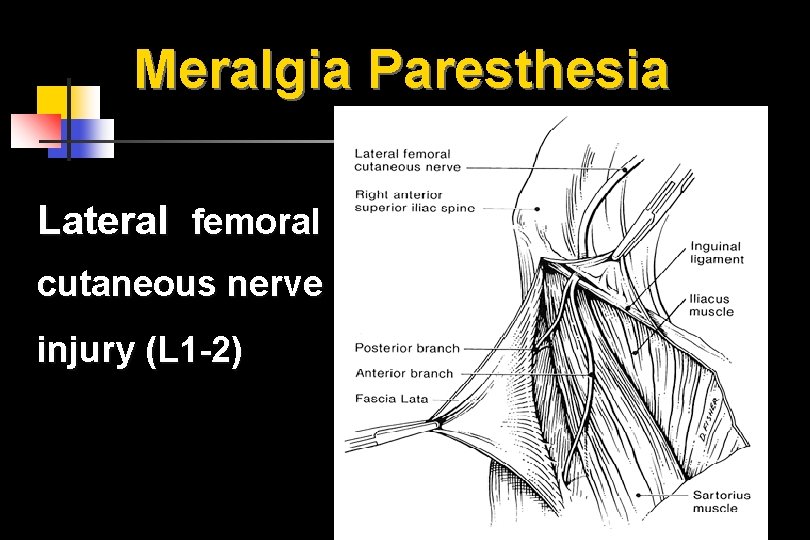
Meralgia Paresthesia Lateral femoral cutaneous nerve injury (L 1 -2)
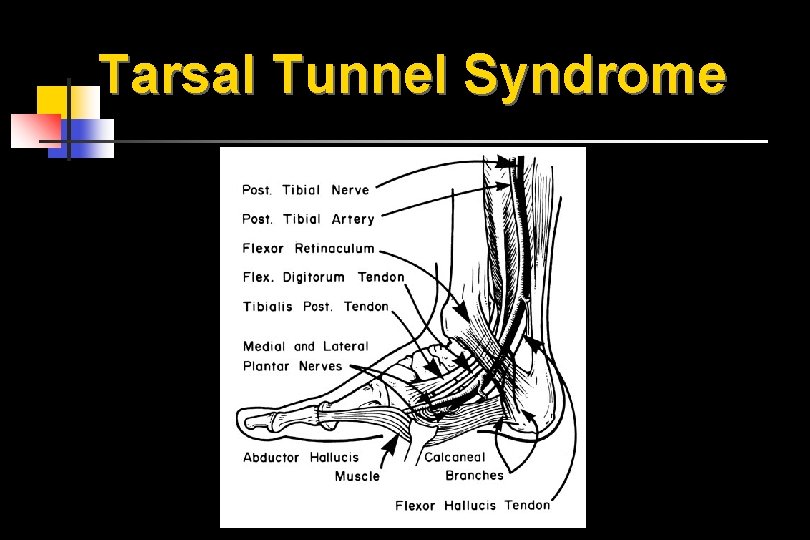
Tarsal Tunnel Syndrome
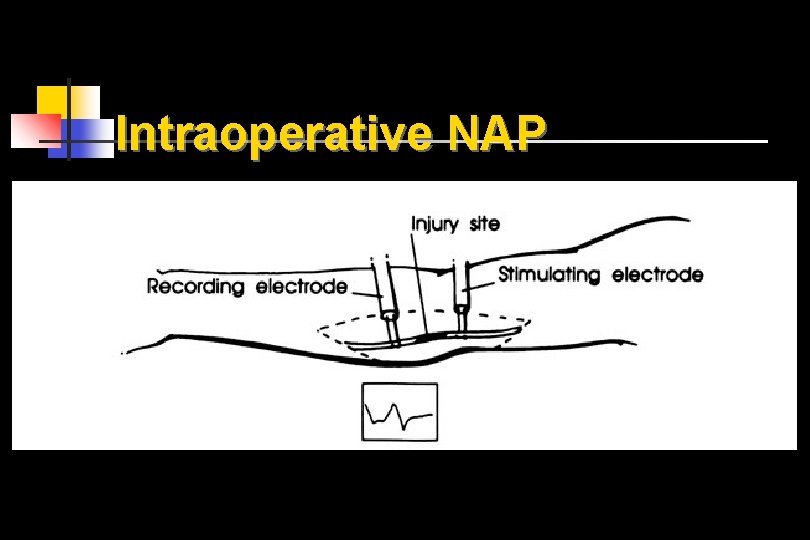
Intraoperative NAP
- Slides: 39