
Peripheral Nerve Injuries Abdulaziz AlAhaideb MBBS FRCSC Professor
Peripheral Nerve Injuries ﺩﻋﺒﺪﺍﻟﻌﺰﻳﺰ ﺍﻷﺤﻴﺪﺏ Abdulaziz Al-Ahaideb MBBS, FRCS(C) Professor of Orthopedics Knee and Shoulder Surgeon
Peripheral Nerve Injuries • Compression neuropathy • Peripheral nerve injury
Compression Neuropathy • Chronic condition with sensory, motor, or mixed involvement • First lost light touch – pressure – vibration • Last lost pain - temperature • microvascular compression neural ischemia paresthesias Intraneural edema more microvascular compression demyelination --> fibrosis --> axonal loss
Common systemic conditions leading to compression neuropathy • SYSTEMIC – Diabetes – Alcoholism – Renal failure • INFLAMMATORY – – Rheumatoid arthritis Infection Gout Tenosynovitis • FLUID IMBALANCE – Pregnancy – Obesity • ANATOMIC – Fibrosis – Anomalous tendon – Fracture deformity • MASS – Ganglion – Lipoma – Hematoma
Symptoms • • • numbness night symptoms dropping of objects clumsiness weakness • Rule out systemic causes
Physical Exam • Examine individual muscle strength --> grades 0 to 5 --> pinch strength - grip strength • Neurosensory testing --> – dermatomal distribution – peripheral nerve distribution
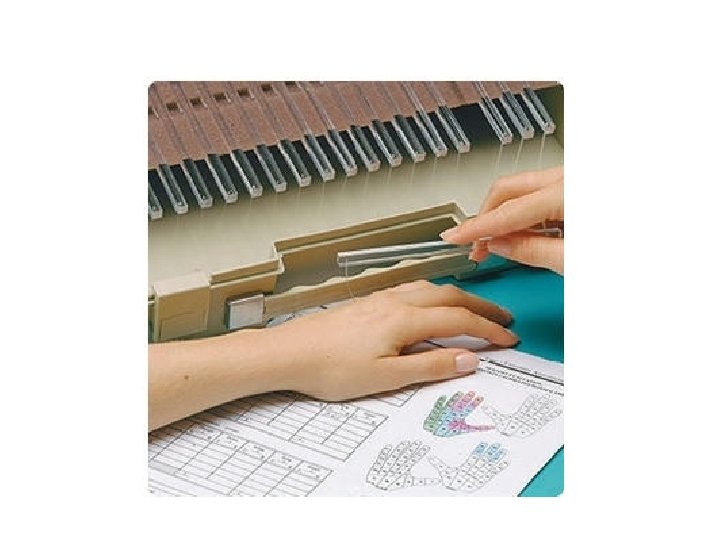
Special Tests • Semmes-Weinstein monofilaments (for the fine touch) --> – First to be affected in compression neuropathy – Sensing 2. 83 monofilament is normal • Two-point discrimination → – performed with closed eyes – abnormal → Inability to perceive a difference between points > 6 mm – late finding
Electrodiagnostic testing • Electromyography (EMG) and Nerve Conduction Study (NCS) • Sensory and motor nerve function can be tested • Objective evidence of neuropathic condition • Helpful in localizing point of compression
Electrodiagnostic testing • NCS → – Tests conduction velocity, distal latency and amplitude – Demyelination → ↓conduction velocity + ↑distal latency axonal loss → ↓ potential amplitude • EMG → – Tests muscle electrical activity – Muscle denervation → fibrillations - positive sharp waves
• Peripheral nerve compression (median / ulnar / radial nerves) • Peripheral nerve injury (neuropraxia / axontemesis / neurotemesis)
Common peripheral nerve compressions • Median nerve compression at the wrist (Carpal Tunnel Syndrome) • Median nerve compression at the arm (Pronator Syndrome) • Ulnar nerve compression at the elbow ( Cubital Syndrome) • Ulnar nerve compression at the wrist ( Ulnar tunnel Syndrome) • Radial nerve Compression
Median Nerve Compression • Carpal Tunnel Syndrome • Pronator Syndrome
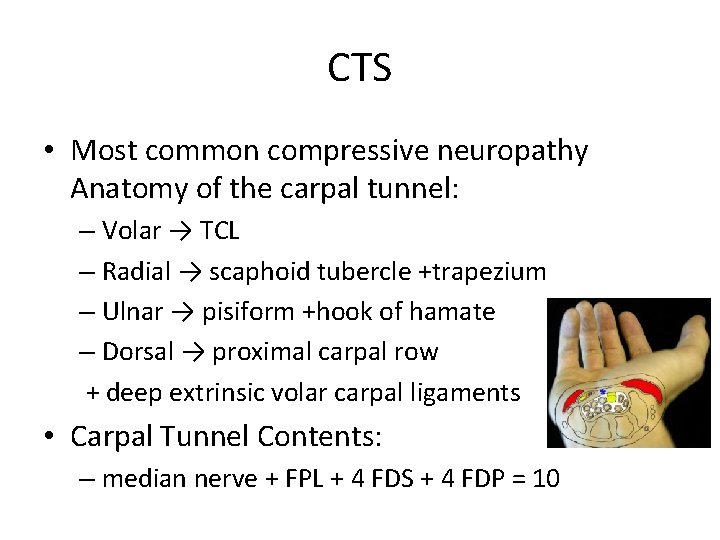
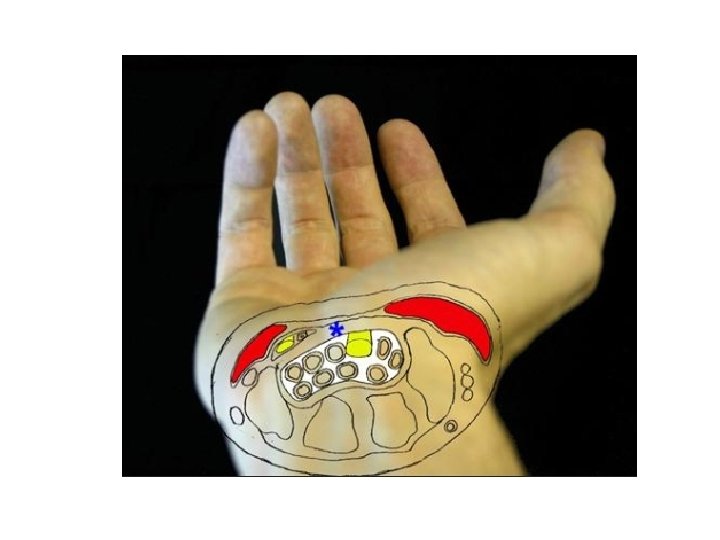
CTS • Most common compressive neuropathy Anatomy of the carpal tunnel: – Volar → TCL – Radial → scaphoid tubercle +trapezium – Ulnar → pisiform +hook of hamate – Dorsal → proximal carpal row + deep extrinsic volar carpal ligaments • Carpal Tunnel Contents: – median nerve + FPL + 4 FDS + 4 FDP = 10
CTS • Normal pressure → 2. 5 mm Hg • >20 mm Hg → ↓↓ epineural blood flow + nerve edema • 30 mm Hg → ↓↓ nerve conduction
Risk Factors obesity pregnancy diabetes thyroid disease chronic renal failure Others RA, storage diseases, alcoholism, advanced age. • Repetitive strain injury • • •
Acute CTS • Causes → – high-energy trauma – hemorrhage – infection • Requires emergency decompression
CTS diagnosis • History: – Numbness and pain – Often at night – Volar aspect → thumb - index - long - radial half of ring – Risk factors
CTS diagnosis • Physical examination: – Durkan test → Most sensitive – Tinel’s test – Phalen’s test
CTS diagnosis • affected first → light touch + vibration • affected later → pain and temperature • Semmes-Weinstein monofilament testing → early CTS diagnosis • late findings Weakness - loss of fine motor control - abnormal two-point discrimination • Thenar atrophy → severe denervation
CTS – Electrodiagnostic testing • Not necessary for the diagnosis of CTS • Distal sensory latencies > 3. 5 msec • Motor latencies > 4. 5 msec
CTS - Differential diagnoses cervical radiculopathy brachial plexopathy TOS pronator syndrome ulnar neuropathy with Martin-Gruber anastomoses • peripheral neuropathy of multiple etiologies • • •
CTS Treatment • Nonoperative – Activity modification – Night splints – NSAIDs – Steroid injection • Operative
CTS – Operative • Can be: – Open – Endoscopic
CTS – Endoscopic release • Short term: – less early scar tenderness – improved short-term grip/pinch strength – better patient satisfaction scores • Long-term: – no significant difference – May have slightly higher complication rate – incomplete TCL release
CTS – release outcome • pinch strength → 6 weeks • grip strength → 3 months • Persistent symptoms after release → – – – Incomplete release Iatrogenic median nerve injury Missed double-crush phenomenon Concomitant peripheral neuropathy Wrong diagnosis • revision success → identify underlying failure cause

Pronator Syndrome • Median nerve compression at arm/forearm (5 potential sites of compression) • Symptoms → – Aching pain over proximal volar forearm – sensory symptoms → palmar cutaneous branch – Lack of nigh pain
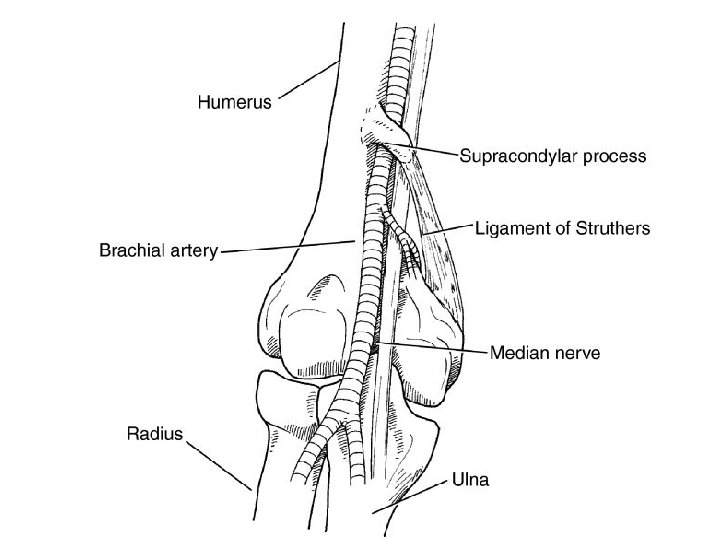
Pronator Syndrome • Diagnosis: – History – Physical examination – NCS/EMG • Treatment: – Non-operative: splints/ NSAIDs – Operative

Ulnar Nerve Compression Neuropathy • Cubital Tunnel Syndrome • Ulnar Tunnel Syndrome
Cubital Tunnel Syndrome • Second most common compression neuropathy of the upper extremity • Cubital tunnel borders: – floor →MCL and capsule – Walls → medial epicondyle and olecranon – Roof → FCU fascia and arcuate ligament of Osborne
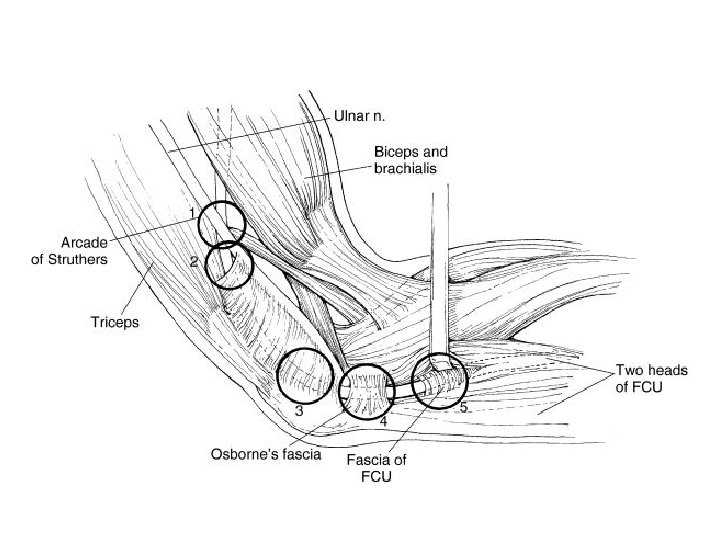
Cubital tunnel syndrome • Symptoms paresthesias of ulnar half of ring finger and small finger • Provocative tests → – direct cubital tunnel compression – Tinel’s test • Froment sign → thumb IP flexion (by FPL which is supplied by median nerve) during key pinch (weak adductor pollicis which is supplied by ulnar nerve)
Cubital Tunnel Syndrome - Treatment • Electrodiagnostic tests diagnostic • Nonoperative treatment – activity modification – night splints → slight extension – NSAIDs
Cubital Tunnel Syndrome - Treatment • Surgical Release Numerous techniques – In situ decompression, Anterior transposition, Subcutaneous, Submuscular, Intramuscular, Medial epicondylectomy • No significant difference in outcome between simple decompression and transposition

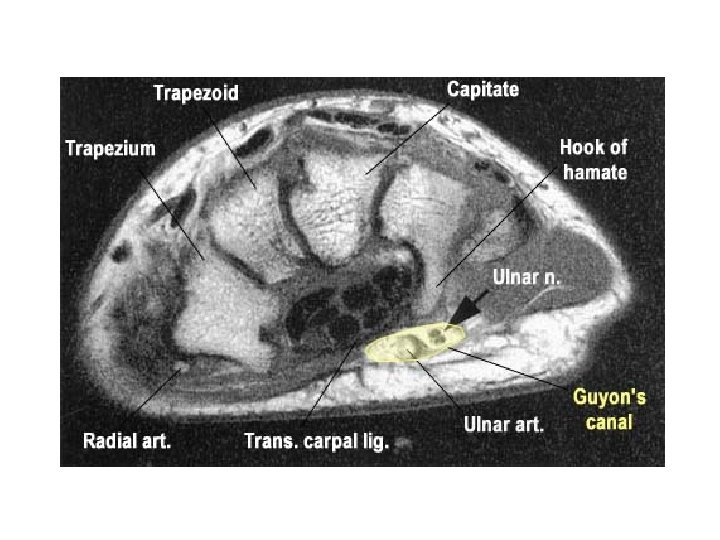
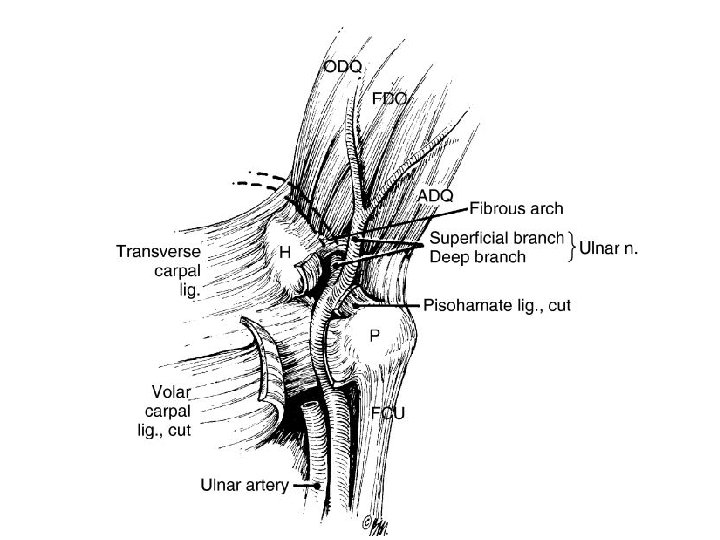
Ulnar Tunnel Syndrome • Compression neuropathy of ulnar nerve in the Guyon canal • Causes: – ganglion cyst : 80% of nontraumatic causes – hook-of-hamate nonunion – ulnar artery thrombosis or aneurysm – lipoma
Ulnar Tunnel Syndrome - Invx • CT → hamate hook fracture • MRI → ganglion cyst or lipoma • Doppler ultrasonography → ulnar artery thrombosis or aneurysm
Ulnar Tunnel Syndorme • Treatment success → identify cause • Nonoperative treatment – activity modification – splints – NSAIDs • Operative treatment → decompressing by removing underlying cause

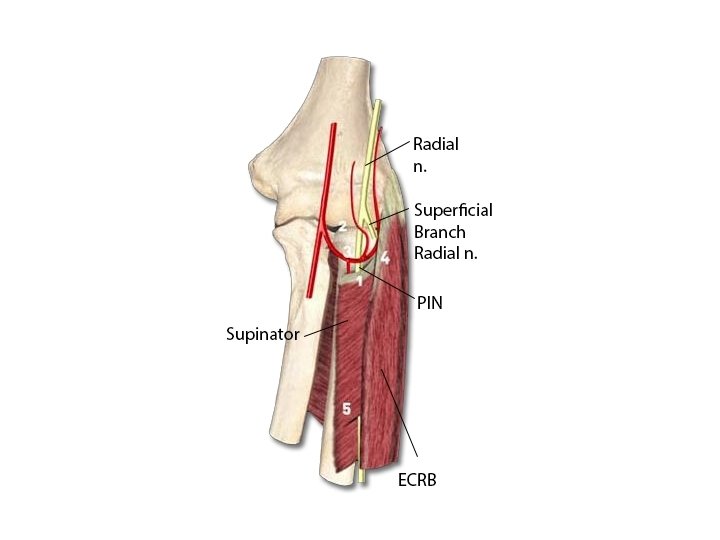
Radial Nerve • Radial nerve compression: rarely compressed and mainly motor symptoms • Radial Tunnel Syndrome – lateral elbow and radial forearm pain – no motor or sensory dysfunction

Peripheral nerve injuries • causes → – compression – stretch – crush – transection – tumor invasion
Peripheral nerve injuries • Good prognostic factors for recovery: – young age → most important factor – stretch/ sharp injuries – clean wounds – direct surgical repair • Poor outcome – crush injuries – infected or scarred wounds – delayed surgical repair.
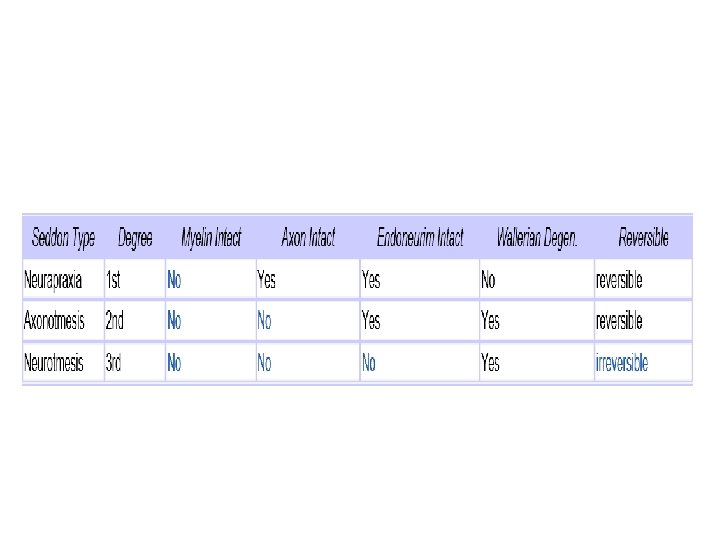
Classification • Neuropraxia • Axonotmesis • Neurotmesis
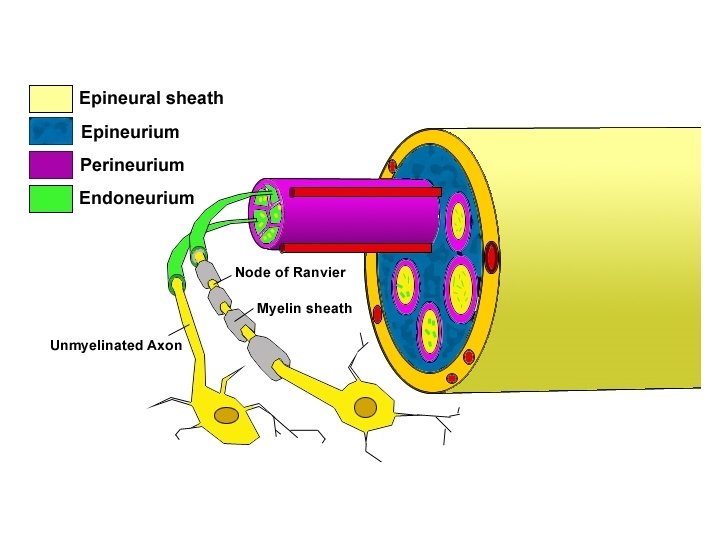
Neurapraxia • • • Mild nerve stretch or contusion Focal conduction block No Wallerian degeneration Disruption of myelin sheath Epineurium, perineurium, endoneurium: intact Prognosis: excellent full recovery
Axonotmesis • • • Incomplete nerve injury Focal conduction block Wallerian degeneration distal to injury Disruption of axons Recovery unpredictable
Neurotmesis • • • Complete nerve injury Conduction block Wallerian degeneration distal to injury Disruption of all layers, including epineurium Proximal nerve end forms neuroma Worst prognosis
Wallerian degeneration • Dr. Augustus Waller (1816 -1870) described the degeneration of peripheral nerves (biomechanical response) • Starts in distal nerve segment • Degradation products removed by phagocytosis • Myelin-producing Schwann cells proliferate and align form a tube receive regenerating axons • Proximal axon forms sprouts connect to the distal stump migrate @ 1 mm/day
Surgical repair • Best performed within 2 weeks of injury • Repair must be free of tension • Repair must be within clean, well-vascularized wound bed • Nerve length may be gained by neurolysis or transposition
Surgical repair • Direct end to end repair • Larger gaps → grafting
Surgical repair • Autogenous → sural - medial/lateral antebrachial cutaneous nerves • Vascularized nerve graft • Growth factor augmentation → insulin-like and fibroblast → promote nerve regeneration • Chronic peripheral nerve injuries → neurotization and/or tendon transfers • Use of nerve transfers for high radial and ulnar nerve injuries gaining popularity

Questions
- Slides: 61