
Peripheral Edema Sensor Jovan Popovich Mike Moeller Biomedical
Peripheral Edema Sensor Jovan Popovich Mike Moeller Biomedical Engineering 1
Project Goal To develop a diagnostic method for testing peripheral edema using impedance analysis methods 2
Presentation Overview • Background on Edema • Current Assessment Technique • Proposal of Impedance Analysis • Background of Technique • Related Products/methods • Overview of Current Project • Testing Methods and Considerations • Challenges • Future Work 3
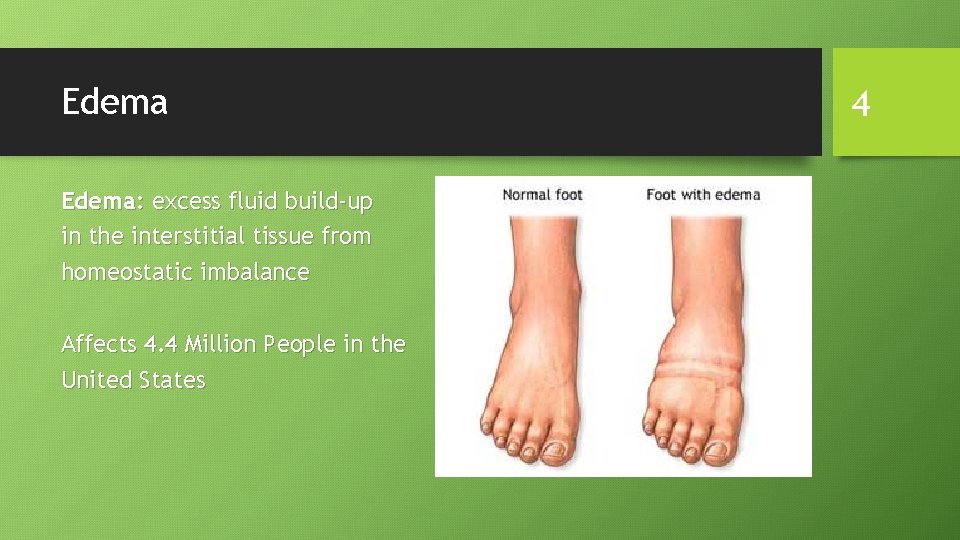
Edema: excess fluid build-up in the interstitial tissue from homeostatic imbalance Affects 4. 4 Million People in the United States 4
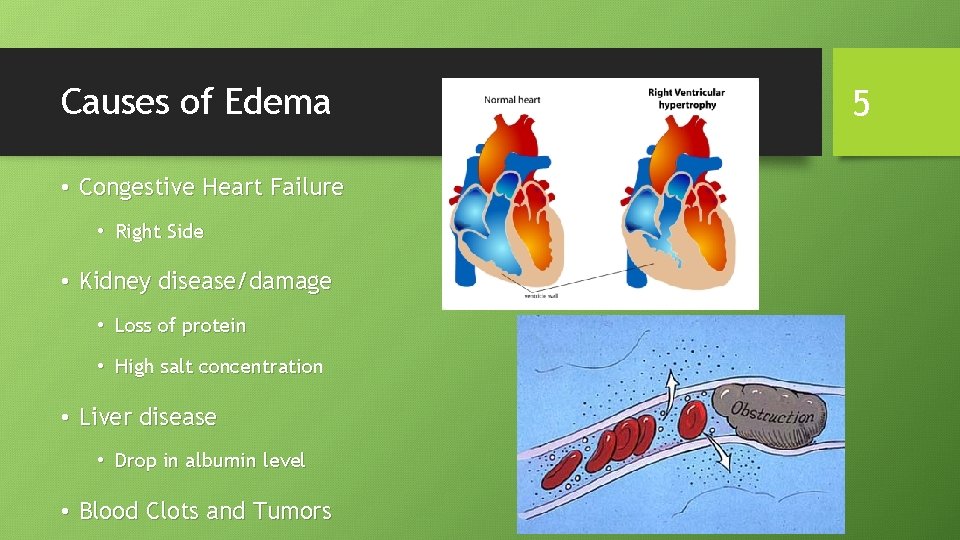
Causes of Edema • Congestive Heart Failure • Right Side • Kidney disease/damage • Loss of protein • High salt concentration • Liver disease • Drop in albumin level • Blood Clots and Tumors 5
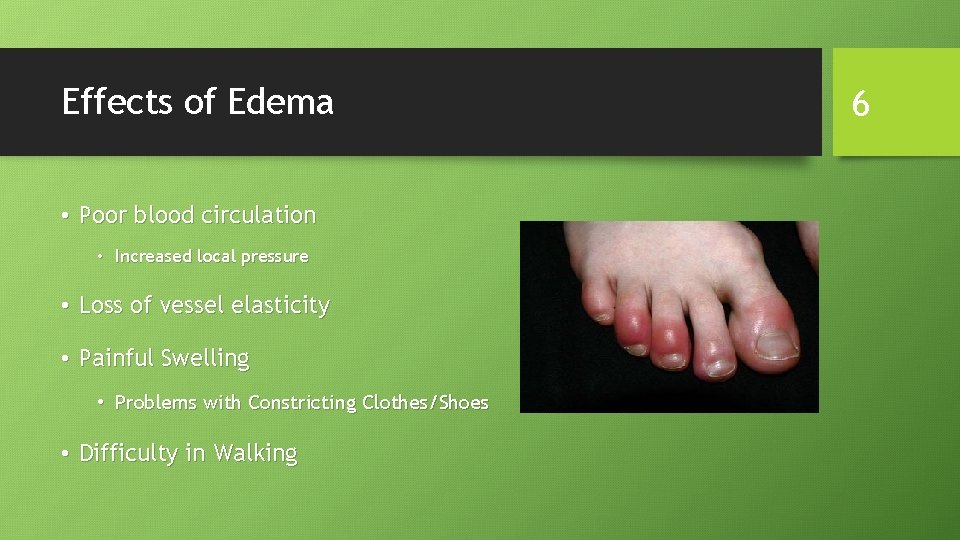
Effects of Edema • Poor blood circulation • Increased local pressure • Loss of vessel elasticity • Painful Swelling • Problems with Constricting Clothes/Shoes • Difficulty in Walking 6
Current Medical Assessment of Edema • With no diagnostic device for tracking edema levels • Currently it is viewed only as an all-or-nothing symptom Level Pitting Edema – Measurement 1 Barely detectable indentation 2 Noticeable Indentation 3 4 Deep Indentation Very Deep Indentation Rebound Time skin rebounds immediately 15 seconds for skin to rebound 30 seconds for skin to rebound Greater than 30 seconds 7
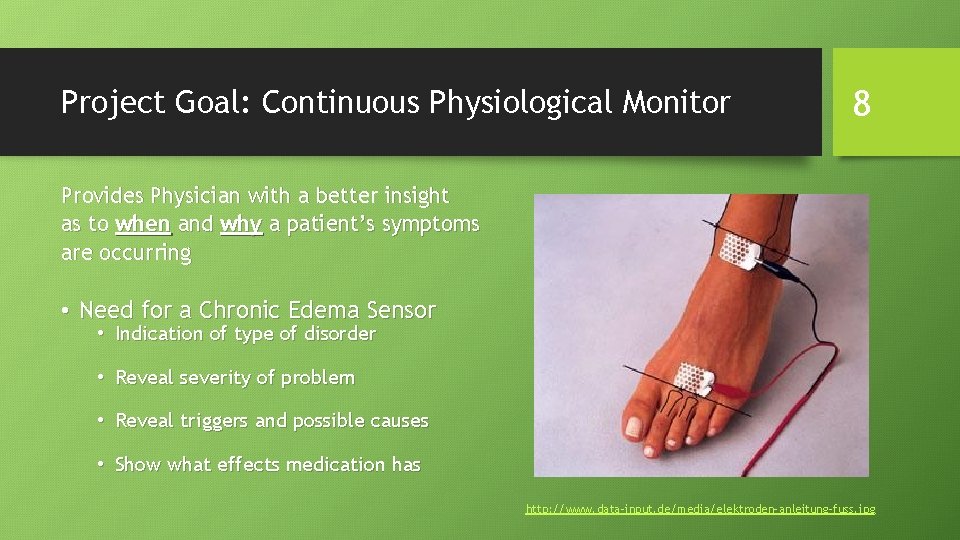
Project Goal: Continuous Physiological Monitor 8 Provides Physician with a better insight as to when and why a patient’s symptoms are occurring • Need for a Chronic Edema Sensor • Indication of type of disorder • Reveal severity of problem • Reveal triggers and possible causes • Show what effects medication has http: //www. data-input. de/media/elektroden-anleitung-fuss. jpg
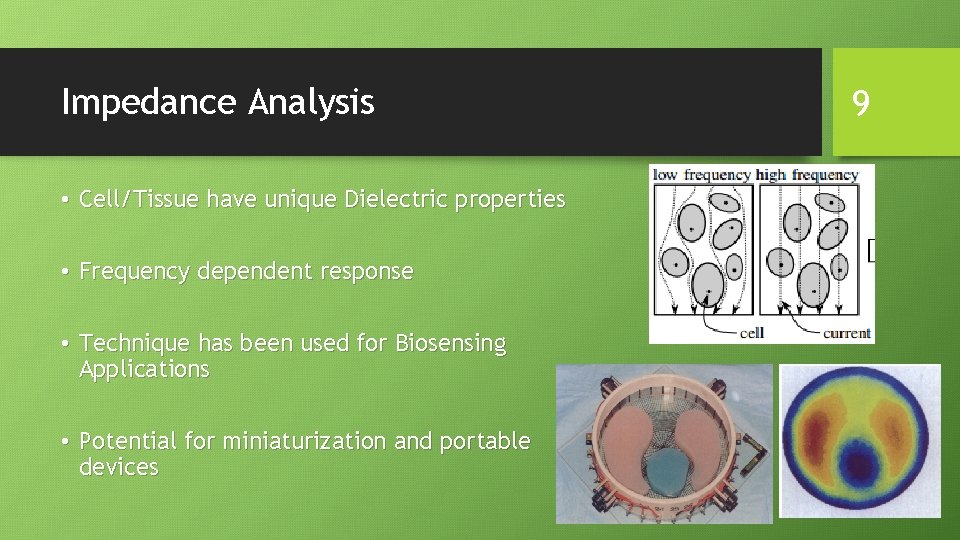
Impedance Analysis • Cell/Tissue have unique Dielectric properties • Frequency dependent response • Technique has been used for Biosensing Applications • Potential for miniaturization and portable devices 9
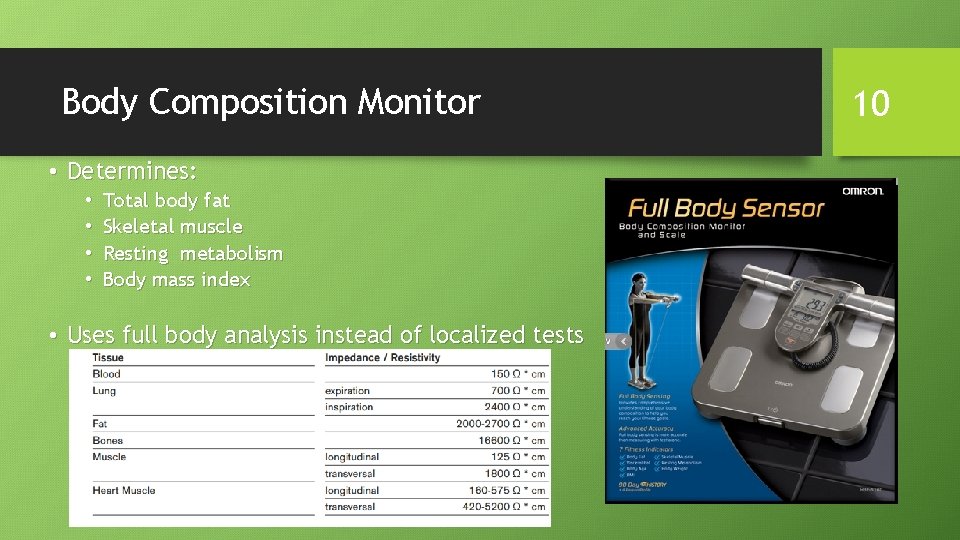
Body Composition Monitor • Determines: • • Total body fat Skeletal muscle Resting metabolism Body mass index • Uses full body analysis instead of localized tests 10
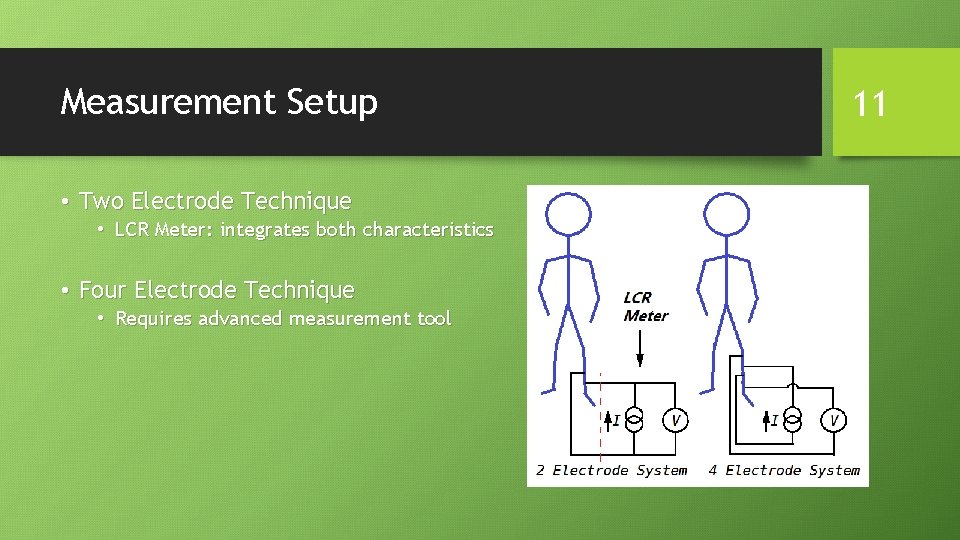
Measurement Setup • Two Electrode Technique • LCR Meter: integrates both characteristics • Four Electrode Technique • Requires advanced measurement tool 11
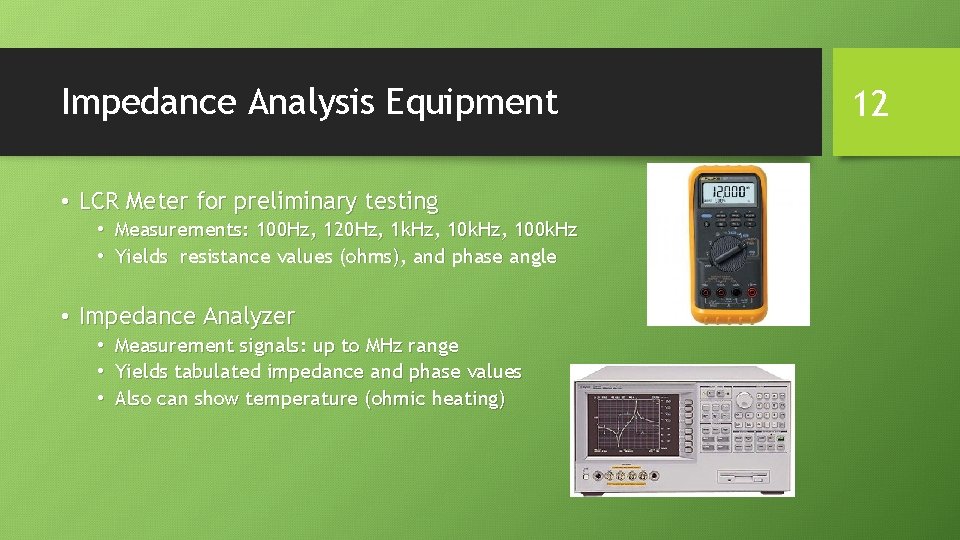
Impedance Analysis Equipment • LCR Meter for preliminary testing • Measurements: 100 Hz, 120 Hz, 1 k. Hz, 100 k. Hz • Yields resistance values (ohms), and phase angle • Impedance Analyzer • • • Measurement signals: up to MHz range Yields tabulated impedance and phase values Also can show temperature (ohmic heating) 12
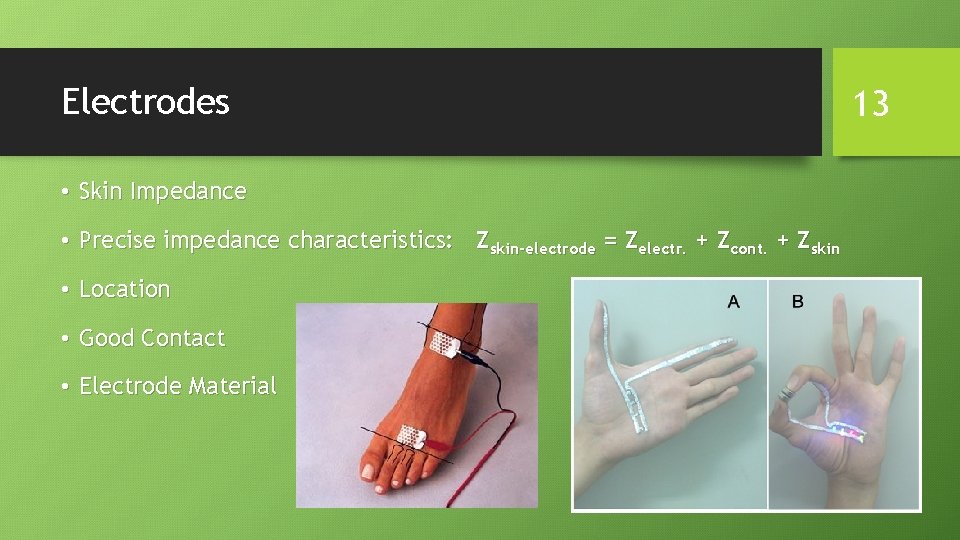
Electrodes • Skin Impedance • Precise impedance characteristics: Zskin-electrode = Zelectr. + Zcont. + Zskin • Location • Good Contact • Electrode Material 13
Overall Testing Considerations • Electrode Characteristics • Tissue Analogue Testing • Efficacy/Reproducibility of data • Trial Testing 14
Anticipated Challenges • Correct Estimation of skin contact impedance • Interpreting and correlating data to Edema symptoms • Sensitivity • Finding participants for clinical trials 15
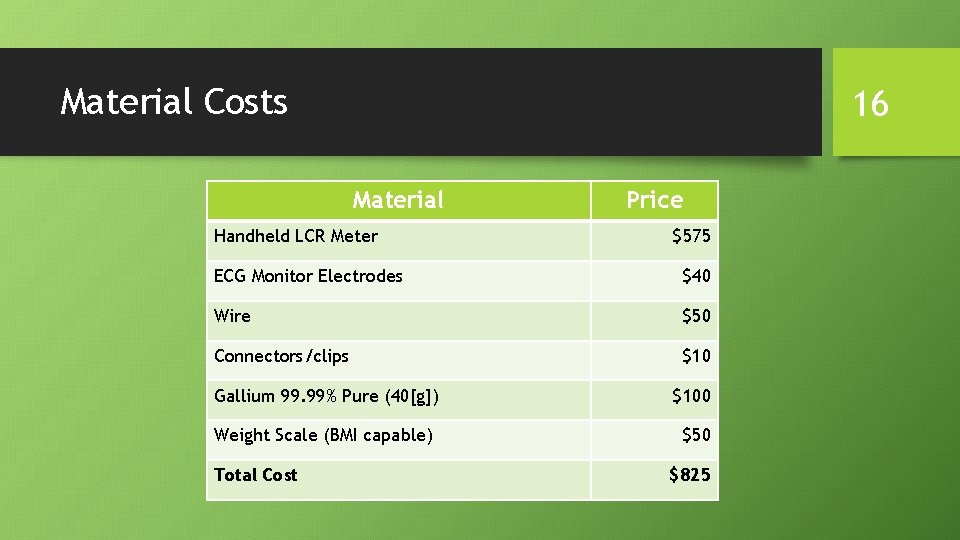
Material Costs 16 Material Handheld LCR Meter Price $575 ECG Monitor Electrodes $40 Wire $50 Connectors/clips $10 Gallium 99. 99% Pure (40[g]) $100 Weight Scale (BMI capable) $50 Total Cost $825
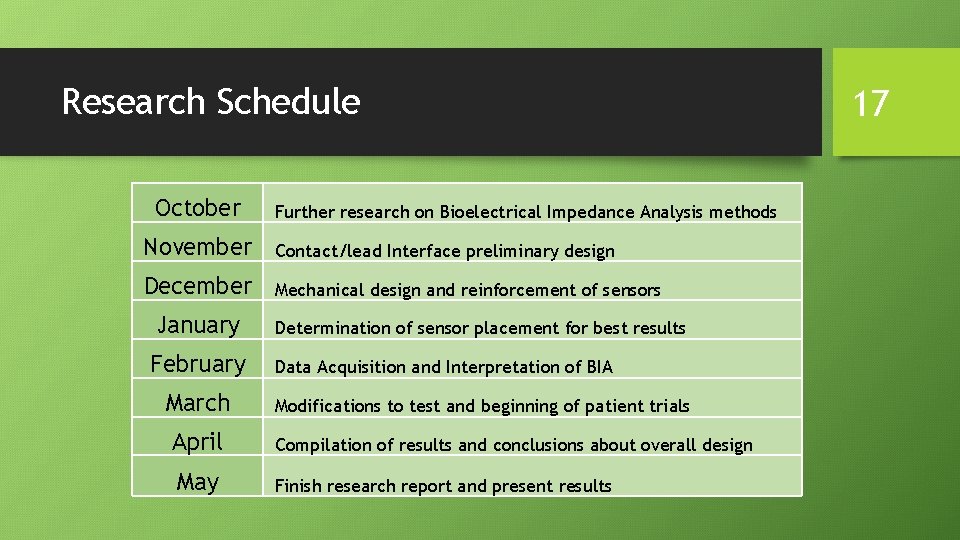
Research Schedule October Further research on Bioelectrical Impedance Analysis methods November Contact/lead Interface preliminary design December Mechanical design and reinforcement of sensors January February March Determination of sensor placement for best results Data Acquisition and Interpretation of BIA Modifications to test and beginning of patient trials April Compilation of results and conclusions about overall design May Finish research report and present results 17
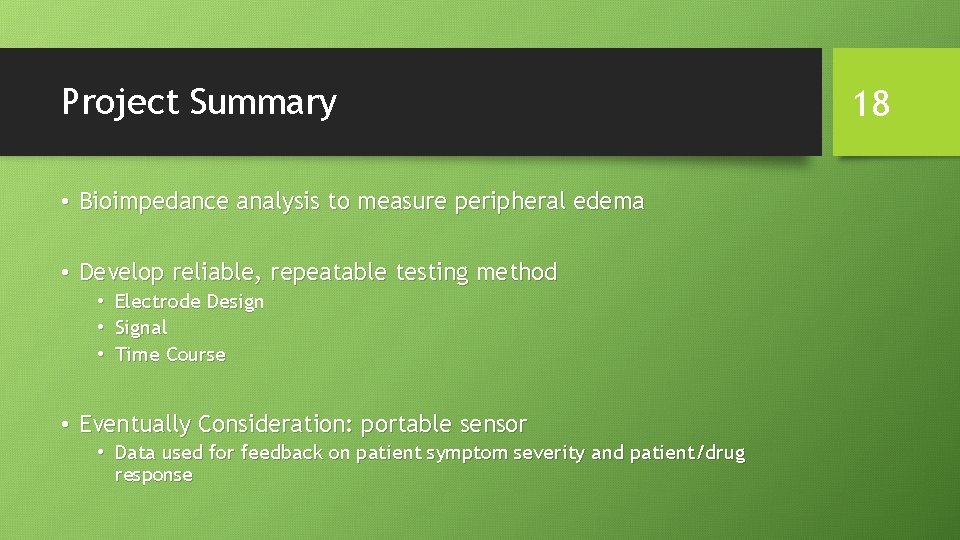
Project Summary • Bioimpedance analysis to measure peripheral edema • Develop reliable, repeatable testing method • • • Electrode Design Signal Time Course • Eventually Consideration: portable sensor • Data used for feedback on patient symptom severity and patient/drug response 18

Research Personnel Advisors/Contacts Prof. Mansoor Nasir • Research Advisor Prof. Kenneth Cook • Tech. consultant 19 Researchers Michael Moeller • Research mech. design & placement • Data Collection • Report: background writing Jovan Popovich • • • Research further in BIA Data Interpretation Report: data plotting, discussion
References • http: //www-rohan. sdsu. edu/~ens 304 l/electrodes. jpg • http: //www. medicalnewstoday. com/articles/159111. php • http: //www. med 724. com/product-p/mmm-2231 pack. htm? site=google_base • http: //www. medicinenet. com/edema/page 5. htm • http: //www. skintact. com/46. 0. html 20

Questions 21

Questions 22

Questions 23

Questions 24

Questions 25
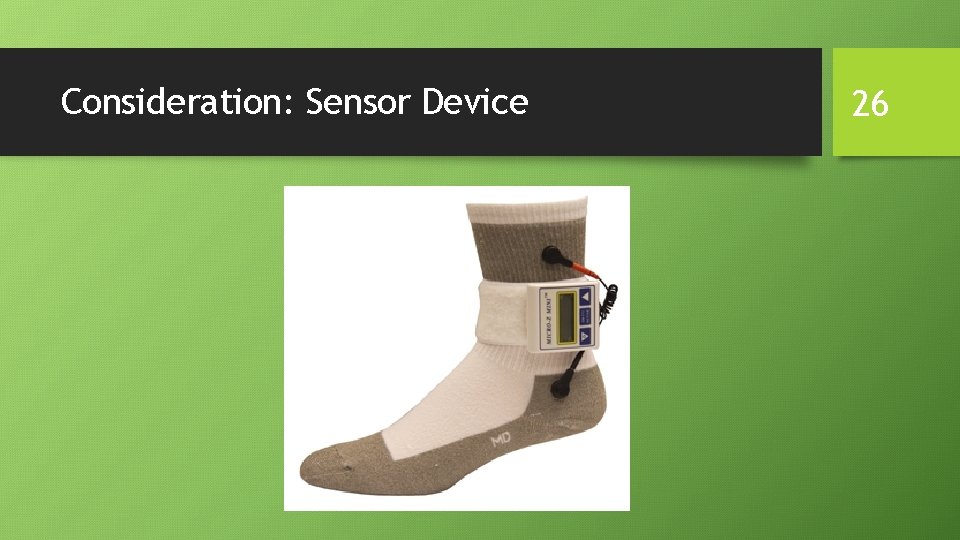
Consideration: Sensor Device 26
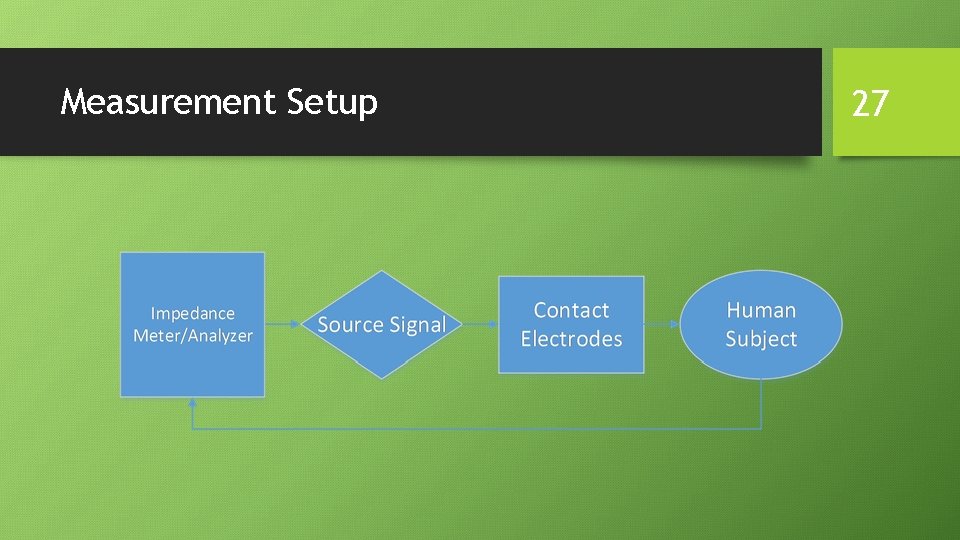
Measurement Setup 27
- Slides: 27