
Peripheral Arterial Disease Surgery Risks and Benefits Gregory
Peripheral Arterial Disease Surgery; Risks and Benefits Gregory Clabeaux D. O. FACOS RPVI Vascular and Endovascular Center of WNY

Disclosures: None
Surgical Bypass – Still considered the Gold Standard Historically proven gold standard for long segment occlusions (tasc c/d) Carries risk of dissection related complications Bleeding/Hematoma Graft infection Nerve injury Increased temporary disability related to surgery Increased long term disability due to incision related complications Superior long term outcomes Multiple randomized clinical trials to support superiority (BASIL, BASIL 2), howeveremerging endovascular techniques and technology.

TASC II classification: Aorto-Iliac
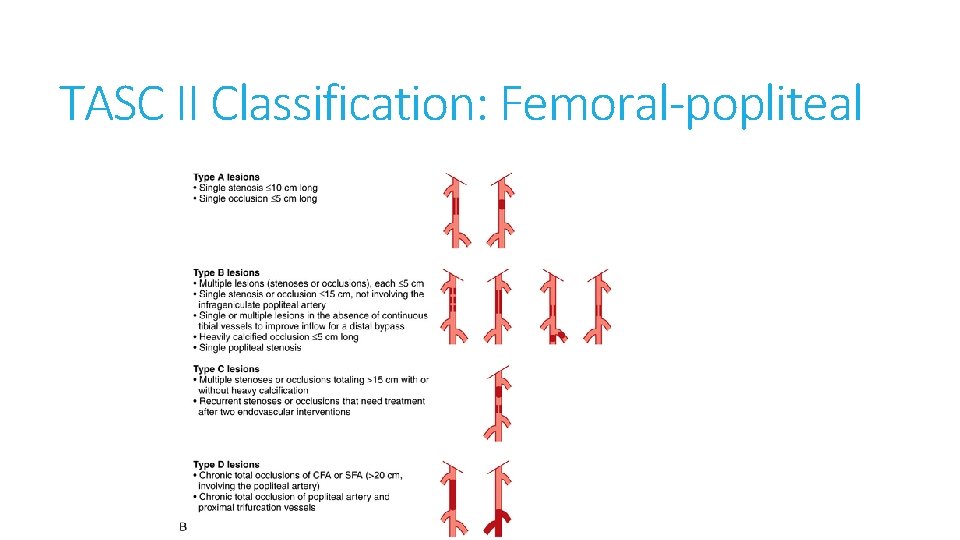
TASC II Classification: Femoral-popliteal
Surgical options: Chronic 1. ) Bypass -Whether in the leg, arm, mesentery, or abdomen/pelvis, chest or neck, priciples stand. -Either Anatomic or extra-anatomic. -Main principal is that if there is too much plaque or chronic thrombosus to go through, more efficient to go around -Go from ‘good vessel’ to ‘good vessel’ 2. )Endarterectomy – Removal of focal area of plaque 3. )Transposition – Changing the arrangement of vascular anatomy to serve a vascular bed 4. )Interposition – Recreating anatomy in it’s original position after destruction or removal

Aorto-Iliac Disease
Aorto-Bifemoral bypass -Indicated for treatment of the occlusion of the aorta and the iliac arterial systems. -Occasionally one of the Iliac systems is diseased, and so an aorto-unifemoral bypass can be configured. -In the case of a hostile abdomen or if the patient is a high risk candidate, an ‘extra anatomic’ configuration can be arranged such as a Femoral-femoral bypass or an axillary bifemoral bypass.
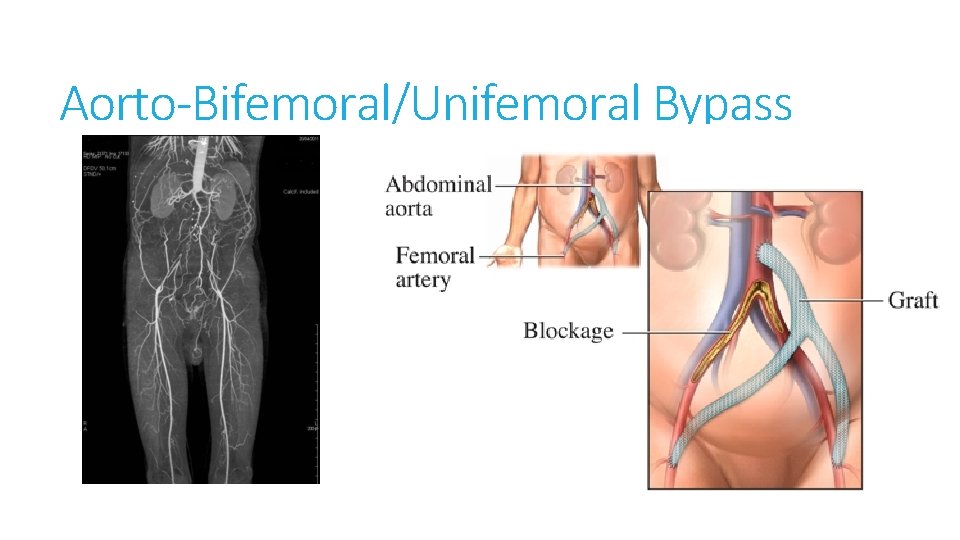
Aorto-Bifemoral/Unifemoral Bypass
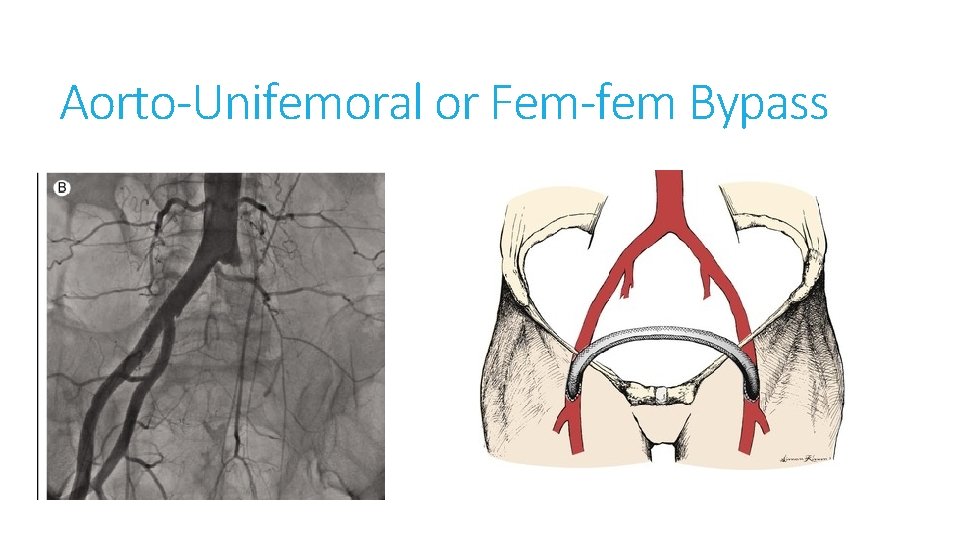
Aorto-Unifemoral or Fem-fem Bypass
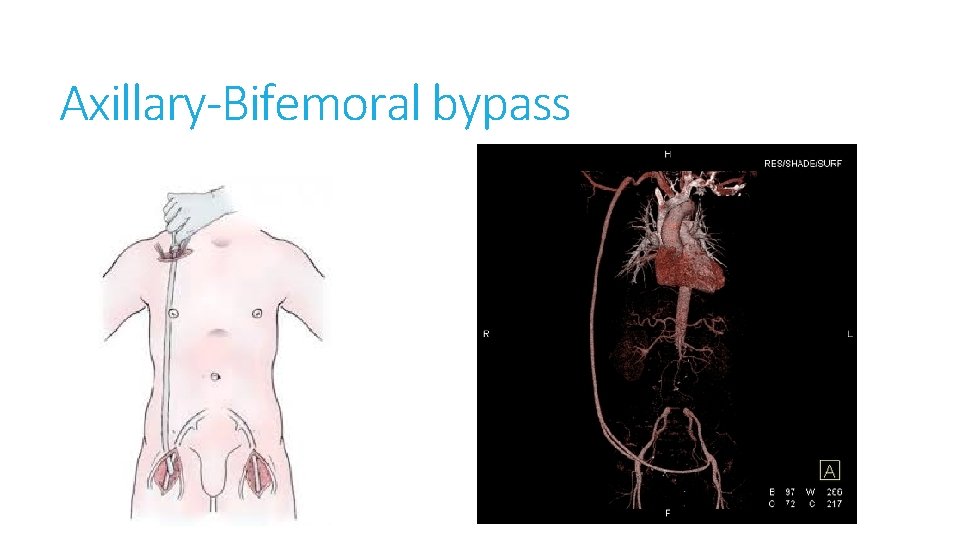
Axillary-Bifemoral bypass
Risks: -Major operation requiring general anesthesia for open abdominal cases. -Increased risk of 1 st 30 day mortality -Blood loss -Early or late graft infections -inadvertent injury to bowel or other intra-abdominal contents -Ureteral injury -risk of damage to the parasympathetic/sympathetic plexus in men causing long term impotence or retrograde ejaculation. -Aorto-enteric fistula creation -Prolonged hospitalization/ventilation from unanticipated but unavoidable nosocomial infections/pneumonias -PAIN
Benefits of Aorto-femoral bypass -Superior performance/patency historically: 1 Yr – 97% 3 Yr – 90% 5 YR – 89% 10 Yr – 84% -Fem-fem bypasses have a lesser patency rate but still offer a very good solution to uncrossable iliac lesions. 5 Yr – 70% 10 YR - ~50% -Ax-fem bypasses have a likewise lesser patency rate but still offer a solution to reperfusion of the legs without entering the abdomen, or if an aortic graft has to be removed due to infection or fistulization. 1 Yr – 72% 5 Yr – 58%
Lower Extremity Surgical Intervention Options: 1. ) Femoral-Popliteal bypass 2. ) Femoral-tibial bypass 3. ) Popliteal –pedal bypass 4. ) Focal femoral/iliofemoral endarterectomy.
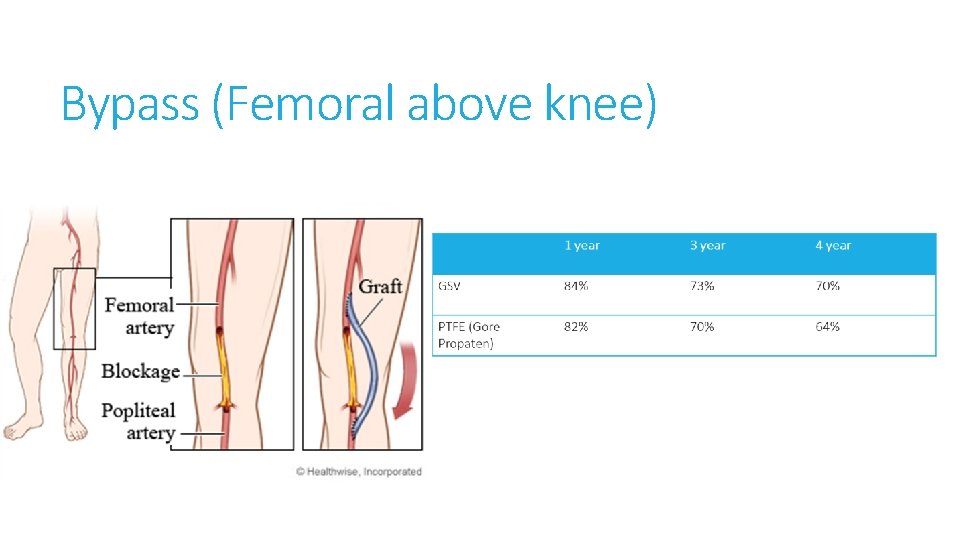
Bypass (Femoral above knee)
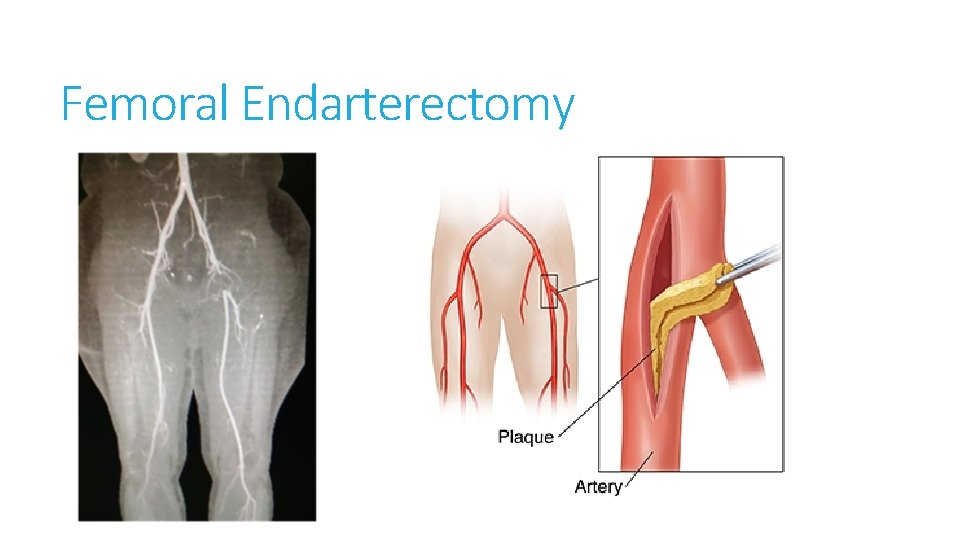
Femoral Endarterectomy
Risks -Bleeding -Infection -Seroma development -pseudoaneurysm formation
Benefits -High yield procedure. Drastically restores blood flow via revasclarization to the SFA as well as the deep femoral artery. -’No-stent zone’ -Durable long lasting results.
Thoracic arch Occlusive Disease -Same prinicples applicable. If occlusion warrants revascularization, the preferred reconstruction of a long segment occlusion an aortic based one. -Many minimally invasive options available as well that are excellent options, however sometimes not feasible or successful.
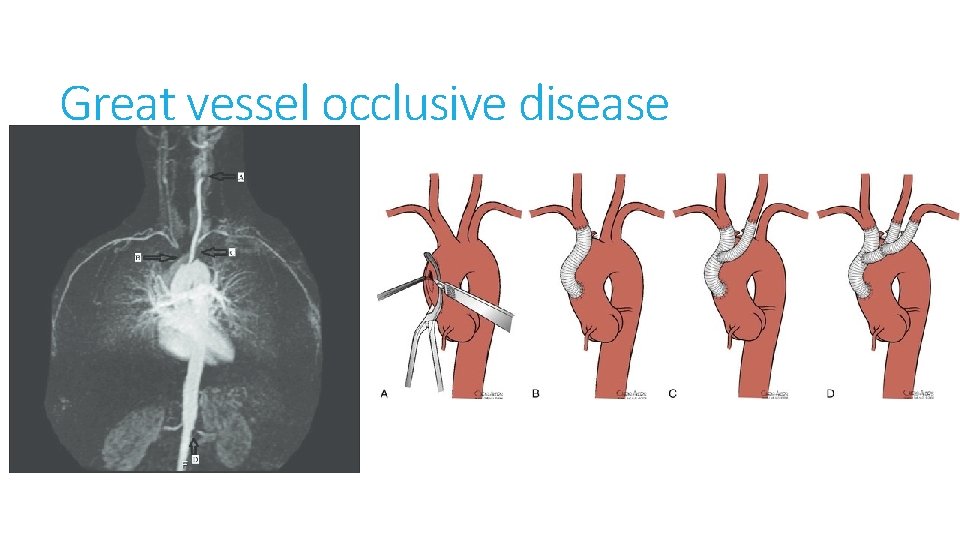
Great vessel occlusive disease
Risks -Requires median sternotomy and comes with morbidity associated. -Infection of graft, sternal wires etc. -Kinking and occlusion of grafts -If patient has already had sternotomy, revision/repeat sternotomy is very hazardous.
Benefits -When aortic based bypass, long term patency rates are again excellent. -Less likely to require repeat intervention
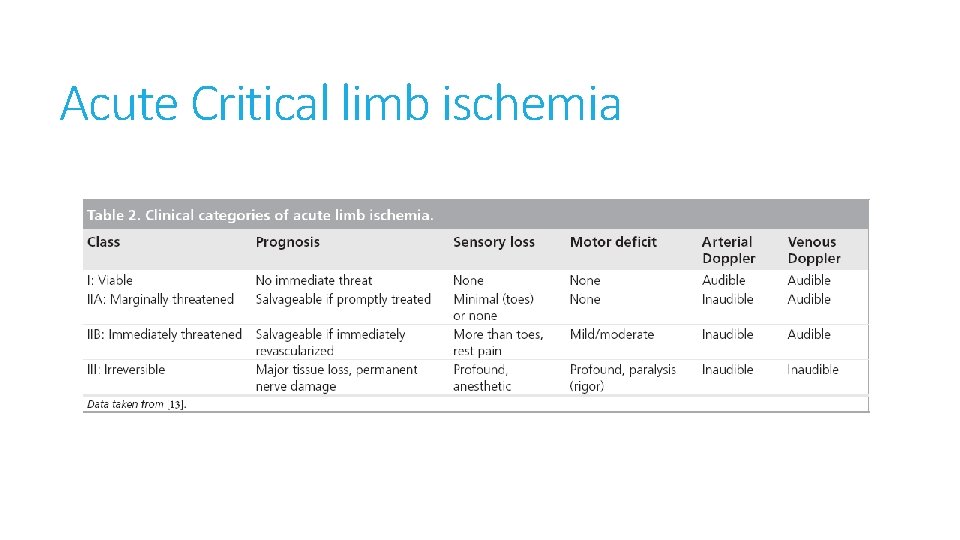
Acute Critical limb ischemia
Open options: 1. )Thrombectomy - Mainstay open technique of acute critical limb ischemia. - Can be done with minimal equipment and efficiently. -Has excellent restorative results. -IF ischemic for more than several hours, may require fasciotomy to prevent compartment syndrome -This occurs after reperfusion from maximal small vessel dilation when ischemia was present
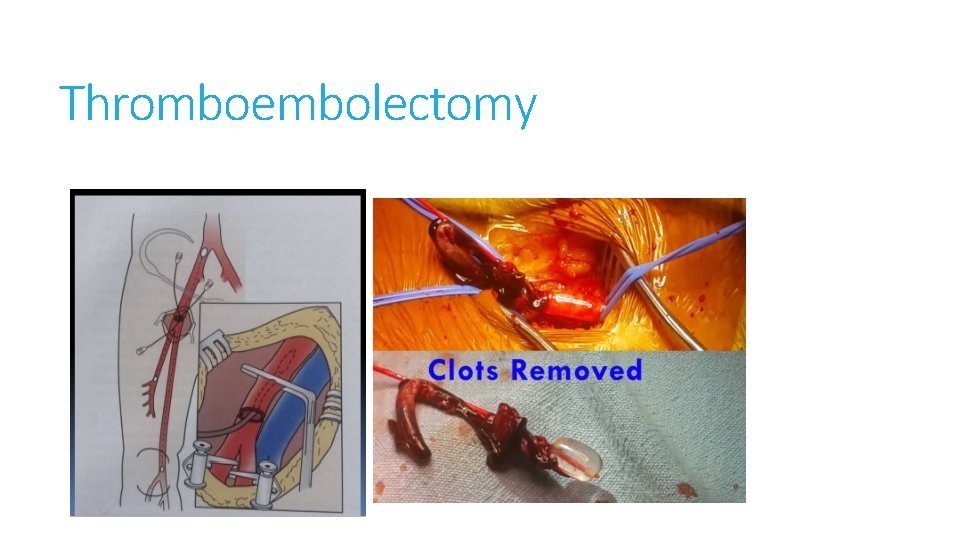
Thromboembolectomy
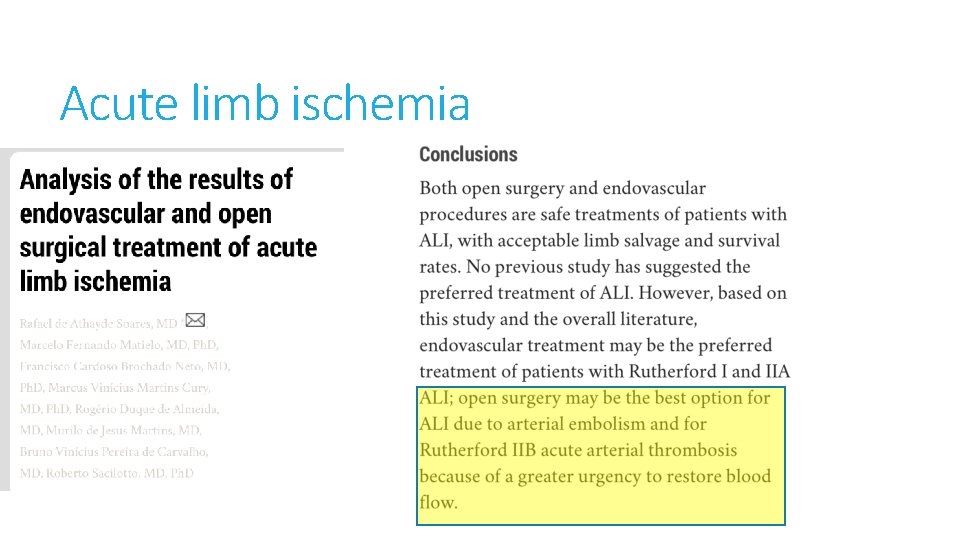
Acute limb ischemia
Conclusion -Endovascular advances are abundant… -Ability to do open procedures is essential for endo-failure or non feasibility. -Only vascular surgeons are trained and equipped to do either open or endovascular procedures and will tailor the treatment needed for individual patient.
- Slides: 27