
Peripetie 4 Arnold Schoenberg Learning Objectives To study
Peripetie 4 Arnold Schoenberg
Learning Objectives • To study the structure of Peripetie
Prep Review 1 a. Use a technical term to describe the clarinet part in bars 10 -15. 1 b. Referring to the same passage, how many different pitches does it use without repeating any? 1 c. What musical style does this suggest? 2. In bars 3 -5 the horns are muted. What does this mean and why is it unusual that they are also marked ff? 3. There is Klangfarbenmelodie in bars 22 -27. What does this mean? 4. What does the symbol in bar 29 mean? 5. Give TWO musical reasons why you like or dislike this piece.

Structure • Bars 1 -18. Describe: • • Tempo Rhythm Instrumentation Texture Melody Harmony and Tonality Dynamics
Structure 2 • Bars 18 -34 • Three ways in which this section is different from what happened before • Describe the different layers in the texture at bar 32. Why do you think the violin 1 and cello are playing at all? • What do you notice about the dynamics of the and parts?

Structure 3 • Bars 35 -43 • Look at the string parts in bar 35. Have we seen this before? When? • Describe the chord in the horns in bars 37 -38. Have we seen this chord before? When? • Bars 44 -58 • • What happens to the tempo in this section? How does the texture change? Can you describe what is happening in bars 50 -53? Describe the dynamics of this section.
Structure 4 • Bars 59 -66 • • • Have we seen the clarinet part in bar 59 before? What about trumpets bars 61 -63? Flutes bars 62 -63? What happens to the texture up to bar 64? Describe in detail what happens in the last 3 bars of the piece.
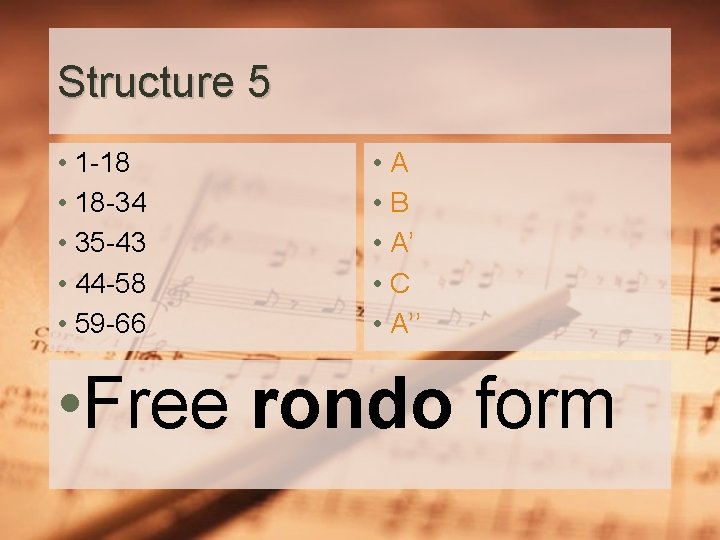
Structure 5 • 1 -18 • 18 -34 • 35 -43 • 44 -58 • 59 -66 • A • B • A’ • C • A’’ • Free rondo form
2012 question 3
- Slides: 9