
Periods of Western Classical Music Early Medieval 500
- Slides: 16
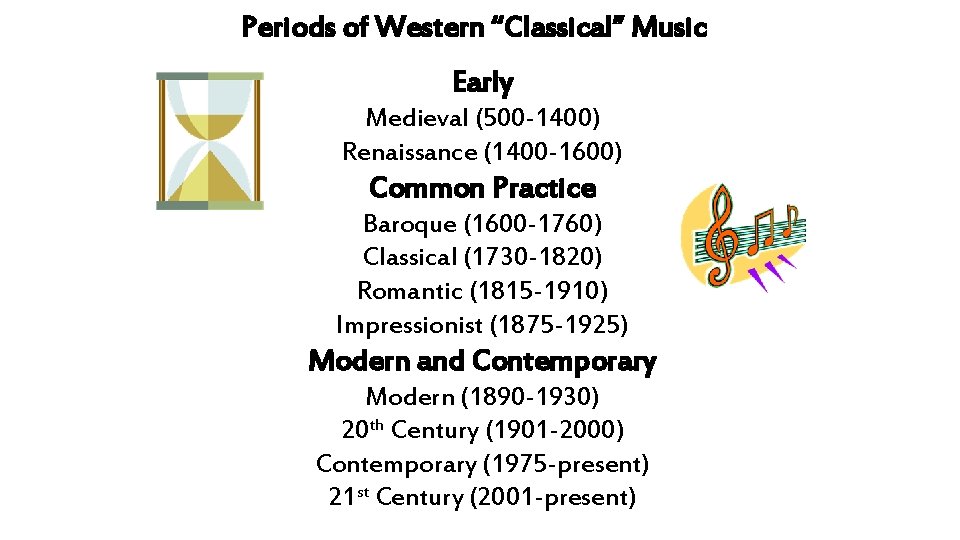
Periods of Western “Classical” Music Early Medieval (500 -1400) Renaissance (1400 -1600) Common Practice Baroque (1600 -1760) Classical (1730 -1820) Romantic (1815 -1910) Impressionist (1875 -1925) Modern and Contemporary Modern (1890 -1930) 20 th Century (1901 -2000) Contemporary (1975 -present) 21 st Century (2001 -present)
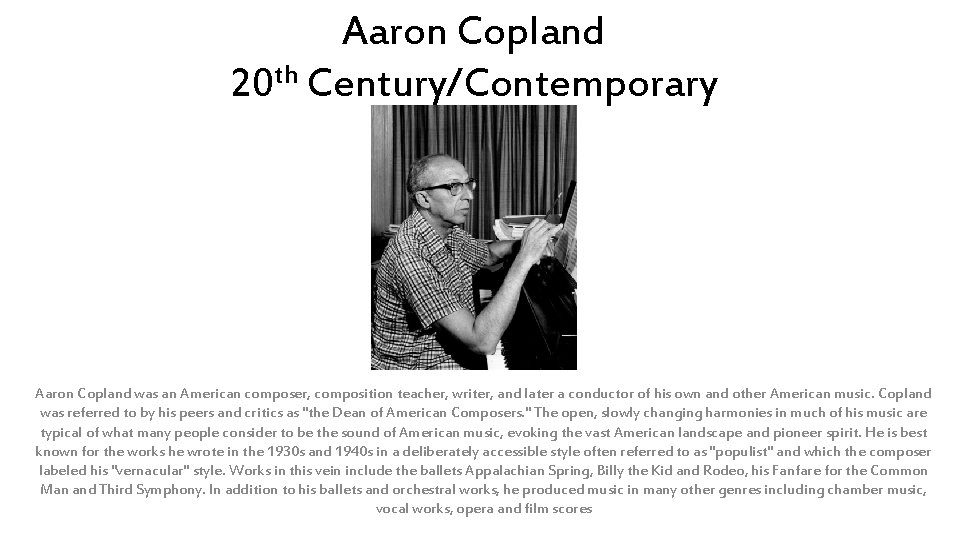
Aaron Copland th 20 Century/Contemporary Aaron Copland was an American composer, composition teacher, writer, and later a conductor of his own and other American music. Copland was referred to by his peers and critics as "the Dean of American Composers. " The open, slowly changing harmonies in much of his music are typical of what many people consider to be the sound of American music, evoking the vast American landscape and pioneer spirit. He is best known for the works he wrote in the 1930 s and 1940 s in a deliberately accessible style often referred to as "populist" and which the composer labeled his "vernacular" style. Works in this vein include the ballets Appalachian Spring, Billy the Kid and Rodeo, his Fanfare for the Common Man and Third Symphony. In addition to his ballets and orchestral works, he produced music in many other genres including chamber music, vocal works, opera and film scores
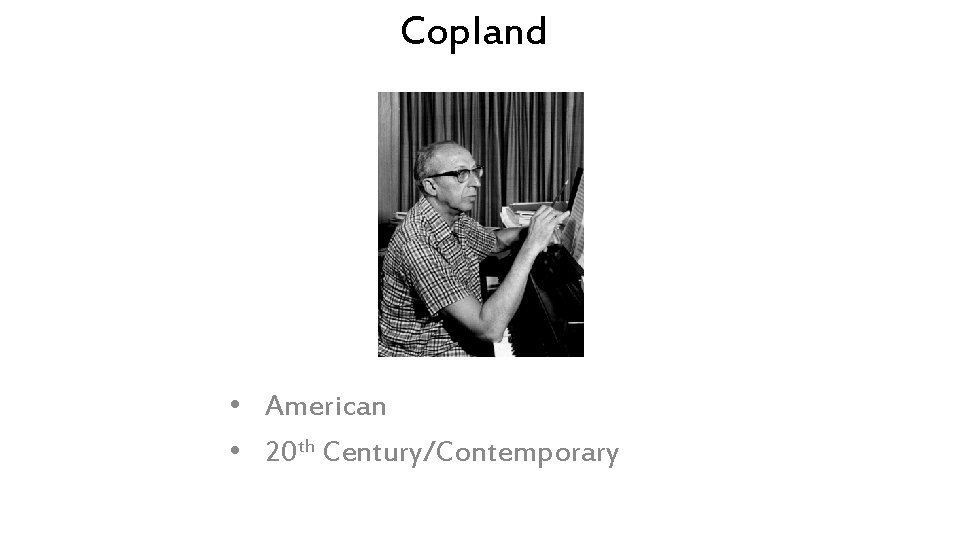
Copland • American • 20 th Century/Contemporary
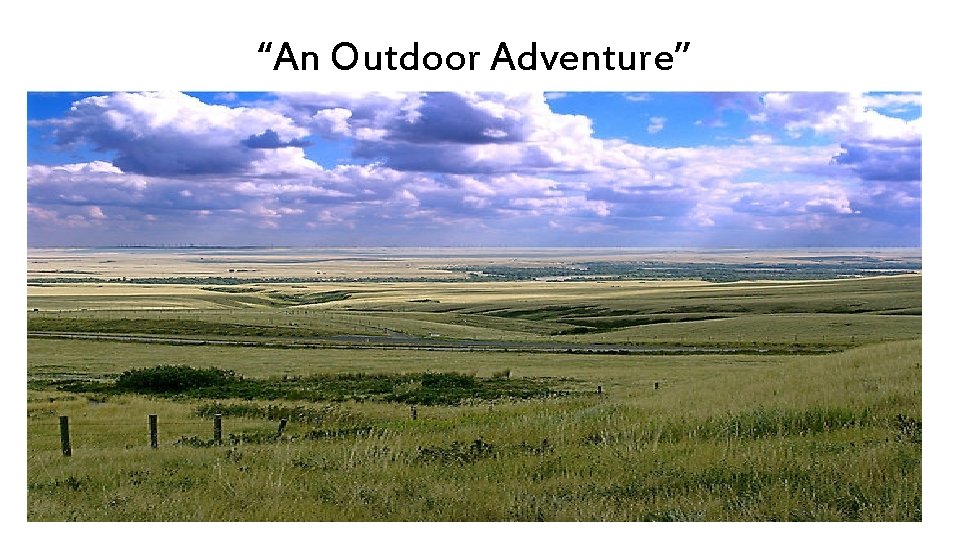
“An Outdoor Adventure”
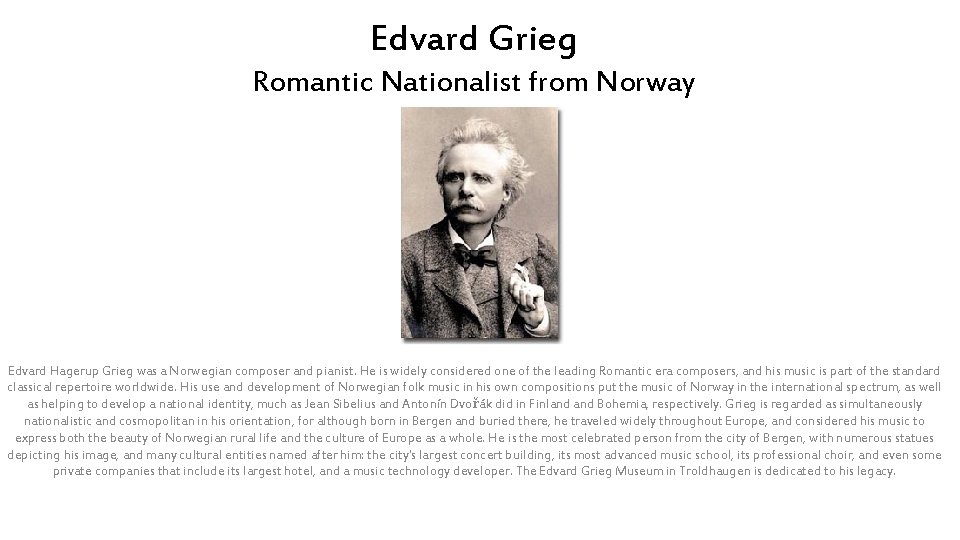
Edvard Grieg Romantic Nationalist from Norway Edvard Hagerup Grieg was a Norwegian composer and pianist. He is widely considered one of the leading Romantic era composers, and his music is part of the standard classical repertoire worldwide. His use and development of Norwegian folk music in his own compositions put the music of Norway in the international spectrum, as well as helping to develop a national identity, much as Jean Sibelius and Antonín Dvořák did in Finland Bohemia, respectively. Grieg is regarded as simultaneously nationalistic and cosmopolitan in his orientation, for although born in Bergen and buried there, he traveled widely throughout Europe, and considered his music to express both the beauty of Norwegian rural life and the culture of Europe as a whole. He is the most celebrated person from the city of Bergen, with numerous statues depicting his image, and many cultural entities named after him: the city's largest concert building, its most advanced music school, its professional choir, and even some private companies that include its largest hotel, and a music technology developer. The Edvard Grieg Museum in Troldhaugen is dedicated to his legacy.
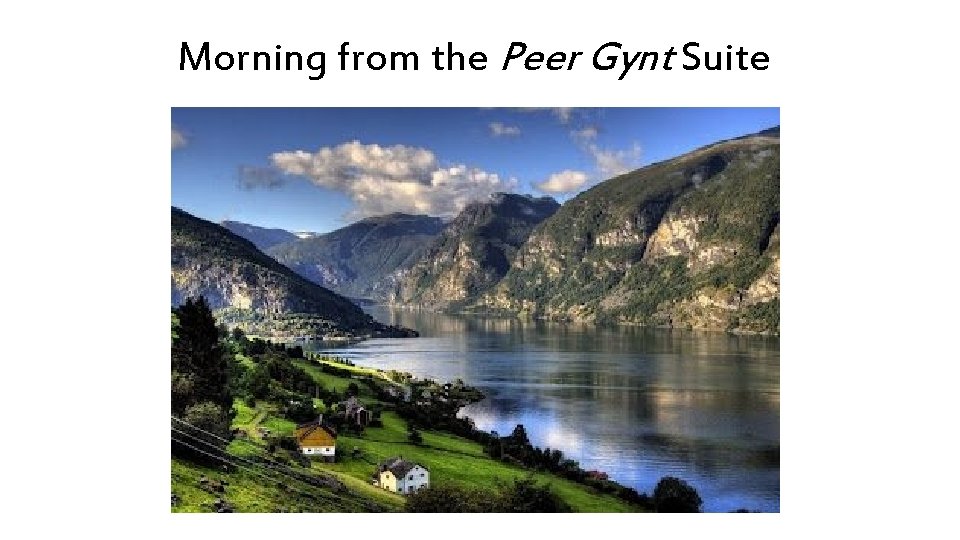
Morning from the Peer Gynt Suite
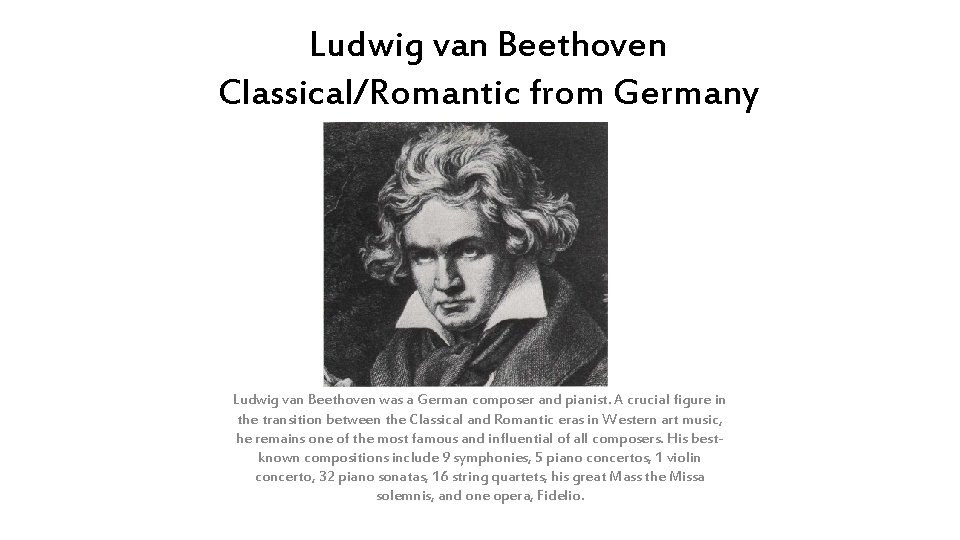
Ludwig van Beethoven Classical/Romantic from Germany Ludwig van Beethoven was a German composer and pianist. A crucial figure in the transition between the Classical and Romantic eras in Western art music, he remains one of the most famous and influential of all composers. His bestknown compositions include 9 symphonies, 5 piano concertos, 1 violin concerto, 32 piano sonatas, 16 string quartets, his great Mass the Missa solemnis, and one opera, Fidelio.
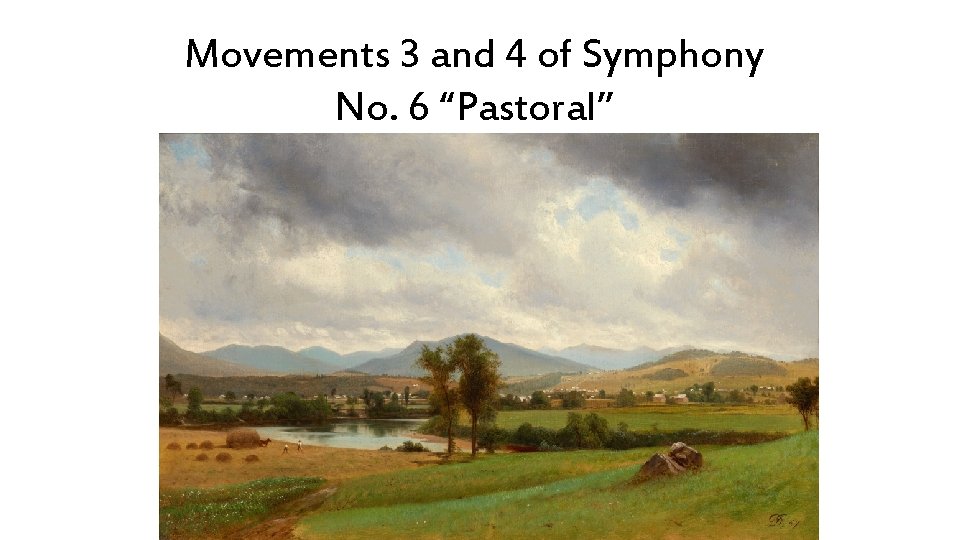
Movements 3 and 4 of Symphony No. 6 “Pastoral”
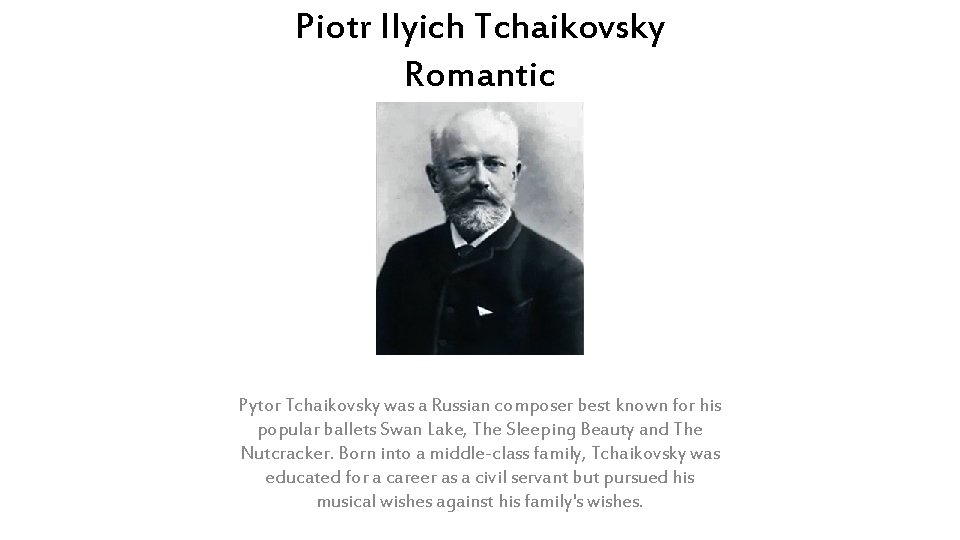
Piotr Ilyich Tchaikovsky Romantic Pytor Tchaikovsky was a Russian composer best known for his popular ballets Swan Lake, The Sleeping Beauty and The Nutcracker. Born into a middle-class family, Tchaikovsky was educated for a career as a civil servant but pursued his musical wishes against his family's wishes.
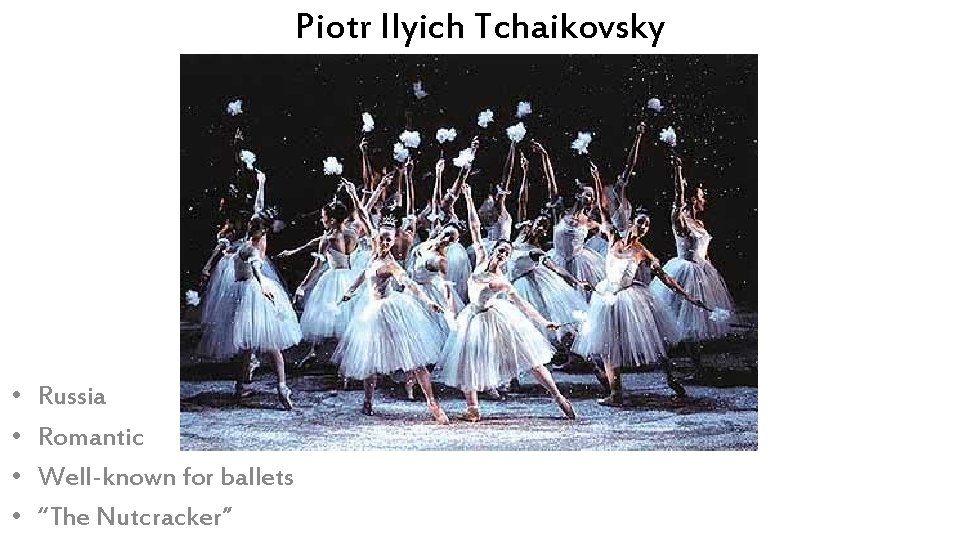
Piotr Ilyich Tchaikovsky • • Russia Romantic Well-known for ballets “The Nutcracker”
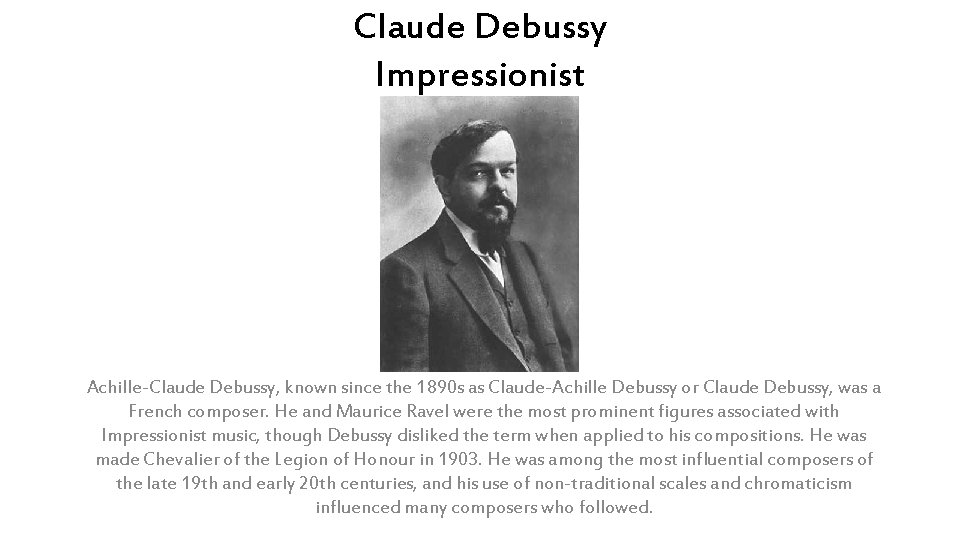
Claude Debussy Impressionist Achille-Claude Debussy, known since the 1890 s as Claude-Achille Debussy or Claude Debussy, was a French composer. He and Maurice Ravel were the most prominent figures associated with Impressionist music, though Debussy disliked the term when applied to his compositions. He was made Chevalier of the Legion of Honour in 1903. He was among the most influential composers of the late 19 th and early 20 th centuries, and his use of non-traditional scales and chromaticism influenced many composers who followed.
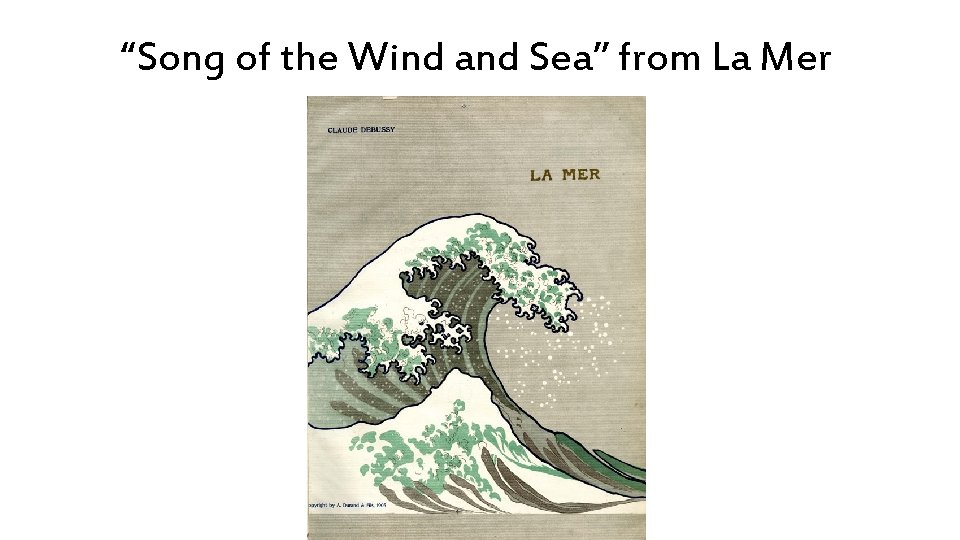
“Song of the Wind and Sea” from La Mer
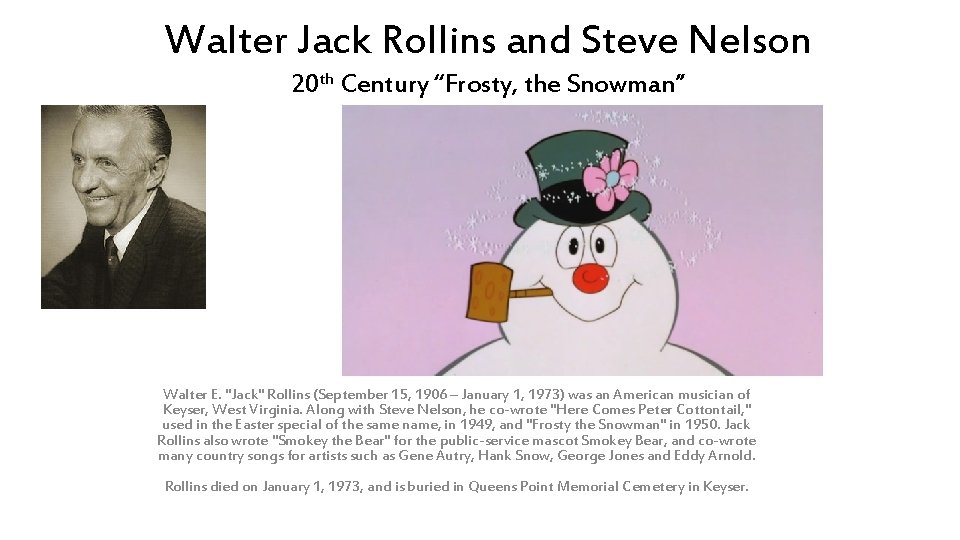
Walter Jack Rollins and Steve Nelson 20 th Century “Frosty, the Snowman” Walter E. "Jack" Rollins (September 15, 1906 – January 1, 1973) was an American musician of Keyser, West Virginia. Along with Steve Nelson, he co-wrote "Here Comes Peter Cottontail, " used in the Easter special of the same name, in 1949, and "Frosty the Snowman" in 1950. Jack Rollins also wrote "Smokey the Bear" for the public-service mascot Smokey Bear, and co-wrote many country songs for artists such as Gene Autry, Hank Snow, George Jones and Eddy Arnold. Rollins died on January 1, 1973, and is buried in Queens Point Memorial Cemetery in Keyser.
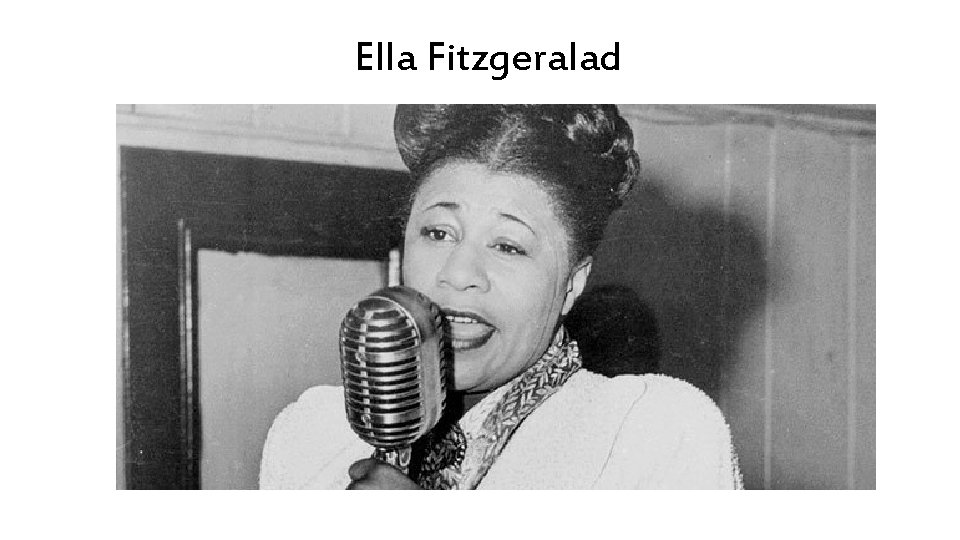
Ella Fitzgeralad
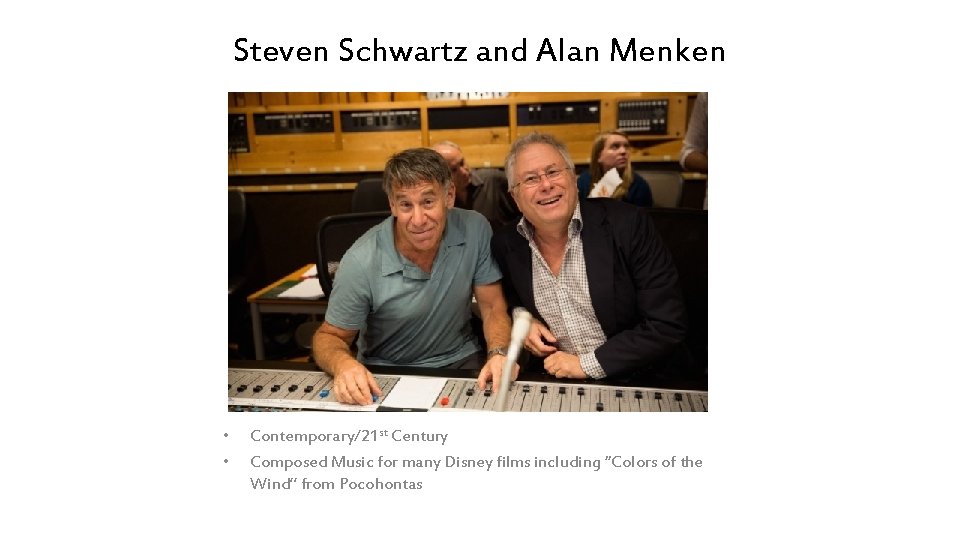
Steven Schwartz and Alan Menken • • Contemporary/21 st Century Composed Music for many Disney films including “Colors of the Wind” from Pocohontas
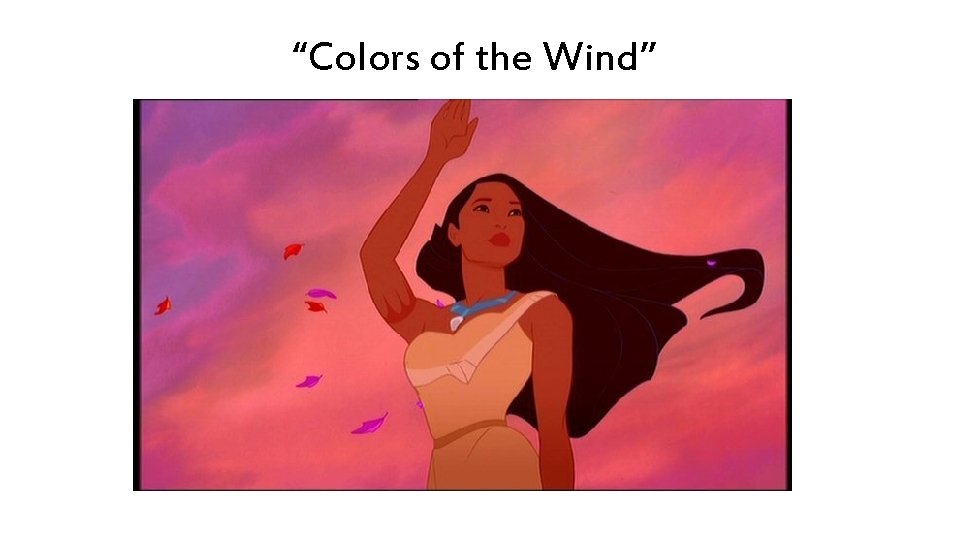
“Colors of the Wind”