
Periodontal Disease Normal Periodontium Remember which structures make
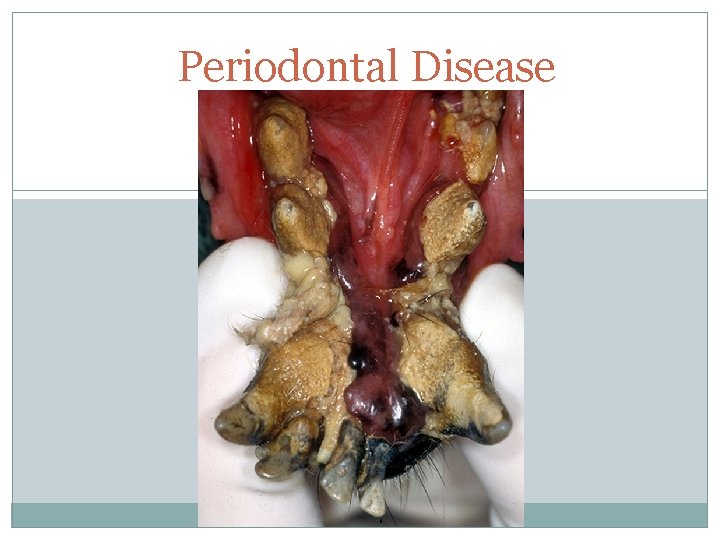
Periodontal Disease
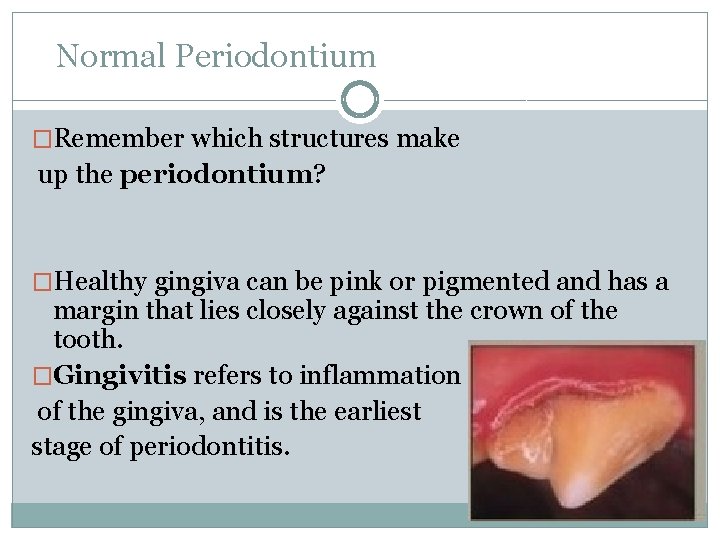
Normal Periodontium �Remember which structures make up the periodontium? �Healthy gingiva can be pink or pigmented and has a margin that lies closely against the crown of the tooth. �Gingivitis refers to inflammation of the gingiva, and is the earliest stage of periodontitis.
Periodontitis �Periodontitis is one of the most common diseases of dogs and cats. It’s caused by subgingival plaque, and the body’s response to it �Periodontitis exists in most pets over five years of age that have not received home care, but can be seen as early as six months of age. �There are four stages of periodontitis.
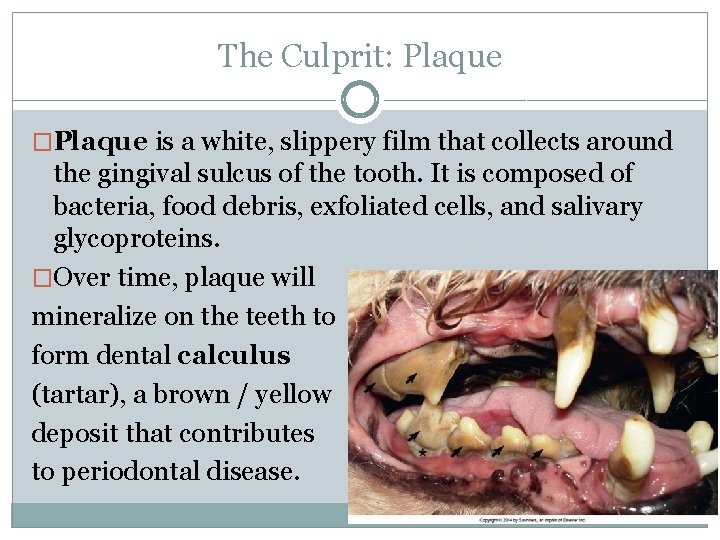
The Culprit: Plaque �Plaque is a white, slippery film that collects around the gingival sulcus of the tooth. It is composed of bacteria, food debris, exfoliated cells, and salivary glycoproteins. �Over time, plaque will mineralize on the teeth to form dental calculus (tartar), a brown / yellow deposit that contributes to periodontal disease.
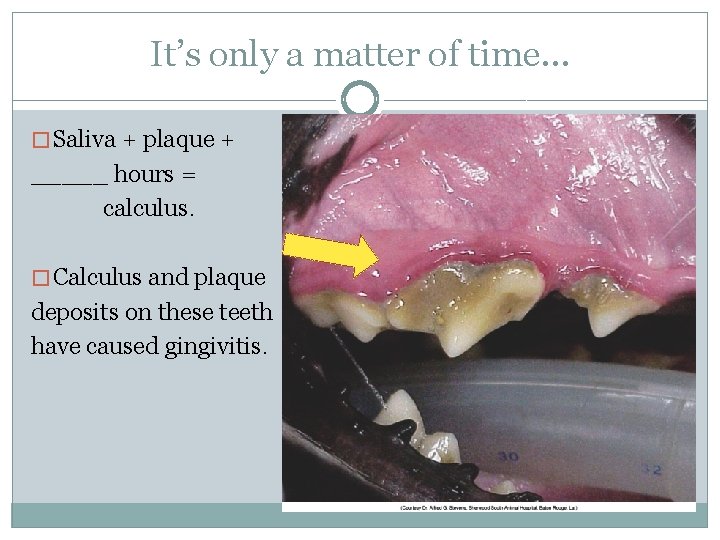
It’s only a matter of time… � Saliva + plaque + _____ hours = calculus. � Calculus and plaque deposits on these teeth have caused gingivitis.
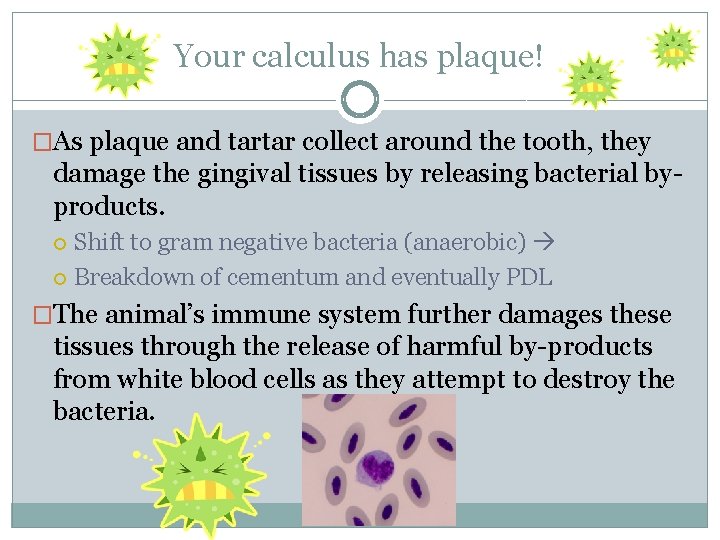
Your calculus has plaque! �As plaque and tartar collect around the tooth, they damage the gingival tissues by releasing bacterial byproducts. Shift to gram negative bacteria (anaerobic) Breakdown of cementum and eventually PDL �The animal’s immune system further damages these tissues through the release of harmful by-products from white blood cells as they attempt to destroy the bacteria.
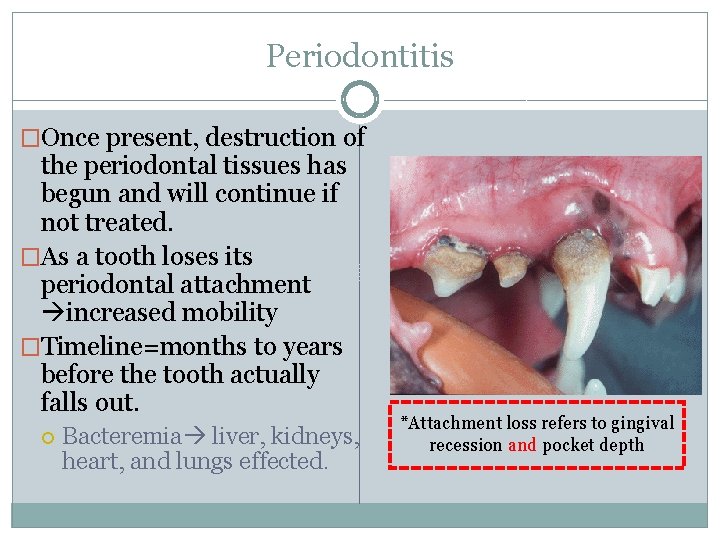
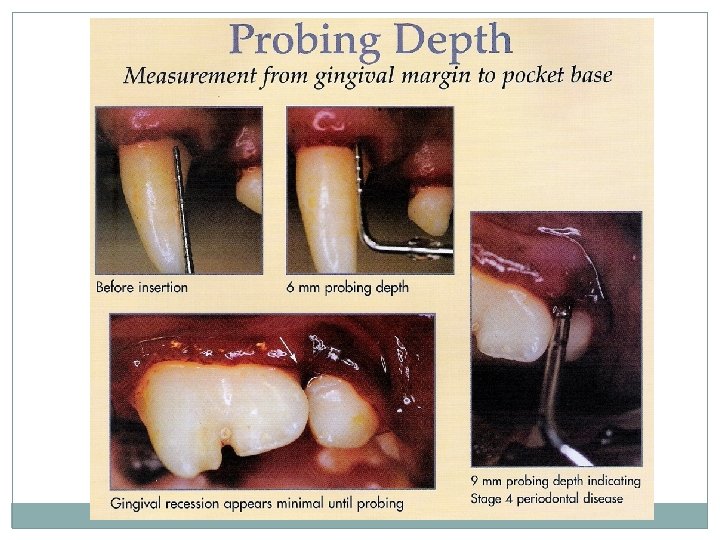
Periodontitis �Once present, destruction of the periodontal tissues has begun and will continue if not treated. �As a tooth loses its periodontal attachment increased mobility �Timeline=months to years before the tooth actually falls out. Bacteremia liver, kidneys, heart, and lungs effected. *Attachment loss refers to gingival recession and pocket depth
Stage I Periodontitis �Also referred to as gingivitis. �Animal presents with reddened gingival tissues. �First thing that owners notice is halitosis (bad breath). �Time of onset depends on diet and home care; can occur as early as 6 months of age. Canned food promotes gum disease. Hard, dry food generally better for gingival health. �Can be treated/cured with professional dental cleaning.
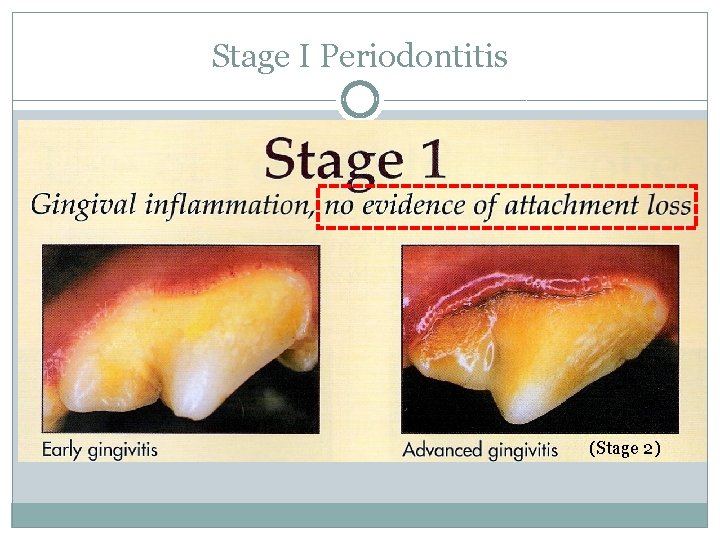
Stage I Periodontitis (Stage 2)

Stage II Periodontitis �Early stage of gum disease; early periodontitis. �Examination will reveal inflammation and plaque at free gingival margin with edema present. �Halitosis is very apparent. �Most dogs between 1 – 4 years of age when stage II occurs. �With scaling, polishing, and home care this stage is treatable and usually curable. �Stage II can also be called advanced gingivitis.

Stage II Periodontitis
Stage III Periodontitis �The established stage; 25 -50% attachment loss �Swelling, inflammation, and pocket formation (from attachment loss) are present. *Note: this stage is the change from gingivitis, which is reversible with treatment, to true periodontitis, which is only controllable with therapy. �Bone loss may be seen on dental x-rays. �Patient presents with horrible halitosis. �Animals that suffer from stage III disease have owners who are not educated on, cannot, or do not wish to perform home care.
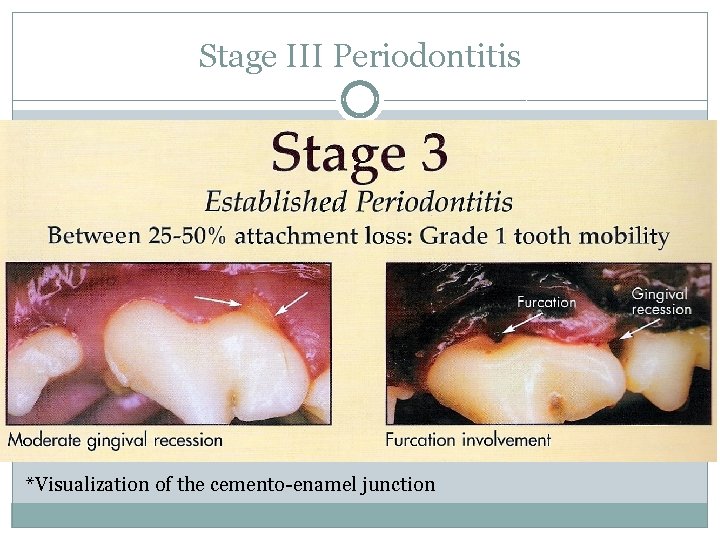
Stage III Periodontitis *Visualization of the cemento-enamel junction
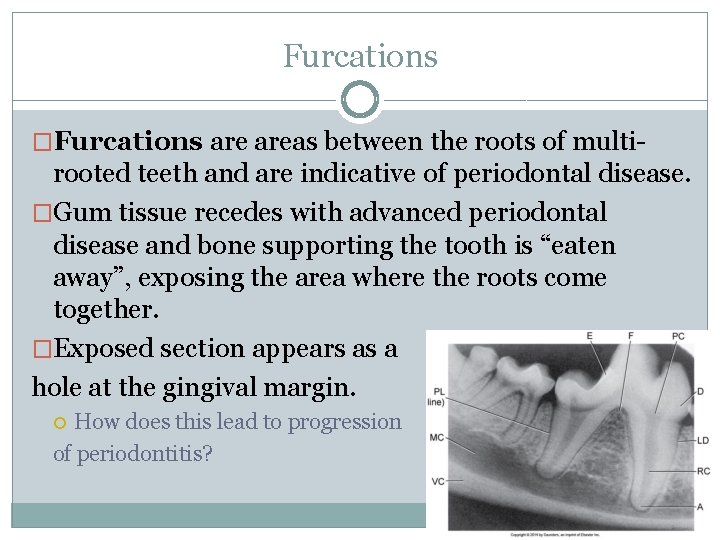
Furcations �Furcations areas between the roots of multi- rooted teeth and are indicative of periodontal disease. �Gum tissue recedes with advanced periodontal disease and bone supporting the tooth is “eaten away”, exposing the area where the roots come together. �Exposed section appears as a hole at the gingival margin. How does this lead to progression of periodontitis?
- Slides: 15