
Periodontal Debridement Cleaning the teeth CTVT pgs 1322
Periodontal Debridement “Cleaning the teeth” CTVT pgs 1322 -32 & 1311 -15
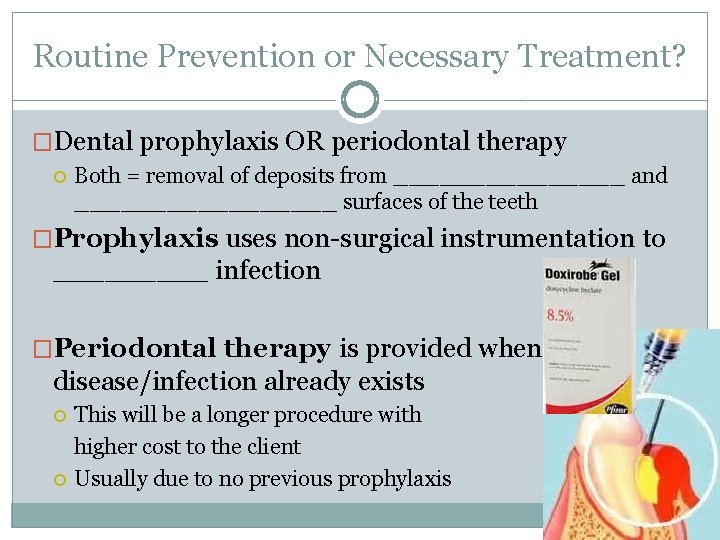
Routine Prevention or Necessary Treatment? �Dental prophylaxis OR periodontal therapy Both = removal of deposits from ________ and _________ surfaces of the teeth �Prophylaxis uses non-surgical instrumentation to _____ infection �Periodontal therapy is provided when disease/infection already exists This will be a longer procedure with higher cost to the client Usually due to no previous prophylaxis
What is done during a dental cleaning? �Examine the crowns for abnormalities Explore any concerning areas �Remove large amounts of calculus �Check for attachment loss �Ultrasonically scale above and below the gingival margin �Hand scale any necessary areas Remove all plaque and calculus! �Polish all scaled areas �Report all abnormalities to VIC �Chart all findings If none, record WNL
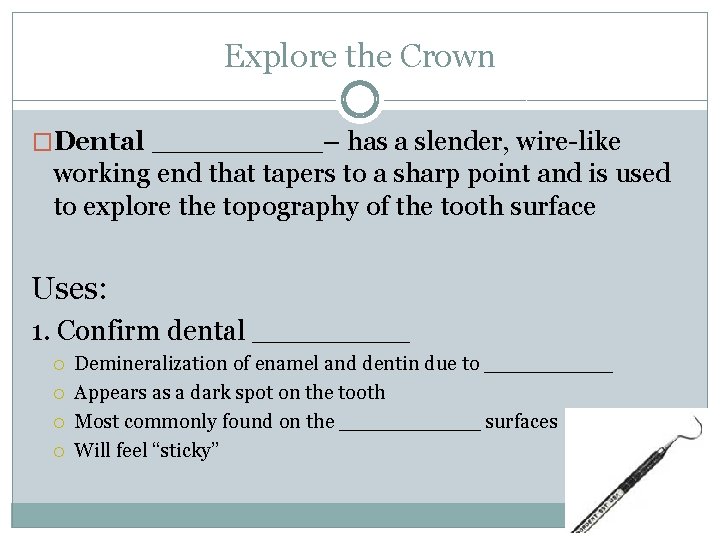
Explore the Crown �Dental _____– has a slender, wire-like working end that tapers to a sharp point and is used to explore the topography of the tooth surface Uses: 1. Confirm dental ____ Demineralization of enamel and dentin due to _____ Appears as a dark spot on the tooth Most commonly found on the ______ surfaces Will feel “sticky”
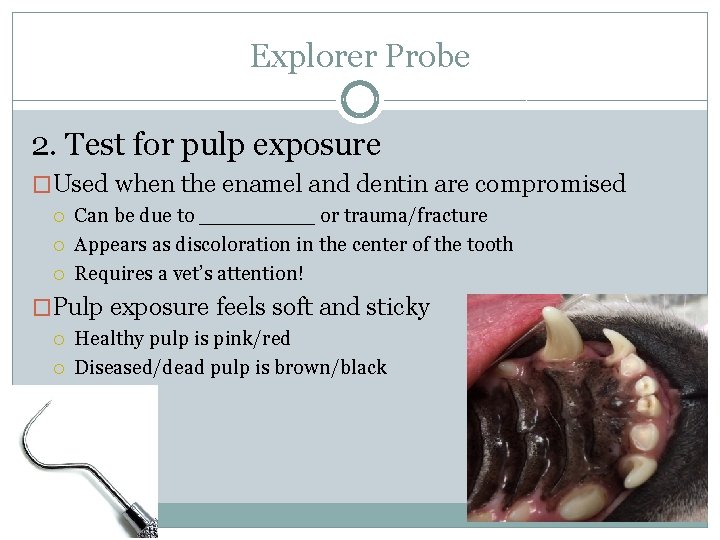
Explorer Probe 2. Test for pulp exposure �Used when the enamel and dentin are compromised Can be due to _____ or trauma/fracture Appears as discoloration in the center of the tooth Requires a vet’s attention! �Pulp exposure feels soft and sticky Healthy pulp is pink/red Diseased/dead pulp is brown/black
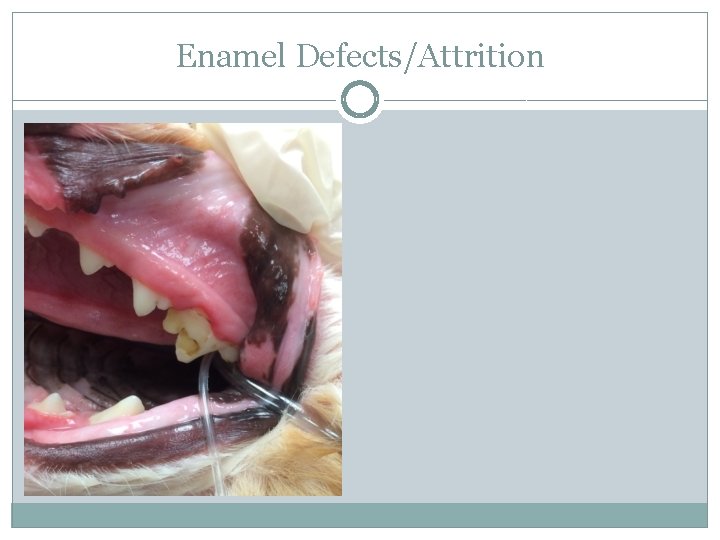
Enamel Defects/Attrition
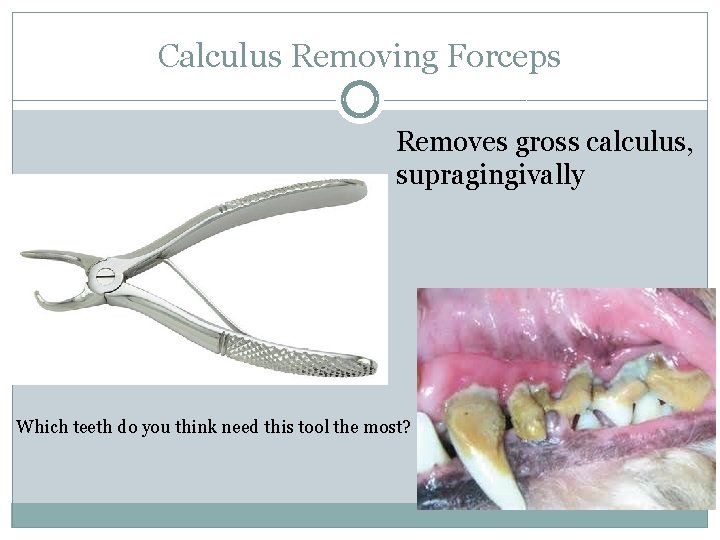
Calculus Removing Forceps Removes gross calculus, supragingivally Which teeth do you think need this tool the most?
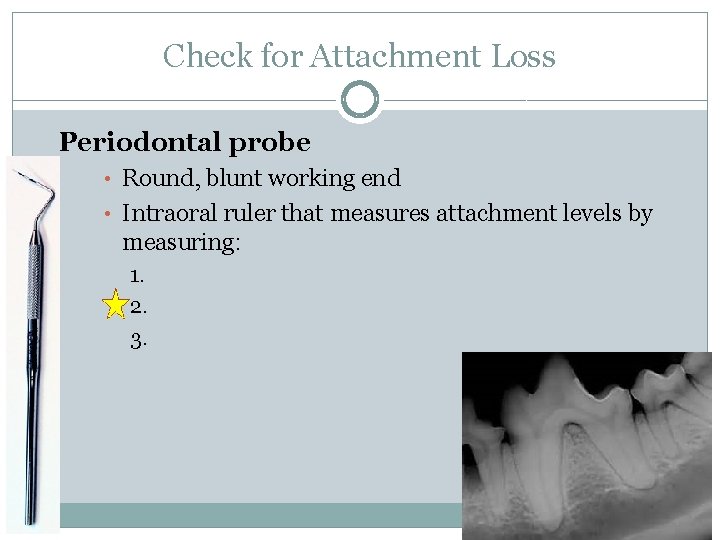
Check for Attachment Loss Periodontal probe • Round, blunt working end • Intraoral ruler that measures attachment levels by measuring: 1. 2. 3.
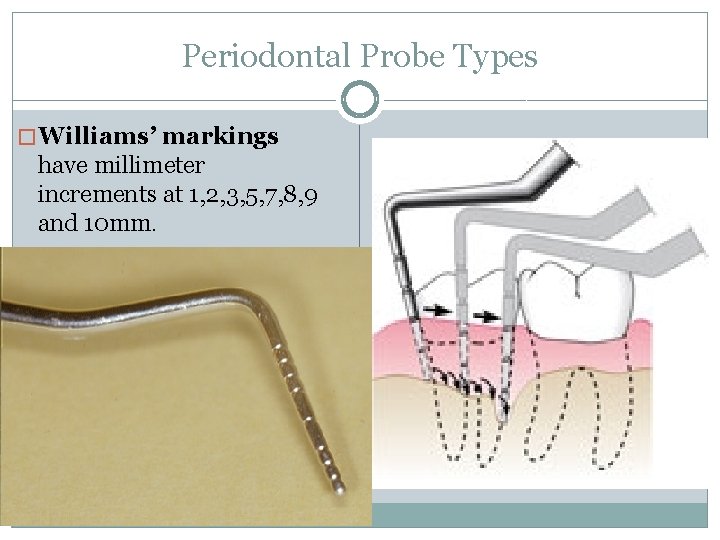
Periodontal Probe Types � Williams’ markings have millimeter increments at 1, 2, 3, 5, 7, 8, 9 and 10 mm.
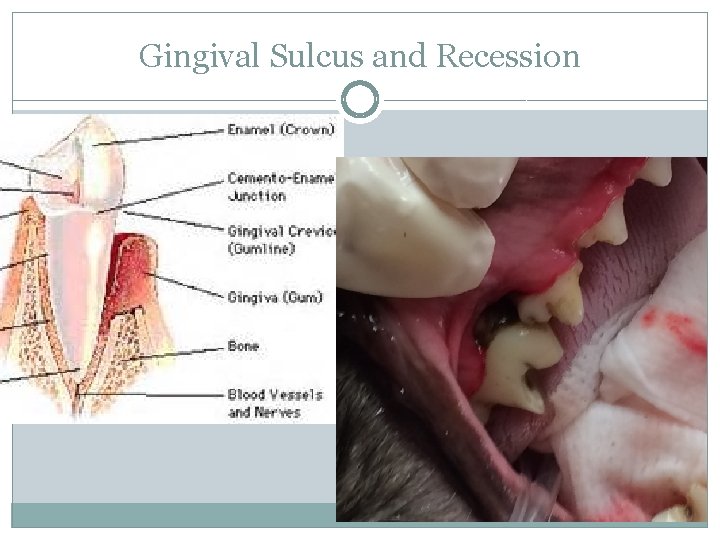
Gingival Sulcus and Recession
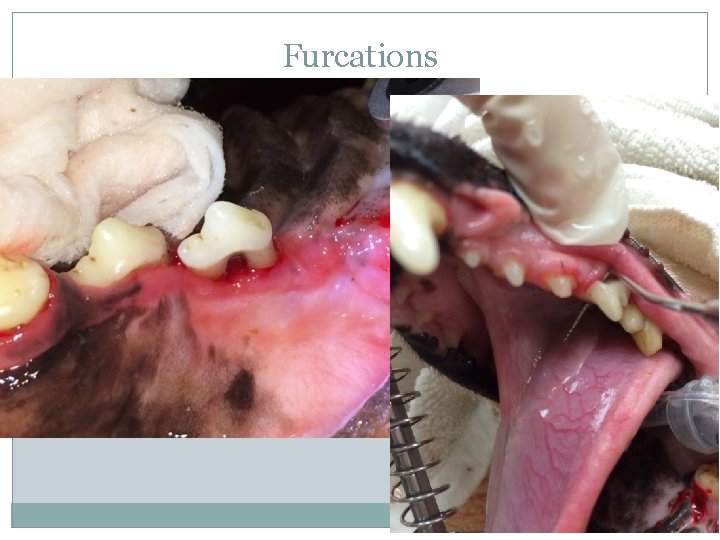
Furcations
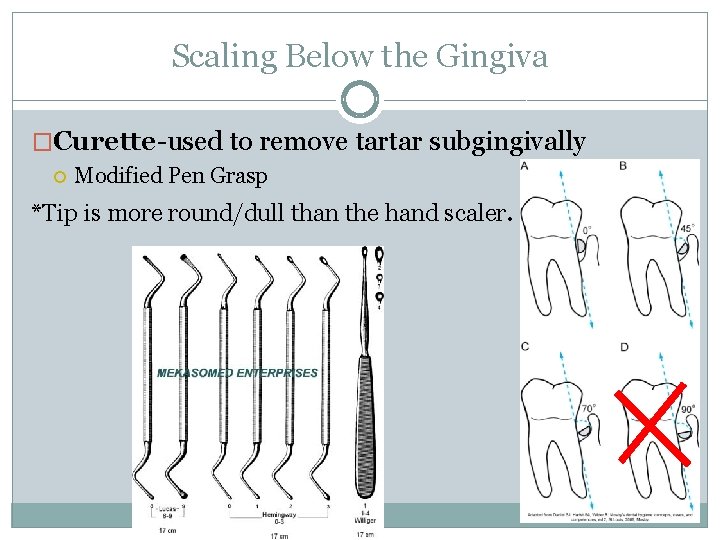
Scaling Below the Gingiva �Curette-used to remove tartar subgingivally Modified Pen Grasp *Tip is more round/dull than the hand scaler.
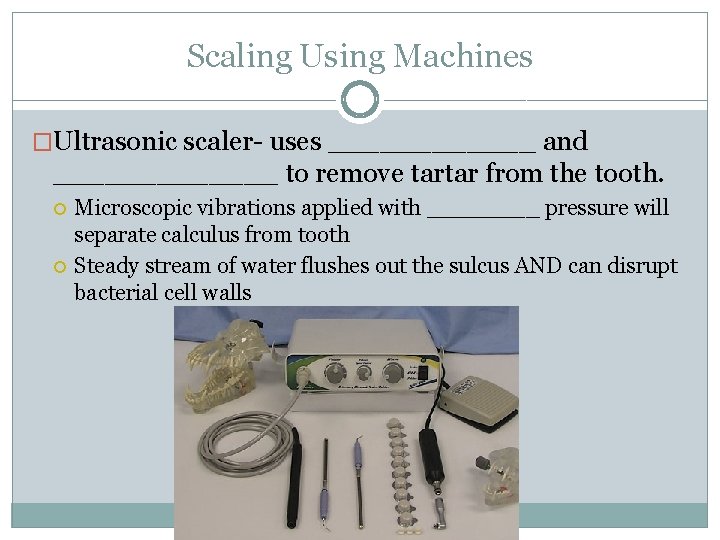
Scaling Using Machines �Ultrasonic scaler- uses ______ and _______ to remove tartar from the tooth. Microscopic vibrations applied with ____ pressure will separate calculus from tooth Steady stream of water flushes out the sulcus AND can disrupt bacterial cell walls
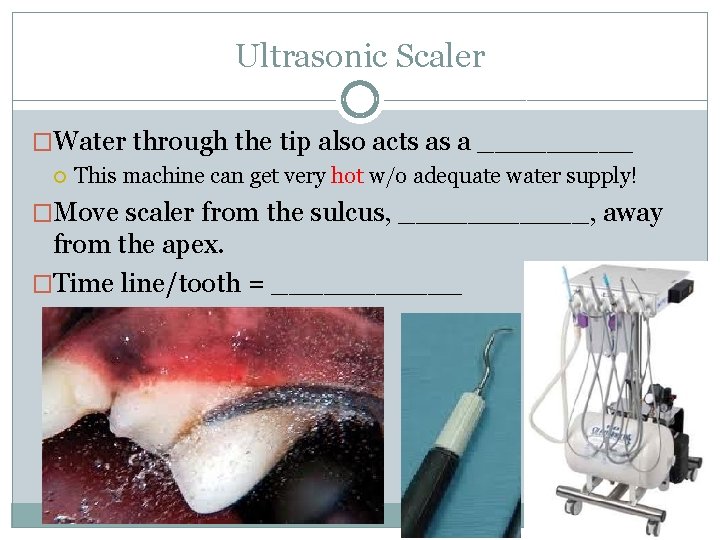
Ultrasonic Scaler �Water through the tip also acts as a _____ This machine can get very hot w/o adequate water supply! �Move scaler from the sulcus, ______, away from the apex. �Time line/tooth = ______
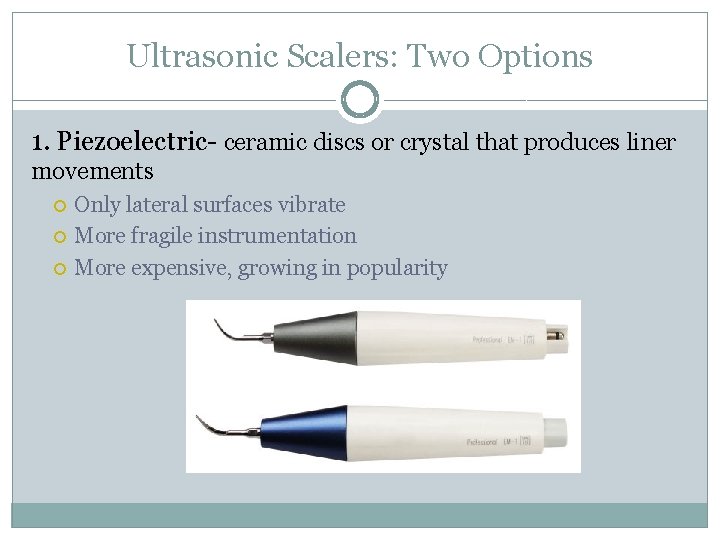
Ultrasonic Scalers: Two Options 1. Piezoelectric- ceramic discs or crystal that produces liner movements Only lateral surfaces vibrate More fragile instrumentation More expensive, growing in popularity
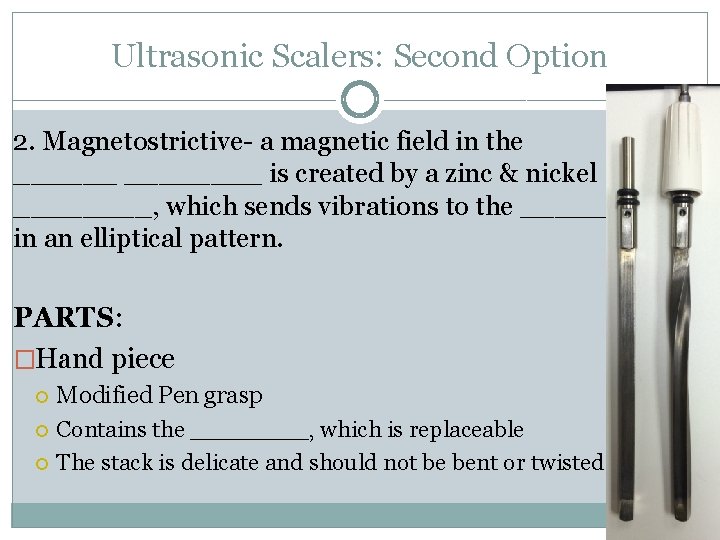
Ultrasonic Scalers: Second Option 2. Magnetostrictive- a magnetic field in the ________ is created by a zinc & nickel ____, which sends vibrations to the ______ in an elliptical pattern. PARTS: �Hand piece Modified Pen grasp Contains the ____, which is replaceable The stack is delicate and should not be bent or twisted!
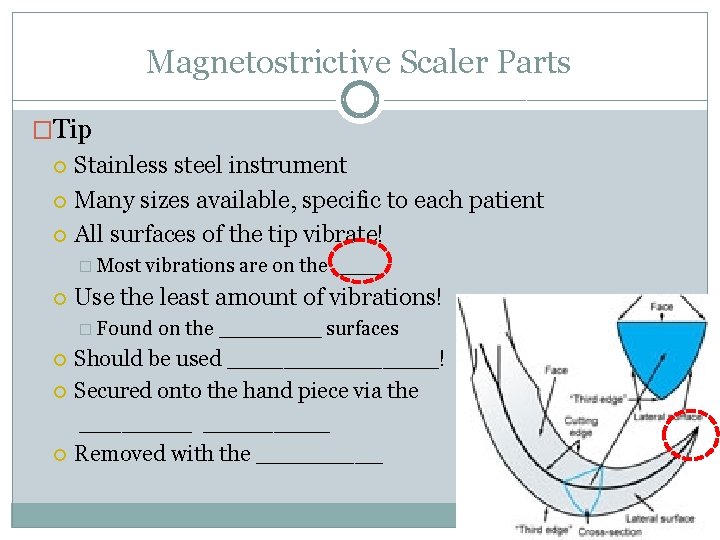
Magnetostrictive Scaler Parts �Tip Stainless steel instrument Many sizes available, specific to each patient All surfaces of the tip vibrate! � Most vibrations are on the ____ Use the least amount of vibrations! � Found on the ____ surfaces Should be used ________! Secured onto the hand piece via the _________ Removed with the _____
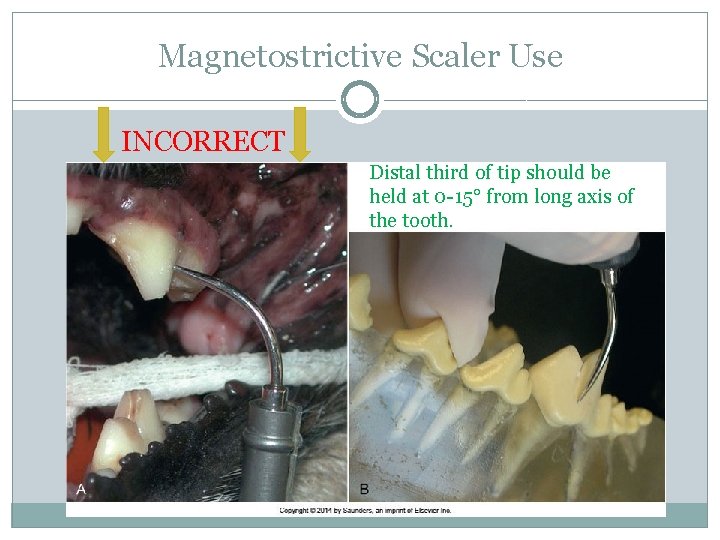
Magnetostrictive Scaler Use INCORRECT Distal third of tip should be held at 0 -15° from long axis of the tooth.
Using the Ultrasonic Scaler �Machine must be plugged in & then turned on �Must have a water source Amount of water used to scale is adjustable with a dial 1. Sink- machine attaches to the sink nozzle; use cold water 2. _____ water tank- must be _______ and locked into place �Machine is operated via a foot pedal �To scale, set dial to “scale” Select desired tip- place on the hand piece until “_____” Start power around 5, increase if needed
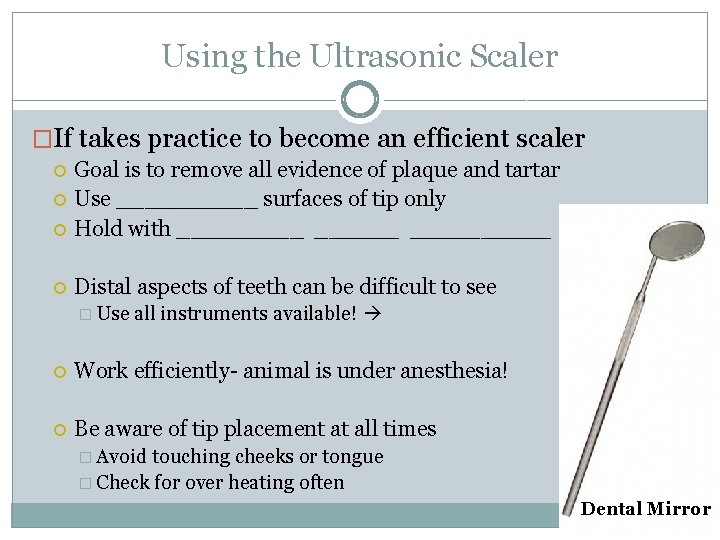
Using the Ultrasonic Scaler �If takes practice to become an efficient scaler Goal is to remove all evidence of plaque and tartar Use _____ surfaces of tip only Hold with __________ Distal aspects of teeth can be difficult to see � Use all instruments available! Work efficiently- animal is under anesthesia! Be aware of tip placement at all times � Avoid touching cheeks or tongue � Check for over heating often Dental Mirror
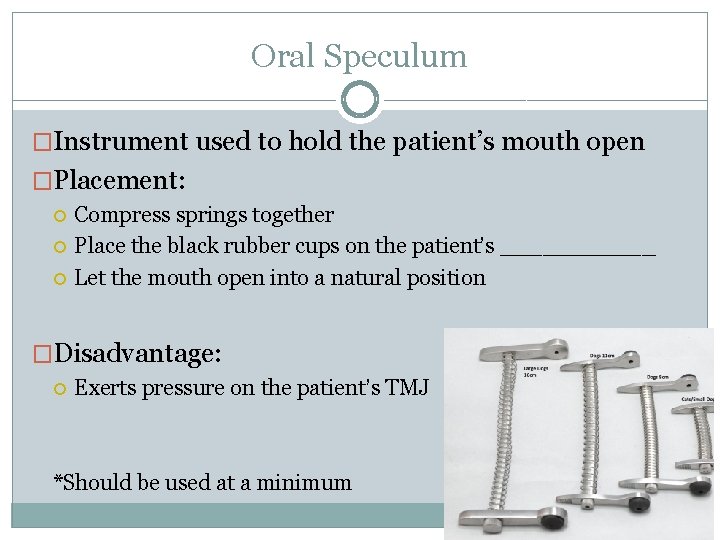
Oral Speculum �Instrument used to hold the patient’s mouth open �Placement: Compress springs together Place the black rubber cups on the patient’s ______ Let the mouth open into a natural position �Disadvantage: Exerts pressure on the patient’s TMJ *Should be used at a minimum
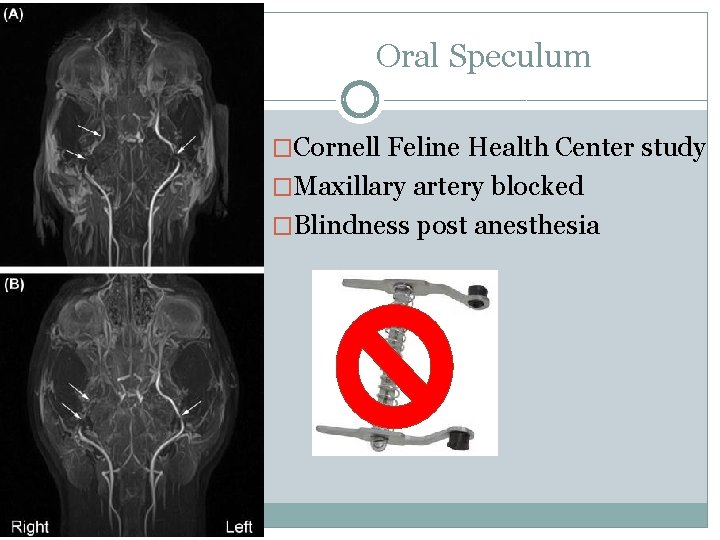
Oral Speculum �Cornell Feline Health Center study �Maxillary artery blocked �Blindness post anesthesia
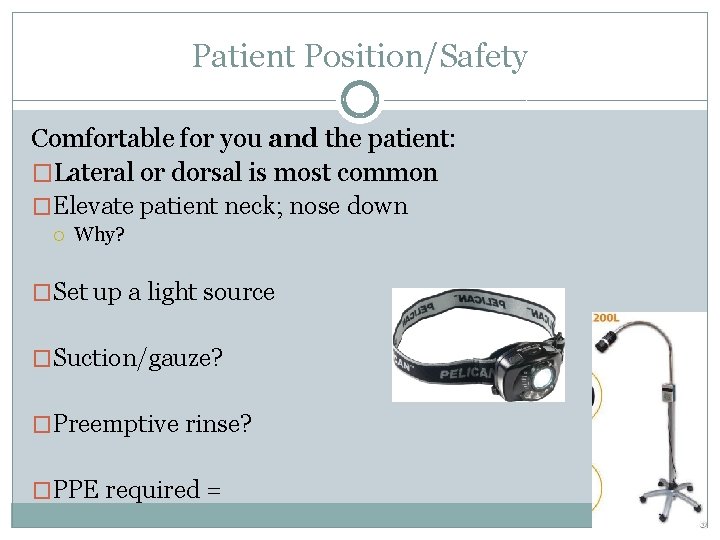
Patient Position/Safety Comfortable for you and the patient: �Lateral or dorsal is most common �Elevate patient neck; nose down Why? �Set up a light source �Suction/gauze? �Preemptive rinse? �PPE required =
Complications/Risks �Soft tissue burns �Trauma to the teeth �Aspiration of fluid
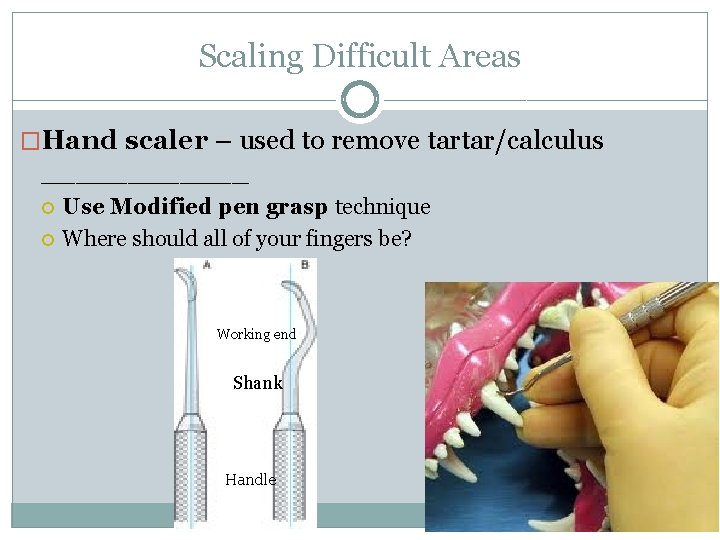
Scaling Difficult Areas �Hand scaler – used to remove tartar/calculus ______ Use Modified pen grasp technique Where should all of your fingers be? Working end Shank Handle
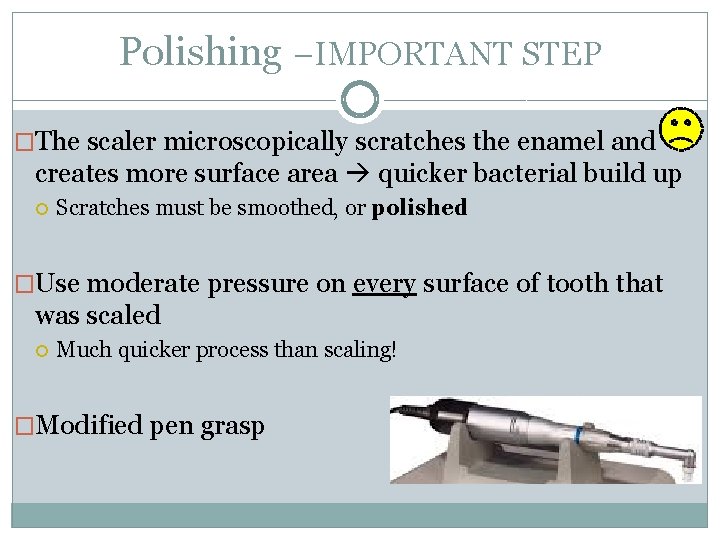
Polishing –IMPORTANT STEP �The scaler microscopically scratches the enamel and creates more surface area quicker bacterial build up Scratches must be smoothed, or polished �Use moderate pressure on every surface of tooth that was scaled Much quicker process than scaling! �Modified pen grasp
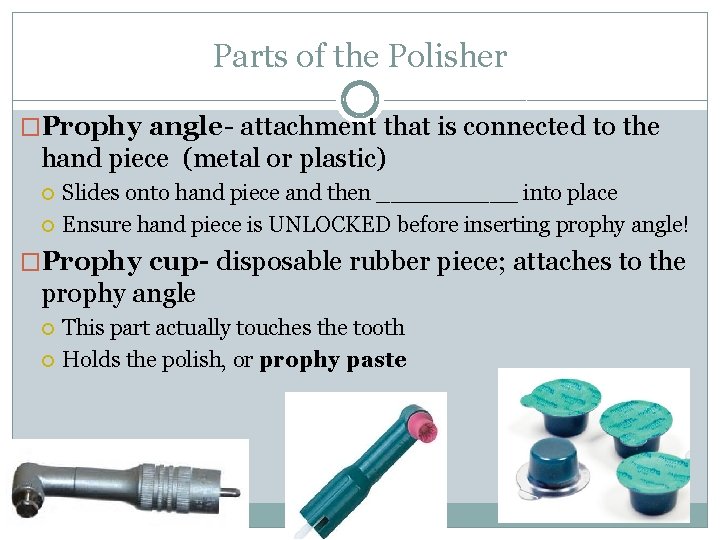
Parts of the Polisher �Prophy angle- attachment that is connected to the hand piece (metal or plastic) Slides onto hand piece and then _____ into place Ensure hand piece is UNLOCKED before inserting prophy angle! �Prophy cup- disposable rubber piece; attaches to the prophy angle This part actually touches the tooth Holds the polish, or prophy paste
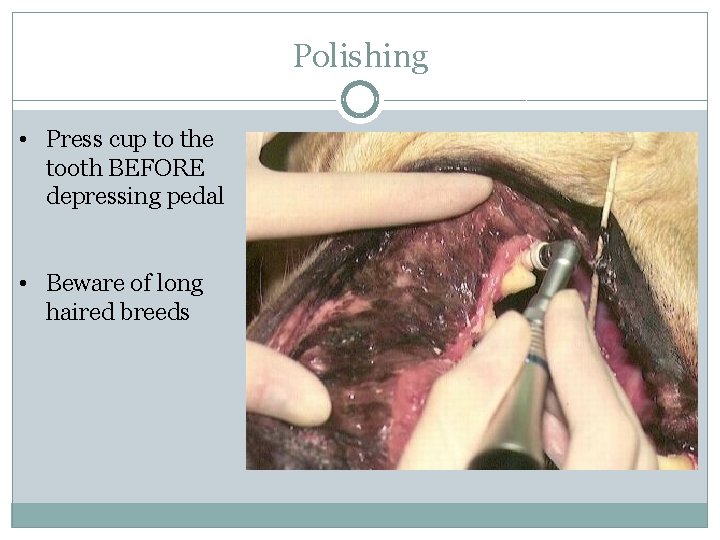
Polishing • Press cup to the tooth BEFORE depressing pedal • Beware of long haired breeds
- Slides: 28