
Periodic Table Chemistry of Living Systems The standards
Periodic Table & Chemistry of Living Systems

The standards
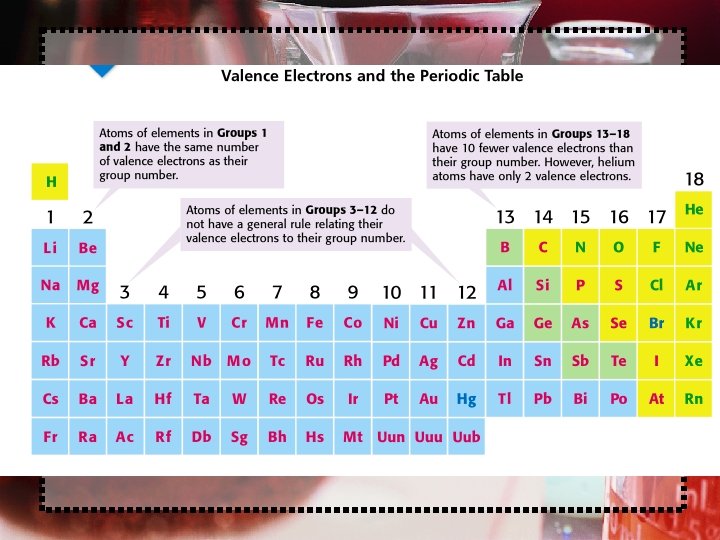
Metals, Nonmetals, & Metalloids: State whether each property is a Metal (M), Nonmetal (N) or Metalloid (D). • • • __ malleable __ ductile __semiconductors __ lustrous __ conductive __ metallic bonding __ brittle __ covalent bonding ___ nonconductor _N__more than 4 valence • _N__ receives electrons in chemical reactions • _M_ gives away electrons in chemical reactions • _D__ possesses properties of both metals & nonmetals • __ typically have a half set of valence electrons • __N_ gaseous at room temperature
Chemistry of Living Systems
The Standards:
1. What are organic compounds? • Molecules made out of carbon
2. Why is carbon such an important element? • It has 4 valence electrons • This lets it bond to a lot of other atoms, including other carbons • It forms huge chains of carbon backbones • It is the basis for MANY molecules of living things
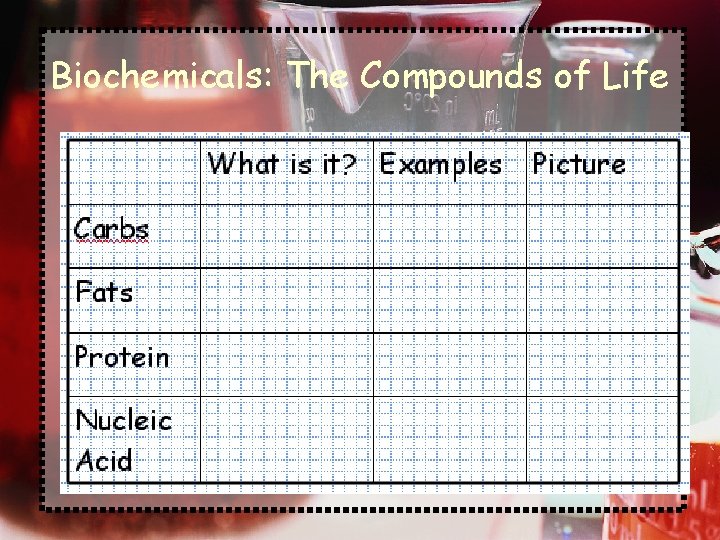
Biochemicals: The Compounds of Life
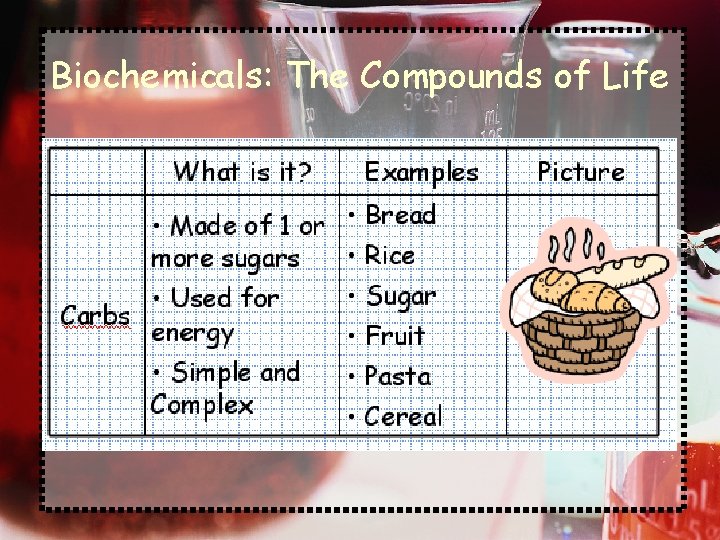
Biochemicals: The Compounds of Life
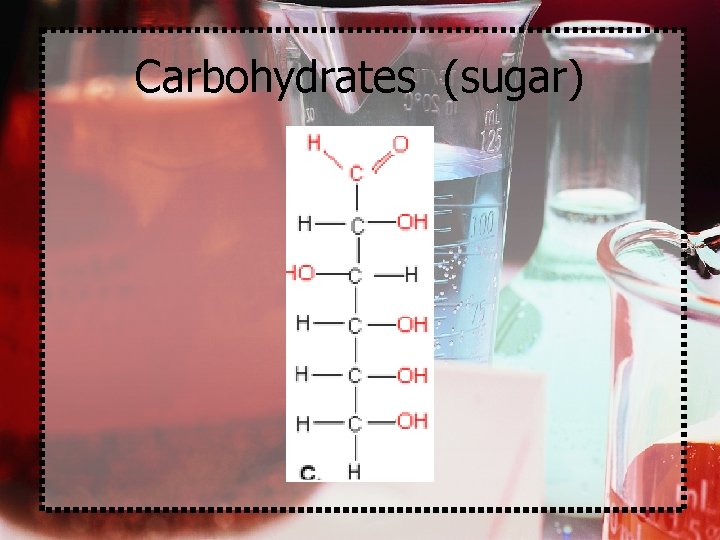
Carbohydrates (sugar)
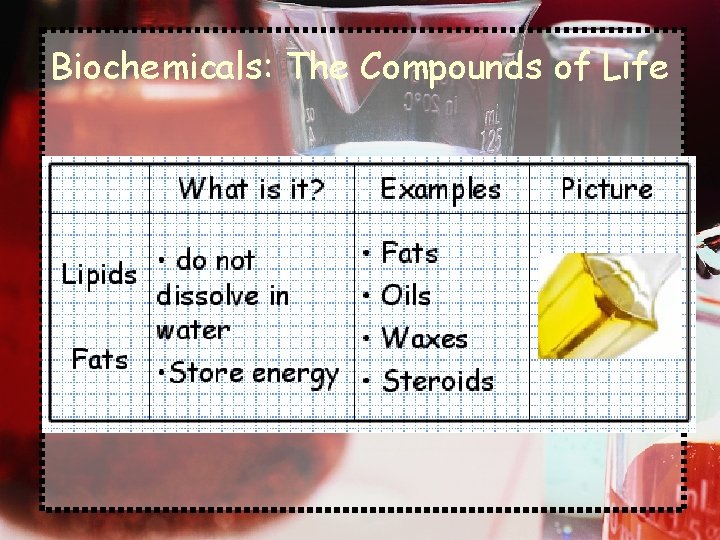
Biochemicals: The Compounds of Life
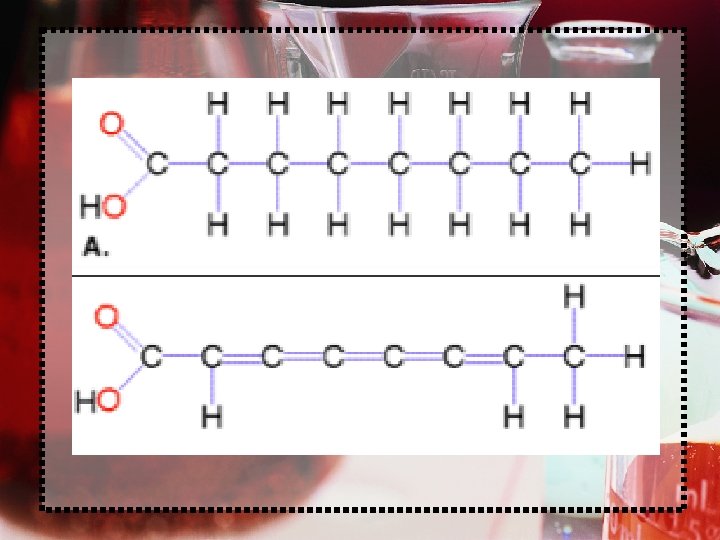
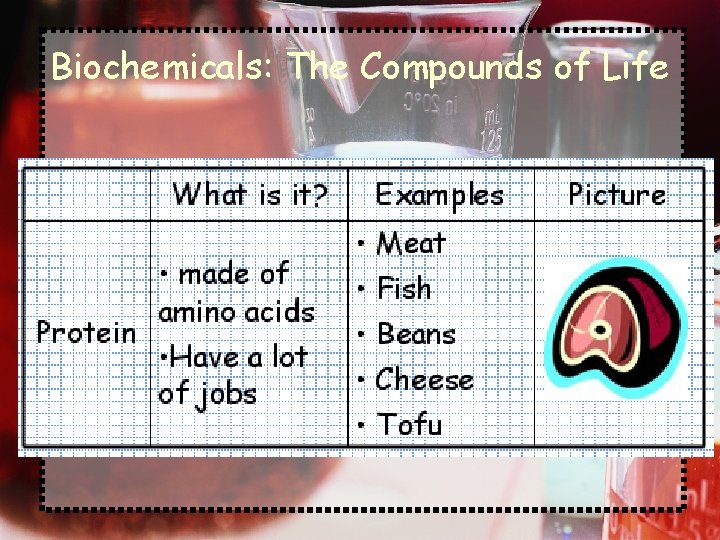
Biochemicals: The Compounds of Life
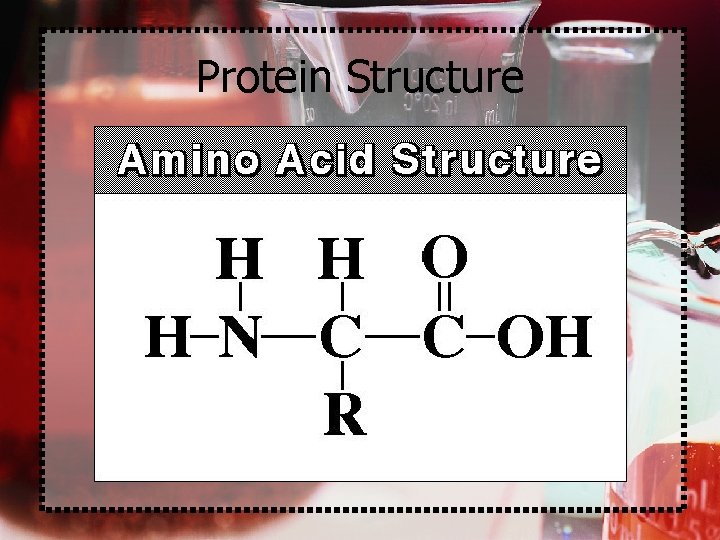
Protein Structure
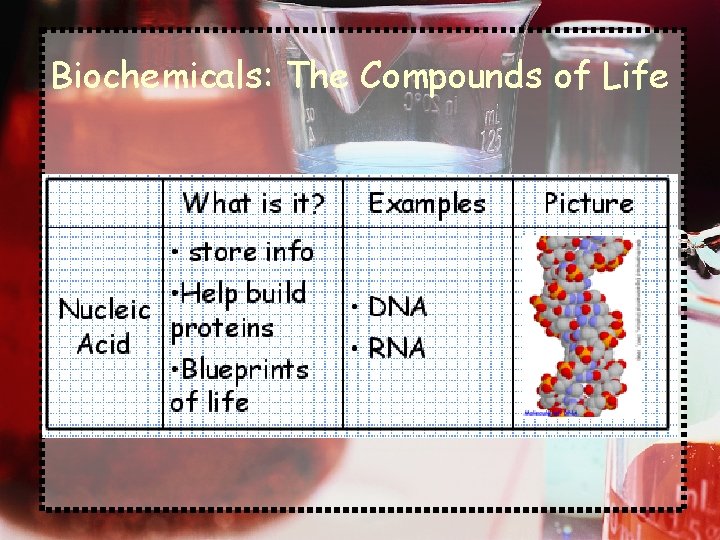
Biochemicals: The Compounds of Life
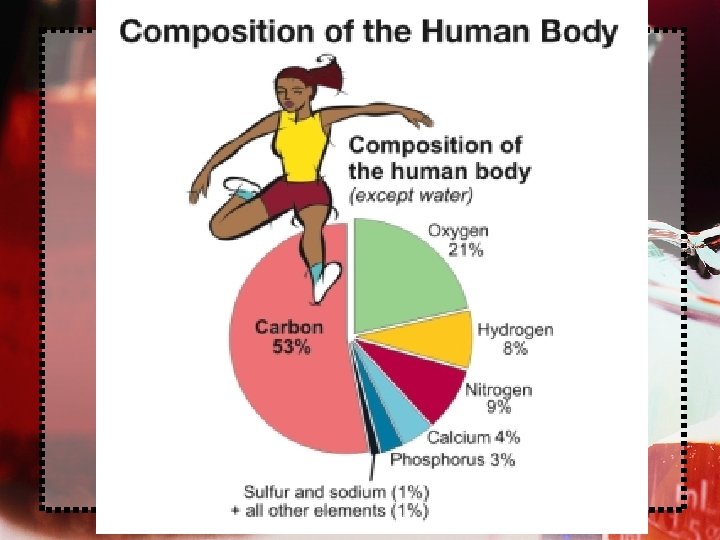
Composition of the Human Body Did you know that your body is made out of the following (minus water)? 53% Carbon 21% Oxygen 9% Nitrogen 8% Hydrogen 4% Calcium 3% Phosphorous 2% Sulfur, Sodium, and all other elements
Composition of the Human Body • Time to figure out what this is in pounds! • First, how much do you weigh? • Total Weight: ______ pounds.
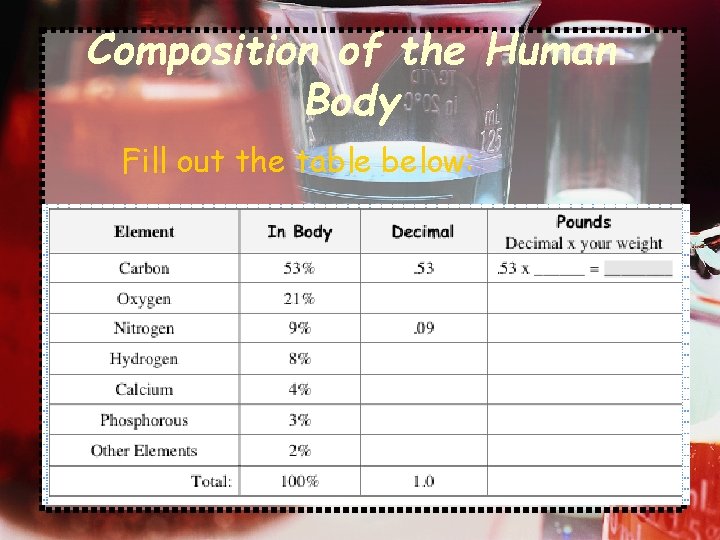
Composition of the Human Body Fill out the table below:
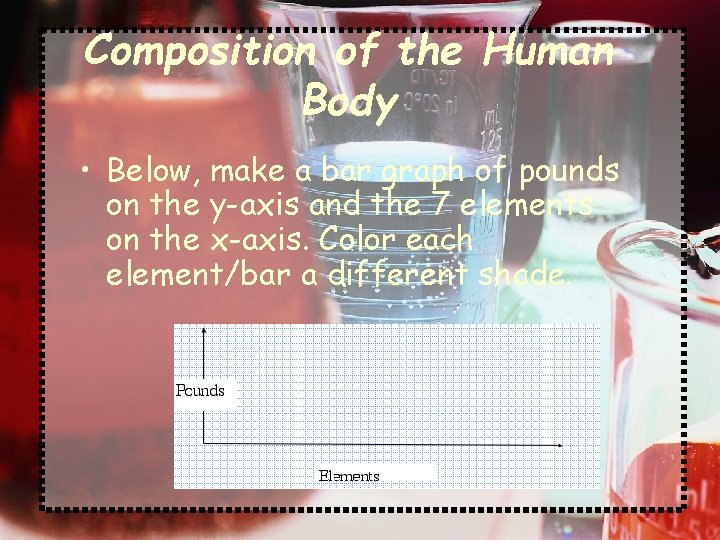
Composition of the Human Body • Below, make a bar graph of pounds on the y-axis and the 7 elements on the x-axis. Color each element/bar a different shade.
The Blueprint of Life • Every cell in your body has the same "blueprint" or the same DNA. • Like the blueprints of a house tell the builders how to construct a house, the DNA "blueprint" tells the cell how to build the organism. • Yet, how can a heart be so
The Blueprint of Life • Although much work remains in genetics, it has become apparent that a cell has the ability to turn off most genes and only work with the genes necessary to do a job. • We also know that a lot of DNA apparently is nonsense and
Questions: • 1. Write out the full name for DNA. • Deoxyribonucleic Acid • 2. What is a gene? • The segment of DNA on a chromosome that directs the making of a specific protein, thus controlling traits that
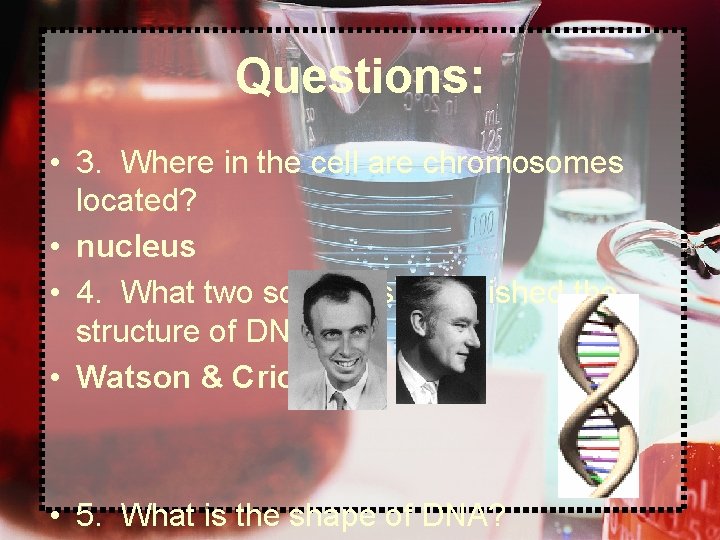
Questions: • 3. Where in the cell are chromosomes located? • nucleus • 4. What two scientists established the structure of DNA? • Watson & Crick • 5. What is the shape of DNA?
Questions • 6. What are the sides of the DNA ladder made of? • Sugar & Phosphate molecules • 7. What are the "rungs" of the DNA ladder made of? • Adenine, Thymine, Cytosine, Guanine • 8. What sugar is found in DNA?
Questions • 9. How do the bases bond together? • A bonds with T G bonds with C • 10. Why is DNA called the "Blueprint of Life"?
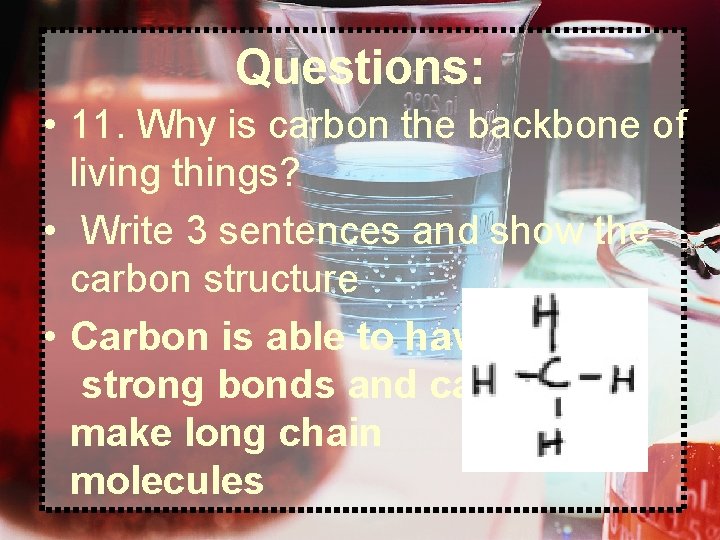
Questions: • 11. Why is carbon the backbone of living things? • Write 3 sentences and show the carbon structure • Carbon is able to have 4 strong bonds and can make long chain molecules
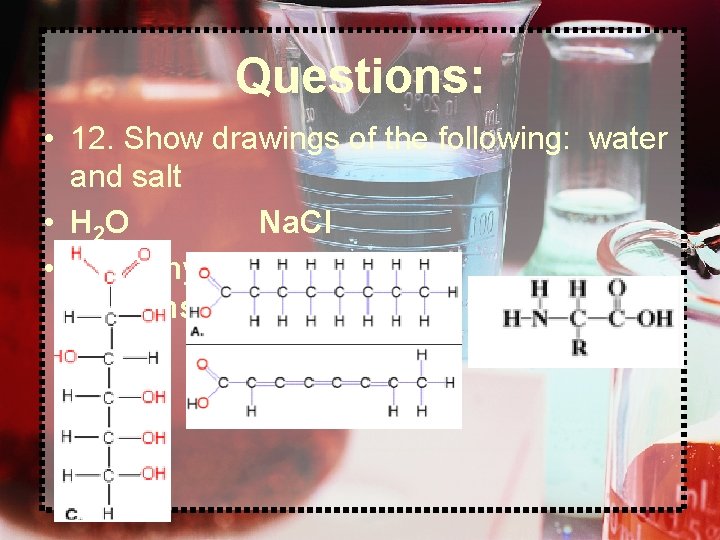
Questions: • 12. Show drawings of the following: water and salt • H 2 O Na. Cl • Carbohydrates, fats, proteins
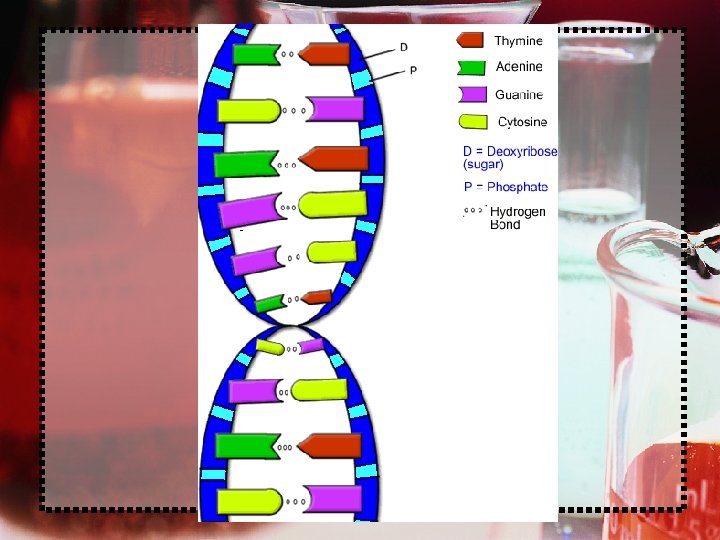
DNA Structure The rungs of the ladder are pairs of 4 types of nitrogen bases. The bases are known by their coded letters A, G, T, C. These bases always bond in a certain way. Adenine will only bond to thymine. Guanine will only bond with cytosine. This is known as the "Base-Pair Rule".
DNA Structure • The bases can occur in any order along a strand of DNA. • The order of these bases is the code the contains the instructions. • For instance ATGCACATA would code for a different gene than AATTACGGA. • A strand of DNA contains millions of bases.
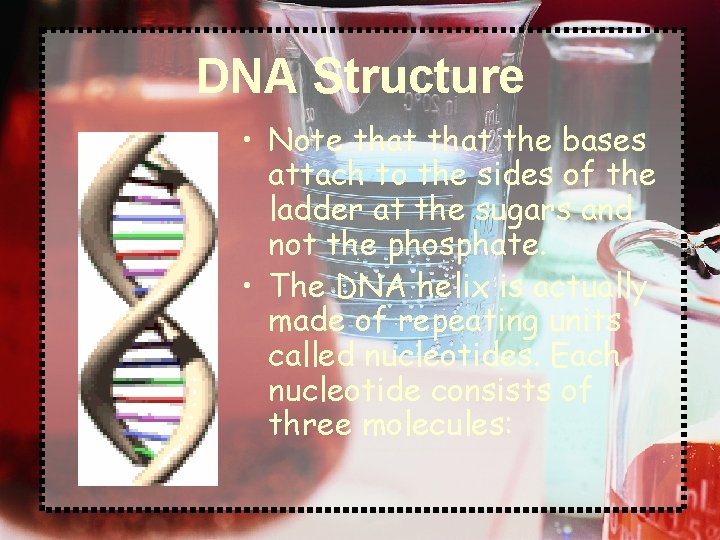
DNA Structure • Note that the bases attach to the sides of the ladder at the sugars and not the phosphate. • The DNA helix is actually made of repeating units called nucleotides. Each nucleotide consists of three molecules:
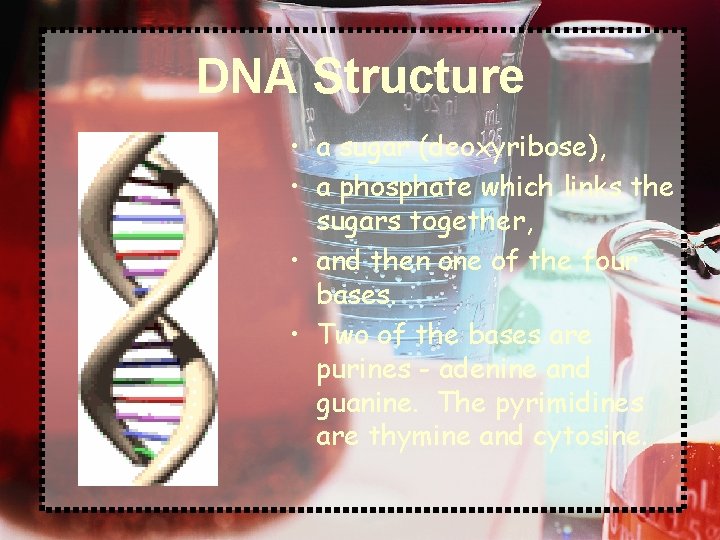
DNA Structure • a sugar (deoxyribose), • a phosphate which links the sugars together, • and then one of the four bases. • Two of the bases are purines - adenine and guanine. The pyrimidines are thymine and cytosine.
DNA Structure • The two sides of the DNA ladder are held together loosely by hydrogen bonds. • The DNA can actually "unzip" when it needs to replicate - or make a copy of itself.
DNA Structure • DNA needs to copy itself when a cell divides, so that the new cells each contain a copy of the DNA. • Without these instructions, the new cells wouldn't have the correct information. • The hydrogen bonds are represented by small circles.
- Slides: 37