
PERIODIC TABLE AEROBICS Unit 3 lec 1 IONIC
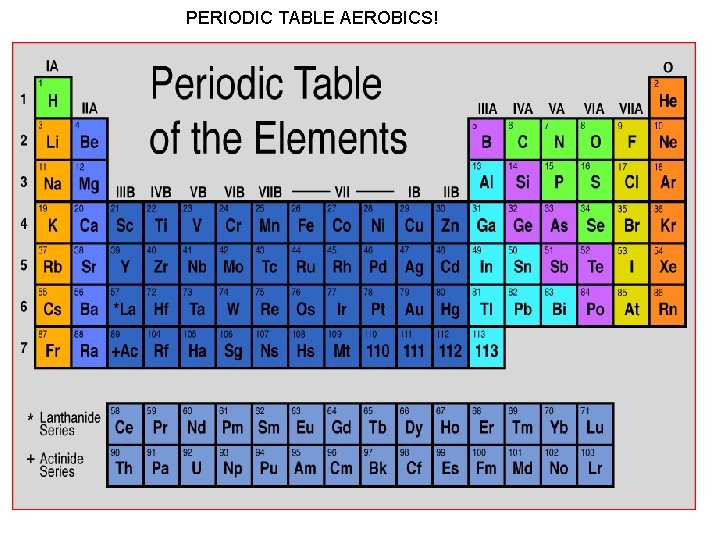
PERIODIC TABLE AEROBICS!
Unit 3 lec 1 - IONIC COMPOUNDS Properties of Ionic compounds: - Are electrolytes: conduct electricity when dissolved in water - This is because of the ions! Cations (+) and Anions (-) - Have Electrostatic attractions: - From the + and - ions This gives them STRONG bonds called a crystal lattice This makes them HARD!
- Have Strong Bonds: - Require lots of energy to break Causes high melting/boiling points - Have crystal structures - depend on the elements being bonded - They must combine to form neutral compounds! - Ex. Ca. Br 2 is from the combination of 1 Ca 2+ cation & 2 Br- anions
DRAWING IONIC COMPOUNDS: (for each of the following ion pairs DRAW how the ionic compounds are made and then write the formula) First write the Lewis structures and then make sure they are neutral. 1. ) Mg with Cl 2. ) Ca with O
3. ) Cs with I 4. ) Mg with P
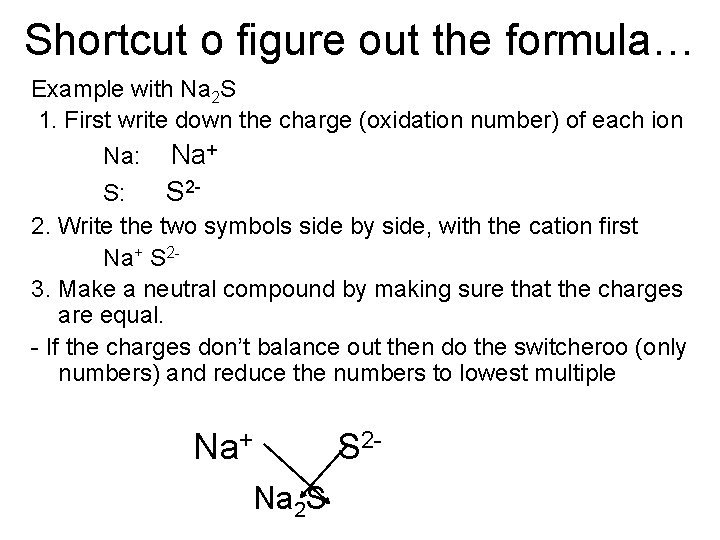
Shortcut o figure out the formula… Example with Na 2 S 1. First write down the charge (oxidation number) of each ion Na: Na+ S 2 - S: 2. Write the two symbols side by side, with the cation first Na+ S 23. Make a neutral compound by making sure that the charges are equal. - If the charges don’t balance out then do the switcheroo (only numbers) and reduce the numbers to lowest multiple Na+ S 2 Na 2 S
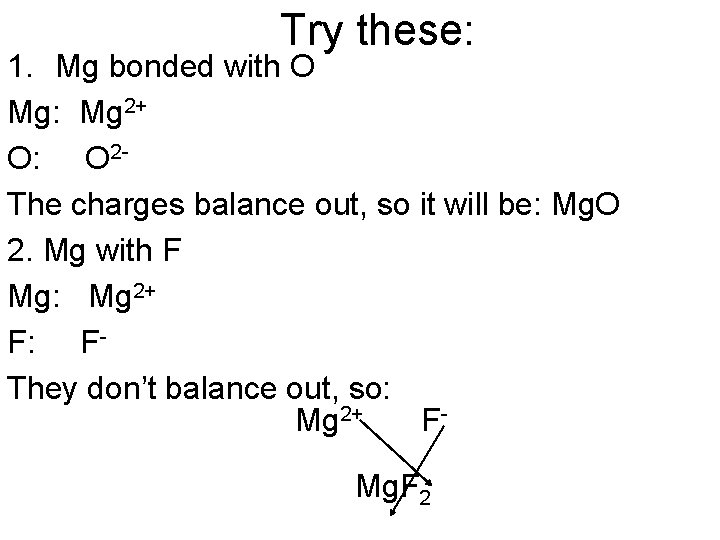
Try these: 1. Mg bonded with O Mg: Mg 2+ O: O 2 The charges balance out, so it will be: Mg. O 2. Mg with F Mg: Mg 2+ F: FThey don’t balance out, so: Mg 2+ FMg. F 2

3. Al with O 4. Sr with Cl Try these:
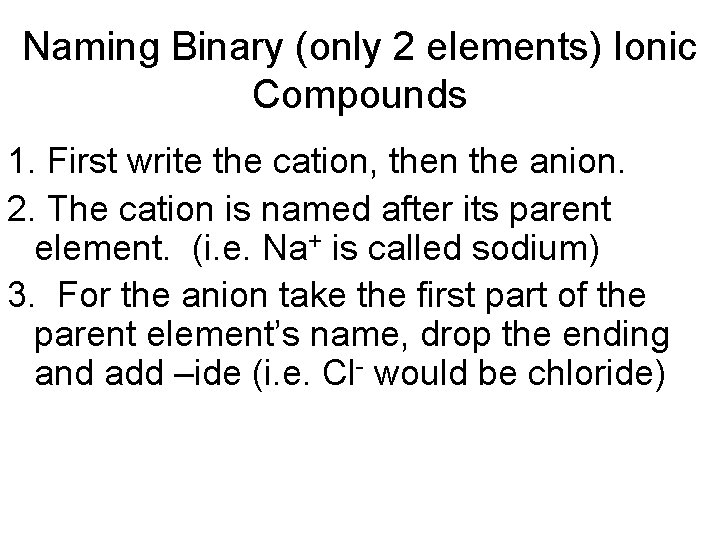
Naming Binary (only 2 elements) Ionic Compounds 1. First write the cation, then the anion. 2. The cation is named after its parent element. (i. e. Na+ is called sodium) 3. For the anion take the first part of the parent element’s name, drop the ending and add –ide (i. e. Cl- would be chloride)
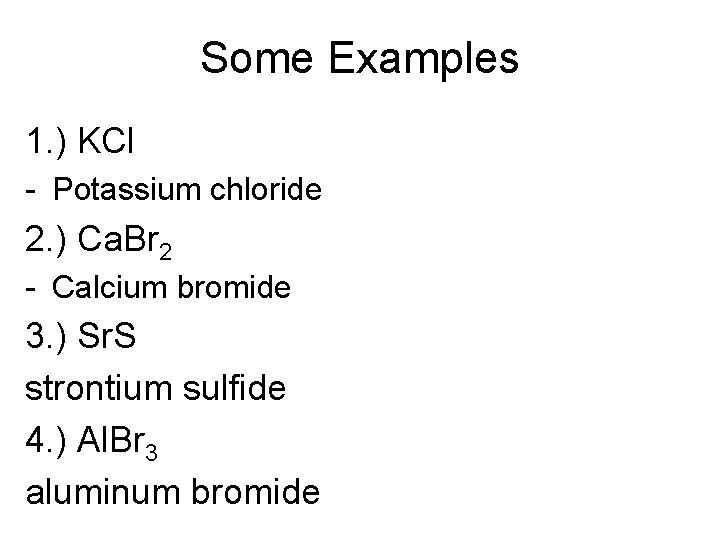
Some Examples 1. ) KCl - Potassium chloride 2. ) Ca. Br 2 - Calcium bromide 3. ) Sr. S strontium sulfide 4. ) Al. Br 3 aluminum bromide
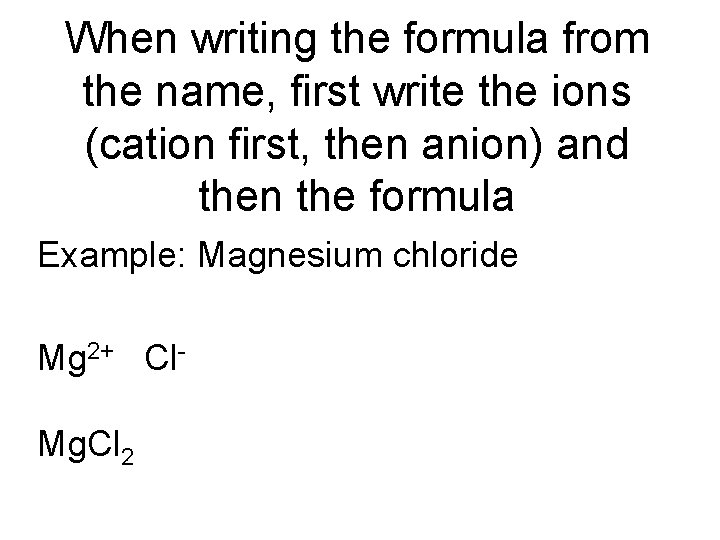
When writing the formula from the name, first write the ions (cation first, then anion) and then the formula Example: Magnesium chloride Mg 2+ Cl. Mg. Cl 2
More Examples 1. ) aluminum oxide 2. ) magnesium phosphide 3. ) Calcium oxide 4. ) lithium sulfide
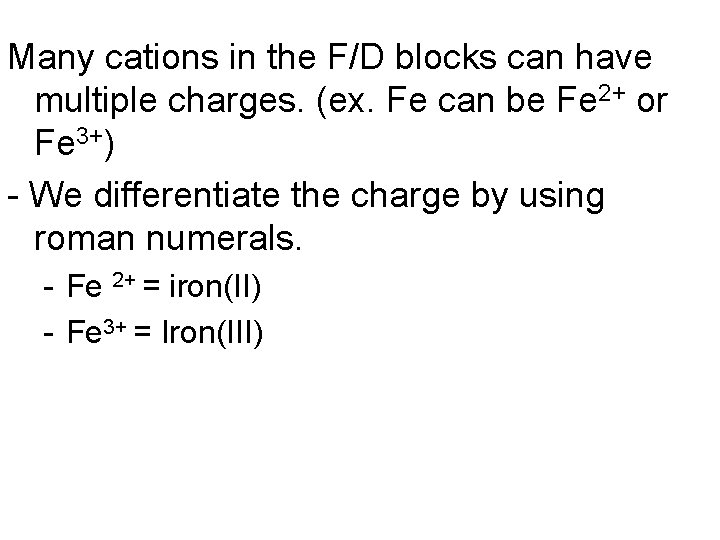
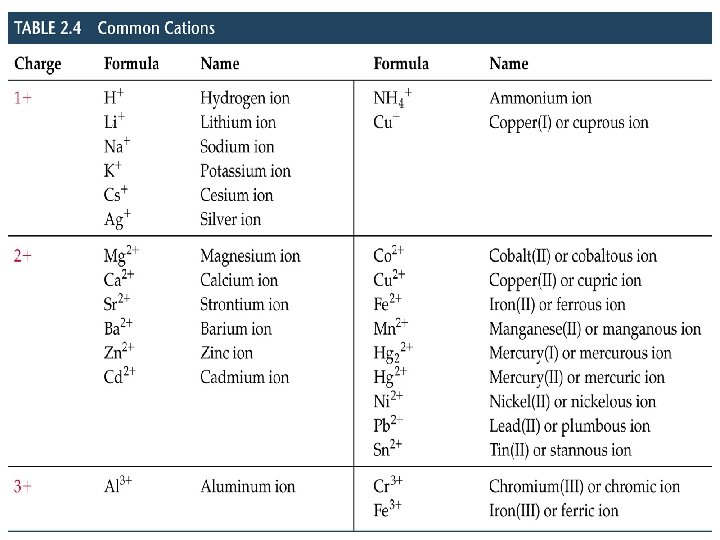
Many cations in the F/D blocks can have multiple charges. (ex. Fe can be Fe 2+ or Fe 3+) - We differentiate the charge by using roman numerals. - Fe 2+ = iron(II) - Fe 3+ = Iron(III)
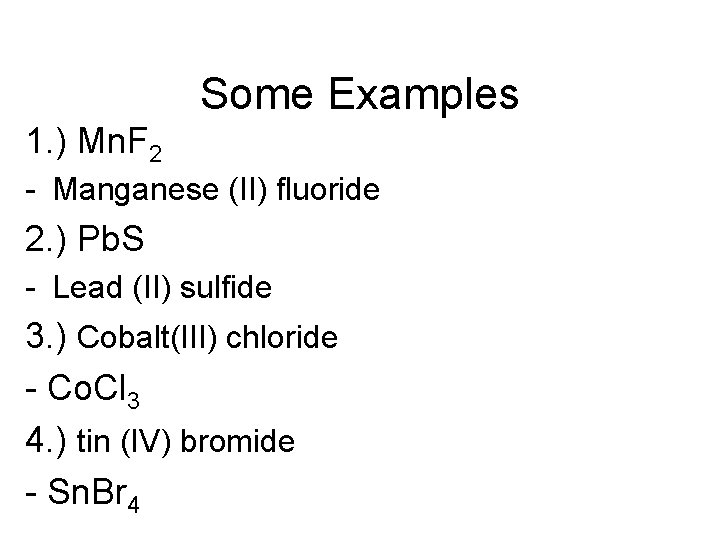
Some Examples 1. ) Mn. F 2 - Manganese (II) fluoride 2. ) Pb. S - Lead (II) sulfide 3. ) Cobalt(III) chloride - Co. Cl 3 4. ) tin (IV) bromide - Sn. Br 4
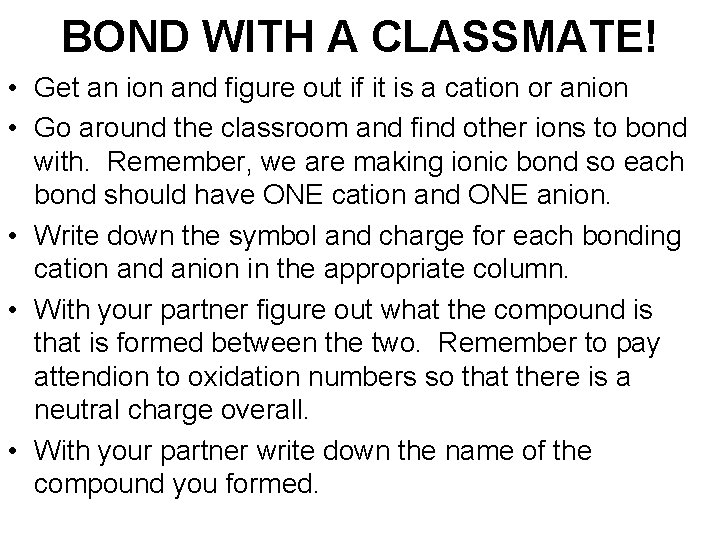
BOND WITH A CLASSMATE! • Get an ion and figure out if it is a cation or anion • Go around the classroom and find other ions to bond with. Remember, we are making ionic bond so each bond should have ONE cation and ONE anion. • Write down the symbol and charge for each bonding cation and anion in the appropriate column. • With your partner figure out what the compound is that is formed between the two. Remember to pay attendion to oxidation numbers so that there is a neutral charge overall. • With your partner write down the name of the compound you formed.
- Slides: 16