
Periodic Inventory System Periodic Inventory n n Detailed
- Slides: 21
Periodic Inventory System
Periodic Inventory n n Detailed inventory records of the goods on hand are NOT kept throughout the period Used for low-unit cost, high-volume turnover goods A physical inventory count is done to determine the quantity and cost of goods on hand at the end of the accounting period The amount is deducted from the goods available for sale to determine the COGS
Purchases n When merchandise is purchased, it is recorded in the Purchases account at cost price, not in the Inventory account (inventory is only updated at the end of the fiscal period). This is an expense account. Purchases (at Cost Price) 3800 Bank or A/P 3800 To record the Purchase of Inventory invoice #731 terms 2/10, n/30
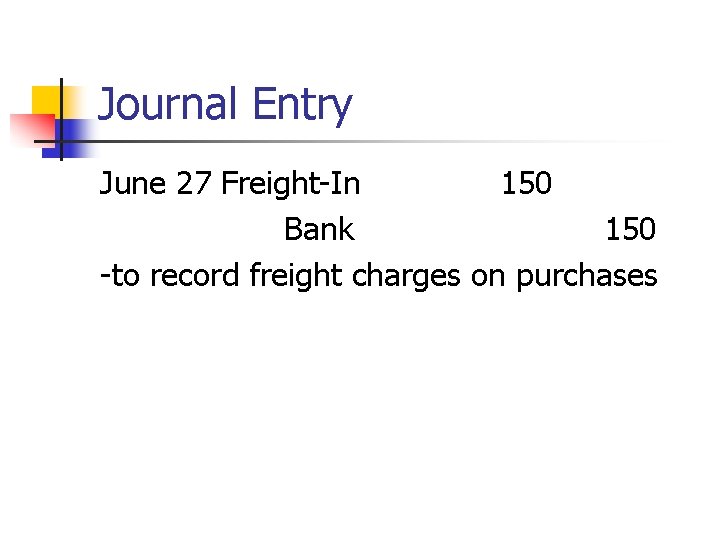
Freight-in Account (Periodic) n n n Considered part of COG purchased Used to accumulate any transportation charges on incoming goods Kept separate from transportation charges on outgoing goods (recorded in Delivery Expense) Usually placed right after Purchases account in ledger Duty – special charges imposed by the government on certain goods imported from a foreign country
Journal Entry June 27 Freight-In 150 Bank 150 -to record freight charges on purchases
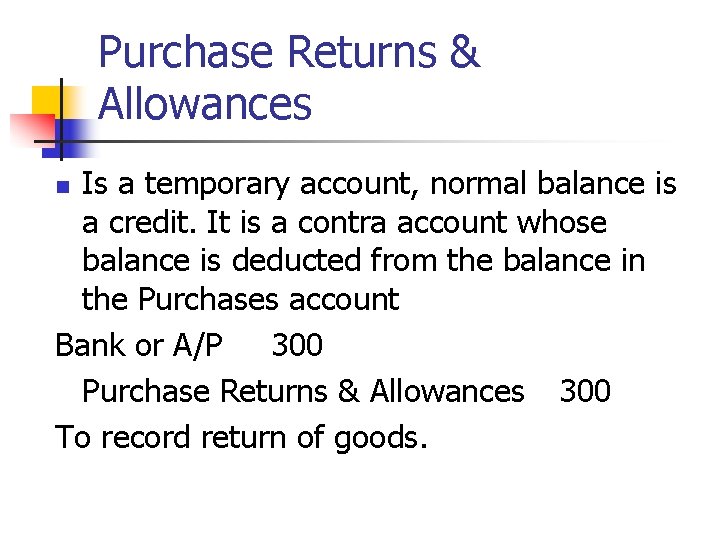
Purchase Returns & Allowances Is a temporary account, normal balance is a credit. It is a contra account whose balance is deducted from the balance in the Purchases account Bank or A/P 300 Purchase Returns & Allowances 300 To record return of goods. n
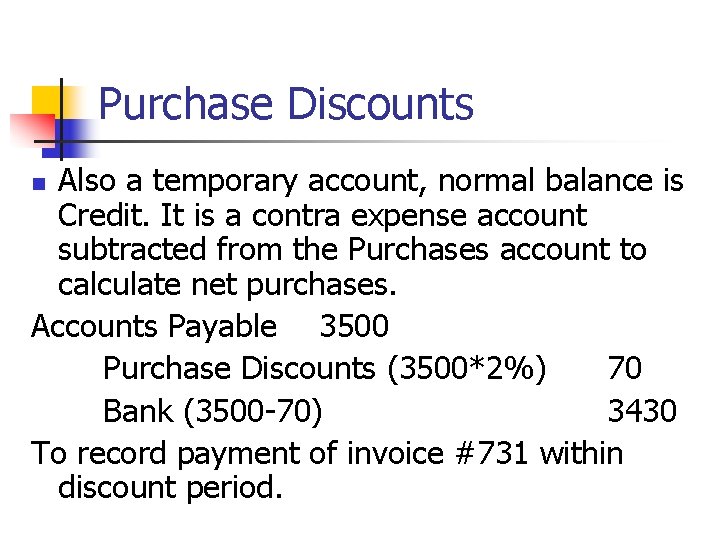
Purchase Discounts Also a temporary account, normal balance is Credit. It is a contra expense account subtracted from the Purchases account to calculate net purchases. Accounts Payable 3500 Purchase Discounts (3500*2%) 70 Bank (3500 -70) 3430 To record payment of invoice #731 within discount period. n
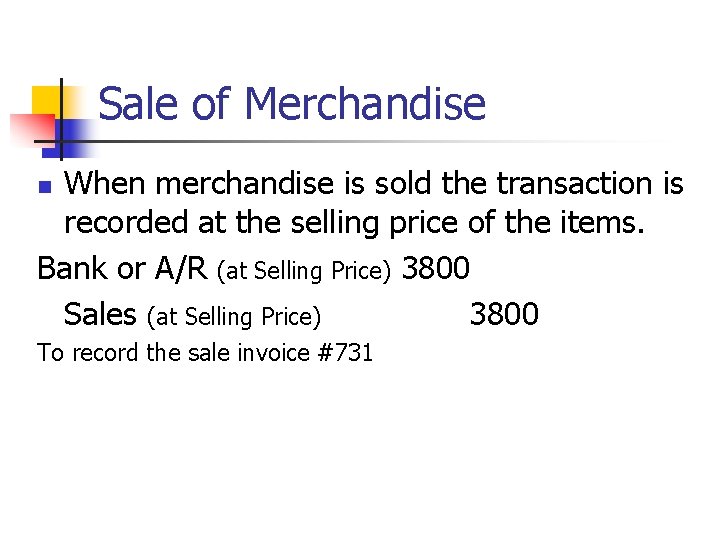
Sale of Merchandise When merchandise is sold the transaction is recorded at the selling price of the items. Bank or A/R (at Selling Price) 3800 Sales (at Selling Price) 3800 n To record the sale invoice #731
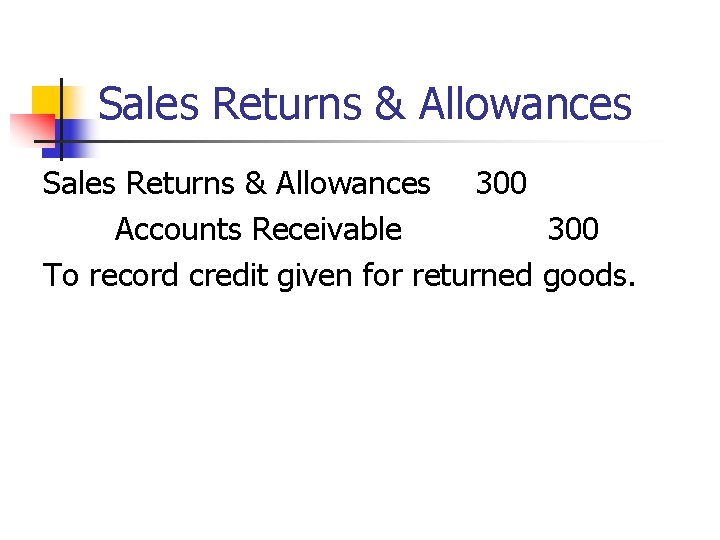
Sales Returns & Allowances 300 Accounts Receivable 300 To record credit given for returned goods.
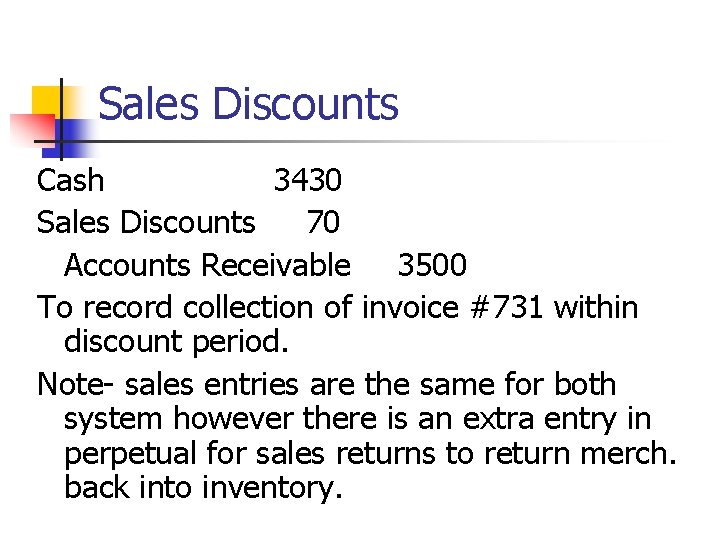
Sales Discounts Cash 3430 Sales Discounts 70 Accounts Receivable 3500 To record collection of invoice #731 within discount period. Note- sales entries are the same for both system however there is an extra entry in perpetual for sales returns to return merch. back into inventory.
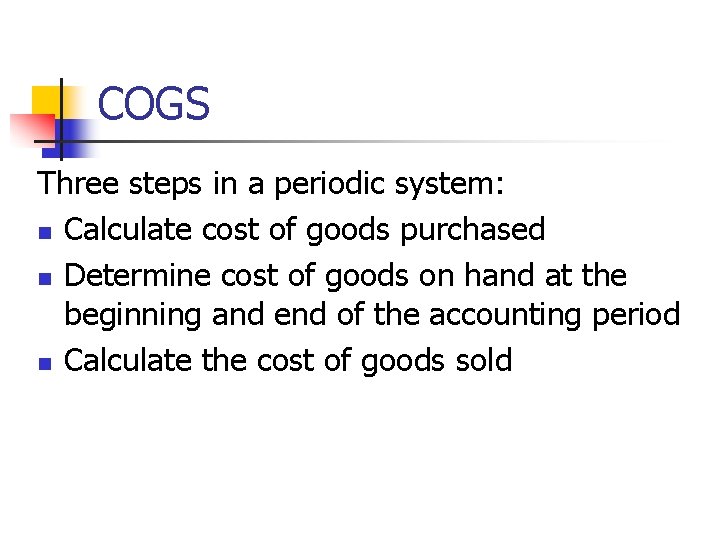
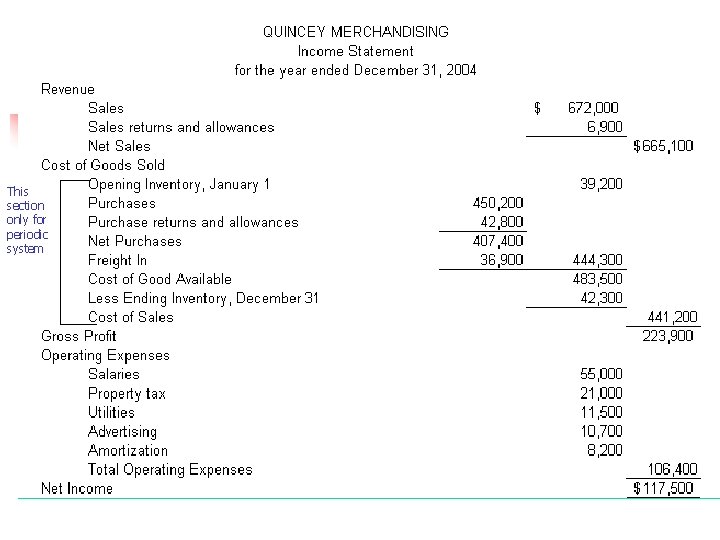
COGS Three steps in a periodic system: n Calculate cost of goods purchased n Determine cost of goods on hand at the beginning and end of the accounting period n Calculate the cost of goods sold
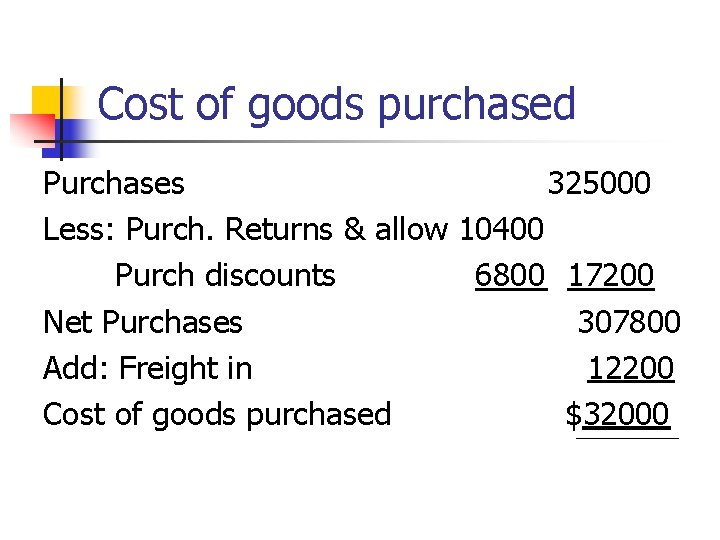
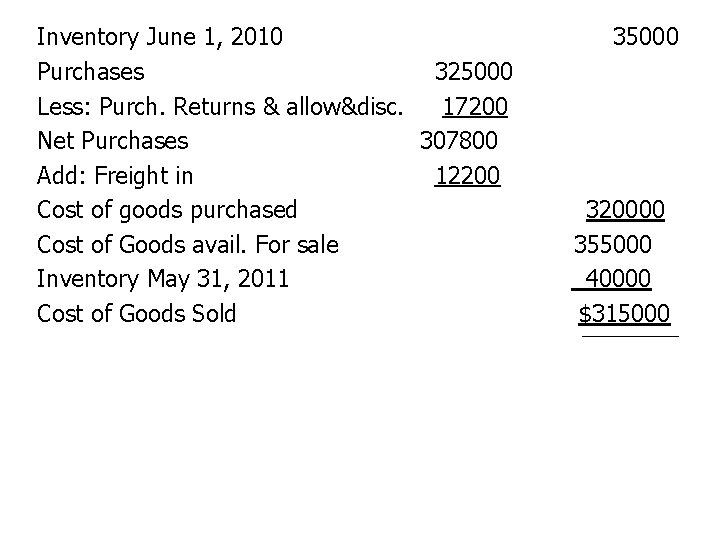
Cost of goods purchased Purchases 325000 Less: Purch. Returns & allow 10400 Purch discounts 6800 17200 Net Purchases 307800 Add: Freight in 12200 Cost of goods purchased $32000
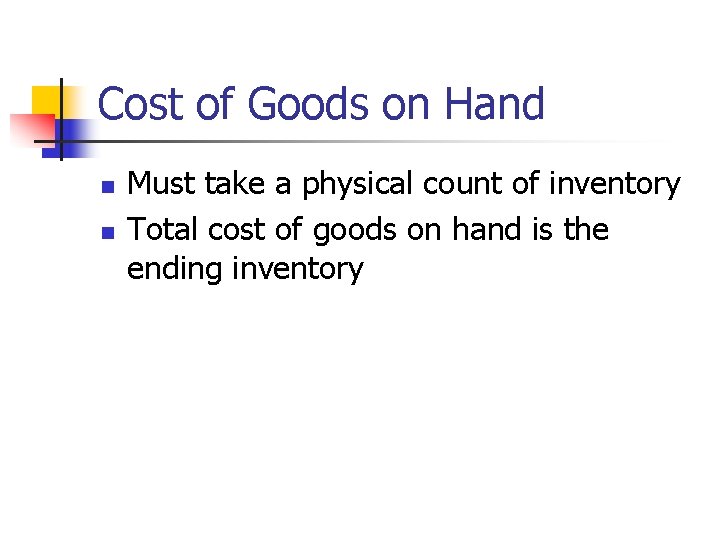
Cost of Goods on Hand n n Must take a physical count of inventory Total cost of goods on hand is the ending inventory
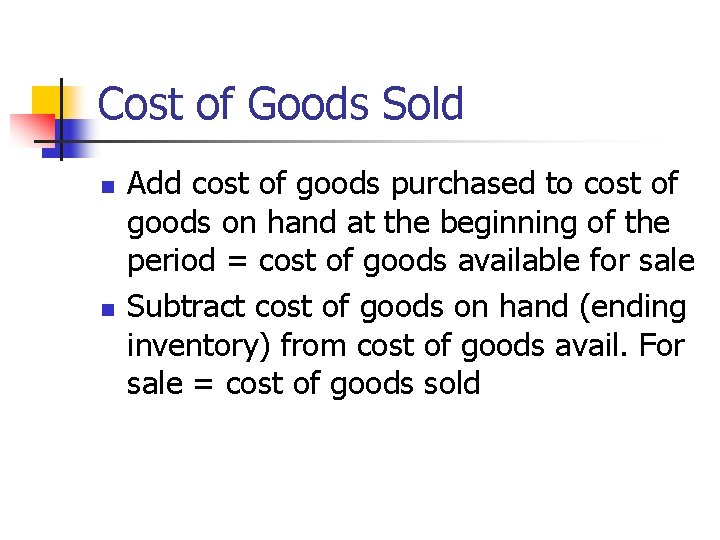
Cost of Goods Sold n n Add cost of goods purchased to cost of goods on hand at the beginning of the period = cost of goods available for sale Subtract cost of goods on hand (ending inventory) from cost of goods avail. For sale = cost of goods sold
Inventory June 1, 2010 Purchases 325000 Less: Purch. Returns & allow&disc. 17200 Net Purchases 307800 Add: Freight in 12200 Cost of goods purchased Cost of Goods avail. For sale Inventory May 31, 2011 Cost of Goods Sold 35000 320000 355000 40000 $315000
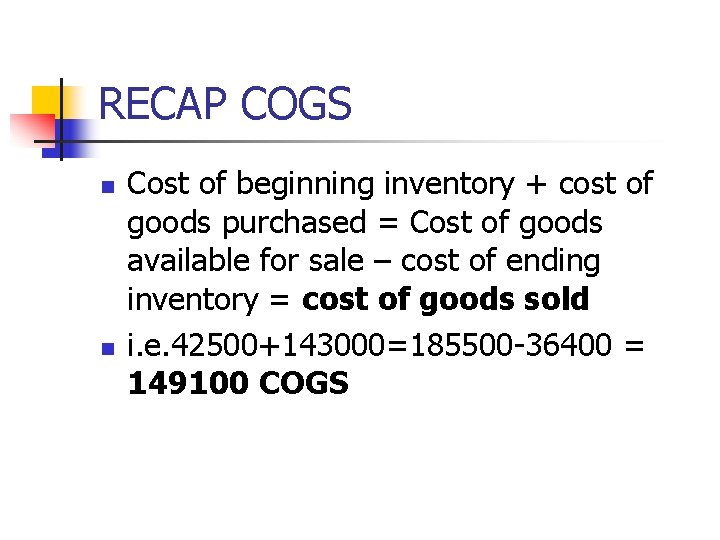
RECAP COGS n n Cost of beginning inventory + cost of goods purchased = Cost of goods available for sale – cost of ending inventory = cost of goods sold i. e. 42500+143000=185500 -36400 = 149100 COGS
This section only for periodic system
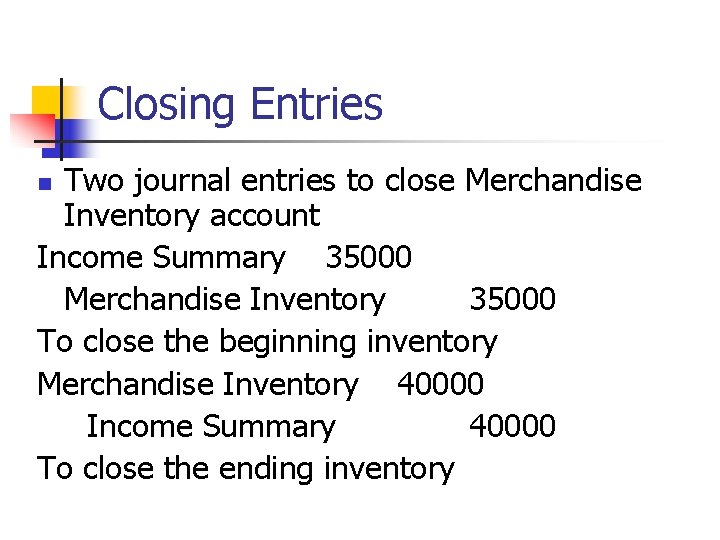
Closing Entries Two journal entries to close Merchandise Inventory account Income Summary 35000 Merchandise Inventory 35000 To close the beginning inventory Merchandise Inventory 40000 Income Summary 40000 To close the ending inventory n
Worksheet Original NEW Close all
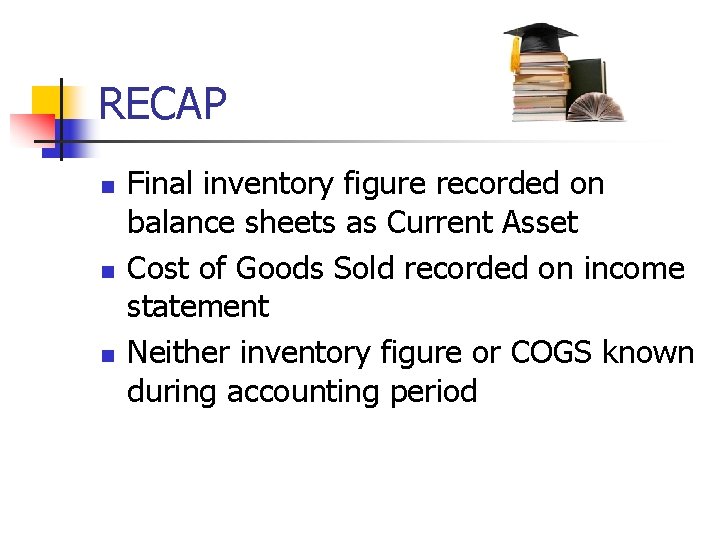
RECAP n n n Final inventory figure recorded on balance sheets as Current Asset Cost of Goods Sold recorded on income statement Neither inventory figure or COGS known during accounting period
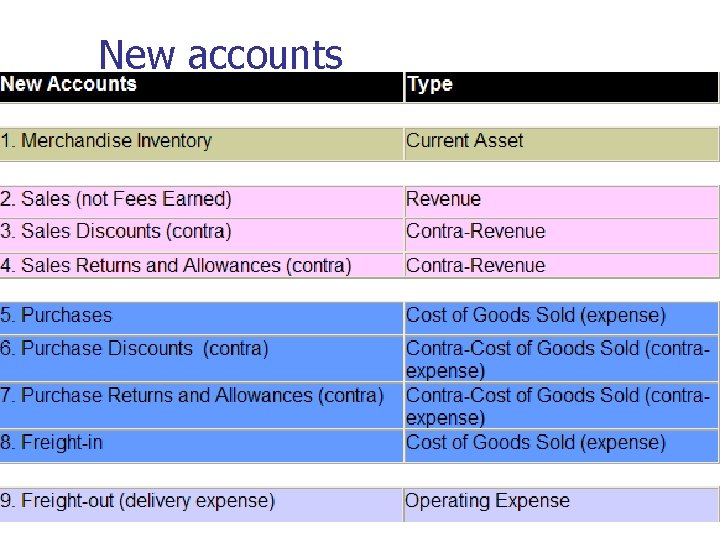
New accounts