
Period 1 1491 1607 AP U S HISTORY



- Slides: 40
Period 1 1491 -1607 AP U. S. HISTORY
Transformations of North America Period 1 1491 -1607
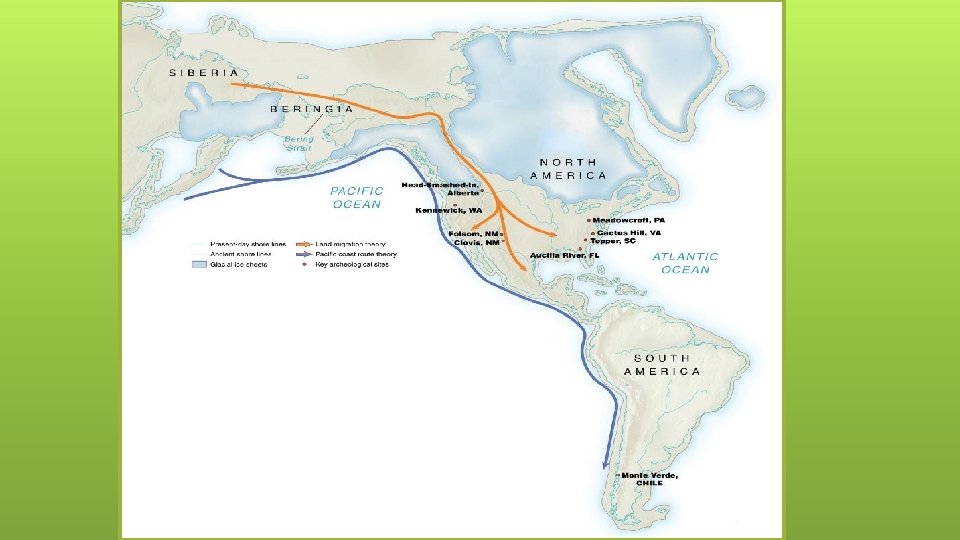
The First Americans 60 million people occupied the Americas when Europeans arrived 13, 000 and 30, 000 BCE first migratory stream of people 6, 000 BCE second wave of migratory people; predecessors of the Navajos and apaches 3, 000 BCE ancestors of the Aleut and Inuit came and settled
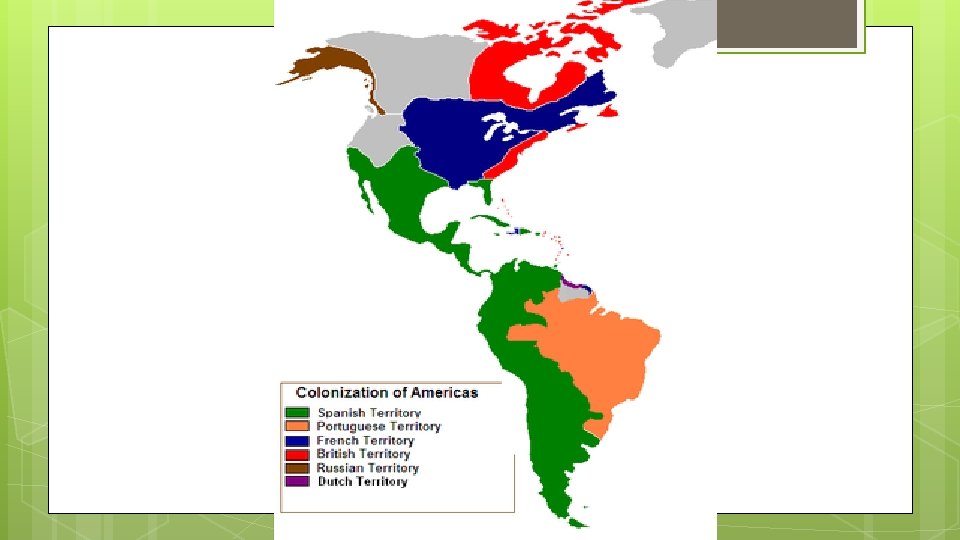
Spanish conquerors Columbus Maya Aztec Inca Hernando Cortes Francisco Pizarro
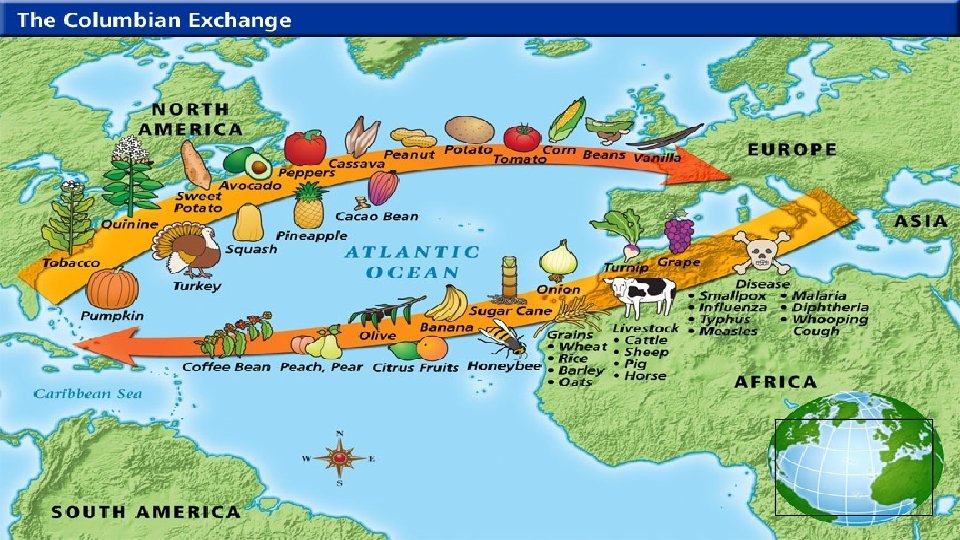
The Columbian exchange People, plants, animals, and germs crossed the Atlantic Grains like wheat and barley were planted; dandelion Potatoes, corn, and tomatoes crossed the Atlantic Horses, pigs, cattle, sugar, wheat, and coffee were introduced to the natives by the Spanish Deadly pathogens wiped out thousands of natives
The Spanish Conquest The Spanish crown offered land, plunder (gold and whatever other resources they could take) , titles of nobility “Mesoamerica as a whole in 1500 had probably 40 million Indians; by 1650 that region had only 3 million Native Americans” Peru 9 million to fewer than half a million Pueblo and Mississippian cultures experienced similar losses
The Encomienda System The encomienda system was created by the Spanish to control and regulate American Indian labor and behavior during the colonization of the Americas. Conquistadors and other leaders (encomenderos) received grants of a number of Indians, from whom they could exact “tribute” in the form of gold or labor.
The Encomienda System The conquerors were supposed to protect and Christianize the Indians They most often used the system to effectively enslave the Indians and take their lands.
Native American diversity The political organizations of Native Americans were diverse Kin based , imperialistic Economic and social systems adapted to the environment Religion and culture varied widely Native American’s were affected by and shaped colonization Decentralized polities were harder for colonists to exploits
The Mississippi valley Adena, Hopewell, mound building and distinctive pottery style Cahokia Population exceeded 10, 000 with surrounding areas around 30, 000 Powerful ruling class and a priesthood that worshipped the sun Peaked in size around 1350 and then declined
Missippian culture The lady of Cofachiqui: encountered by Hernando de soto in 1540 16 th century Spanish explorers in Florida encountered the Apalachee Indians who occupied a network of towns built around mounds and fields of maize The great serpent mound
Eastern woodlands Algonquian and Iroquois Shared related languages and lifestyles but were divided into many distinct societies Would band together in the summer and separate into smaller hunting bands in winter Beans and squash Women tended crops, gathered plants, oversaw community affairs Men hunted, fished, provided protection Bison roamed as far east as New York
Eastern woodlands Has no single type of political organization Many had single chieftains; oftentimes numerous chieftains would come together to make decisions Powhatan chiefdom in Chesapeake bay More than 30 subordinate chiefdoms
… was attended by a guard of 40 or 50 of the tallest men his country could afford John Smith about Powhatan
Eastern woodlands In the mid-atlantic power was mostly local Lenni Lenape and munsee Indians Iroquois confederacy- 1500 Mohawks, Oneidas, onondagas, cayugas, and senecas Long history of fighting and retribution Matriarchy! Councils of sachems, only men
Eastern woodlands New England groups Narragansett, When wampanoags, Pequot, mohegans the dutch and the English arrived they were able to exploit the fragile relationship between native groups for trading and military purposes
Great plains and rockies Shoshone, How Comanche did the horse transform these cultures? Sioux Originated Black in present day montana, Mississippi to the black hills Crow Eastern slope of the rocky mountains
Arid southwest Anasazi Hohokams Mogollons All pueblo people, irrigation systems, adobe and rock shelters often built right into the side of canyons Drought led to abandoned chaco canyon
Pacific coast Hunter-gatherers Chinooks, coast salishes, haidas, tlingits Had sophisticated fishing technologies, ocean ready canoes, large longhouses, totem poles
Patterns of trade What trade items moved between groups of native Americans and what effects did that have on the different groups? How did the trading of goods affect hierarchical structure in native American tribes? Potlach
Question Compare the lives of Europeans to the lives of native Americans Consider social structure, economy, politics, and interactions with the environment
Sacred power Animists Rituals before and after war What actions would native American groups take if they lost a war?
Western Europe: the old world Period 1 491 -1607
Hierarchy and authority Describe the social pyramid of western Europe in 1500 Patriarchies primogeniture
Peasant society The manor Live revolved around the seasons Malnutrition, life span, disease
Expanding trade networks Byzantine civilization in the Mediterranean Scholars Preserved the achievements of the Greeks and romans in medicine, philosophy, mathematics, astronomy, and geography Arab merchants had access to spices, silks, and mechanical clocks from India and china The merchants of Venice 3, 000 ships
Rise of Christianity Roman catholic church The protestant reformation The counter reformation
Rise of christianity Martin luther John calvin Geneva predestination
West and central Africa: origins of the Atlantic slave trade
question Were African leaders involved in the slave trade Why would they enslave their own people? Where did these slaves come from? Consider the geography of Africa, what other group of people were involved in the slave trade? What are some other forms of coerced labor?
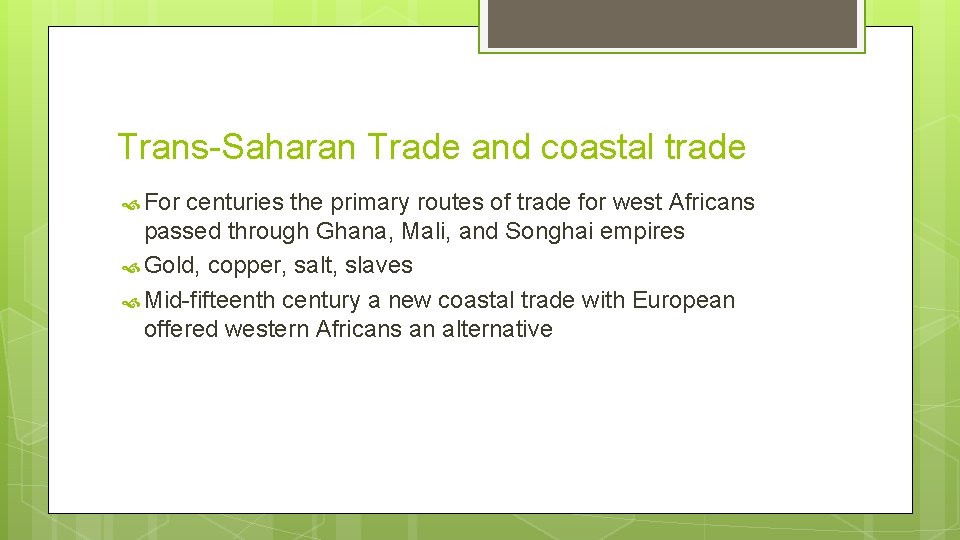
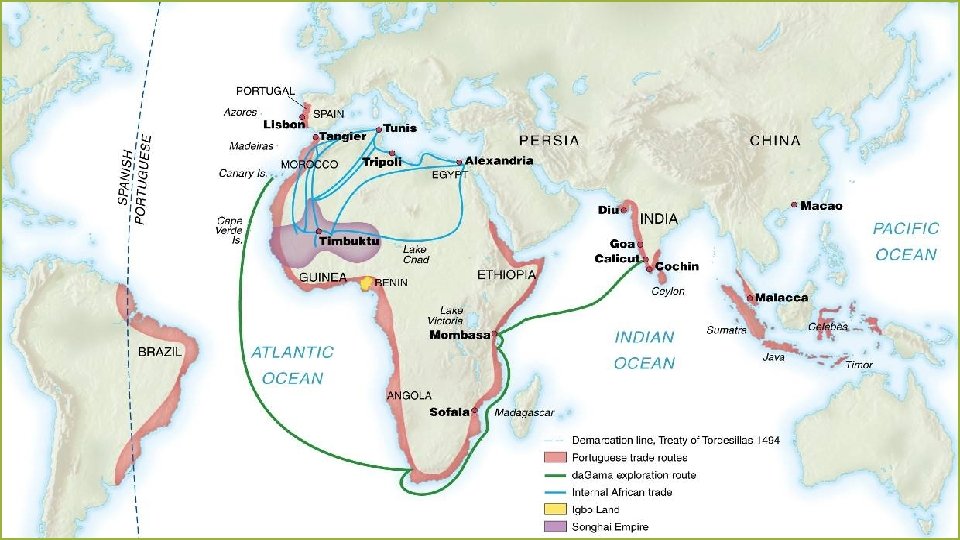
Trans-Saharan Trade and coastal trade For centuries the primary routes of trade for west Africans passed through Ghana, Mali, and Songhai empires Gold, copper, salt, slaves Mid-fifteenth century a new coastal trade with European offered western Africans an alternative
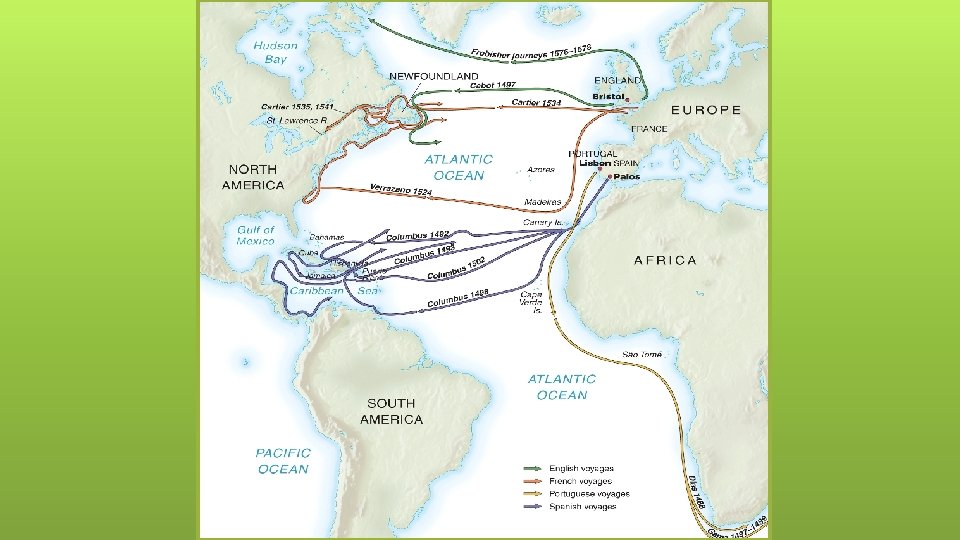
The Portuguese expansion The caravel Portuguese colonized the madeira and Azore islands Brought salt, wine, and fish with them to trade
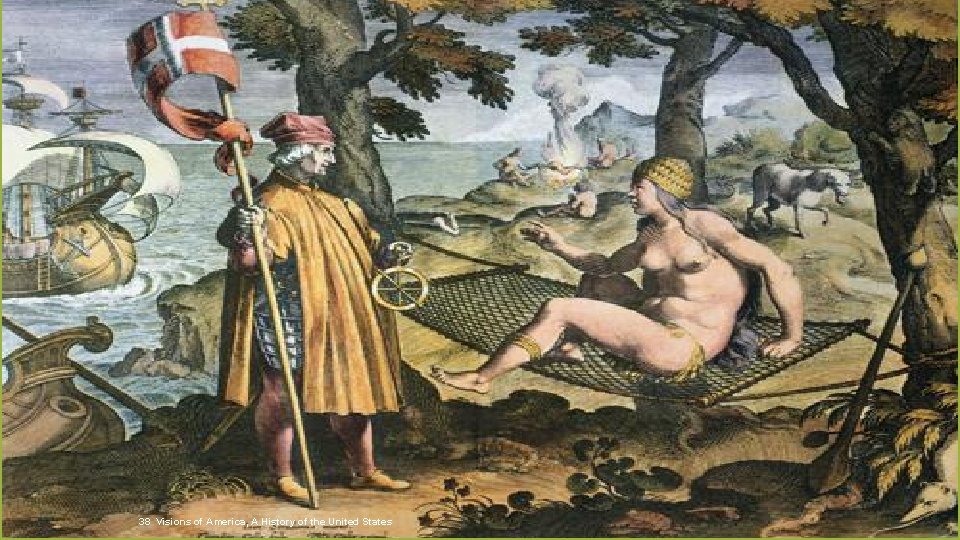
Primary source activities Case studies of African rulers and their views on slavery David North You. Tube clip http: //www. youtube. com/watch? v=GLway. Za. FAIM Primary source Spanish explorers interact with their conquerors
38 Visions of America, A History of the United States