
Perinatal Mood Anxiety Disorders in Pediatric Primary Care

![Screening Clinical judgment or “gut instinct” Best Practice • [Baseline during 1 st trimester]](https://slidetodoc.com/presentation_image_h2/fe7fd5547db0a57f659bab40837d859e/image-19.jpg "Screening Clinical judgment or “gut instinct” Best Practice • [Baseline during 1 st trimester]")
- Slides: 26
Perinatal Mood & Anxiety Disorders in Pediatric Primary Care Aimee Danielson, Ph. D Lynne Mc. Intyre, MSW May 14, 2015
Accreditation The George Washington University School of Medicine and Health Sciences is accredited by the Accreditation Council for Continuing Medical Education (ACCME) to provide continuing medical education for physicians. The George Washington University School of Medicine and Health Sciences designates this live activity for a maximum of 1. 0 AMA PRA Category 1 Credit(s)™. Physicians should claim only the credit commensurate with the extent of their participation in the activity. Instructions for Obtaining Credit At the end of this webinar, you will receive an email for completing the online course evaluation. Your certificate of credit will be available immediately after you complete the evaluation.
Disclosure In accordance with the Accreditation Council for Continuing Medical Education's Standards for Commercial Support, The George Washington University Office of Continuing Education in the Health Professions (CEHP) requires that all individuals involved in the development and presentation of CME activity content disclose any relevant financial relationships with commercial interest(s). CEHP identifies and resolves all conflicts of interest prior to an individual’s participation in an educational activity. The following faculty, planners, and staff report that they have no relevant financial relationships with commercial interest(s): Lynne Mcy. Intire (Speaker) • Aimee Danielson (Speaker) • Mark Weissman, MD (Course Director) • Tamara John, MPH (Staff Planner) • Leticia Hall-Salam (Staff) • Commercial Support: This activity received no support from a commercial interest.
General Information Release Date: Termination Date: March 25, 2014 Hardware/Software Requirements PC • Microsoft Windows 2000 SE or above. • Internet Explorer (v 5. 5 or greater), or Firefox • Flash Player Plug-in (9. 0 or later) Check your version here. • Sound Card & Speakers • 800 x 600 Minimum Monitor Resolution (1024 x 768 Recommended) • Adobe Acrobat Reader* MAC • MAC OS 10. 2. 8 • Safari or Firefox • Flash Player Plug-in (9. 0 or later) Check your version here. • Sound Card & Speakers • 800 x 600 Minimum Monitor Resolution (1024 x 768 Recommended) • Adobe Acrobat Reader* • Internet Explorer is not supported on the Macintosh. * Required to view printable (PDF) version of the lesson. Contact Information Tamara John Ph: (202)476 -5781 Em: tjohn@childrensnational. org Policy on Privacy & Confidentiality http: //www. gwu. edu/privacy-policy Copyright http: //www. gwu. edu/copyright
Overview 1. What are PMADs? 2. What is their impact on mothers & children? 3. How are they treated? 4. How do I screen? 5. Where & how do I refer?
The Problem • 400, 000 infants/year • 10 -20 % of new mothers • 50% of cases go unrecognized and untreated • Most underdiagnosed obstetrical complication • Suicidality
Terms & Definitions • Baby Blues • Maternal Depression • Postpartum Depression • Perinatal Depression • Postpartum Psychosis • PMADs = Perinatal Mood and Anxiety Disorders
PMADs • Heterogeneous • Occur in 1 st year postpartum • Most common: • Major Depressive Disorder • Bipolar Disorder • Anxiety Disorders: • • Generalized Anxiety Disorder Obsessive Compulsive Disorder Panic Disorder Posttraumatic Stress Disorder (PTSD)
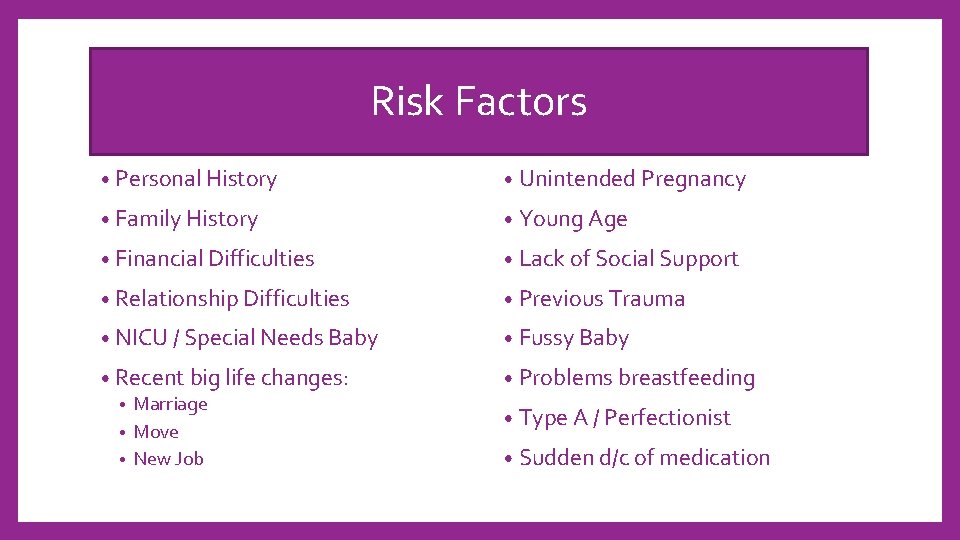
Risk Factors • Personal History • Unintended Pregnancy • Family History • Young Age • Financial Difficulties • Lack of Social Support • Relationship Difficulties • Previous Trauma • NICU / Special Needs Baby • Fussy Baby • Recent big life changes: • Marriage • Move • New Job • Problems breastfeeding • Type A / Perfectionist • Sudden d/c of medication
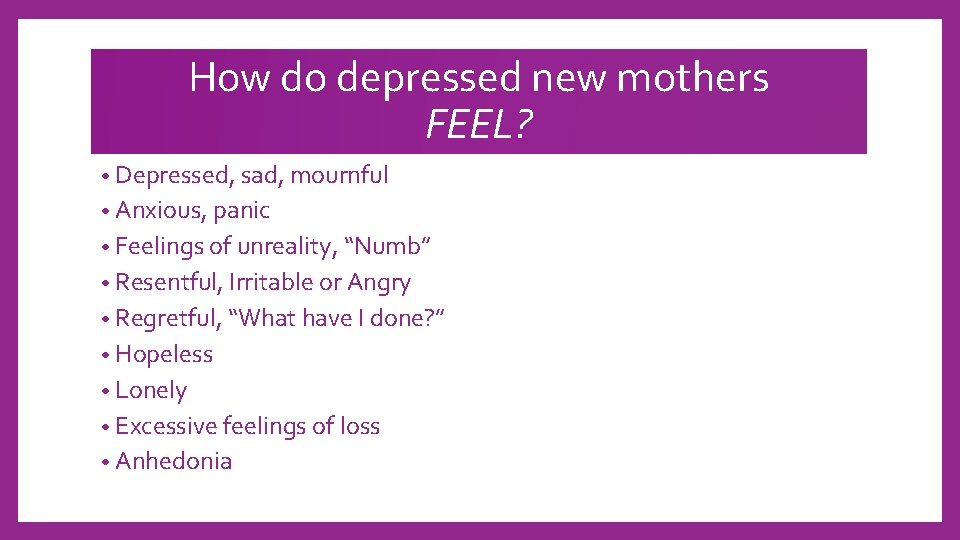
How do depressed new mothers FEEL? • Depressed, sad, mournful • Anxious, panic • Feelings of unreality, “Numb” • Resentful, Irritable or Angry • Regretful, “What have I done? ” • Hopeless • Lonely • Excessive feelings of loss • Anhedonia
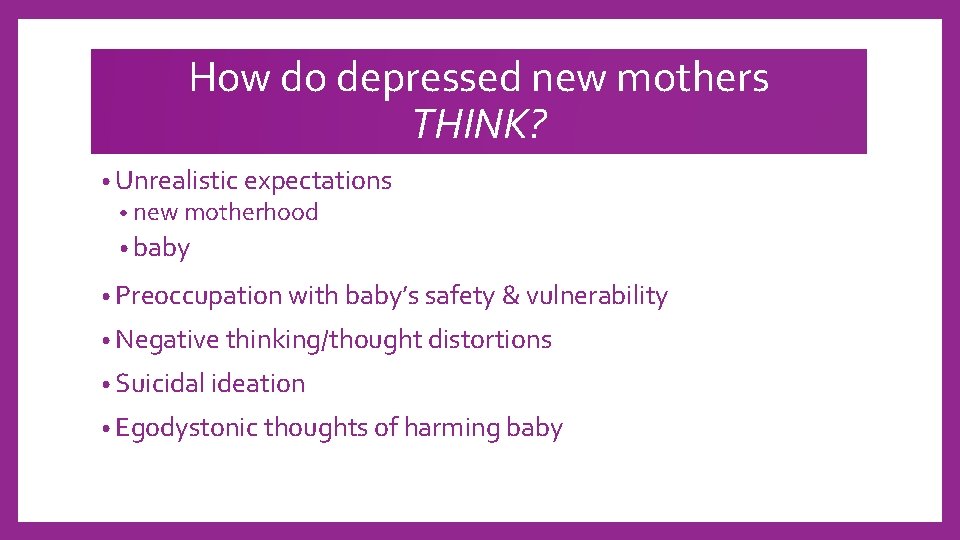
How do depressed new mothers THINK? • Unrealistic expectations • new motherhood • baby • Preoccupation with baby’s safety & vulnerability • Negative thinking/thought distortions • Suicidal ideation • Egodystonic thoughts of harming baby
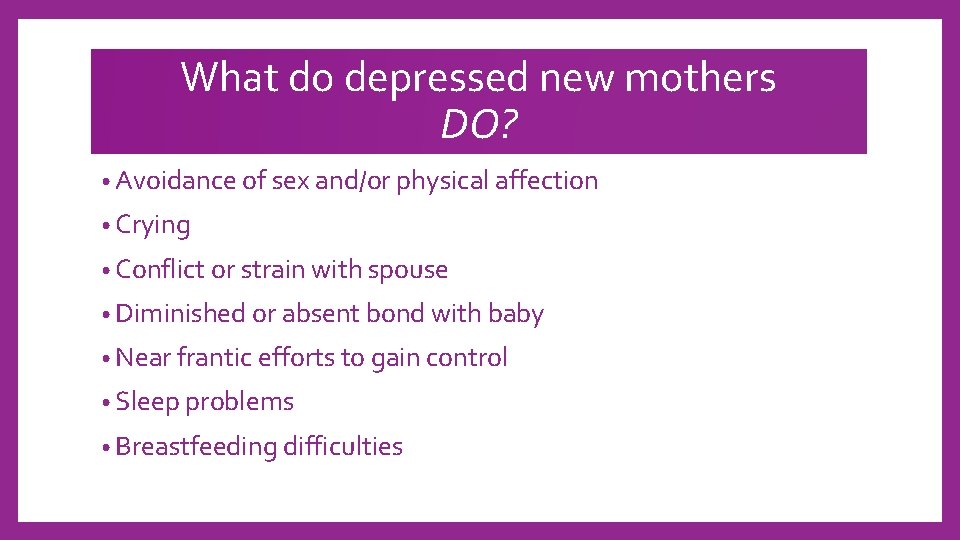
What do depressed new mothers DO? • Avoidance of sex and/or physical affection • Crying • Conflict or strain with spouse • Diminished or absent bond with baby • Near frantic efforts to gain control • Sleep problems • Breastfeeding difficulties
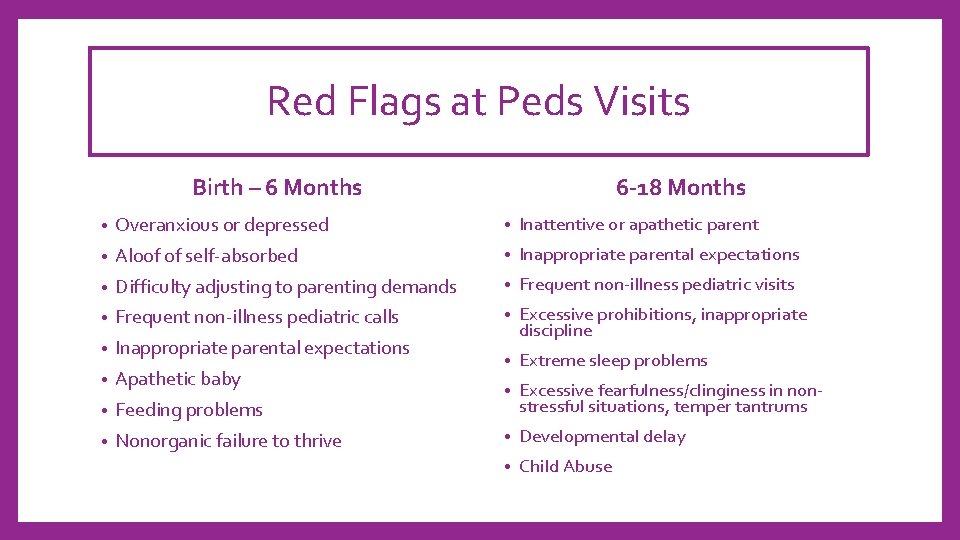
Red Flags at Peds Visits 6 -18 Months Birth – 6 Months • Overanxious or depressed • Inattentive or apathetic parent • Aloof of self-absorbed • Inappropriate parental expectations • Difficulty adjusting to parenting demands • Frequent non-illness pediatric visits • Frequent non-illness pediatric calls • • Inappropriate parental expectations Excessive prohibitions, inappropriate discipline • Apathetic baby • Extreme sleep problems • Feeding problems • Excessive fearfulness/clinginess in nonstressful situations, temper tantrums • Nonorganic failure to thrive • Developmental delay • Child Abuse
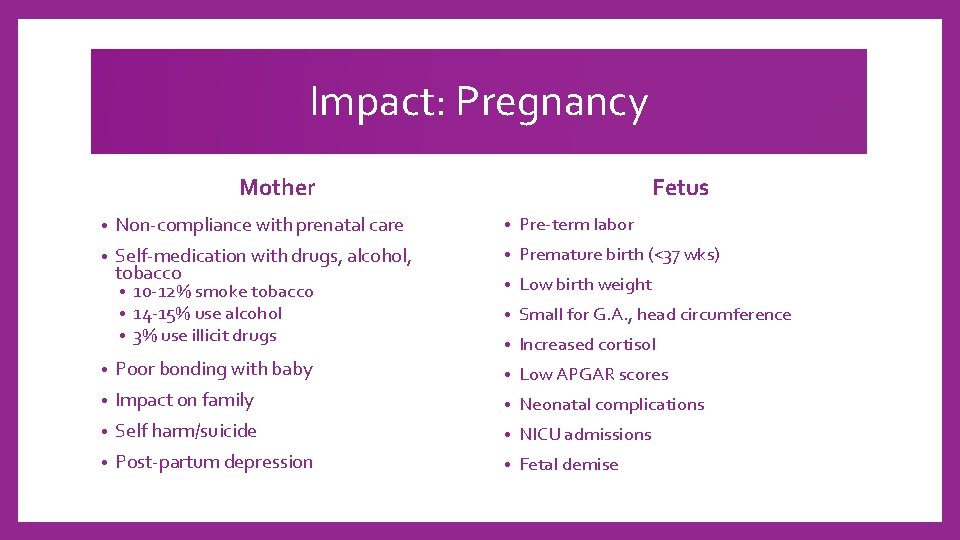
Impact: Pregnancy Fetus Mother • Non-compliance with prenatal care • Pre-term labor • Self-medication with drugs, alcohol, tobacco • Premature birth (<37 wks) • Low birth weight • Small for G. A. , head circumference • Increased cortisol • • • 10 -12% smoke tobacco 14 -15% use alcohol 3% use illicit drugs • Poor bonding with baby • Low APGAR scores • Impact on family • Neonatal complications • Self harm/suicide • NICU admissions • Post-partum depression • Fetal demise
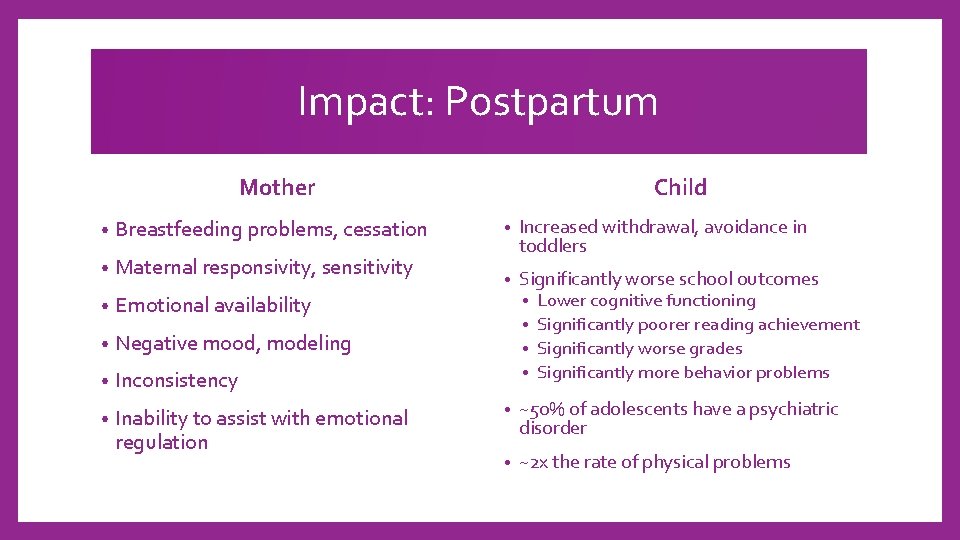
Impact: Postpartum Child Mother • Breastfeeding problems, cessation • Maternal responsivity, sensitivity • Emotional availability • Negative mood, modeling • Inconsistency • Inability to assist with emotional regulation • Increased withdrawal, avoidance in toddlers • Significantly worse school outcomes Lower cognitive functioning • Significantly poorer reading achievement • Significantly worse grades • Significantly more behavior problems • • ~50% of adolescents have a psychiatric disorder • ~2 x the rate of physical problems
The Good News These disorders are treatable
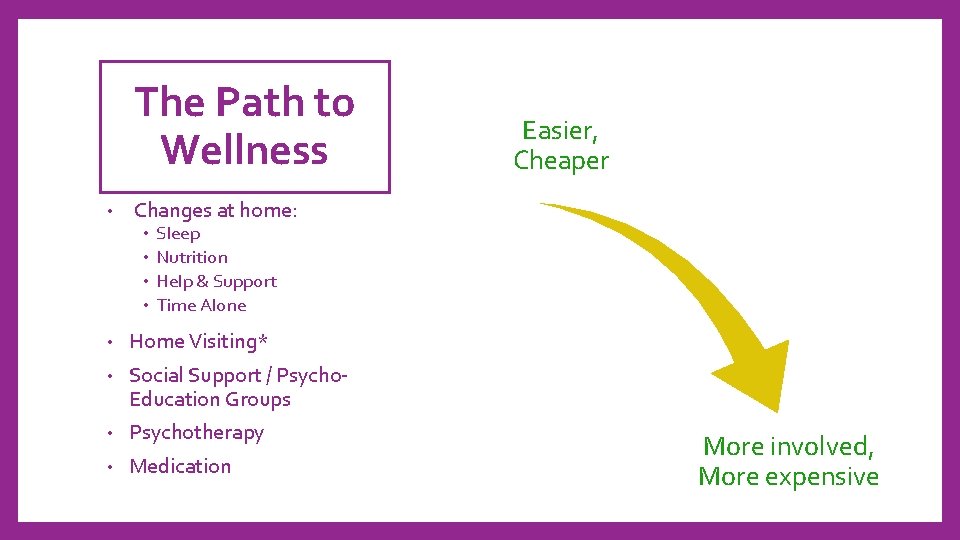
The Path to Wellness • Easier, Cheaper Changes at home: Sleep • Nutrition • Help & Support • Time Alone • • Home Visiting* • Social Support / Psycho. Education Groups • Psychotherapy • Medication More involved, More expensive
Screening Clinical judgment or “gut instinct” Best Practice • [Baseline during 1 st trimester] • [Between 35 -40 weeks] • 2 month well-child* • 6 month well-child • 12 month well-child Codes for Billing • Screening is reimbursable Annual mental health screening required for DC Medicaid providers and perinatal screening “counts” as annual child screen
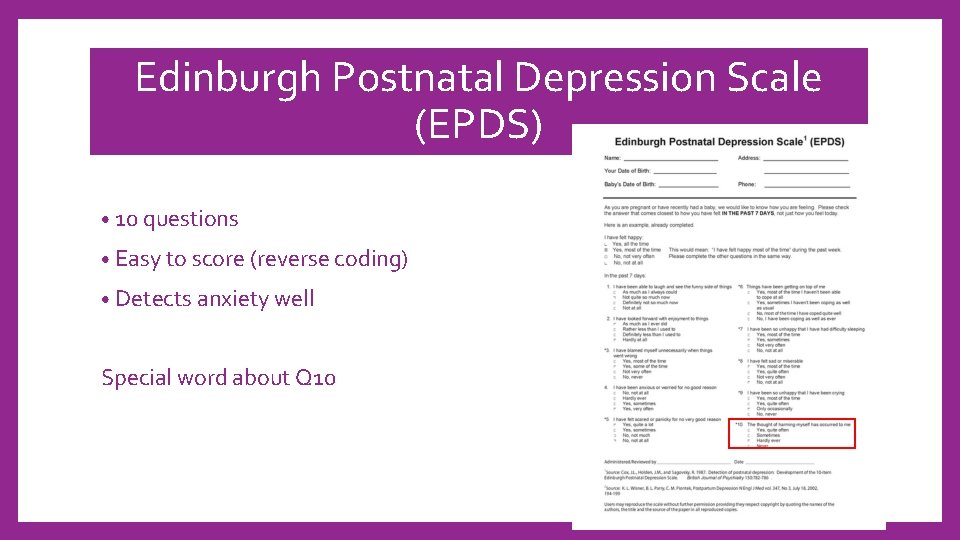
Edinburgh Postnatal Depression Scale (EPDS) • 10 questions • Easy to score (reverse coding) • Detects anxiety well Special word about Q 10
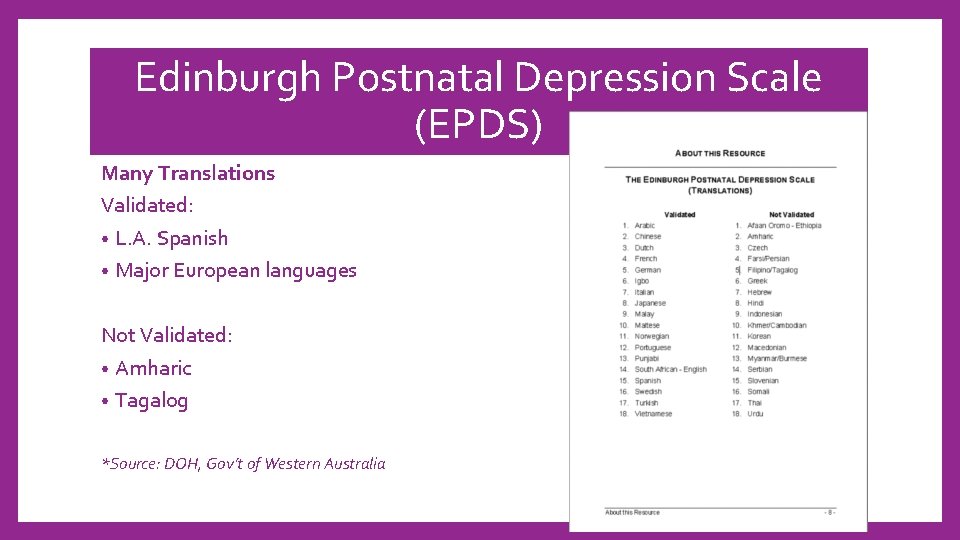
Edinburgh Postnatal Depression Scale (EPDS) Many Translations Validated: • L. A. Spanish • Major European languages Not Validated: • Amharic • Tagalog *Source: DOH, Gov’t of Western Australia
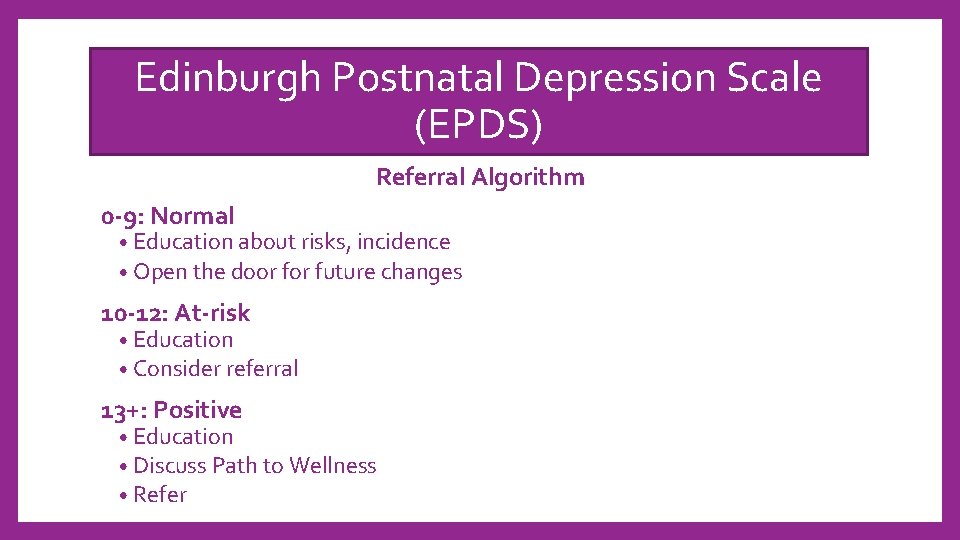
Edinburgh Postnatal Depression Scale (EPDS) Referral Algorithm 0 -9: Normal • Education about risks, incidence • Open the door future changes 10 -12: At-risk • Education • Consider referral 13+: Positive • Education • Discuss Path to Wellness • Refer
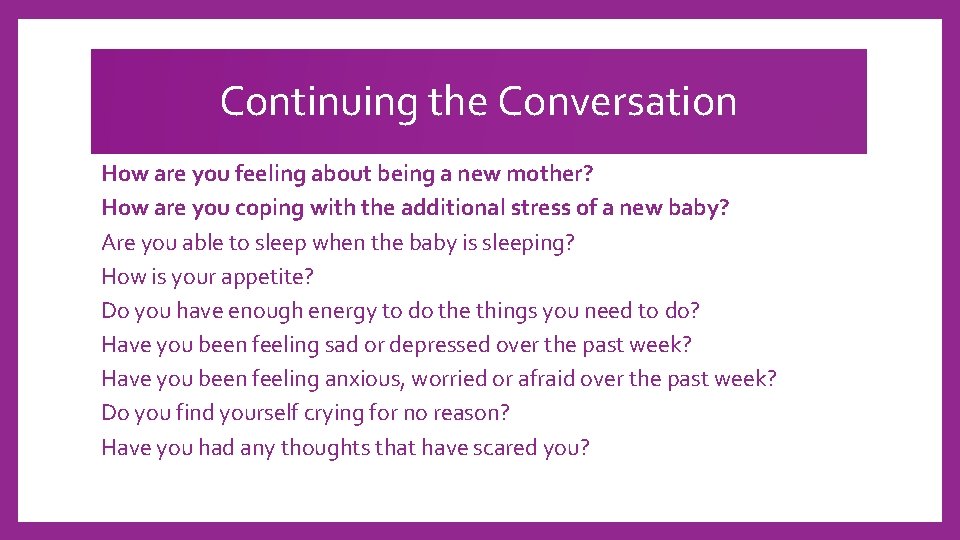
Continuing the Conversation How are you feeling about being a new mother? How are you coping with the additional stress of a new baby? Are you able to sleep when the baby is sleeping? How is your appetite? Do you have enough energy to do the things you need to do? Have you been feeling sad or depressed over the past week? Have you been feeling anxious, worried or afraid over the past week? Do you find yourself crying for no reason? Have you had any thoughts that have scared you?
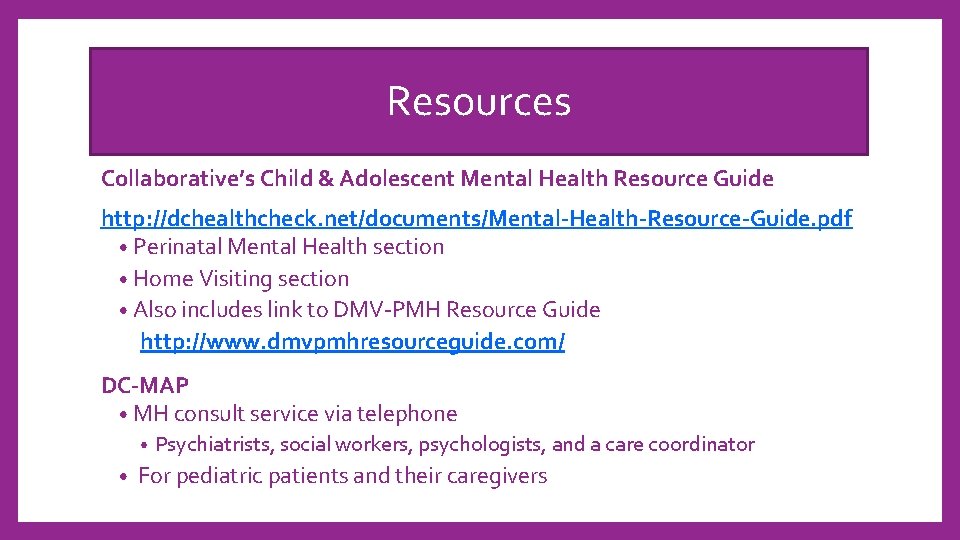
Resources Collaborative’s Child & Adolescent Mental Health Resource Guide http: //dchealthcheck. net/documents/Mental-Health-Resource-Guide. pdf • Perinatal Mental Health section • Home Visiting section • Also includes link to DMV-PMH Resource Guide http: //www. dmvpmhresourceguide. com/ DC-MAP • MH consult service via telephone • • Psychiatrists, social workers, psychologists, and a care coordinator For pediatric patients and their caregivers
Resources Postpartum Support International “one-stop shopping” Washington, DC • Postpartum Support DC: 202 -643 -7290, www. postpartumdc. org Maryland • Postpartum Support Maryland: 240 -432 -4497, www. postpartummd. org Virginia • Postpartum Support Virginia: 703 -829 -7152, www. postpartumva. org
Thank You! Aimee Danielson, Ph. D Medstar Georgetown University Hospital Women’s Mental Health Program Lynne Mc. Intyre, MSW Mary’s Center for Maternal & Child Care Postpartum Support International